FNP Study PSI 2 Questions and Answers
Rated A
A geriatric female presents for her annual examination. She has been on antihypertensive
medications for over 20 years, with good control. Laboratory values are within nor
...
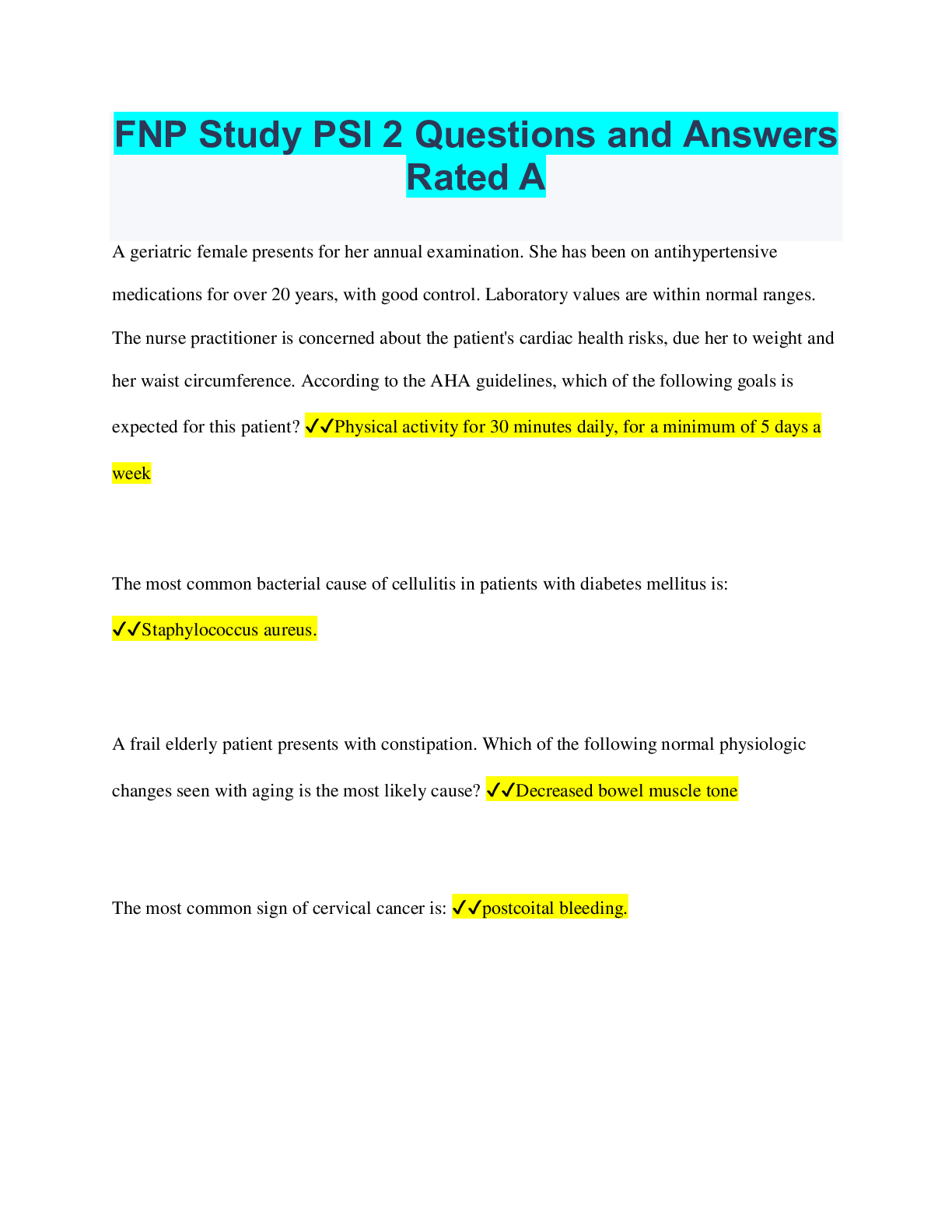
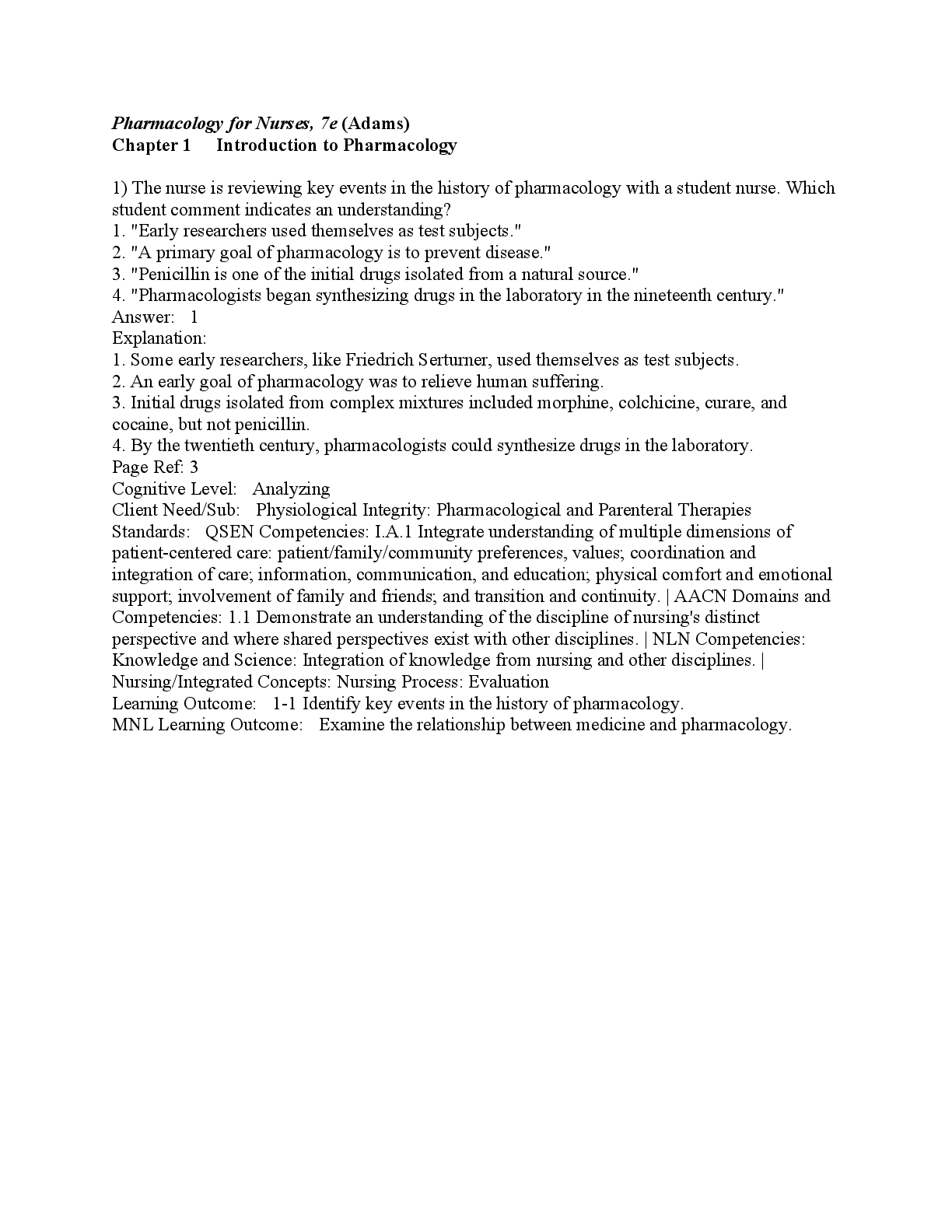
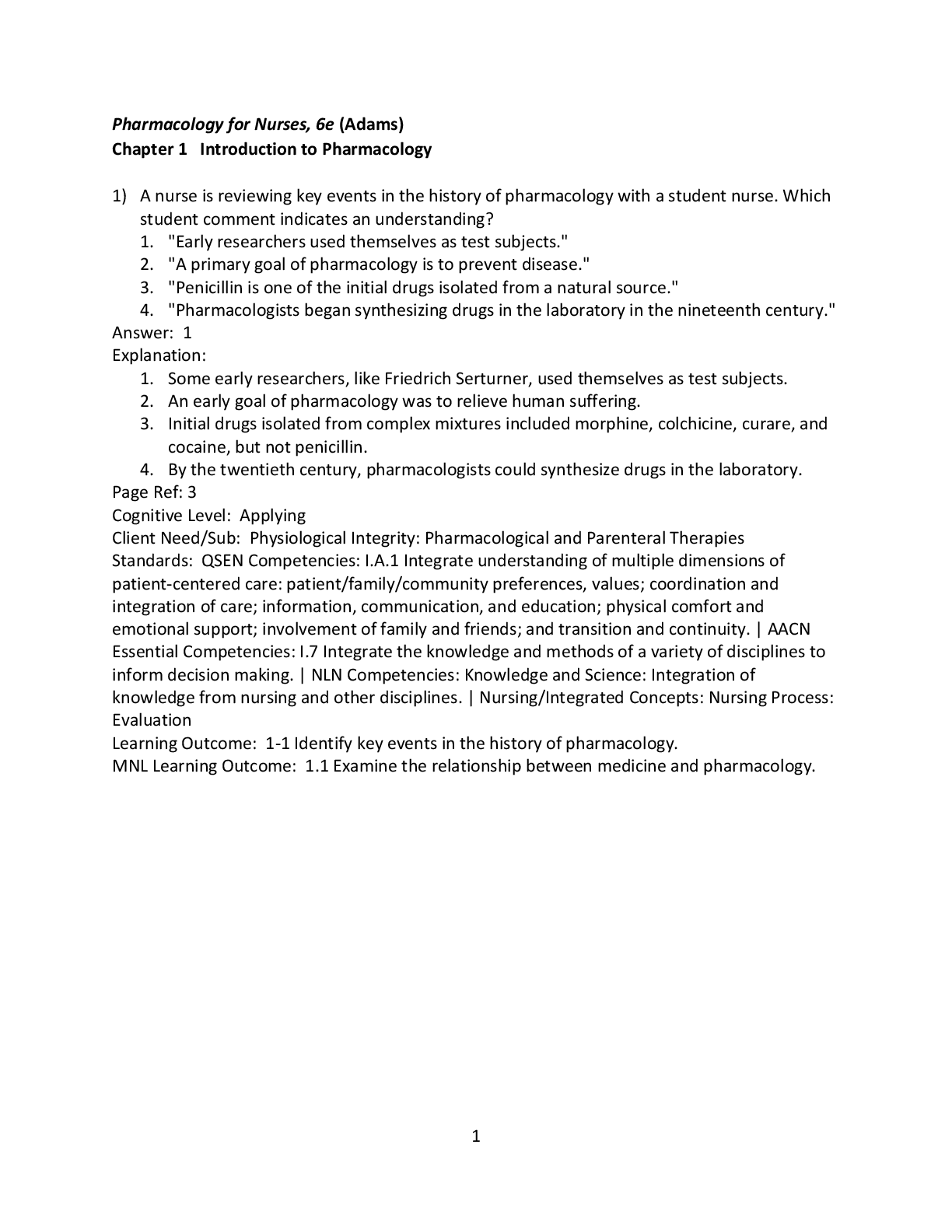
FNP Study PSI 2 Questions and Answers
Rated A
A geriatric female presents for her annual examination. She has been on antihypertensive
medications for over 20 years, with good control. Laboratory values are within normal ranges.
The nurse practitioner is concerned about the patient's cardiac health risks, due her to weight and
her waist circumference. According to the AHA guidelines, which of the following goals is
expected for this patient? ✔✔Physical activity for 30 minutes daily, for a minimum of 5 days a
week
The most common bacterial cause of cellulitis in patients with diabetes mellitus is:
✔✔Staphylococcus aureus.
A frail elderly patient presents with constipation. Which of the following normal physiologic
changes seen with aging is the most likely cause? ✔✔Decreased bowel muscle tone
The most common sign of cervical cancer is: ✔✔postcoital bleeding.
A pediatric male is present with his mother, who states that he is extremely restless at night and
constantly scratches his anal area. Which diagnostic procedure would confirm a diagnosis of
pinworm infestation? ✔✔Examination of transparent tape sample from perianal skin
Congenital dysplasia of the hip: ✔✔occurs more commonly in females.
A patient on warfarin (Coumadin) therapy for recurrent deep vein thrombosis (DVT) is about to
have lumbar spinal fusion surgery. The patient's warfarin is put on hold starting 5 days prior to
the surgery and subcutaneous Lovenox has been ordered for DVT prophylaxis until the
resumption of the warfarin. The nurse practitioner knows that the patient's postoperative warfarin
dose should be restarted based on the: ✔✔baseline PT and INR values.
An adult female who recently returned from a business trip to Japan presents for a recheck
appointment. The only remarkable laboratory result is for thyroid-stimulating hormone (TSH), at
0.3 microunits/mL (normal = 0.4-6 microunits/mL). The patient reports that her neck hurts;
examination reveals thyroid tenderness. Which of the following laboratory tests should the nurse
practitioner order now? ✔✔Triiodothyronine (T3) and free thyroxine (FT4)
Which of the following microorganisms are most frequently associated with acute bacterial
rhino-sinusitis? ✔✔Streptococcus pneumoniae and Haemophilus influenzae
A late adolescent patient presents with complaints of acute-onset unilateral right eye pain, visual
changes, seeing halos around lights, abdominal pain, and intermittent nausea. Physical findings
include an erythematous right eye without discharge, a cloudy cornea, and a moderately dilated
right pupil that is nonreactive to light. The nurse practitioner should immediately: ✔✔refer to the
emergency department.
In most cases, the first manifestation of Alzheimer's disease is: ✔✔decrease in short-term
memory.
T-wave inversion with a normal ST segment on a 12-lead EKG may represent: ✔✔acute
coronary ischemia.
On physically assessing a newborn's head, you note an enlarged, fluid-filled area that is
subperiosteal and does not cross suture lines. This finding indicates the presence of:
✔✔cephalohematoma.
The clinical presentation of placenta previa that develops during the third trimester includes
✔✔sudden onset of painless and profuse bleeding.
A 16-year-old female adolescent is brought to the nurse practitioner's office by her mother, who
is concerned about her daughter's recent weight loss. History reveals that the daughter was
consistently in the 50th percentile for weight, but is now in the 10th percentile. The mother states
that she is concerned that her daughter is purging herself after meals since she often goes to the
restroom after eating and remains there for a long period of time. The daughter denies any selfinduced vomiting, starvation or excessive activity. She does state that she jogs five miles a day
and is in good condition. In addition to a complete blood count with differential, which of the
following laboratory tests will be most helpful for further assessment? ✔✔Electrolytes, blood
urea nitrogen (BUN)/creatinine, urinalysis
An adult female who is homeless presents for an initial obstetric visit at 34 weeks of pregnancy.
She is diagnosed with Chlamydia trachomatis infection. What complication will her newborn be
most at risk? ✔✔Conjunctivitis
There are three reasons for latex allergies. Which of the following does NOT cause the problem?
✔✔Cytotoxic hypersensitivity
An 86-year-old patient is experiencing radiculopathy-associated lower back pain that has not
improved over the past 4 weeks. The medical history includes a lumbar discectomy. The best
type of imaging study for evaluating this patient would be a/an: ✔✔MRI.
A 13-year-old is concerned because she has not yet begun to menstruate. Physical examination
indicates that the patient is at Tanner stage IV and is of average height and weight. Which of the
following would be the most appropriate response to this patient? ✔✔"Your development is
exactly as expected for your age; you'll probably begin to have periods within a year."
Risk factors for genital herpes include: ✔✔multiple sexual partners and years of sexual activity.
A patient reports to your office, having been struck on the right cheek with a baseball bat. On
examination, you notice tenderness and swelling over the cheek. The patient is unable to gaze
laterally with his left eye, and he complains of double vision when he attempts to do so. This is
most likely associated with: ✔✔orbital rim fracture.
A young, athletic adult presents with shoulder pain and inability to raise the arm above the
shoulder. The most likely diagnosis is: ✔✔rotator cuff tear.
Unilateral spontaneous serous or serosanguineous discharge from a single duct of a breast is
most often caused by: ✔✔intraductal papilloma.
Anorexia nervosa occurs most commonly in which of the following? ✔✔High-level athletes
A 27-year-old male patient, who works as a janitor, presents with a 6-month history of an
intermittent rash on his hands. History reveals itching and occasional burning. Examination
reveals irregularly-distributed scaly maculopapular erythematous patches extending from the
dorsum of the hand several inches up the forearms, and dry palms with no nail involvement. The
most likely diagnosis is: ✔✔contact dermatitis.
The 16-year-old mother of a 2-month-old presents the infant, reporting that the child is very
irritable and does not feed well. During physical examination, the child's head drops back and the
child exhibits sudden flexing of the extremities. As the flexing stops, the child cries
uncontrollably. Funduscopic examination reveals retinal hemorrhages. Which of the following
diagnostic tests should be ordered? ✔✔CT scan
A nurse practitioner is evaluating an infant for possible colic. Which of the following could
indicate the need for a more extensive evaluation? ✔✔3-oz (85 g) weight gain over the past 2
weeks
A 26-year-old female presents with abdominal distention, bloating, and intermittent crampy
abdominal pain relieved by defecation. She has four to six loose stools a day when stressed.
Between bouts of diarrhea, she often has constipation. Physical examination results are normal.
The CBC was normal. The most likely diagnosis is: ✔✔irritable bowel syndrome.
An 87-year-old patient presents with round, pruritic plaques and small vesicles on the lower legs.
The most likely diagnosis is: ✔✔nummular eczema.
The optimal treatment for latent tuberculosis is: ✔✔isoniazid (Nydrazid) for 9 months.
A 46-year-old female found a lump in her breast this morning. History includes: no prior breast
disease; G2P2 (first birth, age 22); maternal aunt diagnosed with breast cancer at age 72; last
menstrual period was 2.5 weeks ago. On examination, a nurse practitioner palpates a 2-cm round,
soft, mobile, tender lesion in the upper outer quadrant of the right breast. Mammogram is
negative. Which of the following actions is most appropriate? ✔✔Schedule a right-breast
ultrasound
A 19-year-old patient who has used oral contraceptives for 3 years plans to discontinue the pill at
the end of her current cycle to become pregnant. Which of the following daily supplements
would receive the highest priority? ✔✔Folic acid
In a 6-year-old child, which of the following is the preferred drug for stage 1 Lyme disease?
✔✔Cefuroxime (Ceftin)
A 70-year-old patient presents to the clinic complaining of dyspnea, palpitations, and fatigue.
The patient reports a 2-week history of blackened stools, which the patient attributes to drinking
berry juice. Assessment reveals vital signs of BP = 110/60, P = 100, R = 24; Hgb = 4.5 g/dL; Hct
= 16%. What is the most appropriate immediate intervention? ✔✔Send to the emergency room.
A 90-year-old female is brought to the clinic by her neighbor. She states that everything is fine,
but the nurse practitioner notes that she has poor hygiene and bruises on her trunk. The neighbor
is concerned that the patient often has no money to buy food, despite income from social security
and a coal miner's pension. The nurse practitioner suspects abuse. Which of the following is the
nurse practitioner obligated to do next? ✔✔Report the case to the proper authorities.
A 3-year-old female has been diagnosed with bacterial meningitis. She attends preschool daily at
a local church day care program. The day before her diagnosis, she ate lunch with her mother at a
local restaurant. For which contact(s) would chemoprophylaxis with rifampin be recommended?
✔✔Preschool contacts in the past 7 days
During a well-child examination of an 18-month-old, premature tooth decay and inflamed gums,
particularly of the maxillary incisors, are noted. The approach to this problem includes:
✔✔referring the child to a dentist, assessing for bottle feeding and fluoride in local water.
The medication of choice for the initial treatment of juvenile rheumatoid arthritis is:
✔✔ibuprofen.
A pregnant woman with known HIV infection can reduce the risk of perinatal transmission
through zidovudine (Retrovir) therapy. Based on current research, optimal therapy is to start
daily dosing: ✔✔after 14 weeks of gestation.
A child is being treated with methylphenidate (Ritalin) for attention-deficit disorder. The
following are all side effects of Ritalin EXCEPT: ✔✔slight increase in growth velocity.
Which of the following is NOT used for therapy of an acute attack of gout? ✔✔Allopurinol
(Zyloprim)
A 46-year-old female presents with a complaint of amenorrhea for 3 months. The first-line
diagnostic workup is: ✔✔urine pregnancy test.
A 3-year-old presents with a 2-day history of acute diarrhea with a total of 8 watery stools
without blood or mucus, and 2 episodes of vomiting in the past 48 hours. Assessment reveals no
current antibiotic therapy, dehydration <5%, soft abdomen with hyperactive bowel sounds, no
masses or organomegaly; other physical findings are normal. Which of the following is the most
appropriate management plan? ✔✔No laboratory workup; instruct parents on signs and
symptoms of dehydration; diet of clear liquids, advancing to bananas, rice cereal, Jell-O, and
soup.
In treating a pregnant female with migraine headaches, which of the following drugs is in
Category X? ✔✔Ergotamine tartrate (Ergomar)
A young child with asthma presents for follow-up evaluation. After numerous changes in
medications and doses, the parents report that the child continues to have difficulty with
coughing, especially during the night. Which of the following conditions would be the most
likely cause of the continued asthma symptoms? ✔✔Gastroesophageal reflux
Upon admission to a nursing home, an 85-year-old patient receives a negative result on the
purified protein derivative (PPD) test. To determine TB status in the frail elderly, a second PPD
should be performed in: ✔✔1 week.
The management of COPD in the elderly is best guided by: ✔✔symptomatology.
A 65-year-old patient being treated with digoxin (Lanoxin) for chronic heart failure (HF)
presents with complaints of palpitations. Three days ago, the patient was placed on
clarithromycin (Biaxin) by another provider for community-acquired pneumonia. The
appropriate course of action at this point would be to: ✔✔obtain a digoxin level and change the
antibiotic to azithromycin (Zithromax).
A 17-year-old male with rheumatoid arthritis is being treated with an NSAID and omeprazole
(Prilosec). The patient complains of headache, abdominal pain, and gas. These symptoms are
most likely: ✔✔associated with the omeprazole.
The nurse practitioner prescribes amitriptyline (Elavil) for a patient with neuropathic pain
secondary to diabetes mellitus. On follow-up, the patient complains of urine retention and dry
mouth. The practitioner would: ✔✔discontinue amitriptyline and begin gabapentin (Neurontin).
A 12-year-old with sickle cell anemia has recently experienced a sickle cell crisis and presents
for a follow-up examination after a recent hospitalization. It is most important to continue
monitoring growth, development, and: ✔✔hemoglobin levels.
A 2-year-old male presents for reevaluation. Two days ago, he had four episodes of vomiting and
six diarrheal stools. On physical examination today, his vital signs reveal P = 120 and capillary
refill of 3 seconds. The patient's eyes are sunken and his extremities are mottled and cool to the
touch. The treatment plan would include: ✔✔hospitalization for IV fluid replacement.
A nurse practitioner places a 76-year-old patient on nifedipine (Procardia) 10 mg t.i.d. for
angina. The patient is unable to remember to take the medication at the scheduled times. The
practitioner should: ✔✔change the dose to extended release 30 mg daily.
A 28-year-old patient presents with profuse yellow vaginal discharge, odor, and local irritation.
She reports completing a 7-day course of oral metronidazole (Flagyl), 500 mg b.i.d. 4 weeks ago.
She has had multiple recurrences over the last 18 months. Microscopic examination reveals
presence of clue cells. What is the most appropriate treatment intervention? ✔✔Treat both
patient and partner(s) with oral metronidazole (Flagyl), 500 mg b.i.d., for 7 days
[Show More]