Philosophy > QUESTIONS & ANSWERS > PHIL 347 Week 6 Checkpoint Quiz Results.docx questions and answers new solution 2021 (All)
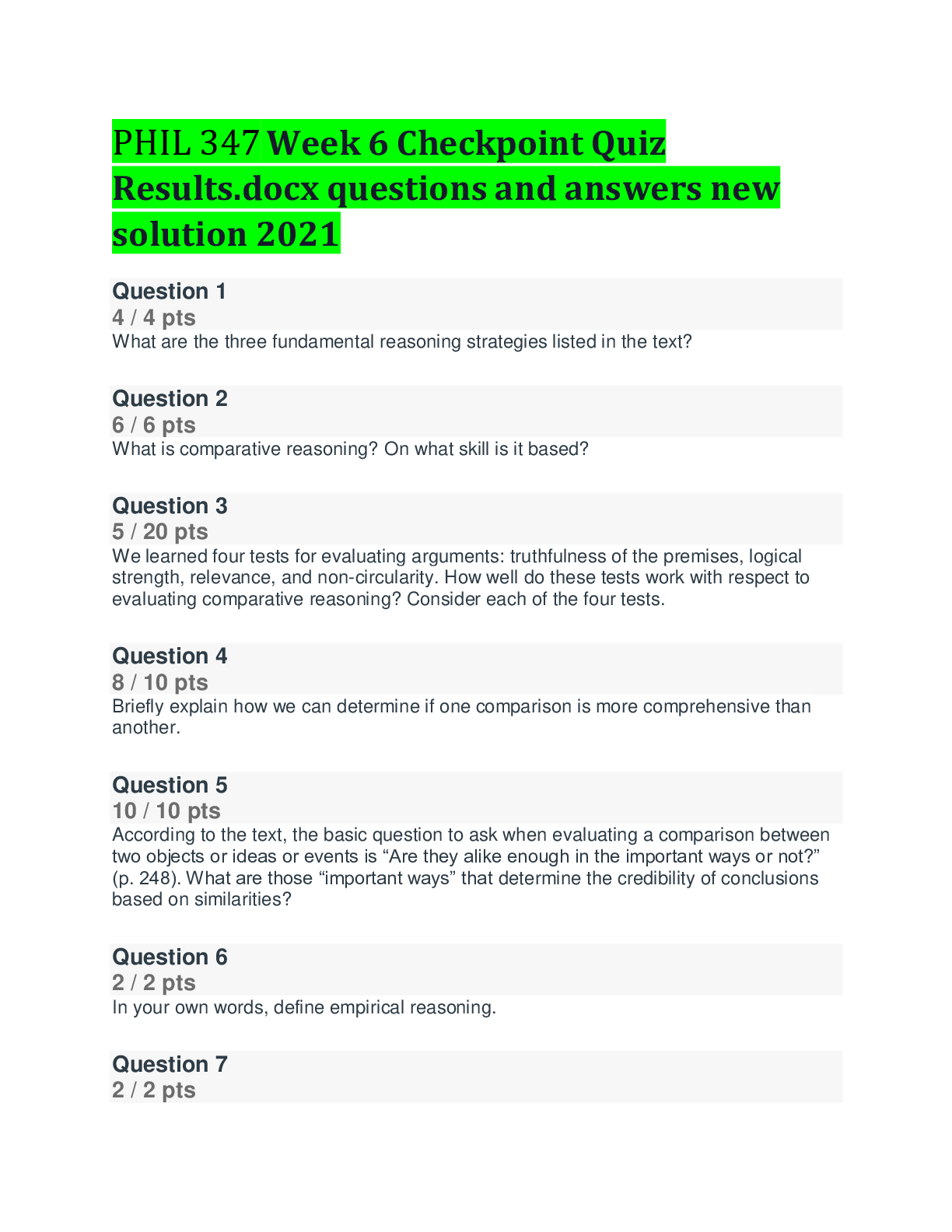
PHIL 347 Week 6 Checkpoint Quiz Results.docx questions and answers new solution 2021
Document Content and Description Below
Last updated: 4 years ago
Preview 1 out of 2 pages
Instant download
Buy this Document to get the Full Access Instantly
Provided by Students Who Aced it
We Verify Document Content to Gurantee Accuracy
Reviews( 0 )
Document information
Connected school, study & course
About the document
Uploaded On
Feb 16, 2021
Number of pages
2
Written in
All

Additional information
This document has been written for:
Uploaded
Feb 16, 2021
Downloads
0
Views
188
Topic Tags
Recommended For You
Get more on QUESTIONS & ANSWERS »
PHIL 347N Critical Reasoning Final Exam | 25 Q&A All Correct A...

PHIL 347N Week 8 Final Exam: CHAMBERLAIN COLLEGE OF NURSING. (...
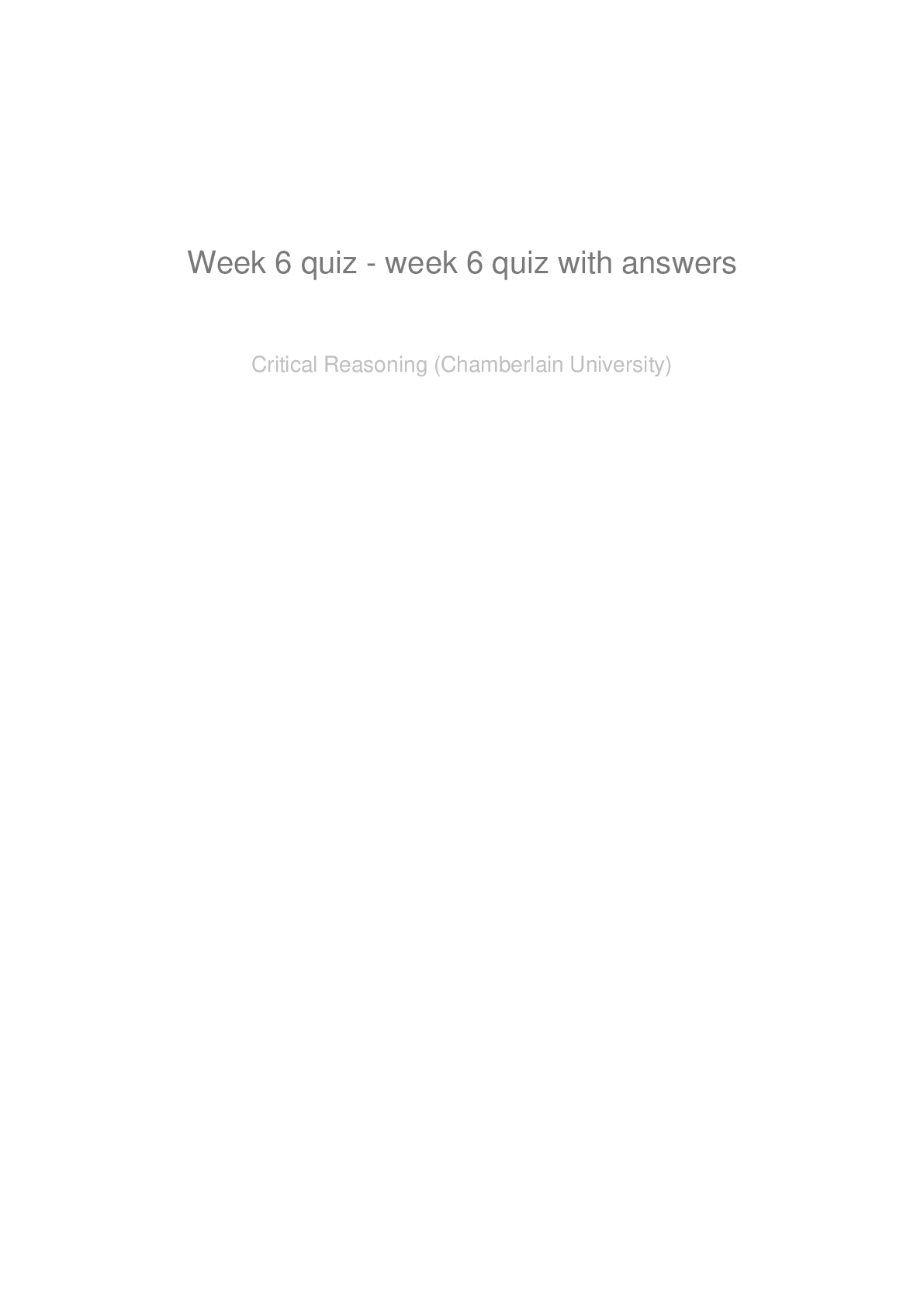
PHIL 347 Week 6 Checkpoint text exam questions and answers new...
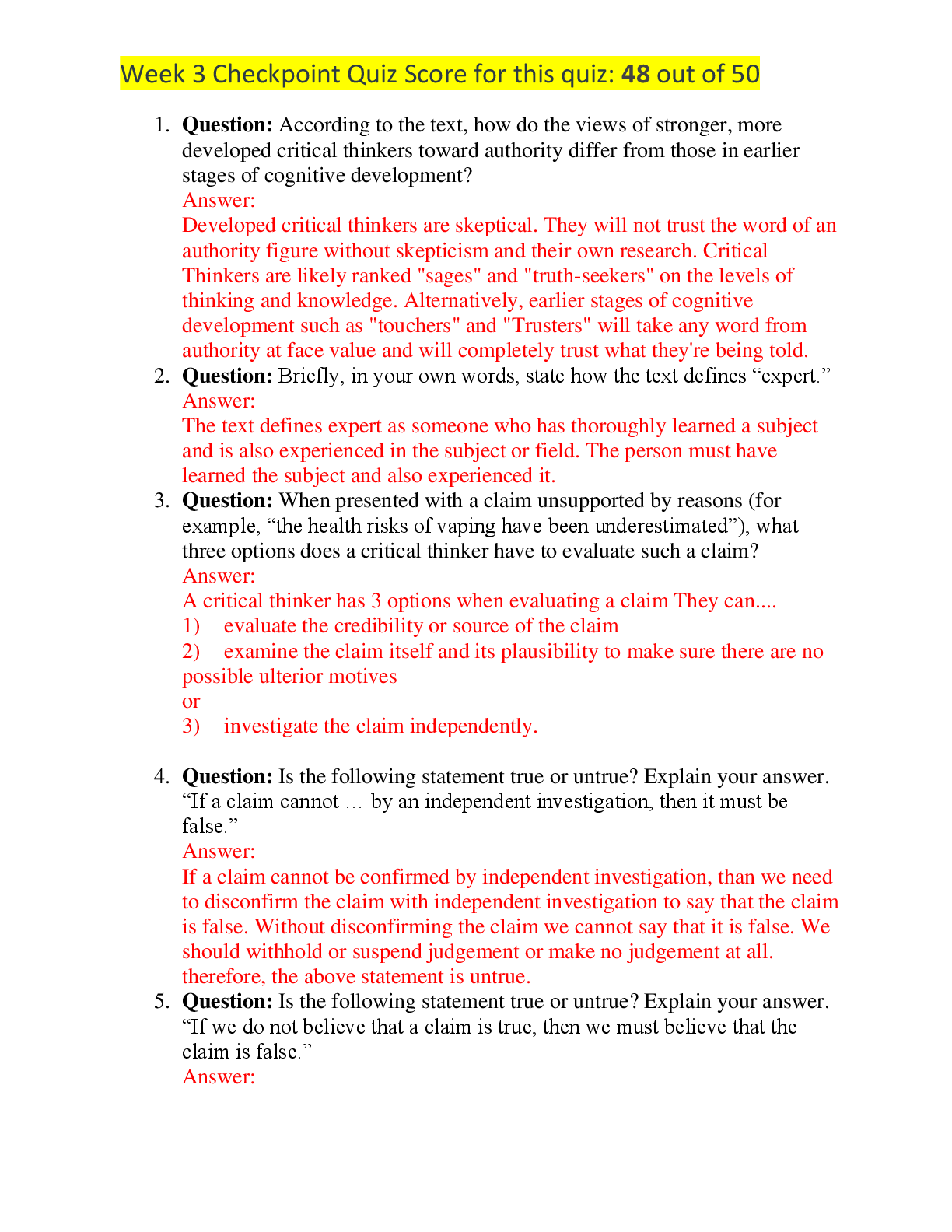

PHIL 347N Final Exam (Retired) PHIL 347 Critical Reasoning -...

PHIL 347 Week 4 Checkpoint_100% Answers and Explanations.


PHIL 347N Week 4 Assignment: Deductive Reasoning Worksheet, At...

PHIL 347 Week 4 Homework Assignment | Attempt Score 60 out of...
.png)
ADVANCED PHARMACOLOGY FINAL EXAM TEST BANK QUESTIONS AND ANSWE...
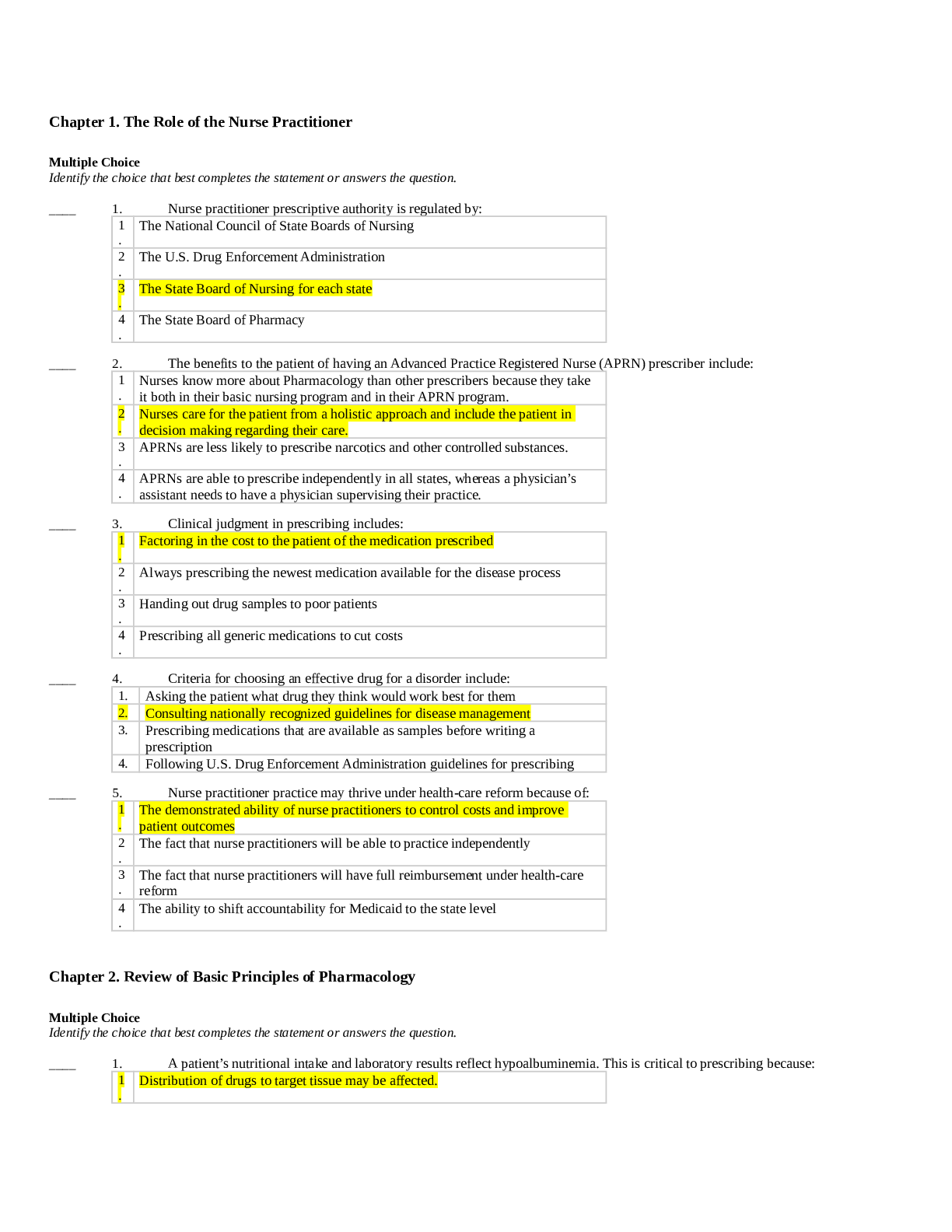
ADVANCED PHARMACOLOGY FINAL EXAM TEST BANK QUESTIONS AND ANSWE...

Test Bank by Morgan Townsend Essentials of Psychiatric Mental...
ADVANCED PHARMACOLOGY FINAL EXAM TEST BANK QUESTIONS AND ANSWE...


Week_5_Journal.docx (1) Week 5 Journal Chamberlain Univers...

An Introduction to Political Philosophy 4th Edition By Jonatha...
Critical Theory to Structuralism Philosophy, Politics and the...
 answers.png)


