QMA INSULIN PRACTICE TEST
QUESTIONS AND ANSWERS 100% PASS
endocrine system ✔✔composed of glands that secrete different types of hormone that affect
almost every cell, organ and function of your body. It is essential i
...
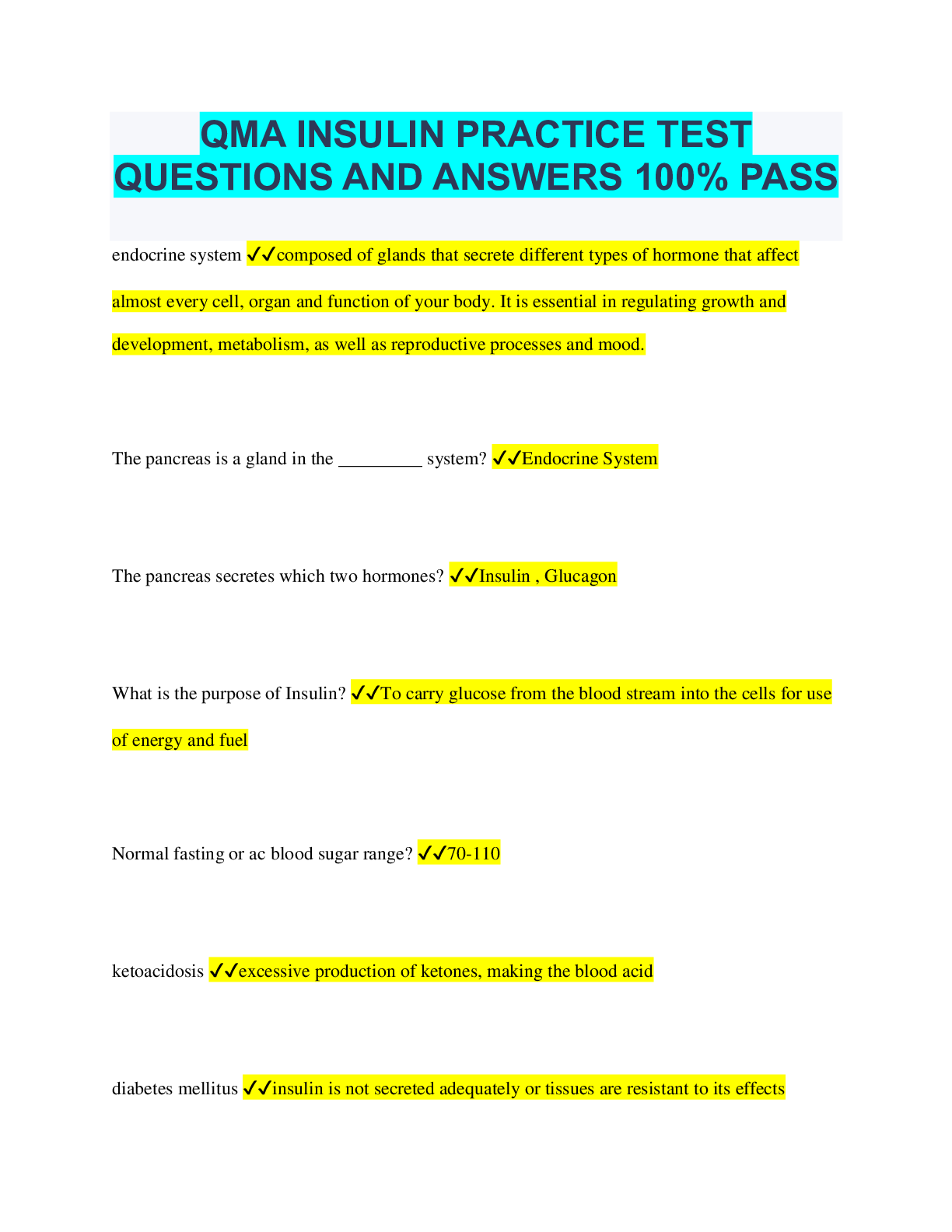
QMA INSULIN PRACTICE TEST
QUESTIONS AND ANSWERS 100% PASS
endocrine system ✔✔composed of glands that secrete different types of hormone that affect
almost every cell, organ and function of your body. It is essential in regulating growth and
development, metabolism, as well as reproductive processes and mood.
The pancreas is a gland in the _________ system? ✔✔Endocrine System
The pancreas secretes which two hormones? ✔✔Insulin , Glucagon
What is the purpose of Insulin? ✔✔To carry glucose from the blood stream into the cells for use
of energy and fuel
Normal fasting or ac blood sugar range? ✔✔70-110
ketoacidosis ✔✔excessive production of ketones, making the blood acid
diabetes mellitus ✔✔insulin is not secreted adequately or tissues are resistant to its effects
Seven signs of Diabetes Mellitus ✔✔unusual thirst, frequent urination, extreme hunger, blurred
vision, unusual weight lost, extreme fatigue, irritability
what are the two most common diabetes mellitus ✔✔type 1 & type 2
What is type 1 diabetes? ✔✔insulin dependent, diagnosed in childhood or early adulthood
What is type 2 diabetes mellitus? ✔✔poor life style choices, excessive body fat, produces insulin
but body doesnt use it effectively known as insulin resistance
How does aging affect the body as related to diabetes and the pancreas? ✔✔Cells become more
resistant to the effects of insulin, more difficulty metabolizing glucose, The cells in the pancreas
that produce insulin becomes less sensitive with age and don't produce insulin quickly enough to
respond to high blood sugar.
What are the three P's of hyperglycemia? ✔✔polyuria - frequent urination, polydipsia- frequent
thirst, polyphagia-frequent hunger
8 signs of hyperglycemia ✔✔unusual thirst, frequent urination, extreme hunger, unusual weight
lost, blurred vision, fruity odor to breath, fatique, irritability
what can occur if blood sugar remains to low ✔✔lead to seizures, coma, death
what are 10 signs of hypoglycemia ✔✔anxious, sweating,cold clammy, confused,fast heart
rate,dizziness,nausea,weakness,headache,blurred vision
By recognizing S/S of Hyper and Hypo Glycemia what can be the outcome for the patient or
resident ✔✔can save persons life, failure to recognize patients S/S can result in death
what is the QMA resbonsible for when recognizing S/S of hypo/hyper glycemia ✔✔Know
Signs/Symptoms, know facilitys policy, notify nurse, follow instructions from the nurse
what is the different onset of hyper/hypo glycemia? ✔✔Hyper- occurs when people with
diabetes have to much sugar
Hypo- occurs when people with diabetes have little sugar
Cause result of hyperglycemia ✔✔cause: infection , medications, stress, high food intake
Results: check blood sugar , contact nurse
Cause result of Hypoglycemia ✔✔Cause: nausea and vomiting, to much insulin intake, alcohol
intake , lowfood intake
QMA responsibility when a resident verbalizes S/S of hypo/Hyper glycemia? ✔✔1. emmedialty
take res blood sugar, 2. notify nurse 3. follow nurse instructions
QMA responsibility when a resident is alert and awake when blood sugars are to high and low?
✔✔1. follow facility policy 2. notify nurse 3.follow nurse instruction
QMA's responsibility when the diabetic resident is unconscious and unable to swallow or
combative. ✔✔1. call 911 , 2.notify nurse 3. take res B/S 4. stay with resident until help arrives
Points to remember diabetic resident facts ✔✔1. to be observed closely 2. proper action taken
when changes occur 3. QMA must contact nurse with any concerns and questions
Why is diet important to diabetic ✔✔Diet can play a significant role in diabetic management
controls Blood sugar levels, and maintain good weight
How does physical activity benefit the diabetic resident? ✔✔Increases insulin activity , improves
glucose tolerance and weight control
What three ways do oral hypoglycemic medications help treat diabetics? ✔✔Stimulate insulin
secretion in the pancreas, decrease the amount of glucose , delays digestion of carbohydrate in
diet
Why is insulin administered by injection ✔✔to carry glucose from the blood stream into the cells
for energy and fuel
residents who are receiving energy should ✔✔1. receive insulin at scheduled times 2. eat at
scheduled times 3.observe for changes,behavior, conditions 4. have any changes report to the on
call nurse
why is insulin called the key ✔✔the key to unlock the cell to allow sugar to enter the cell and be
used for energy
what is the purpose of blood sugar testing ✔✔determines the amount of sugar that is circulating
in the blood normal blood sugar is 70-110
What is BG ✔✔Random blood glucose- blood sugar levels measure the sugar in blood at a
specific time
What is FBS? How long does the resident fast ✔✔Fasting blood glucose- the resident fast for 12
hours no food or drinks except water normal 3.8-6.4%
What does Hba1c determine? ✔✔determines the level of serum glucose over the 3 precious
months normal (3.8-6.4%
How is insulin measured ✔✔units and requires special needle for admin
which unit of measurement qma cannot administer ✔✔U-500 or anything greater
What is a vial? ✔✔Pre filled glass bottle with rubber stopper
is the QMA allowed to recap a needle ✔✔NO
Where does used needles go ✔✔properly in a puncture resistant sharps container labeled
properly
what are 6 facts QMA must know about insulin storage ✔✔1. do not keep in a hot place 2. do
not freeze 3. do not store in sunlight 4. never use expired insulin 5. discard open vial after 28
days. 6. inspect insulin color, clarity, and crystals
why is it important to rotate insulin injection sites ✔✔to prevent irritation, tissue damage, hard
painful lump can occur if insulin site isnt rotated
Common insulin injection sites ✔✔abdomen, outer thighs, buttocks, back of arms
areas not to be injected ✔✔joints, bones, middle of abdomen, groin area, navel area, scar tissue
What is the route the physician will order for an insulin injection ✔✔Subcutaneously Sub-q
subcutaneous layer ✔✔between skin and muscle
Skin supposed to be piched at inject sight ✔✔true
What angle do you insert needle ✔✔45-90 degrees
Blood sugars need to be checked more frequently when sick ✔✔true
drops 70 or lower glucagon needs to be administered QMA cannot administer glucagon ✔✔true
Carbohydrates ✔✔the starches and sugars present in foods
Vommiting can lower blood sugar ✔✔true
Glucagon ✔✔A protein hormone secreted by pancreatic endocrine cells that raises blood glucose
levels; an antagonistic hormone to insulin.
Thrush ✔✔most common in diabetics
Islets of langherans ✔✔cluster of cells
Pancreas ✔✔Regulates the level of sugar in the blood , endocrine glands located behind
stomach, located upper abdomen
2 main hormones produce by pancreas ✔✔insulin, glucose
[Show More]