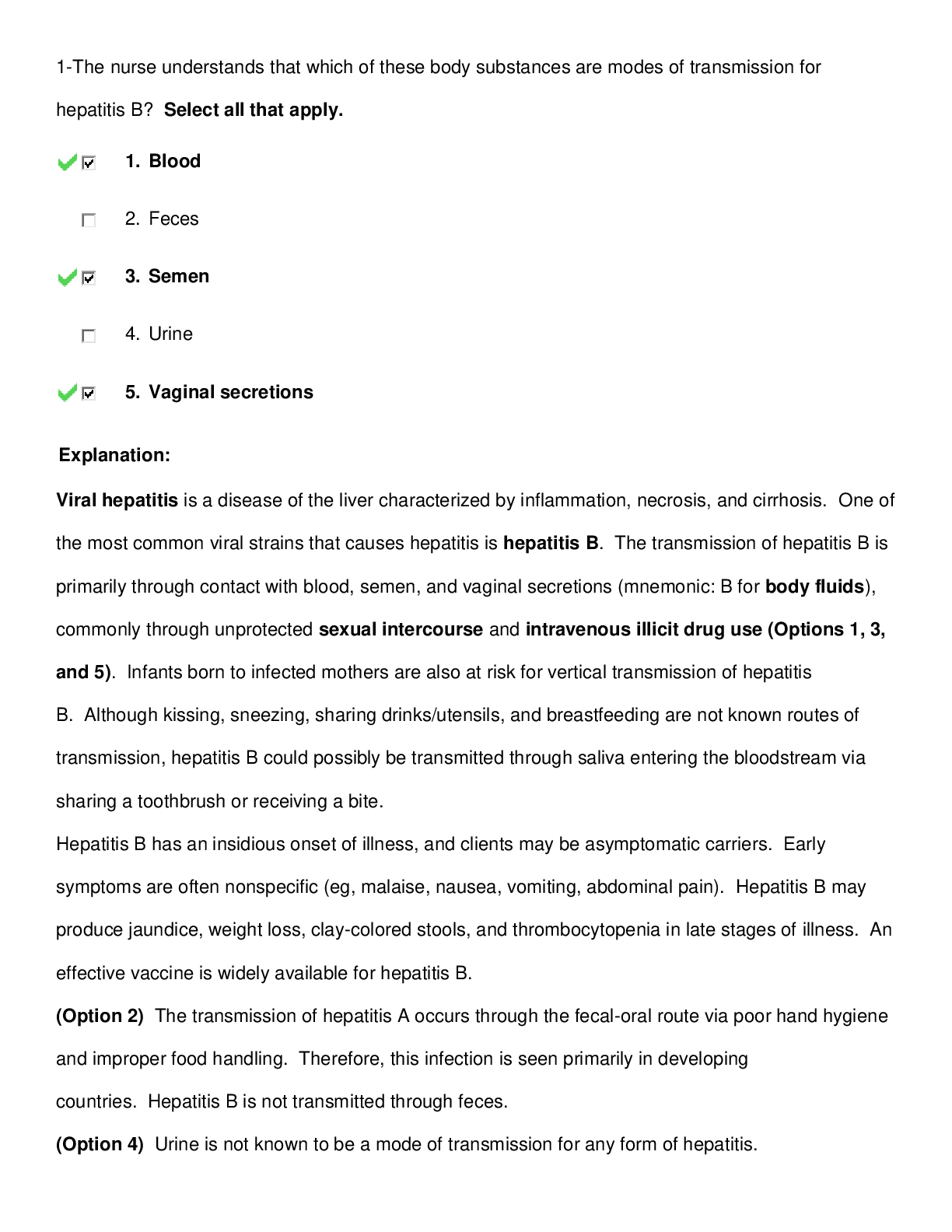
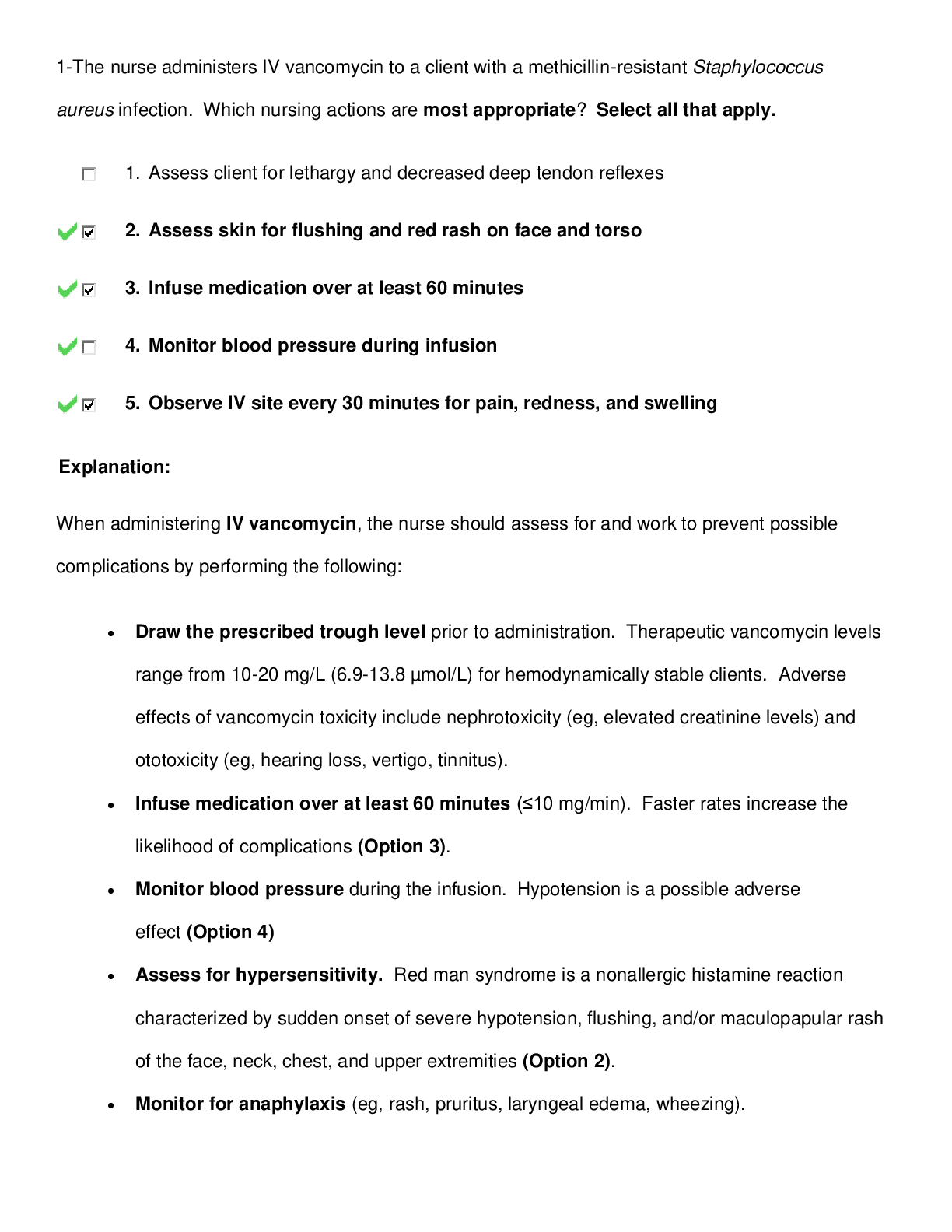
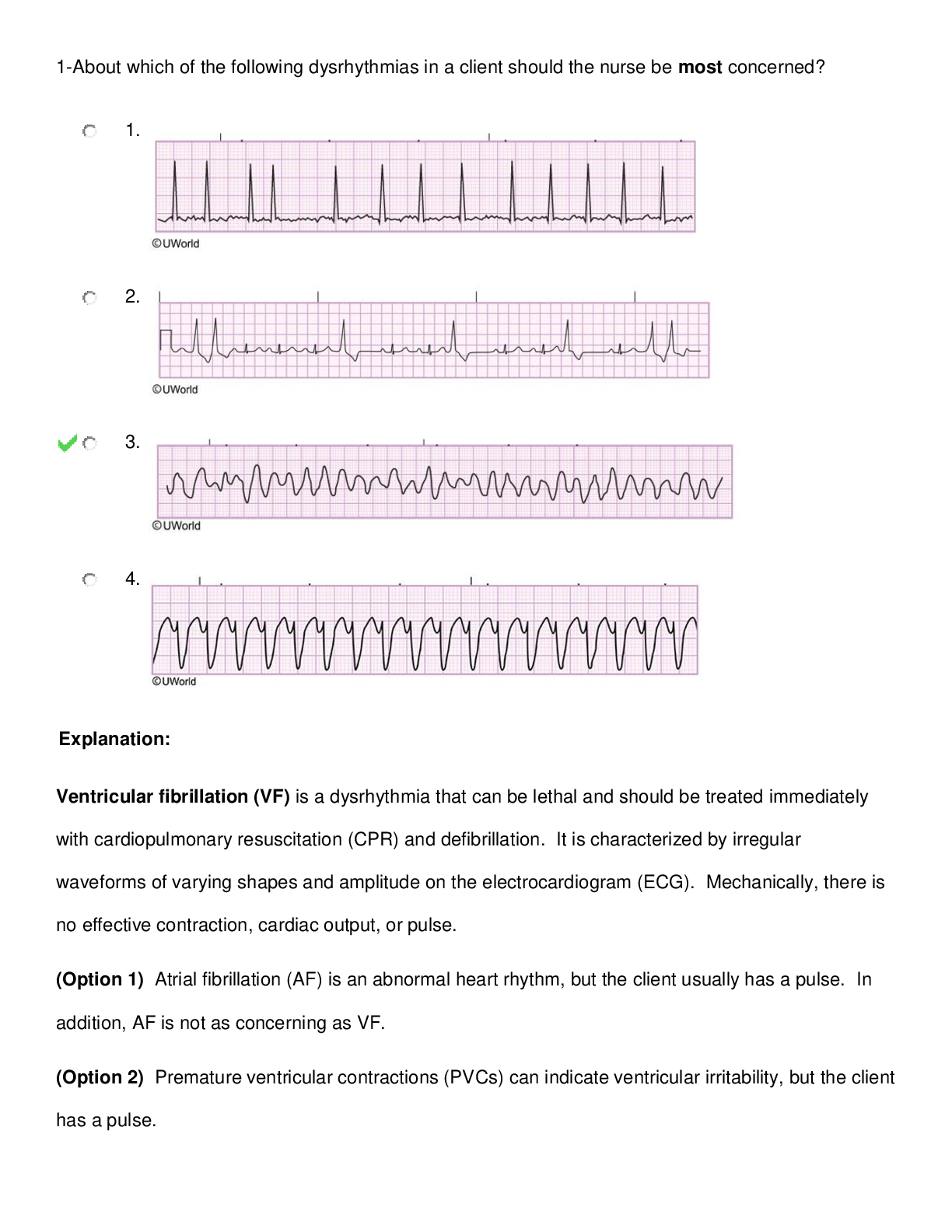
1-The nurse understands that which of these body substances are modes of transmission for
hepatitis B? Select all that apply.
1. Blood
2. Feces
3. Semen
4. Urine
5. Vaginal secretions
Explanation:
Viral
...
1-The nurse understands that which of these body substances are modes of transmission for
hepatitis B? Select all that apply.
1. Blood
2. Feces
3. Semen
4. Urine
5. Vaginal secretions
Explanation:
Viral hepatitis is a disease of the liver characterized by inflammation, necrosis, and cirrhosis. One of
the most common viral strains that causes hepatitis is hepatitis B. The transmission of hepatitis B is
primarily through contact with blood, semen, and vaginal secretions (mnemonic: B for body fluids),
commonly through unprotected sexual intercourse and intravenous illicit drug use (Options 1, 3,
and 5). Infants born to infected mothers are also at risk for vertical transmission of hepatitis
B. Although kissing, sneezing, sharing drinks/utensils, and breastfeeding are not known routes of
transmission, hepatitis B could possibly be transmitted through saliva entering the bloodstream via
sharing a toothbrush or receiving a bite.
Hepatitis B has an insidious onset of illness, and clients may be asymptomatic carriers. Early
symptoms are often nonspecific (eg, malaise, nausea, vomiting, abdominal pain). Hepatitis B may
produce jaundice, weight loss, clay-colored stools, and thrombocytopenia in late stages of illness. An
effective vaccine is widely available for hepatitis B.
(Option 2) The transmission of hepatitis A occurs through the fecal-oral route via poor hand hygiene
and improper food handling. Therefore, this infection is seen primarily in developing
countries. Hepatitis B is not transmitted through feces.
(Option 4) Urine is not known to be a mode of transmission for any form of hepatitis.
[Show More]