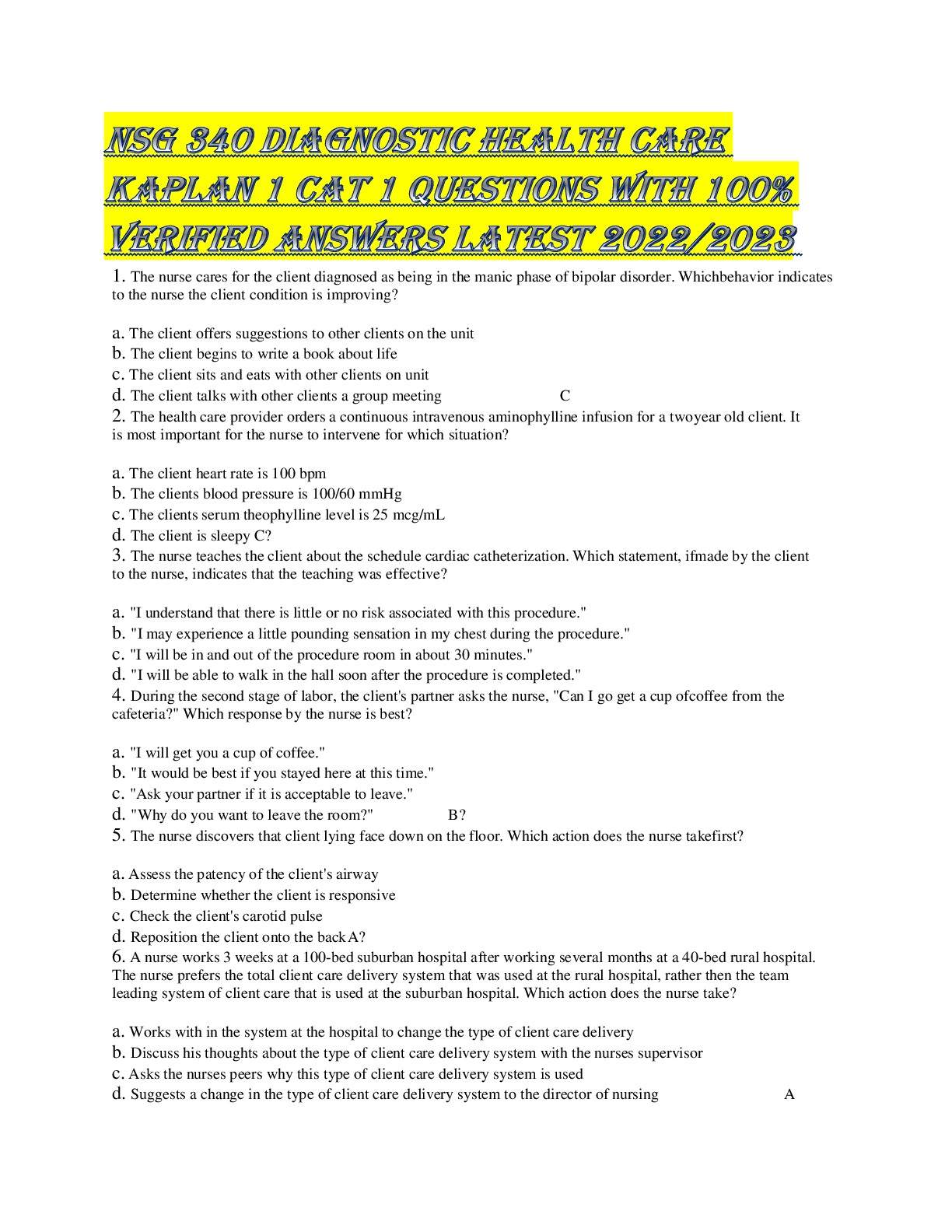
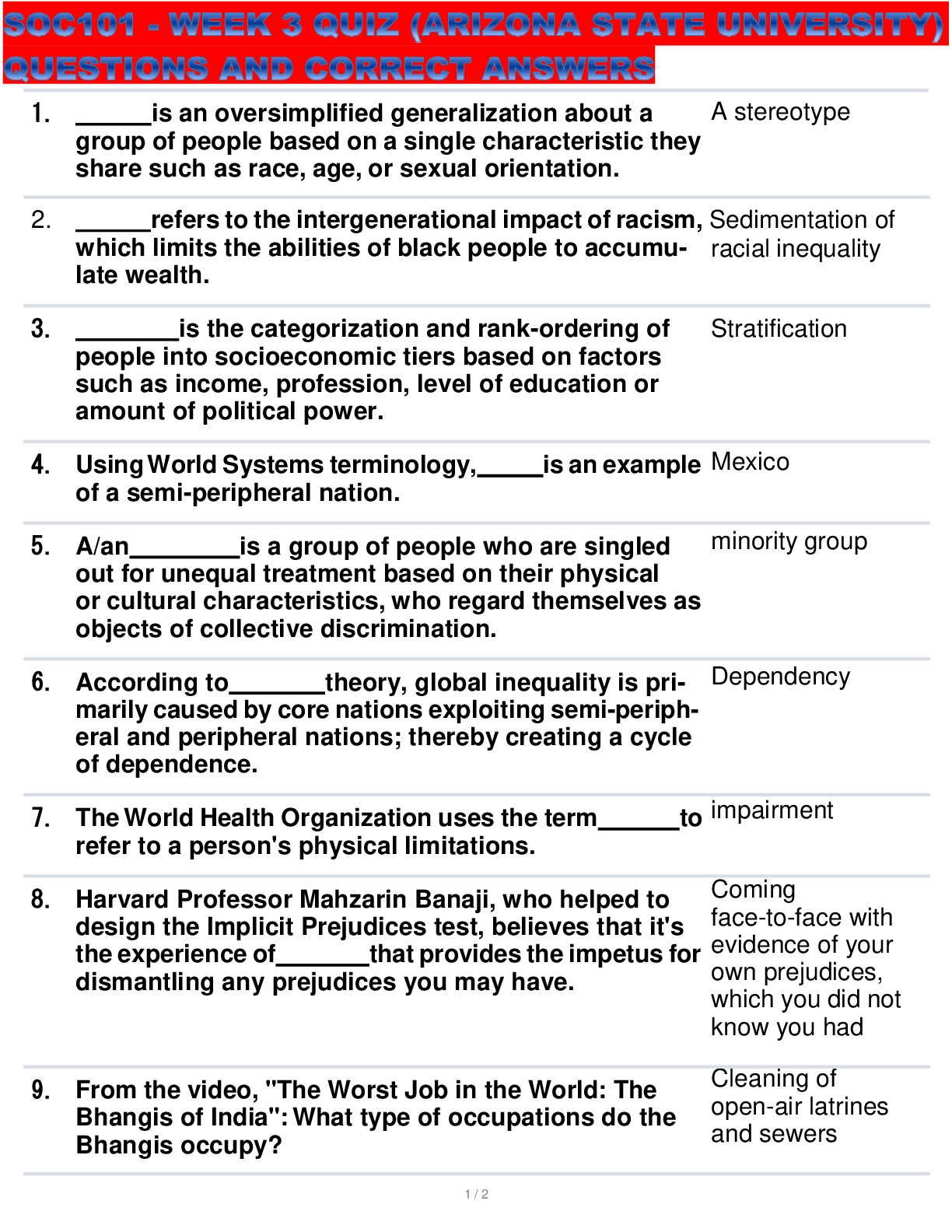
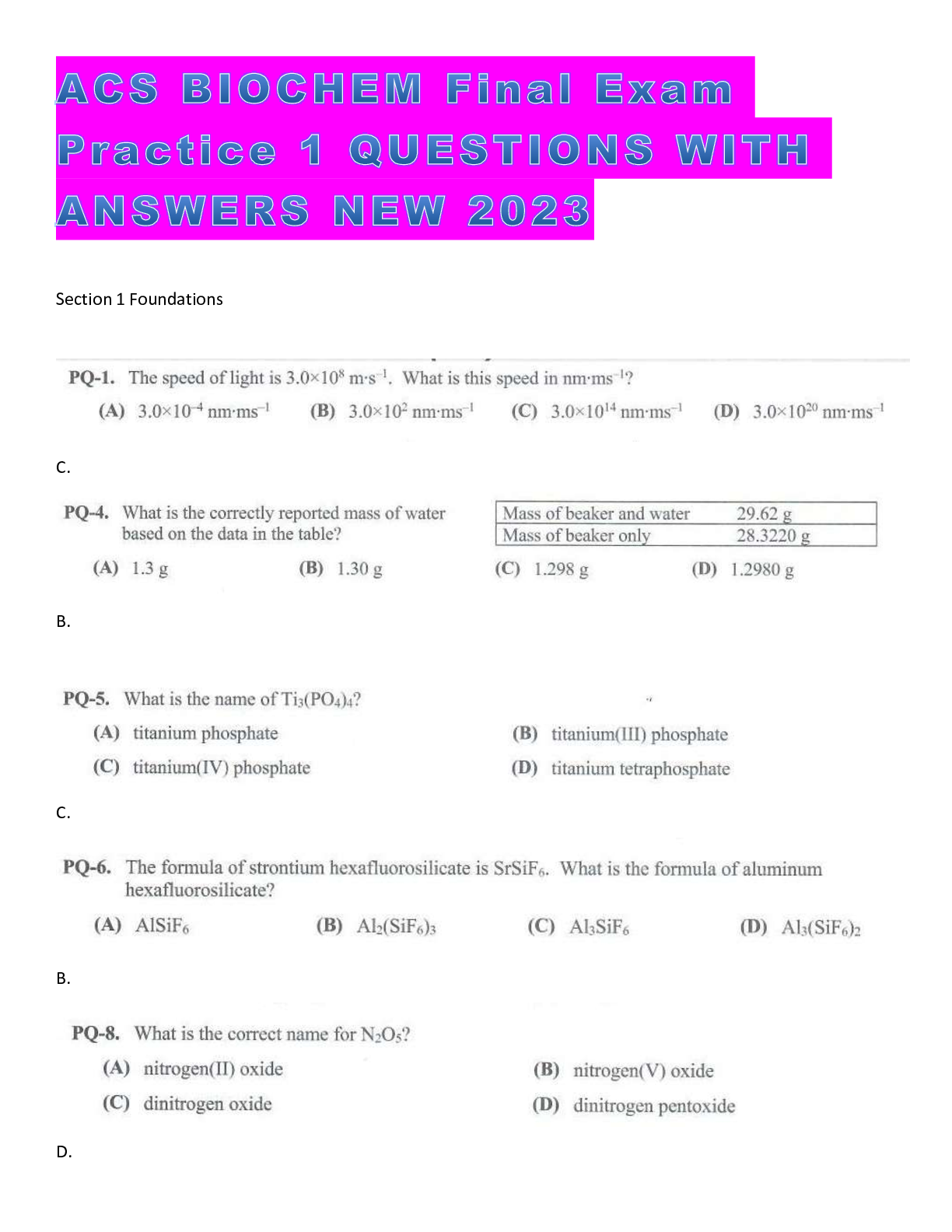
Biology > EXAM > BIO 101 FINAL- STRAIGHTERLINE EXAM STUDY 2024 QUESTIONS & ANSWERS NEW UPDATE 100% SCORES (All)
BIO 101 FINAL- STRAIGHTERLINE EXAM STUDY 2024 QUESTIONS & ANSWERS NEW UPDATE 100% SCORES
Document Content and Description Below
Last updated: 2 years ago
Preview 1 out of 32 pages
Instant download

Buy this Document to get the Full Access Instantly
Provided by Students Who Aced it
We Verify Document Content to Gurantee Accuracy
Reviews( 0 )
Document information
Connected school, study & course
About the document
Uploaded On
Jan 12, 2024
Number of pages
32
Written in
All

Additional information
This document has been written for:
Uploaded
Jan 12, 2024
Downloads
0
Views
220
Topic Tags
Recommended For You
Get more on EXAM »
BIO 1011 WEEK 6 QUIZ Graded A | 60 Questions & Answers - SOUT...

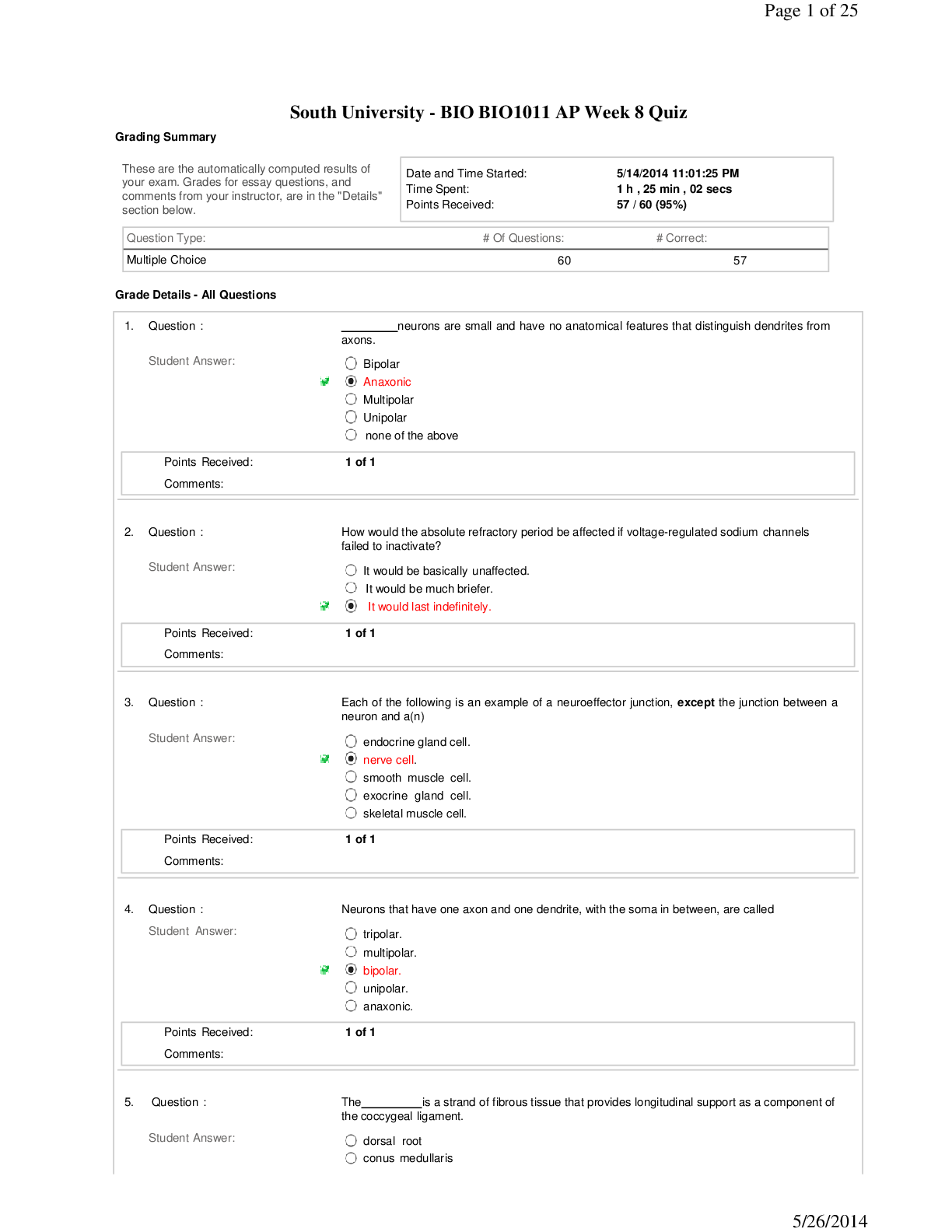
BIO1011 AP Quiz Week 10 / BIO 1011 Week 10 Quiz: Anatomy and P...
.png)
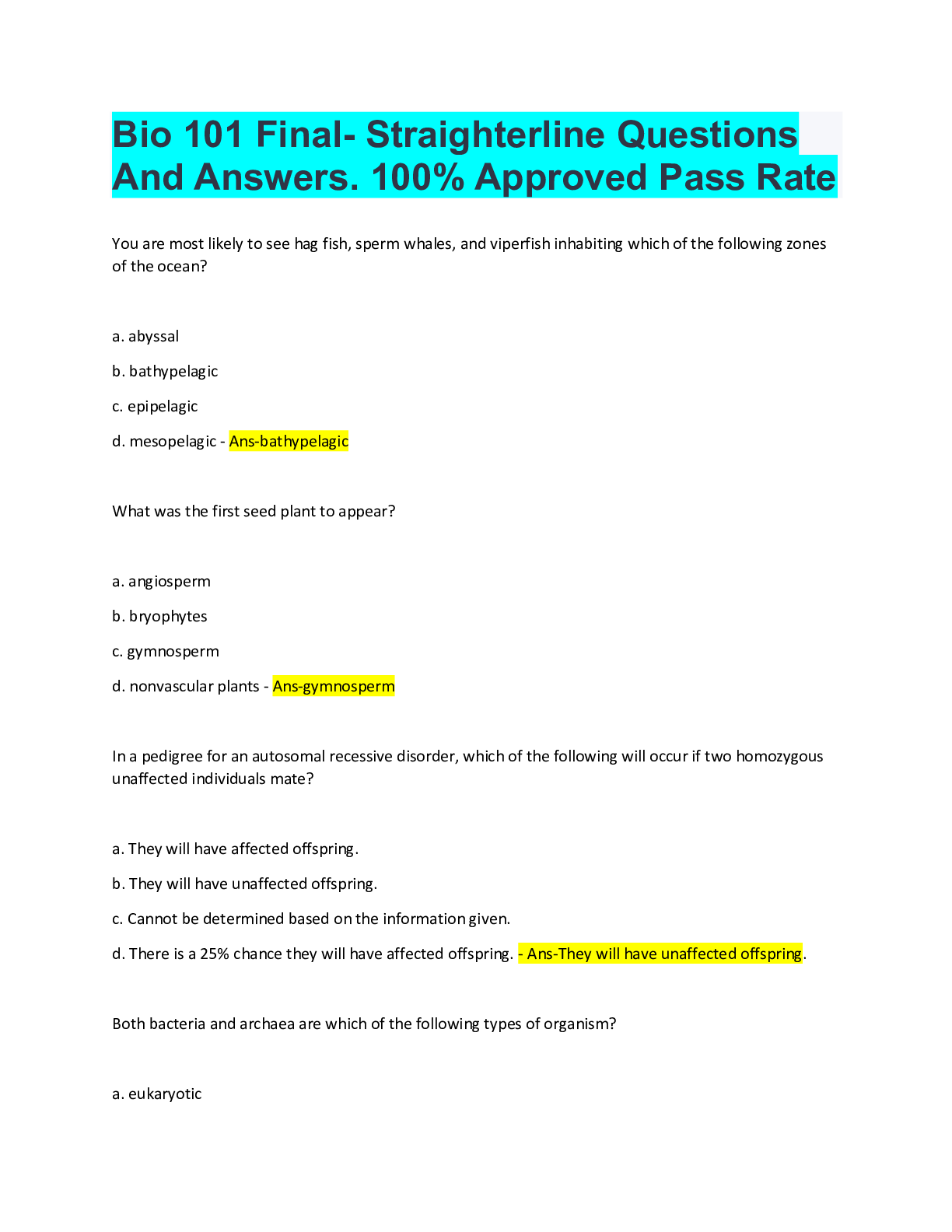
Bio 101 Final- Straighterline Questions And Answers. 100% Appr...
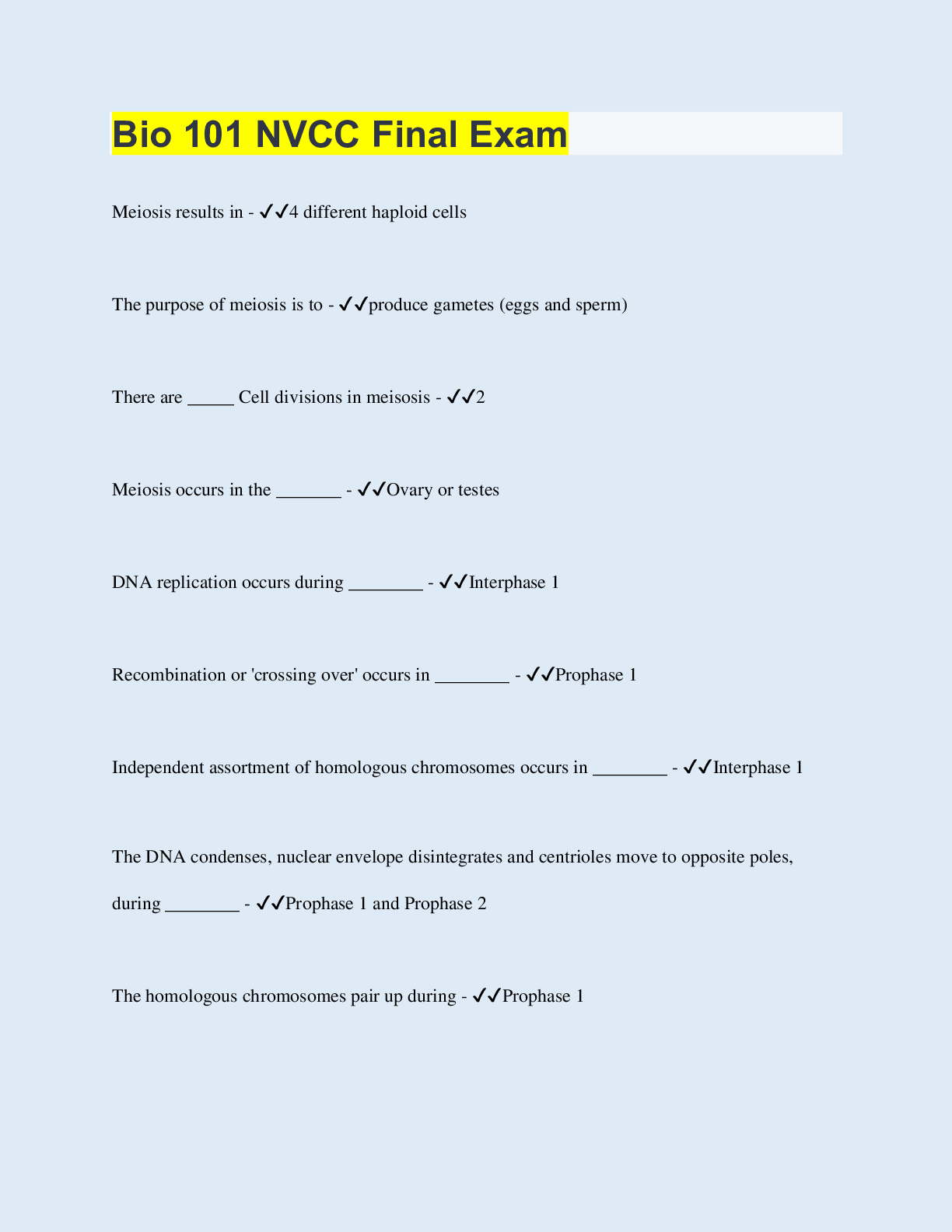
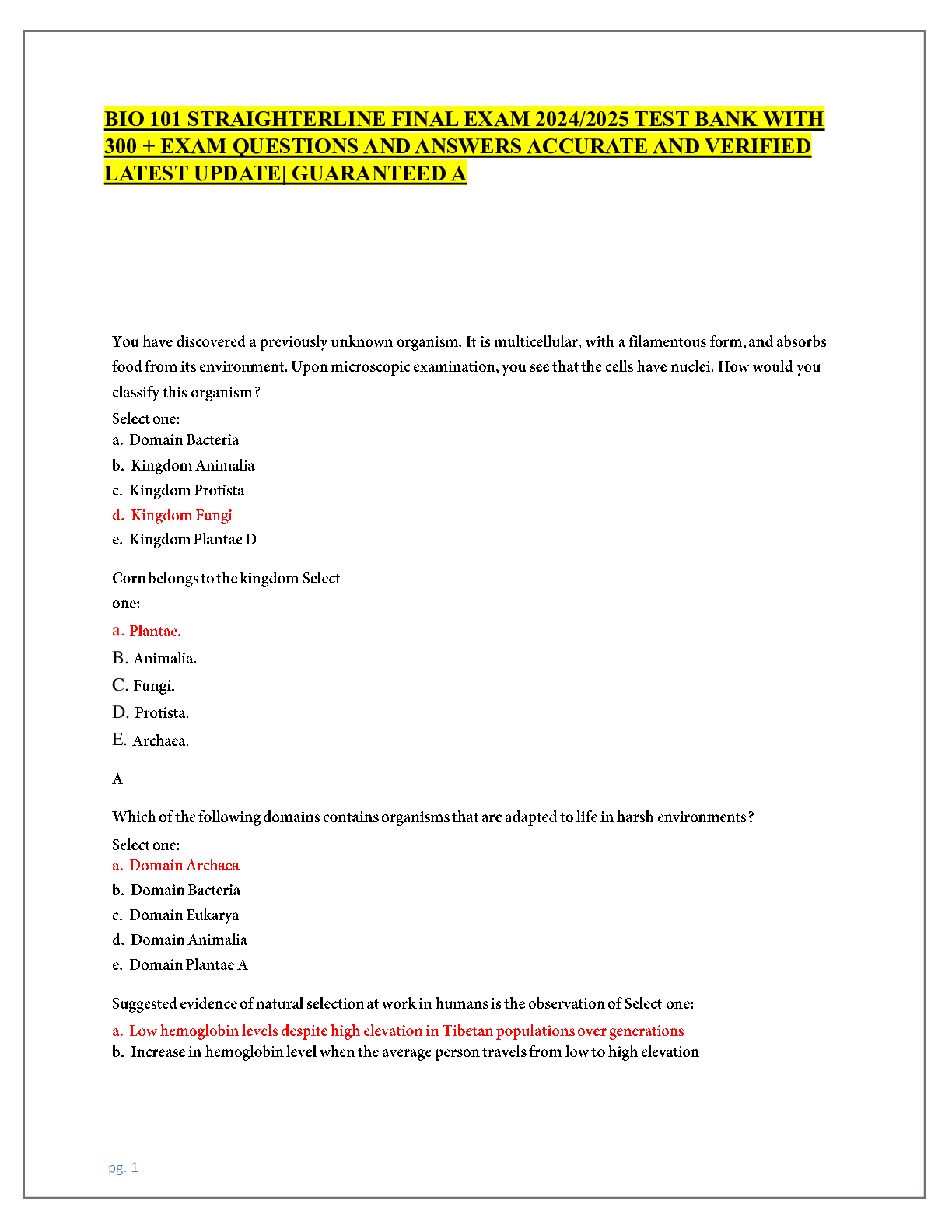
BIO 101 STRAIGHTERLINE FINAL EXAM 2024/2025 TEST BANK WITH 300...

BIO 101 Exams Test bank / BIO 101 multiple exams tests, latest...
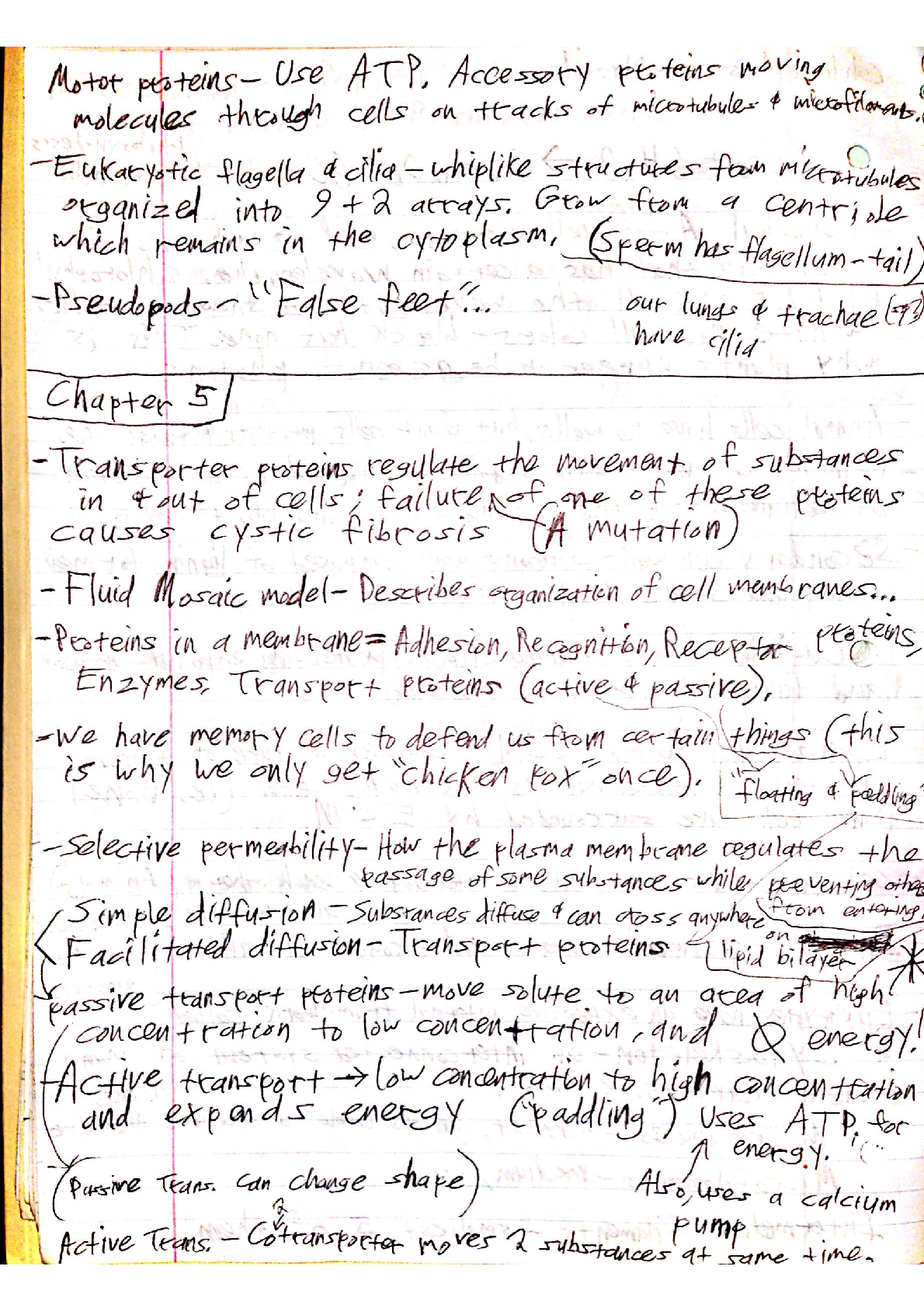
University of Missouri, Kansas CityBIO 101Bio 101 Class Notes-...
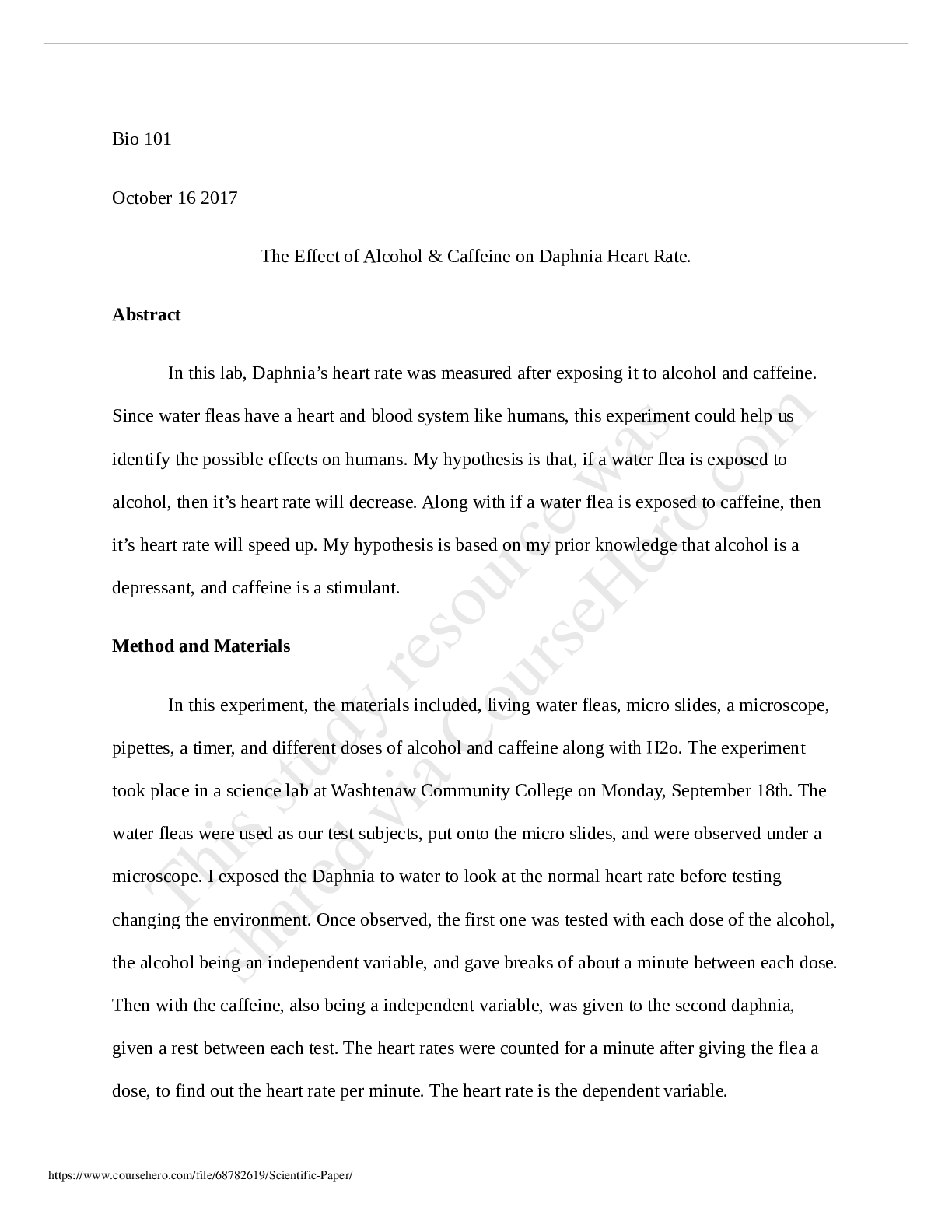
The Effect of Alcohol & Caffeine on Daphnia Heart Rate Washten...
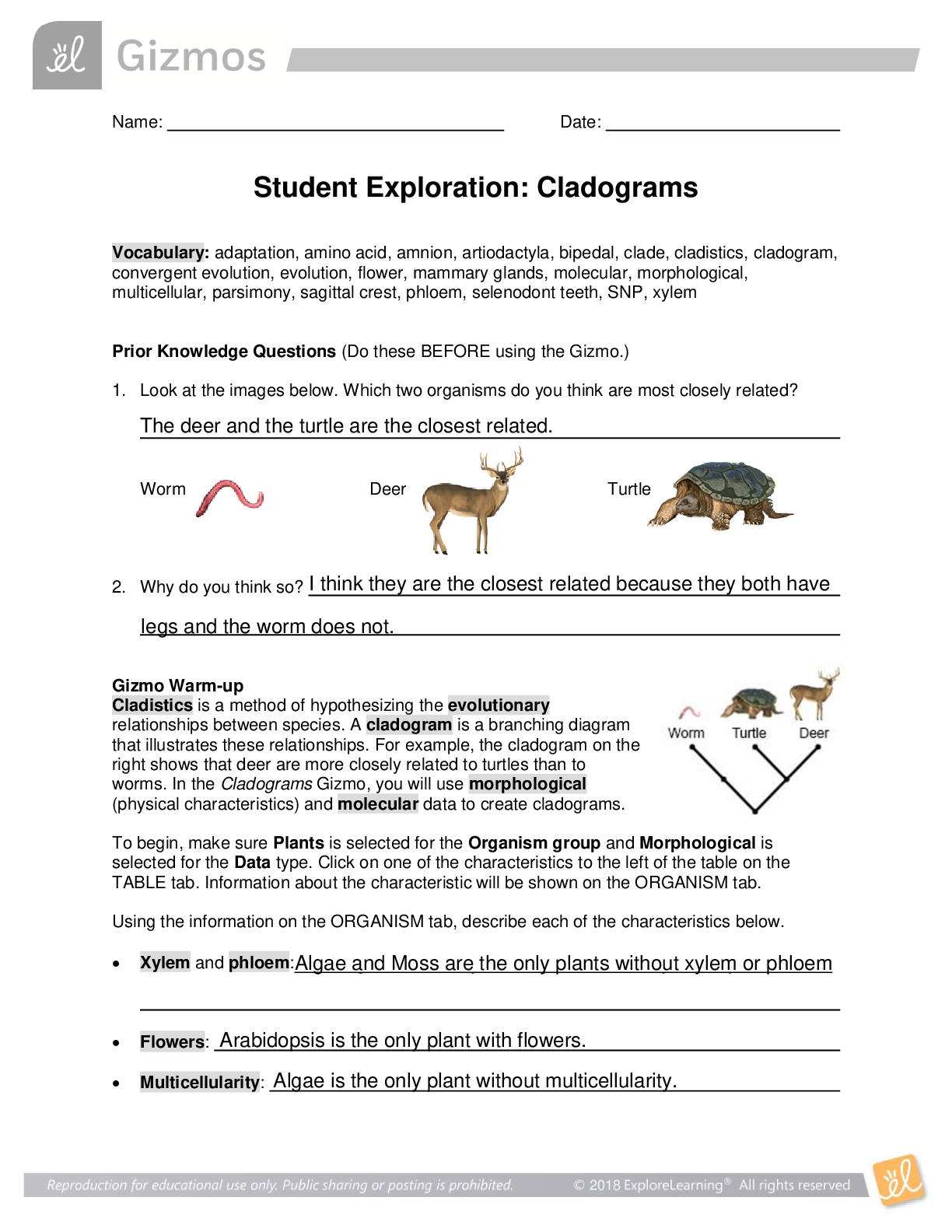

Northern Virginia Community College - BIO 101 Lab 07, Cellular...
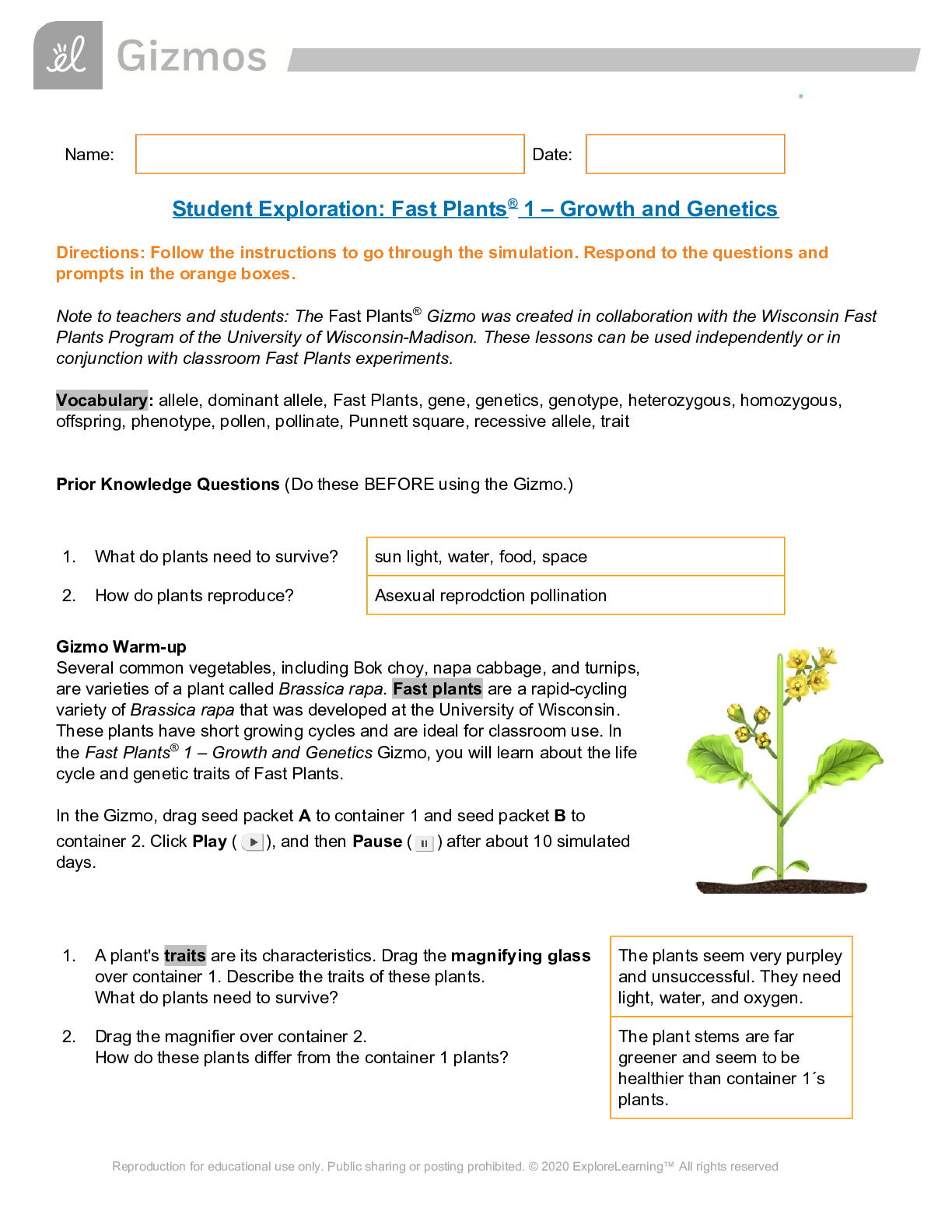
BIO 101 _ Fast Plants 1 – Growth and Genetics_Gizmos | Studen...
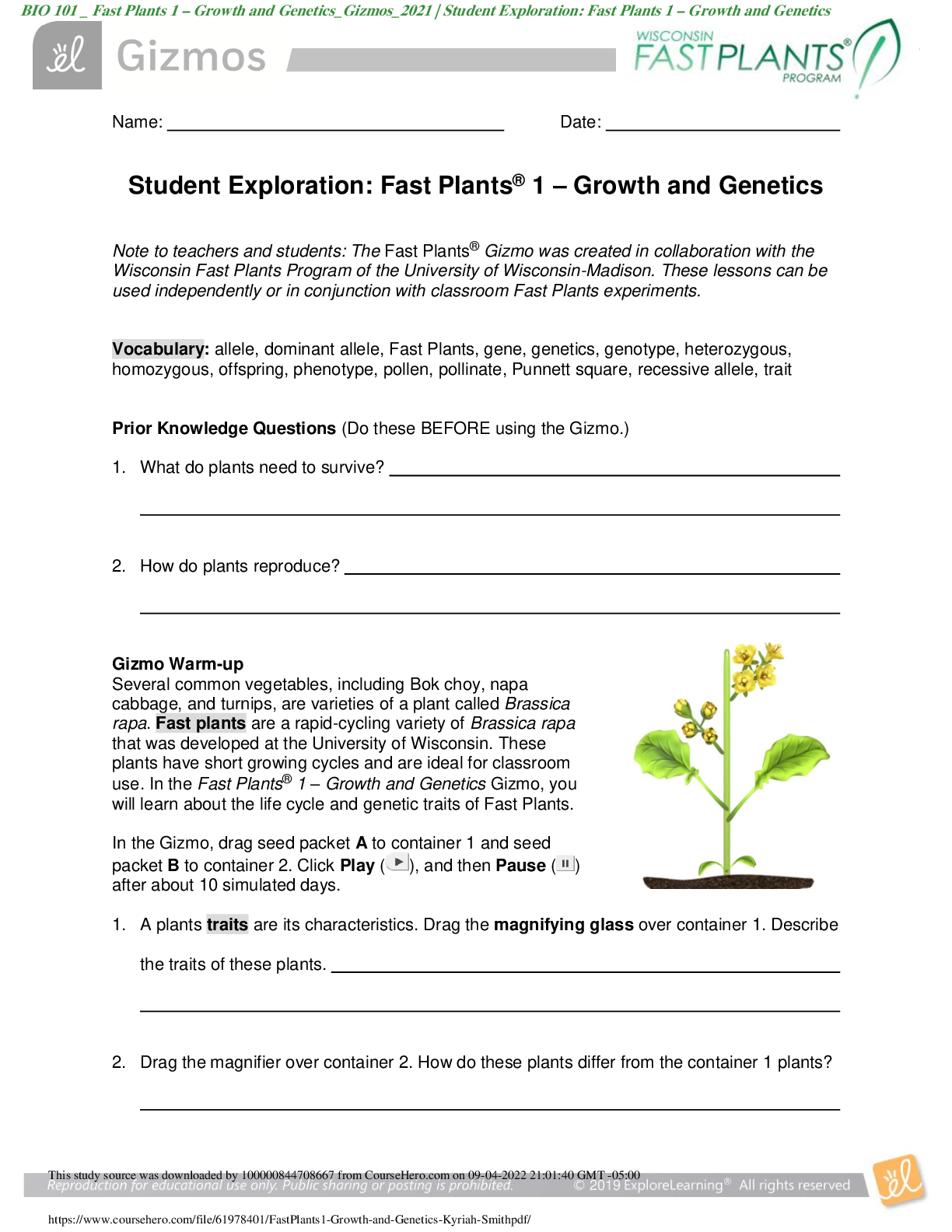
BIO 101 Fast Plants 1 Growth and Genetics GIZMOS Student Expl...
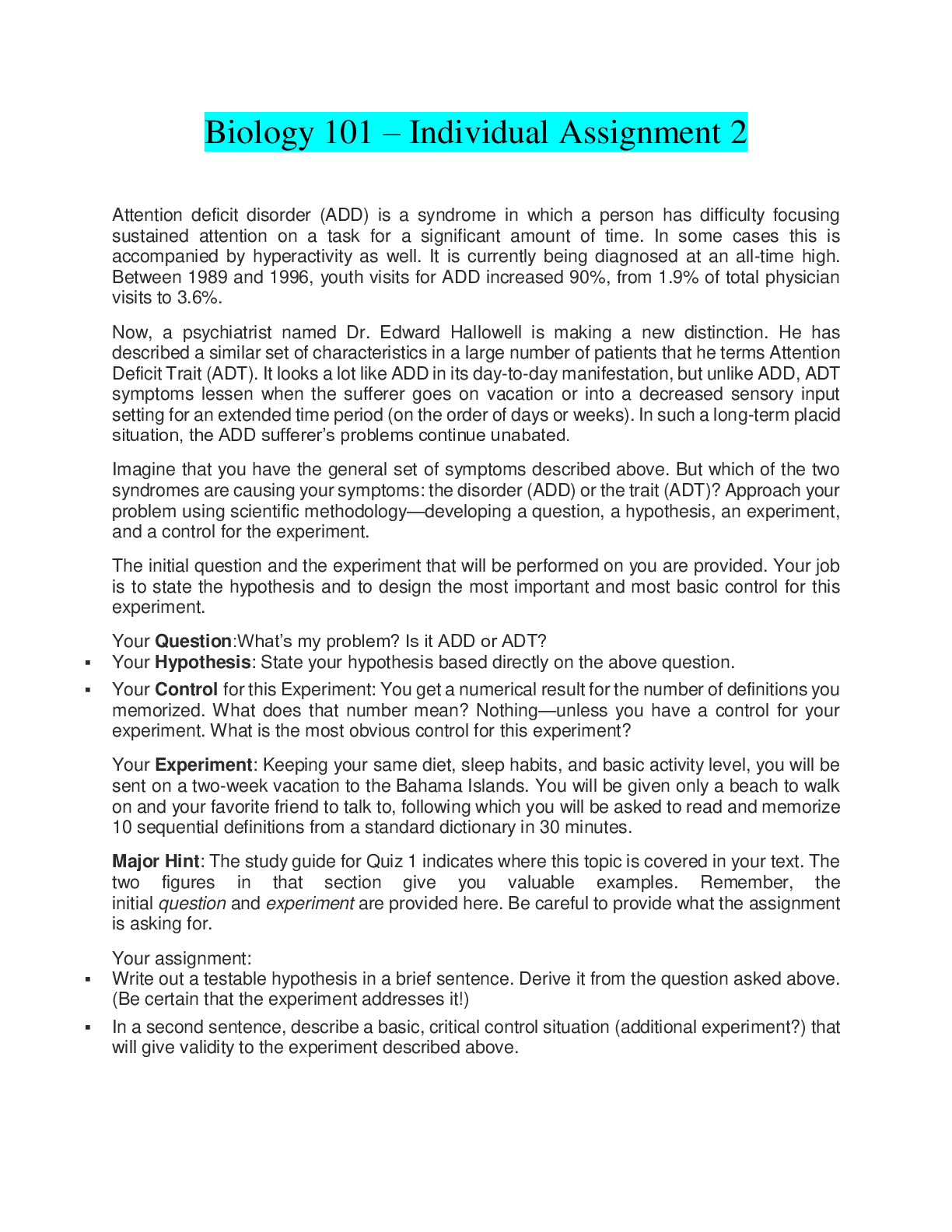
BIO 101 Individual Assignment 2 Answers Liberty University | C...