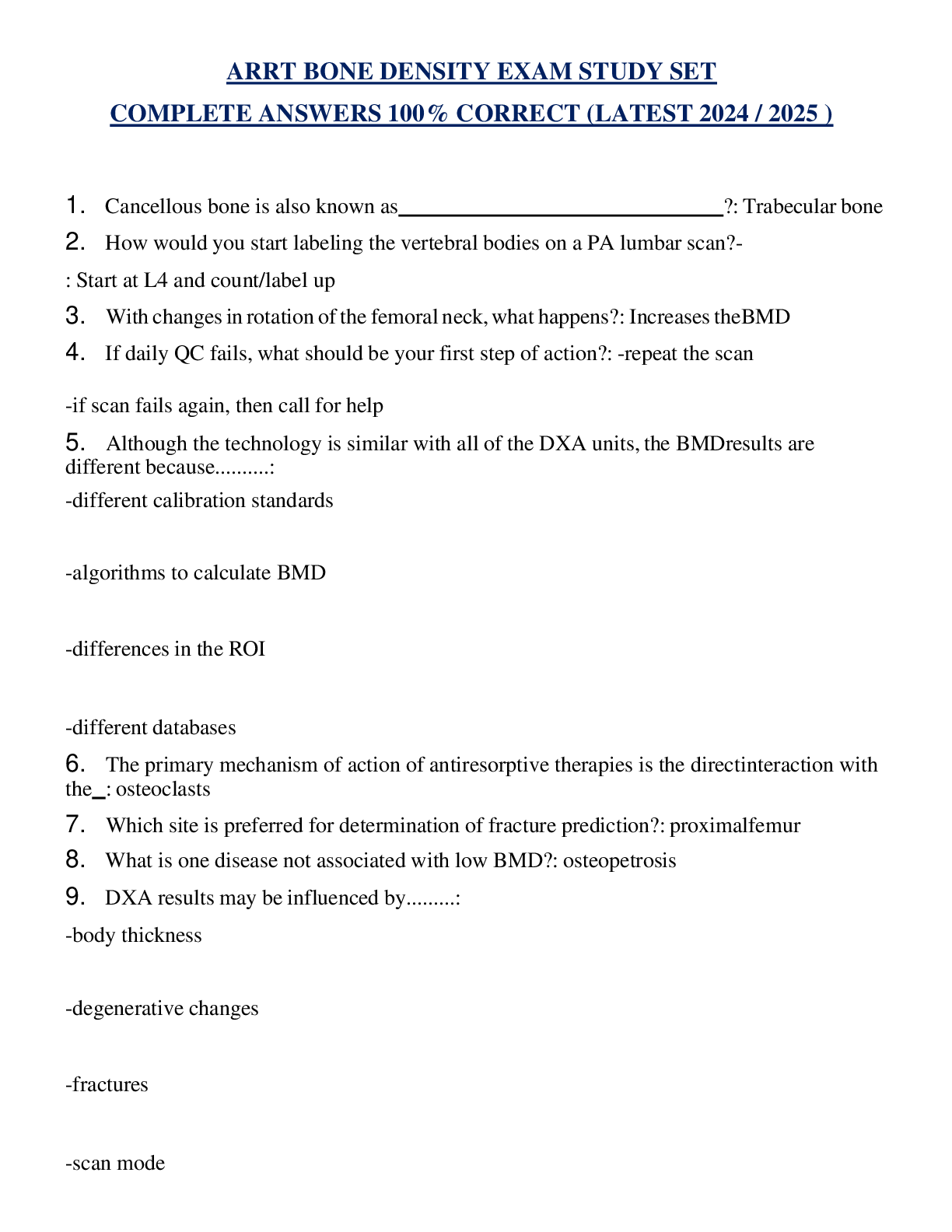
NURSING > EXAM > 2024 CTR Stats Exam Guaranteed A+ Actual Questions and Answers, Complete 100% (All)
2024 CTR Stats Exam Guaranteed A+ Actual Questions and Answers, Complete 100%
Document Content and Description Below
Last updated: 2 years ago
Preview 1 out of 8 pages
Instant download

Buy this Document to get the Full Access Instantly
Provided by Students Who Aced it
We Verify Document Content to Gurantee Accuracy
Reviews( 0 )
Document information
Connected school, study & course
About the document
Uploaded On
Apr 15, 2024
Number of pages
8
Written in
All

Additional information
This document has been written for:
Uploaded
Apr 15, 2024
Downloads
0
Views
65
Topic Tags
Recommended For You
Get more on EXAM »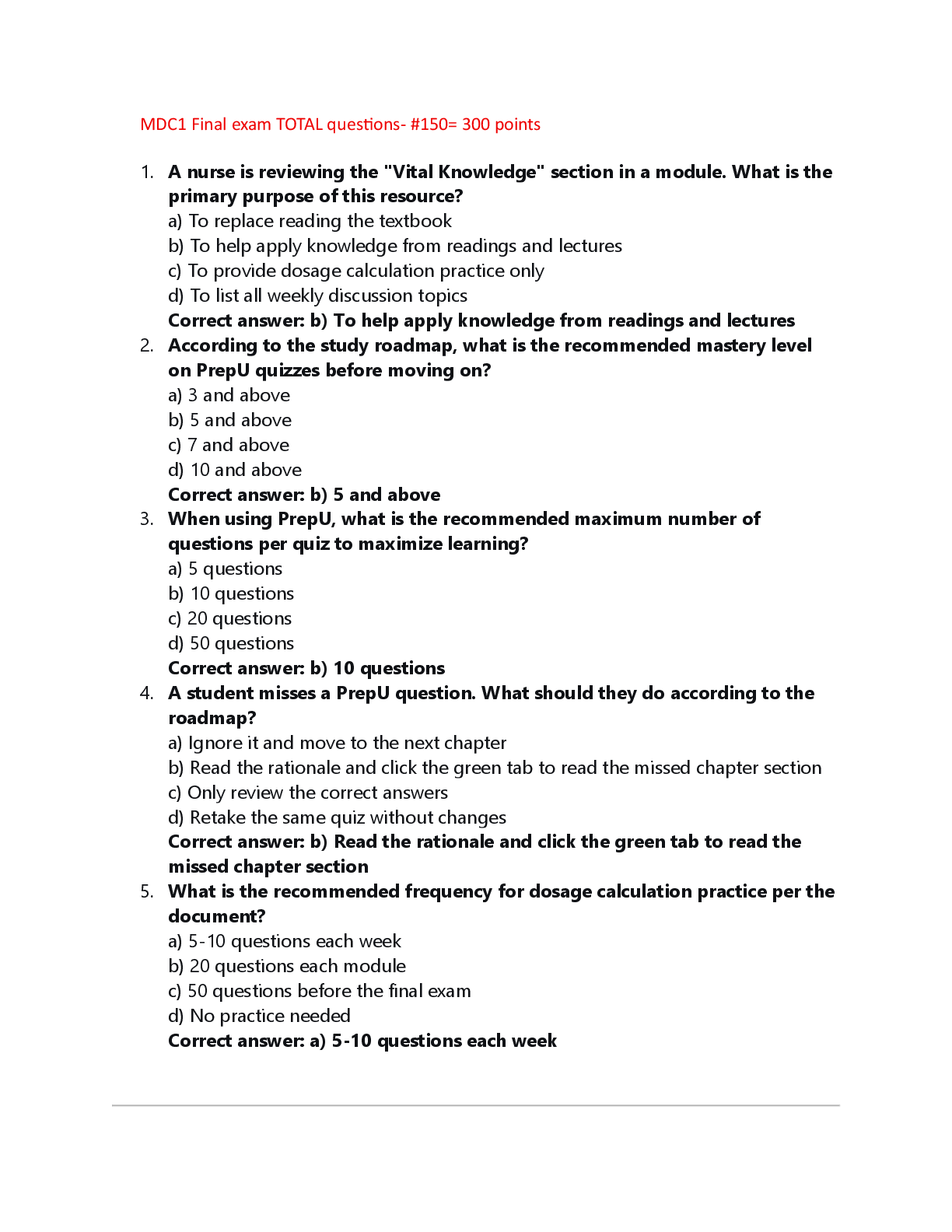
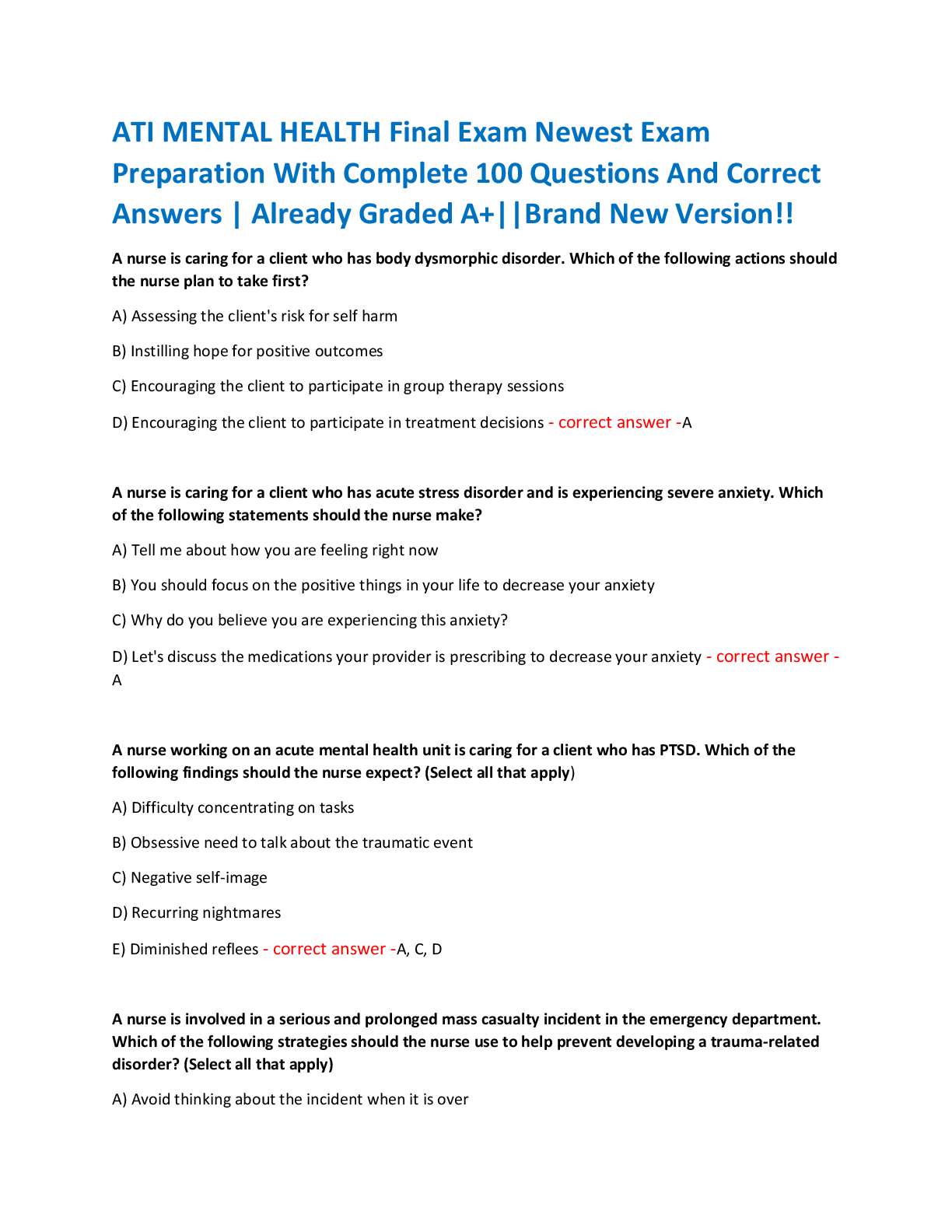
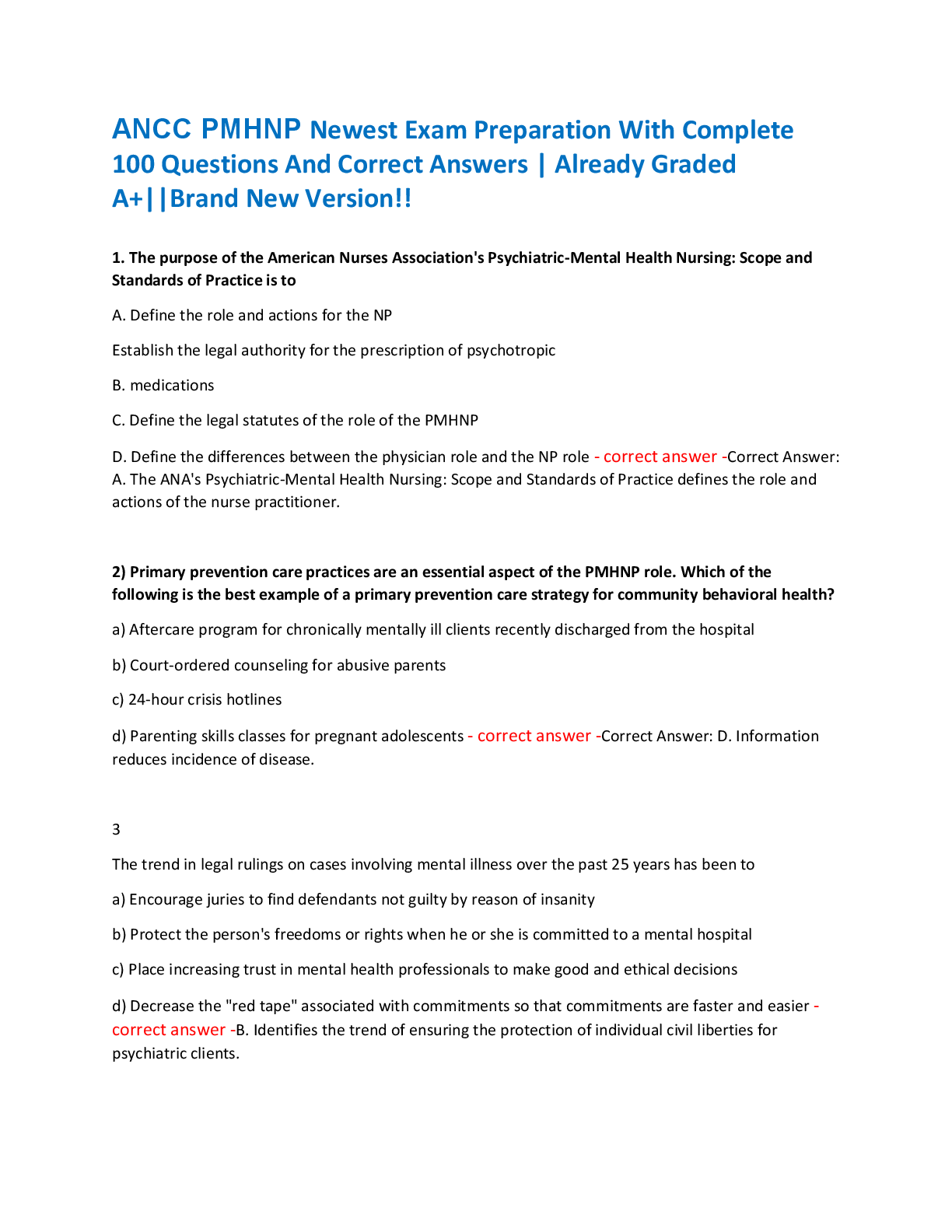
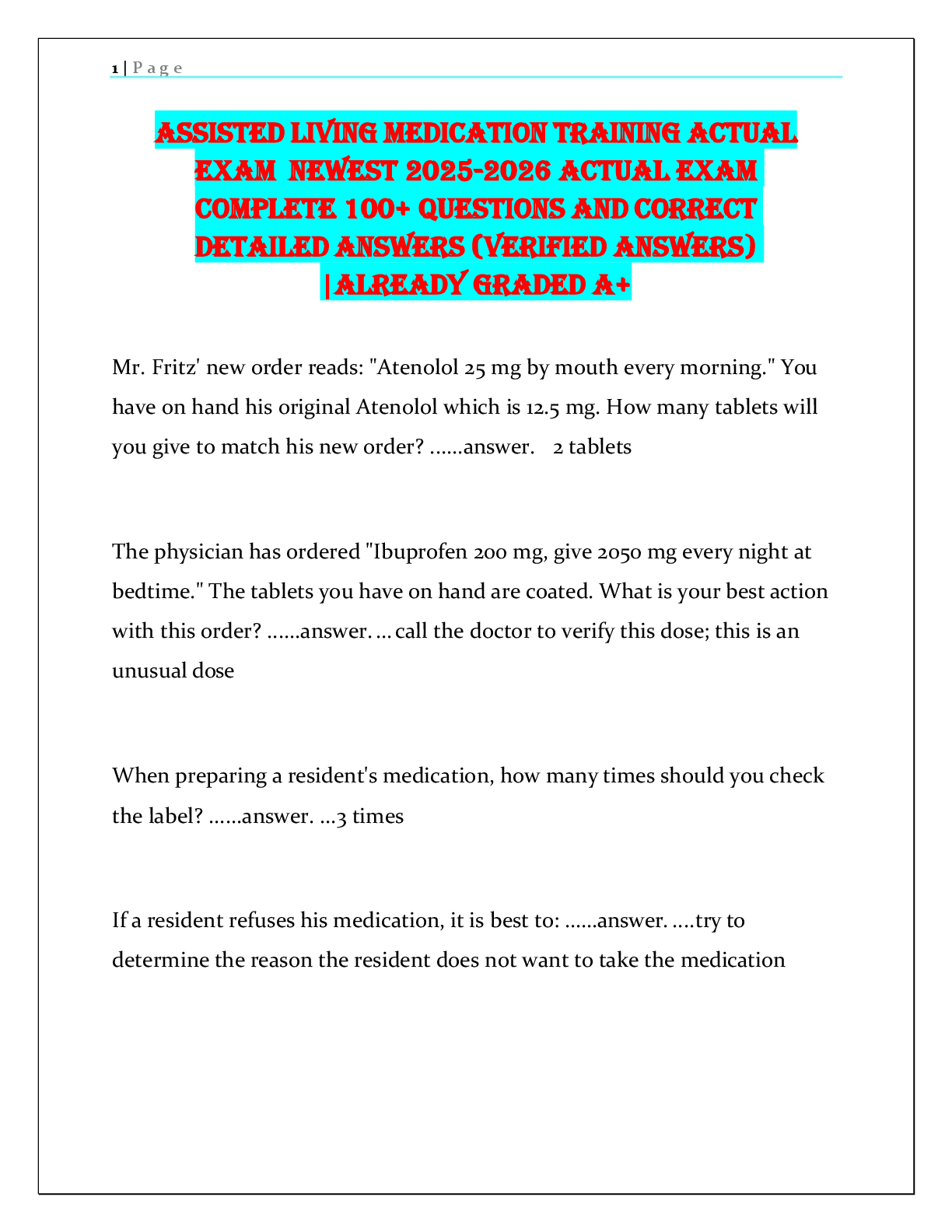
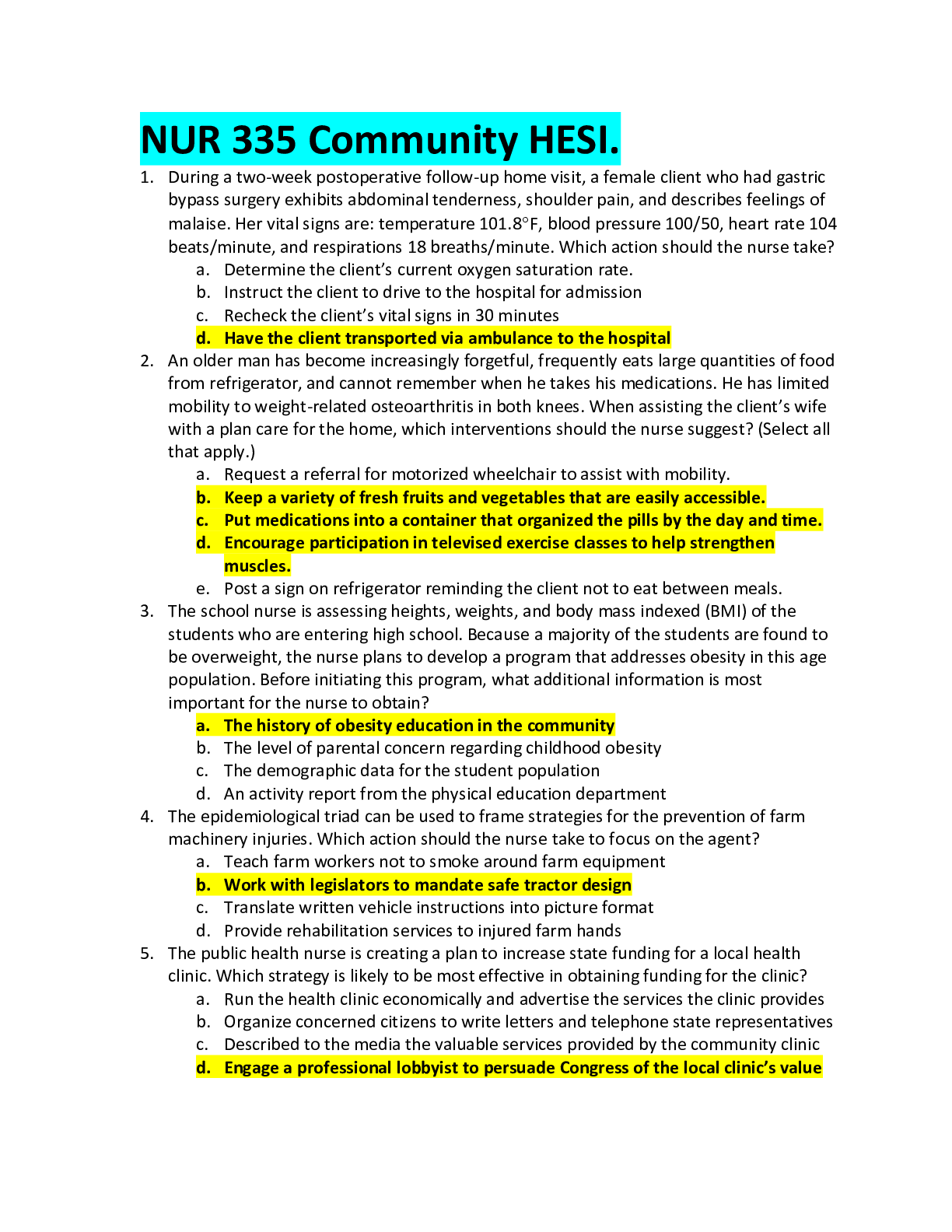
Community HESI Exam, Latest 2025 Complete 100% correct answers...

HESI Mental Health Test Bank Guaranteed A+ || Actual Questions...
ATI PN MED SURG PROCTORED THE LATEST 2024|2025 TEST BANK COMPL...


ATI COMPREHENSIVE 2019 C|Latest 2019/2020 complete 100% all an...

NURS MISC - CS Heart Failure -JoAnn Smith (Complete 100%)

NR 601 Week 5 Test Your Knowledge (Fall 2020/2021) Week 6 DE Q...
DECA HUMAN RESOURCES MANAGEMENT EXAM NEWEST 2024 ACTUAL EXAM,...

eBook [PDF] Barash, Cullen, and Stoelting's Clinical Anesthesi...

eBook [PDF] Fundamentals of Nursing 3rd Edition By Joanne Toll...