Depression/Overdose with Psychosis
UNFOLDING Reasoning
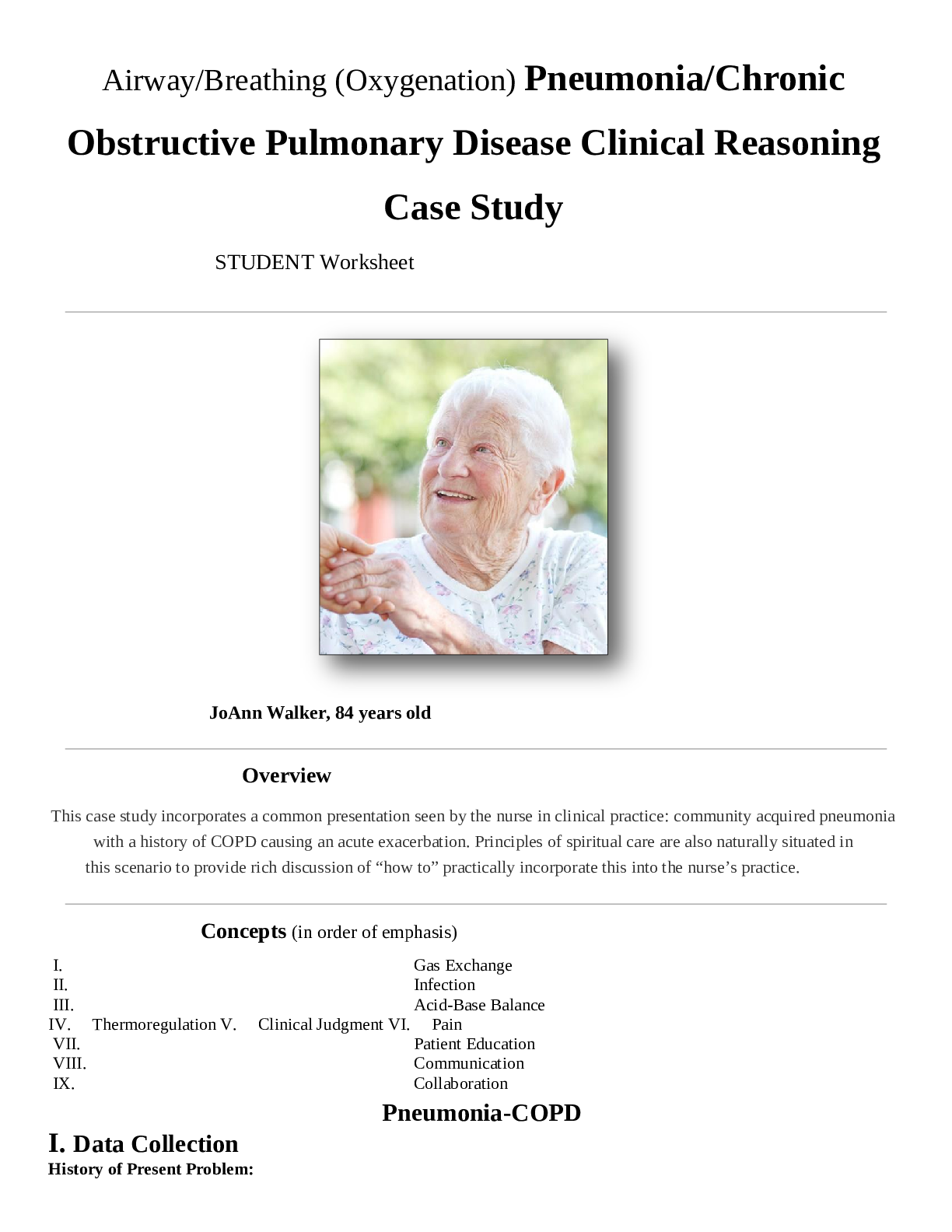
Jenna Taylor, 18-years-old
Depression/Overdose with Psychosis
History of Present Problem: Jenna Taylor is an 18-year-old woman who is brought to th
...
Depression/Overdose with Psychosis
UNFOLDING Reasoning
Jenna Taylor, 18-years-old
Depression/Overdose with Psychosis
History of Present Problem: Jenna Taylor is an 18-year-old woman who is brought to the emergency department by ambulance after she admitted to her mother that she had taken a “handful” of dextroamphetamine/amphetamine (Adderall) this morning. Mom noted that there are 20 tablets missing. Jenna admits that she has been hearing voices telling her that she is worthless and would be better off dead. She denies visual hallucinations. As the primary nurse explores these comments further, Jenna states, “The devil is in the place! I can feel it! The voices are telling me that I am going to hell forever.” Jenna appears fearful, anxious and does not maintain eye contact. When she briefly glances and looks your way, she appears to be looking through you.
Personal/Social History: She was hospitalized three weeks ago for depression and suicidal ideation and was discharged ten days ago. Jenna lives with her mother. Her parents were divorced 12 years ago. She graduated from high school, has few close friends, and has no current plans for her future.
What data from the histories is RELEVANT and has clinical significance to the nurse?
RELEVANT Data from Present Problem: Clinical Significance:
• •
RELEVANT Data from Social History: Clinical Significance:
• •
What is the RELATIONSHIP of your patient’s past medical history (PMH) and current meds? (Which medication treats which condition? Draw lines to connect.)
PMH: Home Meds: Pharm Class: Expected Outcomes:
• Attention deficit hyperactivity disorder (ADHD)
• Depression with psychosis
• Anxiety • •
One disease process often influences the development of other illnesses. Based on your knowledge of pathophysiology, (if applicable), which disease likely developed FIRST, then initiated a “domino effect” in Jenna’s life?
• Circle the PMH problem that likely started FIRST.
o ADHD probably occurred first
• Underline at PMH problem(s) FOLLOWED as domino(s).
o Followed by depression w/ psychosis and anxiety
Patient Care Begins:
Current VS WILDA Pain Assessment (5th VS)
T: 99.2 F (37.3 C) oral Words: Denies
P: 92 (regular) Intensity:
R: 20 (regular) Location:
BP: 118/70 Duration:
O2 sat: 98% RA Aggravating:
Alleviating:
What VS data is RELEVANT and must be recognized as clinically significant by the nurse?
Relevant VS: Clinical Significance:
• Elevated body temp •
Current Assessment
General Appearance:
Respiratory:
Cardiac:
Neuro:
GI:
GU:
Skin:
What assessment data is RELEVANT and must be recognized as clinically significant by the nurse?
Relevant Assessment Data: Clinical Significance:
• •
Mental Status Examination
APPEARANCE:
MOTOR/BEHAVIOR:
SPEECH:
MOOD/AFFECT:
THOUGHT PROCESS:
THOUGHT CONTENT:
PERCEPTION:
INSIGHT/JUDGMENT:
COGNITION:
INTERACTIONS:
SUICIDAL/HOMICIDAL:
What MSE assessment data are RELEVANT and must be interpreted as clinically significant by the nurse?
Relevant MSE Data: Clinical Significance:
• •
Lab Results
What lab results are RELEVANT and must be recognized as clinically significant by the nurse?
CBC Current Results: High/Low/WNL
WBC (4.5-11)
Hgb (12-16)
Platelets (150-450 thousand)
Neutrophil % (42-72)
What lab results are RELEVANT and must be recognized as clinically significant by the nurse?
Relevant Labs: Clinical Significance:
• NA •
BMP Current Results: High/Low/WNL
Sodium (135-145)
Potassium (3.5-5.0)
Glucose (70-110)
Creatinine (0.6-1.2)
What lab results are RELEVANT and must be recognized as clinically significant by the nurse?
Relevant Labs: Clinical Significance:
• •
Misc. Labs Current Results: High/Low/WNL
Acetaminophen
Salicylate
Urine Pregnancy
Relevant Labs: Clinical Significance:
• NA • NA
Urine Drug Screen: Current Results:
Opiates
Benzodiazepines
THC
Amphetamines
Cocaine
Relevant Labs: Clinical Significance:
• •
Clinical Reasoning Begins…
1. What is the primary problem that your patient is most likely presenting with?
2. What is the underlying cause/pathophysiology of this concern?
Patient is a young female who is experiencing …..
Collaborative Care: Medical Management
Provider Orders: Rationale: Outcome:
Acetaminophen level
Salicylate level
(CBC)
(BMP)
Urine drug screen
Urine pregnancy
Establish peripheral IV
Diazepam 5 mg IV PRN for seizure activity
1:1 watch
Check for items of harm
Cardiac monitor • •
PRIORITY Setting: Which Orders Do You Implement First and Why?
Provider Orders: Order of Priority Rationale:
Establish peripheral IV
1:1 watch
Check for items of harm
Cardiac monitor 1. •
Collaborative Care: Nursing
3. What nursing priority(s) will guide your plan of care? (if more than one-list in order of PRIORITY)
1. Keep patient free from injury
2. Keep patient safe from CV and Cerebral impairment
3. Patient will discuss feelings of depression and hopelessness
4. Patient will demonstrate healthy coping mechanisms
5. Patient will demonstrate desire to live
4. What interventions will you initiate based on this priority?
Nursing Intervention: Rationale: Outcome:
Initiate Suicide Precautions
Monitor VS closely every 15 minutes and continuous cardiac rhythm
Provide a calm, safe, stable, supervised environment for the patient
Administer antianxiety/antidepressant meds
Have patient signs a No Harm Contract and
Develop Safety Plan • •
5. What body system(s) will you most thoroughly assess based on the primary/priority concern?
Neurological –
Cardiovascular system –
Respiratory system –
Muscular system –
General appearance –
6. What is the worst possible/most likely complication to anticipate?
7. What nursing assessments will identify this complication EARLY if it develops?
8. What nursing interventions will you initiate if this complication develop?
9. What psychosocial needs will this patient and/or family likely have that will need to be addressed?
10. How can the nurse address these psychosocial needs?
Evaluation: Two hours later…
Jenna has become more restless with increased pacing in room. She cries out loudly in a shriek. As the nurse enters the room, Jenna is sitting on the bed and states fearfully, “I told you the devil is in this place! Please help me!” She suddenly becomes unresponsive; her body becomes rigid and she begins to have rhythmic tonic/clonic movements of her entire body.
Current VS: Most Recent: Current WILDA:
T: 99.8 F (37.6 C) oral T: Words: Denies
P: 140 (regular) P: Intensity:
R: 24 R: Location:
BP: 158/90 BP: Duration:
O2 stat: NA O2 Stat: Aggravating:
Alleviating:
Current Assessment
General Appearance:
Respiratory:
Cardiac:
Neuro:
GI:
GU:
Skin:
1. What clinical data is RELEVANT that must be recognized as clinically significant?
Relevant VS Data: Clinical Significance:
• All VS indicate Amphetamine Toxicity
•
Relevant Assessment Data: Clinical Significance:
• •
2. Has the status improved or not as expected to this point?
3. Does your nursing priority or plan of care need to be modified in any way after this evaluation assessment?
4. Based on your current evaluation, what are your nursing priorities and plan of care?
Nursing Priority –
Plan of Care –
Jenna is going to be admitted to intensive care for close assessment and monitoring. Effective and concise handoffs are essential to excellent care and if not done well can adversely impact the care of this patient. You have done an excellent job to this point, now finish strong and give the following SBAR report to the nurse who will care for this patient:
Situation: 18-year-old female who went completely unresponsive for 60 seconds, still unresponsive to verbal commands.
Name/age:
BRIEF summary of primary problem:
Background:
Primary problem/diagnosis:
RELEVANT past medical history: Recently discharged 10 day
Assessment: Patient was
Most recent vital signs: T: 99.8 F, P: 140, R: 24, BP: 158/90, O2 stat: NA
RELEVANT body system nursing assessment data:
RELEVANT lab values:
How have you advanced the plan of care?
Patient response:
INTERPRETATION of current clinical status (stable/unstable/worsening): S
Recommend:
Suggestions to advance the plan of care:
Education Priorities/Discharge Planning
1. What will be the most important discharge/education priorities you will reinforce with her medical condition to prevent future readmission with the same problem?
2. What are some practical ways you as the nurse can assess the effectiveness of your teaching with this patient?
Caring and the “Art” of Nursing
1. What is the patient likely experiencing/feeling right now in this situation?
2. What can you do to engage with this patient’s experience, and show that she matters to you as a person?
Use Reflection to THINK
Like a Nurse Reflection-IN-action (Tanner, 2006) is the nurse’s ability to accurately interpret the patient’s response to an intervention in the moment as the events are unfolding to make a correct clinical judgment.
1. What did I learn from this scenario?
2. How can I use what has been learned from this scenario to improve patient care in the future?
References
Amphetamine Poisoning. (2016). 5-Minute Emergency Consult (5th edition). Lippincott Williams & Wilkins. Retrieved November 07, 2020, from https://emergency.unboundmedicine.com/emergency/view/5-Minute_Emergency_Consult/307063/all/Amphetamine_Poisoning
Ackley, B. J., Ladwig, G. B., & Makic, M. F. (2017). Nursing Diagnosis Handbook: An evidence-based guide to planning care. St. Louis: Elsevier.
Kee, J. L. (2019). Laboratory and diagnostic tests. New York City: Pearson Education, Inc.
Pearson. (2019). Nursing: A concept-based approach to learning . New York City: Pearson Education, Inc.
Potter, L. M., & Moller, M. D. (2016). Psychiatric Mental Health Nursing. Pearson.
Shields, K. M., Fox, K. F., & Liebrecht, C. (2019). Nurse's drug guide. New York City: Pearson Education, Inc.
Silvestri, L. A., & Silvestri, A. E. (2019). Comprehensive Review for the NCLEX Examination. Elsevier.
Vasan S, O. G. (2020, July). Amphetamine Toxicity. Retrieved from https://www.ncbi.nlm.nih.gov/books/NBK470276/
[Show More]