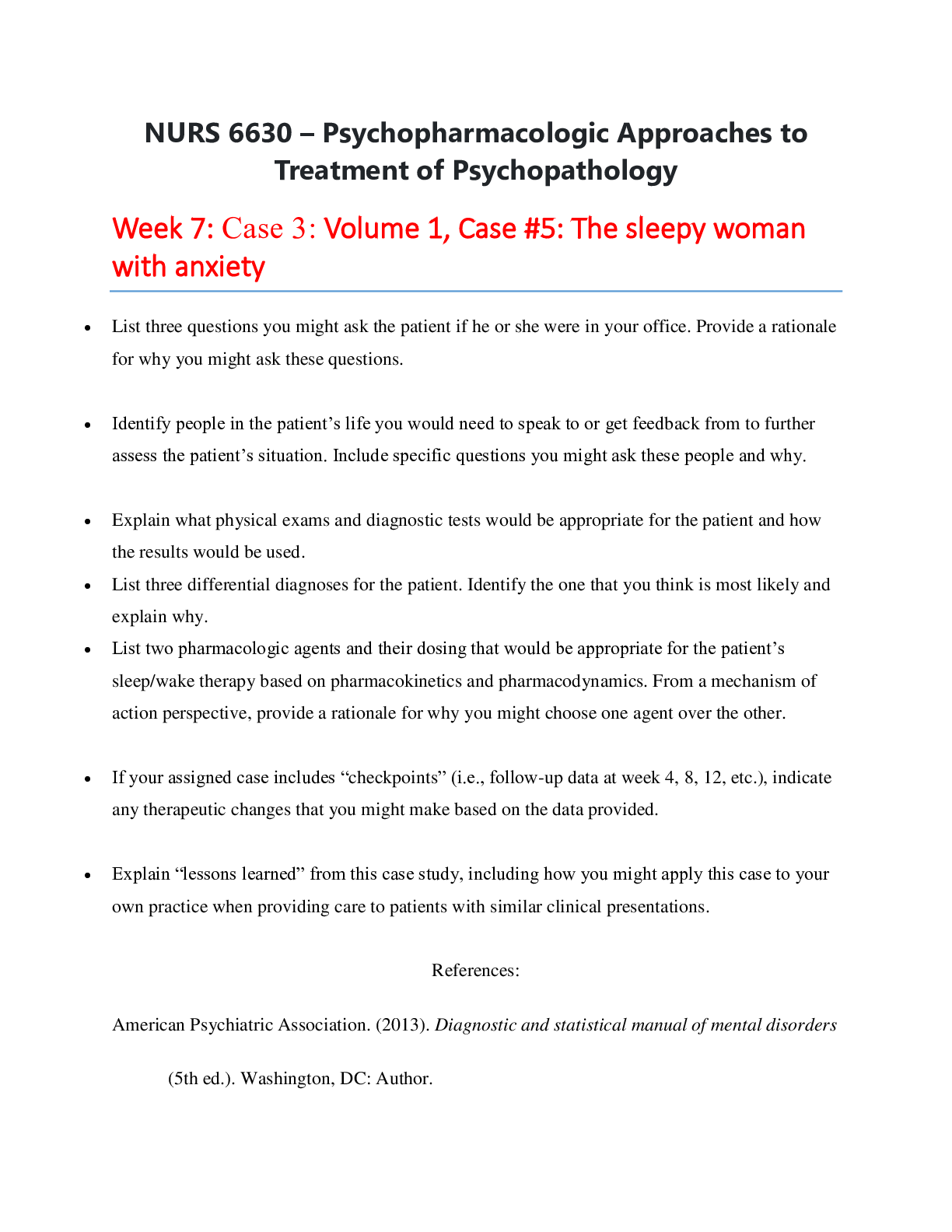
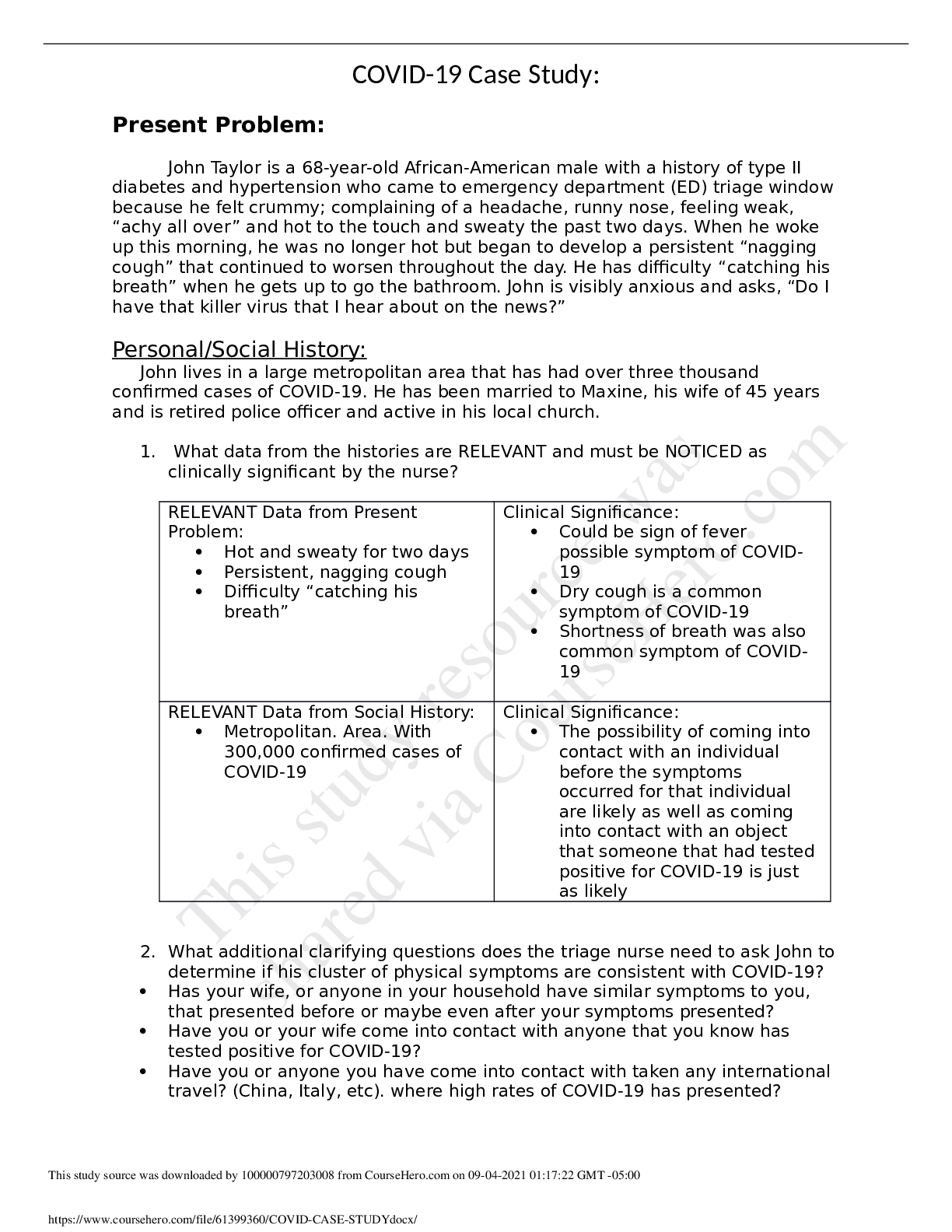
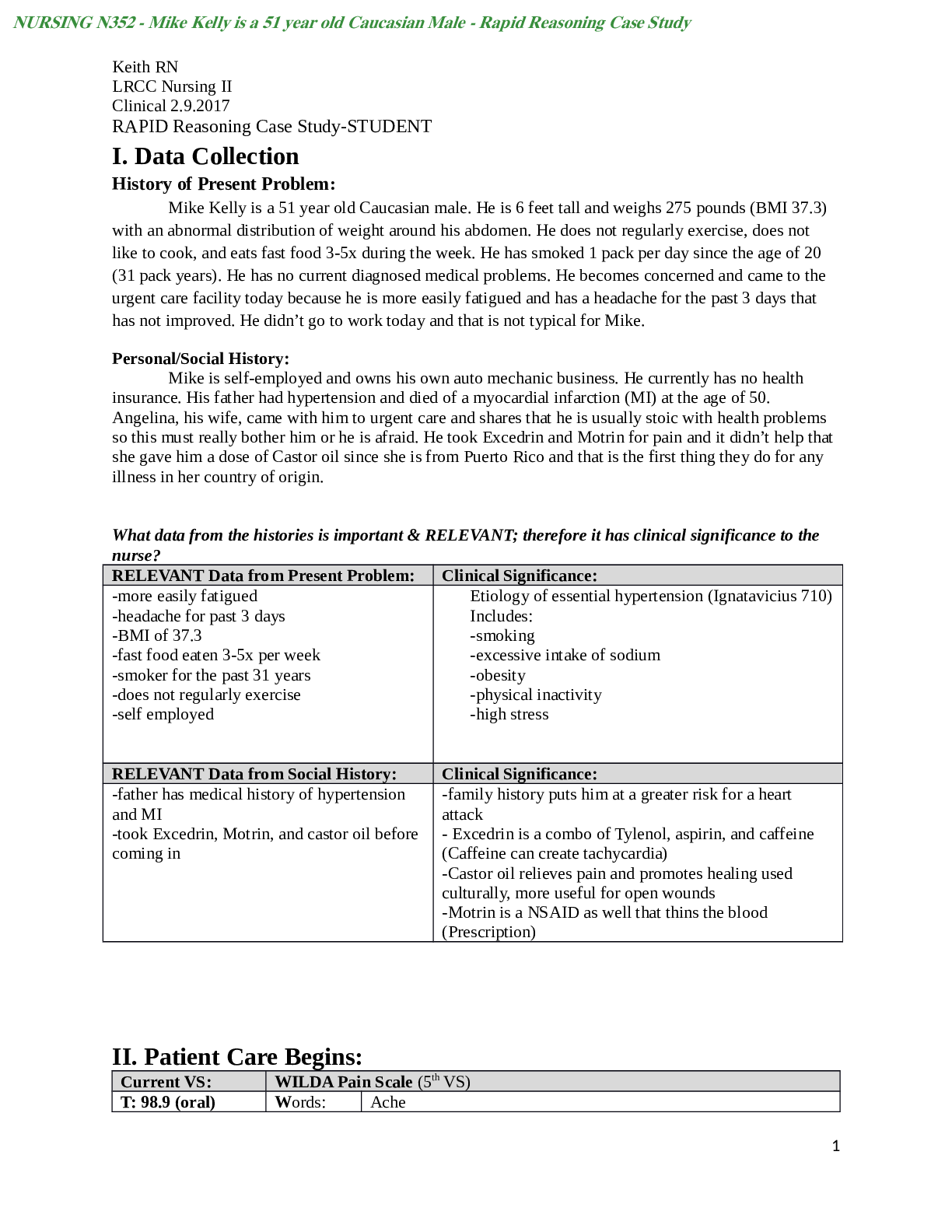
Key Components:
1. Develop Critical Thinking
By applying and using knowledge most important to practice
2. Develop Clinical Reasoning
By recognizing relevant clinical data to identify the nursing priority
3. Dev
...
Key Components:
1. Develop Critical Thinking
By applying and using knowledge most important to practice
2. Develop Clinical Reasoning
By recognizing relevant clinical data to identify the nursing priority
3. Develop Clinical Judgment
Outcome when student interprets, notices, and responds appropriately
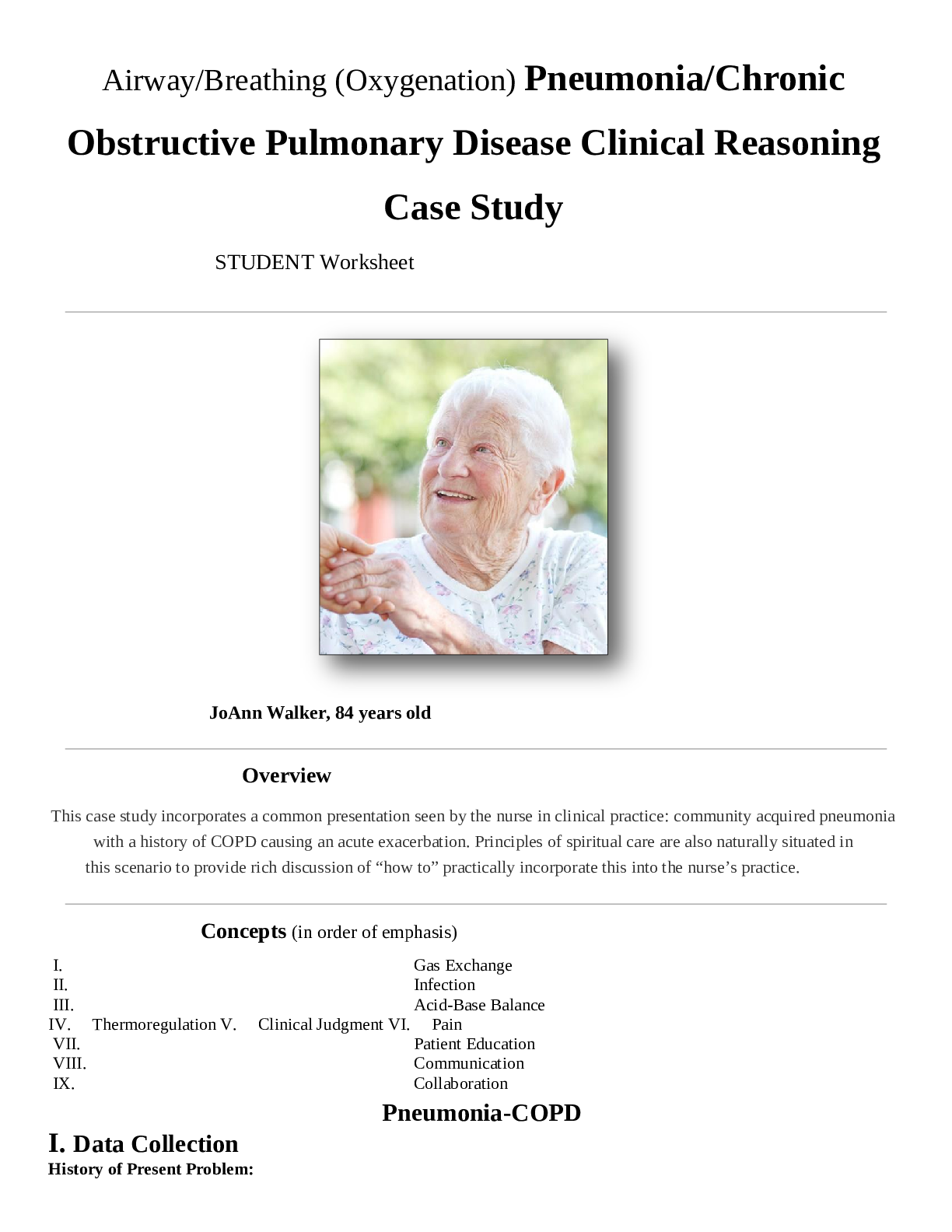
Airway/Breathing (Oxygenation) Pneumonia/Chronic Obstructive Pulmonary Disease Clinical Reasoning Case Study
STUDENT Worksheet
JoAnn Walker, 84 years old
Overview
This case study incorporates a common presentation seen by the nurse in clinical practice: community acquired pneumonia with a history of COPD causing an acute exacerbation. Principles of spiritual care are also naturally situated in
this scenario to provide rich discussion of “how to” practically incorporate this into the nurse’s practice.
Concepts (in order of emphasis)
I. Gas Exchange
II. Infection
III. Acid-Base Balance
IV. Thermoregulation V. Clinical Judgment VI. Pain
VII. Patient Education
VIII. Communication
IX. Collaboration
I. Data Collection
History of Present Problem:
Pneumonia-COPD
JoAnn Walker is an 84-year-old female who has had a productive cough of green phlegm 4 days ago that continues to persist. She was started 3 days ago on prednisone 60 mg po daily and azithromycin (Zithromax) 250 mg po x5 days by her
clinic physician. Though she has had intermittent chills, she first noticed a fever last night of 102.0. She has had more
difficulty breathing during the night and has been using her albuterol inhaler every 1-2 hours with no improvement. Therefore she called 9-1-1 and arrives at the emergency department (ED) by emergency medical services (EMS) where
you are the nurse who will be responsible for her care.
Personal/Social History:
JoAnn was widowed 6 months ago after 64 years of marriage and resides in assisted living. She is a retired elementary
school teacher. She called her pastor and he has now arrived and came back with the patient. The nurse walked in the room when the pastor asked Joan if she would like to pray. The patient said, “Yes, this may the beginning of the end for me.”
What data from the histories is important & RELEVANT; therefore it has clinical significance to the nurse?
RELEVANT Data from Present Problem: Clinical Significance:
RELEVANT Data from Social History: Clinical Significance:
What is the RELATIONSHIP of your patient’s past medical history (PMH) and current meds?
(Which medication treats which condition? Draw lines to connect)
PMH: Home Meds: Pharm. Classification: Expected Outcome:
• COPD/asthma
• Hypertension
• Hyperlipidemia
• Cor-pulmonale
• Anxiety disorder
• 1ppd smoker x40 years. Quit 10 years ago
One disease process often influences the development of other illnesses. Based on your knowledge of
pathophysiology, (if applicable), which disease likely developed FIRST that then initiated a “domino effect” in
their life?
II. Patient Care Begins:
Current VS: WILDA Pain Scale (5th VS):
T: 103.2 (oral)
P: 110 (regular)
R: 30 (labored)
BP: 178/96
O2 sat: 86%
6 liters n/c
What VS data is RELEVANT that must be recognized as clinically significant to the nurse?
RELEVANT VS Data: Clinical Significance:
Current Assessment:
GENERAL
APPEARANCE:
RESP:
CARDIAC:
NEURO:
GI:
GU:
SKIN:
What assessment data is RELEVANT that must be recognized as clinically significant to the nurse?
RELEVANT Assessment Data: Clinical Significance:
12 Lead EKG:
Interpretation:
Clinical Significance:
III. Clinical Reasoning Begins…
1. What is the primary problem that your patient is most likely presenting with?
2. What is the underlying cause/pathophysiology of this problem?
3. What nursing priority(s) will guide your plan of care? (if more than one-list in order of PRIORITY)
4. What interventions will you initiate based on this priority?
Nursing Interventions: Rationale: Expected Outcome:
5. What body system(s) will you most thoroughly assess based on the primary/priority concern?
6. What is the worst possible/most likely complication to anticipate?
7. What nursing assessment(s) will you need to initiate to identify this complication if it develops?
8. What nursing interventions will you initiate if this complication develops?
Medical Management: Rationale for Treatment & Expected Outcomes
Care Provider Orders: Rationale: Expected Outcome:
albuterol-ipratropium
(Combivent) 2.5 mg neb
Establish peripheral IV Lorazepam (Ativan) 1 mg IV
push
Methylprednisolone (Solumedrol) 125 mg IV push
Levofloxacin (Levaquin) 750 mg IVPB (after blood cultures drawn)
Acetaminophen (Tylenol)
1000mg oral
Chest x-ray (CXR) Complete cell count (CBC) Basic metabolic panel
(BMP) Lactate
Arterial blood gas (ABG)
Sputum culture with gram stain
Blood culture x2 sites
Urine analysis (UA) Urine culture (UC)
PRIORITY Setting: Which Orders Do You Implement First and Why?
Care Provider Orders: Order of Priority: Rationale:
1. Albuterol-ipratropium
(Combivent) 2.5 mg neb
2. Establish peripheral IV
3. Lorazepam (Ativan) 1 mg
IV push
4. Methylprednisolone
(Solumedrol) 125 mg IV
push
5. Levofloxacin (Levaquin)
750 mg IVPB (after blood cultures drawn)
6. Acetaminophen (Tylenol)
1000mg oral
Medication Dosage Calculation:
Medication/Dose: Mechanism of Action: Volume/time frame to
Safely Administer: Nursing Assessment/Considerations:
lorazepam
(Ativan)
1 mg IV push
Normal Range:
Average
Medication/Dose: Mechanism of Action: Volume/time frame to
Safely Administer: Nursing Assessment/Considerations:
methylprednisolone
(Solumedrol)
125 mg IV push
Normal Range:
high
Medication/Dose: Mechanism of Action: Volume/time frame to
Safely Administer: Nursing Assessment/Considerations:
levofloxacin
(Levaquin)
750 mg IVPB
Normal Range:
average
Radiology Reports:
What diagnostic results are RELEVANT that must be recognized as clinically significant to the nurse?
RELEVANT Results: Clinical Significance:
Lab Results:
What lab results are RELEVANT that must be recognized as clinically significant to the nurse?
Complete Blood Count (CBC:) Current: High/Low/WNL? Most Recent:
WBC (4.5-11.0 mm 3)
Hgb (12-16 g/dL)
Platelets(150-450x 103/µl)
Neutrophil % (42-72)
Band forms (3-5%)
What lab results are RELEVANT that must be recognized as clinically significant to the nurse?
RELEVANT Lab(s): Clinical Significance: TREND: Improve/Worsening/Stable:
Basic Metabolic Panel (BMP:) Current: High/Low/WNL? Most Recent:
Sodium (135-145 mEq/L)
Potassium (3.5-5.0 mEq/L)
Chloride (95-105 mEq/L)
CO2 (Bicarb) (21-31 mmol/L)
Anion Gap (AG) (7-16 mEq/l)
Glucose (70-110 mg/dL)
Calcium (8.4-10.2 mg/dL)
BUN (7 - 25 mg/dl)
Creatinine (0.6-1.2 mg/dL)
Misc. Labs:
Lactate (0.5-2.2 mmol/L)
RELEVANT Lab(s): Clinical Significance: TREND: Improve/Worsening/Stable:
Arterial Blood Gas: Current: High/Low/WNL?
pH (7.35-7.45)
pCO2 (35-45)
pO2 (80-100)
HCO3 (18-26)
O2 sat (>92%)
RELEVANT Lab(s): Clinical Significance: TREND: Improve/Worsening/Stable:
All of them
Urine Analysis (UA:) Current: High/Low/WNL?
Color (yellow)
Clarity (clear)
Specific Gravity (1.015-1.030)
Protein (neg)
Glucose (neg)
Ketones (neg)
Bilirubin (neg)
Blood (neg)
Nitrite (neg)
LET (Leukocyte Esterase) (neg)
MICRO:
RBC’s (<5)
WBC’s (<5)
Bacteria (neg)
Epithelial (neg)
RELEVANT Lab(s): Clinical Significance: TREND: Improve/Worsening/Stable:
Lab Planning: Creating a Plan of Care with a PRIORITY Lab:
Lab: Normal value: Why Relevant? Nursing Assessments/Interventions Required:
Lactate
Value:
3.2
0.5- 2.2
Critical Value:
Over 2.2
IV. Evaluation:
One hour later…
Current VS: Most Recent:
T: 100.8 (oral)
P: 88 (regular)
R: 24 (slight labored)
BP: 128/90
O2 sat: 92%
4 liters n/c
Current
Assessment:
GENERAL
APPEARANCE:
RESP:
CARDIAC:
NEURO:
GI:
GU:
SKIN:
1. What clinical data is RELEVANT that must be recognized as clinically significant?
RELEVANT VS Data: Clinical Significance:
RELEVANT Assessment Data: Clinical Significance:
You report your assessment findings to the primary care provider who decides to repeat the ABG. You obtain the following results:
Arterial Blood Gas:
pH (7.35-7.45)
pCO2 (35-45)
pO2 (80-100)
HCO3 (18-26)
O2 sat (>92%)
2. Has the status improved or not as expected to this point?
3. Does your nursing priority or plan of care need to be modified in any way after this evaluation assessment?
4. Based on your current evaluation, what are your nursing priorities and plan of care?
It is now time to transfer your patient to the floor. Effective and concise handoffs are essential to excellent care and if not done well can adversely impact the care of this patient. You have done an excellent job to this point, now finish strong and give the following SBAR report to the nurse who will be caring for this patient:
Situation:
Background:
COPD,
Assessment:
GENERALAPPEARANCE:
RESP:
CARDIAC:
NEURO:
GI:
GU:
SKIN:
Recommendation:
V. Education Priorities/Discharge Planning
1. What will be the most important discharge/education priorities you will reinforce with their medical condition to prevent future readmission with the same problem?
2. What are some practical ways you as the nurse can assess the effectiveness of your teaching with this patient?
VI. Caring and the “Art” of Nursing
1. What is the patient likely experiencing/feeling right now in this situation?
2. What can you do to engage yourself with this patient’s experience, and show that he/she matter to you as a person?
[Show More]

 Pneumonia Chronic Obstructive Pulmonary Disease Clinical Reasoning Case Study Medical surgical (NUR 201) Pneumonia-COPD case study solutions.png)
.png)