Sensory/Allergies/Skin
Brunner & Wong
Common Disorders of the Eye – (Ch. 58, pg. 1756)
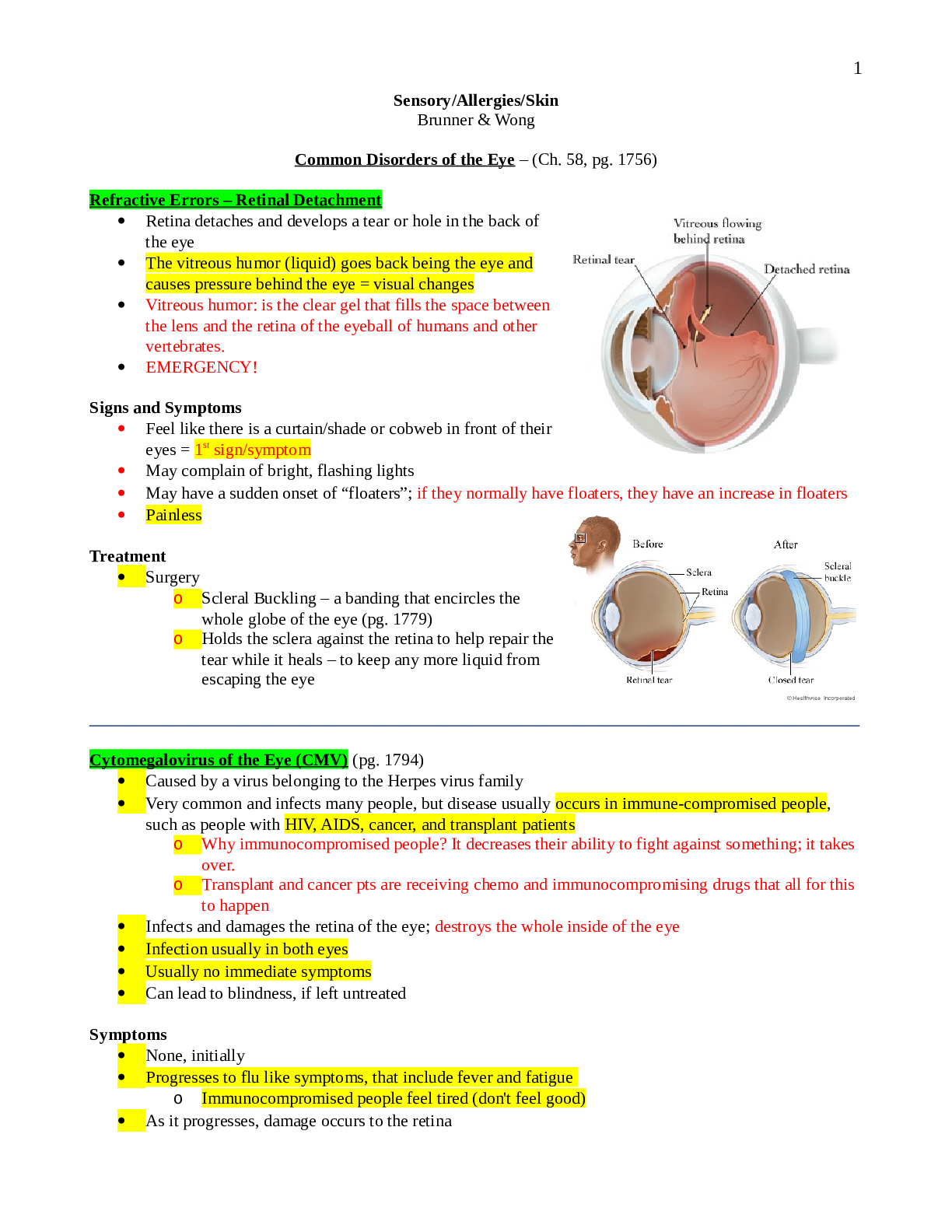
Refractive Errors – Retinal Detachment
Retina detaches and develops a tear or hole in the back of
the eye
The vitreous humo
...
Sensory/Allergies/Skin
Brunner & Wong
Common Disorders of the Eye – (Ch. 58, pg. 1756)
Refractive Errors – Retinal Detachment
Retina detaches and develops a tear or hole in the back of
the eye
The vitreous humor (liquid) goes back being the eye and
causes pressure behind the eye = visual changes
Vitreous humor: is the clear gel that fills the space between
the lens and the retina of the eyeball of humans and other
vertebrates.
EMERGENCY!
Signs and Symptoms
Feel like there is a curtain/shade or cobweb in front of their
eyes = 1st sign/symptom
May complain of bright, flashing lights
May have a sudden onset of “floaters”; if they normally have floaters, they have an increase in floaters
Painless
Treatment
Surgery
o Scleral Buckling – a banding that encircles the
whole globe of the eye (pg. 1779)
o Holds the sclera against the retina to help repair the
tear while it heals – to keep any more liquid from
escaping the eye
__________________________________________________________________________________________
Cytomegalovirus of the Eye (CMV) (pg. 1794)
Caused by a virus belonging to the Herpes virus family
Very common and infects many people, but disease usually occurs in immune-compromised people,
such as people with HIV, AIDS, cancer, and transplant patients
o Why immunocompromised people? It decreases their ability to fight against something; it takes
over.
o Transplant and cancer pts are receiving chemo and immunocompromising drugs that all for this
to happen
Infects and damages the retina of the eye; destroys the whole inside of the eye
Infection usually in both eyes
Usually no immediate symptoms
Can lead to blindness, if left untreated
Symptoms
None, initially
Progresses to flu like symptoms, that include fever and fatigue
o Immunocompromised people feel tired (don't feel good)
As it progresses, damage occurs to the retina
1 Painless
May have blind spots, floating specks, light sensitivity, eye redness, blurred vision
As time goes by, sudden vision loss and flashes of light may occur
Spreads to both eyes
More serious complication - retinal detachment (if not treated)
Diagnosis
By ophthalmology exam
o Pupil is dilated with medication, which makes it easier for the doctor to observe the inner
portion – can then see the damage caused by virus
Blood and urine tests may be done to detect the presence of the virus
Treatment
Antiviral Drugs – they slow down the virus, but can’t cure it
o End in -vir
o Administered IV or through a catheter
Drugs
o Acyclovir
o Cytovir
o Ganciclovir – IV, PO, or intravitreously (4mm intraocular implant or insert containing the
medication. The drug is released during a 5 to 8 month period.)
o Cidofovir – delays the replication of CMV and is administered by IV. Nephrotoxicity,
proteinuria and increased serum creatinine levels are side effects.
o Foscarnet – inhibits viral DNA replication. May be the med of choice when ganciclovir is
ineffective. Can be administered by IV or intravitreal injection.
Vitrasert: implant that is inserted directly in eye (ganciclovir); implant gradually secretes medication;
releases the antiviral overtime; lasts 5 – 8 months; done on an outpatient basis
Complications
Blindness
Most serious is retinal detachment – leads to seriously limited vision and blindness
Because it’s a virus, it can lead to kidney impairment and low WBC count. (The treatment drugs are
VERY nephrotoxic, BUN and Creatinine labs, Creatinine clearance (24 hr urine) drawn, hard on the
kidneys – some complications could be due to drugs)
Antivirals cause damage to the kidneys
o Kidney damage (medications) – antivirals cause kidney damage; monitor BUN, Createnine,
Createnine clearance (24 hr. urine)
Very low WBC
Prevention
Prevented by regular eye exams, even if no symptoms present
Immunocompromised people should have eye exam every 6 months – b/c there are no s/s; if they have
the eye exam, maybe that can catch it early before it causes damage
__________________________________________________________________________________________
Orbital Fracture Trauma (pg. 1782-1784)
Soft tissue injury is usually associated with head injury
If there is soft tissue injury, check for underlying fracture, especially with blunt trauma
Orbital trauma = under the eye
2 Causes: sports (baseball/baseball bat slipped out of their hand), fighting, falls
Simple facial x-ray shows that they have a fracture, then they will perform a CT
o CT should be done to determine what structures were affected
o They can get a cranial abscess b/c everything
in the sinus cavity has gained access to the
orbit; can be fatal
Associated with head trauma
Check Visual Acuity ASAP
o If their vision is not affected yet, keep
checking to prevent irreversible damage;
Signs & Symptoms
Will have tenderness, ecchymosis, swelling, proptosis
(downward displacement of eyeball), hemorrhage
If there is an
immediate loss of
vision, it is usually
irreversible damage
= damaged the
optic nerve
(Proptosis)
Ocular Trauma
Eye injury
Leading cause of blindness in children and young adults due to sports injuries, occupational injuries,
weapons, MVA, assault, explosives, fireworks
Two Types need critical attention
o Chemical Burn – IRRIGATE with normal saline or tap water - flush it, flush it, flush it, if
they are not in the ER where you can flush it with normal saline, if they are at home use
simple tap water, keep flushing until Medical care gets there
Flush for at least 20 minutes
Phone call from a parent who says “my kid splashed bleach in their eye”. Tell them
to keep flushing it until help arrives.
o Foreign Body - never ever mess with it, leave it alone, don't let the patient take it out, the
MD should be the one to take it out, put a metal shield over it to keep them from messing
with that eye; If it is sticking out of the eye, stabilize it and send them to an eye doctor.
Put eye-numbing medication in it, patch it up, and send to ophthalmologist!
Infections and Inflammatory Conditions of the Eye (pg. 1787-1790)
Conjunctivitis – “pink eye”; pink appearance of subconjunctival blood vessels and congestion (outside part of
the eye)
Three Types of Conjunctivitis
Bacterial
o Caused by staph, strep, haemophilus (H Influenza)
o Exudate in the eye in the morning, self-limiting
o Treat with antibiotic eye drops - takes two weeks to go away
o Steroid eye drops to help with the redness
3 Viral – the worst
o VERY contagious
o Usually caused by adenovirus and herpes simplex
o Does not respond to antibiotics
o Lasts longer than bacterial
o Seldom responds to antibiotic treatment
o No work or school for three to seven days, because it is so highly contagious
o Usually seen in preschool, first or second grade, keep them away long enough to eradicate it
o Treat with compresses (to make it feel nice)
They have exudate problem – their eyes stick together = apply warm compress
If they have eye pain, cold compress
Bacterial or Viral Conjunctivitis:
o Clean their toys with bleach and hot, soapy water
o If you add bleach, rinse it extremely well; they put toys in their mouth
Allergic
o Caused by allergic rhinitis
o Usually have a hx of pollen allergy
o Biggest complaint: feel like they have sand in their eye
o Treatment is antihistamine eye drops and/or steroid drops
Teach pts proper hand hygiene – before and after eye drop treatment, or preferably to use gloves to
clean the eye
If the dropper gets into the eye = contaminated
o Throw away, call MD
No eye makeup
Light sensitivity - wear dark glasses outside and inside
Uveitis (Brunner, pg. 1790)
Inflammatory process of the middle layer of the eye, the uveal tract
o Lower middle portion of the eye
This part contains veins and arteries that transports blood to the parts of the eye responsible for vision
This is more serious
Just like conjunctivitis, but it affects a different part of the eye
Symptoms
Eye redness
Irritation
Eye pain
Blurred vision
Increased sensitivity to light
Floating spots
Cause
Usually an infection – viral, bacterial, parasite, fungus
Can affect other parts of the body (because it affects blood supply)
4Treatment
Needs to be done right away
Have light sensitivity - wear dark glasses outside and inside
Steroid eye drops to reduce swelling
Antibiotic eye drops for pts with infectious uveitis
Steroid and abx eye drops should be used opposite – don't use them at the same time
Drugs to relieve pain
Teaching
The eye drops will probably sting/burn when administered
Should be temporary, no more than 15-20 seconds
If it lasts longer = stop using the meds and call MD
__________________________________________________________________________________________
Orbital Cellulitis (pg. 1790)
Inflammation of tissues surrounding the eye due to bacteria, virus, or fungus
Common in pediatrics
Cause
Number one is a sinus infection
Children usually H influenza
Adults usually staph or strep
Treatment
If untreated, can lead to optic nerve damage, intracranial abscess, and death
(Intracranial abscess…. inflammation is tissue around the eye. If untreated, an abscess is formed and
the eye is close to the brain, so it can move into the brain)
Treated with high dose, broad spectrum, systemic antibiotics (IV, not by mouth)
Orbital and Ocular Neoplasms (Brunner, pg. 1790)
Non-cancerous
Benign lesions of Orbit
Masses characterized by lack of infiltration to other tissues
Develops from infancy, grows and presents later in life
Diagnosed with exam, palpation, XR, and/or a CT
Pt will complain of visual function disturbances
The lesion is pushing the eyeball outward
o Will have proptosis – downward displacement of eye
Treated by excision
Benign lesions of Eyelids
Usually size increases with age
Starts out as a mole or extra epithelials
If its tiny, they will not remove it until it starts affecting their vision
Treated by excision
Benign lesions of Conjunctiva
5 Starts in late childhood, early adolescence
If its tiny, they will not remove it until it starts affecting their vision
Treated by excision
Malignant Orbital and Ocular Neoplasms of….. (pg. 1792)
Cancerous
Can infiltrate other areas
Treatment
Excision, Radiation and/or Chemo
Some require reconstructive surgery (some treatments require removal of the eye)
Malignant Tumors of the Orbit:
Rhabdomyosarcoma -- the most common neoplasm in childhood
Manifestations
Proptosis
Lid swelling
Impaired ocular motility
Usually metastasizes to lung
Requires a removal of the eye = enucleation
Malignant Tumors of the Globe:
Retinoblastoma, most of the time – it’s hereditary
Occurs in childhood
Manifestations
Cellulitis
White pupil
o When you take a photo with a camera, the pupil usually appears red. If the pupil
appears white on one side, it should be evaluated
o Usually occurs in children; the mothers notice it when they take pictures
Requires a removal of the eye = enucleation
Malignant Tumors of the Eyelid:
Basal cell carcinoma most common; like a skin cancer = eyelid is apart of the skin
Very common in people with fair skin with a Hx of chronic sun exposure,
Invasive, but slow growing
Doesn’t usually metastasize
Usually occurs on lower eyelid near the inner canthus area
Malignant Tumors of the Conjunctiva:
Metastasis is rare, they just take it out
Types of Eye Surgery (Brunner, pg. 1792)
Enucleation – removal of the entire eye and part of the optic nerve
Because of: Trauma, glaucoma, retinal detachment, blindness (if there is pain w/the blindness),
retinoblastoma
Pts will get a prosthesis after surgery, but must wait until the entire structure heals before they can get a
prosthesis; they do not go ahead and fit for ocular prosthesis until it is healed
Evisceration – remove intra-ocular contents by incision thru cornea
6 Because of: Trauma with ruptured globe, infection
Prosthetic implant will usually have a better fit, because sclera, optic nerve, and muscles are all left
intact
Still have sclera, optic nerve = better prosthesis fit (vs
enucleation = removal of the eye and part of the optic nerve)
Exenteration – removal of the eyelids, eye, and all of the orbital
contents (Picture >>>>>)
Usually due to a malignancy
A prosthesis will follow surgery
Before prosthesis, pt will usually have to have a lot of
plastic surgery to have eye lids and all of that recreated
Will have to have an ocular prosthesis plus reconstructive surgery to it’ll fit; have to have eyelids made
Ocular Prosthesis - implant or conformer – helps prevent a contracted, sunken appearance, made to be placed
in socket, fitting process starts 6-8 weeks after surgery; matches exactly to the other eye; prosthesis usually last
about six years; “glass eye”; not made of silicon
Nursing Care includes: physical, social, psychological considerations
Not only have they lost an eye, they have also lost their vision.
Need emotional support
Teaching should include:
o Hand hygiene – due to insertion and removal of prosthesis for cleaning and put back in
They get very comfortable with their prosthesis; can sleep in it, etc.
Have to have frequent eye exams to make sure it still fits
Nursing Interventions for Ocular Surgery Patients
Goals
Preserve visual function
Maintain the anatomical relation of the ocular structures
Always be aware of the developmental stage of your patient, also age and culture
Complications
Blindness, if the optic nerve is damaged or blood supply is compromised during surgery
May lead to optic nerve damage
May get ptosis, lazy or droopy eye = can be temporary
o Sometimes resolves itself after surgery (depends on what caused it)
Hemorrhage
o Bleeding of serous blood is to be expected.
o Bright red blood could mean hemorrhage and the HCP needs to be notified ASAP.
Treatments
Prophylactic IV antibiotics – before surgery
Corticosteroids for optic nerve swelling = Temporary
Topical ocular antibiotics
Ice compresses 24 to 48 hours post-op (decreases periorbital swelling)
Elevate the HOB 30 to 45 degrees – to decrease swelling and intraocular pressure
o Other ways to increase intraocular pressure:
Bending over at the waist
Ex: to tie shoes, cleaning
o Do not want them doing this ^^
7Discharge teaching
Teaching on meds – how to administer – (PO or drops) – explain hygiene with drop meds
o Teach about abx that they might have to take by mouth
o Eye drops
Teach not to contaminate the dropper
Teach that any type of eye drops can affect the systemic system
Beta blocker for glaucoma = affect BP and HR
Steroid = affect blood sugar
Teaching on compresses
__________________________________________________________________________________________
Ocular Medications (pg. 1795)
Drop meds - once the dropper has touched they eye, they are considered infected
Topical Anesthetic – usually used prior to a procedure – for severe eye pain
Numbs the eye
Lasts 10 to 20 minutes
Tell patients not to rub eye (since it’s numb, they can scratch eye and not know it) = can cause more
damage that is already present
Pontocaine
Proparacaine hydrochloride, tetracaine hydrochloride are commonly used drops
Makes it numb, one drop of tetracaine hydrochloride will numb the eye for 10-15 minutes at a time
Anti-infective - will still have same side effects as taking PO or IV antibiotics
Anti-fungal
Antiviral
Antibiotics
Will get the same systemic effect in eye drops
Anti-Allergy – used to treat allergic reactions and/or symptoms = temporary
o If used on a daily basis, overtime, the redness in the eyes will come back sooner and sooner
o Should not use the one w/ Astrigen in it
o Just use a lubricant eye drop
Corticosteroids and NSAIDs
Corticosteroids – affect glucose
Short term eye drops
Used to treat inflammatory conditions
Need to teach them they have to shake the meds well before use
NSAIDs have fewer side effects
Corticosteroids (usually long term treatment) – side effects: glaucoma, cataracts, infection, impaired
wound healing, and increased intraocular pressure.
Ocular irrigants and lubricants
8 Irrigants: used to irrigate, flush, cleanse, or lubricate eye
Wet the eye (artificial tears)
Lubricants be used every hour if used for corneal lubrication
Nursing Management regarding ocular medications
Hand hygiene before and after
Don't contaminate eye drop dropper
Stinging, burning, blurred vision is temporary, but if it continues to for a long period of time, call your
doctor
Blurred vision occurs after application: If you have an elderly client at r/f falls taking eye drops, tell
them not to get up at least 10-15mins after using eye drops
Tell pt to be careful with ambulation (meds might cause blurred vision)
Tell pt how to perform proper administration of drops (explain why they need to hold pressure at the
corner at the eye
Chart 58-13
________________________________________________________________________________________
Common Disorders of the Ear (Ch. 59, pg. 1802)
Ear Function – hearing and balance
Assessment
Otoscope Exam
Weber – bone conduction
Rinne – air conduction
Whisper
Audiometry Exam – testing hearing
Tympanogram – checks middle ear; muscle function
A&P Section on ear – pg. 1802-1804
Test hearing
Conditions of the External Ear
Otitis Media
Kids get OM a lot, versus adults, b/c of short eustachian tubes, they are in school and pass the infection among
the other children
External Otitis – Otitis External; "swimmers ear"
Severe ear canal swelling
Can be bacterial, viral, and/or fungal
o There can be fungus in pool water
S/s – pain; fullness; hearing loss; canal edema and erythema
Tx – antibiotic/steroid ear drops combo
If untreated will lead to malignant otitis media (mastoiditis); it infects the mastoid bone behind the ear
NO SWIMMING until all the abx are gone
Can go swimming if they wear ear plugs that are fitted
Shower: to alleviate water in the ear, ear plugs or rub Vaseline on a cotton ball and stick in ear (Vaseline
does not allow water to get by it)
9Causes
Water in the ear (swimmer’s ear)
Trauma, systemic conditions (vitamin deficiency, endocrine disorders), dermatosis such as psoriasis
Can be bacterial from staph or pseudomonas or fungus from aspergillus
Acute Otitis – usually bacterial
Happens all of a sudden
S/s – fever; unilateral otalgia (ear pain); purulent exudate; tympanic membrane erythematous and
bulging (typically the TM is concave, not bulging)
Tx: antibiotic ear drops, if tympanic membrane is not perforated (a hole in it); if it is perforated you can
no longer use the ear drops
o How to tell if TM is perforated? Immediate relief of pain after pain is present (CALL MD)
Chronic Otitis – irreversible damage to TM
Continual otitis media
S/s – foul smelling otorrhea and pain
Tx – antibiotic drops or abx powder
o Abx to dry up the infection
Serous Otitis Media (SOM) (pg. 1814) - fluid in the inner ear, but no evidence of infection
Causes
Eustachian tube dysfunction
Upper respiratory infection
Allergies
Manifestations
Conductive hearing loss
Feeling of fullness in ear
Congestion
Popping or cracking sensation in the ear
Treatment
Myrongotomy – tubes for an opening of the TM
Antibiotics (if infection present)
Steroids
Tympanic Membrane Perforation – usually infection, trauma, or foreign body (kids take stuff and stuck in
their ear = qtip); ear drum has a hole in it
Causes
Usually due to infection, trauma, foreign objects
Usually heals spontaneously
If not, they have to do a tympanoplasty type 1 (pg. 1815)
Observe for otorrhea and rhinorrhea (ear and nose drainage) (pg. 1813)
No ear drops or water in ear canal
Manifestations
Otorrhea and rhinorrhea and sudden relief of pain
Treatment – no ear drops; no water in canal: myringoplasty (suturing or fixing of the perforated TM) if does not
heal spontaneously
10Nursing Care
No q-tips or scratching the canal
No water in canal until healed
No swimming until healed
When showering – use cotton balls covered in petroleum jelly; place in ear to seal off the ear canal (pg.
1812)
Reminder on eardrops:
Child (until 6 or 7) – pull down and back (remember chilD – D for down)
Adult – pull up and back (adUlt – U for up)
Conditions of the Inner Ear
Labyrinthitis – inflammation of inner ear (affects hearing and balance)
Causes
Bacterial or viral infection
Can be a complication of otitis media
Affects hearing and balance
Treatment
IV antibiotics
Fluid replacement
Antihistamines
Anti-emetics
__________________________________________________________________________________________
Cholesteatoma (pg. 1814) – Benign tumor of ear drum
Ingrowth of skin of the eardrum into the middle ear
If treatment is delayed, the tumor may destroy structures of
the temporal bone
Tumor is fast growing
Manifestations
Hearing loss
Neurological deficits
Treatment
Surgery – mastoidectomy (removal of the mastoid bone)
__________________________________________________________________________________________
Glomus Tympanicum (pg. 1817)
Rare malignant tumor of the middle ear
Treatment
Surgical excision and/or radiation therapy, if surgery is not an option
11__________________________________________________________________________________________
Facial Nerve Neuroma (pg. 1823) – benign tumor of cranial nerve number 7 = the facial nerve
Manifestation
Facial nerve paralysis – first manifestation
Usually complain that their face in numb, (Stroke) a lot of times it is overlooked, but they need to
remove tumor because if not, the paralysis will be permanent
Will display facial drooping
Treatment
Surgical removal = excision
__________________________________________________________________________________________
Acoustic Neuroma (pg. 1823) - benign tumor
Manifestations
Vertigo
Hearing loss
Tinnitus – ringing in the ears
Treatment
Surgery – Craniotomy to remove tumor
Complication during the craniotomy – Facial nerve can be damaged = if present they will display facial
drooping (cranial nerve 7) = call the MD
______________________________________________________________________________
Types of Ear Surgery
Tympanoplasty (pg. 1815) - reconstructive surgery of tympanic membrane
5 Types
o Type I – Myringoplasty – closure of the perforated tympanic membrane
o Types II-V – extensive repair of the middle ear structures (of the bones)
Ossiculoplasty – reconstruction of middle ear bones to restore hearing
Mastoidectomy – remove part or all of mastoid bone, because they want to create a dry, healthy ear.
Always check facial nerve number 7, may be damaged during surgery – will show facial drooping if
damaged
Nursing Interventions for Patients having Ear Surgery (pg. 1816)
Reduce anxiety
Relieve pain - after surgery, intermittent, sharp pain is ok, but if they are having throbbing, constant pain
it is NOT ok and should be reported ASAP
Prevent complications – check CBC, chemistries, bleeding tendencies (PT, PTT, INR)
Prevent infection - antibiotics prophylactically, prevent water getting into the ear canal for six weeks
after surgery (cotton ball/Vaseline)
Improve hearing and communication – decrease noise, face pt when speaking to them, speak clearly,
have good lighting; might not be able to hear immediately after surgery; establish other ways of
communication; do not scream
12 Prevent injury – inner ear – place for balance and hearing, so surgery can affect their balance; vertigo;
assist them when they first get up or tell them to get up slowly and sit on the side of the bed before
going anywhere
Prevent altered sensory perception – hearing will be affected
Promote home care – teach them to sneeze with their mouth open, cannot blow their nose for three
weeks, no heavy lifting = prevents pressure on the ears, no water in the ear canal for 6 weeks
__________________________________________________________________________________________
Allergic Disorders (Ch. 53, pg. 1606)
Allergy is an inappropriate, often harmful, response of the body’s immune system to a normally harmless
substance(s); substances = allergens
Allergens - dust, weeds, pollen, dander, medication, etc.
Chemical Mediators are released in allergic reactions, which is what causes the allergic reaction. May produce
mild to life threatening symptoms.
**The allergen causes you to do that; th chemical mediators is what is released that may cause the problem; it’s
not the allergen itself, it’s the chemical mediators that cause the reaction.
Allergy Pathophysiology - allergens encounter antigens, which cause a series of events to render the foreign
invaders harmless, when lymphocytes respond, antibodies are formed
Antibodies - combine with antigens like a lock and key, with only one key that fits a certain lock. Once
antibodies are formed, they initiate immunoglobulins
Immunoglobulins (pg. 1607)
•IgE – these are the ones involved in allergic disorders; found in lymph nodes, tonsils, appendix,
blood, and intestinal tract
•IgD, IgG, IgM, IgA
Types of Allergens
Airborne - pollen, dust, smokes, fumes, perfumes, dander
Ingested - food, medications
Contact - stings, latex, allergy testing or shots, dyes, oils, poison ivy, poison oak
Allergic Reactions
Hypersensitivity – excessive immune response to any stimulus; Doesn’t usually react at the first exposure – it
follows after a buildup of antibodies.
4 Types of Reactions (pg. 1609)
Type I – Anaphylactic – very common
o Most severe, explosive onset; you’re fine one minute…the next minute you’re not
o Usually have edema in the larynx = breathing trouble > respiratory collapse > cardiovascular
collapse > death
o Hypotension, bronchospasms, and cardiovascular collapse
o Increased heart rate, decreased BP
o Immediate reaction, beginning within minutes of exposure
o Treated with EPINEPHRINE; given injection (if they come in ER w/o IV access), then IV
Antihistamine (diphenhydramine)
Steroids
13o Ex: allergic rhinitis, asthma, severe allergic response to latex or penicillin; food; medications
o Ex: pt comes into ER having an anaphylactic reaction, you give Epi, put them on O2, given
them a steroid, given an antihistamine, given fluids, observe for a couple of hrs…let them go
home? NO!
About 6 hrs later, they have rebouce (they have it all over again); they are admitted for
observation for at least 24hrs
o Most common cause of anaphylactic reaction = medications
Penicillin allergy – give ciprofloxacin, floroquinolones, erythromycin
No –cillin medications (Ex: amoxicillin)
No cephalosporins – b/c of cross contamination
Type II – Cytotoxic – attack on the normal body as foreign, leading to cell and tissue death.
o Ex: myasthenia gravis, blood transfusion reaction, hemolytic anemia, immune complex
Type III – Immune Complex – phagocytic action depositing immune complexes in joints and kidneys
resulting in tissue injury
o Ex: Lupus, RA, nephritis, and bacterial endocarditis
Type IV – Delayed – most common, mostly delayed response it to medication and food,
hypersensitivity usually 24-72 hrs after exposure
o Ex: contact dermatitis (poison oak/ivy), tape, latex, poison ivy
Assessment and Diagnostics
History and Physical
History - what kind of reaction? Symptoms?
Physical - Rashes and lesions? Redness? Edema? Ecchymosis?
Diagnostics
CBC – WBC will be elevated if they are allergic, but we want to look at the eosinophils (if there is an
esophonophil count on CBC = allergic reaction); WBC count between 5 and 15
Total serum IgE, not as sensitive as other tests, but can be helpful in diagnosing.
Skin Tests – (pg. 1609) – allergy skin test; most definitive test, they inject the medication = the pt gets a
wheal and a flare = normal reaction of the body; positive wheal and flare is clinically significant usually
intra-dermal or superficial application;
o If in doubt may require a RAST test – usually done on the back to reduce sensitivity; inject
medications; must have a crash cart available = if they have an anaphylactic reaction, you have
to medicate them; testing in not done during bronchospasms; need to stop antihistamine and
steroids 48-96 hrs prior to testing. A positive test is a 3+ wheal or 1.5 localized erythema.
Best time to do RAST testing is in the winter time b/c they can go longer periods of
time w/o their steroids and antihistamines
Anaphylaxis - substances that usually cause it are foods, medications, stings, and latex – avoid it, stay away
from it
Causes:
o Food –nuts, shellfish, eggs, and milk
o Meds - penicillin, contrast dye, Aspirin, NSAIDs, antibiotics, blood transfusions
Need to keep an epi pen with them at all times
Primary prevention is AVOIDANCE
14 Give EPI FIRST
Their airway will be compromised, so secure a patent airway – before CPR or anything
like that.
Treated with EPI and IV fluids and antihistamines
If the allergen is something that you are infusing (Blood, IV Antibiotics) - STOP it, start
NS, flush it and have someone call the MD, don't keep giving it to them the allergen
These people need to be monitored closely for 12-14 hrs after you have treated them
because they may develop rebound anaphylaxis
o Latex
Prevention: avoid the food
Education: carry an Epi pen
Blood transfusion reaction: stop the transfusion, disconnect the line, start new like w/NS, send the
tubing to the lab to be tested
__________________________________________________________________________________________
Allergic Rhinitis - Aka “hay fever” or seasonal allergies
Symptoms are benign
Happens at the same time every year, spring-tree pollen, summer-grass pollen, and fall-rag weed
Most common respiratory allergy
Increases with age
Allergen gains access to the nasal passages, causes edema, histamine is released, you start
coughing/sneezing/itchy throat
You get a sensitization, nasal edema, and then the histamine is released when exposed to
Manifestations
Cough and sneeze, nasal congestion, and an itchy throat
Treatment (pg. 1617 – 1620)
Avoid it, use air purifiers, removal of dust, don’t use down pillows, avoid smoke or whatever the trigger
is, take a shower at night before you go to bed because the pollen is on your hair/clothes, lay on pillow,
every time you roll over you are breathing in the pollen
Antihistamines – major side effect is sedation - make you sleepy and drowsy
o Antihistamines – Contraindicated in third trimester of pregnancy and nursing mothers,
newborns and children, elderly, people with asthma, open angle glaucoma, and hypertension
o Teach to use a humidifier because they dry nasal passages up
No humidifier? = Water in a little bowel (place it beside bed or under bed when sleep at
night; after 3-4 days the water will start evaporating; refill it)
Antihistamines w/ decongestants
o Contraindicated in pts w/ HTN
Nasal sprays may take up to a week for you to get any benefit – recommended prior to seasonal
allergies starting; start it a week before allergy fare ups
Corticosteroids
o Cause major nose bleeds
o Will cause dry nasal mucosa
o Itching and burning of nasal passages
o May use oral steroids short term, in tapered doses. Do not stop abruptly.
o Side effects - weight gain, fluid retention, elevated blood sugars or blood sugar swings
Inhalers – for daily use; after using the inhaler, ask pt to rinse their mouth
o Inhalers w/steroids can cause thrust
Immunotherapy are allergy shots,
15o Most effective with ragweed pollen
o Also good with grass or tree pollen, cat dander, dust
o Should be done in doctor’s office or clinic b/c they can have an anaphylaxis reaction (no one
has epi at home)
__________________________________________________________________________________________
Contact Dermatitis (Wong, ch. 30, pg. 1074, Brunner pg. 1623)
Can be acute or chronic
Poison ivy, poison oak
Inflammation due to exposure or contact with chemicals or allergens
Manifestations
Itching, burning, fluid filled lesions, vesicles, erythema, edema
Treatment
Removal of what caused the exposure
Treatment: topical antihistamines and steroids
If severe – treat with topical antihistamines and steroids (PO, short term) for seven days
__________________________________________________________________________________________
Atopic Dermatitis (Wong pg. 1086, pg. 1623 Brunner)
Very common in children
Dry, itchy skin
AKA: eczema
Teach parents to use mild detergent, cotton fabrics, humidify the air, keep temp between 68-72 degrees
(as cool as possible), may give a little antihistamines, use daily moisturizers, and topical steroids
If they have open lesions (from scratching during exacerbations), the patient cannot have any flu shots
or immunizations
__________________________________________________________________________________________
Dermatitis Medicamentosa (pg. 1624-1625)
Drug reaction with sudden skin rash
Sudden onset of skin rash that is caused by medications (that they have taken for a long time)
Treatment
Discontinue medication and inform all HCP of the reaction
It’s usually due to an ABX
________________________________________________________________________________
Urticaria and Angioneurotic Edema
Urticaria - hives that itch
Angioneurotic edema
Lesions over the entire back, they do not pit (pit: touch it and turns white); these stay red, diffuse
swelling of face, lips, hands, and tongue
Usually due to penicillin and ace inhibitors
Treatment:
o If they don't get there early enough to be tubed, have to trach them
o Epinephrine, antihistamines, and corticosteroids
16 In ICU for several days
________________________________________________________________________________
Food Allergy
Common Causes
Tree nuts, peanuts, shell fish, legumes, peas, beans, licorice, eggs, wheat, chocolate, milk, berries
Tree nuts and peanuts – children have the most severe reaction
Can be mild or severe allergy
Can start off mild, but continued exposure or eating the food will make the reaction worse
Signs and Symptoms
Uticaria (hives)
Wheezing, coughing
Itching of the tongue, pallet, mouth
Treatment
Avoid that food
Corticosteroids, antihistamines, Epi
__________________________________________________________________________________________
Latex Allergy
Latex is made from a natural rubber protein allergy from the sap of a rubber tree
Number one group at risk – health care workers, kids w/myelomingeocele
Cross reactions - kiwi, bananas, papaya, pineapple, mango, avocado, passion fruit, and chestnuts
o Pt may think they’re allergic to the fruit b/c when they eat it, they have s/s
o If a person is allergic to latex, they may be allergic to the foods as well (but not necessarily)
Signs and symptoms
Erythema
Puritus
Urticaria
Wheezing, dyspnea
Laryngeal edema, bronchospasm
Tachycardia, hypotension, cardiac arrest
Treatment
EPI pen
Patients should wear medical ID that states that they are allergic to latex
If having surgery, inform the physician; they have to go FIRST, because the room has to be
prepped/decontaminated latex-free
__________________________________________________________________________________________
Dermatologic (skin) Disorders (Brunner, ch. 56, pg. 1676)
Primary Goals
o Prevent additional damage
o Prevent secondary infection
17o Reverse the inflammatory process
o Relieve the symptoms
Nursing Care
o Administration of topical and systemic medications
o Wound care and dressing
o Proper hygiene
o Address emotional and psychological needs of the pt
__________________________________________________________________________________________
Infectious Diseases of the Skin (Brunner, pg. 1687 / Wong, ch. 30, pg. 1069-1070)
Bacterial
Impetigo – superficial infection of the skin and is highly contagious
Usually caused by strep, staph, or multiple bacteria
Towels and utensils are #1 cause of contamination, causing
the spread of the infection
o Wash in extremely hot water w/bleach
Common in children; going to daycare
Excess use of antibacterial soap may be a questionable
cause or may contribute to the problem
Has nothing to do w/hygiene nor socioeconomic status
Manifestations
Start as small red macules that turn into vesicles that rupture and have a honey yellow crust
Treatment
Systemic antibiotics usually penicillin = best treatment
If area is small, treat with mupirocin – topical antibiotic. Apply 7 times a day for 7 days; wash the old
off and put the new on = usually not adhered to
Contact precautions = gloves
Wash utensils and towels, with hot water, and toys in hot water but with no bleach
__________________________________________________________________________________________
Folliculitis (pimple) – an infection originating in the hair
follicle
Cause is usually staph
Usually on face, legs, axillae, trunk, and buttocks
Usually due to staph
No picking or squeezing
o When you pop it, half of the infection comes
out and the other half is pushed further down
into the tissue
Treatment: antibiotic = Keflex (allergic to
cephalosporine? > V-pack)
__________________________________________________________________________________________
18Furuncle (aka “boil”) (Brunner, pg. 1688, Wong, pg. 1070) – an
infection deep in the hair follicle and surrounding tissue
Prevalent in areas of irritation, pressure, friction, and
excessive perspiration
Cause is usually staph
Appears as a painful nodule
Has a yellow or black center several days after nodule
appears
Develops from pick and popping the folliculitis; when a
pimple is popped, half of the infection comes out and the
other half is pushed further down into the tissue
Folliculitis leads to a boil (if it is popped); when the furuncle comes to a head…you squeeze it and it
turns into a carbuncle.
__________________________________________________________________________________________
Carbuncle (“multiple boils”) is an abscess of the skin and subcutaneous
tissue
Cause - staph
Prevalent in hot climates
It can start as folliculitis, but we create a carbuncle!
Manifestations
Pt appears ill and has a fever, pain, leukocytosis, and an infection
may enter the bloodstream; b/c we have pushed all the infection
further in the skin
Wherever the carbuncle is, it can cause symptoms
o Ex: on the jaw: may have pain talking or eating; on your butt: may hurt to sit
o Wherever it is, assess and see if it is causing any other problems
Treatment for Folliculitis, Furuncle, and Carbuncle:
Systemic antibiotics
Warm moist compresses
May require surgical intervention, I &D-incision and drainage
Educate patient not to rupture the abscess
Pts that are immunocompromised are at greater risk for developing these conditions
Teaching:
Don’t pop it, squeeze it, or scratch it
Use compress to bring it to a head by itself and it’ll rupture by itself
__________________________________________________________________________________________
Herpes Zoster (aka “shingles”) (Brunner, pg. 1689, also Wong, pg. 1072)
An infection caused by the varicella-zoster virus
Dormant chicken pox virus inside the nerve cells near the brain and spinal cord
Prevalent in Caucasian population and in immunocompromised patients (AIDS, cancer)
Manifestations
Pain first, then a rash along a nerve route; burning, stabbing, aching, with tenderness and itching
o If its around the eye = medical emergency = need to be referred to an ophthalmologist ASAP
19o They can go blind
Eruption of grouped, red vesicles that rupture and crust
Vesicles are usually unilateral in the thoracic, cervical, or cranial nerve areas in a band-like
configuration (they follow the path of nerves)
Course of illness - one to three weeks
Healing – can take from 7 days to a month
Complication
Post-herpetic neuralgia with pain and numbness that lasts up to 6 months
Gabapentin used for ^^ for neuropathy
Treatment
Goal is to relieve pain and to reduce or avoid complications
Oral antivirals: (pg. 1689)
o Acyclovir
o Valacyclovir
o Famciclovir
Antivirals should be started within 24 hours after the rash has occurred to decrease the
number of lesions, but it does not decrease the severity
50/50/50 rule – within 50 hours, 50 years of age or greater, 50 lesions or more
Side effects are headache, N/V, diarrhea, joint pain, malaise, fatigue
Corticosteroids
Analgesics
Vaccine for 55 years old and older, few side effects, good results
Ophthalmic herpes is a medical emergency and need referral to ophthalmologist immediately because they can
lose their vision
__________________________________________________________________________________________
Infectious Diseases of the Skin
Herpes Simplex has 2 types: (pg. 1690)
Herpes Simplex I – mouth (orolabial)
Herpes Simplex 2 – genital
Both types can be found in either area
Herpes Simplex 1
Orolabial – aka “fever blisters” or “cold sores”
Erythematous clusters of grouped vesicles found on the lips
May feel some burning or itching 24 hours before the vesicles appear
Triggers – increased stress and sunlight.
Teach people not to share lipstick, drinks or utensils.
Use proper hand hygiene.
Treatment
Usually topical
If severe, will be given an oral antiviral (to be taken 5 x a day)
Herpes Simplex 2 (Brunner, pg.1690, Ch. 47, Wong, pg. 548)
20 Genital
Grouped vesicles on the vagina, rectum or penis
Classified as an STD
Recurrent and lifelong
No cure – you may not have signs and symptoms but you always have Herpes Simplex 2.
Treatment (pg. 1691)
Antivirals – helps to suppress the development of reoccurrence by 85%
Teach: Must take Rx antivirals to prevent spread, use of condoms
If a mother has it and is pregnant she has to have a C-Section to prevent spreading to the newborn
__________________________________________________________________________________________
Non-Infectious Inflammatory Dermatoses (Brunner, pg. 1694/Wong pg. 1085)
Psoriasis
One of the most common skin diseases
Hereditary
More common between ages 15 to 35
Immunologic disease that comes and goes; worse in
the winter time
Triggers – stress, anxiety, trauma, infection, seasonal
or hormonal changes
Patho - basal layer cells replicate quickly and they
surface to become red, scaly plaques
Red patches of skin covered in silvery/white scales, if
the scales are removed, it reveals a dark red base with bleeding
Usually manifests bilaterally
Seen on scalp, elbows, knees and lower back
There is no cure
It can be a complication of Rheumatoid arthritis of multiple joints
Treatment (pg. 1695)
Biological modifiers (etanercept, infliximab): make you immunocompromised; suppresses the immune
system; risk for infection
Topical steroids
Methotrexate – can be toxic to liver, kidneys, and bone marrow
o Must have CBC, liver function tests, BUN, creatinine
o Teach that it’s a chemotherapy agent and no alcohol can be consumed while on this
o Can be harmful to fetus
__________________________________________________________________________________________
Stevens – Johnson Syndrome and Toxic Epidermal Necrolysis (TEN)
(Brunner, pg. 1702/Wong pg. 1085)
Both are potentially fatal skin disorders
Mortality rate up to 35%
Triggered by medication reactions antibiotics, Sulfonamides, NSAIDS, or anti-seizure medications
Manifestations
21 Fever, headache, malaise, flu-like symptoms
Rapid onset of large flaccid-looking boil (like little water balloons) that rupture, sheets of skin start
shedding off
They may lose so many sheets of skin that they can lose their finger nails and toe nails and eye lashes
(looks like scalded skin – it’s called “scalded skin syndrome”)
o May lead to infection and electrolyte disorders – due to the shedding of large sheets of skin
o The skin is a barrier that helps you keep electrolytes and fluids
Treatment
IV fluids
IV immunoglobulins,
Topical antibiotic agents
Pain management
Systemic antibiotics
__________________________________________________________________________________________
Skin Cancer (Brunner pg. 1706)
Most common cancer in US
Leading Cause – sun exposure, tanning beds
Diagnosis by biopsy and histologic evaluation
Population at risk – fair hair, fair skinned, blue eyed people; they don't tan = they burn
Pg. 1706, chart 56-5
Basal Cell Carcinoma
Most common
Appearance – small waxy nodule with rolled, translucent borders (can’t see the border)
Raised lesions
May have vessels that come out from it
Face is most common site
Recurrence is common, but rarely metastasizes
Squamous Cell Carcinoma
Most common
Appearance - rough looking, kind of thick, scaly, blackish center
Raised lesions
Common Sites – upper extremities, face, lip, ears, nose, forehead = most exposed areas
o Wear hats and SPF on the face and ears daily
Invasive cancer
Malignant Melanoma
Most lethal
Incidence more common in men, 24-45 years in age
Incidents and mortality (death) is increasing
22 Population at risk – fair haired, fair skinned, blue eyes, freckles, burn and don't tan, have had a history
of at least one incident of sun burn or sun poisoning, or tanning bed exposure at least 10 times a year
Appearance - flat irregular borders, brown and black in color
Treatment is wide surgical excision and may need skin grafting – b/c it is so invading; plus radiation and
chemo
Surgery has to remove skin from a wide border around the area and makes recovery painful = take
muscle tissue? Even more painful!
Skin Cancer Treatment
Surgical Excision – they go in excise the lesion and look to see if it has invaded any other tissue
Electrosurgery –burning it off
Cryosurgery – freezing it
Radiation Therapy – after skin cancer, especially after malignant melanoma
Prevention of Skin Cancer (Brunner, pg. 1711)
SPF – 15 or higher everyday
Avoid sun exposure between 10-3
Lip Balm - SPF of 15 or higher
Avoid tanning beds
Educate using “ABCDE”
o A=asymmetry (doesn't match if folded over itself)
o B=borders irregular
o C=color changes (Ex: that mole has changed colors)
o D=diameter (greater than 6mm or the size of a pencil eraser)
o E=evolving over time (Ex: I’ve had this for a long time, but it keeps changing; “it’s getting
bigger”)
[Show More]

 Quiz 2 Concept Notes MY21.png)