2020/2021 NCLEX-PN Test Prep
Questions and Answers with Explanations
V3 PRACTICE EXAM 1 (STUDY MODE)
1. A client hospitalized with severe depression and suicidal ideation refuses
to talk with the nurse. The nurse r
...
2020/2021 NCLEX-PN Test Prep
Questions and Answers with Explanations
V3 PRACTICE EXAM 1 (STUDY MODE)
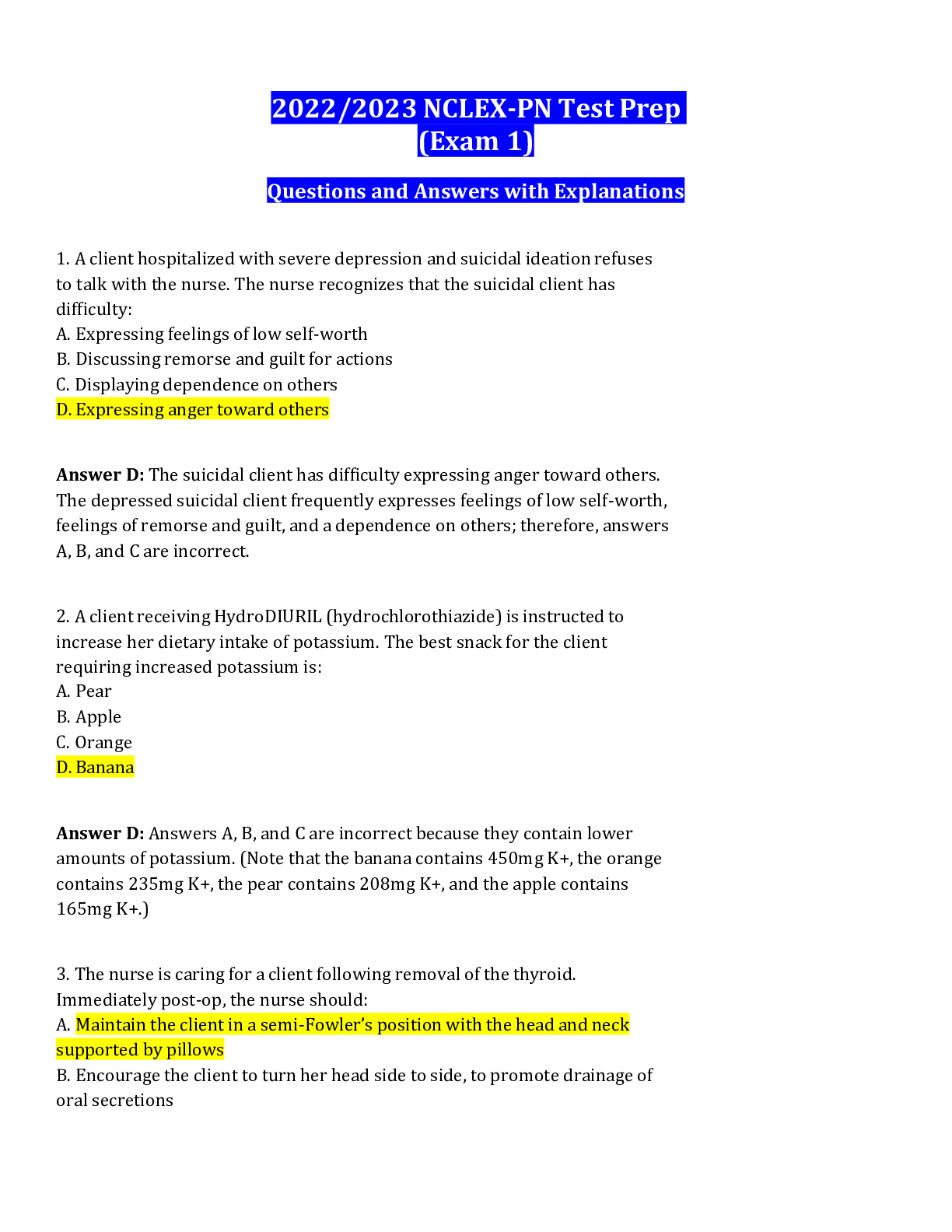
1. A client hospitalized with severe depression and suicidal ideation refuses
to talk with the nurse. The nurse recognizes that the suicidal client has
difficulty:
A. Expressing feelings of low self-worth
B. Discussing remorse and guilt for actions
C. Displaying dependence on others
D. Expressing anger toward others
Answer D: The suicidal client has difficulty expressing anger toward others.
The depressed suicidal client frequently expresses feelings of low self-worth,
feelings of remorse and guilt, and a dependence on others; therefore, answers
A, B, and C are incorrect.
2. A client receiving HydroDIURIL (hydrochlorothiazide) is instructed to
increase her dietary intake of potassium. The best snack for the client
requiring increased potassium is:
A. Pear
B. Apple
C. Orange
D. Banana
Answer D: Answers A, B, and C are incorrect because they contain lower
amounts of potassium. (Note that the banana contains 450mg K+, the orange
contains 235mg K+, the pear contains 208mg K+, and the apple contains
165mg K+.)
3. The nurse is caring for a client following removal of the thyroid.
Immediately post-op, the nurse should:
A. Maintain the client in a semi-Fowler’s position with the head and neck
supported by pillows
B. Encourage the client to turn her head side to side, to promote drainage of
oral secretions
C. Maintain the client in a supine position with sandbags placed on either
side of the head and neck
D. Encourage the client to cough and breathe deeply every 2 hours, with the
neck in a flexed position
Answer A: Following a thyroidectomy, the client should be placed in semiFowler’s position to decrease swelling that would place pressure on the
airway. Answers B, C, and D are incorrect because they would increase the
chances of post-operative complications that include bleeding, swelling, and
airway obstruction.
4. A client hospitalized with chronic dyspepsia is diagnosed with gastric
cancer. Which of the following is associated with an increased incidence of
gastric cancer?
A. Dairy products
B. Carbonated beverages
C. Refined sugars
D. Luncheon meats
Answer D: Luncheon meats contain preservatives such as nitrites that have
been linked to gastric cancer. Answers A, B, and C have not been found to
increase the risk of gastric cancer; therefore, they are incorrect.
5. A client is sent to the psychiatric unit for forensic evaluation after he is
accused of arson. His tentative diagnosis is antisocial personality disorder. In
reviewing the client’s record, the nurse could expect to find:
A. A history of consistent employment
B. A below-average intelligence
C. A history of cruelty to animals
D. An expression of remorse for his actions
Answer C: A history of cruelty to people and animals, truancy, setting fires,
and lack of guilt or remorse are associated with a diagnosis of conduct
disorder in children, which becomes a diagnosis of antisocial personality
disorder in adults. Answer A is incorrect because the client with antisocial
personality disorder does not hold consistent employment. Answer B is
incorrect because the IQ is usually higher than average. Answer D is
incorrect because of a lack of guilt or remorse for wrong-doing.
6. The licensed vocational nurse may not assume the primary care for a
client:
A. In the fourth stage of labor
B. Two days post-appendectomy
C. With a venous access device
D. With bipolar disorder
Answer C: The licensed vocational nurse may not assume primary care of
the client with a central venous access device. The licensed vocational nurse
may care for the client in labor, the client post-operative client, and the client
with bipolar disorder; therefore, answers A, B, and D are incorrect.
7. The physician has ordered dressings with mafenide acetate (Sulfamylon)
cream for a client with full-thickness burns of the hands and arms. Before
dressing changes, the nurse should give priority to:
A. Administering pain medication
B. Checking the adequacy of urinary output
C. Requesting a daily complete blood count
D. Obtaining a blood glucose by finger stick
Answer A: Sulfamylon (mafenide acetate) produces a painful sensation when
applied to the burn wound; therefore, the client should receive pain
medication before dressing changes. Answers B, C, and D do not pertain to
dressing changes for the client with burns, so they are incorrect.
8. The nurse is teaching a group of parents about gross motor development of
the toddler. Which behavior is an example of the normal gross motor skill of
a toddler?
A. She can pull a toy behind her.
B. She can copy a horizontal line.
C. She can build a tower of eight blocks.
D. She can broad-jump.
Answer A: According to the Denver Developmental Screening Test, the
child can pull a toy behind her by age 2 years. Answers B, C, and D are not
accomplished until ages 4–5 years; therefore, they are incorrect.
9. A client hospitalized with a fractured mandible is to be discharged. Which
piece of equipment should be kept on the client with a fractured mandible?
A. Wire cutters
B. Oral airway
C. Pliers
D. Tracheostomy set
Answer A: The client with a fractured mandible should keep a pair of wire
cutters with him at all times to release the device in case of choking or
aspiration. Answer B is incorrect because the wires would prevent insertion
of an oral airway. Answer C is incorrect because it would be of no use in
releasing the wires. Answer D is incorrect because it would be used only as a
last resort in case of airway obstruction.
10. The nurse is to administer digoxin (Lanoxin) elixir to a 6-month-old with
a congenital heart defect. The nurse auscultates an apical pulse rate of 100.
The nurse should:
A. Record the heart rate and call the physician
B. Record the heart rate and administer the medication
C. Administer the medication and recheck the heart rate in 15 minutes
D. Hold the medication and recheck the heart rate in 30 minutes
Answer B: The infant’s apical heart rate is within the accepted range for
administering the medication. Answers A, C, and D are incorrect because the
apical heart rate is suitable for giving the medication.
11. A mother of a 3-year-old hospitalized with lead poisoning asks the nurse
to explain the treatment for her daughter. The nurse’s explanation is based on
the knowledge that lead poisoning is treated with:
A. Gastric lavage
B. Chelating agents
C. Antiemetics
D. Activated charcoal
Answer B: Chelating agents are used to treat the client with poisonings from
heavy metals such as lead and iron. Answers A and D are used to remove
noncorrosive poisons; therefore, they are incorrect. Answer C prevents
vomiting; therefore, it is an incorrect response.
12. An 18-month-old is scheduled for a cleft palate repair. The usual type of
restraints for the child with a cleft palate repair are:
A. Elbow restraints
B. Full arm restraints
C. Wrist restraints
D. Mummy restraints
Answer A: The least restrictive restraint for the infant with cleft lip and cleft
palate repair is elbow restraints. Answers B, C, and D are more restrictive and
unnecessary; therefore, they are incorrect.
13. A client with glaucoma has been prescribed Timoptic (timolol) eyedrops.
Timoptic should be used with caution in the client with a history of:
A. Diabetes
B. Gastric ulcers
C. Emphysema
D. Pancreatitis
Answer C: Beta blockers such as timolol (Timoptic) can cause
bronchospasms in the client with chronic obstructive lung disease. Timoptic
is not contraindicated for use in clients with diabetes, gastric ulcers, or
pancreatitis; therefore, answers A, B, and C are incorrect.
14. An elderly client who experiences nighttime confusion wanders from his
room into the room of another client. The nurse can best help decrease the
client’s confusion by:
A. Assigning a nursing assistant to sit with him until he falls asleep
B. Allowing the client to room with another elderly client
C. Administering a bedtime sedative
D. Leaving a nightlight on during the evening and night shifts
Answer D: Leaving a nightlight on during the evening and night shifts helps
the client remain oriented to the environment and fosters independence.
Answers A and B will not decrease the client’s confusion. Answer C will
increase the likelihood of confusion in an elderly client.
15. Which of the following is a common complaint of the client with endstage renal failure?
A. Weight loss
B. Itching
C. Ringing in the ears
D. Bruising
Answer B: Pruritis or itching is caused by the presence of uric acid crystals
on the skin, which is common in the client with end-stage renal failure.
Answers A, C, and D are not associated with end-stage renal failure.
16. Which of the following medication orders needs further clarification?
A. Darvocet (propoxyphene) 65mg PO every 4–6 hrs. PRN
B. Mysoline (primidone) 250mg PO TID
C. Coumadin (warfarin sodium) 10mg PO
D. Premarin (conjugated estrogen) .625mg PO daily
Answer C: There is no specified time or frequency for the ordered
medication. Answers A, B, and D contain specified time and frequency,
therefore they do not require further clarification.
17. The best diet for the client with Meniere’s syndrome is one that is:
A. High in fiber
B. Low in sodium
C. High in iodine
D. Low in fiber
Answer B: A low-sodium diet is best for the client with Meniere’s syndrome.
Answers A, C, and D do not relate to the care of the client with Meniere’s
syndrome; therefore, they are incorrect.
18. Which of the following findings is associated with right-sided heart
failure?
A. Shortness of breath
B. Nocturnal polyuria
C. Daytime oliguria
D. Crackles in the lungs
Answer B: Increased voiding at night is a symptom of right-sided heart
failure. Answers A and D are incorrect because they are symptoms of leftsided heart failure. Answer C does not relate to the client’s diagnosis;
therefore, it is incorrect.
19. An 8-year-old admitted with an upper-respiratory infection has an order
for O2 saturation via pulse oximeter. To ensure an accurate reading, the nurse
should:
A. Place the probe on the child’s abdomen
B. Recalibrate the oximeter at the beginning of each shift
C. Apply the probe and wait 15 minutes before obtaining a reading
D. Place the probe on the child’s finger
Answer D: The pulse oximeter should be placed on the child’s finger or
earlobe because blood flow to these areas is most accessible for measuring
oxygen concentration. Answer A is incorrect because the probe cannot be
secured to the abdomen. Answer B is incorrect because it should be
recalibrated before application. Answer C is incorrect because a reading is
obtained within seconds, not minutes.
20. An infant with Tetralogy of Fallot is discharged with a prescription for
lanoxin elixir. The nurse should instruct the mother to:
A. Administer the medication using a nipple
B. Administer the medication using the calibrated dropper in the bottle
C. Administer the medication using a plastic baby spoon
D. Administer the medication in a baby bottle with 1oz. of water
Answer B: The medication should be administered using the calibrated
dropper that comes with the medication. Answers A and C are incorrect
because part or all of the medication could be lost during administration.
Answer D is incorrect because part or all of the medication will be lost if the
child does not finish the bottle.
21. The client scheduled for electroconvulsive therapy tells the nurse, “I’m so
afraid. What will happen to me during the treatment?” Which of the
following statements is most therapeutic for the nurse to make?
A. “You will be given medicine to relax you during the treatment.”
B. “The treatment will produce a controlled grand mal seizure.”
C. “The treatment might produce nausea and headache.”
D. “You can expect to be sleepy and confused for a time after the treatment.”
Answer A: The client will receive medication that relaxes skeletal muscles
and produces mild sedation. Answers B and D are incorrect because such
statements increase the client’s anxiety level. Nausea and headache are not
associated with ECT; therefore, answer C is incorrect.
22. Which of the following skin lesions is associated with Lyme’s disease?
A. Bull’s eye rash
B. Papular crusts
C. Bullae
D. Plaques
Answer A: Lyme’s disease produces a characteristic annular or circular rash
sometimes described as a “bull’s eye” rash. Answers B, C, and D are
incorrect because they are not symptoms associated with Lyme’s disease.
23. Which of the following snacks would be suitable for the child with
gluten-induced enteropathy?
A. Soft oatmeal cookie
B. Buttered popcorn
C. Peanut butter and jelly sandwich
D. Cheese pizza
Answer B: The client with gluten-induced enteropathy experiences
symptoms after ingesting foods containing wheat, oats, barley, or rye. Corn
or millet are substituted in the diet. Answers A, C, and D are incorrect
because they contain foods that worsen the client’s condition.
24. A client with schizophrenia is receiving chlorpromazine (Thorazine)
400mg twice a day. An adverse side effect of the medication is:
A. Photosensitivity
B. Elevated temperature
C. Weight gain
D. Elevated blood pressure
Answer B: Neuroleptic malignant syndrome is an adverse reaction that is
characterized by extreme elevations in temperature. Answers A and C are
incorrect because they are expected side effects. Elevations in blood pressure
are associated with reactions between foods containing tyramine and MAOI;
therefore, answer D is incorrect.
25. Which information should be given to the client taking phenytoin
(Dilantin)?
A. Taking the medication with meals will increase its effectiveness.
B. The medication can cause sleep disturbances.
C. More frequent dental appointments will be needed for special gum care.
D. The medication decreases the effects of oral contraceptives.
Answer C: Gingival hyperplasia is a side effect of phenytoin. The client will
need more frequent dental visits. Answers A, B, and D do not apply to the
medication; therefore, they are incorrect.
26. A client has returned to his room following an esophagoscopy. Before
offering fluids, the nurse should give priority to assessing the client’s:
A. Level of consciousness
B. Gag reflex
C. Urinary output
D. Movement of extremities
Answer B: The client’s gag reflex is depressed before having an EGD. The
nurse should give priority to checking for the return of the gag reflex before
offering the client oral fluids. Answer A is incorrect because conscious
sedation is used. Answers C and D are not affected by the procedure;
therefore, they are incorrect.
27. Which instruction should be included in the discharge teaching for the
client with cataract surgery?
A. Over-the-counter eyedrops can be used to treat redness and irritation.
B. The eye shield should be worn at night.
C. It will be necessary to wear special cataract glasses.
D. A prescription for medication to control post-operative pain will be
needed.
Answer B: The eye shield should be worn at night or when napping, to
prevent accidental trauma to the operative eye. Prescription eyedrops, not
over-the-counter eyedrops, are ordered for the client; therefore, Answer A is
incorrect. The client might or might not require glasses following cataract
surgery; therefore, answer C is incorrect. Answer D is incorrect because
cataract surgery is pain free.
28. An 8-year-old is admitted with drooling, muffled phonation, and a
temperature of 102°F. The nurse should immediately notify the doctor
because the child’s symptoms are suggestive of:
A. Strep throat
B. Epiglottitis
C. Laryngotracheobronchitis
D. Bronchiolitis
Answer B: The child’s symptoms are consistent with those of epiglottitis, an
infection of the upper airway that can result in total airway obstruction.
Symptoms of strep throat, laryngotracheobronchitis, and bronchiolitis are
different than those presented by the client; therefore, answers A, C, and D
are incorrect.
29. Phototherapy is ordered for a newborn with physiologic jaundice. The
nurse caring for the infant should:
A. Offer the baby sterile water between feedings of formula
B. Apply an emollient to the baby’s skin to prevent drying
C. Wear a gown, gloves, and a mask while caring for the infant
D. Place the baby on enteric isolation
Answer A: Providing additional fluids will help the newborn eliminate
excess bilirubin in the stool and urine. Answer B is incorrect because oils and
lotions should not be used with phototherapy. Physiologic jaundice is not
associated with infection; therefore, answers C and D are incorrect.
30. A teen hospitalized with anorexia nervosa is now permitted to leave her
room and eat in the dining room. Which of the following nursing
interventions should be included in the client’s plan of care?
A. Weighing the client after she eats
B. Having a staff member remain with her for 1 hour after she eats
C. Placing high-protein foods in the center of the client’s plate
D. Providing the client with child-size utensils
Answer B: Having a staff member remain with the client for 1 hour after
meals will help prevent self-induced vomiting. Answer A is incorrect because
the client will weigh more after meals, which can undermine treatment.
Answer C is incorrect because the client will need a balanced diet and excess
protein might not be well tolerated at first. Answer D is incorrect because it
treats the client as a child rather than as an adult.
31. According to Erickson’s stage of growth and development, the
developmental task associated with middle childhood is:
A. Trust
B. Initiative
C. Independence
D. Industry
Answer D: According to Erikson’s Psychosocial Developmental Theory, the
developmental task of middle childhood is industry versus inferiority.
Answer A is incorrect because it is the developmental task of infancy.
Answer B is incorrect because it is the developmental task of the school-age
child. Answer C is incorrect because it is not one of Erikson’s developmental
stages.
32. The nurse should observe for side effects associated with the use of
bronchodilators. A common side effect of bronchodilators is:
A. Tinnitus
B. Nausea
C. Ataxia
D. Hypotension
Answer B: A side effect of bronchodilators is nausea. Answers A and C are
not associated with bronchodilators; therefore, they are incorrect. Answer D
is incorrect because hypotension is a sign of toxicity, not a side effect.
33. The 5-minute Apgar of a baby delivered by C-section is recorded as 9.
The most likely reason for this score is:
A. The mottled appearance of the trunk
B. The presence of conjunctival hemorrhages
C. Cyanosis of the hands and feet
D. Respiratory rate of 20–28 per minute
Answer C: Although cyanosis of the hands and feet is common in the
newborn, it accounts for an Apgar score of less than 10. Answer B suggests
cooling, which is not scored by the Apgar. Answer B is incorrect because
conjunctival hemorrhages are not associated with the Apgar. Answer D is
incorrect because it is within normal range as measured by the Apgar.
34. A 5-month-old infant is admitted to the ER with a temperature of 103.6°F
and irritability. The mother states that the child has been listless for the past
several hours and that he had a seizure on the way to the hospital. A lumbar
puncture confirms a diagnosis of bacterial meningitis. The nurse should
assess the infant for:
A. Periorbital edema
B. Tenseness of the anterior fontanel
C. Positive Babinski reflex
D. Negative scarf sign
Answer B: Tenseness of the anterior fontanel indicates an increase in
intracranial pressure. Answer A is incorrect because periorbital edema is not
associated with meningitis. Answer C is incorrect because a positive Babinski
reflex is normal in the infant. Answer D is incorrect because it relates to the
preterm infant, not the infant with meningitis.
35. A client with a bowel resection and anastamosis returns to his room with
an NG tube attached to intermittent suction. Which of the following
observations indicates that the nasogastric suction is working properly?
A. The client’s abdomen is soft.
B. The client is able to swallow.
C. The client has active bowel sounds.
D. The client’s abdominal dressing is dry and intact.
Answer A: Nasogastric suction decompresses the stomach and leaves the
abdomen soft and nondistended. Answer B is incorrect because it does not
relate to the effectiveness of the NG suction. Answer C is incorrect because it
relates to peristalsis, not the effectiveness of the NG suction. Answer D is
incorrect because it relates to wound healing, not the effectiveness of the NG
suction.
36. The nurse is teaching the client with insulin-dependent diabetes the signs
of hypoglycemia. Which of the following signs is associated with
hypoglycemia?
A. Tremulousness
B. Slow pulse
C. Nausea
D. Flushed skin
Answer A: Tremulousness is an early sign of hypoglycemia. Answers B, C,
and D are incorrect because they are symptoms of hyperglycemia.
37. Which of the following symptoms is associated with exacerbation of
multiple sclerosis?
A. Anorexia
B. Seizures
C. Diplopia
D. Insomnia
Answer C: The most common sign associated with exacerbation of multiple
sclerosis is double vision. Answers A, B, and D are not associated with a
diagnosis of multiple sclerosis; therefore, they are incorrect.
38. Which of the following conditions is most likely related to the
development of renal calculi?
A. Gout
B. Pancreatitis
C. Fractured femur
D. Disc disease
Answer A: Gout and renal calculi are the result of increased amounts of uric
acid. Answer B is incorrect because it does not contribute to renal calculi.
Answers C and D can result from decreased calcium levels. Renal calculi are
the result of excess calcium; therefore, answers C and D are incorrect.
39. A client with AIDS is admitted for treatment of wasting syndrome.
Which of the following dietary modifications can be used to compensate for
the limited absorptive capability of the intestinal tract?
A. Thoroughly cooking all foods
B. Offering yogurt and buttermilk between meals
C. Forcing fluids
D. Providing small, frequent meals
Answer D: Providing small, frequent meals will improve the client’s appetite
and help reduce nausea. Answer A is incorrect because it does not
compensate for limited absorption. Foods and beverages containing live
cultures are discouraged for the immune-compromised client; therefore,
answer B is incorrect. Answer C is incorrect because forcing fluids will not
compensate for limited absorption of the intestine.
40. The treatment protocol for a client with acute lymphocytic leukemia
includes prednisone, methotrexate, and cimetadine. The purpose of the
cimetadine is to:
A. Decrease the secretion of pancreatic enzymes
B. Enhance the effectiveness of methotrexate
C. Promote peristalsis
D. Prevent a common side effect of prednisone
Answer D: A common side effect of prednisone is gastric ulcers. Cimetadine
is given to help prevent the development of ulcers. Answers A, B, and C do
not relate to the use of cimetadine; therefore, they are incorrect.
41. Which of the following meal choices is suitable for a 6-month-old infant?
A. Egg white, formula, and orange juice
B. Apple juice, carrots, whole milk
C. Rice cereal, apple juice, formula
D. Melba toast, egg yolk, whole milk
Answer C: Rice cereal, apple juice, and formula are suitable foods for the 6-
month-old infant. Whole milk, orange juice, and eggs are not suitable for the
young infant; therefore, they are incorrect.
42. The LPN is preparing to administer an injection of vitamin K to the
newborn. The nurse should administer the injection in the:
A. Rectus femoris muscle
B. Vastus lateralis muscle
C. Deltoid muscle
D. Dorsogluteal muscle
Answer B: The nurse should administer the injection in the vastus lateralis
muscle. Answers A and C are not as well developed in the newborn;
therefore, they are incorrect. Answer D is incorrect because the dorsogluteal
muscle is not used for IM injections until the child is 3 years of age.
43. The physician has prescribed Cytoxan (cyclophosphamide) for a client
with nephotic syndrome. The nurse should:
A. Encourage the client to drink extra fluids
B. Request a low-protein diet for the client
C. Bathe the client using only mild soap and water
D. Provide additional warmth for swollen, inflamed joints
Answer A: The client taking Cytoxan should increase his fluid intake to
prevent hemorrhagic cystitis. Answers B, C, and D do not relate to the
question; therefore, they are incorrect.
44. The nurse is caring for a client with detoxification from alcohol. Which
medication is used in the treatment of alcohol withdrawal?
A. Antabuse (disulfiram)
B. Romazicon (flumazenil)
C. Dolophine (methodone)
D. Ativan (lorazepam)
Answer D: Benzodiazepines are ordered for the client in alcohol withdrawal
to prevent delirium tremens. Answer A is incorrect because it is a medication
used in aversive therapy to maintain sobriety. Answer B is incorrect because
it is used for the treatment of benzodiazepine overdose. Answer C is incorrect
because it is the treatment for opiate withdrawal.
45. A client with insulin-dependent diabetes takes 20 units of NPH insulin at
7 a.m. The nurse should observe the client for signs of hypoglycemia at:
A. 8 a.m.
B. 10 a.m.
C. 3 p.m.
D. 5 a.m.
Answer C: The client taking NPH insulin should have a snack midafternoon
to prevent hypoglycemia. Answers A and B are incorrect because the times
are too early for symptoms of hypoglycemia. Answer D is incorrect because
the time is too late and the client would be in severe hypoglycemia.
46. The licensed practical nurse is assisting the charge nurse in planning care
for a client with a detached retina. Which of the following nursing diagnoses
should receive priority?
A. Alteration in comfort
B. Alteration in mobility
C. Alteration in skin integrity
D. Alteration in O2 perfusion
Answer B: The client with a detached retina will have limitations in mobility
before and after surgery. Answer A is incorrect because a detached retina
produces no pain or discomfort. Answers C and D do not apply to the client
with a detached retina; therefore, they are incorrect.
47. The primary purpose for using a CPM machine for the client with a total
knee repair is to help:
A. Prevent contractures
B. Promote flexion of the artificial joint
C. Decrease the pain associated with early ambulation
D. Alleviate lactic acid production in the leg muscles
Answer B: The primary purpose for the continuous passive-motion machine
is to promote flexion of the artificial joint. The device should be placed at the
foot of the client’s bed. Answers A, C, and D do not describe the purpose of
the CPM machine; therefore, they are incorrect.
48. Which of the following statements reflects Kohlberg’s theory of the
moral development of the preschool-age child?
A. Obeying adults is seen as correct behavior.
B. Showing respect for parents is seen as important.
C. Pleasing others is viewed as good behavior.
D. Behavior is determined by consequences.
Answer D: According to Kohlberg, in the preconventional stage of
development, the behavior of the preschool child is determined by the
consequences of the behavior. Answers A, B, and C describe other stages of
moral development; therefore, they are incorrect.
49. A toddler with otitis media has just completed antibiotic therapy. A
recheck appointment should be made to:
A. Determine whether the ear infection has affected her hearing
B. Make sure that she has taken all the antibiotic
C. Document that the infection has completely cleared
D. Obtain a new prescription in case the infection recurs
Answer C: The client should be assessed following completion of antibiotic
therapy to determine whether the infection has cleared. Answer A would be
done if there are repeated instances of otitis media; therefore, it is incorrect.
Answer B is incorrect because it will not determine whether the child has
taken the medication. Answer D is incorrect because the purpose of the
recheck is to determine whether the infection is gone.
50. A factory worker is brought to the nurse’s office after a metal fragment
enters his right eye. The nurse should:
A. Cover the right eye with a sterile 4×4
B. Attempt to remove the metal with a cotton-tipped applicator
C. Flush the eye for 10 minutes with running water
D. Cover both eyes and transport the client to the ER
Answer D: The nurse should cover both of the client’s eyes and transport
him immediately to the ER or the doctor’s office. Answers A, B, and D are
incorrect because they increase the risk of further damage to the eye.
51. The nurse is caring for a client with systemic lupus erythematosis (SLE).
The major complication associated with systemic lupus erythematosis is:
A. Nephritis
B. Cardiomegaly
C. Desquamation
D. Meningitis
Answer A: The major complication of SLE is lupus nephritis, which results
in end-stage renal disease. SLE affects the musculoskeletal, integumentary,
renal, nervous, and cardiovascular systems, but the major complication is
renal involvement; therefore, answers B and D are incorrect. Answer C is
incorrect because the SLE produces a “butterfly” rash, not desquamation.
52. Which diet is associated with an increased risk of colorectal cancer?
A. Low protein, complex carbohydrates
B. High protein, simple carbohydrates
C. High fat, refined carbohydrates
D. Low carbohydrates, complex proteins
Answer C: A diet that is high in fat and refined carbohydrates increases the
risk of colorectal cancer. High fat content results in an increase in fecal bile
acids, which facilitate carcinogenic changes. Refined carbohydrates increase
the transit time of food through the gastrointestinal tract and increase the
exposure time of the intestinal mucosa to cancer-causing substances.
Answers A, B, and D do not relate to the question; therefore, they are
incorrect.
53. The nurse is caring for an infant following a cleft lip repair. While
comforting the infant, the nurse should avoid:
A. Holding the infant
B. Offering a pacifier
C. Providing a mobile
D. Offering sterile water
Answer B: The nurse should avoid giving the infant a pacifier or bottle
because sucking is not permitted. Holding the infant cradled in the arms,
providing a mobile, and offering sterile water using a Breck feeder are
permitted; therefore, answers A, C, and D are incorrect.
54. The physician has ordered Amoxil (amoxicillin) 500mg capsules for a
client with esophageal varices. The nurse can best care for the client’s needs
by:
A. Giving the medication as ordered
B. Providing extra water with the medication
C. Giving the medication with an antacid
D. Requesting an alternate form of the medication
Answer D: The client with esophageal varices can develop spontaneous
bleeding from the mechanical irritation caused by taking capsules; therefore,
the nurse should request the medication in a suspension. Answer A is
incorrect because it does not best meet the client’s needs. Answer B is
incorrect because it is not the best means of preventing bleeding. Answer C is
incorrect because the medications should not be given with milk or antacids.
55. The nurse is providing dietary instructions for a client with irondeficiency anemia. Which food is a poor source of iron?
A. Tomatoes
B. Legumes
C. Dried fruits
D. Nuts
Answer A: Tomatoes are a poor source of iron, although they are an
excellent source of vitamin C, which increases iron absorption. Answers B,
C, and D are good sources of iron; therefore, they are incorrect.
56. The nurse is teaching a client with Parkinson’s disease ways to prevent
curvatures of the spine associated with the disease. To prevent spinal flexion,
the nurse should tell the client to:
A. Periodically lie prone without a neck pillow
B. Sleep only in dorsal recumbent position
C. Rest in supine position with his head elevated
D. Sleep on either side but keep his back straight
Answer A: Periodically lying in a prone position without a pillow will help
prevent the flexion of the spine that occurs with Parkinson’s disease.
Answers B and C flex the spine; therefore, they are incorrect. Answer D is
not realistic because of position changes during sleep; therefore, it is
incorrect.
57. The nurse is planning dietary changes for a client following an episode of
pancreatitis. Which diet is suitable for the client?
A. Low calorie, low carbohydrate
B. High calorie, low fat
C. High protein, high fat
D. Low protein, high carbohydrate
Answer B: The client recovering from pancreatitis needs a diet that is high in
calories and low in fat. Answers A, C, and D are incorrect because they can
increase the client’s discomfort.
58. A client with hypothyroidism frequently complains of feeling cold. The
nurse should tell the client that she will be more comfortable if she:
A. Uses an electric blanket at night
B. Dresses in extra layers of clothing
C. Applies a heating pad to her feet
D. Takes a hot bath morning and evening
Answer B: Dressing in layers and using extra covering will help decrease the
feeling of being cold that is experienced by the client with hypothyroidism.
Decreased sensation and decreased alertness are common in the client with
hypothyroidism; therefore, the use of electric blankets and heating pads can
result in burns, making answers A and C incorrect. Answer D is incorrect
because the client with hypothyroidism has dry skin, and a hot bath morning
and evening would make her condition worse.
59. A client has been hospitalized with a diagnosis of laryngeal cancer.
Which factor is most significant in the development of laryngeal cancer?
A. A family history of laryngeal cancer
B. Chronic inhalation of noxious fumes
C. Frequent straining of the vocal cords
D. A history of alcohol and tobacco use
Answer D: A history of frequent alcohol and tobacco use is the most
significant factor in the development of cancer of the larynx. Answers A, B,
and C are also factors in the development of laryngeal cancer, but they are
not the most significant; therefore, they are incorrect.
60. The nurse is completing an assessment history of a client with pernicious
anemia. Which complaint differentiates pernicious anemia from other types
of anemia?
A. Difficulty in breathing after exertion
B. Numbness and tingling in the extremities
C. A faster-than-usual heart rate
D. Feelings of lightheadedness
Answer B: Numbness and tingling in the extremities is common in the client
with pernicious anemia, but not those with other types of anemia. Answers A,
C, and D are incorrect because they are symptoms of all types of anemia.
61. The chart of a client with schizophrenia states that the client has
echolalia. The nurse can expect the client to:
A. Speak using words that rhyme
B. Repeat words or phrases used by others
C. Include irrelevant details in conversation
D. Make up new words with new meanings
Answer B: The client with echolalia repeats words or phrases used by others.
Answer A is incorrect because it refers to clang association. Answer C is
incorrect because it refers to circumstantiality. Answer D is incorrect because
it refers to neologisms.
62. Which early morning activity helps to reduce the symptoms associated
with rheumatoid arthritis?
A. Brushing the teeth
B. Drinking a glass of juice
C. Drinking a cup of coffee
D. Brushing the hair
Answer C: Holding a cup of coffee or hot chocolate helps to relieve the pain
and stiffness of the hands. Answers A, B, and D do not relieve the symptoms
of rheumatoid arthritis; therefore, they are incorrect.
63. A newborn weighed 7 pounds at birth. At 6 months of age, the infant
could be expected to weigh:
A. 14 pounds
B. 18 pounds
C. 25 pounds
D. 30 pounds
Answer A: The infant’s birth weight should double by 6 months of age.
Answers B, C, and D are incorrect because they are greater than the expected
weight gain by 6 months of age.
64. A client with nontropical sprue has an exacerbation of symptoms. Which
meal selection is responsible for the recurrence of the client’s symptoms?
A. Tossed salad with oil and vinegar dressing
B. Baked potato with sour cream and chives
C. Cream of tomato soup and crackers
D. Mixed fruit and yogurt
Answer C: Symptoms associated with nontropical sprue and celiac disease
are caused by the ingestion of gluten, which is found in wheat, oats, barley,
and rye. Creamed soup and crackers contain gluten. Answers A, B, and D do
not contain gluten; therefore, they are incorrect.
65. A client with congestive heart failure has been receiving Digoxin
(lanoxin). Which finding indicates that the medication is having a desired
effect?
A. Increased urinary output
B. Stabilized weight
C. Improved appetite
D. Increased pedal edema
Answer A: Lanoxin (digoxin) slows and strengthens the contraction of the
heart. An increase in urinary output shows that the medication is having a
desired effect by eliminating excess fluid from the body. Answer B is
incorrect because the weight would decrease. Answer C might occur but is
not directly related to the question; therefore, it is incorrect. Answer D is
incorrect because pedal edema would decrease, not increase.
66. Which play activity is best suited to the gross motor skills of the toddler?
A. Coloring book and crayons
B. Ball
C. Building cubes
D. Swing set
Answer B: The toddler has gross motor skills suited to playing with a ball,
which can be kicked forward or thrown overhand. Answers A and C are
incorrect because they require fine motor skills. Answer D is incorrect
because the toddler lacks gross motor skills for play on the swing set.
67. The physician has ordered Basalgel (aluminum carbonate gel) for a client
with recurrent indigestion. The nurse should teach the client common side
effects of the medication, which include:
A. Constipation
B. Urinary retention
C. Diarrhea
D. Confusion
Answer A: Antacids containing aluminum and calcium tend to cause
constipation. Answer A refers to the side effects of anticholinergic
medications used to treat ulcers; therefore, it is incorrect. Answer C refers to
antacids containing magnesium; therefore, it is incorrect. Answer D refers to
dopamine antagonists used to treat ulcers; therefore, it is incorrect.
68. A client is admitted with suspected abdominal aortic aneurysm (AAA). A
common complaint of the client with an abdominal aortic aneurysm is:
A. Loss of sensation in the lower extremities
B. Back pain that lessens when standing
C. Decreased urinary output
D. Pulsations in the periumbilical area
Answer D: The client with an abdominal aortic aneurysm frequently
complains of pulsations or “feeling my heart beat” in the abdomen. Answers
A and C are incorrect because they occur with rupture of the aneurysm.
Answer B is incorrect because back pain is not affected by changes in
position.
69. A client is admitted with acute adrenal crisis. During the intake
assessment, the nurse can expect to find that the client has:
A. Low blood pressure
B. Slow, regular pulse
C. Warm, flushed skin
D. Increased urination
Answer A: The client with acute adrenal crisis has symptoms of
hypovolemia and shock; therefore, the blood pressure would be low. Answer
B is incorrect because the pulse would be rapid and irregular. Answer C is
incorrect because the skin would be cool and pale. Answer D is incorrect
because the urinary output would be decreased.
70. An elderly client is hospitalized for a transurethral prostatectomy. Which
finding should be reported to the doctor immediately?
A. Hourly urinary output of 40–50cc
B. Bright red urine with many clots
C. Dark red urine with few clots
D. Requests for pain med q 4 hrs.
Answer B: Bright red bleeding with many clots indicates arterial bleeding
that requires surgical intervention. Answer A is within normal limits;
therefore, it is incorrect. Answer C indicates venous bleeding, which can be
managed by nursing intervention; therefore, it is incorrect. Answer D does
not indicate excessive need for pain management that requires the doctor’s
attention; therefore, it is incorrect.
71. A 9-year-old is admitted with suspected rheumatic fever. Which finding
is suggestive of polymigratory arthritis?
A. Irregular movements of the extremities and facial grimacing
B. Painless swelling over the extensor surfaces of the joints
C. Faint areas of red demarcation over the back and abdomen
D. Swelling, inflammation, and effusion of the joints
Answer D: The child with polymigratory arthritis will exhibit swollen,
painful joints. Answer B is incorrect because it describes subcutaneous
nodules. Answer C is incorrect because it describes erythema marginatum.
Answer A is incorrect because it describes Syndeham’s chorea.
72. A child with croup is placed in a cool, high-humidity tent connected to
room air. The primary purpose of the tent is to:
A. Prevent insensible water loss
B. Provide a moist environment with oxygen at 30%
C. Prevent dehydration and reduce fever
D. Liquefy secretions and relieve laryngeal spasm
Answer D: The primary reason for placing a child with croup under a mist
tent is to liquefy secretions and relieve laryngeal spasms. Answer A is
incorrect because it does not prevent insensible water loss. Answer B is
incorrect because the oxygen concentration is too high. Answer C is incorrect
because the mist tent does not prevent dehydration or reduce fever.
73. A client is admitted with a diagnosis of hypothyroidism. An initial
assessment of the client would reveal:
A. Slow pulse rate, weight loss, diarrhea, and cardiac failure
B. Weight gain, lethargy, slowed speech, and decreased respiratory rate
C. Rapid pulse, constipation, and bulging eyes
D. Decreased body temperature, weight loss, and increased respirations
Answer B: Symptoms of hypothyroidism include weight gain, lethargy, slow
speech, and decreased respirations. Answers A and D do not describe
symptoms associated with myxedema; therefore, they are incorrect. Answer
C describes symptoms associated with Graves’s disease; therefore, it is
incorrect.
74. Which statement describes the contagious stage of varicella?
A. The contagious stage is 1 day before the onset of the rash until the
appearance of vesicles.
B. The contagious stage lasts during the vesicular and crusting stages of the
lesions.
C. The contagious stage is from the onset of the rash until the rash
disappears.
D. The contagious stage is 1 day before the onset of the rash until all the
lesions are crusted.
Answer D: The contagious stage of varicella begins 24 hours before the
onset of the rash and lasts until all the lesions are crusted. Answers A, B, and
C are inaccurate regarding the time of contagion; therefore, they are
incorrect.
75. A client admitted to the psychiatric unit claims to be the Son of God and
insists that he will not be kept away from his followers. The most likely
explanation for the client’s delusion is:
A. A religious experience
B. A stressful event
C. Low self-esteem
D. Overwhelming anxiety
Answer C: Delusions of grandeur are associated with low self-esteem.
Answer A is incorrect because conversion is expressed as sensory or motor
deficits. Answers B and D can cause an increase in the client’s delusions but
do not explain their purpose; therefore, they are incorrect.
76. The nurse is caring for an 8-year-old following a routine tonsillectomy.
Which finding should be reported immediately?
A. Reluctance to swallow
B. Drooling of blood-tinged saliva
C. An axillary temperature of 99°F
D. Respiratory stridor
Answer D: Respiratory stridor is a symptom of partial airway obstruction.
Answers A, B, and C are expected with a tonsillectomy; therefore, they are
incorrect.
77. The nurse is admitting a client with a suspected duodenal ulcer. The client
will most likely report that his abdominal discomfort lessens when he:
A. Skips a meal
B. Rests in recumbent position
C. Eats a meal
D. Sits upright after eating
Answer C: Pain associated with duodenal ulcers is lessened if the client eats
a meal or snack. Answer A is incorrect because it makes the pain worse.
Answer B refers to dumping syndrome; therefore, it is incorrect. Answer D
refers to gastroesophageal reflux; therefore, it is incorrect.
78. Which of the following meal selections is appropriate for the client with
celiac disease?
A. Toast, jam, and apple juice
B. Peanut butter cookies and milk
C. Rice Krispies bar and milk
D. Cheese pizza and Kool-Aid
Answer C: Foods containing rice or millet are permitted on the diet of the
client with celiac disease. Answers A, B, and D are not permitted because
they contain flour made from wheat, which exacerbates the symptoms of
celiac disease; therefore, they are incorrect.
79. A client with hyperthyroidism is taking lithium carbonate to inhibit
thyroid hormone release. Which complaint by the client should alert the nurse
to a problem with the client’s medication?
A. The client complains of blurred vision.
B. The client complains of increased thirst and increased urination.
C. The client complains of increased weight gain over the past year.
D. The client complains of changes in taste.
Answer B: Increased thirst and increased urination are signs of lithium
toxicity. Answers A and D do not relate to the medication; therefore, they are
incorrect. Answer C is an expected side effect of the medication; therefore, it
is incorrect.
80. A 2-month-old infant has just received her first Tetraimmune injection.
The nurse should tell the mother that the immunization:
A. Will need to be repeated when the child is 4 years of age
B. Is given to determine whether the child is susceptible to pertussis
C. Is one of a series of injections that protects against dpt and Hib
D. Is a one-time injection that protects against MMR and varicella
Answer C: The immunization (Tetraimmune) protects the child against
diphtheria, pertussis, tetanus, and H. influenza b. Answer A is incorrect
because a second injection is given before 4 years of age. Answer B is not a
true statement; therefore, it is incorrect. Answer D is incorrect because it is
not a one-time injection, nor does it protect against measles, mumps, rubella,
or varicella.
81. The nurse is caring for a client hospitalized with bipolar disorder, manic
phase. Which of the following snacks would be best for the client with
mania?
A. Potato chips
B. Diet cola
C. Apple
D. Milkshake
Answer D: The milkshake will provide needed calories and nutrients for the
client with mania. Answers A and B are incorrect because they are high in
sodium, which causes the client to excrete the lithium. Answer C has some
nutrient value, but not as much as the milkshake.
82. A 2-year-old is hospitalized with suspected intussusception. Which
finding is associated with intussusception?
A. “Currant jelly” stools
B. Projectile vomiting
C. “Ribbonlike” stools
D. Palpable mass over the flank
Answer A: The child with intussusception has stools that contain blood and
mucus, which are described as “currant jelly” stools. Answer B is a symptom
of pyloric stenosis; therefore, it is incorrect. Answer C is a symptom of
Hirschsprung’s; therefore, it is incorrect. Answer D is a symptom of Wilms
tumor; therefore, it is incorrect.
83. A client is being treated for cancer with linear acceleration radiation. The
physician has marked the radiation site with a blue marking pen. The nurse
should:
A. Remove the unsightly markings with acetone or alcohol
B. Cover the radiation site with loose gauze dressing
C. Sprinkle baby powder over the radiated area
D. Refrain from using soap or lotion on the marked area
Answer D: The nurse should not use water, soap, or lotion on the area
marked for radiation therapy. Answer A is incorrect because it would remove
the marking. Answers B and C are not necessary for the client receiving
radiation; therefore, they are incorrect.
84. The nurse is caring for a client with acromegaly. Following a
transphenoidal hypophysectomy, the nurse should:
A. Monitor the client’s blood sugar
B. Suction the mouth and pharynx every hour
C. Place the client in low Trendelenburg position
D. Encourage the client to cough
Answer A: Growth hormone levels generally fall rapidly after a
hypophysectomy, allowing insulin levels to rise. The result is hypoglycemia.
Answer B is incorrect because it traumatizes the oral mucosa. Answer C is
incorrect because the client’s head should be elevated to reduce pressure on
the operative site. Answer D is incorrect because it increases pressure on the
operative site that can lead to a leak of cerebral spinal fluid.
85. A client newly diagnosed with diabetes is started on Precose (acarbose).
The nurse should tell the client that the medication should be taken:
A. 1 hour before meals
B. 30 minutes after meals
C. With the first bite of a meal
D. Daily at bedtime
Answer C: Precose (acarbose) is to be taken with the first bite of a meal.
Answers A, B, and D are incorrect because they specify the wrong schedule
for medication administration.
86. A client with a deep decubitus ulcer is receiving therapy in the hyperbaric
oxygen chamber. Before therapy, the nurse should:
A. Apply a lanolin-based lotion to the skin
B. Wash the skin with water and pat dry
C. Cover the area with a petroleum gauze
D. Apply an occlusive dressing to the site
Answer B: The client going for therapy in the hyperbaric oxygen chamber
requires no special skin care; therefore, washing the skin with water and
patting it dry are suitable. Lotions, petroleum products, perfumes, and
occlusive dressings interfere with oxygenation of the skin; therefore, answers
A, C, and D are incorrect.
87. A client with a laryngectomy returns from surgery with a nasogastric tube
in place. The primary reason for placement of the nasogastric tube is to:
A. Prevent swelling and dysphagia
B. Decompress the stomach via suction
C. Prevent contamination of the suture line
D. Promote healing of the oral mucosa
Answer C: The primary reason for the NG to is to allow for nourishment
without contamination of the suture line. Answer A is not a true statement;
therefore, it is incorrect. Answer B is incorrect because there is no mention of
suction. Answer D is incorrect because the oral mucosa was not involved in
the laryngectomy.
88. The chart indicates that a client has expressive aphasia following a stroke.
The nurse understands that the client will have difficulty with:
A. Speaking and writing
B. Comprehending spoken words
C. Carrying out purposeful motor activity
D. Recognizing and using an object correctly
Answer A: The client with expressive aphasia has trouble forming words that
are understandable. Answer B is incorrect because it describes receptive
aphasia. Answer C refers to apraxia; therefore, it is incorrect. Answer D is
incorrect because it refers to agnosia.
89. A camp nurse is applying sunscreen to a group of children enrolled in
swim classes. Chemical sunscreens are most effective when applied:
A. Just before sun exposure
B. 5 minutes before sun exposure
C. 15 minutes before sun exposure
D. 30 minutes before sun exposure
Answer D: Sunscreens of at least an SPF of 15 should be applied 20–30
minutes before going into the sun. Answers A, B, and C are incorrect because
they do not allow sufficient time for sun protection.
90. A post-operative client has an order for Demerol (meperidine) 75mg and
Phenergan (promethazine) 25mg IM every 3–4 hours as needed for pain. The
combination of the two medications produces a/an:
A. Agonist effect
B. Synergistic effect
C. Antagonist effect
D. Excitatory effect
Answer B: The combination of the two medications produces an effect
greater than that of either drug used alone. Agonist effects are similar to those
produced by chemicals normally present in the body; therefore, answer A is
incorrect. Antagonist effects are those in which the actions of the drugs
oppose one another; therefore, answer C is incorrect. Answer D is incorrect
because the drugs would have a combined depressing, not excitatory, effect.
91. Before administering a client’s morning dose of Lanoxin (digoxin), the
nurse checks the apical pulse rate and finds a rate of 54. The appropriate
nursing intervention is to:
A. Record the pulse rate and administer the medication
B. Administer the medication and monitor the heart rate
C. Withhold the medication and notify the doctor
D. Withhold the medication until the heart rate increases
Answer C: The medication should be withheld and the doctor should be
notified. Answers A, B, and D are incorrect because they do not provide for
the client’s safety.
92. What information should the nurse give a new mother regarding the
introduction of solid foods for her infant?
A. Solid foods should not be given until the extrusion reflex disappears, at 8–
10 months of age.
B. Solid foods should be introduced one at a time, with 4- to 7-day intervals.
C. Solid foods can be mixed in a bottle or infant feeder to make feeding
easier.
D. Solid foods should begin with fruits and vegetables.
Answer B: Solid foods should be added to the diet one at a time, with 4- to
7-day intervals between new foods. The extrusion reflex fades at 3–4 months
of age; therefore, answer A is incorrect. Answer C is incorrect because solids
should not be added to the bottle and the use of infant feeders is discouraged.
Answer D is incorrect because the first food added to the infant’s diet is rice
cereal.
93. A client with schizophrenia is started on Zyprexa (olanzapine). Three
weeks later, the client develops severe muscle rigidity and elevated
temperature. The nurse should give priority to:
A. Withholding all morning medications
B. Ordering a CBC and CPK
C. Administering prescribed anti-Parkinsonian medication
D. Transferring the client to a medical unit
Answer C: The client’s symptoms suggest an adverse reaction to the
medication known as neuroleptic malignant syndrome. Answers A, B, and D
are not appropriate.
94. A client with human immunodeficiency syndrome has gastrointestinal
symptoms, including diarrhea. The nurse should teach the client to avoid:
A. Calcium-rich foods
B. Canned or frozen vegetables
C. Processed meat
D. Raw fruits and vegetables
Answer D: The client with HIV should adhere to a low-bacteria diet by
avoiding raw fruits and vegetables. Answers A, B, and C are incorrect
because they are permitted in the client’s diet.
95. A 4-year-old is admitted with acute leukemia. It will be most important to
monitor the child for:
A. Abdominal pain and anorexia
B. Fatigue and bruising
C. Bleeding and pallor
D. Petechiae and mucosal ulcers
Answer C: The child with leukemia has low platelet counts, which
contribute to spontaneous bleeding. Answers A, B, and D, common in the
child with leukemia, are not life-threatening.
96. A 5-month-old is diagnosed with atopic dermatitis. Nursing interventions
will focus on:
A. Preventing infection
B. Administering antipyretics
C. Keeping the skin free of moisture
D. Limiting oral fluid intake
Answer A: The nurse should prevent the infant with atopic dermatitis
(eczema) from scratching, which can lead to skin infections. Answer B is
incorrect because fever is not associated with atopic dermatitis. Answers C
and D are incorrect choices because they increase dryness of the skin, which
worsens the symptoms of atopic dermatitis.
97. The nurse is caring for a client with a history of diverticulitis. The client
complains of abdominal pain, fever, and diarrhea. Which food was
responsible for the client’s symptoms?
A. Mashed potatoes
B. Steamed carrots
C. Baked fish
D. Whole-grain cereal
Answer D: Symptoms associated with diverticulitis are usually reported after
eating popcorn, celery, raw vegetables, whole grains, and nuts. Answers A,
B, and C are incorrect because they are allowed in the diet of the client with
diverticulitis.
98. The physician has scheduled a Whipple procedure for a client with
pancreatic cancer. The nurse recognizes that the client’s cancer is located in:
A. The tail of the pancreas
B. The head of the pancreas
C. The body of the pancreas
D. The entire pancreas
Answer B: The Whipple procedure is performed for cancer located in the
head of the pancreas. Answers A, C, and D are not correct because of the
location of the cancer.
99. A child with cystic fibrosis is being treated with inhalation therapy with
Pulmozyme (dornase alfa). A side effect of the medication is:
A. Weight gain
B. Hair loss
C. Sore throat
D. Brittle nails
Answer C: Side effects of Pulmozyme include sore throat, hoarseness, and
laryngitis. Answers A, B, and D are not associated with the use of
Pulmozyme; therefore, they are incorrect.
100. The doctor has ordered Percocet (oxycodone) for a client following
abdominal surgery. The primary objective of nursing care for the client
receiving an opiate analgesic is to:
A. Prevent addiction
B. Alleviate pain
C. Facilitate mobility
D. Prevent nausea
Answer B: The nurse should be concerned with alleviating the client’s pain.
Answers A, C, and D are not primary objectives in the care of the client
receiving an opiate a
[Show More]






.png)





 5th Edition.png)


