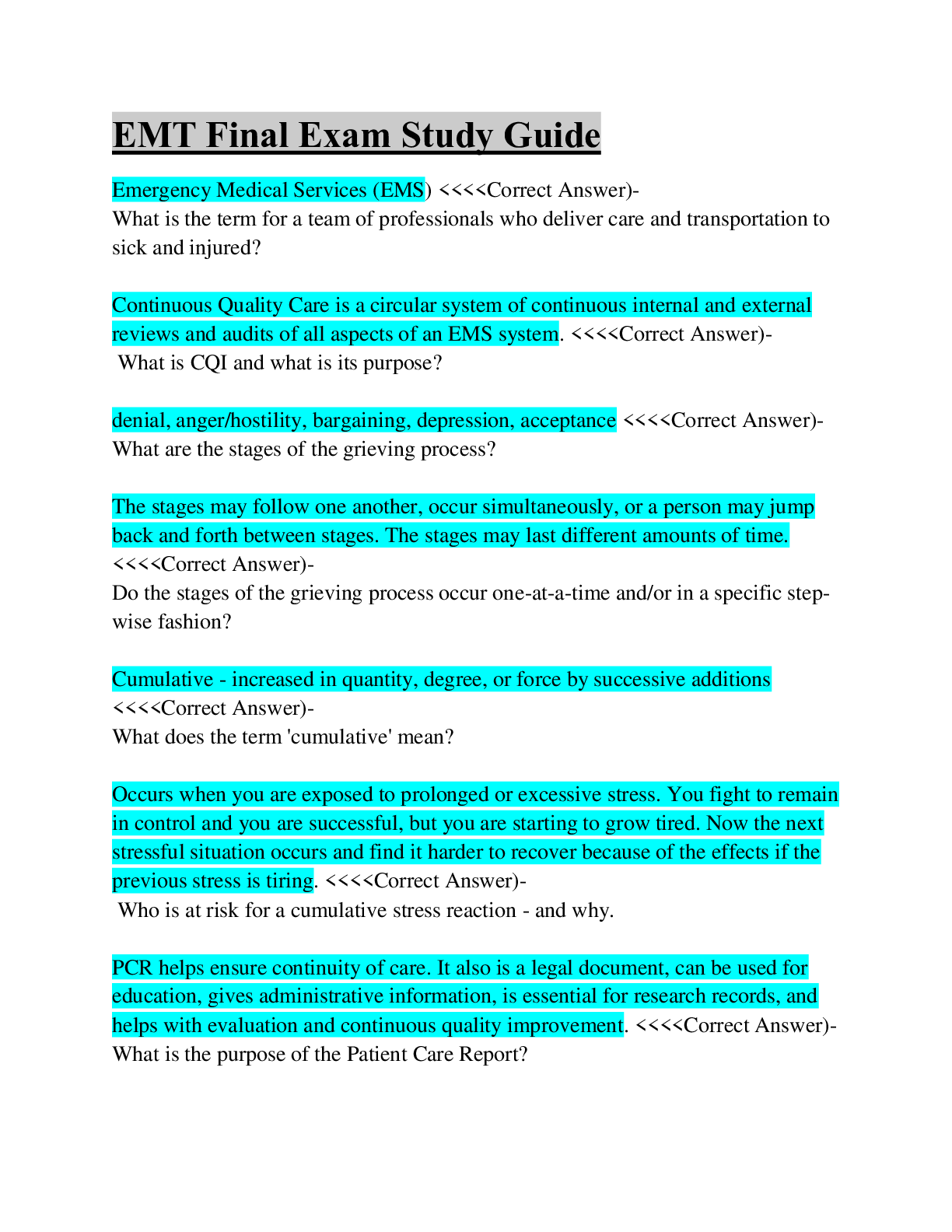
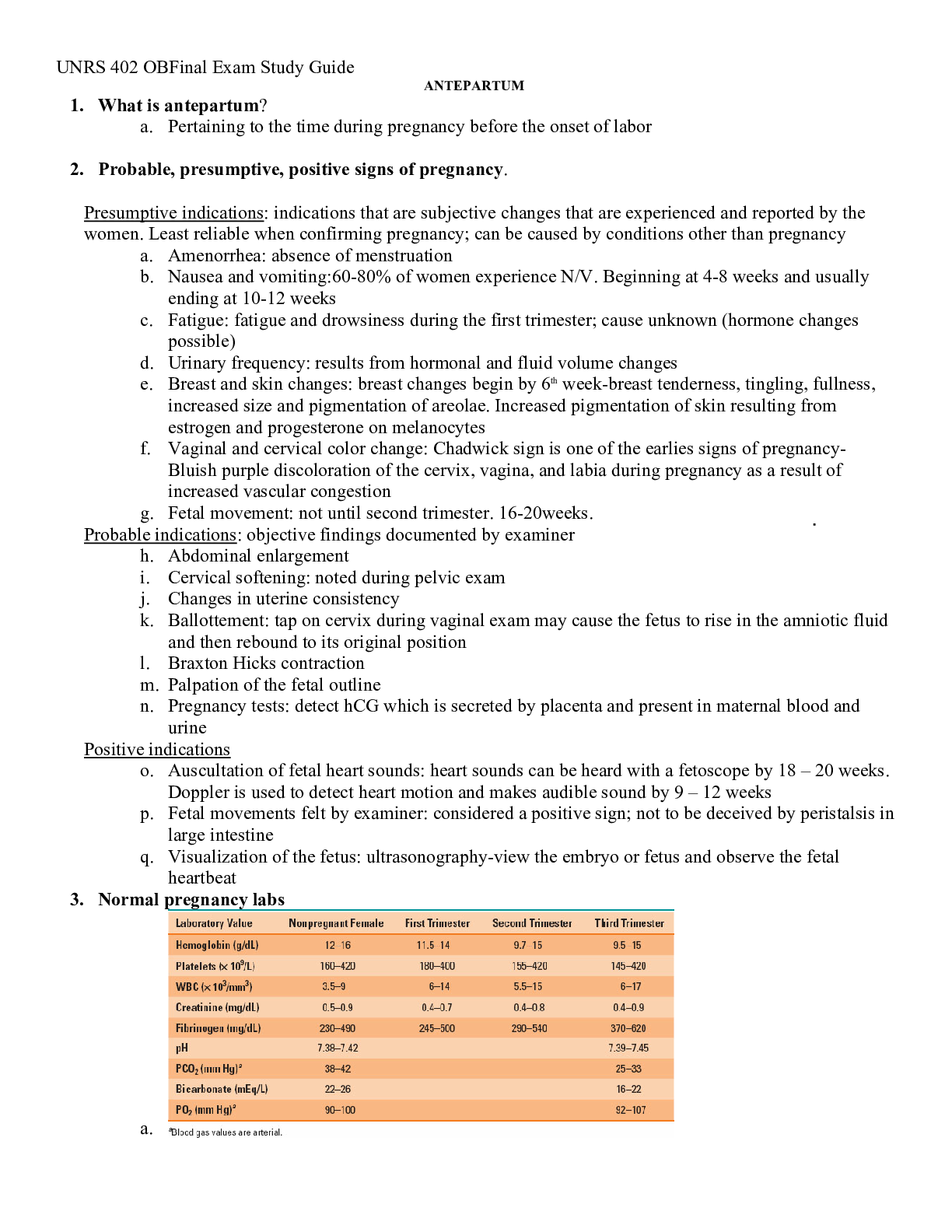
Health Care > STUDY GUIDE > NSG 527 Final Exam: Study Guide: Latest Updated: Guaranteed A Plus Guide (All)
NSG 527 Final Exam: Study Guide: Latest Updated: Guaranteed A Plus Guide
Document Content and Description Below
Last updated: 1 year ago
Preview 3 out of 9 pages
Instant download

Loading document previews ...
Buy this Document to get the Full Access Instantly
Provided by Students Who Aced it
We Verify Document Content to Gurantee Accuracy
Reviews( 0 )
Document information
Connected school, study & course
About the document
Uploaded On
Sep 24, 2024
Number of pages
9
Written in
All

Additional information
This document has been written for:
Uploaded
Sep 24, 2024
Downloads
0
Views
58
Topic Tags
Related Subjects & Courses
Explore similar study resources and related concepts.
Recommended For You
Get more on STUDY GUIDE »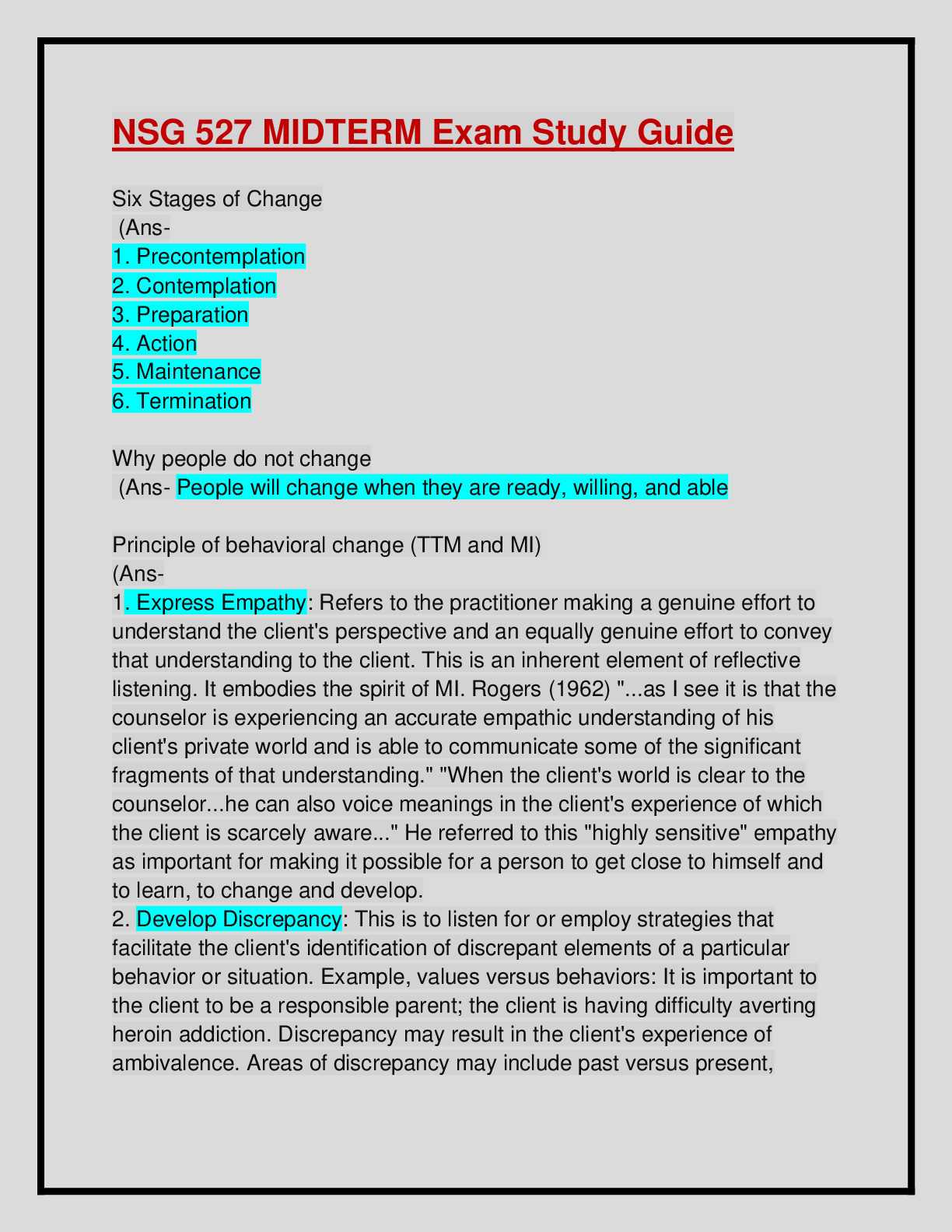
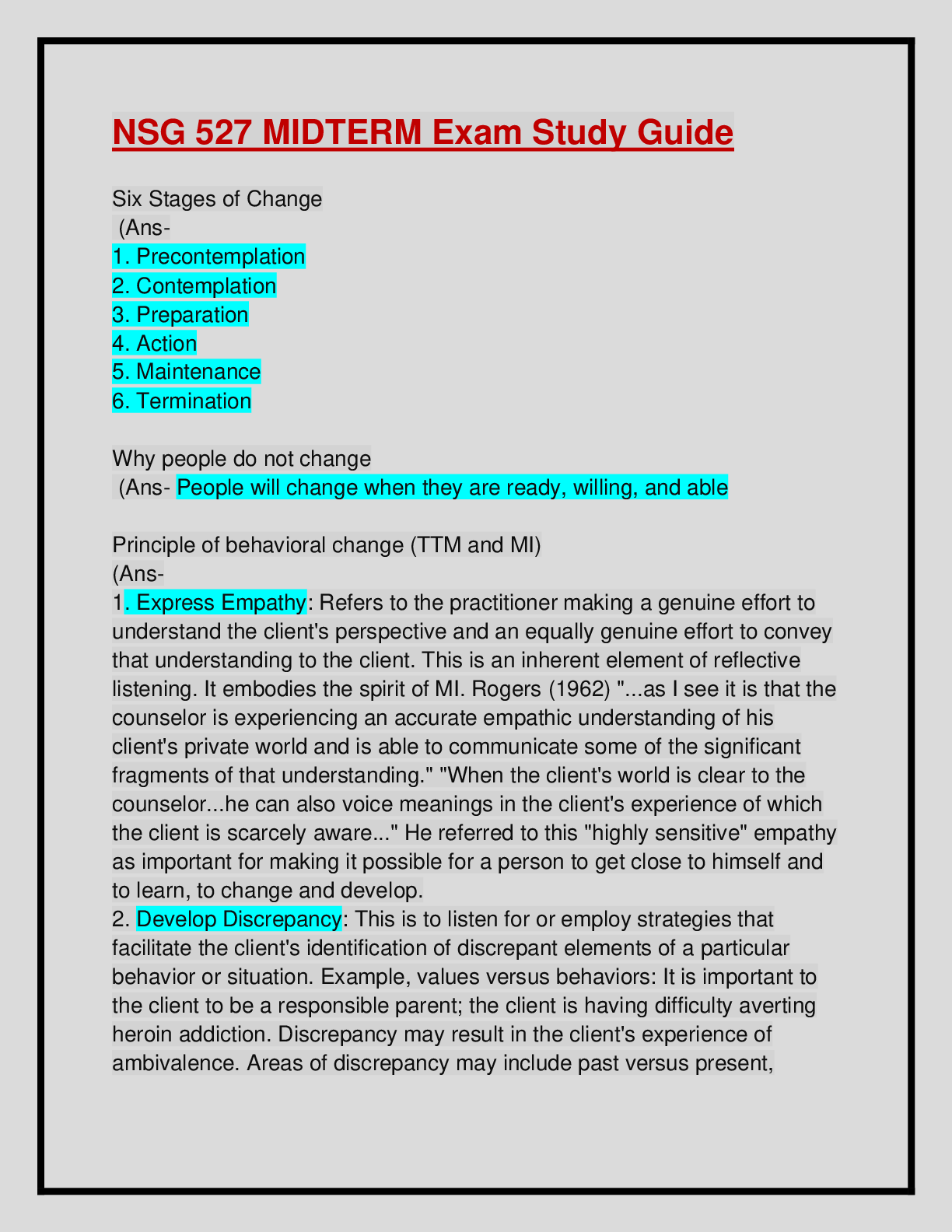
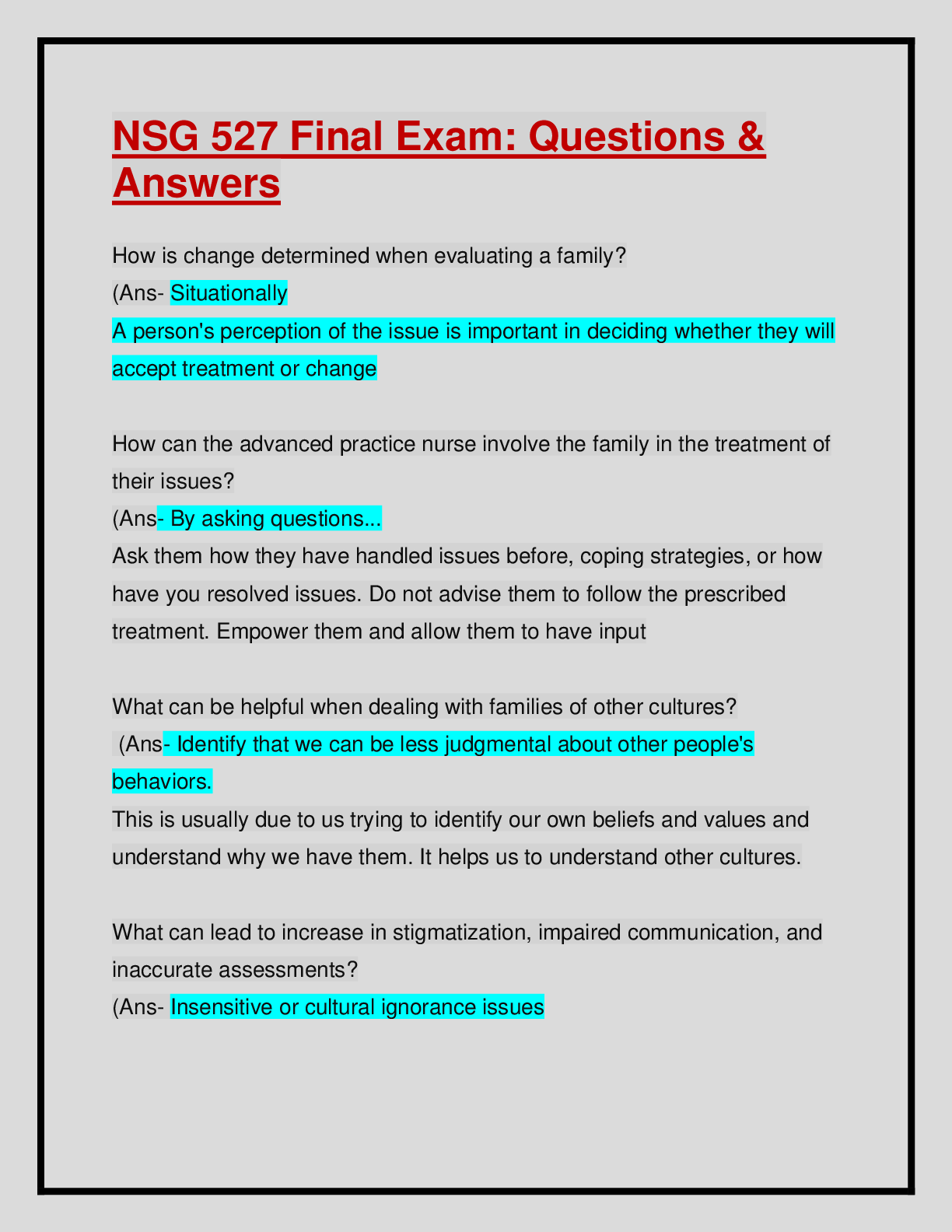

NSG 527 Final – Verified Exam Study Guide with Comprehensive C...
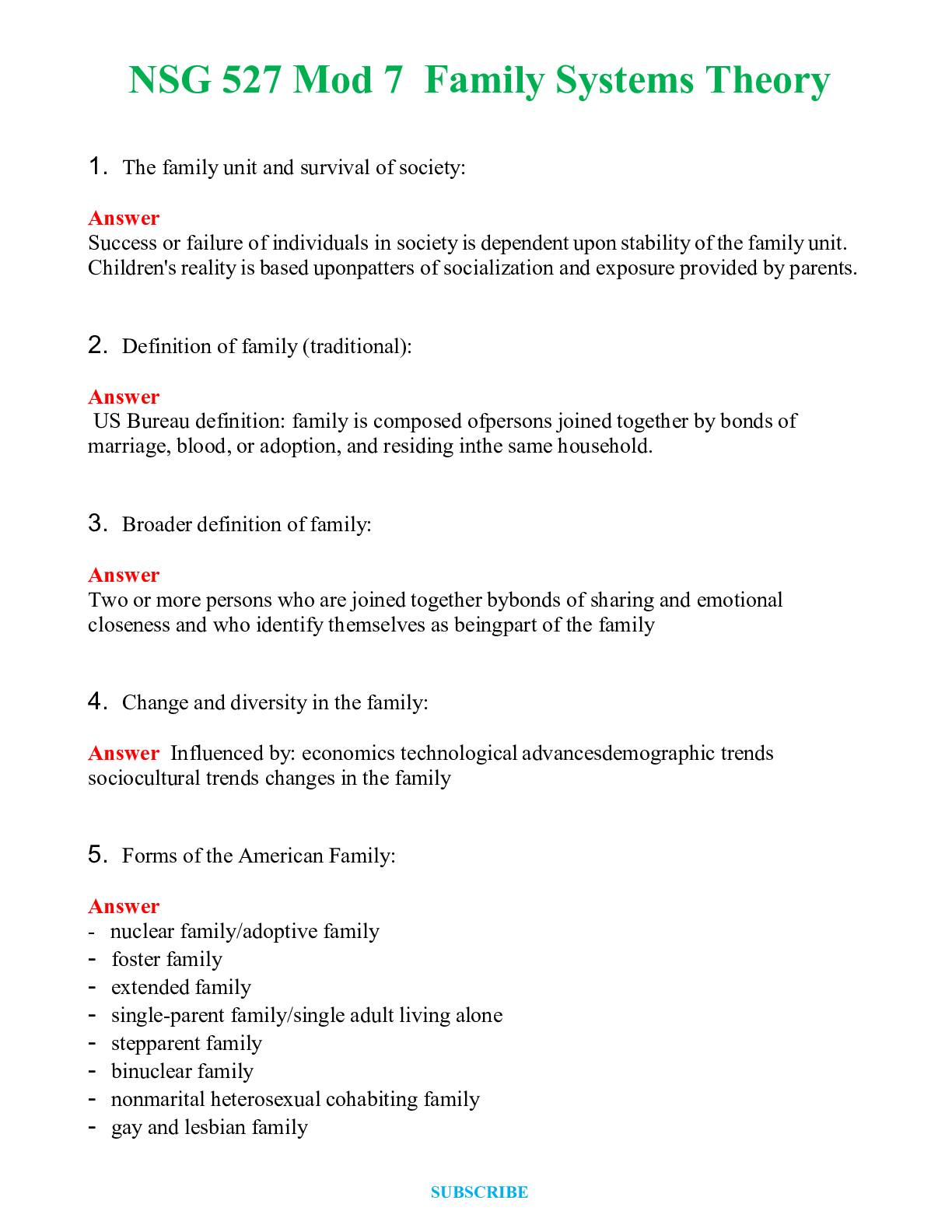
NSG 527 Mod 7 Family Systems Theory Questions and Verified...

![Preview of [FOR ELDY] Telehealth for Mental Health Services Post Pandemic](https://browseimages.nyc3.digitaloceanspaces.com/paper-images/2026/04/19/efrRqveL2026-04-19-12-0969e3f3031469a.png)