How to Answer Legal Problem Questions
Document Content and Description Below
INTRODUCTION
Legal problem questions present a hypothetical set of facts and require students to advise
one or more of the characters about their legal position arising out of those facts or to
construct an argument o
...
[Show More]
Last updated: 3 years ago
Preview 1 out of 7 pages
Instant download

Buy this Document to get the Full Access Instantly
Provided by Students Who Aced it
We Verify Document Content to Gurantee Accuracy
Reviews( 0 )
Document information
Connected school, study & course
About the document
Uploaded On
Mar 17, 2021
Number of pages
7
Written in
All

Additional information
This document has been written for:
Uploaded
Mar 17, 2021
Downloads
0
Views
123
Topic Tags
Related Subjects & Courses
Explore similar study resources and related concepts.
Recommended For You
Get more on Summary »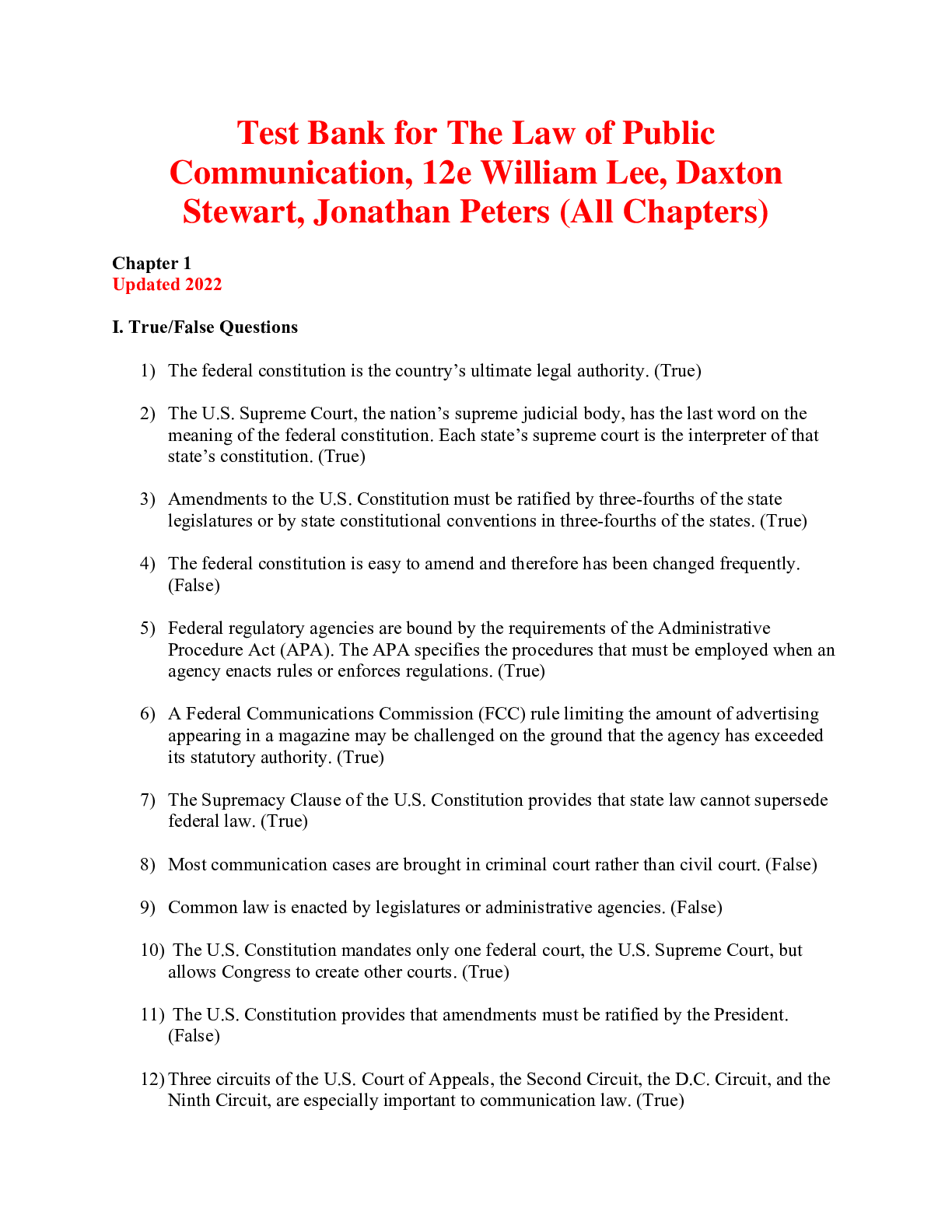
$25
107 Pages
The Law of Public Communication, 12th Edition William, Daxton...
$25
80 Pages
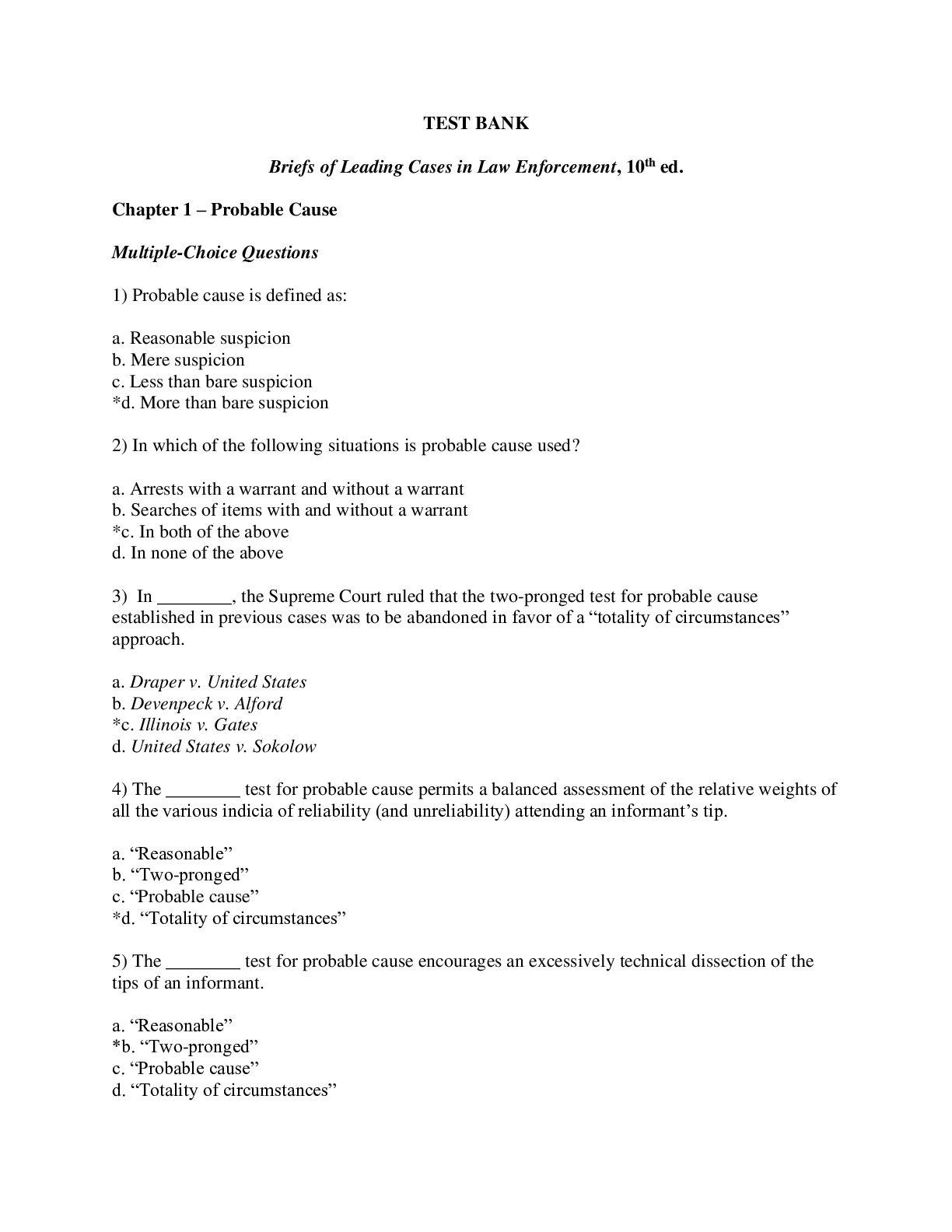
Briefs of Leading Cases in Law Enforcement, 10e Rolando Del Ca...
$20
885 Pages
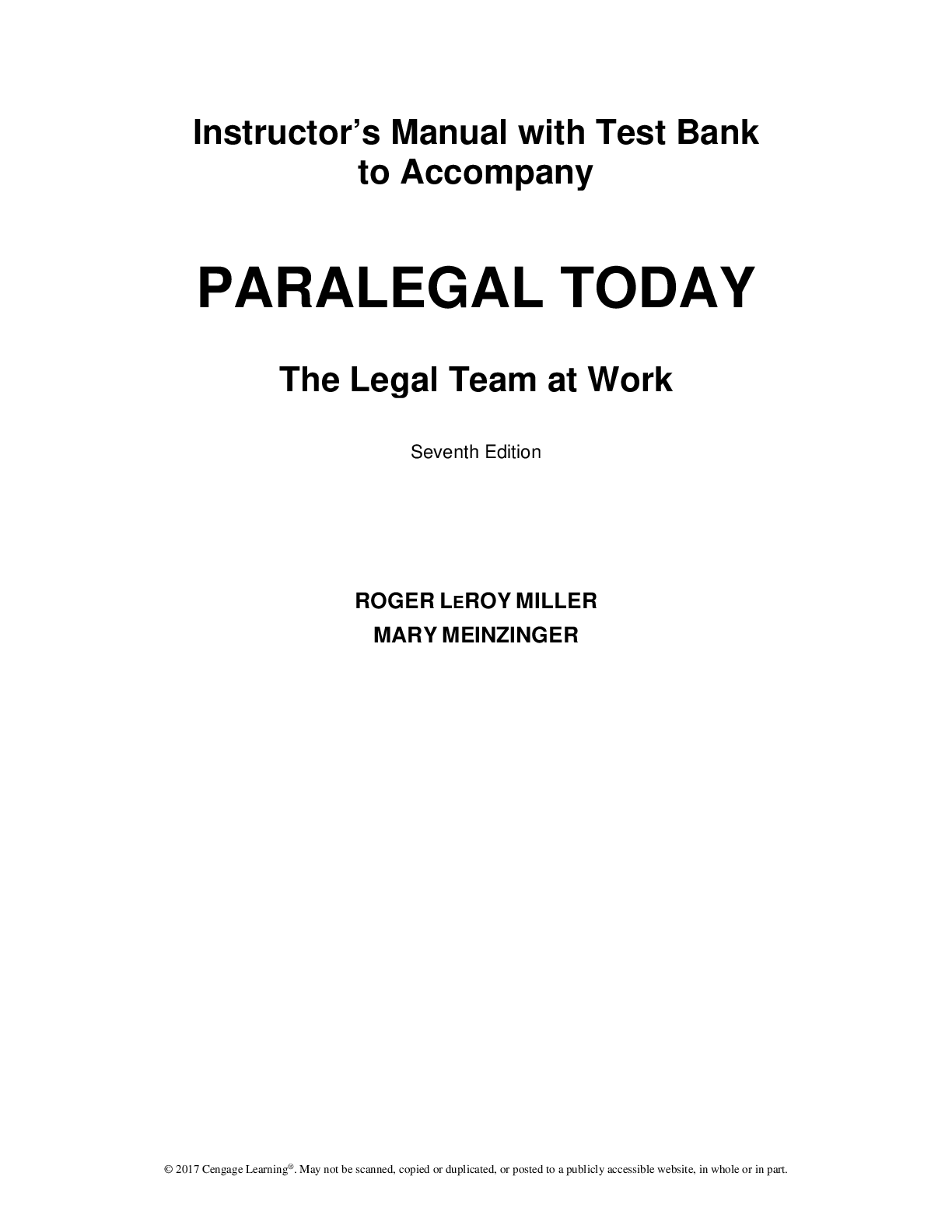
Test Bank for Paralegal Today The Legal Team at Work 7th Edit...
$15
69 Pages
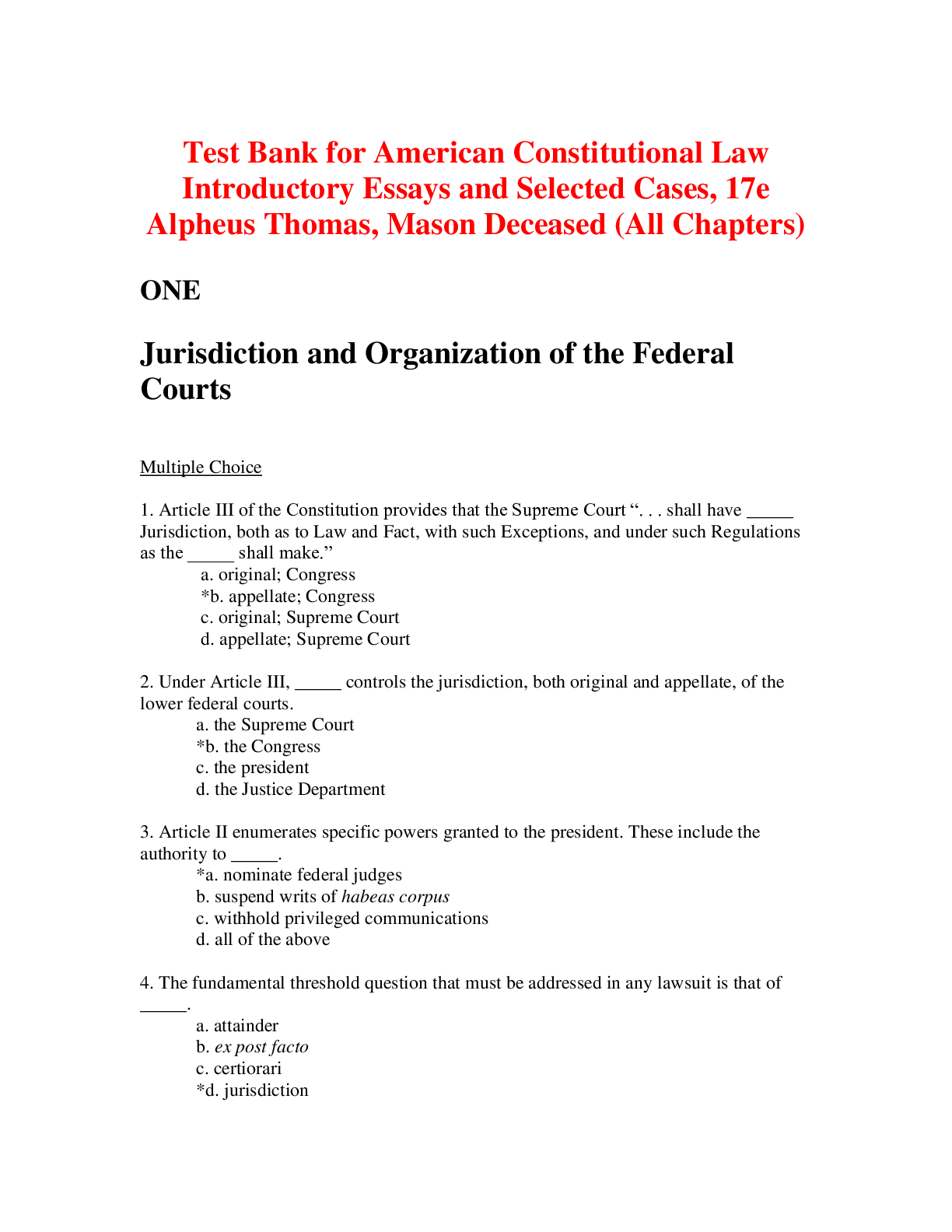
American Constitutional Law Introductory Essays and Selected C...

$3
3 Pages
Test Bank Lehnes Pharmacotherapeutics for Advanced Practice Nu...

$6
54 Pages
NR566 / NR 566: Advanced Pharmacology for Care of the Family W...

$10
49 Pages
Summary Pathophysiology Final Exam Study Guide_all chapters (1...
$10
6 Pages
NR601 / NR 601: Primary Care of the Maturing & Aged Family Pra...
$10
6 Pages
NR601 / NR 601: Primary Care of the Maturing & Aged Family Pra...

$6
49 Pages
NR 566 / NR566 Advanced Pharmacology for Care of the Family We...
More related documents below


