PHARM 100
PHARMACOLOGY HESI PRACTICE EXAM
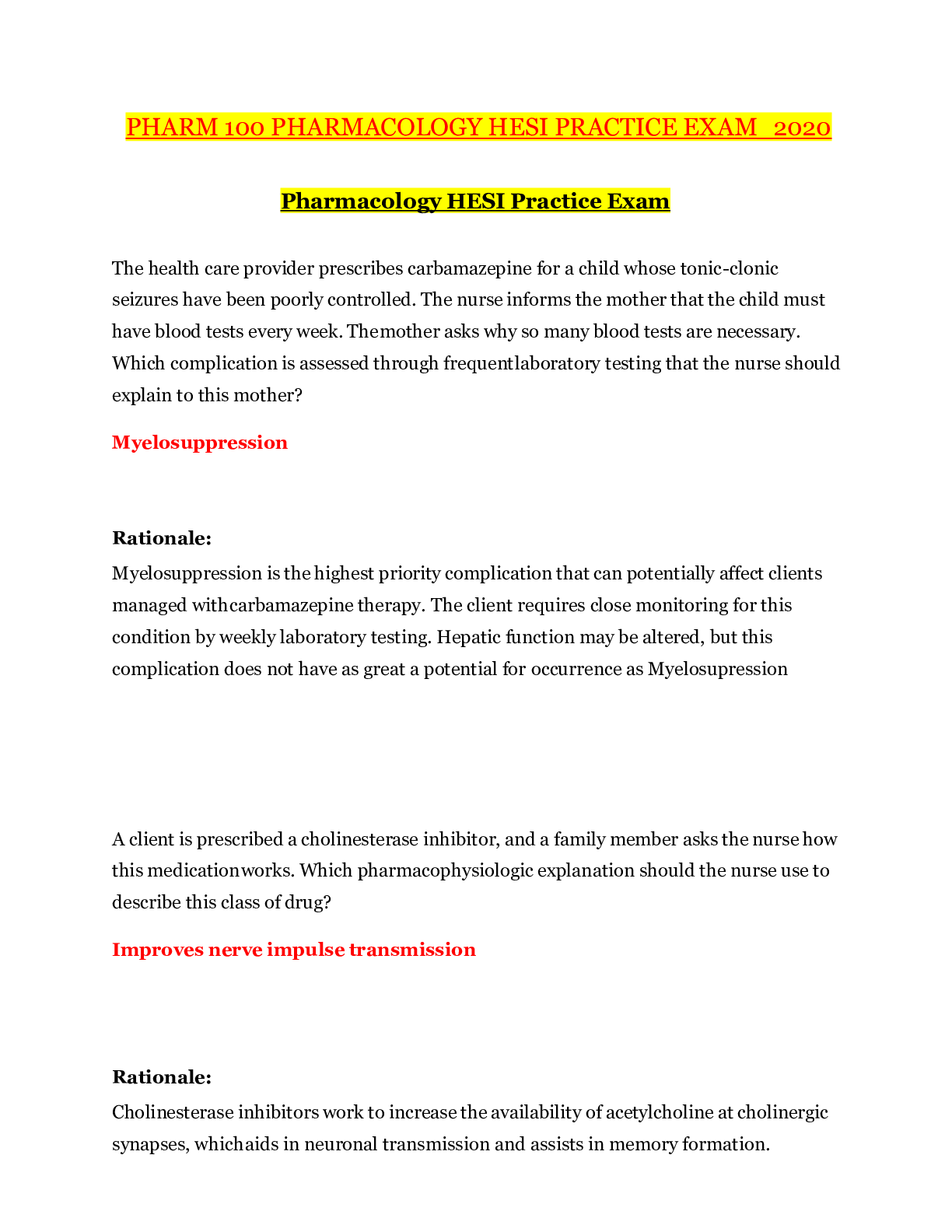
The health care provider prescribes carbamazepine for a child whose tonic-clonic seizures have been
poorly controlled. The nurse informs the mother that the child must have bl
...
PHARM 100
PHARMACOLOGY HESI PRACTICE EXAM
The health care provider prescribes carbamazepine for a child whose tonic-clonic seizures have been
poorly controlled. The nurse informs the mother that the child must have blood tests every week. The
mother asks why so many blood tests are necessary. Which complication is assessed through frequent
laboratory testing that the nurse should explain to this mother?
Myelosuppression
Rationale:
Myelosuppression is the highest priority complication that can potentially affect clients managed with
carbamazepine therapy. The client requires close monitoring for this condition by weekly laboratory
testing. Hepatic function may be altered, but this complication does not have as great a potential for
occurrence as Myelosupression
A client is prescribed a cholinesterase inhibitor, and a family member asks the nurse how this
medication works. Which pharmacophysiologic explanation should the nurse use to describe this class of
drug?
Improves nerve impulse transmission
Rationale:
Cholinesterase inhibitors work to increase the availability of acetylcholine at cholinergic synapses, which
aids in neuronal transmission and assists in memory formation.
A client is ordered 22 mg of gentamicin by IM injection. The drug is available in 20 mg/2 mL. How many
milliliters should be administered?
2.2 mLRationale:
(22 mg/20 mg) × (x mL/2 mL) = 22x = 40
x = 2.2 mL
In addition to nitrate therapy, a client is receiving nifedipine, 10 mg PO every 6 hours. The nurse should
plan to observe for which common side effect of this treatment regimen?
Hypotension
Rationale:
Nifedipine reduces peripheral vascular resistance and nitrates produce vasodilation, so concurrent use
of nitrates with nifedipine can cause hypotension with the initial administration of these agents.
Which response best supports the observations that the nurse identifies in a client who is experiencing a
placebo effect?
Psychological response to inert medication
Rationale:
The placebo effect is a response in the client that is caused by the psychological impact of taking an inert
drug that has no biochemical properties. A placebo effect can be therapeutic, negative, or ineffective
but provides no cure or benefit to the client's progress. The placebo effect may evoke behavioral
changes but does not affect neurochemical psychotropic changes. Malingering and drug seeking are
behaviors that a client exhibits to obtain treatment for nonexistent disorders or obtain prescription
medications.A 42-year-old client is admitted to the emergency department after taking an overdose of amitriptyline
in a suicide attempt. Which drug should the nurse plan to administer to reverse the cardiac and central
nervous system effects of amitriptyline?
Sodium bicarbonate
Rationale:
Sodium bicarbonate is an effective treatment for an overdose of tricyclic antidepressants such as
amitriptyline to reverse QRS prolongation.
A 67-year-old client is discharged from the hospital with a prescription for digoxin, 0.25 mg daily. Which
instruction should the nurse include in this client's discharge teaching plan?
Take and record radial pulse rate daily.
Rationale:
Monitoring pulse rate is very important when taking digoxin. The client should be further instructed to
report pulse rates <60 or >110 beats/min and to withhold the dosage until consulting with the health
care provider in such a case. Vision change is an indication of drug toxicity, and the client should be
instructed to report this immediately.
A 55-year-old client was diagnosed with schizophrenia 5 years earlier. Numerous hospitalizations have
occurred since the diagnosis because of noncompliance with the prescribed medication regimen. Which
drug might work best for this particular client?
Fluphenazine decanoate
Rationale:
Fluphenazine, an antipsychotic drug that can be given IM, has a rapid onset (1 to 2 hours) and a long
duration of action (up to 3 or 4 weeks), so it would be the drug of choice for a noncompliant psychotic
client. Chlorpromazine HCl is an antipsychotic drug used to treat schizophrenia and is usually
administered PO (IM doses are short-acting). The client must be compliant in taking this drug for it to be
effective. Lithium carbonate is most effective with manic and depressive bipolar affective disorders.
Diazepam is an anti-anxiety drug and would not be effective for a psychotic disorder.A client is being discharged with a prescription for sulfasalazine to treat ulcerative colitis. Which
instruction should the nurse provide to this client prior to discharge?
Drink at least eight glasses of fluid a day
Rationale:
Adequate hydration is important for all sulfa drugs because they can crystallize in the urine. If possible,
the drug should be taken after eating to provide longer intestinal transit time. Maintaining good oral
hygiene is important for other medications, such as phenytoin, because of the incidence of gingival
hyperplasia, Discontinue use of the drug gradually is important for steroid administration.
Amoxicillin, 500 mg PO every 8 hours, is prescribed for a client with an infection. The drug is available in
a suspension of 125 mg/5 mL. How many milliliters should the nurse administer with each dose?
20 mL
Rationale:
500 mg/x mL = 125 mg/5 mL
125x = 2500
x = 20 mL
A client with acute lymphocytic leukemia is to begin chemotherapy today. The health care provider's
prescription specifies that ondansetron is to be administered IV 30 minutes prior to the infusion of
cisplatin. What is the rationale for administering Zofran prior to the chemotherapy induction?
Reduction or elimination of nausea and vomiting
Rationale:
Ondansetron is a type 3 receptor (5-HT3) antagonist that is recognized for improved control of acute
nausea and vomiting associated with chemotherapy. 5-HT3 antagonists are most effective when
administered IV prior to the induction of the chemotherapeutic agent(s).
A client with chronic gouty arthritis is talking allopurinol, 100 mg PO daily. Which laboratory serum level
should the nurse report to the health care provider to determine the therapeutic outcome?
Uric acid levelRationale:
The primary therapeutic outcome associated with allopurinol therapy is reduced serum uric acid levels
with a lower frequency of acute gouty attacks, so uric acid level should be reported to the health care
provider.
The nurse is reviewing prescribed medications with a female client who is preparing for discharge. The
client asks the nurse why the oral dose of an opioid analgesic is higher than the IV dose that she
received during hospitalization. Which response is best for the nurse to provide?
Oral forms of drugs must pass through the liver first, where more of the dose is
metabolized.
Rationale:
Oral doses of medication are usually larger than parenteral doses to compensate for the first-pass effect
in the liver after oral administration, which metabolizes more of the drug's dose before affecting its
therapeutic response. Although recommended dose ranges for adults should be individualized, a client's
pain should be controlled at discharge.
The nurse performs a client assessment prior to the administration of a prescribed dose of dipyridamole
and aspirin PO. The nurse notes that the client's carotid bruit is louder than previously assessed. Which
action should the nurse implement?
Administer the prescribed dose as scheduled.
Rationale:
A carotid bruit reflects the degree of blood vessel turbulence, which is typically the result of
atherosclerosis. Aspirin is prescribed to reduce platelet aggregation and should be administered to this
client, who is at high risk for thrombus occlusion.
A client experiencing dysrhythmias is given quinidine, 300 mg PO every 6 hours. The nurse plans to
observe this client for which common side effect associated with the use of this medication?
Diarrhea
Rationale:
The most common side effects associated with quinidine therapy are gastrointestinal complaints, such
as diarrhea.A male client with prostatic carcinoma has arrived for his scheduled dose of docetaxel chemotherapy.
What symptom would indicate a need for an immediate response by the nurse prior to implementing
another dose of this chemotherapeutic agent?
A cough that is new and persistent
Rationale:
A cough that is new and persistent is an adverse effect that is immediately life threatening. Severe fluid
retention can cause pleural effusion (requiring urgent drainage), dyspnea at rest, cardiac tamponade, or
pronounced abdominal distention (caused by ascites). Persistent nausea and vomiting, Fingernail
and toenail changes and Increasing weakness and neuropathy are all adverse effects from
chemotherapy and need to be monitored consistently.
The nurse is preparing to administer a secondary infusion of a dobutamine solution to a client. The nurse
notes that the solution is brown in color. Which action should the nurse implement?
Administer the drug if the solution's reconstitution time is <24 hours.
Rationale:
The color of the dobutamine solution is normal, and the solution should be administered within 24
hours after reconstitution, so the time of reconstitution should be verified before administering the
solution of medication.
Which instruction should the nurse include in the teaching plan for a client who is receiving phenytoin
for seizure control?
Brush and floss teeth daily.
Rationale:
Brushing and flossing the teeth daily prevents gingival hyperplasia (gum disease) that is common with
long-term phenytoin therapy.
When providing client teaching about the administration of methylphenidate (Ritalin) to a parent of a
child diagnosed with ADHD, which instruction should the nurse include in the teaching plan?
Offer the child the medication with breakfast and after the child eats lunch.Rationale:
Administering the medication at breakfast and after lunch provides the correct spacing of the doses to
maximize the child's attention span and helps prevent the appetite suppression associated with the
drug. Doses should be spaced at 6-hour intervals. A dose given mid-afternoon is likely to increase
insomnia. Doses should be discontinued only for brief intervals (with the health care provider's
approval) when the client's condition is being evaluated or if the client is being weaned from the
medication entirely.
A primigravida at 34 weeks of gestation is admitted to labor and delivery in preterm labor. She is started
on a terbutaline sulfate continuous IV infusion via pump. This therapy is ineffective, and the baby is
delivered vaginally. For which complication should the nurse monitor in this infant during the first few
hours after delivery?
Hypoglycemia
Rationale:
Hypoglycemia may occur in the neonate because a side effect of terbutaline sulfate is increased
maternal serum glucose levels. Monitoring for hypoglycemia is the priority following the maternal
administration of terbutaline sulfate.
In administering the antiinfective agent chloramphenicol IV to a client with bacterial meningitis, the
nurse observes the client closely for signs of bone marrow depression. Which laboratory data would be
most important for the nurse to monitor?
Platelet count
Rationale:
Chloramphenicol can cause irreversible, fatal bone marrow depression, so the nurse should monitor the
client's platelet count.
A client is experiencing an adverse effect of the gastrointestinal stimulant metoclopramide HCl. Which
assessment finding would require immediate intervention by the nurse?
Demonstrates Parkinson-like symptoms, such as cogwheel rigidity.Rationale:
Metoclopramide HCl blocks dopamine receptors in the brain, which can cause the extrapyramidal
symptoms associated with Parkinson disease. Reglan has been associated with hypertension. An
unpleasant metallic taste in the mouth is often associated with metronidazole, not metoclopramide
HCl.
The nurse is scheduling a client's antibiotic peak and trough levels with the laboratory personnel. What
is the best schedule for drawing the trough level?
Instruct the laboratory to draw the trough immediately before the next scheduled dose.
Rationale:
The best time to draw a trough is the closest time to the next administration.
A client who is HIV-positive is receiving combination therapy with the antiviral medication zidovudine.
Which instruction should the nurse include in this client's teaching plan?
Return to the clinic every 2 weeks for blood counts.
Rationale:
Bone marrow depression with granulocytopenia is a severe but common adverse effect of zidovudine.
Careful monitoring of CBCs is indicated. Dizziness is an expected side effect. The client should be
instructed to avoid driving until this reaction improves.
To evaluate whether the administration of an antihypertensive medication has caused a therapeutic
effect, which action should the nurse implement?
Compare the client's blood pressure before and after the client takes the medication.
Rationale:
Therapeutic effects are the expected or predictable physiologic responses to a medication. An
antihypertensive medication is administered to lower blood pressure, so to determine if the therapeutic
effect has been achieved, the nurse should compare the client's blood pressure before and after the
client takes the medication. Ask the client about the onset of any dizziness since taking the
medication and Measure the client's blood pressure while the client is lying, sitting, and thenstanding provide data related to the side effect of hypotension, which may occur following the
administration of an antihypertensive medication. Interviewing the client about any past or recent
history of high blood pressure provides useful data but does not evaluate the medication's
effectiveness.
A female client with myasthenia gravis is taking a cholinesterase inhibitor and asks the nurse
what can be done to remedy her fatigue and difficulty swallowing. What action should the nurse
implement?
Develop a teaching plan for the client to self-adjust the dose of medication in response to
symptoms.
Rationale:
Maintaining optimal dosage for cholinesterase inhibitors can be challenging for clients with myasthenia
gravis. Clients should be taught to recognize signs of over-medication and under-medication so that they
can modify the dosage themselves based on a prescribed sliding scale.
The health care provider prescribes oral contraceptives for a client who wants to prevent pregnancy.
Which information is the most important for the nurse to provide to this client?
Take one pill at the same time every day until all the pills are gone.
Rationale:
To maintain adequate hormonal levels for contraception and enhance compliance, oral contraceptives
should be taken at the same time each day. There is no strong pharmacokinetic evidence that shows a
relationship between the category of broad-spectrum antibiotic use and altered hormone levels in oral
contraceptive users. Abstinence is the best method to prevent pregnancy during the first cycle. If a client
misses two pills during the first week, the client should take two pills a day for 2 days and finish the
package while using a backup method of birth control until her next menstrual cycle.
Dopamine is administered to a client who is hypotensive. Which finding should the nurse identify as a
therapeutic response?
Increase in urine output
Rationale:
Intropin activates dopamine receptors in the kidney and dilates blood vessels to improve renal
perfusion, so an increase in urine output indicates an increase in glomerular filtration caused byincreased arterial blood pressure. Dopamine increases cardiac output, which increases a client's blood
pressure.
A female client is receiving tamoxifen following surgery for breast cancer. She reports the onset of hot
flashes to the nurse. Which intervention should the nurse implement?
Instruct the client that hot flashes are a side effect that often occurs with the use of this
medication.
Rationale:
Tamoxifen is an estrogen receptor blocker used to treat breast carcinoma. Hot flashes are a common
side effect. If the hot flashes become bothersome, the client can be instructed in measures to reduce
the discomfort.
In developing a nursing care plan for a 9-month-old infant with cystic fibrosis, the nurse writes a nursing
diagnosis of alteration in nutrition: less than body requirements, related to inadequate digestion of
nutrients. Which intervention would best meet this child's needs?
Give pancrelipase capsule mixed with applesauce before each meal.
Rationale:
Pancreatic enzyme replacement with pancrelipase is a major component of cystic fibrosis nutritional
management. Aluminum hydroxide and magnesium hydroxide may be given before meals with enzymes
to reduce gastric acidity and prevent enzyme destruction but are ineffective when used alone to
promote enzyme replacement. Administering cholestyramine resin before each meal and at
bedtime and administering omeprazole for gastroesophageal reflux are used to treat steatorrhea in
cystic fibrosis.
The nurse is preparing to administer amphotericin B IV to a client. What laboratory data is most
important for the nurse to assess before initiating an IV infusion of this medication?
Serum potassium level
Rationale:
The nurse should obtain baseline potassium levels prior to beginning drug therapy because
amphotericin B changes cellular permeability, allowing potassium to escape from the cell, which could
lead to a decrease in the serum potassium level and severe hypokalemia.The health care provider prescribes cisplatin to be administered in 5% dextrose and 0.45% normal saline
with mannitol added. Which assessment parameters would be most helpful to the nurse in evaluating
the effectiveness of the therapy?
Urine output
Rationale:
The effectiveness of the diuresis is best measured by urine output. Mannitol, an osmotic diuretic, is
given during cisplatin therapy to promote diuresis and reduce the risk of nephrotoxicity and ototoxicity
associated with this chemotherapeutic agent.
Which statement indicates that client teaching regarding the administration of the chemotherapeutic
agent daunorubicin HCl has been effective?
"I expect my urine to be red for the next few days."
Rationale:
Daunorubicin HCl causes the urine to turn red in color.
Which question should the nurse ask a client prior to the initiation of treatment with IV infusions of
gentamicin sulfate?
"Are you having difficulty hearing?"
Rationale:
Complications of gentamicin sulfate therapy include ototoxicity, nephrotoxicity, and neurotoxicity.
Determining if the client is hard of hearing prior to initiation of this aminoglycoside will be helpful as the
treatment progresses and ototoxicity is identified as a possible complication.
A child with cystic fibrosis is receiving ticarcillin disodium for Pseudomonas pneumonia. For which
adverse effect should the nurse assess and report promptly to the health care provider?
PetechiaeRationale:
Adverse effects of ticarcillin disodium include hypothrombinemia and decreased platelet adhesion,
which can result in the presence of petechiae.
A client has a positive skin test for tuberculosis. Which prophylactic drug should the nurse expect to
administer to this client?
Isoniazid
Rationale:
Isoniazid is the drug of choice for treatment of clients with positive skin tests for tuberculosis.
The nurse notes that the hemoglobin level of a client receiving darbepoetin alfa has increased from 6 to
10 g/dL over the first 2 weeks of treatment. Which action should the nurse take?
Notify the health care provider of the change in the client's laboratory values.
Rationale:
Although an increase in the client's hemoglobin level is desired, a rapid increase (more than 1 g/dL in a
2-week period) may lead to hypertension, so the health care provider should be notified of this
excessive increase.
During the initial nursing assessment history, a client tells the nurse that he is taking tetracycline
hydrochloride for urethritis. The nurse is most concerned if the client reports taking which medication
concurrently?
Sucralfate
Rationale:
Sucralfate is used to treat duodenal ulcers and will bind with tetracycline hydrochloride, inhibiting this
antibiotic's absorption.
A client with metastatic cancer who has been receiving fentanyl for several weeks reports to the nurse
that the medication is not effectively controlling the pain. Which intervention should the nurse initiate?
Notify the health care provider of the need to increase the dose.Rationale:
Clients can develop a tolerance to the analgesic effect of opioids and may require an increased dose for
effective long-term pain relief. The client is not exhibiting indications of dependence, withdrawal, or
toxicity.
A client being treated for an acute myocardial infarction is to receive the tissue plasminogen activator
alteplase. The nurse would be correct in providing which explanation to the client regarding the purpose
of this drug?
This drug is a clot buster that dissolves clots within a coronary artery.
Rationale:
t-PA, or tissue plasminogen activator, is a coronary-specific fibrinolytic agent that dissolves clots within
the coronary arteries. This drug is not a calcium channel blocker or nitrate, which would promote
vasodilation of the coronary arteries. This medication is not an anticoagulant, such as warfarin or
heparin, which would prevent new clot formation. Volume expansion is not provided by an infusion of tPA and would not necessarily improve myocardial perfusion caused by an increased cardiac output in a
client with coronary artery disease.
A client with angina pectoris is instructed to take sublingual nitroglycerin tablets PRN for chest pain.
Which instruction should the nurse include in the client's teaching plan?
Take one tablet at the onset of angina and stop activity.
Rationale:
Nitroglycerin tablets should be taken at the onset of angina, and the client should stop activity and rest.
One tablet can be taken every 5 minutes, up to three doses. Nitroglycerin should be replaced every 3 to
6 months. Nitroglycerin should provide relief in 5 minutes.
The nurse is preparing a plan of care for a client receiving the glucocorticoid methylprednisolone. Which
nursing diagnosis reflects a problem related to this medication that should be included in the care plan?
Risk for infection
Rationale:
Corticosteroids depress the immune system, placing the client at risk for infection.The nurse is providing discharge instructions to a client who has received a prescription for an antibiotic
that is hepatotoxic. Which information should the nurse include in the instructions?
Avoid ingesting any alcohol or acetaminophen.
Rationale:
Combining hepatotoxic drugs, such as acetaminophen and alcohol, increases the risk of liver damage. A
client who is receiving a hepatotoxic drug should report any hepatotoxic symptoms, such as jaundice,
dark urine, or light-colored stools.
When providing nursing care for a client receiving pyridostigmine bromide for myasthenia gravis, which
nursing intervention has the highest priority?
Assess respiratory status and breath sounds often.
Rationale:
The client should be assessed often for signs of respiratory complications. The client with myasthenia
gravis is at greatest risk for life-threatening respiratory complications because of the weakness of the
diaphragm and ancillary respiratory muscles caused by the disease process. Cholinergic agents used to
reduce muscle weakness can also cause hypersalivation, increased respiratory secretions, and possible
bronchoconstriction.
Minocycline, 50 mg PO every 8 hours, is prescribed for an adolescent girl diagnosed with acne. The
nurse discusses self-care with the client while she is taking the medication. Which teaching points
should be included in the discussion? (Select all that apply.)
Report vaginal itching or discharge.
Protect skin from natural and artificial ultraviolet light.
Avoid driving until response to medication is known.
Use a nonhormonal method of contraception if sexually active.
Rationale:
Adverse effects of tetracyclines include superinfections, photosensitivity, and decreased efficacy of oral
contraceptives. Therefore, the client should report vaginal itching or discharge, protect the skin from
ultraviolet light and use a nonhormonal method of contraception while on the medication. Minocycline
is known to cause dizziness and ataxia, so until the client’s response to the medication is known, drivingshould be avoided. Tetracyclines should be taken around the clock. They exhibit decreased absorption
when taken with antacid.
Which nursing intervention has the highest priority during IV administration of mechlorethamine HCl
and actinomycin?
Assess for extravasation at the IV site during infusion.
Rationale:
Mechlorethamine HCl and actinomycin are vesicants; therefore, assessment for blister formation and/or
tissue sloughing that can occur with leakage of these agents into surrounding subcutaneous tissues is
essential to ensure client safety during the IV infusion.
Methenamine mandelate is prescribed for a client with a urinary tract infection and renal calculi. Which
finding indicates to the nurse that the medication is effective?
The frequency of urinary tract infections decreases.
Rationale:
Mandelamine is prescribed to acidify the urine, decreasing the incidence of calcium phosphate calculi
and urinary tract infections. The urine changing color and pain is diminishing is related to the
administration of pyridine.
Methylphenidate is prescribed for daily administration to a 10-year-old child with attentiondeficit/hyperactivity disorder (ADHD). In preparing a teaching plan for the parents of this child newly
diagnosed with ADHD, which instruction is most important for the nurse to provide to the parents?
Administer the medication in the morning before the child goes to school.
Rationale:
Methylphenidate is a central nervous system (CNS) stimulant. To be most effective in affecting the
child's behavior, the dose of the drug should be administered in the morning before the child goes to
school. Drug holidays are often prescribed to assess the child's degree of recovery; however, such
interruptions are not conducted in the early phase of treatment and are usually implemented when side
effects occur over a period of time.Following the administration of sublingual nitroglycerin, which assessment finding indicates that the
medication was effective?
Decrease in level of chest pain
Rationale:
Nitroglycerin reduces myocardial oxygen consumption, which decreases ischemia and reduces chest
pain.
A client who is receiving chlorpromazine HCl to control his psychotic behavior also has a prescription for
benztropine. When teaching the client and/or significant others about these medications, what should
the nurse explain about the use of benztropine in the treatment plan for this client?
The benztropine is used to control extrapyramidal symptoms.
Rationale:
Benztropine, an anticholinergic drug, is used to control extrapyramidal symptoms associated with
chlorpromazine HCl (Thorazine) use.
A client who arrives in the postanesthesia care unit (PACU) after surgery is not awake from general
anesthesia. Which action should the nurse implement first?
Review the medication administration record (MAR).
Rationale:
Most general anesthetics produce cardiovascular and respiratory depression, so a review of the client's
MAR identifies all the medications received during surgery and helps the nurse anticipate the client's
response and emergence from anesthesia. Assessing for deep tendon reflexes and observing urinary
output are ongoing postoperative assessments. Based on the medications that the client has received,
naloxone may need to be administered if indicated by the client's vital signs and delayed spontaneous
reactivity.
The charge nurse is reviewing the admission history and physical data for four clients newly admitted to
the unit. Which client is at greatest risk for adverse reactions to medications?
75-year-old woman with liver diseaseRationale:
Impaired hepatic metabolic pathways for drug and chemical degradation place option an elderly pt at
greatest risk for adverse reactions to medications based on advancing age and liver disease.
A client with viral influenza is receiving vitamin C, 1000 mg PO daily, and acetaminophen elixir, 650 mg
PO every 4 hours PRN. The nurse calls the health care provider to report that the client has developed
diarrhea. Which change in prescriptions should the nurse anticipate?
Decrease the dose of vitamin C.
Rationale:
Diarrhea is an adverse effect of high doses of vitamin C, so the nurse should anticipate a reduction in the
dose of vitamin C. Acetaminophen does not cause diarrhea and is not available in an injectable form.
Because the client has a viral infection Tx with abx will not be beneficial.
The nurse is preparing to apply a surface anesthetic agent for a client. Which action should the nurse
implement to reduce the risk of systemic absorption?
Avoid abraded skin areas when applying the anesthetic.
Rationale:
To minimize systemic absorption of topical anesthetics, the anesthetic agent should be applied to the
smallest surface area of intact skin. Application to the mucous membranes poses the greatest risk of
systemic absorption because absorption occurs more readily through mucous membranes than through
the skin. Inflamed areas generally have an increased blood supply, which increases the risk of systemic
absorption. A large surface area increases the amount of topical drug that is available for transdermal
absorption, so the smallest area should be covered not the largest.
A client is taking famotidine. Which client statement should the nurse further assess because it may
indicate that the client is experiencing a side effect of this drug?
"I seem to be having difficulty thinking clearly."
Rationale:
A common side effect of of famotidine is confusion.The nurse knows that certain antipsychotic drugs cause extrapyramidal symptoms. Which
extrapyramidal symptom is a permanent and irreversible adverse effect of long-term phenothiazine
administration?
Tardive dyskinesia
Rationale:
Tardive dyskinesia is a permanent irreversable effect of long-term phenothiazine administration.
Dystonia, Akathisia and Pseudoparkinsonism are side effects of phenothiazines but do not have the
characteristics of being permanent and irreversible.
A client who is hypertensive receives a prescription for hydrochlorothiazide. When teaching about the
side effects of this drug, which symptoms are most important for the nurse to instruct the client to
report?
Fatigue and muscle weakness
Rationale:
Thiazide diuretics, such as HCTZ, cause potassium wasting in the urine, so the client should be instructed
to report fatigue and muscle weakness, which are characteristic of hypokalemia. which is a side effect
of thiazides that can cause cardiac dysrhythmias.
The nurse is reviewing a client's laboratory results before a procedure in which a neuromuscular
blocking agent is prescribed. Which finding should the nurse report to the health care provider?
Hypokalemia
Rationale:
Low potassium levels enhance the effects of neuromuscular blocking agents, so the health care provider
should be informed of the client's hypokalemia. Hyponatremia, Hypercalcemia and
Hypomagnesemia are of concern but do not enhance the effects of neuromuscular blocking agents.
A psychiatric client is discharged from the hospital with a prescription for haloperidol. Which instruction
should the nurse include in the discharge teaching plan for this client?
Use sunglasses and sunscreen when outdoors.Rationale:
Photosensitivity is a common adverse effect of haloperidol (Haldol); therefore, the use of sunglasses and
sunscreen should be included in the discharge teaching for this client.
A female client with trichomoniasis (Trichomonas vaginalis) receives a prescription for metronidazole.
Which instruction is most important for the nurse to include in this client's teaching plan?
Avoid alcohol consumption.
Rationale:
Clients should be instructed to avoid alcohol and products containing alcohol while taking metronidazole
because of the possibility of a disulfiram-like reaction.
A client is receiving oral griseofulvin for a persistent tinea corporis infection. Which response by the
client indicates an accurate understanding of the drug teaching conducted by the nurse?
"I'll wear sunscreen whenever I mow the lawn."
Rationale:
Photosensitivity is a side effect of griseofulvin, so clients should be cautioned to wear protective
sunscreen during sun exposure.
A female client is receiving tetracycline for acne. Which client teaching should the nurse include?
Oral contraceptives may not be effective.
Rationale:
Certain antibiotics, such as tetracycline, decrease the effectiveness of oral contraceptives.
A client receives a prescription for theophylline PO to be initiated in the morning after the dose of
theophylline IV is complete. The nurse determines that a theophylline level drawn yesterday was 22
mcg/mL. Based on this information, which action should the nurse implement?
Hold the theophylline dose and notify the health care providerRationale:
The therapeutic range for theophylline is 10 to 20 mcg/mL, so the theophylline dose should be held for
fear of causing toxicity.
A 3-year-old boy is admitted to the emergency department after ingesting an unknown amount of
phenobarbital elixir prescribed for his brother's seizure disorder. Which nursing intervention should the
nurse implement first?
Take the child's vital signs.
Rationale:
Phenobarbital causes respiratory depression, so the priority intervention is assessment of vital signs.
Administering syrup of ipecac, drawing a blood specimen for a phenobarbital level and teaching
the mother safe medication storage practices are actions that may all be used in the treatment of this
child, but they do not have the priority over taking the vital signs.
A pediatric client is discharged home with multiple prescriptions for medications. Which information
should the nurse provide that is most helpful to the parents when managing the medication regimens?
Maintain a drug administration record.
Rationale:
A written drug administration record provides a consistent plan to ensure safe adherence to multiple
medication dosages and times. The parents should be given a tool to enhance their confidence and
provide a mechanism to ensure accurate and timely medication administration without duplicating or
omitting a dose. Using a written record to record medication administration allows more than one
person to share the responsibility of giving medications to the child. Although smaller volumes ensure
that all the medication is taken, it is more important to maintain an accurate administration schedule.
When caring for a client on digoxin therapy, the nurse knows to be alert for digoxin toxicity. Which
finding would predispose this client to developing digoxin toxicity?
Low serum potassium level
Rationale:
Hypokalemia predisposes the client on digoxin to digoxin toxicity, which usually presents as abdominal
pain, anorexia, nausea, vomiting, visual disturbances, bradycardia, and atrioventricular (AV) dissociation.Assessment of serum potassium levels with prompt correction of hypokalemia is an important
intervention for the client taking digoxin.
The nurse is administering the early morning dose of insulin aspart, 5 units subcutaneously, to a client
with diabetes mellitus type 1. The client's fingerstick serum glucose level is 140 mg/dL. Considering the
onset of insulin aspart, when should the nurse ensure that the client's breakfast be given?
5 minutes after subcutaneous administration
Rationale:
Insulin aspart is a very rapidly acting insulin, with an onset of 5 to 15 minutes. Insulin aspart should be
administered when the client's tray is available. Insulin aspart peaks in 45 minutes to 1½ hours and has a
duration of 3 to 4 hours. The client should have eaten to ensure absorption of the meal so that serum
glucose levels will coincide with the peak. Insulin glargine has a flat peak of action and is usually given at
bedtime.
A client taking linezolid at home for an infected foot ulcer calls the home care nurse to report the onset
of watery diarrhea. Which intervention should the nurse implement?
Instruct the client to obtain a stool specimen to be taken to the laboratory for analysis.
Rationale:
Antibiotics, such as linezolid, can cause pseudomembranous colitis, resulting in severe watery diarrhea.
The prescriber should be notified, and a stool specimen should be obtained and analyzed for this
complication. Severe diarrhea is not an indication of drug toxicity. Although gastrointestinal disturbance
can be an adverse effect of linezolid, a stool specimen should be obtained because the client reports the
diarrhea is severe. Antidiarrheal medications are contraindicated in the presence of this colitis and
should not be started until this potential complication is ruled out.
During therapy with isoniazid, it is most important for the nurse to monitor which laboratory value
closely?
Liver enzyme levels
Rationale:
The client receiving isoniazid is at risk for the development of hepatitis; therefore, liver function test
results should be monitored carefully during drug therapy.The nurse is preparing a teaching plan for a client who has received a new prescription for levothyroxine
sodium. Which instruction should be included?
"Take your pulse daily, and if it exceeds 100 beats/min, contact the health care provider."
Rationale:
Levothyroxine sodium should be withheld if the pulse is over 100 beats/min. To prevent insomnia, the
daily dose should be taken early in the morning before breakfast, not at bedtime. Product brands should
not be changed without consulting the health care provider because the intended effects and side
effects of different formulations of the medication can vary.
A 2-month-old infant is scheduled to receive the first DPT immunization. What is the preferred injection
site to administer this immunization?
Vastus lateralis
Rationale:
The preferred intramuscular site for children younger than 2 years is the vastus lateralis.
During administration of theophylline, the nurse should monitor for signs of toxicity. Which symptom
would cause the nurse to suspect theophylline toxicity?
Restlessness
Rationale:
Restlessness is a sign of theophylline intoxication. Other signs of toxicity are anorexia, nausea, vomiting,
insomnia, tachycardia, arrhythmias, and seizures. dry mouth, urinary retention and sedation are
common side effects of antihistamines but do not indicate theophylline intoxication.
Dopamine, 5 mcg/kg/min, is prescribed for a client who weighs 105 kg. The nurse mixes 400 mg of
dopamine in 250 mL D5W for IV administration via an infusion pump. What is the hourly rate that the
nurse should set on the pump?
20 mL/hrRationale:
400 mg/250 mL equals 1.6 mg/mL, or 1600 mcg/mL. The
prescription for 5 mcg/kg/min would result in 31,500 mcg/hr.
Delivery of that dose would be achieved by administering 20
mL/hr, which would deliver 5.07 mcg/kg/min. Options A, B, and C
are not accurate hourly rates for this infusion.
The nurse plans to draw blood samples for the determination of peak and trough levels of gentamicin
sulfate in a client receiving IV doses of this medication. When should the nurse plan to obtain the peak
level?
Thirty minutes after the dose is administered
Rationale:
Peak drug serum levels are achieved 30 minutes after the IV administration of aminoglycosides.
A client with Tourette syndrome takes haloperidol to control tics and vocalizations. The client has
become increasingly drowsy over the past 2 days and reports becoming dizzy when changing from a
supine to sitting position. Which action should the nurse take?
Assess for poor skin turgor, sunken eyeballs, and concentrated urine output.
Rationale:
Because haloperidol causes CNS effects of sedation and decreased thirst, the nurse should assess for
signs of dehydration. Sedation may occur with haloperidol administration, this side effect may signal an
adverse CNS reaction. urine pink or reddish brown is expected.
A client who is experiencing an acute attack of gouty arthritis is prescribed colchicine USP, 1 mg PO
daily. Which information is most important for the nurse to provide the client?
Report any vomiting to the clinic.
Rationale:
The client should be instructed to report signs of colchicine toxicity, such as nausea, diarrhea, vomiting,
and/or abdominal pain, to the health care provider. Food inhibits the absorption of colchicine when
ingested concurrently. Limited fluid intake decreases the excretion of the uric acid crystals, which
contributes to painful attacks. Typically, a client should remain on a daily dose of colchicine to decreasethe number and severity of acute attacks, so stopping the medication after the pain resolves is not
indicated.
Alteration of which laboratory finding represents the achievement of a therapeutic goal for heparin
administration?
Partial thromboplastin time (PTT)
Rationale:
Heparin therapy is guided by changes in the partial thromboplastin time (PTT).
A client is receiving acyclovir sodium IV for a severe herpes simplex infection. Which intervention should
the nurse implement during this drug therapy?
Increase daily fluids to 2000 to 4000 mL/day.
Rationale:
Increasing fluid intake during treatment prevents precipitation of the drug in the renal tubules, which
could lead to obstructive problems that impair kidney function. Acute glomerulonephritis is a possible
complication of acyclovir sodium therapy.
A chemotherapeutic regimen with doxorubicin HCl is being planned for a client recently diagnosed with
cancer. What diagnostic test results should the nurse review prior to initiating this treatment?
Electrocardiogram (ECG)
Rationale:
Baseline cardiac function studies are required to monitor the irreversible cardiotoxic effects of
doxorubicin HCl.
A client receives pancuronium, a long-acting, nondepolarizing neuromuscular blocker, during surgical
anesthesia. Which client situation should alert the nurse to evaluate the client for a prolonged muscle
relaxation response to this medication?Renal insufficiency
Rationale:
Pancuronium is eliminated via the kidneys, so a client with renal failure is at risk for prolonged muscle
relaxation. Although hepatitis can interfere with this drug's metabolism, it does not place a client at
increased risk for prolonged muscle relaxation.
Two hours after taking the first dose of penicillin, a client arrives at the emergency department
complaining of feeling ill, exhibiting hives, having difficulty breathing, and experiencing hypotension.
These findings are consistent with which client response that requires immediate action?
Severe acute anaphylactic response
Rationale:
Anaphylaxis related to penicillin can cause a life-threatening allergic response characterized by
bronchospasm, laryngeal edema, and a precipitous drop in blood pressure. This client's ingestion of
penicillin and presenting clinical picture indicate the client is having an acute reaction with respiratory
difficulty.
A male client asks the nurse why condoms should not be lubricated with the spermicide nonoxynol-9.
Which response is best for the nurse to provide?
Nonoxynol-9 provides no protection from STDs and has been linked to the transmission of
HIV.
Rationale:
The use of condoms and a water-based spermicide is recommended because nonoxynol-9 can cause a
rash that allows viruses a portal of entry if the condom breaks, which increases the risk of transmission
of sexually transmitted diseases (STDs), such as human immunodeficiency virus (HIV), herpes, human
papillomavirus (HPV), or hepatitis B virus (HBV). Nonoxynol-9 may cause vaginal irritation.
A 4-year-old child is receiving chemotherapy for acute lymphocytic leukemia. Which laboratory result
should the nurse examine to assess the child's risk for infection?
Neutrophil countRationale:
During chemotherapy, granulocytes are significantly suppressed. Because neutrophils comprise 60% to
70% of the granulocyte count, these levels are the most useful laboratory results of the options
presented to determine the child's risk for infection.
An older client who had a colon resection yesterday is receiving a constant dose of hydromorphone via a
patient-controlled analgesia (PCA) pump. Which assessment finding is most significant and requires that
the nurse intervene?
Respirations decrease to 14 breaths/min.
Rationale:
Hydromorphone is an opioid agonist-analgesic of opiate receptors that inhibits ascending pathways and
can cause respiratory depression. Older adults are more sensitive to opioids so the "start low and go
slow" approach should be taken. Drowsiness and pruritus are common side effects of opioids,
particularly the opiates, which are usually harmless and often transient. The normal range of pupils is 2
to 6 cm. The suture site may be red and swollen as an inflammatory response, but no action is required
if the skin around the incision is a normal color and temperature.
Prior to administering a scheduled dose of digoxin, the nurse reviews the client's current serum digoxin
level, which is 1.3 ng/dL. Which action should the nurse implement?
Give the dose of digoxin if the client's heart rate is within a safe range.
Rationale:
The client's digoxin level of 1.3 ng/dL is not above the upper range of its therapeutic index (toxic level is
>2.0 ng/dL), so the dose should be administered after the client's heart rate is evaluated. Digibind is
administered for toxic levels of digoxin.
The nurse is preparing a child for transport to the operating room for an emergency appendectomy. The
anesthesiologist prescribes atropine sulfate, IM STAT. What is the primary purpose for administering this
drug to the child at this time?
Decrease the oral secretions.Rationale:
Atropine sulfate, an anticholinergic agent, is given to decrease oral secretions during a surgical
procedure.
A child is being treated with mebendazole for pinworms. Which type of diet should the mother be
instructed to feed the child while the child is receiving this medication?
High-fat diet
Rationale:
A high-fat diet increases the absorption of mebendazole, which boosts the effectiveness of the
medication in eliminating the pinworms.
The nurse has completed diabetic teaching for a client who has been newly diagnosed with diabetes
mellitus. Which statement by this client would indicate to the nurse that further teaching is needed?
"When I exercise, I should plan to increase my insulin dosage."
Rationale:
Exercise helps facilitate the entry of glucose into the cell, so increasing insulin doses with exercise would
place the client at high risk for a hypoglycemic reaction. "Regular insulin can be stored at room
temperature for 30 days.", "My legs, arms, and abdomen are all good sites to inject my insulin."
And "I will always carry hard candies to treat hypoglycemic reactions." reflect accurate
statements about the use of insulin and management of hypoglycemic reactions.
The apical heart rate of an infant receiving digoxin for congestive heart failure is 80 beats/min. Which
intervention should the nurse implement first?
Obtain a serum digoxin level.
Rationale:
Sinus bradycardia (rate <90 to 110 beats/min in an infant) is an indication of digoxin toxicity, so
assessment of the client's digoxin level is the highest priority. Further doses of digoxin should be
withheld until the serum level is obtained.A client is receiving antiinfective drug therapy for a postoperative infection. Which complaint should
alert the nurse to the possibility that the client has contracted a superinfection?
"My mouth feels sore."
Rationale:
Stomatitis caused by a thrush infection, which can cause mouth pain, is a sign of superinfection.
Headache, ears feeling plugged up and constipation are more typical side effects, rather than
symptoms, of a superinfection.
Which medication is useful in treating digoxin toxicity?
Digoxin immune Fab
Rationale:
Digibind is useful in treating this type of drug toxicity because it is an antibody that binds antigenically to
unbound serum digoxin or digitoxin, resulting in renal excretion of the bound complex.
A 45-year-old female client is receiving alprazolam for anxiety. Which client behavior would indicate that
the drug is effective?
The staff observes the client sitting in the day room reading a book.
Rationale:
The ability to sit and concentrate on reading indicates decreased anxiety.
A client receives an antihypertensive agent daily. Which action is most important for the nurse to
implement prior to administering the medication?
Obtain the client's blood pressure.
Rationale:
To determine the most accurate response to antihypertensive therapy, baseline blood pressures should
be obtained before an antihypertensive drug is administered and should be compared with orthostatic
vital signs to determine whether any side effects are occurring.The health care provider prescribes the anticonvulsant carbamazepine for an adolescent client with a
seizure disorder. The nurse should instruct the client to notify the health care provider if which
condition occurs?
Develops a sore throat.
Rationale:
Blood dyscrasias (aplastic anemia, leukopenia, anemia, and thrombocytopenia) can be an adverse effect
of carbamazepine. Flu-ike symptoms, such as pallor, fatigue, sore throat, and fever, are indications of
such dyscrasias. Options A and B are expected reactions. Option D is a side effect of phenytoin, not
carbamazepine.
The nurse is evaluating a client's understanding of the prescribed antilipemic drug lovastatin. Which
client statement indicates that further teaching is needed?
"I will take the medication every day before breakfast."
Rationale:
The enzyme that helps metabolize cholesterol is activated at night, so this medication should be taken
with the evening meal. Options A, B, and C"My bowel habits should not be affected by this drug."
, "This medication should be taken once a day only."
And"I will still need to follow a low-cholesterol diet."
reflect correct information about lovastatin.
A 6-year-old child is admitted to the emergency department with status epilepticus. His parents report
that his seizure disorder has been managed with phenytoin, 50 mg PO bid, for the past year. Which drug
should the nurse plan to administer in the emergency department?
DiazepamRationale:
Diazepam is the drug of choice for treatment of status epilepticus. Phenytoin, Phenobarbital and
Carbamazepine are used for the long-term management of seizure disorders but are not as useful in
the emergency management of status epilepticus.
A client who has trouble swallowing pills intermittently has been prescribed venlafaxine (XR) for
depression. The medication comes in capsule form. What should the nurse include in the discharge
teaching plan for this client?
Contact the health care provider for another form of medication.
Rationale:
Venlafaxine is administered PO in capsule form. Capsules that are extended-release (XR) or continuousrelease (CR) contain delayed-release, enteric-coated granules to prevent decomposition of the drug in
the acidic pH of the stomach. The client should notify the health care provider about the inability to
swallow the capsule. This medication should not be chewed or opened so that the delayed-release,
enteric-coated granules can remain intact. Water or juice will not affect the medication.
A client is receiving pyridostigmine bromide to control the symptoms of myasthenia gravis. Which client
behavior would indicate that the drug therapy is effective?
Clear speech
Rationale:
Clear speech is the result of increased muscle strength. Muscle weakness characteristic of myasthenia
gravis often first appears in the muscles of the neck and face. Decreased oral secretions and increased
ptosis are symptoms of multiple sclerosis that would persist if the medication was ineffective. Hand
tremors are not typical symptoms of the disease.
When developing a written nursing care plan for a client receiving chemotherapy for treatment of
cancer, the nurse writes, "Assess each voiding for hematuria." The administration of which type of
chemotherapeutic agent would prompt the nurse to add this intervention?
CyclophosphamideRationale:
Hemorrhagic cystitis is the characteristic adverse reaction of cyclophosphamide.
Which factor is most important to ensure compliance when planning to teach a client about a drug
regimen?
Client education
Rationale:
The client's educational level is the most important factor when planning teaching to ensure a client's
compliance with taking a prescribed drug. Genetics and absorption rate are physiologic responses that
do not relate to a client's compliance. Although maturity level and age contribute to compliance, the
client's basic understanding of instructions, which is best indicated by educational level, is more
significant.
.
A client with a dislocated shoulder is being prepared for a closed manual reduction using conscious
sedation. Which medication should the nurse explain as a sedative used during the procedure?
Midazolam IV
Rationale:
Conscious sedation uses sedative-hypnotics that do not compromise the airway, so IV midazolam, a
short-duration benzodiazepine sedative, provides conscious sedation with local and regional anesthesia
and has an amnestic effect. Inhaled nitrous oxide is a weak anesthetic and is rarely used alone.
Ketamine causes profound analgesia that causes a client to appear catatonic and amnestic. Fentanyl is
an opioid more commonly used as an analgesic during anesthesia, whereas droperidol is a skeletalmuscle anesthetic agent used to reduce spasticity to ensure a smooth induction under general
anesthesia and requires intubation and ventilation during its onset and duration.
.
A client with metastatic cancer reports severe continuous pain. Which route of administration should
the nurse use to provide the most effective continuous analgesia?
Transdermal
Rationale:
Continuous pain is best managed by maintaining a constant serum drug level. Transdermal drug
administration of an analgesic provides around-the-clock, controlled release of the medication that is
absorbed through intact skin into the bloodstream to provide continuous pain relief. Oral administration
is convenient, but gastrointestinal variables affect the absorption rate of the drug, its onset and
intensity, and duration of response and requires repeated doses around the clock. Intravenous provides
immediate action because the drug is infused directly into the bloodstream and is quickly metabolized,
and repeated IV doses are required to maintain a continuous blood level. With Intramuscular
administration repeated injections at regular intervals are needed, which are uncomfortable, and
absorption rates vary between muscle sites.
A mother brings her 18-month-old child to the community health center because the child has had "bad
diarrhea" for the last 3 days. She states, "I bought some of this liquid at the pharmacy and gave mydaughter a half-ounce." The nurse sees that the bottle contains loperamide. Which intervention is most
important for the nurse to implement initially?
Ask the mother when the child last voided.
Rationale:
Determining when the child last voided is most important because urine output is decreased with
dehydration and an 18-month-old with a 3-day history of diarrhea could be severely dehydrated.
Although the manufacturer states that loperamide should not be given to a child younger than 2 years
except under the direction of a health care provider,telling the mother never to give this drug to her
toddler is not the best answer for this question. In addition, loperamide causes an anticholinergic effect
of urinary retention. Data obtained by asking if any other siblings have experienced diarrhea and taking
the child’s oral and tympanic temperatures are not as high a priority as assessing when the child last
voided.
The health care provider prescribes ipratropium for a client. An allergic reaction to which other
medication would cause the nurse to question the prescription for?
Atropine sulfate
Rationale:
Clients who have experienced allergic reactions to atropine sulfate and belladonna alkaloids may also be
allergic to ipratropium, so the prescription for Atrovent should be questioned.
.
Which parameter is most important for the nurse to check prior to administering a subcutaneous
injection of heparin?Activated partial thromboplastin time (aPTT)
Rationale:
The laboratory value that measures heparin's therapeutic anticoagulation time is the aPTT. Heart rate
should be checked before the administration of digoxin. Urinary output is valuable information but not
a parameter measured for heparin therapy. Prothrombin time (PT) and International Normalized Ratio
(INR) is evaluated during anticoagulation therapy using sodium warfarin.
An older client is receiving a water-soluble drug that is more than the average dose for a young adult.
Which action should the nurse implement first?
Determine the drug's serum levels for toxicity
Rationale:
Older clients usually have a decline in lean body mass and total body water that causes water-soluble
drugs to become distributed in fluid compartments, resulting in an increased concentration, so
determining the drug's serum level for toxicity should be implemented first. Although obtaining a
prescription for a lower medication dosage, starting IV fluids to decrease the serum drug levels and
holding the next dose and notifying the healthcare provider may be indicated, an increased plasma drug
level should be the determining factor to consider when water-soluble drugs warrant a reduced dosage
in the older client.A client who is HIV-positive is receiving epoetin alfa for the management of anemia secondary to
zidovudine (AZT) therapy. Which laboratory finding is most important for the nurse to report to the
health care provider?
Hematocrit (HCT) of 58%
Rationale:
Hematocrit (HCT) of 58 % should be reported to the health care provider immediately because of the
likelihood of a hypertensive crisis and because seizure activity increases with an increase in HCT of more
than 4 points, or an HCT above 36%. Epoetin alfa stimulates erythropoiesis (production of red blood
cells), thereby decreasing the need for blood transfusions. Uncontrolled hypertension can occur if
erythropoietin levels are too high. A hemoglobin 0f 10.8 would be the reason why the client is receiving
epoetin alpha. A white blood cell count of 5000 and a serum potassium level of 5 mEq/L are both within
normal limits.
A lidocaine IV infusion at 4 mg/min via infusion pump is prescribed for a client having premature
ventricular contractions (PVCs). The available premixed infusion contains 2 mg/mL of D5W. How many
milliliters per hour should the nurse program the pump to deliver to this client?
120
Rationale:
120 is the correct calculation; 120 mL/hr = 1 mL/2 mg × 4 mg/min × 60 min/hr.The nurse is preparing to administer the disease-modifying antirheumatic drug (DMARD) methotrexate
to a client diagnosed with rheumatoid arthritis. Which intervention is most important to implement
prior to administering this medication?
Have another nurse check the prescription.
Rationale:
Double-checking the prescription is an important intervention because death can occur from an
overdose. This medication is administered weekly and in low doses for rheumatoid arthritis and should
not be confused with administration of the drug as a chemotherapeutic agent. Assessing the client’s
liver function test results and monitoring their intake and output are appropriate interventions for those
who are receiving this drug, but they are not the most important interventions. Stomatitis (inflammation
of the oral mucosa) is an expected side effect of this medication.
Which class of antineoplastic chemotherapy agents resembles the essential elements required for DNA
and RNA synthesis and inhibits enzymes necessary for cellular function and replication?
Antimetabolites
Rationale:
Antimetabolites exert their action by inhibiting the enzymes necessary for cellular function and
replication.
Which intervention is most important for a nurse to implement prior to administering atropine PO?
Determine the presence of 5 to 35 bowel sounds/min.
Rationale:
Anticholinergic drugs, such as atropine, have antispasmodic and antisecretory properties, which relax
the gastrointestinal tract, and are therefore contraindicated in a client with intestinal atony. Oral care
may be required after administration since atropine can dry secretions. Atropine itself has no analgesic
effect; it is used with opioids to potentiate their effect.
Which instructions should the nurse provide to an adolescent female client who is initiating treatment
with isotretinoin for acne vulgaris? (Select all that apply.)"Notify the health care provider immediately if you think you are pregnant."
"If you begin crying more than usual and feel sad, stop the drug and call the health care
provider."
“Before, during, and after therapy, two effective forms of birth control must be used at the same
time."
Rationale:
Isotretinoin has been found to cause pregnancy category D drug-related birth defects, premature births,
and fetal death which necessitates the use of effective birth control methods before, during, and after
therapy . Isotretinoin is associated with sadness depression, suicidal ideations, and other serious mental
health problems. An initial exacerbation of acne is common when starting drug therapy. Isotretinoin is a
retinoid related to vitamin A, and taking additional multivitamin supplements can predispose the client
to vitamin A toxicity. The client should stop taking isotretinoin at least 6 months before cosmetic
procedures, such as dermabrasion because the drug can increase the chances of scarring.
A client with HIV who was recently diagnosed with tuberculosis (TB) asks the nurse, "Why do I need to
take all of these medications for TB?" What information should the nurse provide?
Multiple drugs prevent the development of resistant organisms.
Rationale:
A multidrug regimen is prescribed for a client with HIV and TB to prevent the development of resistance
of the tubercle bacilli. Although antitubercular medications can inhibit some antiretrovirals, a multidrug
regimen is needed to inhibit the proliferation of the virulent tubercle bacilli. The duration of
antitubercular therapy is typically 6 to 9 months and is not shortened by the use of multiple
medications. A client who is receiving HIV and TB therapy is at an increased risk of adverse reactions
because of the complex medication regimens and complications secondary to immunosuppression.
A 26-year-old primigravida client is experiencing increasing discomfort and anxiety during the active
phase of labor. She requests something for pain. Which analgesic should the nurse anticipate
administering?
ButorphanolRationale:
Butorphanol is a mixed agonist-antagonist analgesic resulting in good analgesia but with less respiratory
depression, nausea, and vomiting compared with opioid agonist analgesics. Hydromorphone, Morphine
and Codeine are not drugs of choice in this situation.
A female client who has started long-term corticosteroid therapy tells the nurse that she is careful to
take her daily dose at bedtime with a snack of crackers and milk. Which is the best response by the
nurse?
Advise the client to take the medication in the morning, rather than at bedtime.
Rationale:
Daily doses of long-term corticosteroid therapy should be administered in the morning to coincide with
the body's normal secretion of cortisol. Clients receiving long-term corticosteroids need to increase their
intake of calcium, which generally means an increase in dairy products. Corticosteroids can often cause
gastrointestinal distress and should be administered with meals. The client has established a safe
routine by taking the medication with a snack, but the routine will be more effective if done in the
morning.
A client who has chronic back pain is on long-term pain medication management and asks the nurse why
his pain relief therapy is not as effective as it was 2 months ago. How should the nurse respond?
Pharmacodynamic tolerance requires increased drug levels to achieve the same effect.
Rationale:
Pharmacodynamic tolerance explains the client's need for an increased drug level to produce effects
that formerly occurred at lower drug levels. Tolerance can occur with opioids during shorter periods of
use. Although a withdrawal syndrome can occur if the client develops a dependency, this does not
address the client's immediate concern of drug effectiveness. Although a stable serum drug level
provides effective pain management, the client's complaint is consistent with a tolerance to his current
pain management regimen.For which clients should the nurse withhold the initial dose of a cyclooxygenase 2 (COX-2) inhibitor until
notifying the health care provider? (Select all that apply.)
An older adult with a history of a skin rash while taking glyburide (DiaBeta)
An adolescent with a history of an anaphylactic reaction to penicillin
An adolescent at 34 weeks of gestation experiencing 1+ pitting edema
The health care provider prescribes the H2 antagonist famotidine, 20 mg PO in the morning and at
bedtime. Which statement regarding the action of H2 antagonists offers the correct rationale for
administering the medication at bedtime?
Hydrochloric acid secreted during the night is blocked.
Rationale:
H2 antagonists act on the parietal cells to inhibit gastric secretion. Some gastric secretion occurs all the
time, even when the stomach is empty, unless medications are taken to inhibit this action. Options ©
The drug relaxes stomach muscles at night to reduce acid and (D) ingestion of the medication at
night offers a sedative effect, promoting sleep are not actions of famotidine. Antacids do not affect
healing or prevent the recurrence of ulcers; they merely provide symptomatic relief. Knowing the
difference between H2 antagonists and antacids is important when teaching clients.
The nurse is assessing a stuporous client in the emergency department who is suspected of overdosing
with opioids. Which agent should the nurse prepare to administer if the client becomes comatose?
Naloxone hydrochloride
Rationale:
Naloxone is an opioid antidote used in opioid overdose to reverse CNS and respiratory depression.
Atropine is used for bradycardia, intestinal hypertonicity and hypermotility, muscarinic agonist
poisoning, peptic ulcer disease, and biliary colic. Vitamin K is used to manage warfarin overdose andvitamin K deficiency in newborns. Flumazenil reduces the sedative effects of benzodiazepines following
general anesthesia or overdose.
The health care provider has prescribed a low-molecular-weight heparin, enoxaparin prefilled syringe,
30 mg/0.3 mL IV every 12 hours, for a client following hip replacement. Prior to administering the first
dose, which intervention is most important for the nurse to implement?
Contact the health care provider to clarify the prescription.
Rationale:
Enoxaparin is a low-molecular-weight heparin that should be administered subcutaneously when given
as a prophylaxis for deep vein thrombosis, so the nurse should contact the health care provider to clarify
the route of administration. Assessing the IV site for inflammation and evaluating the client’s degree of
mobility are important nursing interventions but not necessary to the administration of this medication.
The client should be instructed about medication side effects, but this is of lower priority than obtaining
a correct prescription.
A 19-year-old male client who has sustained a severe head injury is intubated and placed on assisted
mechanical ventilation. To facilitate optimal ventilation and prevent the client from "fighting" the
ventilator, the healthcare provider administers pancuronium bromide IV, with adjunctive opioid
analgesia. What medication should be immediately accessible for a potential complication with this
drug?
Neostigmine bromide
Rationale:
Neostigmine bromide and atropine sulfate, both anticholinergic drugs, reverse the respiratory muscle
paralysis caused by pancuronium bromide.
Which physiologic mechanism explains a drug's increased metabolism that is triggered by a disease
process?Pharmacokinetics
Rationale:
Pharmacokinetics describes the physiologic process of a drug's movement throughout the body and how
the drug's interaction is affected by an underlying disease. Selectivity, or a selective drug, is defined as a
drug that elicits only the response for which it is given. Pharmacodynamics is the impact of drugs on the
body. Pharmacotherapeutics is defined as the use of drugs to diagnose, prevent, or treat disease or
prevent pregnancy.
A client receiving a continuous infusion of heparin IV starts to hemorrhage from an arterial access site.
Which medication should the nurse anticipate administering to prevent further heparin-induced
hemorrhaging?
Protamine sulfate
Rationale:
Protamine sulfate is the antagonist for heparin and is given for episodes of acute hemorrhage.
A client with mild parkinsonism is started on oral amantadine. Which statement accurately describes the
action of this medication?
Dopamine in the central nervous system is increased.
Rationale:
Amantadine is a dopamine-releasing agent; therefore, this medication increases the amount of
dopamine present in the central nervous system. Although this medication is also an antiviral agent, the
antiviral effect is not significant in the treatment of parkinsonism.
Which assessment datum indicates to the nurse that a dose of granisetron administered IV prior to
chemotherapy has had the desired effect?
Client denies nausea
Rationale:
Granisetron is an antiemetic administered before chemotherapy to prevent chemotherapy-induced
nausea and vomiting.
[Show More]


.png)
![Preview of HESI Critical Care TEST BANK RN 2021 [50 Questions /Answers]](https://scholarfriends.com/storage/Critical_Care_HESI_notes___.png)
 Questions, Answers & Rationale, A+ Guide.png)