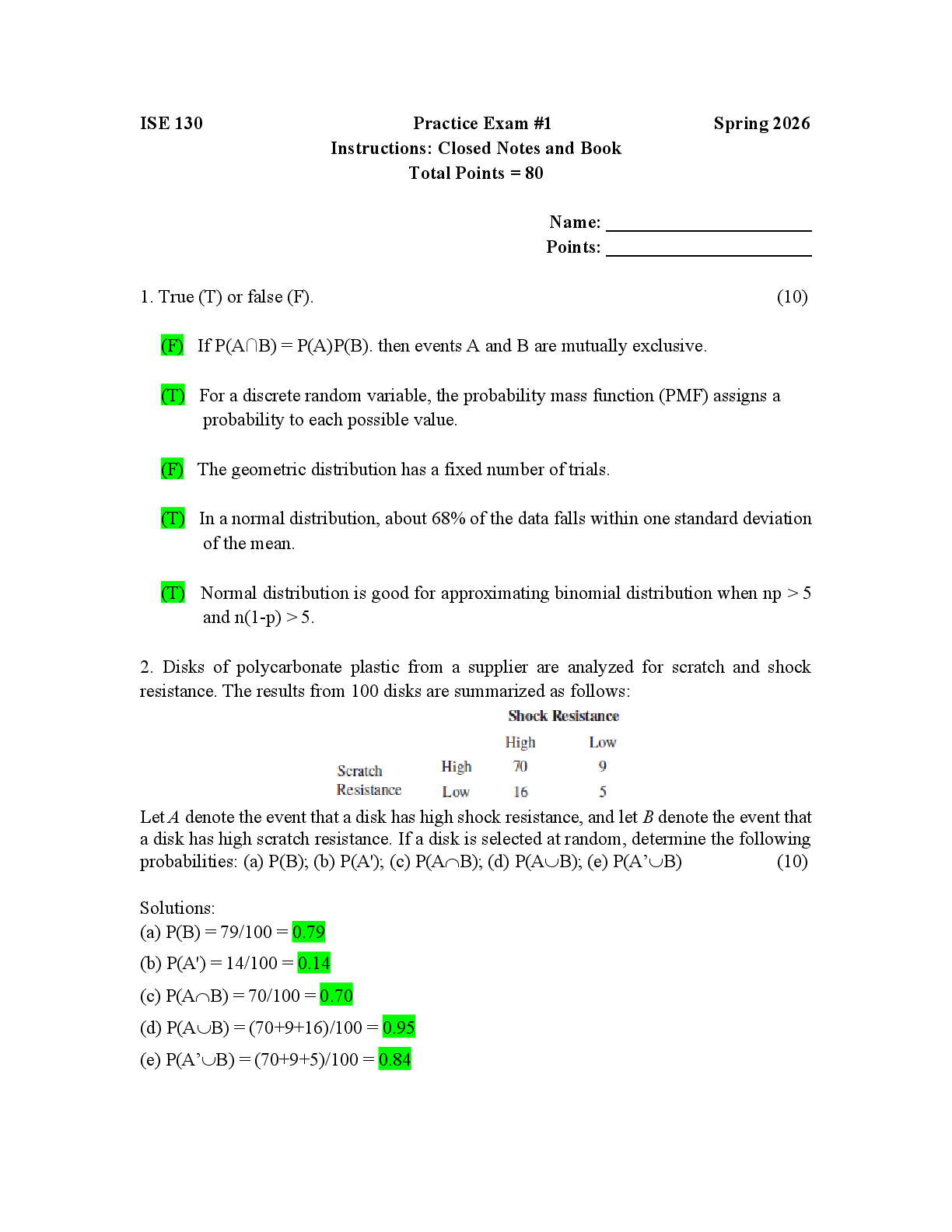
BIO 201 Homework 1 | Questions and Answers
Document Content and Description Below
Last updated: 1 year ago
Preview 2 out of 3 pages
Instant download

Loading document previews ...
Buy this Document to get the Full Access Instantly
Provided by Students Who Aced it
We Verify Document Content to Gurantee Accuracy
Also available in bundle (1)
Click Below to Access Bundle(s)
BIO 201 HOMEWORK 1, 3, 4 & 10 BUNDLE
BIO 201 HOMEWORK 1, 3, 4 & 10 BUNDLE
By Ajay25 1 year ago
$20
4
Reviews( 0 )
Document information
Connected school, study & course
About the document
Uploaded On
Feb 14, 2025
Number of pages
3
Written in
All

Additional information
This document has been written for:
Uploaded
Feb 14, 2025
Downloads
0
Views
48
Topic Tags
Recommended For You
Get more on EXAM »

Straighterline-BIO-201-MH-V3-Topic-8 Joints Quiz | 33.25 out o...
BIO 201 Human Anatomy & Physiology - NAU-Final Exam (Latest sc...
BIO 201 ANATOMY AND PHYSIOLOGY I FULL COURSE ALL GRADED QUIZZE...
STRAIGHTERLINE BIO 201 ANATOMY AND PHYSIOLOGY I- COMPLETE FULL...

Straighterline-A&P I - BIO 201 FULL COURSE MARCH 2022 with ALL...

STRAIGHTERLINE BIO 201 ANATOMY AND PHYSIOLOGY I Topic 1 - 16 G...
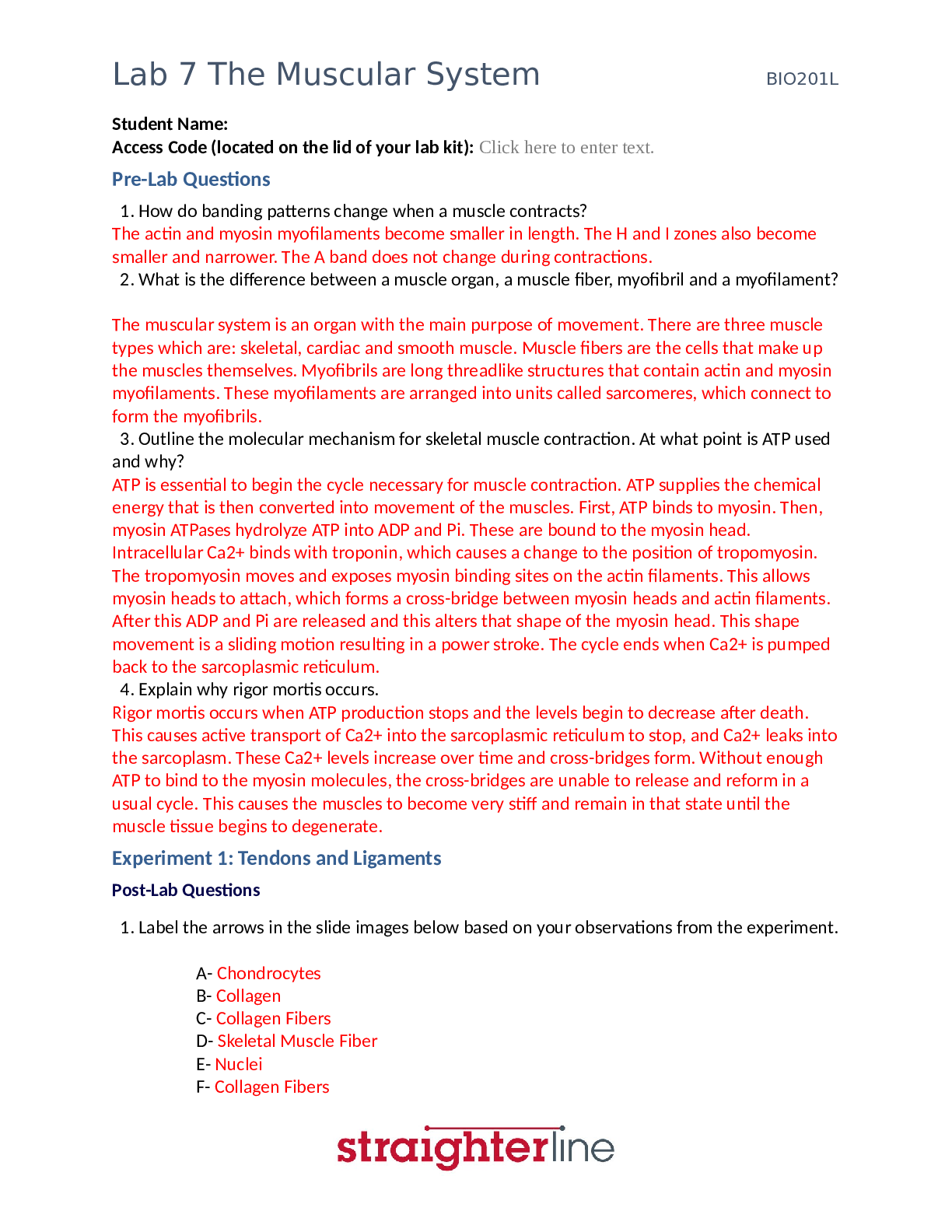
LAB_ QUIZ BIO 201L_ MUSCLES MODULE 8|UPDATED 2022/2023| ALL QU...

LAB QUIZ__ BIO 201L_ALL QUESTIONS EXAMINABLE||ANSWERS CORRECT|...
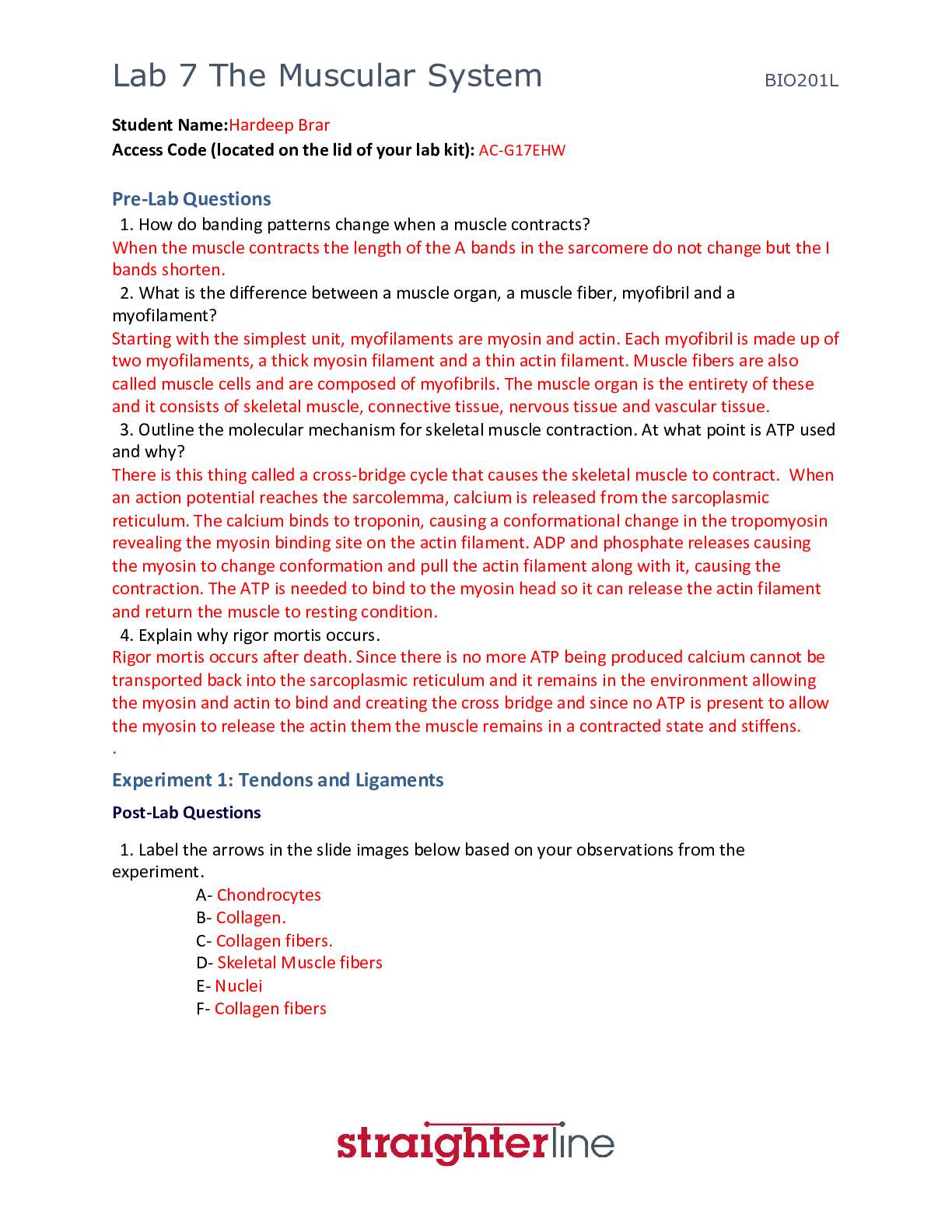
BIO201L_LAB MODULE 7_ALL QUESTIONS EXAMINABLE WITH ANSWERS|LAT...
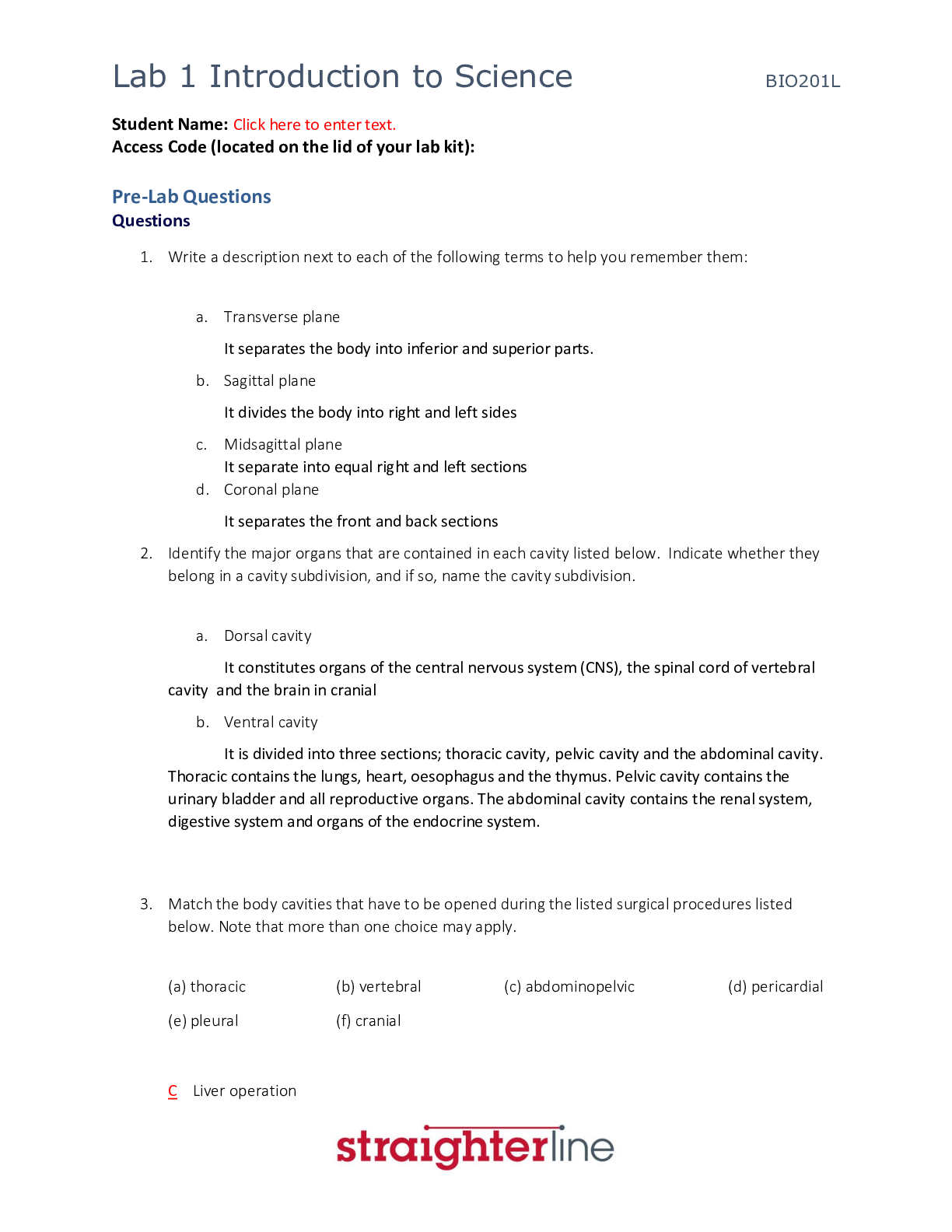
Straighterline BIO 201L Lab 1 - 9 Quizzes & Worksheets (Merged...

Florida International UniversityBIO 2010LWeek 4 Task Sheet