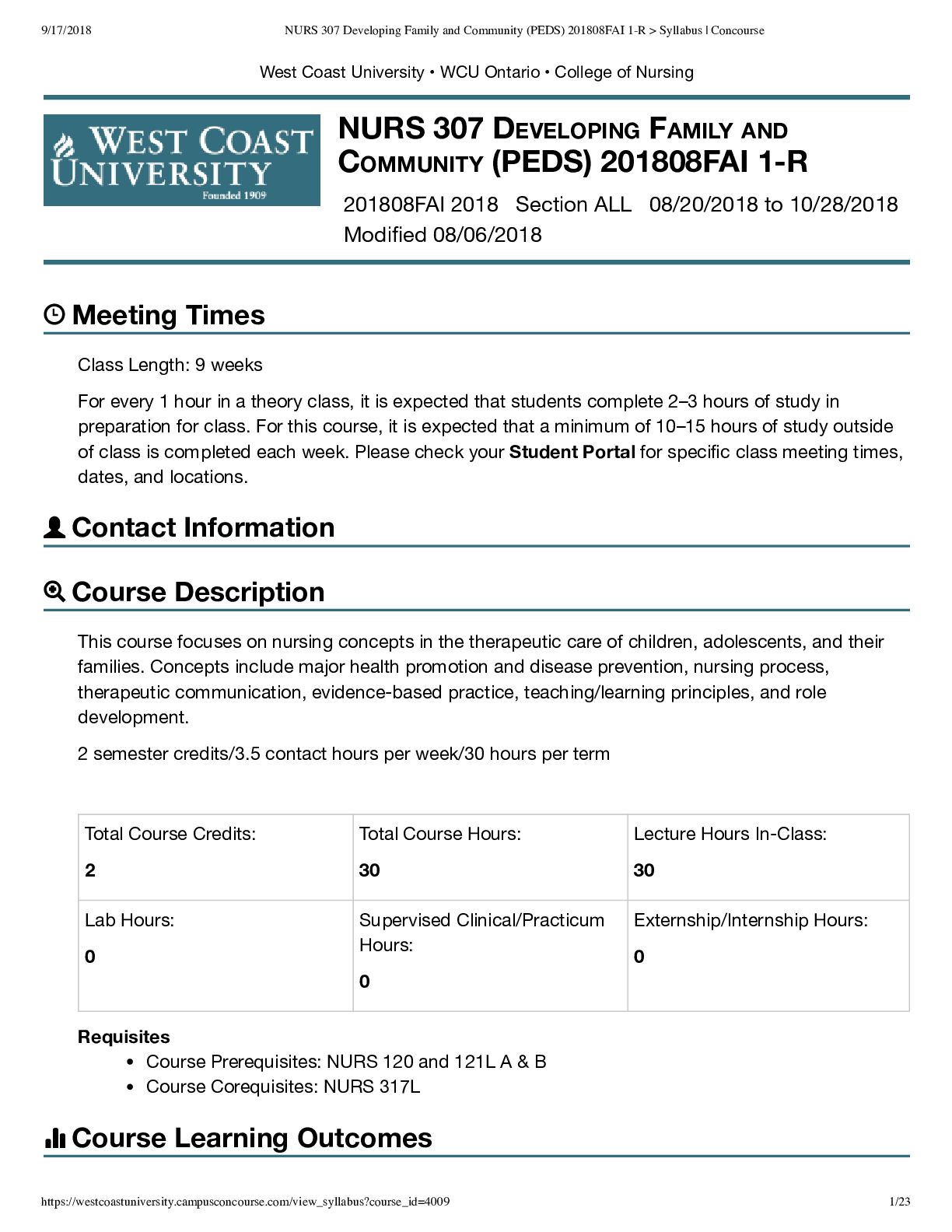
NURSING > EXAM PROCTORED > Alterations in Fluid, Electrolyte, and Acid-Base Balance (All)
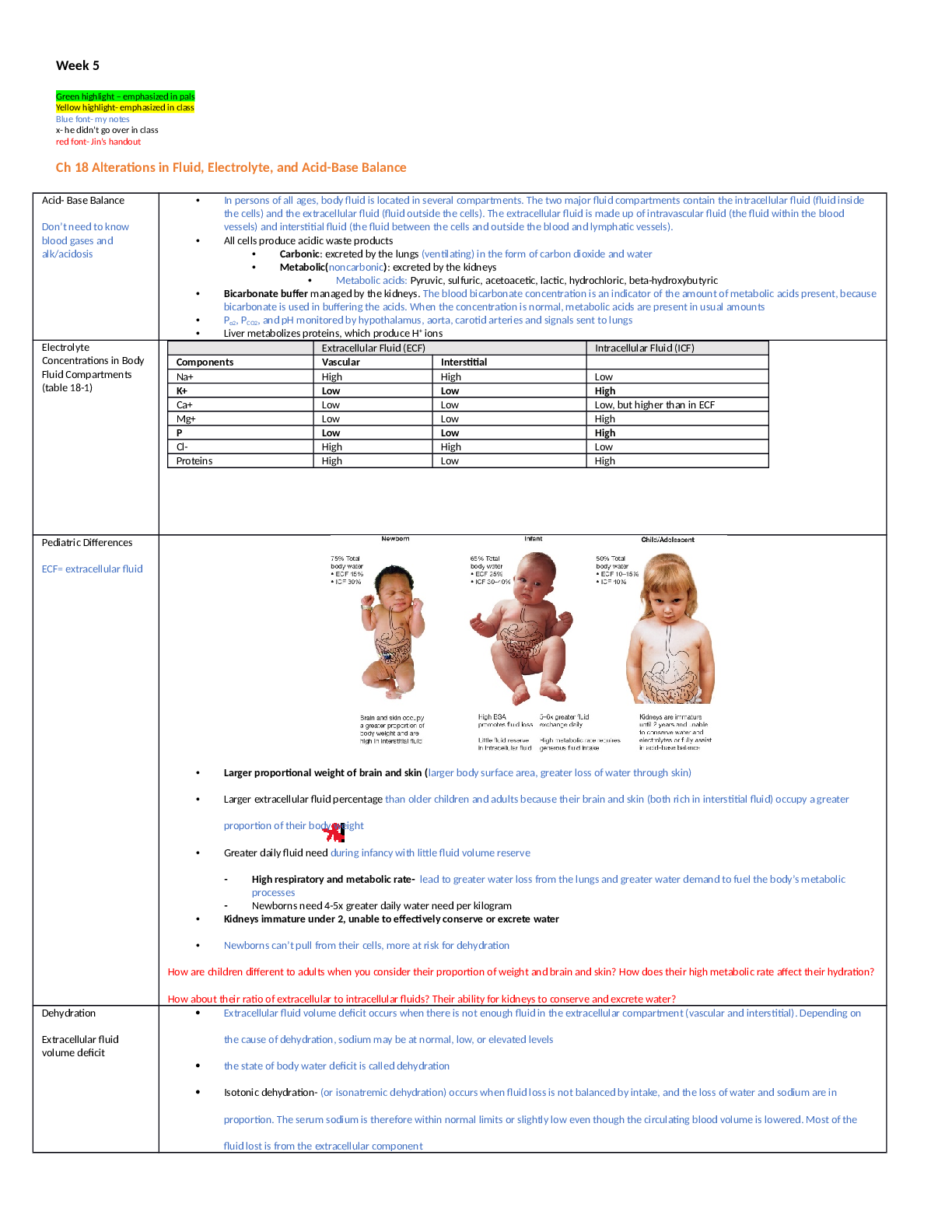
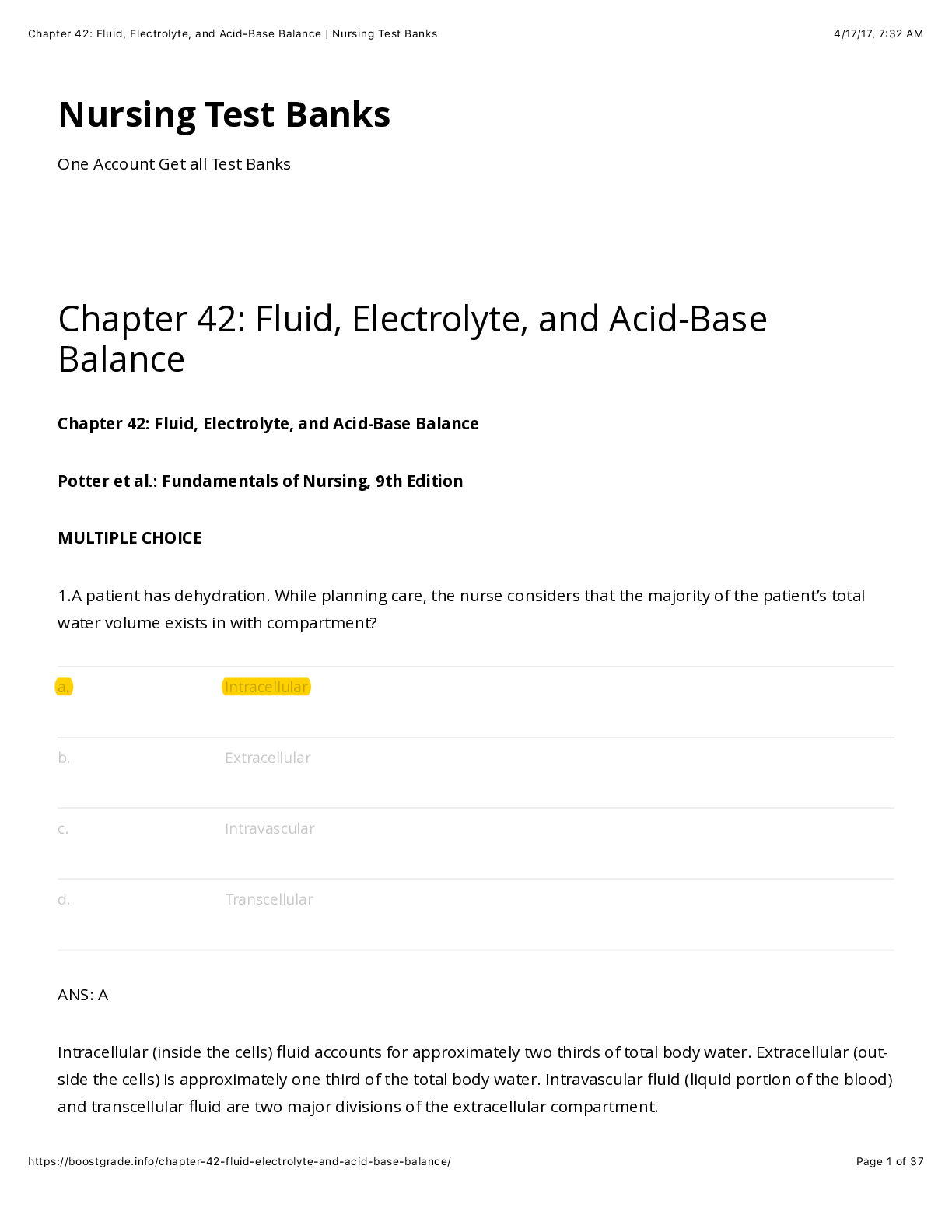
Alterations in Fluid, Electrolyte, and Acid-Base Balance
Document Content and Description Below
Last updated: 3 years ago
Preview 1 out of 22 pages
Instant download
Buy this Document to get the Full Access Instantly
Provided by Students Who Aced it
We Verify Document Content to Gurantee Accuracy
Reviews( 0 )
Document information
Connected school, study & course
About the document
Uploaded On
Mar 19, 2021
Number of pages
22
Written in
All

Additional information
This document has been written for:
Uploaded
Mar 19, 2021
Downloads
0
Views
186
Topic Tags
Recommended For You
Get more on EXAM PROCTORED »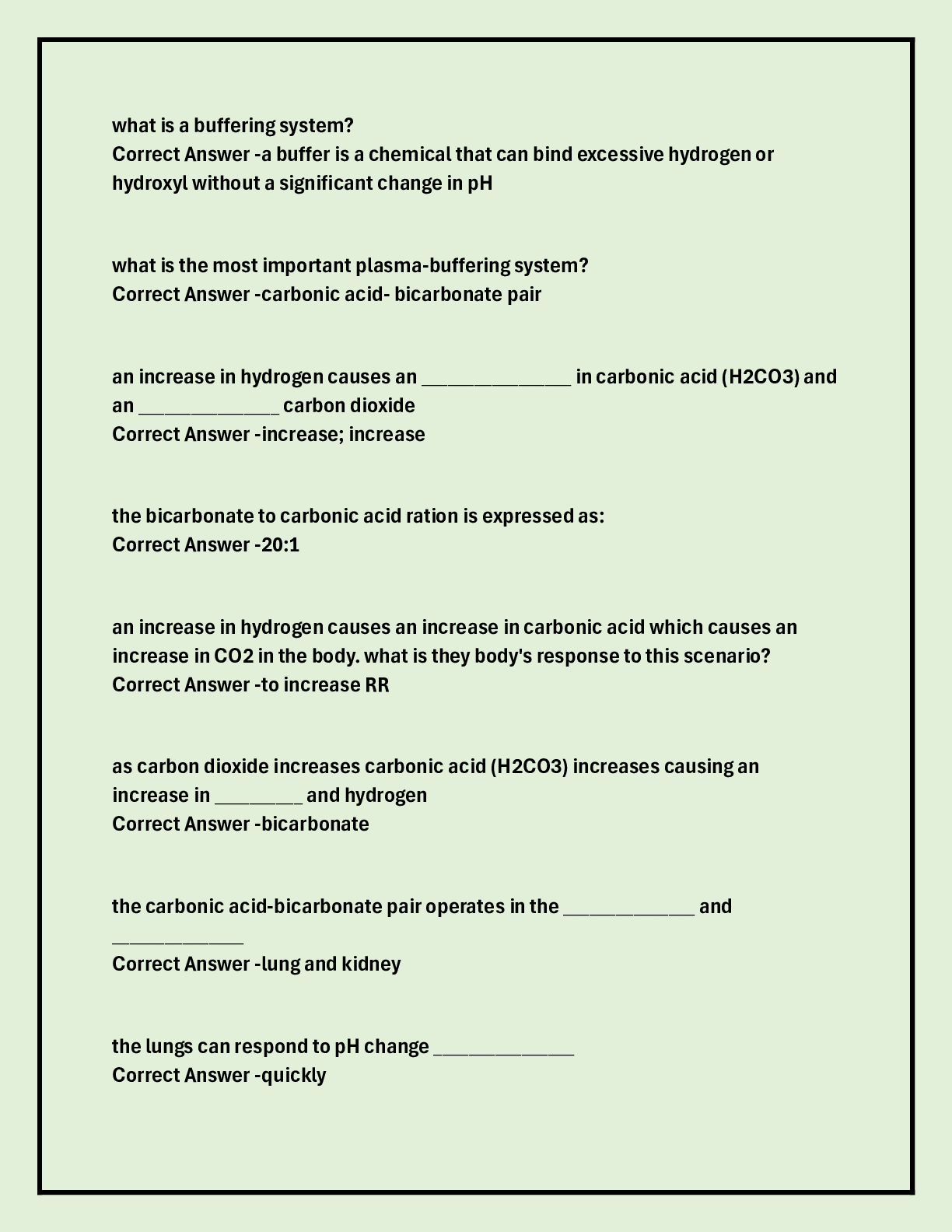
BIO 669 (Fluid and Electrolyte) ACID BASE BALANCE EXAM REVIEW...

Introduction to Medical-Surgical Nursing Test Bank 7TH Editon

ATI Pharmacology Proctored Test Bank, Latest Complete Question...

NR 283 / NR283 Case Study 1 Fluid-Electrolyte Acid base Balanc...
NUR 111 Davis Edge Fluid Electrolyte Acid Base Imbalances Test...
EXAM 2 Fundamentals NR 226 (Electrolyte imbalances, fluid and...


BB ATI Proctored Comprehensive 180 questions and answers .100%...
ATI Leadership Management Proctored Exam ( Latest verified Ve...

NUR 103-LECTURE 1: Acid Base Balance & Ventilator- Lecture 2:...

Saunders NCLEX-PN Examination 7th Edition Category: Priority C...

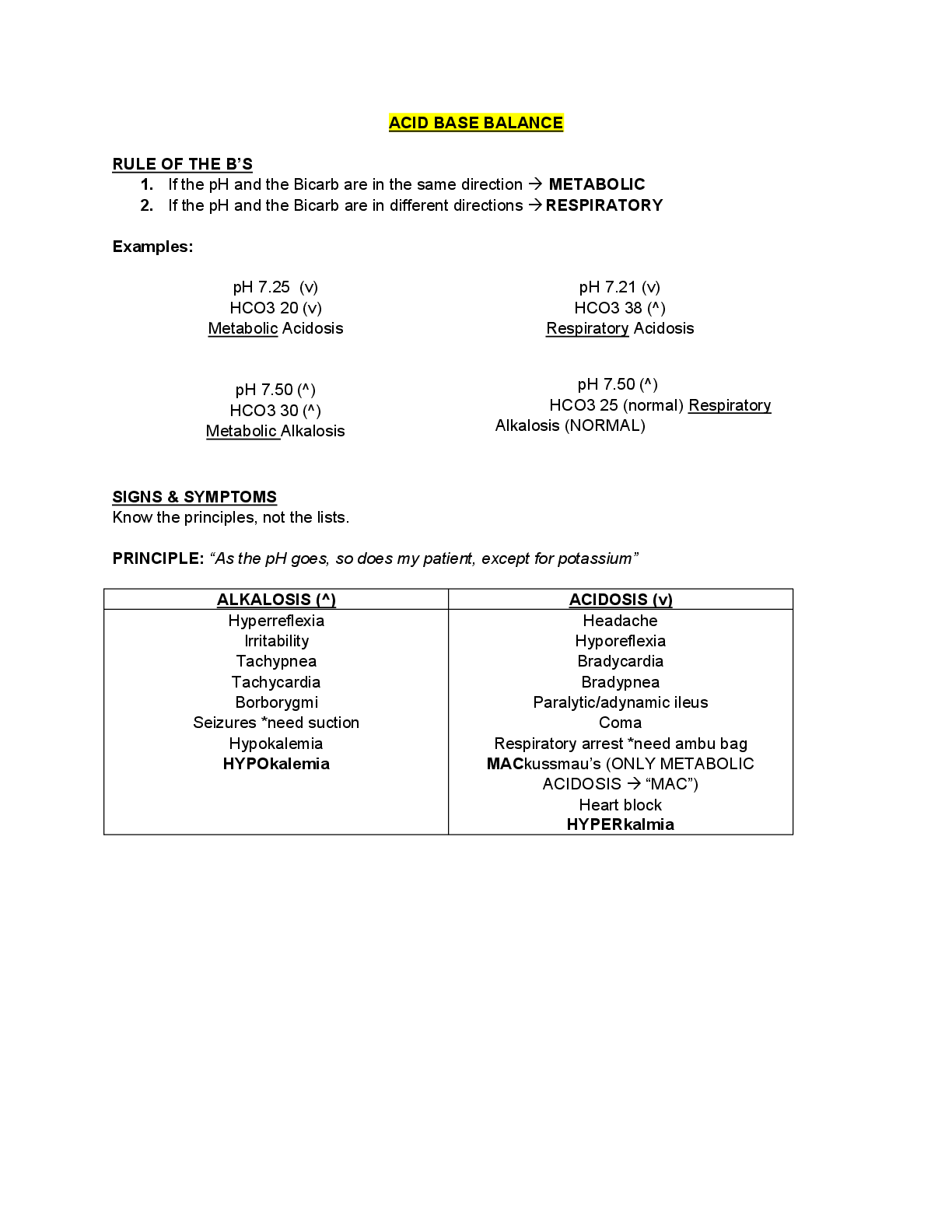
Mark Klimek Lecture Notes LECTURE 1_Acid Base Balance & Venti...


![Preview of Questions From Proctored Med Surg ATI.[detailed and listed below]](https://scholarfriends.com/storage/Questions_From_Proctored_Med_Surg_ATI.png)
![Preview of ATI_Med_Surg_Proctored_Exam_Latest.docx with questions and answers well verified] FOR GRAD](https://scholarfriends.com/storage/ATI_Med_Surg_Proctored_Exam_Latest.png)

![Preview of PEDS_ATI_PROCTORED_STUDY_NOTES.docx[STUDY GUIDE- LATEST SUMMER 2021] A+ GRADED.](https://scholarfriends.com/storage/PEDS_ATI_PROCTORED_STUDY_NOTES.png)
![Preview of NR 534 W2 Advanced Communication.docx{LATEST STUDYGUIDE AND WELL PRINTED IN FULL] A+ GRADE](https://scholarfriends.com/storage/NR_534_W2_Advanced_Communication.png)