Botany > STUDY GUIDE > Exam Guide Mid Term Arizona State University - WPC 300 (All)
Exam Guide Mid Term Arizona State University - WPC 300
Document Content and Description Below
Last updated: 6 months ago
Preview 1 out of 2 pages
Instant download

Buy this Document to get the Full Access Instantly
Provided by Students Who Aced it
We Verify Document Content to Gurantee Accuracy
Reviews( 0 )
Document information
Connected school, study & course
About the document
Uploaded On
Mar 23, 2021
Number of pages
2
Written in
All

Additional information
This document has been written for:
Uploaded
Mar 23, 2021
Downloads
0
Views
235
Topic Tags
Recommended For You
Get more on STUDY GUIDE »


Science of Analytics Quiz Arizona State University - WPC 300 A...
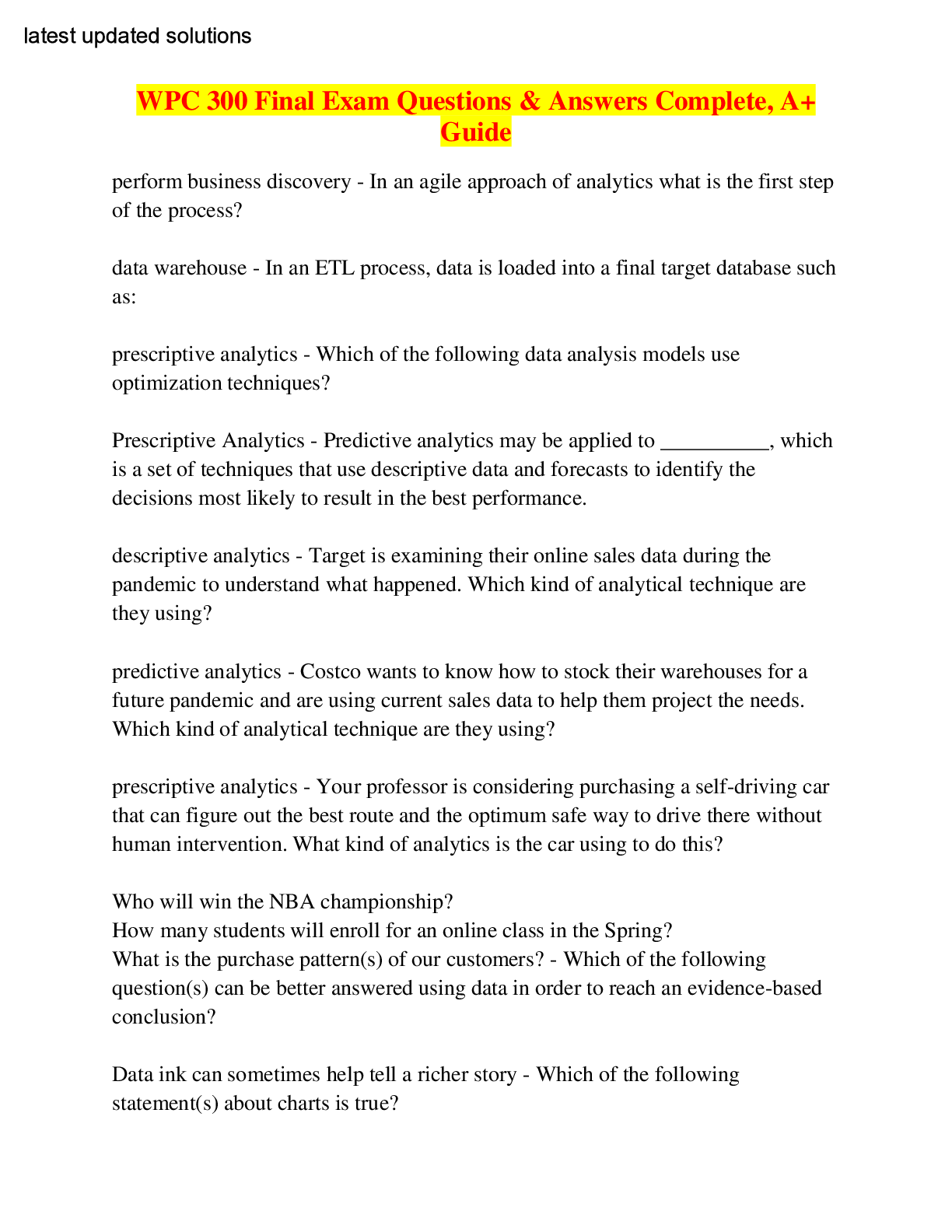
WPC 300 Final Exam Questions & Answers Complete, A+ Guide
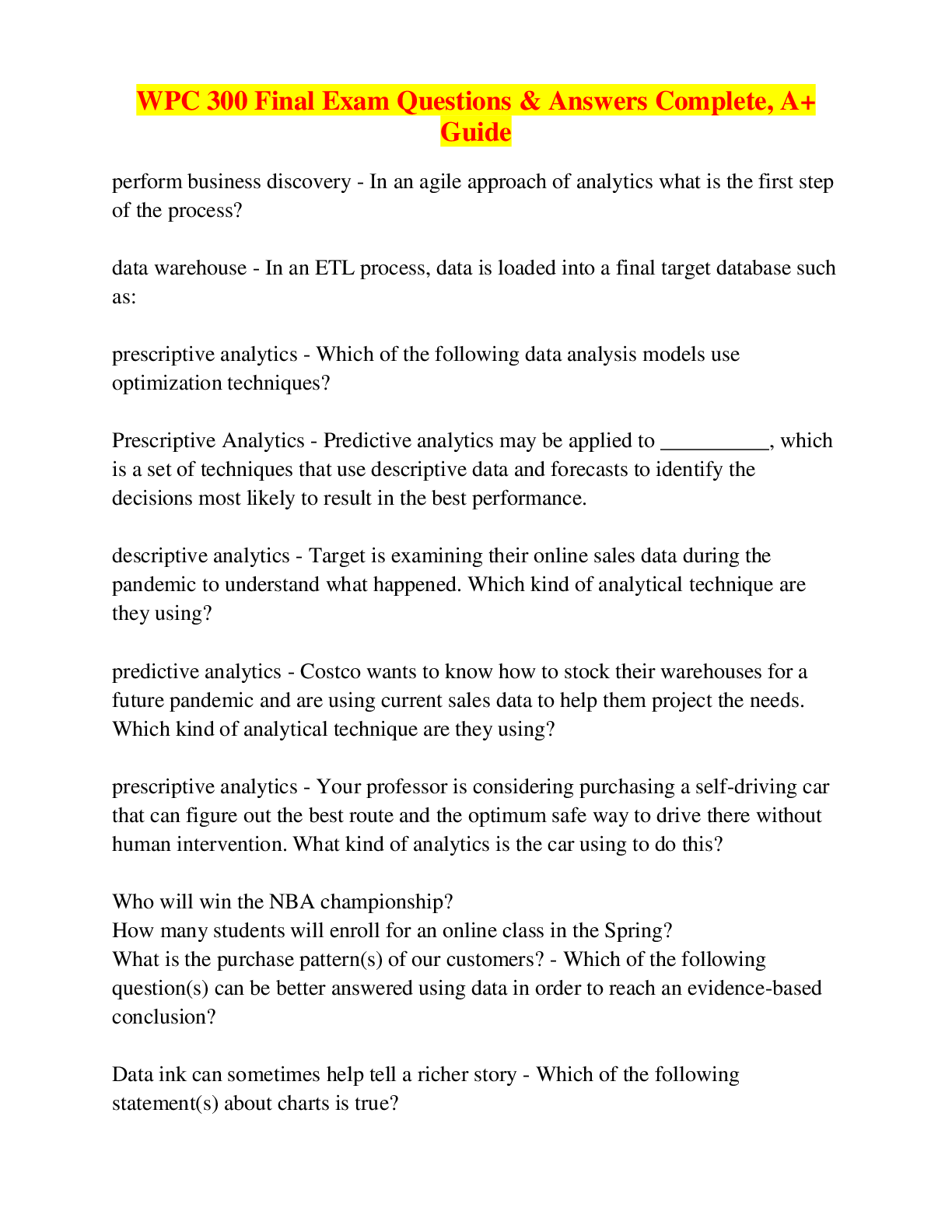
WPC 300 Final Exam Questions & Answers Complete, A+ Guide
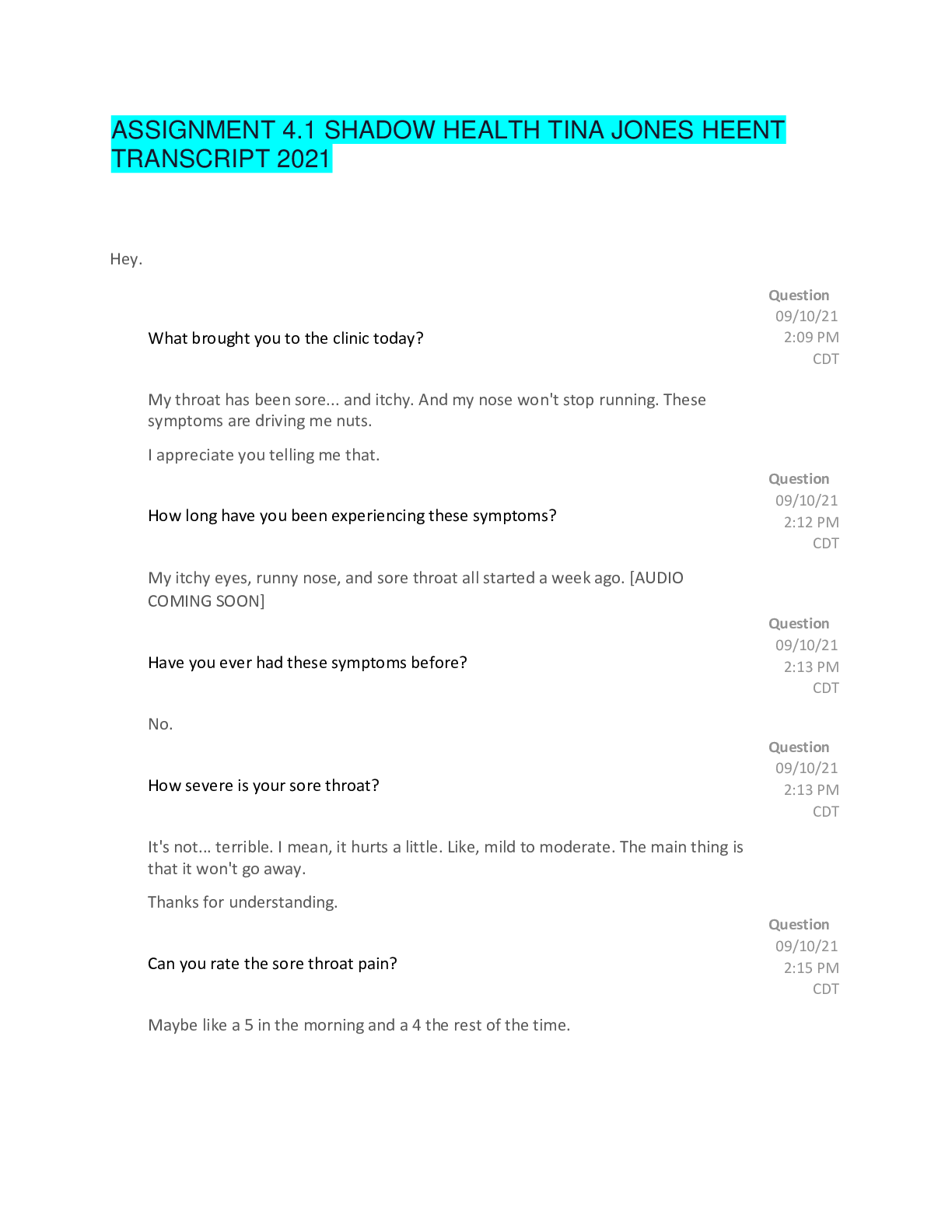
Arizona State University - WPC 300 (Hybrid Course) Assignment-...

Albany State University - ACCOUNTING sKevin Durham-wpc-300-hw2...
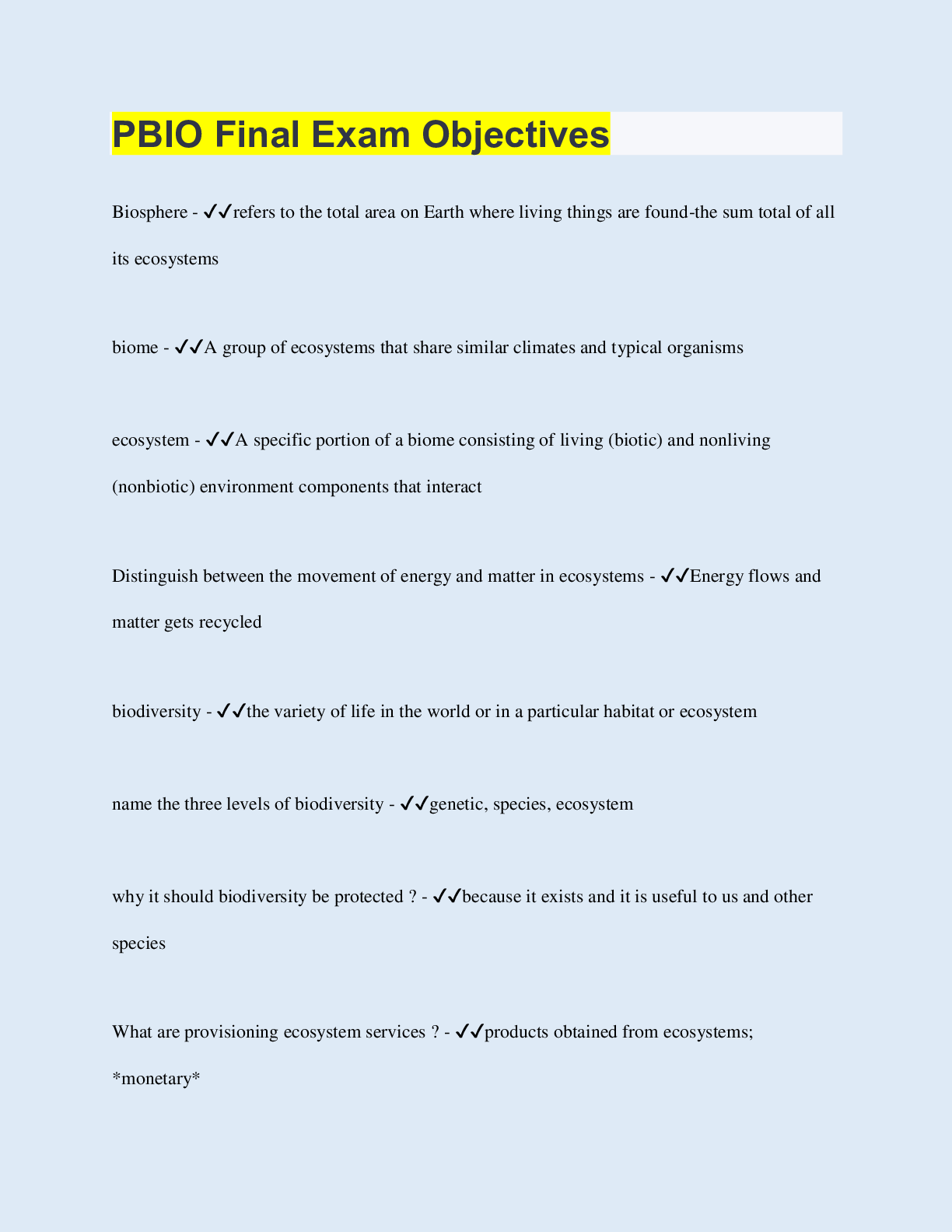
PBIO Final Exam Objectives | 150 Questions with 100% Correct A...
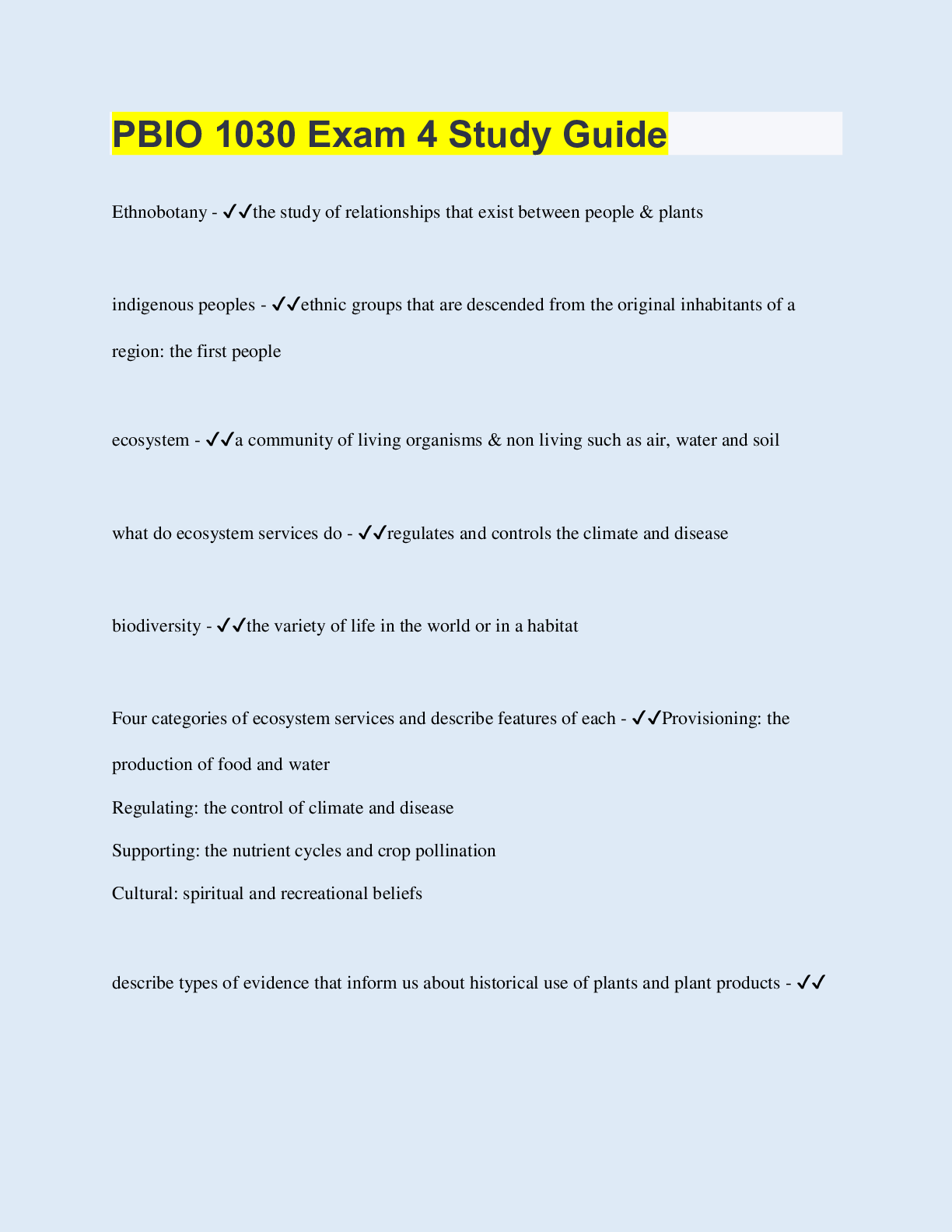
PBIO 1030 Exam 4 Study Guide | 115 Questions with 100% Correct...

Testbank t/a Organisational behaviour on the Pacific Rim 2e by...
Botany An Introduction To Plant Biology 7th Edition By James D...
Test Bank For Botany, An Introduction to Plant Biology 6th Edi...
Solutions Manual For Botany, An Introduction to Plant Biology...
.png)

TEST BANK for Botany, An Introduction to Plant Biology, 7th Ed...
TEST BANK for Botany: An Introduction To Plant Biology by Jame...

TEST BANK for Botany, An Introduction To Plant Biology by Jame...


.png)