Management > DISCUSSION POST > Discussion Post 11 Temple University - MANAGEMENT 201 (All)
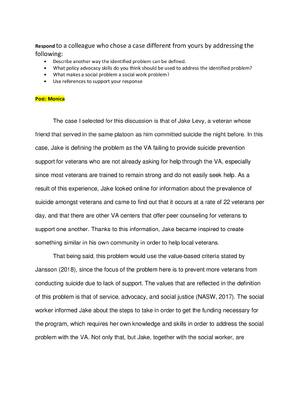
Discussion Post 11 Temple University - MANAGEMENT 201
Document Content and Description Below
Last updated: 5 months ago
Preview 1 out of 3 pages
Instant download
.png)
Buy this Document to get the Full Access Instantly
Provided by Students Who Aced it
We Verify Document Content to Gurantee Accuracy
Reviews( 0 )
Document information
Connected school, study & course
About the document
Uploaded On
Mar 24, 2021
Number of pages
3
Written in
All

Additional information
This document has been written for:
Uploaded
Mar 24, 2021
Downloads
0
Views
132
Topic Tags
Related Subjects & Courses
Explore similar study resources and related concepts.
Recommended For You
Get more on DISCUSSION POST »
Solution Manual for Operations Management 13th Edition AND Pri...

Solutions Manual for Investment Analysis and Portfolio Managem...

Test Bank for Investment Analysis and Portfolio Management, 11...
.png)
Test Bank for Strategic Management Concepts and Cases, 4th Edi...

Solutions Manual for Introduction To Management Science A Mode...

Test Bank for Police Administration, 11th Edition by Gary Cord...

Solutions Manual for Torkildsen's Sport and Leisure Management...
Test Bank for The Economics of Farm Management A Global Perspe...
Instructor solutions Manual for Hospitality Management Account...
.png)
Test Bank for Hospitality Management Accounting 9th Edition by...
.png)
Solutions Manual for Operations Management, 14th Edition by Wi...
.png)
Test Bank for Operations Management, 14th Edition by William S...
.png)
Solutions Manual for Strategic Management A Competitive Advant...
.png)
Solutions Manual for Strategic Management Concepts and Cases,...

Test Bank for Cost Management A Strategic Emphasis, 9th Canadi...
Test Bank for An Introduction to Management Science Quantitati...
Test Bank for Managerial Accounting Tools for Business Decisio...

Introduction To Management Science A Modeling And Case Studies...


.png)
.png)



.png)

