Computer Science > Solutions Guide > University of British Columbia - CPSC 320Assignment 6 solution (All)
University of British Columbia - CPSC 320Assignment 6 solution
Document Content and Description Below
Last updated: 6 months ago
Preview 1 out of 5 pages
Instant download

Buy this Document to get the Full Access Instantly
Provided by Students Who Aced it
We Verify Document Content to Gurantee Accuracy
Reviews( 0 )
Document information
Connected school, study & course
About the document
Uploaded On
Apr 02, 2021
Number of pages
5
Written in
All

Additional information
This document has been written for:
Uploaded
Apr 02, 2021
Downloads
0
Views
238
Topic Tags
Related Subjects & Courses
Explore similar study resources and related concepts.
Recommended For You
Get more on Solutions Guide »
Fundamentals of Computer Vision (Complete Instructor Resources...

Quiz 4_ CPSC 425 101 2021W1 Computer Vision - University of Br...
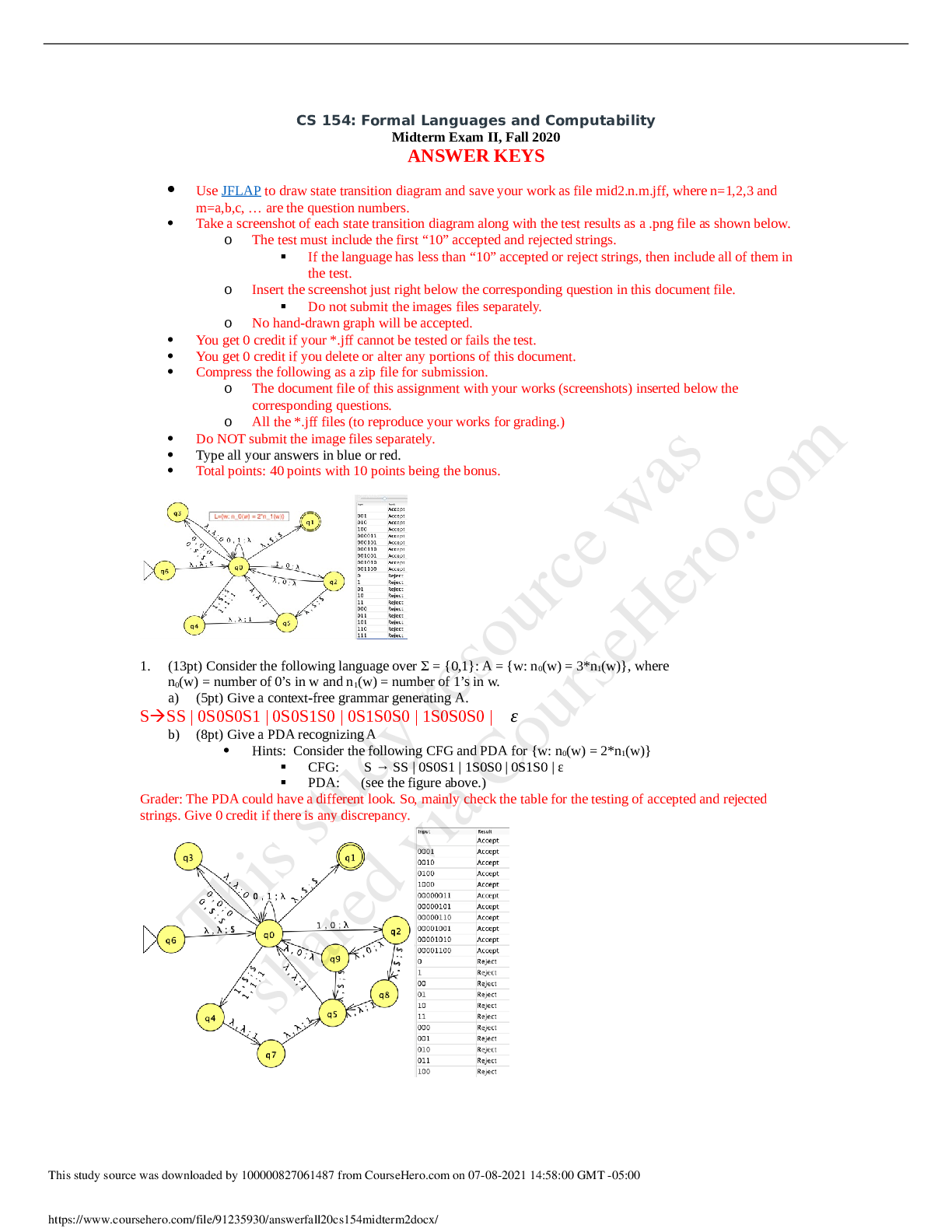
CS 154 Formal Languages and Computability Midterm Exam II, ANS...

CPSC 425 Winter 2012 Quiz 3 Solutions - University of British...

.png)
Gwinnett Technical College - CIST 1305Lesson_07_Homework_Muham...




.png)

.png)