Families Exam 1 Blueprint
Normal Physiological Changes of Pregnancy
o Presumptive/Positive Signs of Pregnancy (3 questions)
o Presumptive Signs—changes that the woman experiences that make her think that she
might be
...
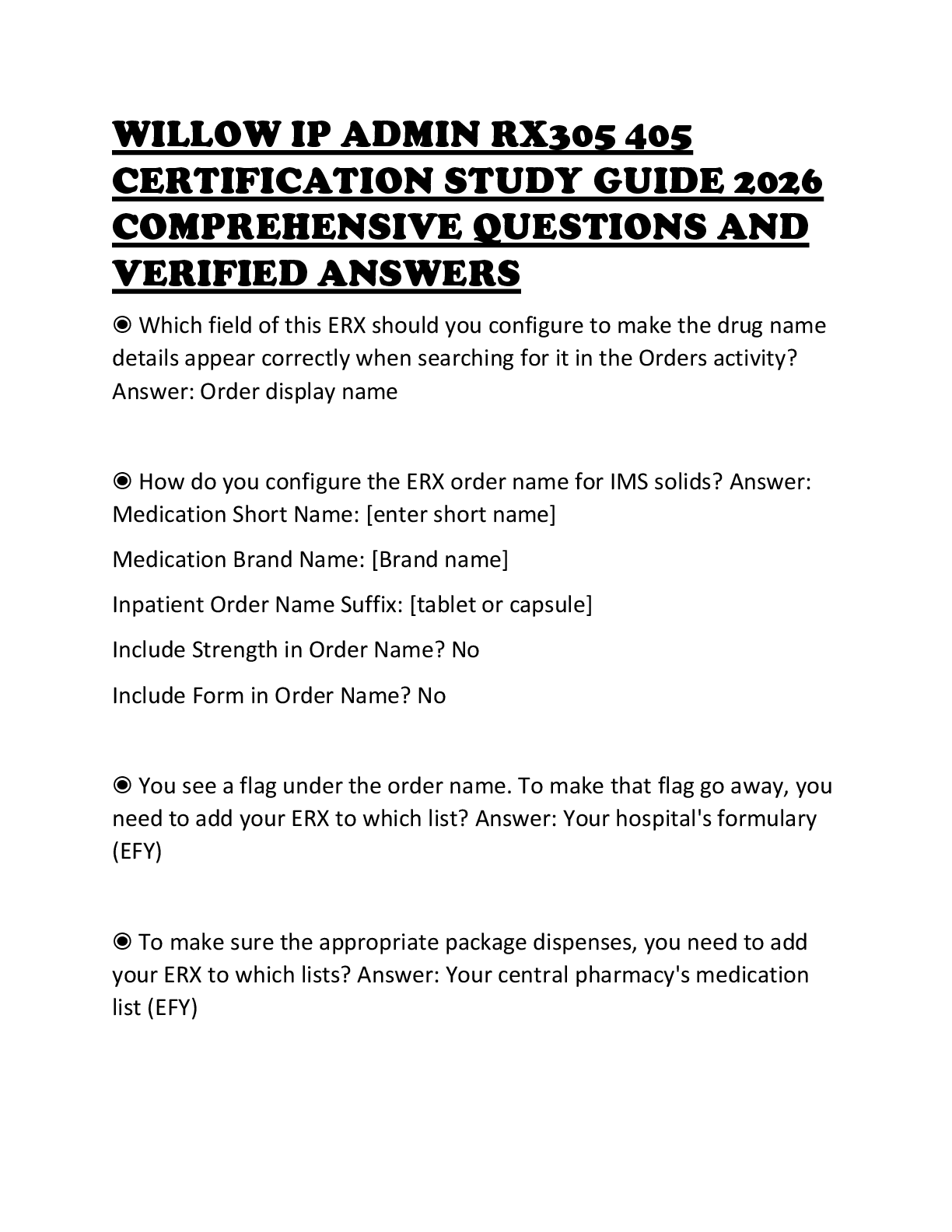
Families Exam 1 Blueprint
Normal Physiological Changes of Pregnancy
o Presumptive/Positive Signs of Pregnancy (3 questions)
o Presumptive Signs—changes that the woman experiences that make her think that she
might be pregnant
Amenorrhea, fatigue, urinary frequency, N/V, changes in breasts (darkened areolae,
enlarged Montgomery’s glands), quickening (starts between 16-20wks), uterine
enlargement
o Positive Signs—can be explained only by pregnancy
Fetal heart sounds—listen right above symphysis pubis
Can be detected between 8-12wks
Fetal movement
Visualization of fetus by ultrasound
o (Probable Signs—changes that make provider suspect a woman is pregnant)
Abdominal enlargement, Braxton hicks contractions, positive pregnancy test,
physical changes of uterus
o Physiological/Psychological/Hormonal Changes (3 questions)
o Reproductive
Uterus size increases; ovulation/menses cease
o Cardiovascular
CO increases; blood volume increases; HR increases & peaks at 10-15bpm above
pre-pregnancy rate; murmurs may be heard
o Respiratory
O2 needs increase; RR increases; total lung capacity decreases
o Musculoskeletal
Weight increases—change in posture needed
o Gastrointestinal
N/V—due to hormones/increased pressure in abdominal cavity; constipation
o Renal
Filtration rate increases—hormones/increase in blood volume; amount of urine
produced remains the same; urinary frequency
o Endocrine
Placenta produces lots of hCG, progesterone, estrogen, human placental lactogen,
prostaglandins
o Integumentary
Stretch marks (striae gravidarum); hyperpigmentation of face (chloasma); linea
nigra (dark line of pigmentation from umbilicus to pubic area)
o Vitals
BP: in supine position, BP drops due to pressure on vena cava—can lead to fetal
hypoxia—if supine, use wedge under one hip
Pulse: increases 10-15bpm around 32wks
o Nagele’s Rule (1 question)
o To determine estimated due date (EDD):
Take first day of woman’s last menstrual cycle, subtract 3 months, add 7 days and 1
year
Ex. Last menstrual period Aug. 22
EDD: May 29th (Aug-3mos=May; 22+7=29)
o GTPAL (1 question)
o G: Gravidity—number of pregnancies including current one total
o T: Term births (>38wks)
o P: Preterm births (20wks-37wks)
o A: Abortions/miscarriages (prior to viability; <20wks)
o L: Living childre
[Show More]











.png)