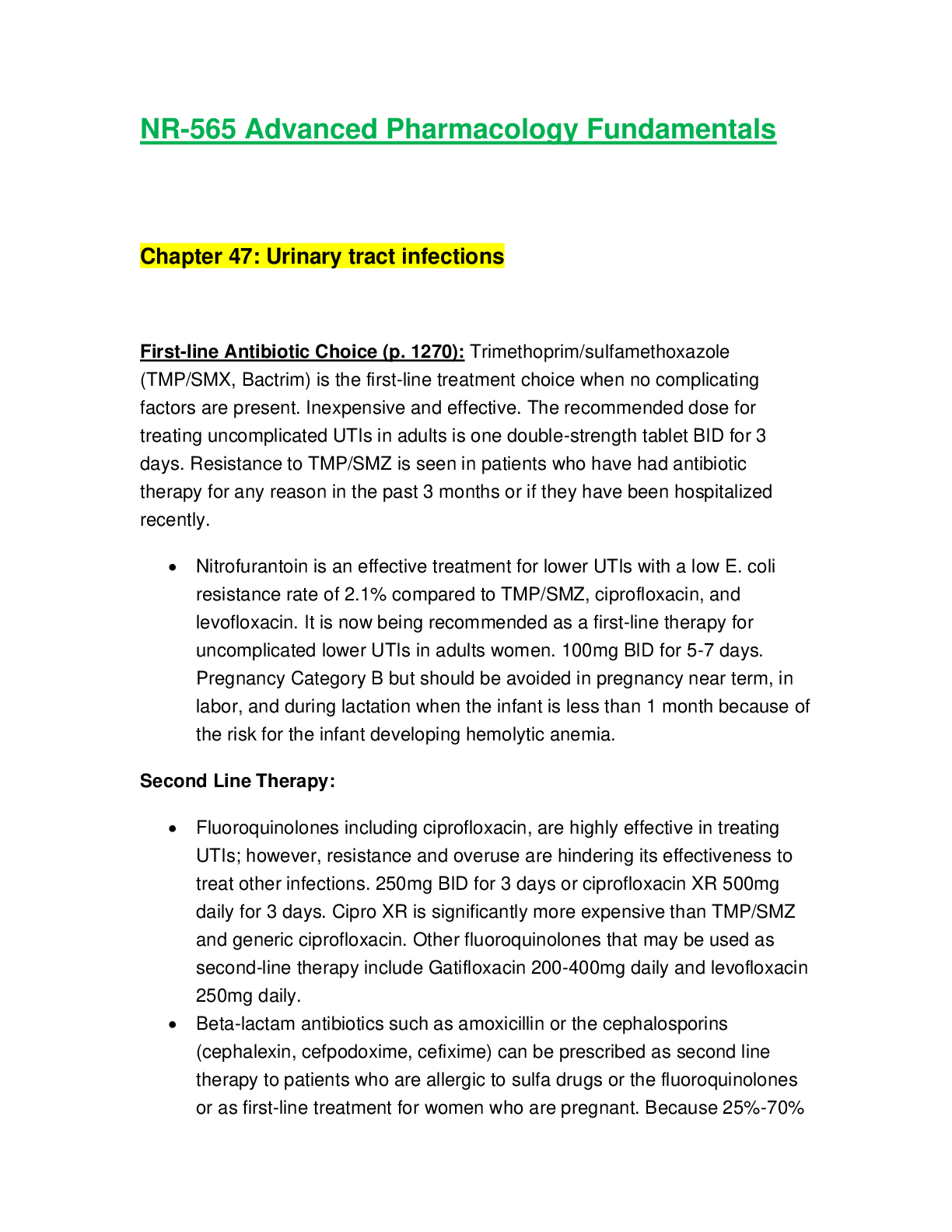
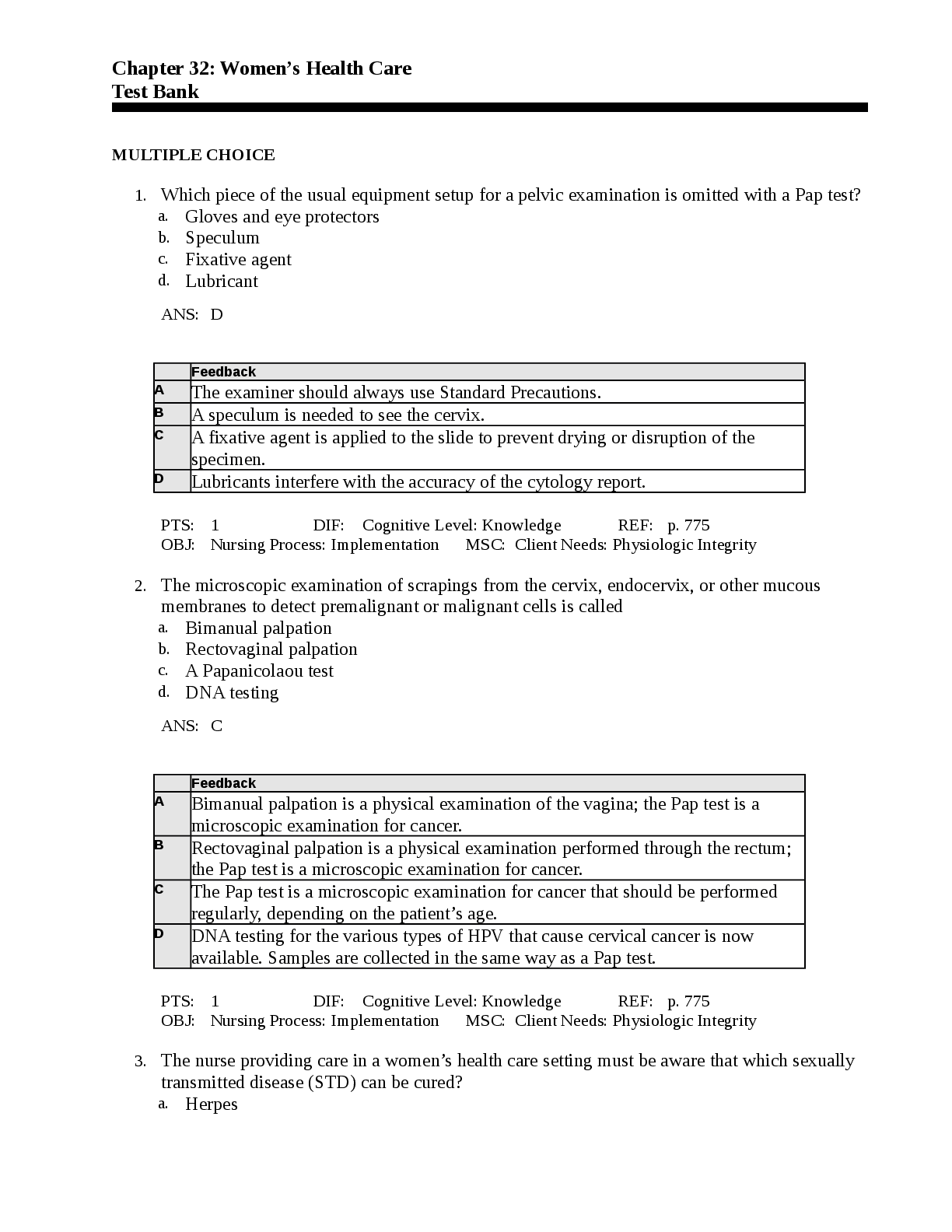
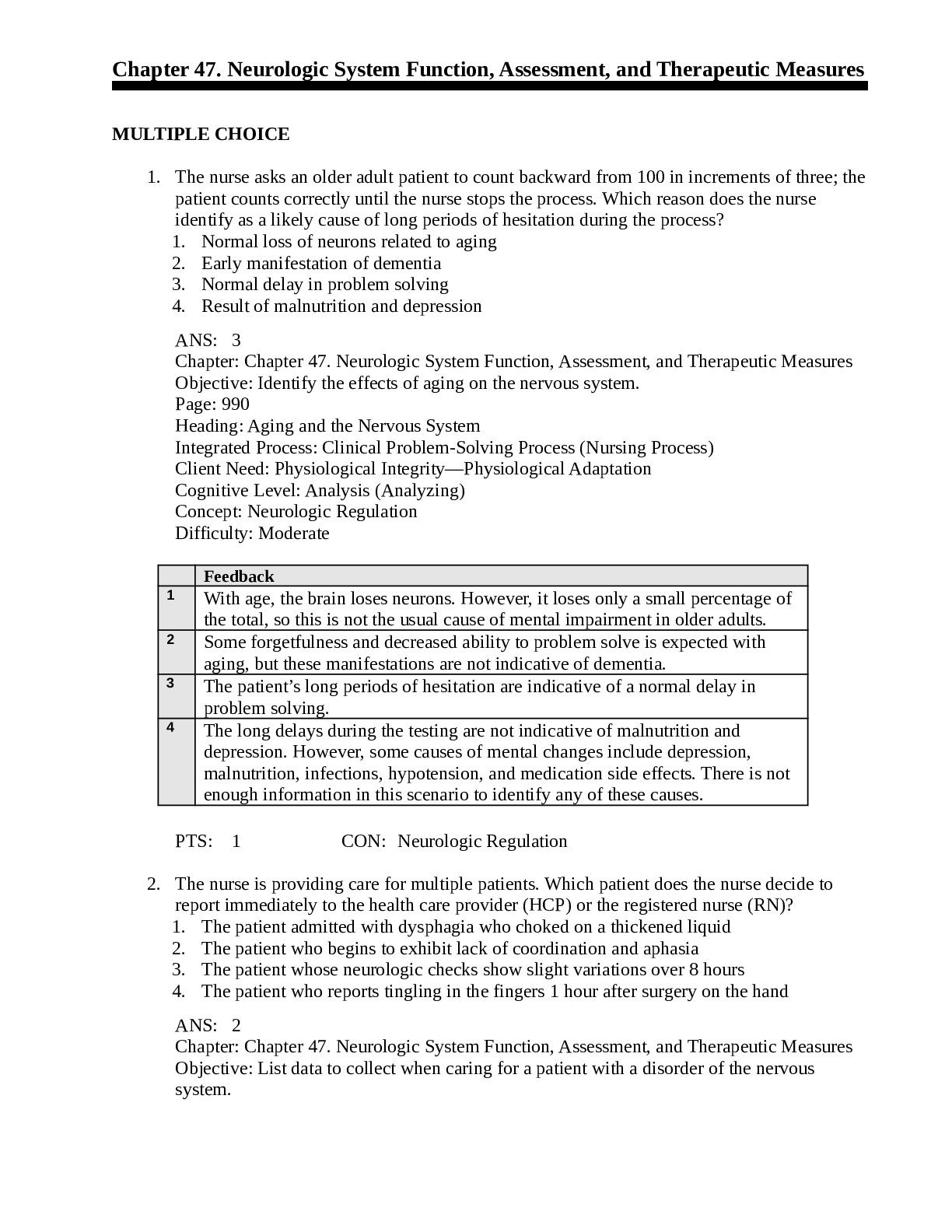
NURSING > QUESTIONS & ANSWERS > NURSING MISC<Chapter 47. Neurologic System Function, Assessment, and Therapeutic Measures>ANSWERS VE (All)
NURSING MISC<Chapter 47. Neurologic System Function, Assessment, and Therapeutic Measures>ANSWERS VERIFIED.100% CORRECT
Document Content and Description Below
Last updated: 3 years ago
Preview 1 out of 14 pages
Instant download
Buy this Document to get the Full Access Instantly
Provided by Students Who Aced it
We Verify Document Content to Gurantee Accuracy
Reviews( 0 )
Document information
Connected school, study & course
About the document
Uploaded On
Apr 15, 2021
Number of pages
14
Written in
All

Additional information
This document has been written for:
Uploaded
Apr 15, 2021
Downloads
0
Views
105
Topic Tags
Related Subjects & Courses
Explore similar study resources and related concepts.
Recommended For You
Get more on QUESTIONS & ANSWERS ».png)
Lewis's Chapter 49- Endocrine Problems Test Bank, Chapter 47-...
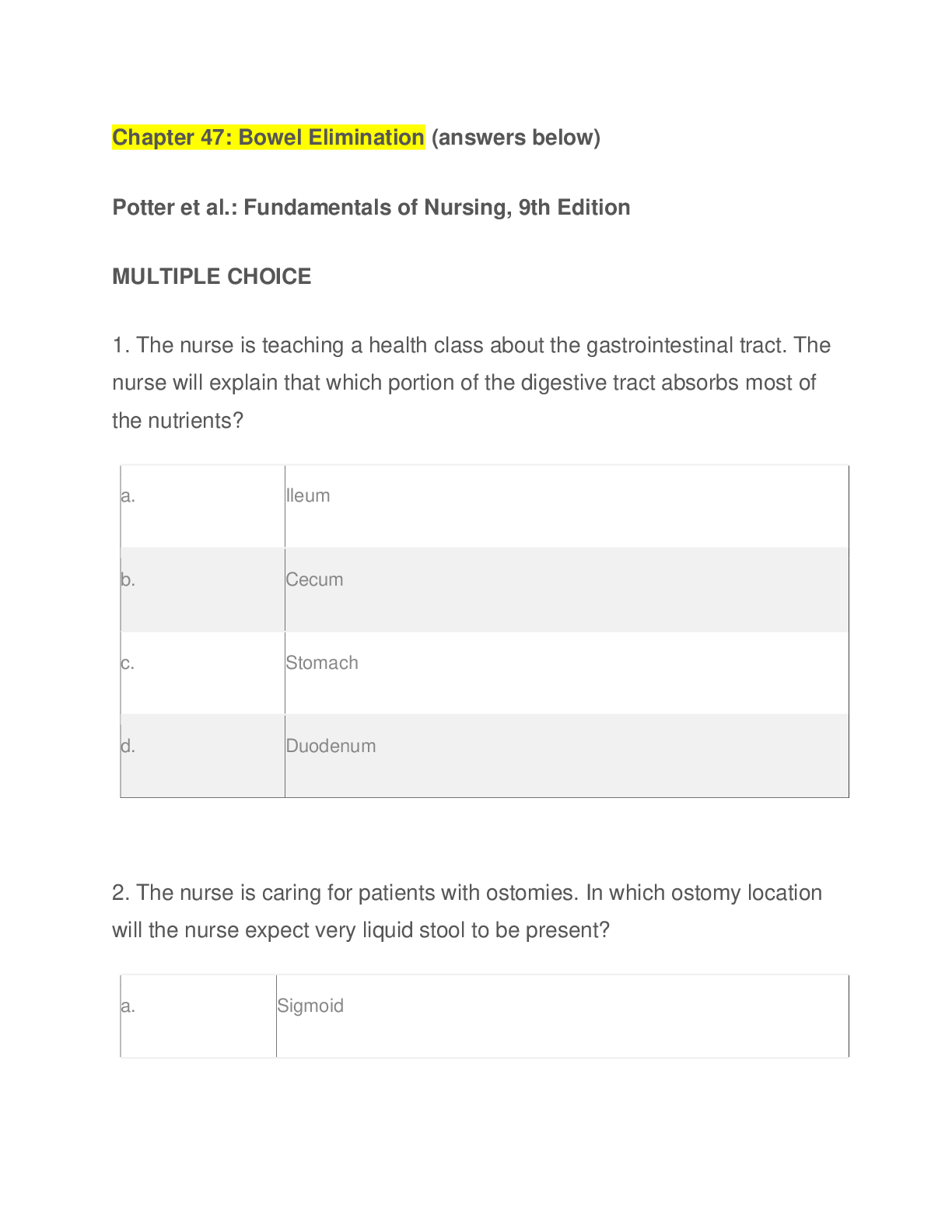
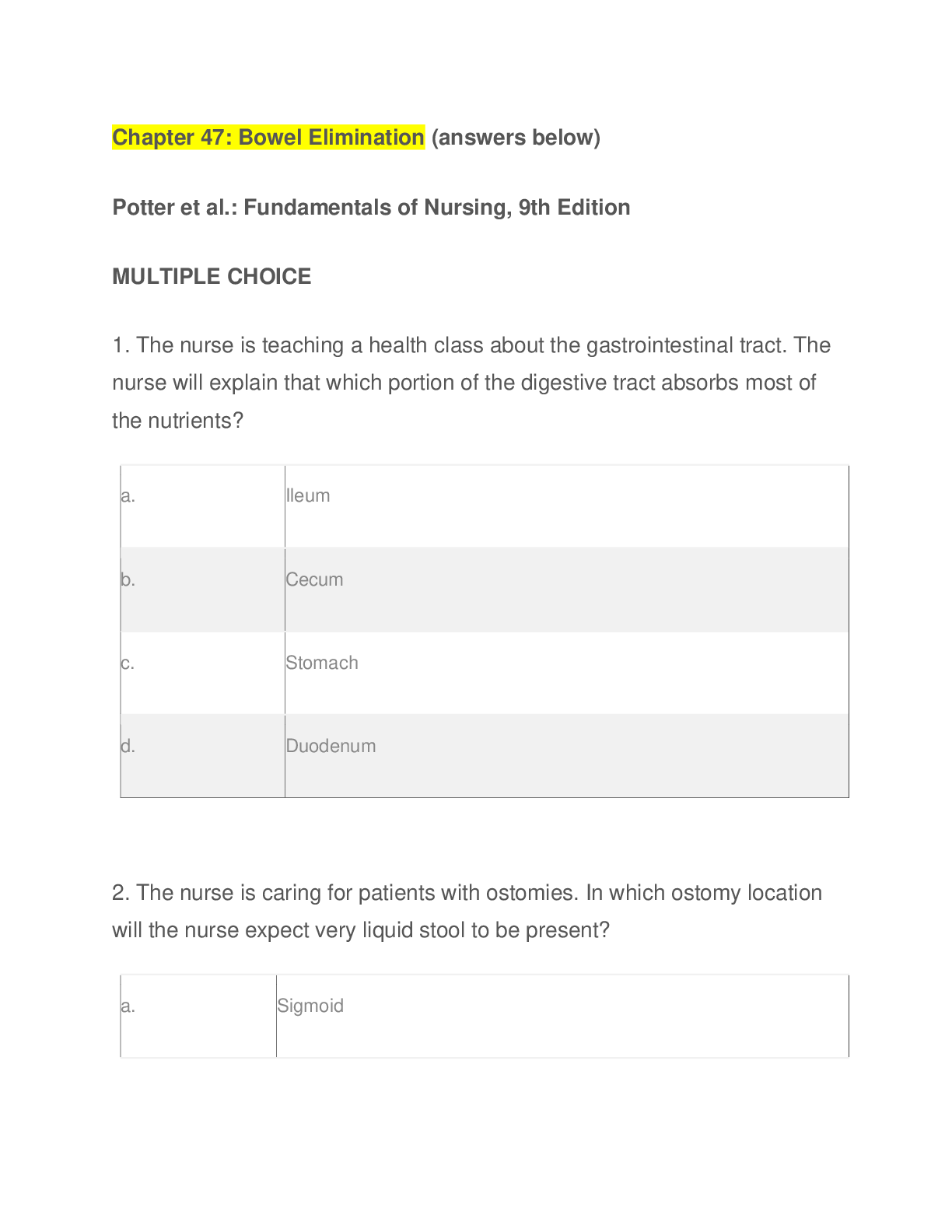
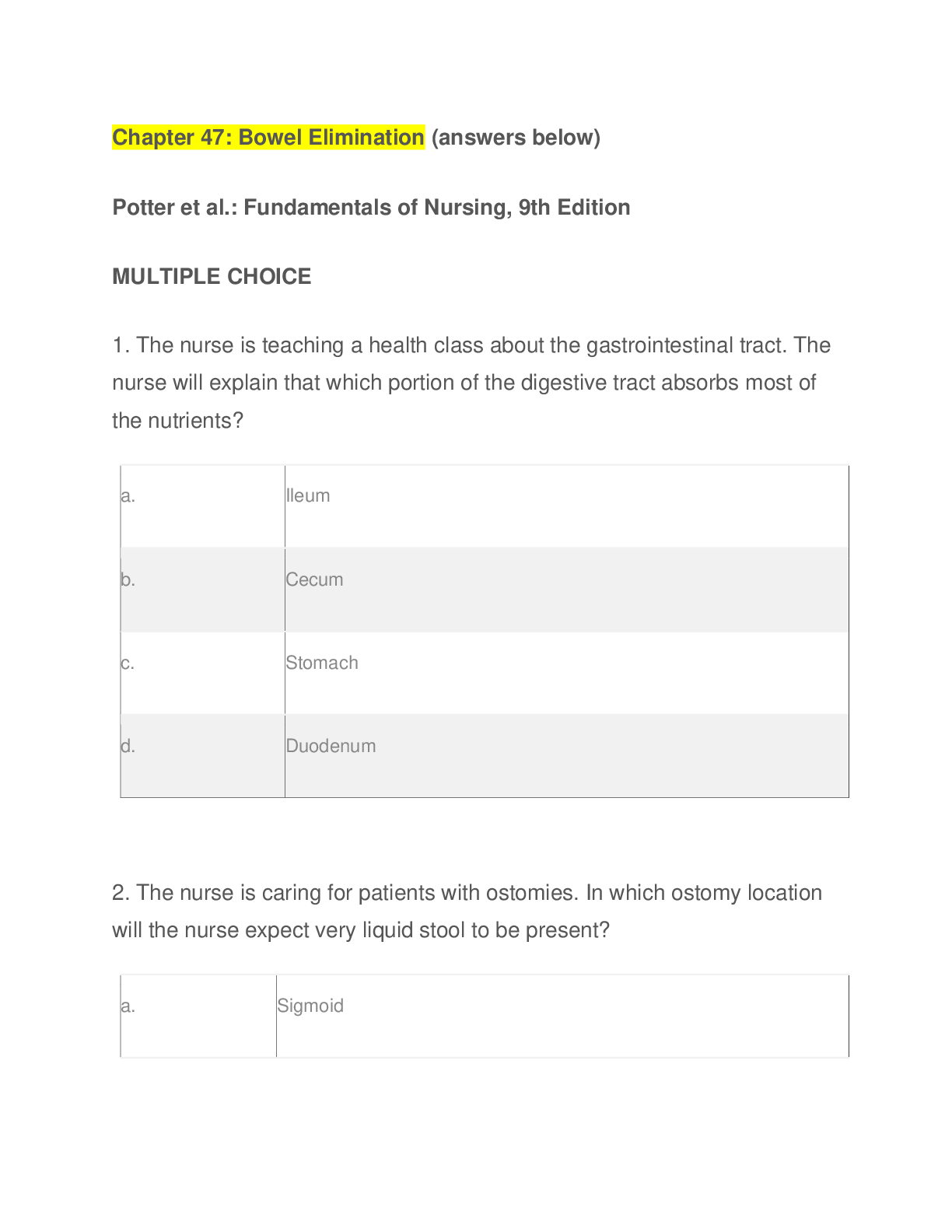
 Med Surg test Latest Verified Questions and all Correct Answers with Explanations Chapter 47 Management of Patients with Intestinal and Rectal Disorders.png)
Sophia Milestone Adult Nursing (NUR 105) Med Surg test Latest...
 Correct Study Guide, Download to Score A.png)
ATI Chapter 47: Integumentary Dysfunction (Latest 2021) Correc...
.png)
Milestone Chapter 47 Care of Patients with Eye and Vision Prob...
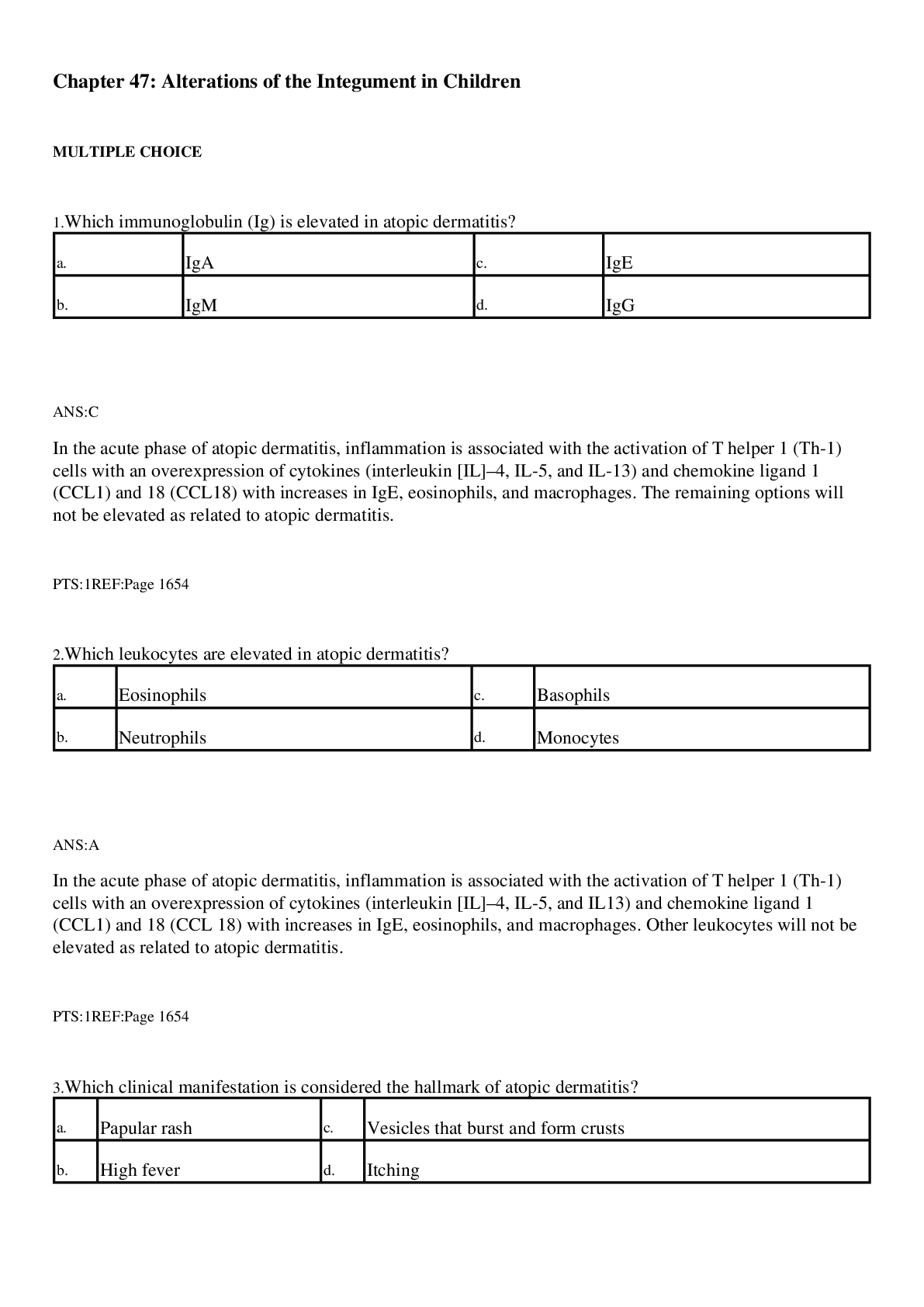
Chapter 47: Alterations of the Integument in Children TESTBANK
Chapter 47: Alterations of the Integument in Children TESTBANK
Primary Care Art and Science of Advanced Practice Nursing - Te...
ATI Primary Care Art and Science of Advanced Practice Nursing...

Potter-Perry Chapter 47 Bowel Elimination- Questions ALL ANSWE...
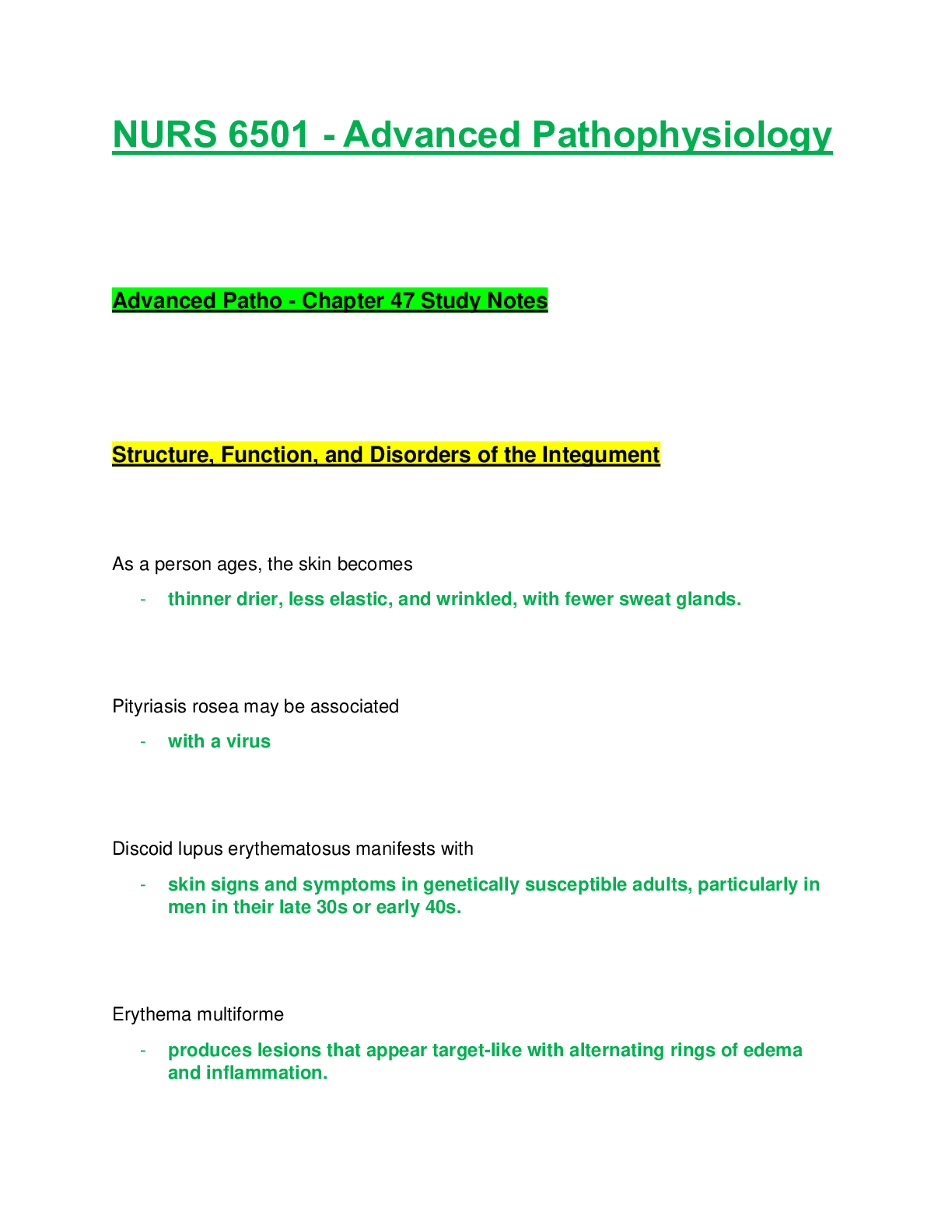
NURS 6501 / NURS6501: Advanced Pathophysiology - Chapter 47 St...

Chapter 47-Neurological System Function, Assessment & Therape...
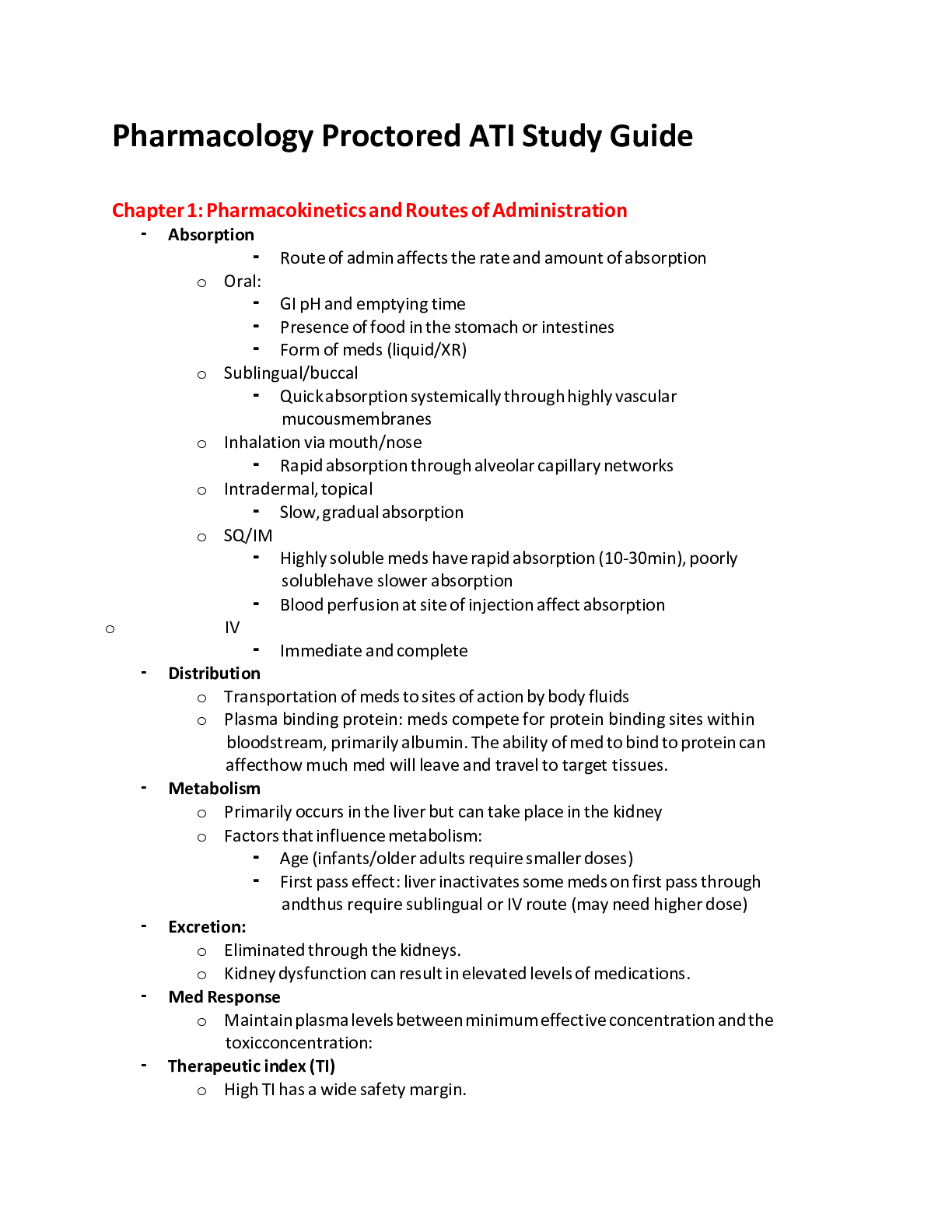
Pharmacology Proctored ATI Study Guide (Chapter 1- Chapter 47)
ATI Chapter 47 Integumentary Dysfunction (Latest 2021) Correct...
ATI Chapter 47 Integumentary Dysfunction (Latest 2021) Correct...