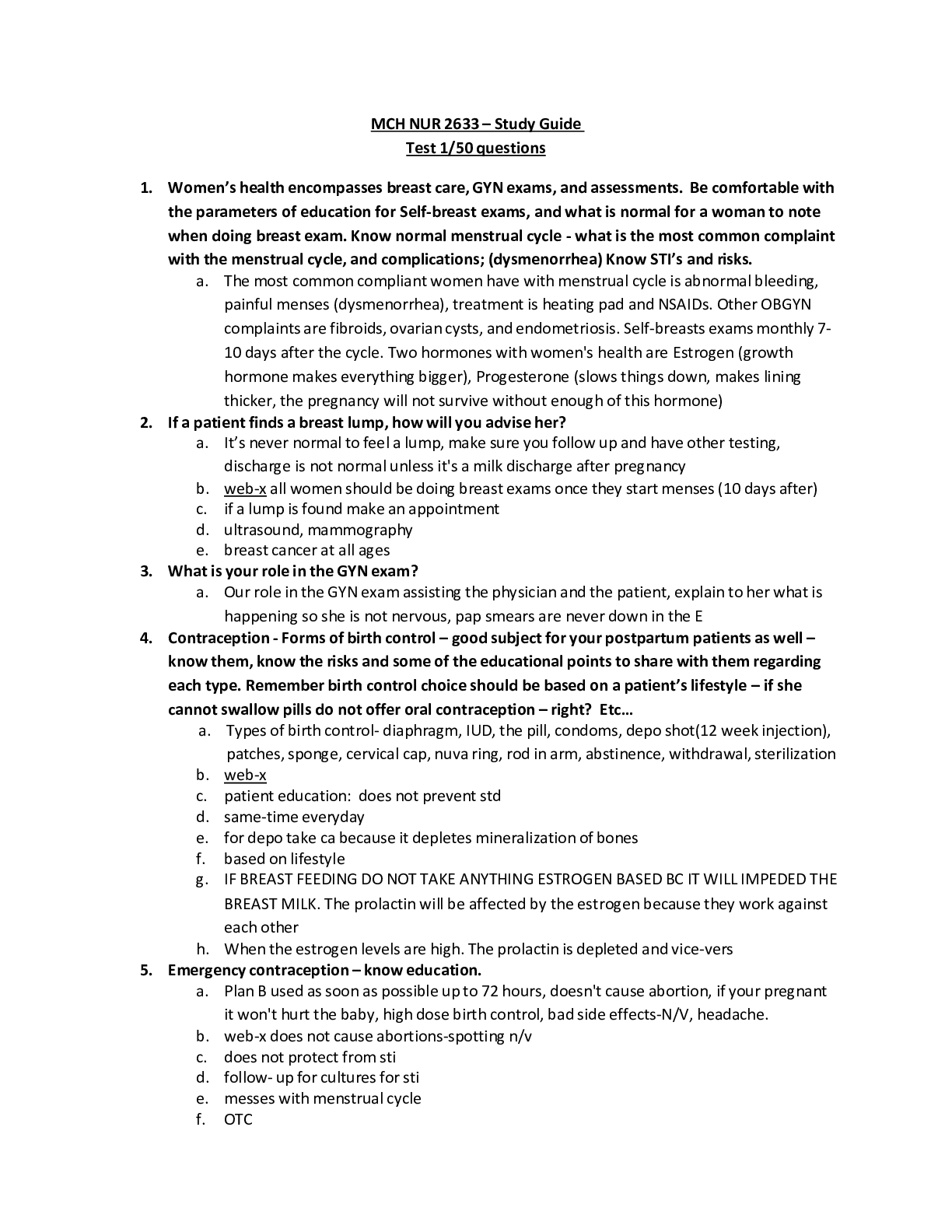
Psychology > STUDY GUIDE > Athabasca University, Athabasca - PSYCHOLOGY 290(DOWNLOAD TO SCORE A+) (All)
Athabasca University, Athabasca - PSYCHOLOGY 290(DOWNLOAD TO SCORE A+)
Document Content and Description Below
Last updated: 4 years ago
Preview 1 out of 11 pages
Instant download
.png)
Buy this Document to get the Full Access Instantly
Provided by Students Who Aced it
We Verify Document Content to Gurantee Accuracy
Reviews( 0 )
Document information
Connected school, study & course
About the document
Uploaded On
Apr 20, 2021
Number of pages
11
Written in
All

Additional information
This document has been written for:
Uploaded
Apr 20, 2021
Downloads
0
Views
270
Topic Tags
Recommended For You
Get more on STUDY GUIDE »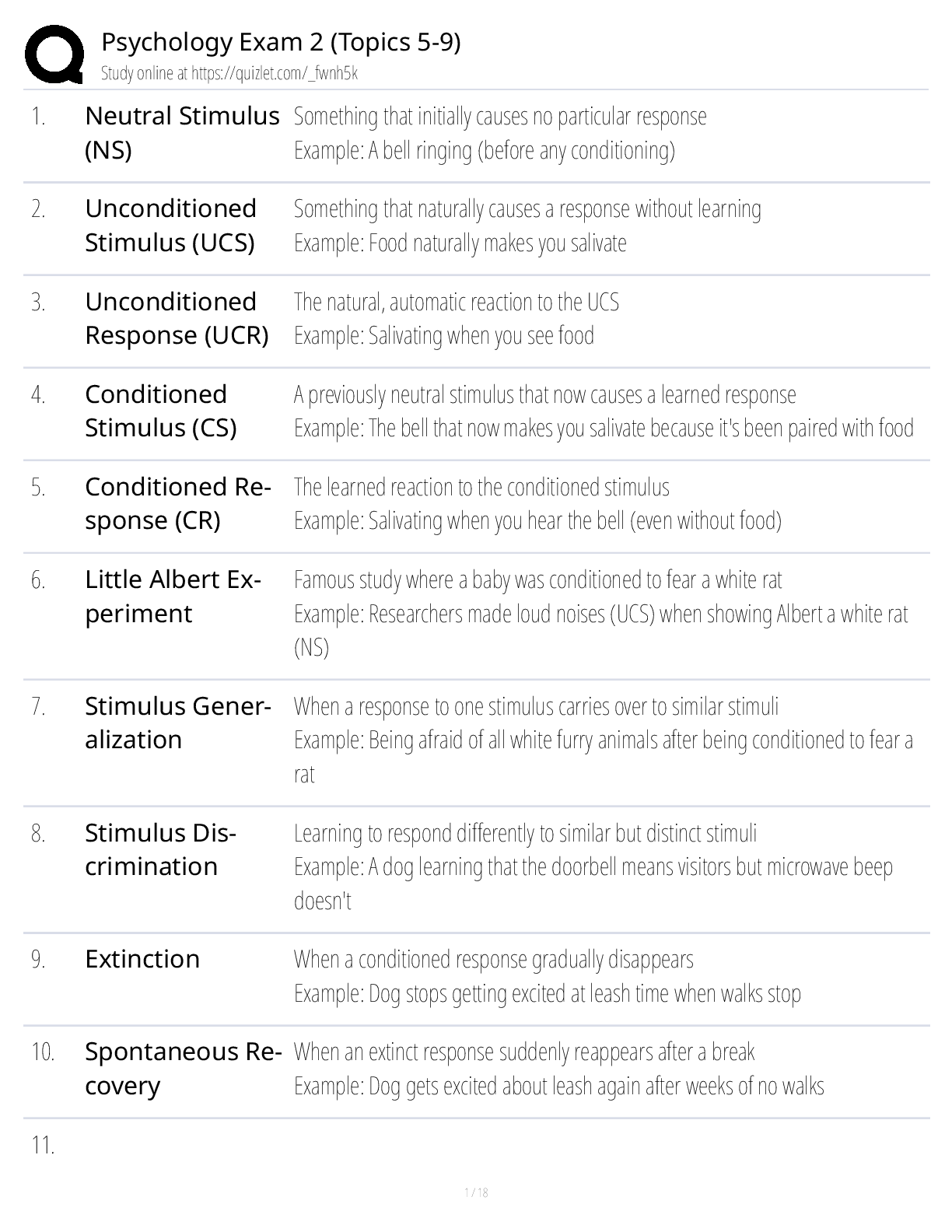
Psychology Exam 2 (Topics 5–9) — Class Notes, Study Guide & Te...
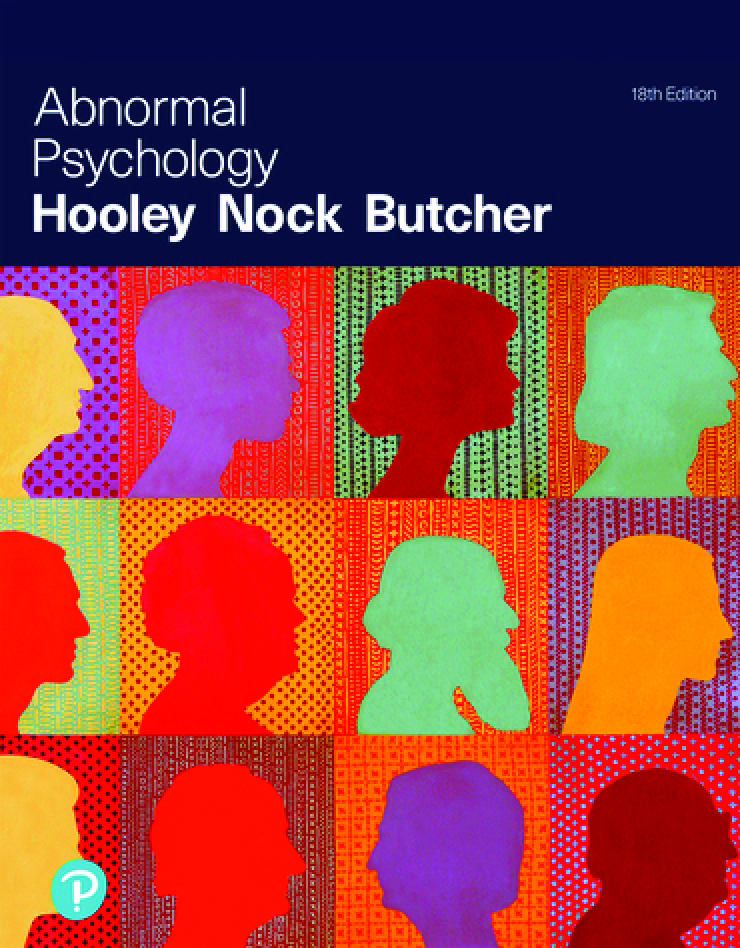
Abnormal Psychology,18th Edition By Jill M Hooley, James Butch...
Essential Social Psychology 5th Edition By Richard Crisp, Rhia...
eBook Advanced and Multivariate Statistical Methods: Practical...
Test Bank for Psychology Research Methods How to Think About a...
Instructors Manual and Test Bank For Eshleman, The family, pre...
Test bank For Principles of Social Psychology Version 3.0 By C...
eBook Life Span, The Human Development for Helping Professiona...
Life Span, The Human Development for Helping Professionals 5th...
eBook [PDF] Abnormal Psychology 6th Edition By Gordon L. Flett...
Introduction to Evolutionary Psychology Dr. Paul Wehr | New Sc...
AQA A LEVEL PSYCHOLOGY PAPER 1 INTRODUCTORY TOPICS SOLUTION BU...
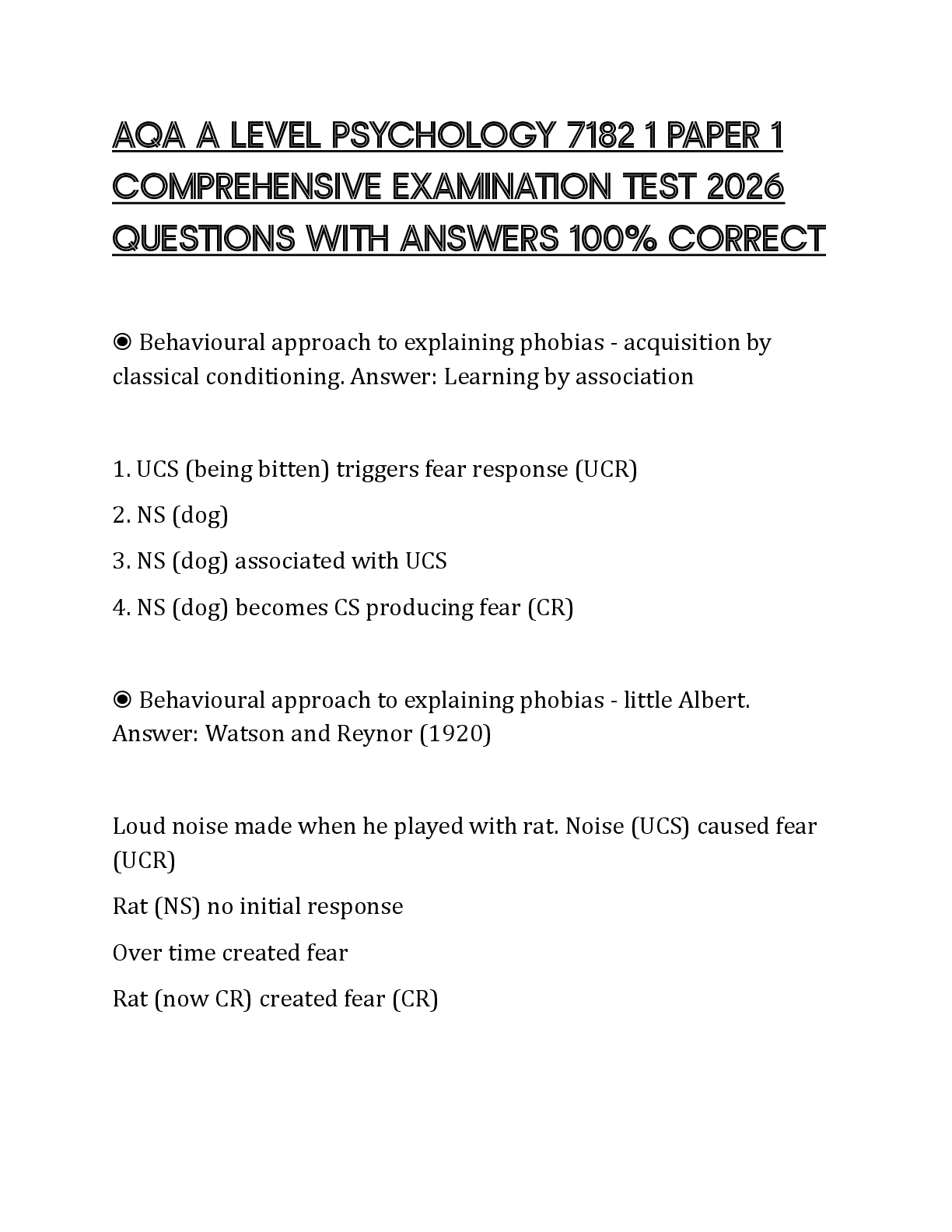
AQA A LEVEL PSYCHOLOGY 7182 1 PAPER 1 COMPREHENSIVE EXAMINATIO...
Instructor Manual For Personality Psychology Understanding You...