Programming > QUESTIONS & ANSWERS > D278 Programming Fundamentals Lesson 2 Summary CS Questions & Answers (All)
D278 Programming Fundamentals Lesson 2 Summary CS Questions & Answers
Document Content and Description Below
Last updated: 7 months ago
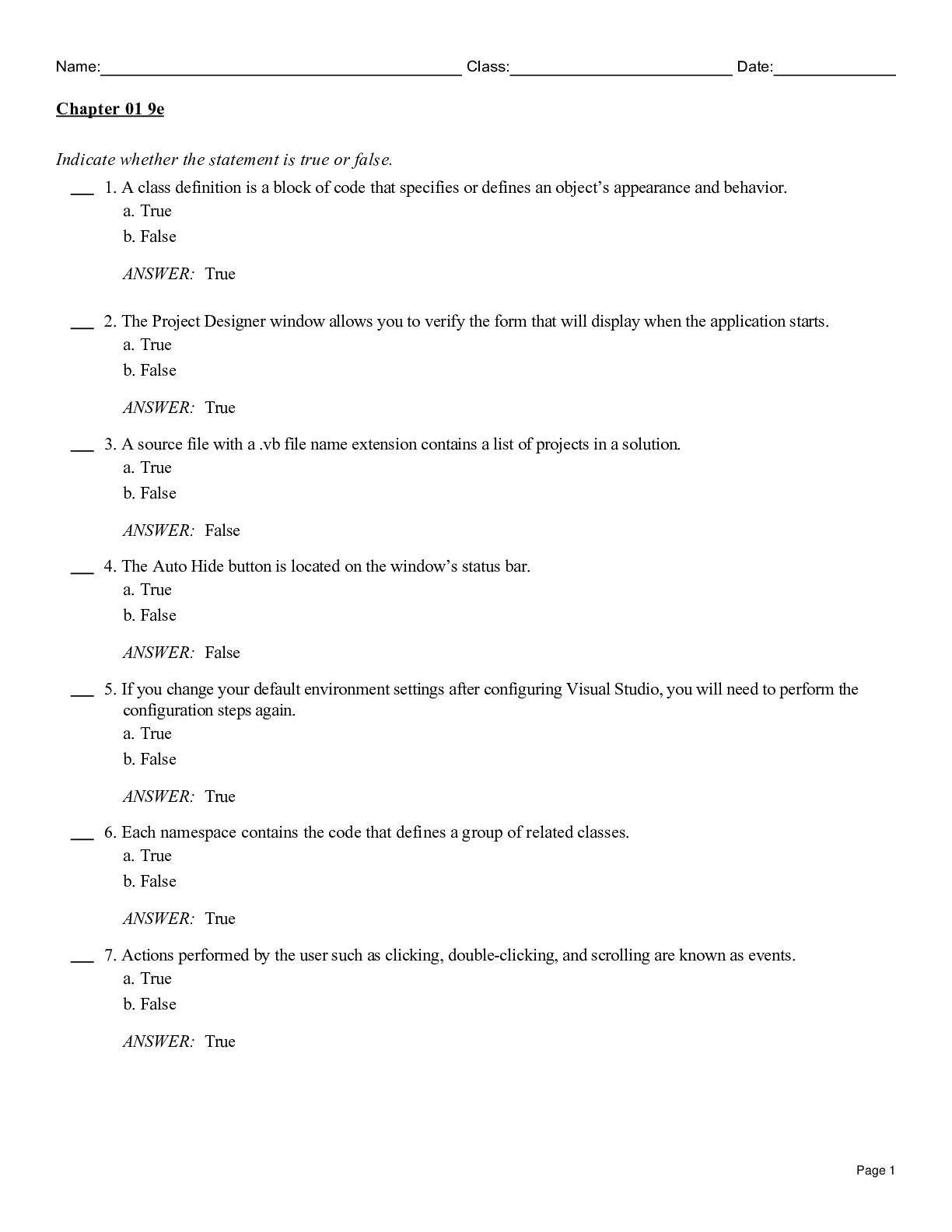
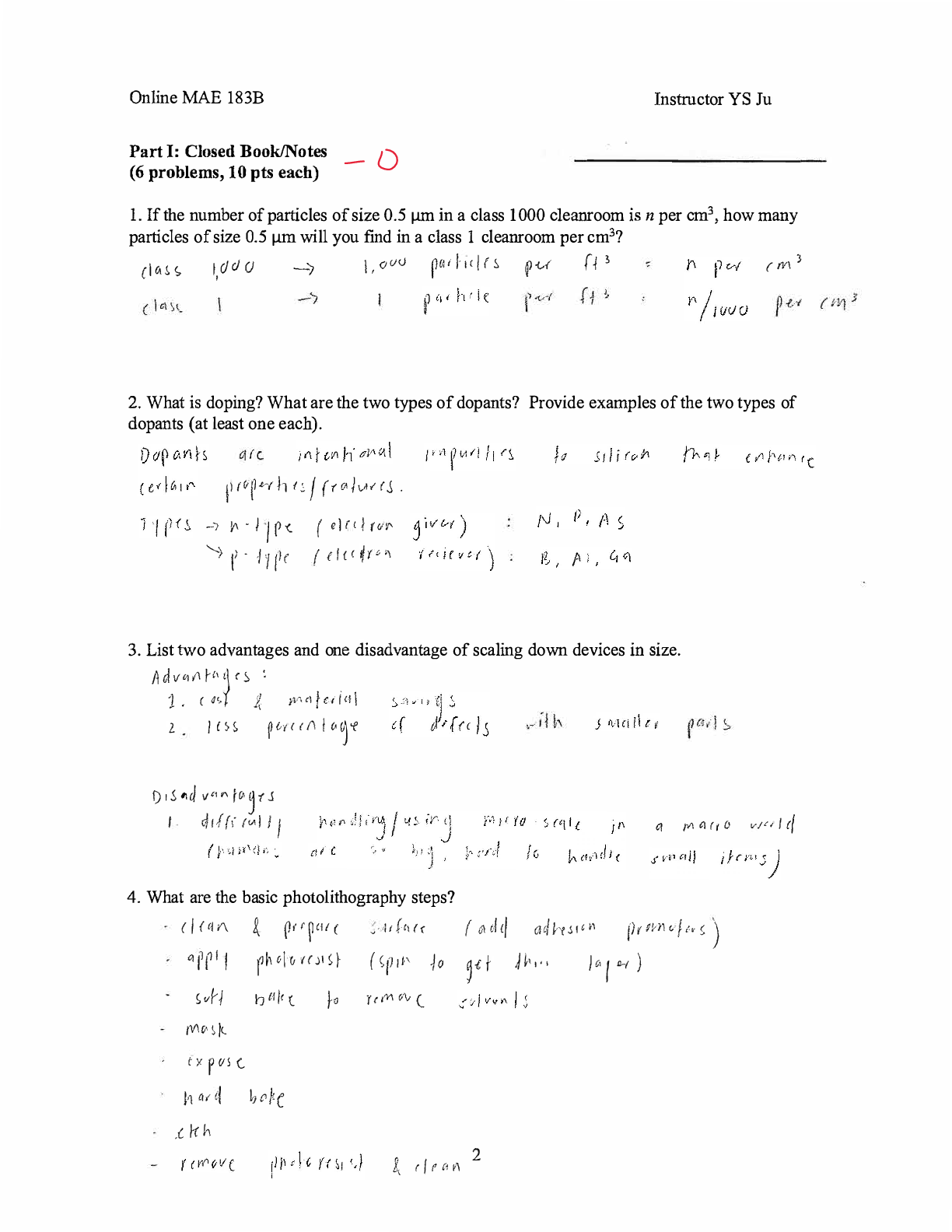
Preview 5 out of 34 pages
Instant download

Loading document previews ...
Buy this Document to get the Full Access Instantly
Provided by Students Who Aced it
We Verify Document Content to Gurantee Accuracy
Reviews( 0 )
Document information
Connected school, study & course
About the document
Uploaded On
Feb 20, 2026
Number of pages
34
Written in
All

Additional information
This document has been written for:
Uploaded
Feb 20, 2026
Downloads
0
Views
109
Topic Tags
Recommended For You
Get more on QUESTIONS & ANSWERS »
D278 Scripting and Programming Foundations WGU Exam Resources
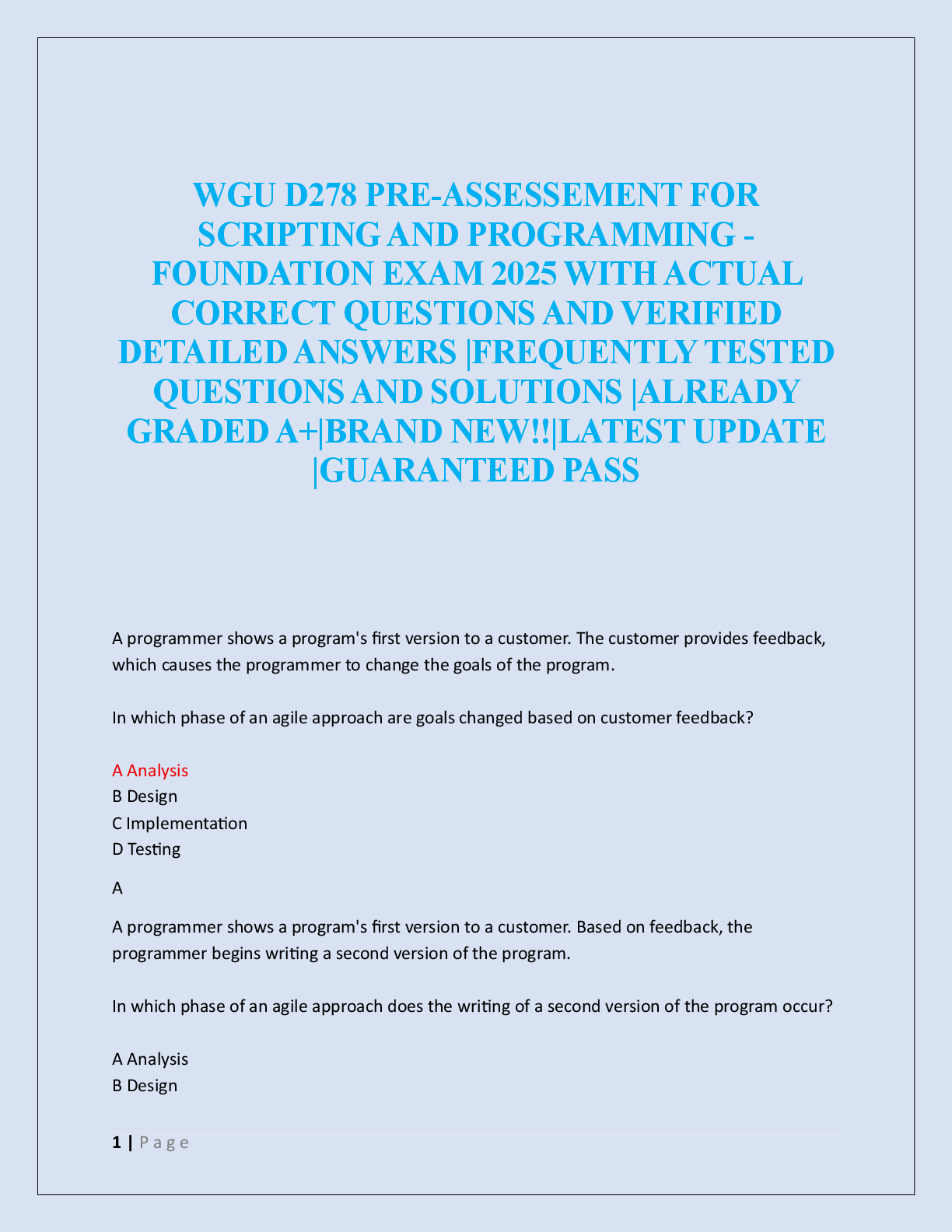
WGU D278 PRE-ASSESSEMENT FOR SCRIPTING AND PROGRAMMING FOUND...
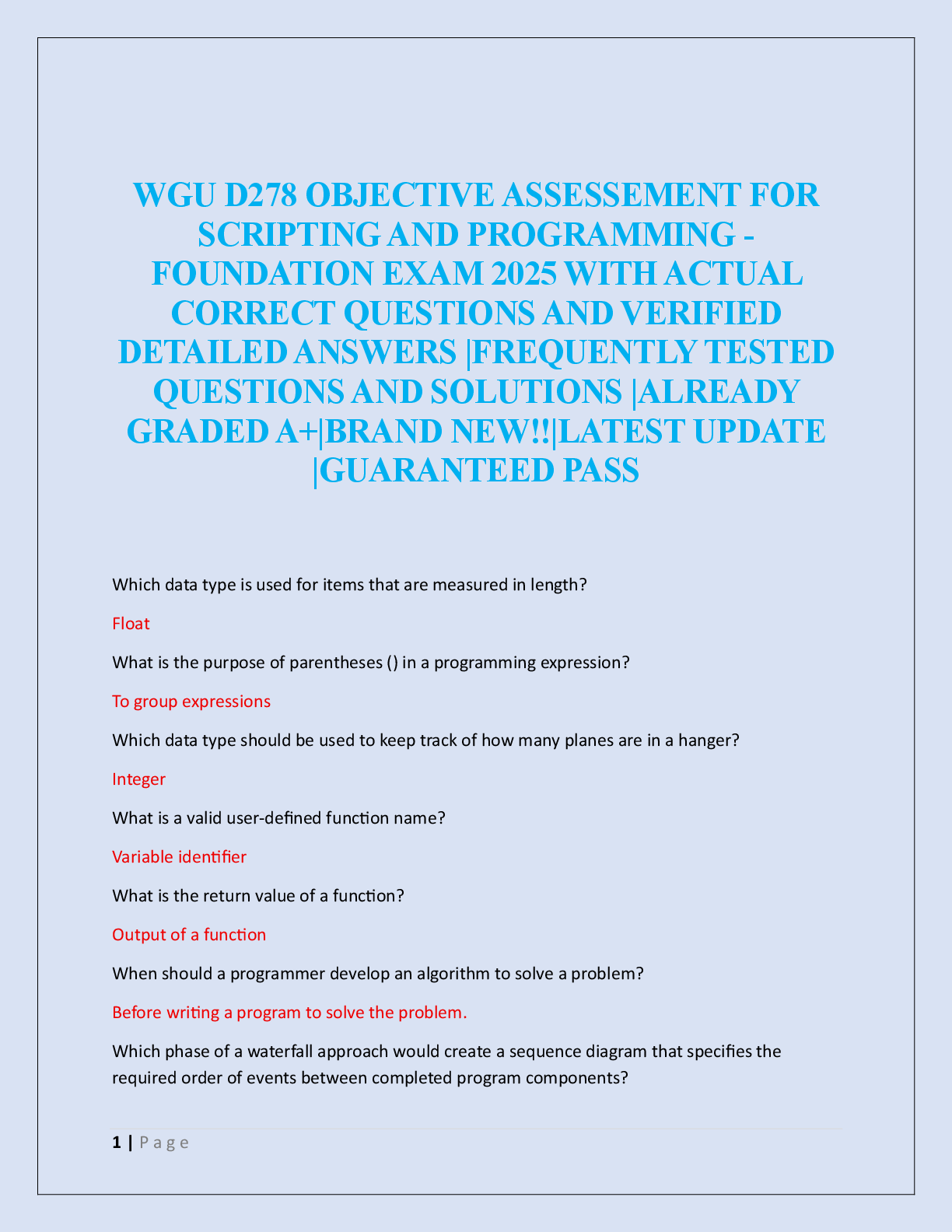
WGU D278 OBJECTIVE ASSESSEMENT FOR SCRIPTING AND PROGRAMMING...
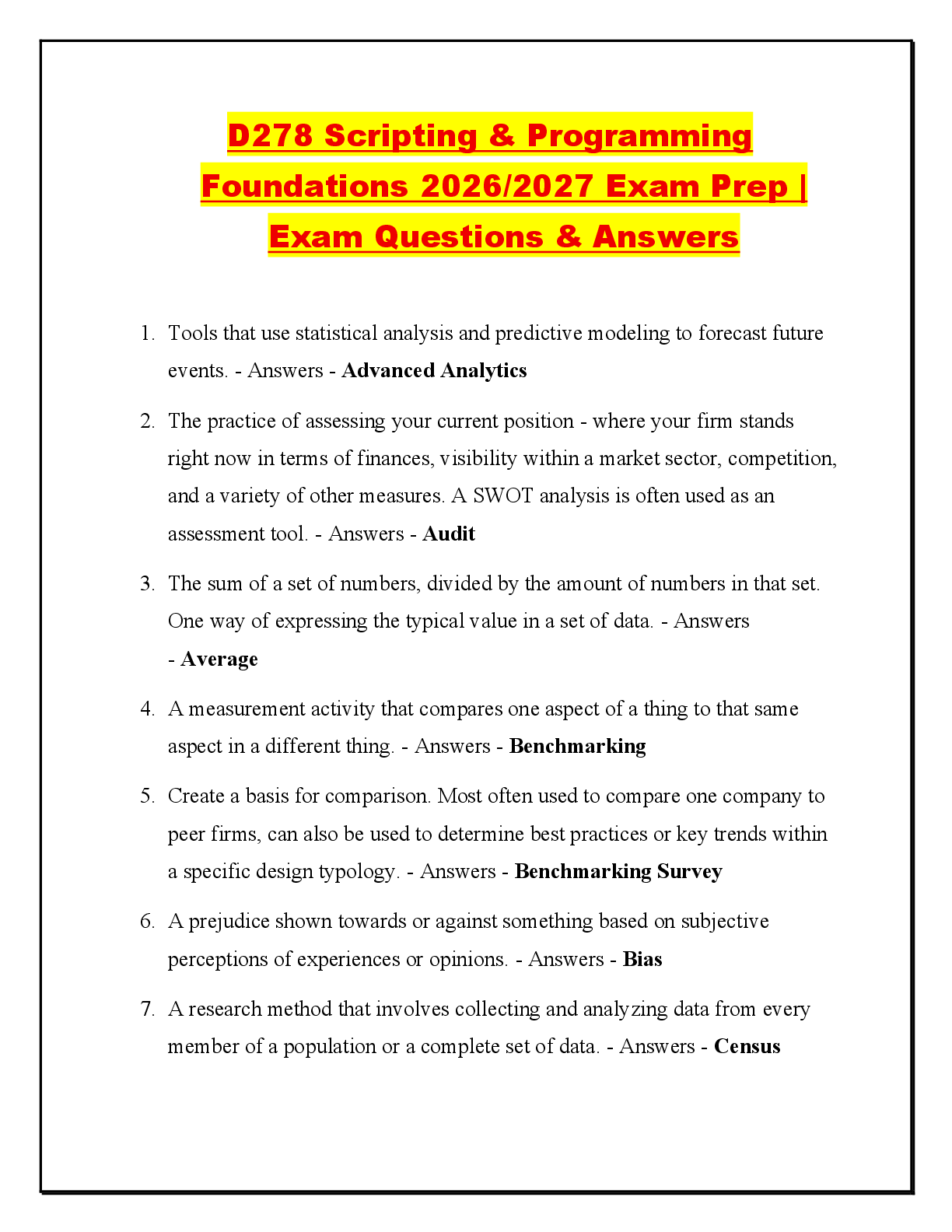
D278 Scripting and Programming |WGU Study Guide for All Chapte...
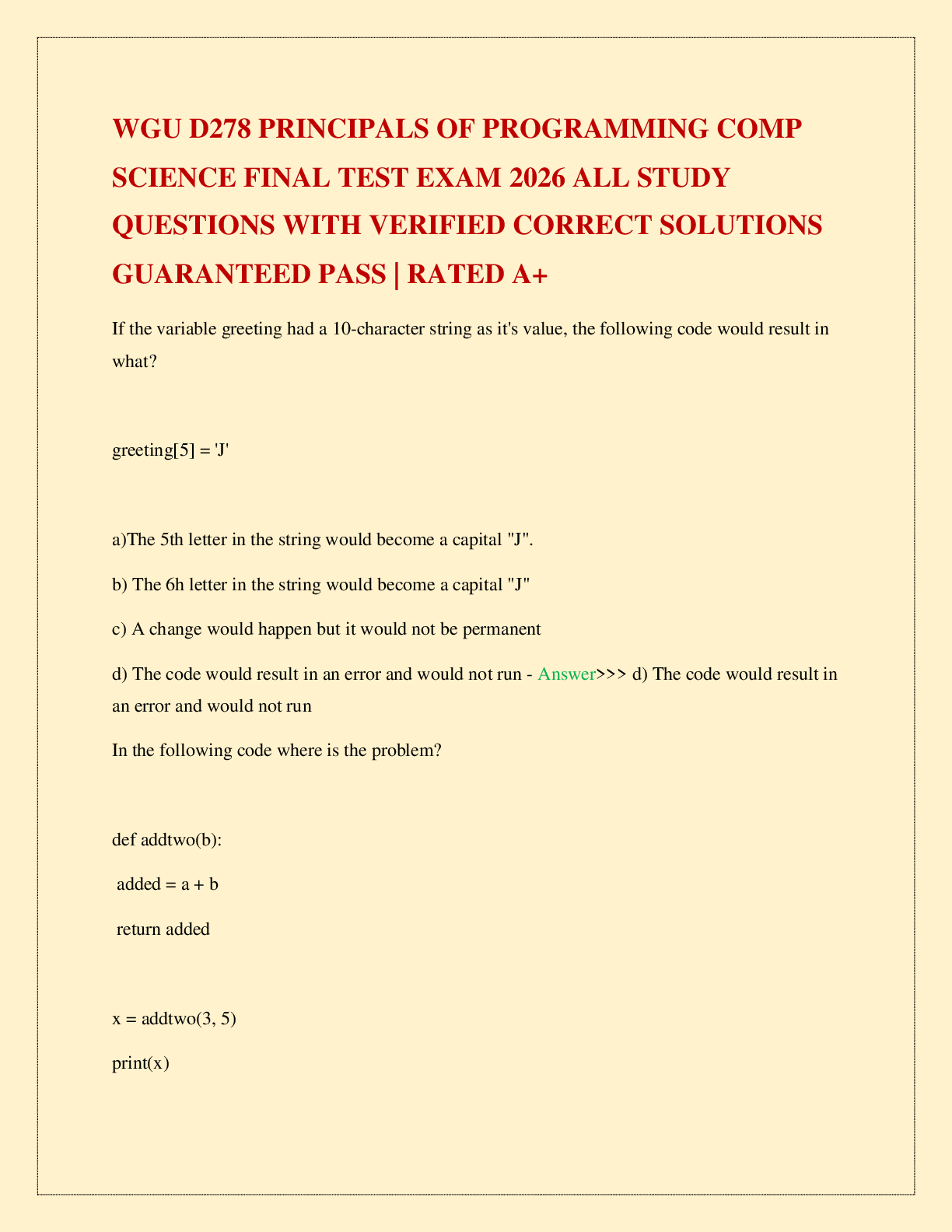
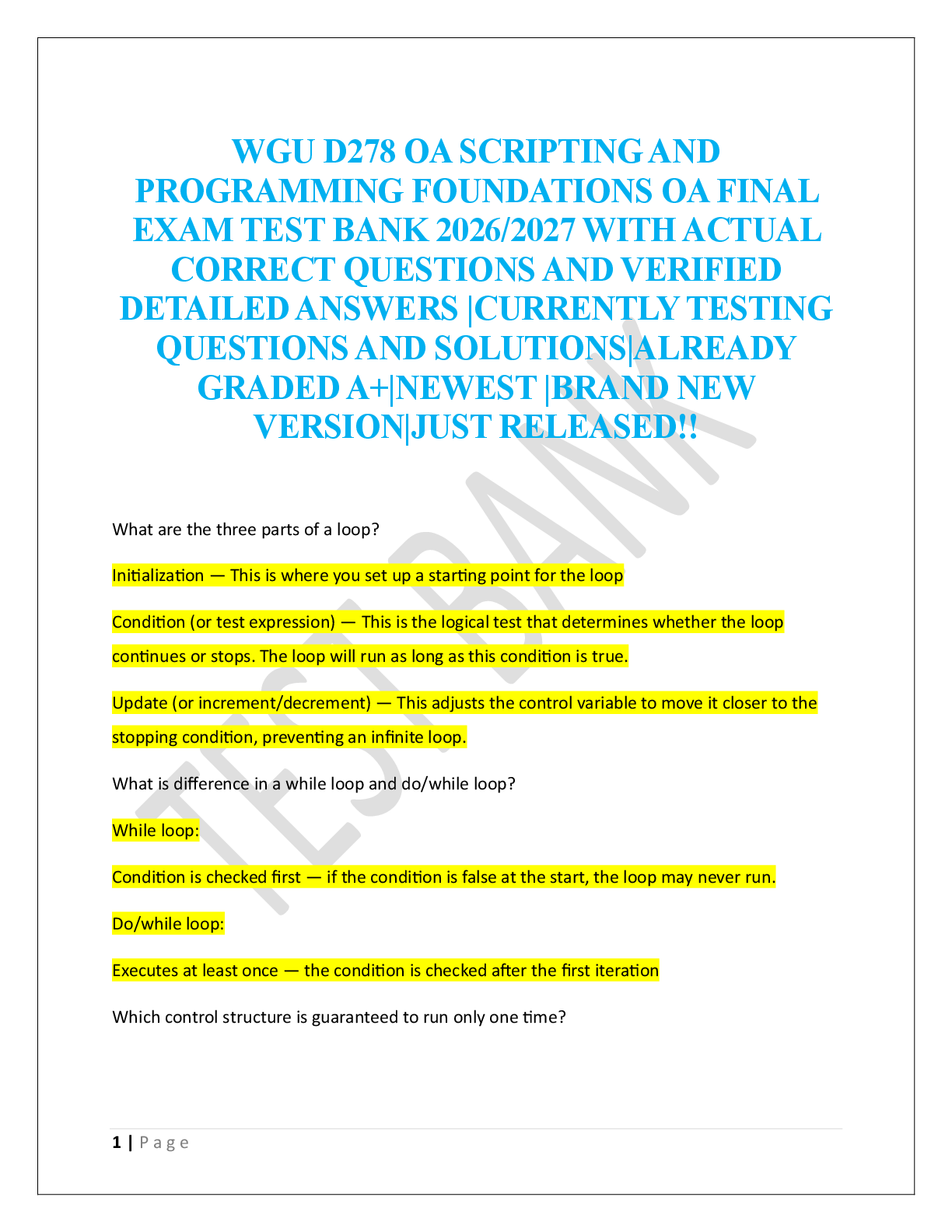
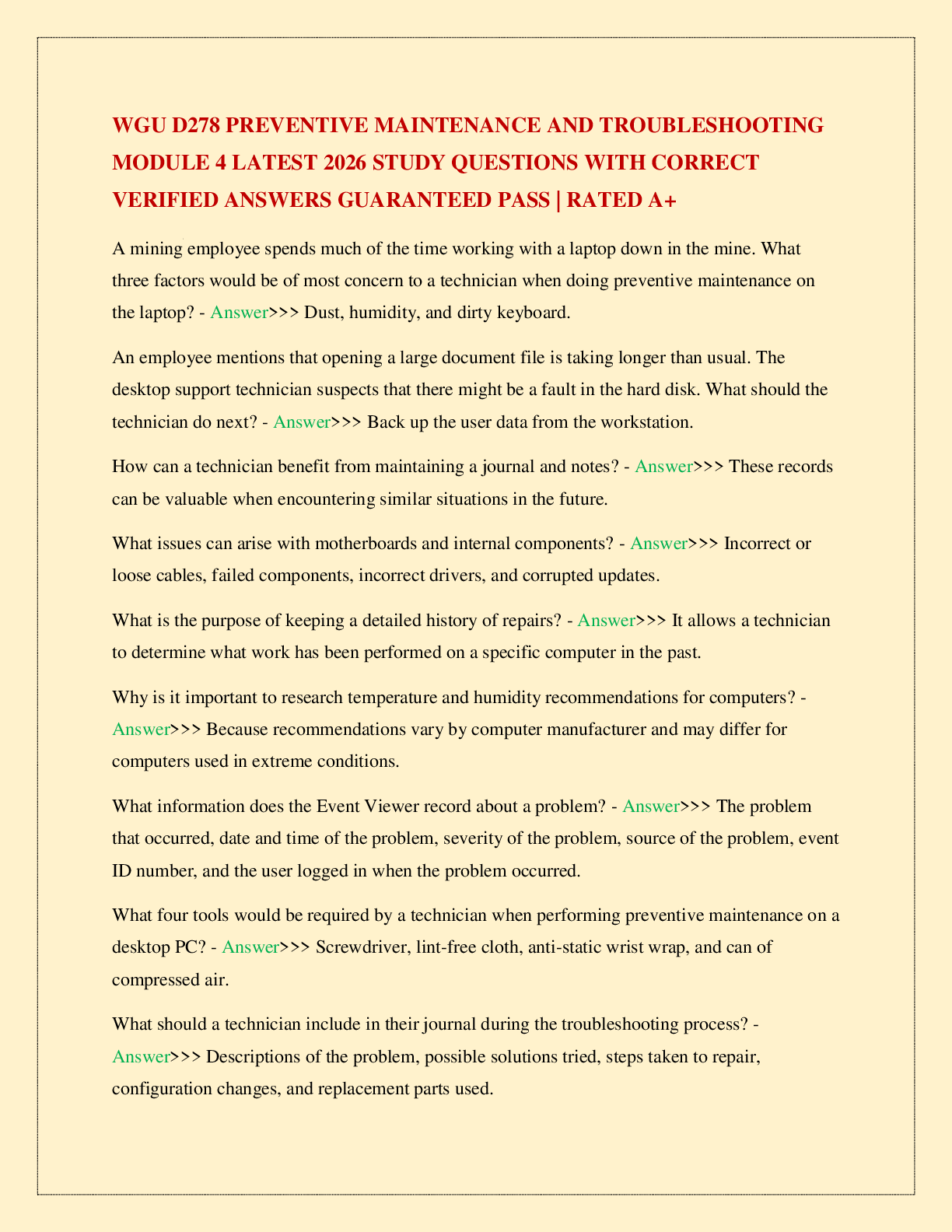
IT-ITSW 2113(D278) Scripting & Programming Foundations Latest...
D278A ITSW 2113 Scripting & Programming Foundations OA (Qns &...
D278 ITSW 2113 Scripting & Programming Foundations - Latest FA...
WGU D278 - ITSW 2113 Scripting & Programming - Foundations Lat...
(WGU D278) ITEC 2113 Scripting & Programming Foundations Objec...
ITSW 2113 (D278) Scripting & Programming Foundations Latest OA...
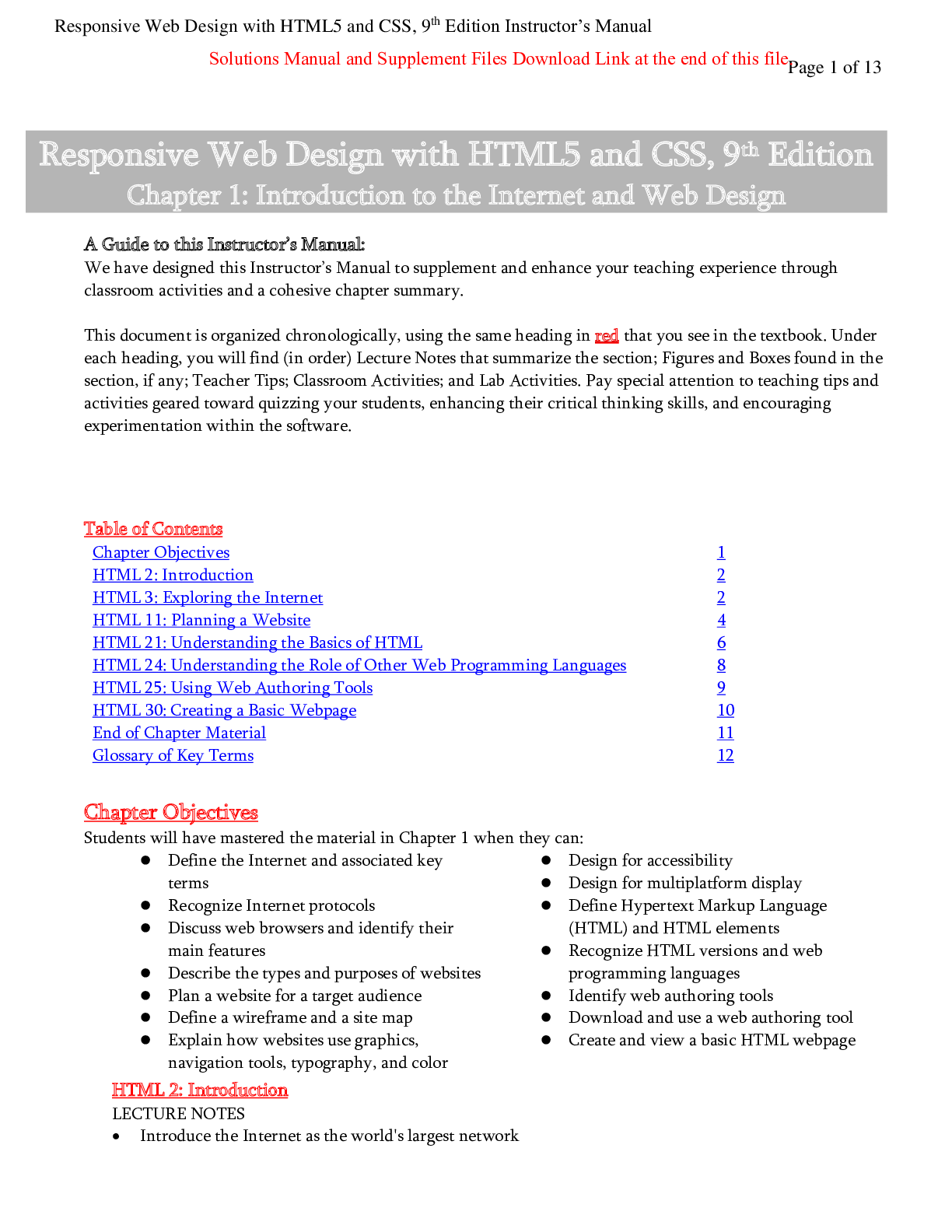
Responsive Web Design with HTML 5 & CSS 9th Edition By Jessica...

MKTG12: Principles of Marketing 12th Edition by Charles Lamb,...
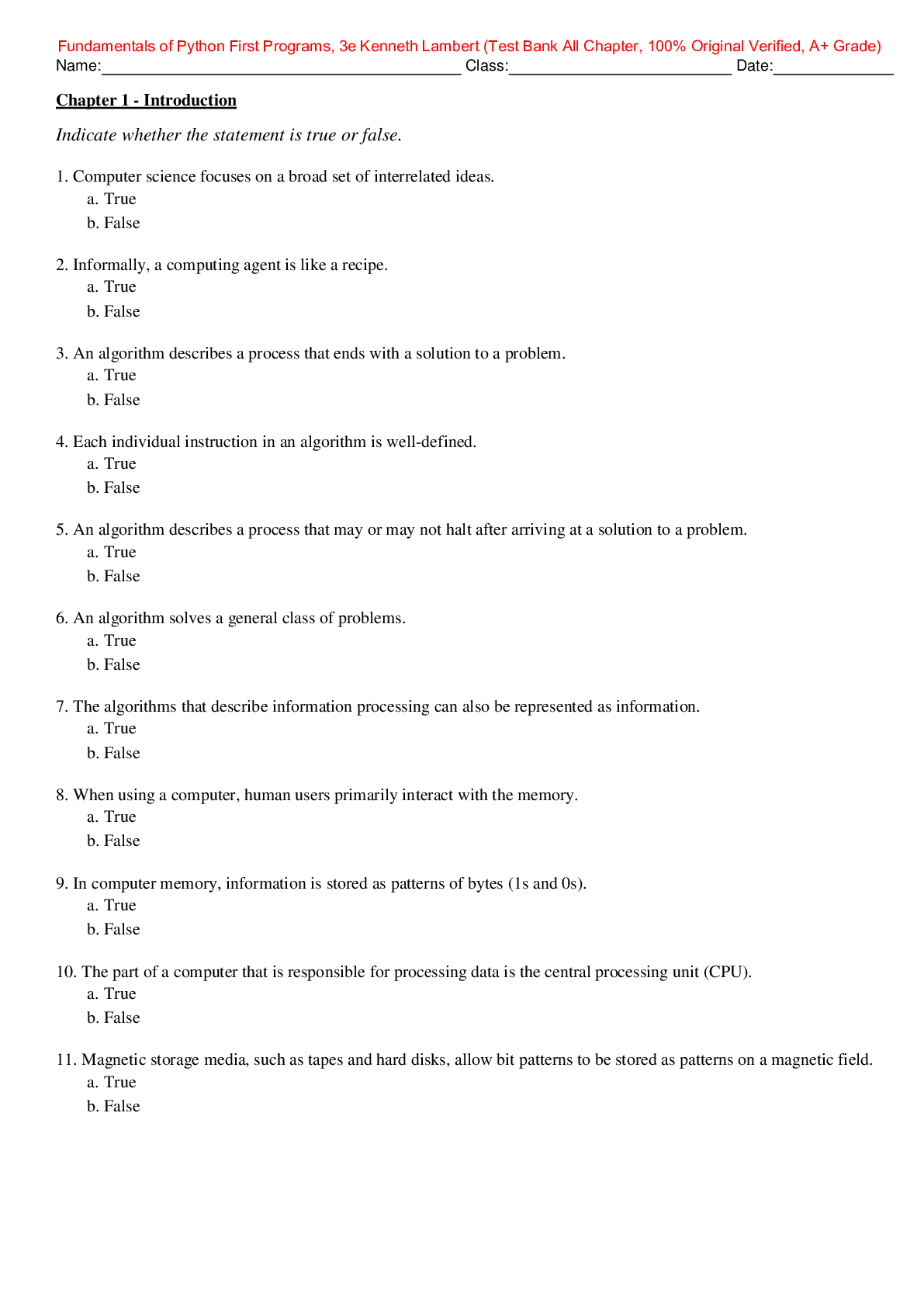
Fundamentals of Python First Programs 3rd Edition By Kenneth L...
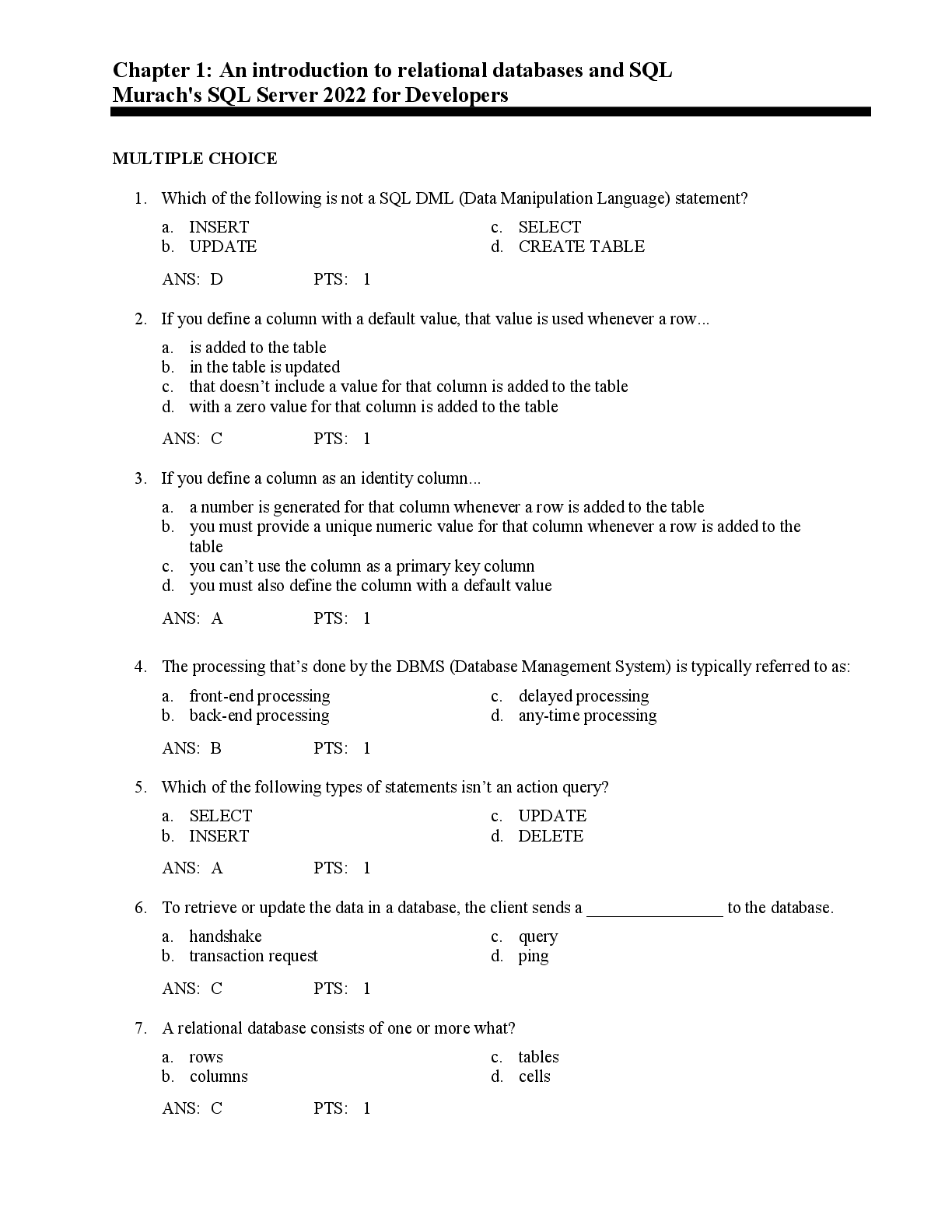
Test Bank for Murach’s SQL Server 2022 for Developers, 1st Edi...