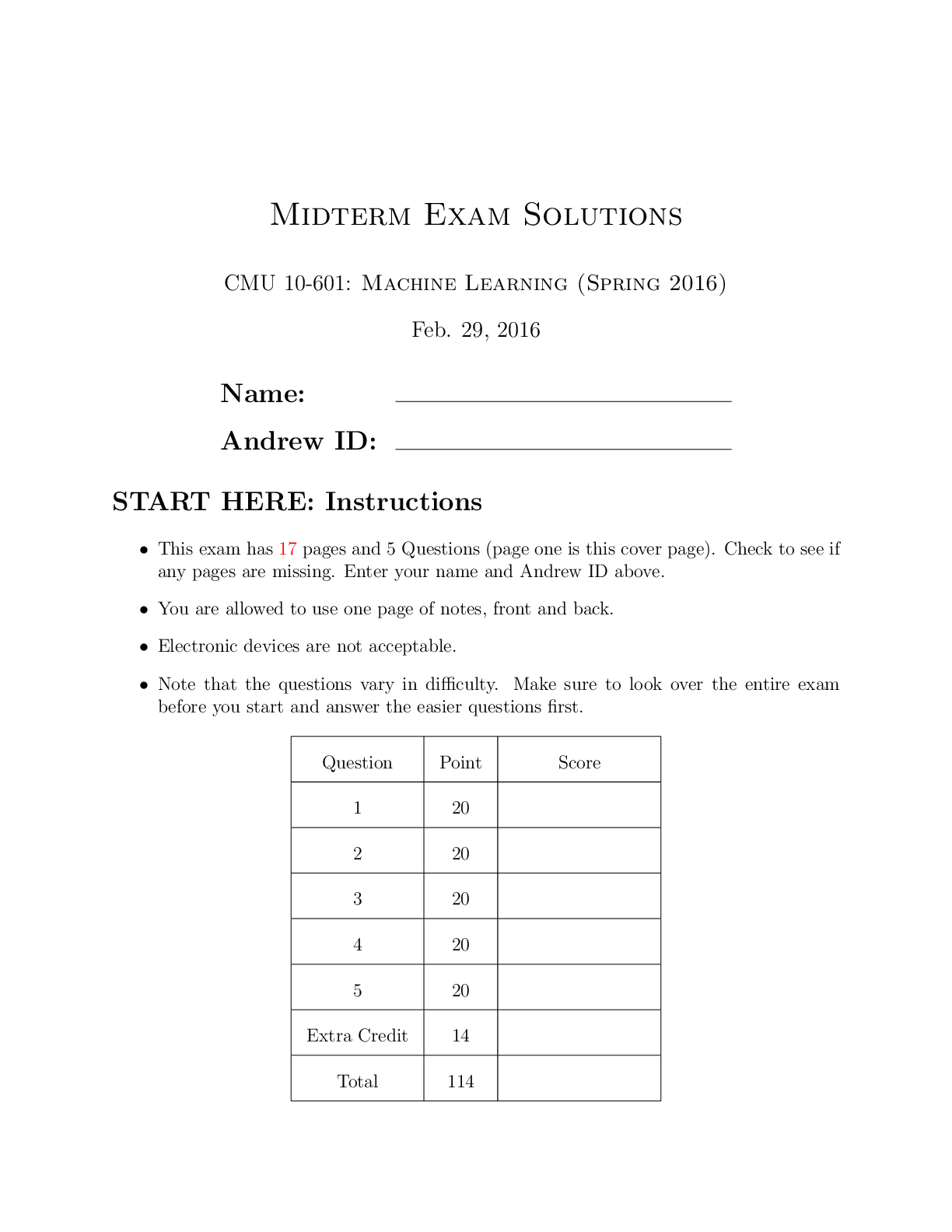
Management > EXAM > Georgia Institute Of TechnologyMGT 6203Final_Part2 (All)
Georgia Institute Of TechnologyMGT 6203Final_Part2
Document Content and Description Below
Last updated: 7 months ago
Preview 1 out of 17 pages
Instant download

Buy this Document to get the Full Access Instantly
Provided by Students Who Aced it
We Verify Document Content to Gurantee Accuracy
Reviews( 0 )
Document information
Connected school, study & course
About the document
Uploaded On
Apr 27, 2021
Number of pages
17
Written in
All

Additional information
This document has been written for:
Uploaded
Apr 27, 2021
Downloads
1
Views
282
Topic Tags
Recommended For You
Get more on EXAM »
TEST BANK for Project Management: A Managerial Approach, 11th...


eBook Byrd & Chen's Canadian Tax Principles, 2022-2023, (Volum...
SOLUTIONS MANUAL for Project Management: A Managerial Approach...

Test Bank for Leadership: Enhancing the Lessons of Experience...

Test Bank for Strategic Management Concepts and Cases, 4th Edi...

Management of Occupational Health and Safety, 8th Edition By K...
WGU C720 Operations and Supply Chain Management - Study Guide

eBook Discrete Mathematics with Ducks 2nd Edition By Sarah-Mar...

Solution Manual For Farm Management 10th Edition By Ronald Kay...


International Business Competing in the Global Marketplace, 14...

Solutions Manual for Managerial Economics and Strategy, 3rd ed...

TEST BANK for Managerial Economics and Strategy, 3rd edition B...

Comprehensive Stress Management, 15th Edition By Jerrold S. Gr...
Solution Manual For Management by Ricky W. Griffin 14th Editi...

Introduction to Management Science and Business Analytics 7th...


.png)