NR 508 week 5 quiz
1. Fosamax has a half-life of 10 years
2. Peripheral neuropathy is a Microvascular disease in DM.
3. In hyperthyroid states, what organ system other than CV must be evaluated to establish potential
...
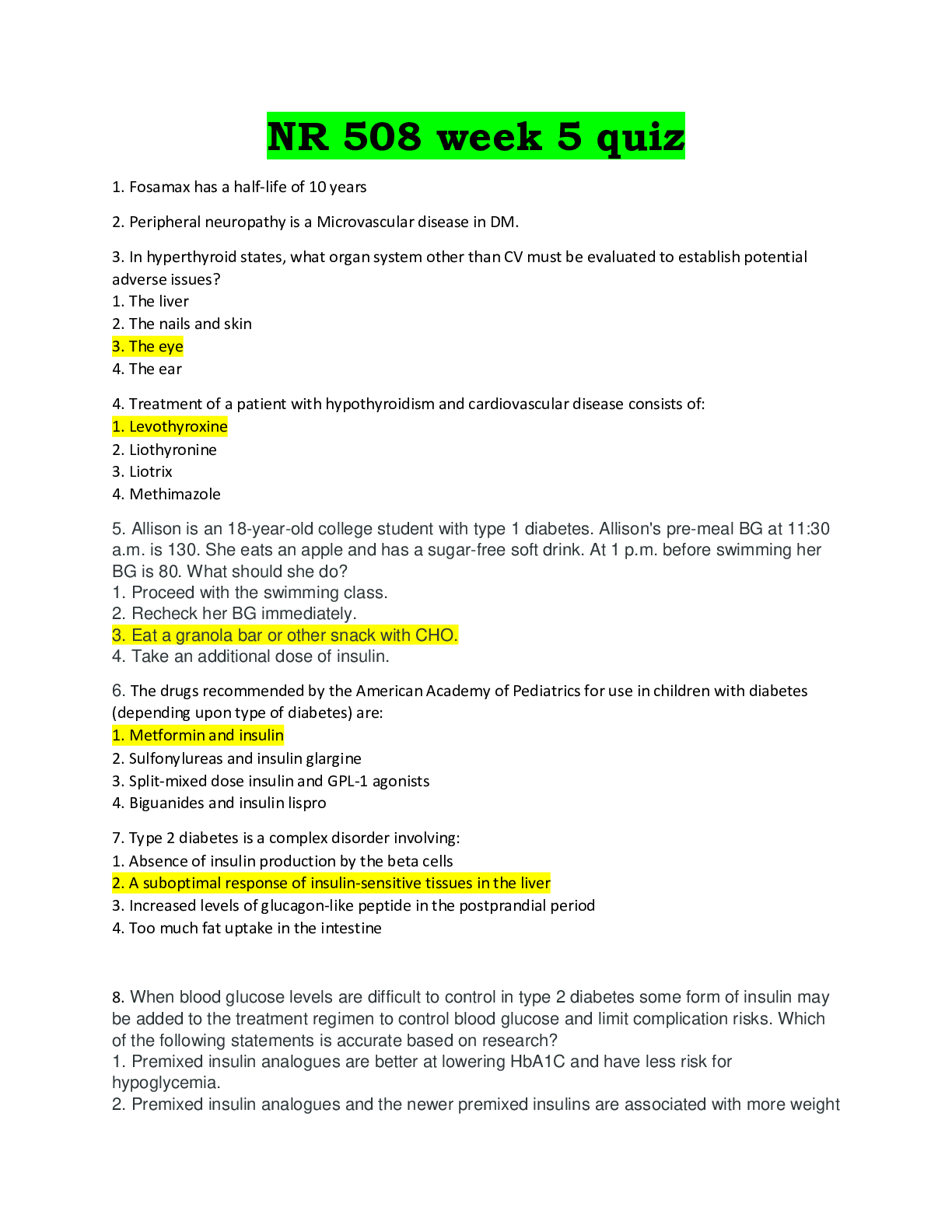
NR 508 week 5 quiz
1. Fosamax has a half-life of 10 years
2. Peripheral neuropathy is a Microvascular disease in DM.
3. In hyperthyroid states, what organ system other than CV must be evaluated to establish potential adverse issues?
1. The liver
2. The nails and skin
3. The eye
4. The ear
4. Treatment of a patient with hypothyroidism and cardiovascular disease consists of:
1. Levothyroxine
2. Liothyronine
3. Liotrix
4. Methimazole
5. Allison is an 18-year-old college student with type 1 diabetes. Allison's pre-meal BG at 11:30 a.m. is 130. She eats an apple and has a sugar-free soft drink. At 1 p.m. before swimming her BG is 80. What should she do?
1. Proceed with the swimming class.
2. Recheck her BG immediately.
3. Eat a granola bar or other snack with CHO.
4. Take an additional dose of insulin.
6. The drugs recommended by the American Academy of Pediatrics for use in children with diabetes (depending upon type of diabetes) are:
1. Metformin and insulin
2. Sulfonylureas and insulin glargine
3. Split-mixed dose insulin and GPL-1 agonists
4. Biguanides and insulin lispro
7. Type 2 diabetes is a complex disorder involving:
1. Absence of insulin production by the beta cells
2. A suboptimal response of insulin-sensitive tissues in the liver
3. Increased levels of glucagon-like peptide in the postprandial period
4. Too much fat uptake in the intestine
8. When blood glucose levels are difficult to control in type 2 diabetes some form of insulin may be added to the treatment regimen to control blood glucose and limit complication risks. Which of the following statements is accurate based on research?
1. Premixed insulin analogues are better at lowering HbA1C and have less risk for hypoglycemia.
2. Premixed insulin analogues and the newer premixed insulins are associated with more weight gain than the oral antidiabetic agents.
3. Newer premixed insulins are better at lowering HbA1C and postprandial glucose levels than long-acting insulins.
4. Patients who are not controlled on oral agents and have postprandial hyperglycemia can have neutral protamine Hagedorn insulin added at bedtime.
9. The decision may be made to switch from twice daily neutral protamine Hagedorn (NPH) insulin to insulin glargine to improve glycemia control throughout the day. If this is done:
1. The initial dose of glargine is reduced by 20% to avoid hypoglycemia.
2. The initial dose of glargine is 2 to 10 units per day.
3. Patients who have been on high doses of NPH will need tests for insulin antibodies.
4. Obese patients may require more than 100 units per day.
10. Nonselective beta blockers and alcohol create serious drug interactions with insulin because they:
1. Increase blood glucose levels
2. Produce unexplained diaphoresis
3. Interfere with the ability of the body to metabolize glucose
4. Mask the signs and symptoms of altered glucose levels
11. The action of "gliptins" is different from other antidiabetic agents because they:
1. Have a low risk for hypoglycemia
2. Are not associated with weight gain
3. Close ATP-dependent potassium channels in the beta cell
4. Act on the incretin system to indirectly increase insulin production
[Show More]