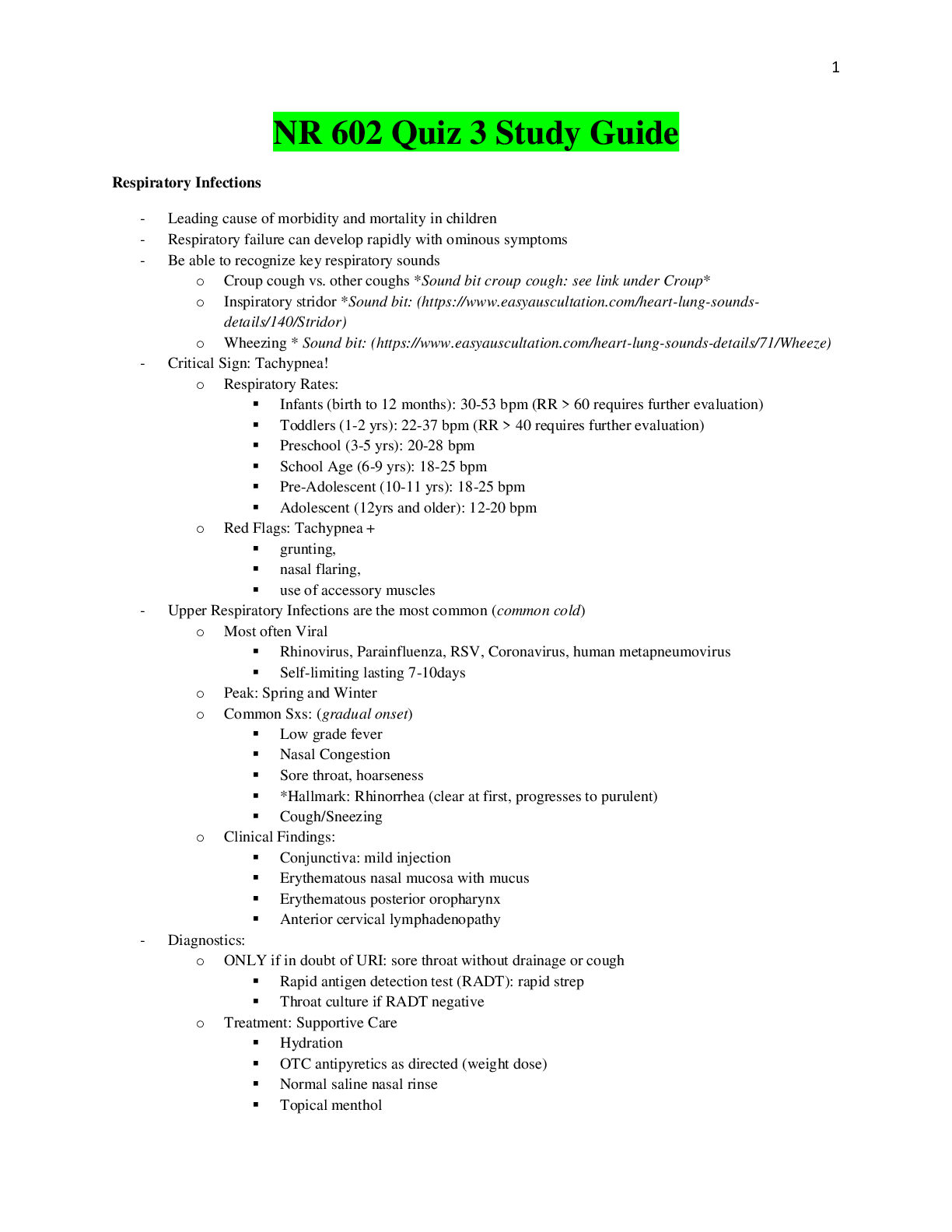
NR 602 Quiz 3 Study Guide
Respiratory Infections
- Leading cause of morbidity and mortality in children
- Respiratory failure can develop rapidly with ominous symptoms
- Be able to recognize key respiratory sounds
o
...
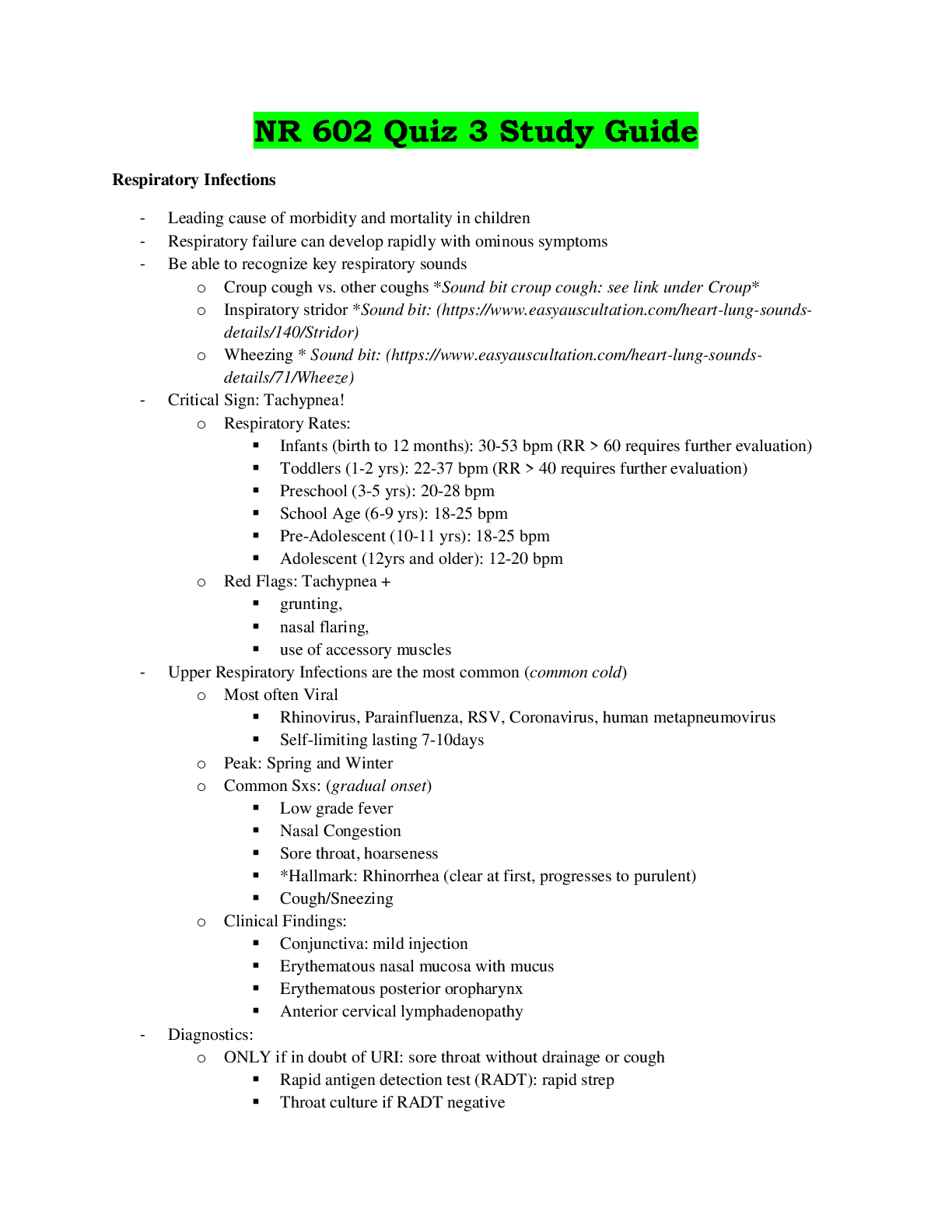
NR 602 Quiz 3 Study Guide
Respiratory Infections
- Leading cause of morbidity and mortality in children
- Respiratory failure can develop rapidly with ominous symptoms
- Be able to recognize key respiratory sounds
o Croup cough vs. other coughs *Sound bit croup cough: see link under Croup*
o Inspiratory stridor *Sound bit: (https://www.easyauscultation.com/heart-lung-soundsdetails/140/Stridor)
o Wheezing * Sound bit: (https://www.easyauscultation.com/heart-lung-soundsdetails/71/Wheeze)
- Critical Sign: Tachypnea!
o Respiratory Rates:
Infants (birth to 12 months): 30-53 bpm (RR > 60 requires further evaluation)
Toddlers (1-2 yrs): 22-37 bpm (RR > 40 requires further evaluation)
Preschool (3-5 yrs): 20-28 bpm
School Age (6-9 yrs): 18-25 bpm
Pre-Adolescent (10-11 yrs): 18-25 bpm
Adolescent (12yrs and older): 12-20 bpm
o Red Flags: Tachypnea +
grunting,
nasal flaring,
use of accessory muscles
- Upper Respiratory Infections are the most common (common cold)
o Most often Viral
Rhinovirus, Parainfluenza, RSV, Coronavirus, human metapneumovirus
Self-limiting lasting 7-10days
o Peak: Spring and Winter
o Common Sxs: (gradual onset)
Low grade fever
Nasal Congestion
Sore throat, hoarseness
*Hallmark: Rhinorrhea (clear at first, progresses to purulent)
Cough/Sneezing
o Clinical Findings:
Conjunctiva: mild injection
Erythematous nasal mucosa with mucus
Erythematous posterior oropharynx
Anterior cervical lymphadenopathy
- Diagnostics:
o ONLY if in doubt of URI: sore throat without drainage or cough
Rapid antigen detection test (RADT): rapid strep
Throat culture if RADT negativeo Treatment: Supportive Care
Hydration
OTC antipyretics as directed (weight dose)
Normal saline nasal rinse
Topical menthol
NO Antibiotics prophylactically
o Complications: secondary infection
Bacterial infection
Otitis media
Sinusitis
Asthma exacerbation
- Pharyngitis, Tonsillitis, and Tonsillopharyngitis
o Inflammation of mucosal lining of the throat structures
o Infectious or noninfectious causes
Viral or bacterial
Viral (most common): adenovirus (pharyngitis primary sx), Epstein-Barr
(EBV), herpes simplex (HSV), cytomegalovirus (CMV), enterovirus,
parainfluenza, HIV
o Upper nasal symptoms, cough and rhinorrhea, hoarseness,
conjunctivitis, rash, diarrhea
o Occur year round, except adenovirus which is predominantly
summer (contaminated swimming pools)
Bacterial: GABHS (most common in 5-13 year olds), gonococcal (15-19
year olds), Corynebacterium diphtheria (RARE), Arcanobacterium
haemolyticum, Neisseria gonorrheae(adolescents), Chlamydia
trachomatis (adolescents), Francisella tularensis, Mycoplasma
pneumonia, Group C & G Strep
o GABHS: typically late winter and early spring
o Acute abrupt onset: sore throat, headache, nausea, vomiting,
abdominal pain, myalgia, arthralgia, malaise
Respiratory irritants (smoke)
o Clinical Findings:
Erythematous tonsils and pharynx
EBV: exudates on tonsils, petechiae on soft palate, diffuse adenopathy
Adenovirus: follicular pattern on pharynx
Enterovirus: vesicles or ulcers on tonsillar pillars, coryza, vomiting, diarrhea
Herpes: anterior ulcers, adenopathy
Parainfluenza and RSV: lower respiratory sx, stridor, rales, and wheezing
Influenza: cough, fever, systemic sxs
M. pneumo & Chlamydophila pneumo: cough, pharyngitis
GABHS: exudative Erythematous pharyngitis with follicular pattern without
presence of cough or nasal symptoms, swollen beefy red uvula, enlarged
tonsillopharyngeal tissue, anterior cervical lymphadenopathy, bad breath,
scarlatiniform rash, strawberry tongue A. haemolyticum: exudative pharyngitis, marked erythema and pruritic, fine
scarlatiniform rash
o Diagnostics:
RADT and/or throat culture if >3 years old with pharyngitis or if someone in
household is + Strep
Culture if RADT negative, or suspect A. haemolyticum, N. gonorrhea or C.
diphtheria
If suspect Mononucleosis: CBC
o Treatment:
Supportive care: ibuprofen, acetaminophen
Hydration
GABHS with + RADT or + culture: antibiotics
PCN V potassium – 1st choice
Amoxicillin suspension
Benzathine pcn G IM
Allergy to PCN:
o Cephalexin
o Cefadroxil
o Clindamycin (1st choice if chronic symptomatic carriage of
GABHS)
o Azithromycin
o clarithromycin
If CMV or EBV: beta-lactam antibiotic causes diffuse morbilliform skin eruption
Discard/Clean: bathroom cups, toothbrush, orthodontic devices
Return to school when afebrile or on antibiotic for 24 hours
Tonsillectomy/adenoidectomy:
if > 7 throat infections in past year, >5 throat infections in past 2 years,
>3 throat infections per year x 3 years
sleep apnea
adenoid hypertrophy
unresponsive rhinosinusitis
chronic otitis media (post tympanostomy tube placement)
Sinusitis/Rhinosinusitis
- URI lasting 10 to 14 days with no symptoms improvement or worsening symptoms
o Acute (ARS): lasting as long as 4 weeks
o Chronic (CRS): persist 12 weeks or more
- Inflammation and edema of mucous membranes lining the sinuses
- Bacterial: Strep pneumo., H. influenza, Moraxella catarrhalis, Staph. Aureus (less often)
- Risk factors:
o Preceding infection
o Environmental irritants/allergies
o Anatomic problems (septal deviation, nasal polyps, facial trauma)o GERD
o CF, ciliary dyskinesia
o Immunodeficiency
- Clinical Findings:
o Thick, yellow discharge
o Worsening symptoms after initial improvement from URI
o Sx: headache, fatigue, decreased appetite
o Bad breath (halitosis)
o Facial pain*
o Facial/nasal congestion and fullness*
o Purulent postnasal drainage and nasal discharge
o Cough
o Ear pain/fullness/pressure
- Treatment:
o Watchful waiting: do not over use antibiotics
Symptom management: ibuprofen, acetaminophen
Rest
Reassess after 72 hours
o Chronic: referral to ENT
o Antibiotics Criteria per AAP Guidelines:
URI with persistent nasal discharge, daytime cough, lasting >10 days without
improvement
URI with worsening symptoms, new onset of fever, nasal discharge, or daytime
cough after initial improvement
Fever > 102.2 F (39 C) with purulent nasal discharge for at least 3 days and
sinusitis
Amoxicillin – 1st line x10-28 days or 7 days past symptom resolution
45 mg/kg divided into 2 doses/day
S. pneumo: 80-90 mg/kg/day (max: 1000 mg/dose)
Child < 2 yrs, daycare attendee, recent antibiotic use, or severe illness:
Augmentin 80-90 mg/kg/day of amoxicillin part (max: 2 grams/dose)
Vomiting: ceftriaxone 50 mg/kg IV or IM
PCN allergy type I: 3rd generation cephalosporin (cefdinir, cefpodoxime,
cefuroxime)
Bronchitis/ Bronchiolitis/ Respiratory Syncytial Virus (RSV)
- inflammatory process of the bronchus, or bronchioles (small airways)
- most commonly caused by a Virus
o MOST Common: Respiratory Syncytial Virus (RSV)
o Others: influenza, parainfluenza, adenovirus, enterovirus, bocavirus, and rhinovirus
o Rarely: can have rare bacterial cause: Mycoplasma pneumonia
- Highly CONTAGIOUS
- Direct Contact and Droplet Transmission
o Incubation period before symptoms start- High Risk: children with
o Prematurity
o Chronic lung disease
o Immunocompromised
o Participating in Day Care
- Symptoms:
o Starts as URI
o Worsening cough
o Rhinorrhea
o *HALLMARK: Wheezing
- Exam Findings:
o Increased work of breathing
o Prolonged expiration
o Intercostals retraction
o Grunting
o Nasal flaring
o Wheezes and crackles *Sound bit: polyphonic wheeze found in RSV:
(https://www.easyauscultation.com/heart-lung-sounds-details/144/Wheeze-Polyphonic),
crackles (https://www.easyauscultation.com/heart-lung-sounds-details/72/Crackles-Fine-
(Rales))
o Abdominal distention, palpable liver and spleen
o Chest X-ray (not typically done): hyperinflation, atelectasis, flattening diaphragm
- Complications: may progress to
o Pneumonia
o Respiratory distress and hypoxia
o Respiratory acidosis
- Treatment:
o Supportive Care
Monitory pulse oximetry and respiratory status
Supplemental Oxygen
Hydration (oral, NG, IV)
Nutrition
Suction
o Hospitalization
Age < 2 months
Respiratory distress
Progressive stridor or stridor at rest
Apnea
RR > 50-60 bpm (sleeping)
Cyanosis, hypoxia
Inability to tolerate oral feeding
Depressed sensorium
Presence of chronic cardiovascular or immunodeficiency diseasePertussis “Whooping Cough”
- Gram-negative bacillus: Bordetella pertussis
- Hallmark: high-pitched inspiratory whoop follows by spasms of coughing *Sound bit:
(https://www.youtube.com/watch?v=zuK4honWVsE)
- Aerosol droplet transmission
- 7-10 day incubation, most contagious during first 2 weeks
- Cough lasts 6-10 weeks (possibly longer in adolescents)
- Vaccination: DTaP or Tdap
- Symptoms:
o Most severe in infants < 6 months
Apnea
Seizures induced by hypoxemia
Cough without inspiratory whoop
Tachypnea
Poor feeding
Leukocytosis nad lymphocytosis
- Diagnostics:
o Gold standard: culture with Dacron or Calcium alginate swab of nasopharynx (only 12%-
60% specific)
o PCR (improved sensitivity)
- Treatment:
o Macrolide (not in infants < 1 month due to pyloric stenosis)
Azithromycin – 1st line
Clarithromycin
Erythromycin
o Macrolide allergy: Bactrim
o Chemoprophylaxis in household and close contact exposure: monitor x 21 days
- Prevention
o “Cocooning”: vaccination of all adults and relatives close to infant and protection from
environmental hazards
o Vaccinate
Pneumonia
- Bacterial or Viral
o Bacterial:
less common in childhood
S. pneumo.
Most common cause
Lobar pneumonia
Methicillin resistant Staph aureus(MRSA)
Community acquired
Empyema
Necrosiso Viral:
More common in children < 2 yrs
Gradual onset
- Typical or Atypical
o Typical: lobar, infection of alveolar space resulting in consolidation
o Atypical: non-localized consolidation
Walking pneumonia
- Risk factors: neonates
o Prolonged rupture of membranes
o Maternal amnionitis
o Premature delivery
o Fetal tachycardia
o Maternal intrapartum fever
o Airway anomaly
- Symptoms (vary by age group):
o Neonates:
*Fever,
irritability,
lethargy
o Older Children:
*Cough
*Fever
Tachypnea, tachycardia, air-hunger
Downward displacement of liver and spleen
Obvious illness (lethargy, decreased appetite, look unwell)
o C. trachomatis: repetitive staccato cough with tachypnea, cervical adenopathy, and
crackles
- Treatment:
o If sxs not improving after 72 hours: Chest x-ray
o Neonates: admit to hospital
o Supportive care:
Antipyretics
Hydration
Rest
o Antibiotics: by age and causative organism
Chlamydia: azithromycin or amoxicillin, erythromycin, ethyl succinate
C.pneumo, M. pneumo: azithromycin, macrolide+ beta-lactam
S. pneumo: 3rd generation cephalosporin
S. aureus: vancomycin, clindamycin + beta-lactam
- Complications:
o Respiratory Distress, pneumothorax
o Meningitis
o CNS abscess
o Endocarditis, pericarditiso Osteomyelitis, septic arthritis
- Vaccination: Prevnar 13
Rotavirus
Croup
- Viral infection of the middle respiratory track (Larynx and bronchial tree
- Laryngotraceitis / Laryngotracheobronchitis (LTB)
o Viral: parainfluenza type 1 & 2 (HPIV)
o LTB more severe, occurs 5 – 7 days in to the disease
- Usually children < 6 yrs
- Season: fall and winter
- Incubation period: 2-4 days with viral shedding up to 1 week, lasts approx. 5 days
- HALLMARK: Barking Cough *Sound bit: 1, 2, 3 (https://mommyhood101.com/croup-audioclips
- Diagnosis: made by symptoms/clinical presentation
- Symptoms:
o Low grade fever
o URI symptoms- gradual onset (rhinorrhea, congestion)
o Barking Cough
o Hoarseness
o Dyspnea
o Respiratory Distress (Intercostal retraction, tachypnea, cyanosis, accessory muscles, nasal
flaring)
- Clinical Findings:
o Tachypnea
o Prolonged inspiration
o Inspiratory stridor (as airway obstruction worsens) *Sound bit: 4, 5
(https://mommyhood101.com/croup-audio-clips)
o Wheezing (if lower airway involved)
o Chest X-Ray (not typically done): subglottic narrowing – Steeple Sign
- Treatment:
o Supportive Care: Symptom Management
Cold air
Hydration
o Glucocorticoids: reduce airway swelling
Dexamethasone 0.6 mg/kg to1 mg/kg IM PO
o Aerosolized racemic epinephrine: reduce swelling of larynx and subglottis
o Bronchodilator
o Hospitalization:
RR > 70 bpm Stridor at rest
Temperature > 102.2 F (39C)
- Complications:
o Pneumonia
o Respiratory distress
Epiglottitis
- Inflammation of epiglottis, aryepiglottic folds, and ventricular bands at the base of the epiglottis
- Cause: H. influenza type B (HiB)
- Prevention: HiB vaccine
- Typically age 1-5 yrs (most under 2 yrs)
- Symptoms:
o Abrupt onset fever
o Severe sore throat
o Dyspnea
o Inspiratory distress without stridor
o *drooling
o Toxic look
- Clinical Findings: Emergent- Death within hours
o * If epiglottitis is suspected: do NOT examine throat, do NOT place in supine position,
Immediately transfer to ER
o Expiratory stridor
o Drooling
o Aphonia (muffled, „hot potatoe‟ voice)
o Rapid progression of respiratory obstruction
o High fever
o Flaring ala nasi and retraction of supraclavicular, intercostals, and subcostal spaces
o Hyperextension of the neck
- Diagnostic:
o Blood culture
o Lateral neck radiograph: absence of „thumb‟ sign rules out condition
o Confirmed in OR
- Treatment:
o Establish airway (possible intubation or tracheostomy)
o Start antimicrobials IV broad spectrum
Rifampin prophylaxis to all household members (20 mg/kg, max: 600 mg, x 4
days)
o O2/ respiratory support
Foreign Body Occlusion/ Aspiration
Nasal Occlusion
- Symptoms:
o Recurrent, unilateral purulent nasal dischargeo Foul odor
o Epistaxis
o Nasal obstruction/ mouth breathing
- Detection of FB in nasal passageway
- Removal:
o Alligator forceps
o Suction with narrow tips
o Cotton tipped applicators w/ or w/o topical vasoconstrictor
o Hook or curette
o 5-Fr catheter balloon inflation behind FB
o Refer to ENT
Laryngeal FB Aspiration
- Symptoms:
o Rapid onset hoarseness
o Croupy cough
o Aphonia
Tracheal FB Aspiration
- Symptoms:
o Brassy cough
o Hoarseness
o dyspnea
Bronchial FB Aspiration
- Symptoms:
o Unilateral wheeze, usually aspirated into *Right lung
o Recurrent pneumonia
o HX of Choking episode
- Clinical Findings:
o Cyanosis
o Hemoptysis, blood streaked sputum
o Decreased vocal fremitus
o Limited chest expansion
o Diminished breath sounds
o Unilateral wheezes
Tracheal: homophonic wheeze: wheeze with audible „slap‟ and palpable „thud‟
on expiration
- Diagnostic:
o Inspiratory and forced expiratory chest radiographs
o Chest fluoroscopy
- Treatment: Referral to Pulmonary Specialist
- Complications:o If vegetable matter: severe condition
Fever, sepsis-like sxs, dyspnea, cough
o Lobar pneumonia
o Status asthmaticus
o Emphysema, atelectasis
- Prevention: Education on high risk foods/objects:
o Carrots, nuts, popcorn, hot dog chunks
o Small toys, coins, buttons, etc
Restrictive Airway Diseases
- Less common in pediatrics
- Decreased lung compliance with relatively normal flow rates
- HALLMARK: tachypnea and decreased tidal volume/capacity
- Causes:
o Neuromuscular weakness
o Lobar pneumonia
o Pleural effusion or mass
o Severe pectus excavatum
o Abdominal distention
Asthma *Know Levels of severity*
Cystic Fibrosis (CF)
- Genetic disorder, autosomal recessive, mutation of CFTR protein on chromosome 7
- Multisystem, progressive disease: COPD, GI disturbances, *exocrine dysfunction
- Life expectancy: 41 yrs
- Symptoms:
o Respiratory: chronic airway inflammation and lung infections, viscous mucus,
*mucociliary transport dysfunction, chronic cough, and *excess sputum production,
respiratory failure
o GI: meconium ileus, pancreatic insufficiency, rectal prolapsed, GI obstruction, failure to
thrive, edema, hypoproteinemia, steatorrhea, poor muscle mass, GERD, *vitamin
deficiencies (A, K, E, D)
o Hepatic: biliary cirrhosis, jaundice, ascites, hematemesis, esophageal varices,
cholelithiasis
o Endocrine: recurrent acute pancreatitis, CF related diabetes (CFRD)
o Musculoskeletal: osteoporosis
o Reproductive: delayed sexual development, nonfunctional vas deferens (male sterility),
undescended testes, hydrocele, demale decreased fertility, cervicitis
o Sweat: *“taste salty”, hypochloremic alkalosis, dehydration
- Diagnostic:
o Newborn screening performedo Gold Standard: pilocarpine iontophoresis sweat test
Only ordered if child has more than one clinical feature of CF
Sweat chloride concentration > 60 mmol/L (age > 6 months), > 30 mmol/L (in
infants)
o PFTs
o Glycosylated hemoglobin (elevated)
- Treatment: complicated, require multidisciplinary team
o Pulmonary: promote airway clearance
Inhaled dornase alfa :reduce mucus viscosity
Hypertonic saline: thins mucus
Postural drainage (cycle: active breathing, autogenic drainage, percussion,
positive expiratory pressure, exercise, high frequency chest wall oscillation) BID
High dose Ibuprofen: reduce airway inflammation
Azithromycin 3x/week (ibuprofen decreases neutrophil mitigation)
Lung transplant
o GI:
Pancreatic enzyme supplementation
Vitamin replacement and serum monitoring (A, D, E, K)
Osmotic laxatives, Gastrografin enemas
o Endocrine
Glucose tolerance test
Diabetes management
Salmonella
Clostridium difficile
Cryptosporidium
Pyloric Stenosis
Pinworms
Gastric Esophageal Reflux (GERD)
- Common in young infants: anatomical reasons
o Spitting up after mealsForeign Body Ingestion
- Common in children exploring their environment with mouths and hands
- Common locations:
o Thoracic inlet, pyloris, ileocecal junction
- Common Culprits: Coins
o Most pass without problem; 10-20% need surgery
- Symptoms:
o Dysphagia
o odynophagia,
o drooling,
o regurgitation,
o abdominal pain,
o difficulty breathing
Urinary Tract Infection
- More common in females > uncircumcised male > circumcised males
o Girls who have > 2 UTIs, urology consult is recommended
o Boys who have >1 UTIs, urology consult is recommended
- Lower UTI: uncomplicated, bladder and urethra
- Upper UTI: complicated, urethra, bladder, ureters, kidneys
o May require hospitalization
Fluid stabilization
Treatment
Monitoring for sepsis
- Risk Factors:
o Perineal irritation (soaps, bubble baths, fragrances, wipes)
o Not wiping front to back
o uncircumcised
- Symptoms:
o Infants:
Fever/hypothermia
Jaundice
Poor feeding
Irritability
Vomiting
Strong smelling urine
Failure to thrive
Sepsis
o Children:
Abdominal/ flank pain
Urinary frequency
Dysuria Urgency
Enuresis
Vomiting
Fever
- Diagnostics:
o Urinalysis
o Urine culture and sensitivity
o Gram stain
o Hydration status and electrolyte values
- Most common cause: E. coli (85%)
o Others: Klebsiella, Proteus, Enterococcus, Staphylococcus, and Streptococcus
- Treatment: dependent on culture, child‟s age, and clinical guidelines
Primary Enuresis
Glomerulonephritis
- Result of renal insult caused by immunoglobulin damage to the kidney
- Red Flag: hematuria
- Types:
o Post-infection: most common
Post-streptococcal infection: occurs 10 to 14 days post-primary infection
Sx: edema, renal insufficiency
Dark, tea-colored urine
o Membranoproliferative
o IgA nephropathy
o Henoch – Schonlein purpura (HSP):
Most common cause of small vessel vasculitis in children 2-7 yrs old
Sx: itching, urticaria, maculopapular rash with purpura on legs, buttocks, and
elbows
Joint pain
50% chance of renal involvement
o Systemic lupus
o Alport syndrome
Osgood-Schlatter
Juvenile Rheumatoid Arthirits
OsteomyelitisTranscient Synovitis of the Hip
Legg-Calve’ – Perthes Disease
Idiopathic Scoliosis
[Show More]



![Preview of WEEK **5 [Chamberlain university]NR 602 IHUMAN Case Week #5 Deborah Arnaudin 54 Year Old](https://browseimages.nyc3.digitaloceanspaces.com/paper-images/2026/03/31/zbQKePwt2026-03-31-11-4669cc328fcad96.png)