Adult Health Final Exam Study Guide
Surgical: Pre/Postop assessment and interventions,
safety in the OR
Assessment of the preoperative patient
Overall goal is to
Gather data to identify risk factors and plan c
...
Adult Health Final Exam Study Guide
Surgical: Pre/Postop assessment and interventions,
safety in the OR
Assessment of the preoperative patient
Overall goal is to
Gather data to identify risk factors and plan care to ensure patient safety
Baseline data for comparison
Psychologic status/coping strategies
Physiologic factors contributing to risk
Identify and document surgical site
Prescription medications, OTC, herbals
Laboratory results
Cultural and ethic factors
Pt adequately informed
Assess pts emotional status and readiness for surgery
Subjective data
Psychosocial assessment
Decrease stress: use common language
Anxiety: lack of knowledge
Common fears: death, mutilation, disability, pain, body image, anesthesia
Health history
LMP, family hx, meds, allergies, ROS
Ask questions about each system for history of issues and current issues
Medications
Prescription
OTC (and herbals)
Astragalus and Ginseng: increase BP
Garlic, Vitamin E, Ginkgo, Fish Oil: Bleeding
Kava and Valerian: Sedation
In general, stop herbals 2-3 weeks prior to surgery
Objective data (T 17-3 to 17-5)
Physical exam
Based on this, a physical status rating is assigned
Diagnostic tests and labs
EKG, CBC, chest X-Ray PT, PTT, INR, liver function
Allergies
What is their reaction?
Screen for latex allergy
Risk factors: long-term multiple exposures to latex products, history of hay fever,
asthma, allergies to certain foods such as avocado, potatoes, or bananas (latexfood syndrome)
Nursing management of the preop patient (T 17-6/7) Preoperative teaching
Void prior to surgery
No make-up
ID band on patient
Hospital gown
Valuables
Dentures, contacts, glasses removed
We have a check list that must be completed before procedure is performed
NPO status (smoking goes with it - increases HCL)
Liquid and Food Intake Fasting Period
clear liquid: 2 hours
breast milk: 4 hours
nonhuman milk: 6 hours
light meal: 6 hours
regular or heavy meal: 8 hours (or more)
Sensory: what they will see, hear, feel
Procedural: what to bring, when/where to be
Process: flow of surgery, family waiting
Other: deep breathing, coughing, moving postop, PCA, immobilizer, cast, epidural
Ambulatory surgery: care at home
Special considerations (for the elderly)
Many surgical procedures are on patients older than 65
↑ risk in surgery and post-op complications
Many have chronic diseases
Altered cognition & senses (document baseline)
More intense reactions (emotional) to surgery
May have physical decline and loss of health
Usually involves several providers (primary, hospitalist, surgeon)
Upon admission of a patient to the PACU, the nurse’s priority assessment is
Respiratory adequacy
Consent
We don’t always need consent (in cases of emergency), but whenever possible we get it.
The person performing the procedure is responsible for attaining consent
Care in the operating room
Physical environment
pre-operative area (holding area)
surgical suite (operating room)
Controlled geographically, environmentally, & aseptically
Air flow control and filters for dust control
Positive air pressure: prevents air flowing in from hall
UV light: decreases microorganisms in air
Limited surfaces
Restricted traffic area – why?
To avoid contamination and infection
Near the PACU, ICU, and ED
Surgical team RN
Prepares OR for pt before they go in
Meet pt
The advocate for pt during surgery
1. Safety, privacy, dignity, confidentiality
2. Communicate with patient
3. Physical care
Final assessment prior to surgery
Scrub nurse (sterile)!
Prepares instrument table, remains in the sterile area of the OR, passes
instruments to surgeon and assistants
Circulating nurse (nonsterile)!
Scrub tech
Surgeon and assistants
Registered nurse first assistant
Anesthesia care provider
Anesthesiologist and/or nurse anesthetist
Nursing management of pt during surgery
Before surgery
Final assessment & support
Know about cultural values and spiritual beliefs
Review physical assessment
Chart review
Admitting the patient: ID process, CAM (complementary and alternative meds),
questions, confirm NPO status, valuables, preoperative meds (30-60 minutes), hair
cover
During surgery
Room preparation (sterile field, equipment)
Transferring the patient
Scrubbing, gowning & gloving
Basic aseptic technique T 18-3
Assisting the ACP
Positioning: alignment, bony prominences, thoracic expansion, blood flow, privacy,
pt history
Preparing the surgical site
Preventing hypothermia
Can cause: impaired wound healing, adverse cardiac events, altered drug
metabolism, coagulopathies, surgical infection
Use thermal warming blanket
Patient safety
Use a grounding pad on a well vascularized muscle mass to prevent a fire
Grounding pads prevent burn injury
Special considerations (elderly)
May have varying and unique reactions to anesthesia
May have trouble communicating and/or following directions Integumentary problems: protection is key (positioning to prevent injury)
Unexpected/catastrophic events
Anaphylactic reaction
Most severe form of allergic reaction
Life-threatening pulmonary and circulatory complications
Hypotension, tachycardia, bronchospasm, possibly pulmonary edema
Anesthetic agents, antibiotics and latex are responsible for many perioperative
allergic reactions
Treatment: maintain airway, oxygen, IV access, epinephrine, respiratory
treatment, Benadryl, steroids, treat hypotension with fluids and epi
One of the national patient safety goals
Safety considerations
Universal Protocol: prevents wrong site, wrong procedure, or the wrong person
Called a surgical time-out
performed just before the procedure is started to verify patient identity, surgical
procedure, and surgical site
Classification of anesthesia
General: loss of sensation with loss of consciousness
Phases of general:
Pre-induction
Prepping anesthesia/patient
Induction
Administering by IV or inhalation
Maintenance
Continue to administer to maintain surgical stage
Emergence
Discontinue administration of anesthesia to return them to their basic state
Drugs used in general/adjuncts
Neuromuscular blocking agents paralyzes whole body
used to make the muscle flaccid
opioids we worry about decrease rr
Benzos same thing if we give too much
Local: loss of sensation to a small area without loss of consciousness
Topical, injected, nebulized
Regional: loss of sensation to a region of the body without loss of consciousness
Spinal
Epidural
We are responsible of the care of the epidural cath
We never change epidural dressing, we just care for it
MAC: sedatives and opioids, no inhalation agents, patients breathe without assistance
(used with local and regional)
* MAC = monitored anesthesia care
Moderate sedation: usually outside of OR, no ACP needed
Malignant hyperthermia is an inherited disorder of skeletal muscle that predisposes susceptible individuals to a
life threatening adverse reaction upon exposure to some inhalation anesthetics and the
skeletal muscle relaxant succinylcholine.
Symptoms
Tachycardia/Dysrhythmias
Tachypnea
Hypercarbia
Too much CO2 in blood stream (from hypoventilation)
Rise in body temperature to 105 degrees or higher (not an early sign)
Dark brown urine
Myoglobinuria- muscle breaking down into urine
kidney can get damaged
Muscle ache without an obvious cause, such as exercise or injury
Muscle rigidity and stiffness
Assessment
MH is often discovered after a patient is given anesthesia during surgery.
There may be a family history of malignant hyperthermia or unexplained death during
anesthesia, therefore, assess for history of personal or family problems with
anesthesia
The person may have a fast and often irregular heart rate.
Since it is genetic, ask ―has your family had any issues with anesthesia?‖
Tests
Blood clotting studies, Chem-20, including CPK (creatinine phosphokinase, a muscle
protein destroyed during the acute illness)
Genetic testing to look for defects in a specific gene
Muscle biopsy
Urine myoglobin (muscle protein)
Treatment
Prompt detection essential to survivability
Wrapping the patient in a cooling blanket can help reduce fever and the risk of
serious complications
Drugs such as dantrolene, lidocaine, or a beta-blocker drug can help with heart
rhythm problems
Dantrolene- slows metabolism, reduces muscle contraction
highly specific in terms of dosing. Dosing occurs in stages and is the primary
medication in MH
To preserve kidney function during an episode, you must get fluids through a vein
and by mouth, as well as certain medications
Postoperative care
Nursing management of the post op patient
Main Focus
Protecting the patient
Preventing complications
PACU
Post Anesthesia Care Unit for patient’s immediate recovery period
Care in PACU General anesthesia – Phase I (typically)
Ecg and more intense monitoring- goal is to prepare patient for transfer to
phase II or inpatient
Fast-tracking
PACU Phase I Bypass – direct to Phase II
Generally, for ambulatory surgery patients who will be discharged
home
Which patient is ready for discharge from phase 1 PACU care to the clinical unit?
Awake, vital signs stable, dressing is dry and intact, no respiratory
depression, SpO2 is 92%
Priority assessment: ABC’s
Priority Care: monitoring and managing respiratory and circulatory function, pain,
temperature, and the surgical site
Key Element: Oxygenation
Pulse oximetry
Assessment of each body system in PACU
Common respiratory complications post op
Signs of inadequate oxygenation
In absence of any other reason for restlessness, agitation, etc think oxygen! Airway obstruction
Usually caused by the patient’s tongue
Treatment is to reposition
Other causes
No matter the issue, if it is a respiratory problem, give oxygen
Retained thick secretions: treatment – cough if able, if not then suction
Laryngospasm: treatment - positive pressure (bag them), IV muscle relaxant,
steroids
Laryngeal edema: treatment - steroids
Atelectasis
Most common cause of postop hypoxemia
Cough and deep breath to prevent
10 times every hour while awake
Pulmonary Edema: accumulation of fluid in the alveoli from fluid overload, left
ventricular failure, prolonged airway obstruction, sepsis, aspiration
Signs and symptoms: crackles, decreased O2 sat
Treatment: diuretics, treat the cause
U can tell its working by having more UO, maybe decrease crackles, increased o2
sat
Aspiration: gastric contents in the lungs
Signs and symptoms: tachypnea, bronchospasm, decreased O2 sat
Prevention is goal, BUT, if it happens, treatment is to support airway however is
needed and antibiotics
Can proceed to respiratory failure!
Aspiration pneumonia is very hard to treat when the gastric contents get into lung
Bronchospasm: closure of small airways
Signs and symptoms: wheezing, SOB
treatment – nebulizer treatment and treat the cause (such as aspiration)
Hypoventilation: decreased RR or effort, usually due to CNS depression, poor muscle
tone (anesthetic agents), mechanical restriction, pain
Signs and symptoms: shallow respirations, decreased RR (except in pain) Treatment – treat the cause (reverse neuromuscular blockade, reverse opioid if it is
severe, loosen binders/dressings/casts)
Proper patient positioning
Lateral ―recovery‖ position
Once conscious – supine position
Pneumonia
Due to mucous plugs from hypoventilation, recumbent position, ineffective coughing,
history of smoking, irritation from intubation and inhaled anesthetic agents
Atelectasis may progress to pneumonia without intervention when microorganisms
grow in the stagnant mucus and an infection develops
Nursing process: Respiratory
Assessment: airway patency, chest symmetry, and depth, rate, and character of
respirations, pulse oximetry, breath sounds, sputum
Nsg interventions - proper positioning (HOB ↑), oxygen, deep breathing/coughing,
Incentive Spirometer (same of cough/deep breath), reposition q 1-2 hr
Potential Cardiovascular problems
Hypotension
S&S: disorientation, loss of consciousness, chest pain, oliguria, hypoxemia
Treatment critical to avoid organ ischemia and/or infarction: OXYGEN first, then
assess to find cause, usually unreplaced fluid and blood loss – may lead to
hypovolemic shock
Replace fluid with IV bolus, make sure BP reading is accurate
Hypertension
Results from sympathetic nervous system stimulation from pain, anxiety, bladder
distention, or respiratory compromise
Treatment: Fix the cause (pain meds, assist to void, etc), or medicate with
antihypertensives
Dysrhythmias
Often results from hypoxemia, hypercapnia, alterations in electrolyte imbalance,
circulatory instability, preexisting heart disease, hypothermia, pain, surgical stress,
anesthetic agents
Treatment: fix the cause, antidysrhythmic medications
Fluid and electrolyte imbalances
Hypokalemia (urinary and GI tract losses)
Monitor lab values
Fluid retention
Fluid overload
Fluid deficits
0.5 mL/kg/hr urine output
VTE (venous thromboembolism)
Stress response ↑ platelet production, general anesthesia causes peripheral
vasodilation possible damaging vascular lining
May form in legs due to inactivity, body position, pressure
May lead to pulmonary embolism
Prevention is best: Low Molecular Weight Heparin, ICD, exercises
Exercises Dorsiflexion, plantar flexion, quad flexion, foot circles, and hip and knee
movements
Syncope
May indicate ↓ cardiac output, fluid deficits, defects in cerebral perfusion
Often postural hypotension when pt ambulates
Make position changes slowly
Nursing assessment
Frequent monitoring of vital signs
Compare to pre- and intra- operative numbers
Cardiac monitoring
Skin color, temperature and moisture
EARLY AMBULATION IS THE MOST SIGNFICANT GENERAL NURSING
MEASURE TO PREVENT POSTOPERATIVE COMPLICATIONS
Why?
Increases muscle tone
Stimulates circulation
prevents VTE
speeds wound healing
Increases vital capacity and maintains normal respiratory function
Also improves GI and urinary tract function
To promote effective coughing, deep breathing, and ambulation in the postoperative
patient, what is the most important for the nurse to do?
Provide adequate and regular pain medication.
Potential Neurologic/Psychologic problems
Emergence delirium
Waking up restless, agitated, disorientated, thrashing, shouting
Suspect hypoxia, but could be pain, bladder distention, anesthetic medications, ET
tube
Assess respiratory status, give oxygen if needed, assess for other causes and fix,
sedation may help agitation if no cause can be found
Usually time limited and will resolve before PACU discharge
Delayed emergence
Prolonged drug action
Normal awakening can be predicted by ACP based on what was given and when
during surgery
Usually resolve spontaneously with time
Benzodiazepines and opioids can be reversed
Keep patient safe during both delayed emergence and emergence delirium
Postoperative cognitive dysfunction
Decline in cognitive function for weeks to months after surgery, almost always in
older patients
Risk factors: age, duration of anesthesia, complications and infections are related to
the development of POCD
Delirium in general
Most common in the older patient, but can occur at any age Multiple potential causes: fluid and electrolyte imbalances, hypoxemia, drugs, sleep
deprivation or overload, pain, UTIs
Treatment
Maintain physiological function
Fluid and electrolyte balance
Adequate nutrition
Adequate sleep
Pain management
Proper bowel and bladder function
Early mobilization
Use of clocks, calendars, photos to keep pt oriented
Anxiety and depression
Grieving for lost body parts or functions, decreased independence, poor prognosis
Alcohol withdrawal delirium
Results from withdrawal of alcohol
Restlessness, insomnia, nightmares, irritability, auditory or visual hallucinations
Anticipate and treat with medications, quiet/calm environment, avoid restraints and
IV lines
Assessment
Level of consciousness
Orientation
Memory and ability to follow commands
Pupils
Sleep/wake cycle
Sensory & motor status
Determine differences from preop status
Problems
For all problems, address factors that are known to contribute to the condition
Listen and talk to your patient, offer explanations and reassurance, encourage
presence and assistance from caregiver, discuss expectations for discharge
Keep in mind the most common cause of restlessness in the PACU is hypoxemia!
Pain and discomfort
Assessment
Patient’s self-report is the single most reliable indicator of pain - SUBJECTIVE
If not verbal, then look for restlessness, changes in vital signs, diaphoresis
Nurses are required to implement effective pain management strategies for anyone in
pain
Restlessness usually indicates hypoxemia rather than pain
Interventions
Pharmacological therapies
Potential alterations in temperature
Hypothermia (T below 96.8)
Assessment – Temperature, skin assessment
Warm IV fluids, active rewarming (warm blankets, forced air warmers)
Monitor body temp q 30 min when using device Fever
Encourage airway clearance with cough and deep breathing or use of IS
Chest x-ray may be taken, as well as cultures of wound, sputum, urine, or blood –
depending on the suspected cause
Antibiotics AFTER the cultures have been obtained
If over 103⁰F, antipyretic drugs and cooling blanket might be used
Gastrointestinal problems
Nausea and vomiting (PONV)
Assess: ask pt if they feel nauseated, assess vomit if it occurs, assess abdomen for
distention or bowel sounds
N/V interventions
Antiemetic or prokinetic drugs
Prevent aspiration (gag reflex)
Pt usually NPO after bowel surgery until bowel sounds return (IV fluids provide
hydration)
NG tube may be used to decompress the stomach
Mouth care
Progress diet from clear liquids as tolerated when allowed
Hematology
White blood count
Not an indicator of infection
Indicator of physiological stress!!!
If the WBC is elevated, it means that the body is undergoing some sort of
physiological stress
Physiologic stress can be caused by injuries, hospitalizations, surgeries
If the WBC is low, the level indicates an inability to deal with stressors =
immunosuppression
If WBC is normal and you’re typically low d/t being immunosuppressed, it could
mean infection
The WBC differential must equal 100
Red blood count
Low = Anemia
High = Polycythemia
Composed of hemoglobin (carries oxygen) and hematocrit (percentage of RBC’s in
relation to blood volume)
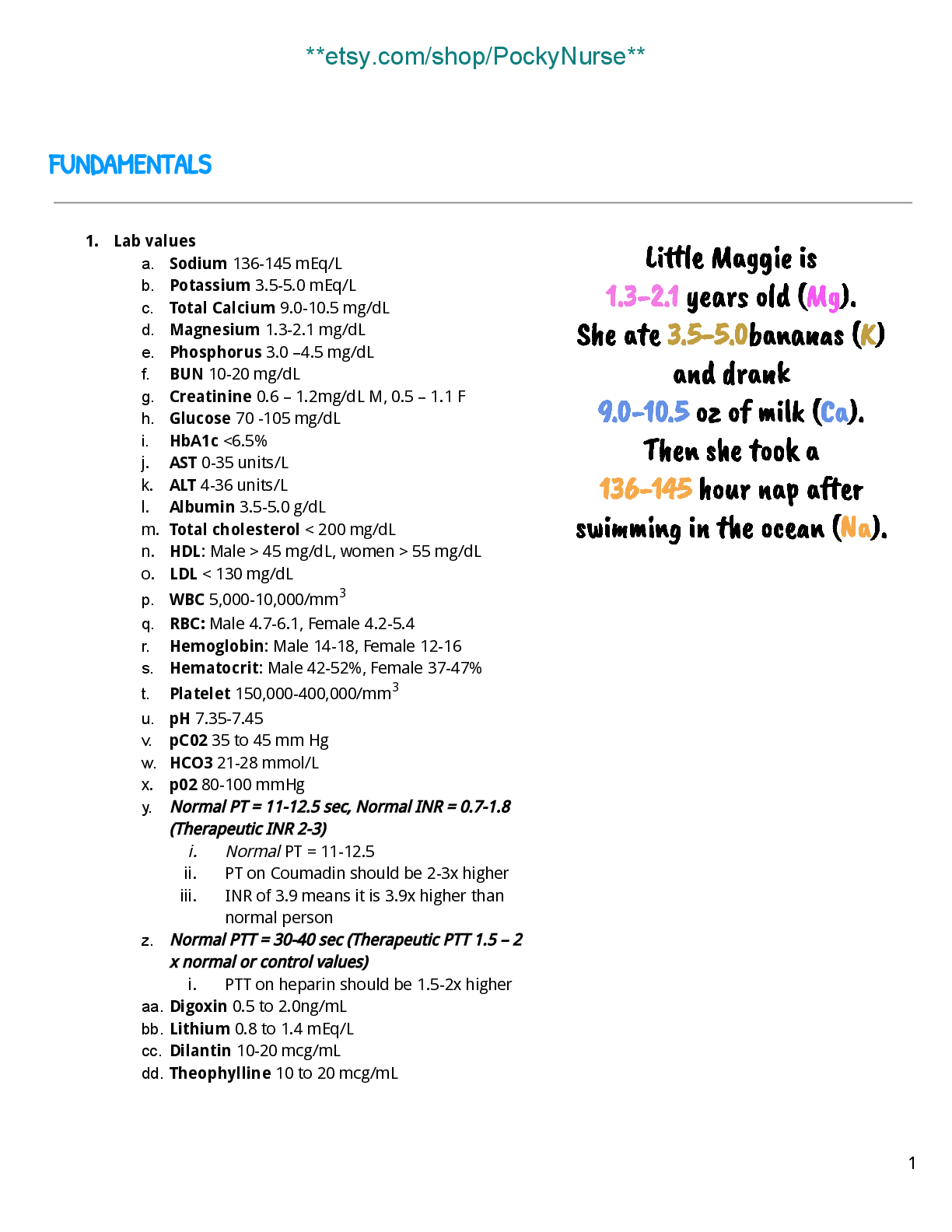
Hemoglobin and hematocrit levels typically higher in males vs femals Normal lab values
Normal Range
Platelets 150,000-400,000
RBC F: 3.8-5.1
M: 4.3-5.7
HCT F: 35-47%
M: 39-50%
HGB F: 11.7-16
M: 13.2-17.3
WBC 4,000-11,000
Anemia
What is it?
Anemia develops when you don’t have enough robust, healthy red blood cells to carry
oxygen throughout your body. The blood cells may lack enough hemoglobin, the
protein that gives blood its red color, or there may be a lack of overall blood volume.
It can occur in women, men, and children and is linked to some illnesses.
Clinical manifestations
Caused by the body’s response to tissue hypoxia
Manifestations vary based on rate of development, severity of anemia, presence of
co-existing disease.
Hemoglobin (Hgb) levels are used to determine the severity of anemia.
Early manifestations none
Mild manifestations
Mild (Hgb 10-12): palpitations, exertional dyspnea, mild fatigue
Moderate manifestations
(Hgb 6-10): increased palpitations, dyspnea, roaring in the ears, fatigue
Severe manifestations
Severe (Hgb <6): pallor, jaundice, icteric conjunctiva and sclera, glossitis, smooth
tongue, tachycardia, tachypnea, dyspnea at rest, vertigo, irritability, and more…
Keep in mind, S&S will be similar so symptom management will be similar, but
treating the CAUSE might be different
General treatments of anemia
Blood transfusions, drug therapy (vitamin supplements), volume replacement, oxygen
therapy, dietary changes, energy management (alternate periods of rest and activity as
tolerated), prioritize activities
Nursing interventions
Correct physiologic status deficits (e.g., chemotherapy-induced anemia) as priority
items.
Monitor cardiorespiratory response to activity (e.g., tachycardia, dysrhythmias,
dyspnea, diaphoresis, pallor, respiratory rate) to evaluate activity intolerance.
Assist the patient in assigning priority to activities to accommodate energy levels to
promote tolerance for important activities. Assist with regular physical activities (e.g., ambulation, transfers, personal care) to
minimize fatigue and risk of injury from falls.
Encourage alternate rest and activity periods to provide activity without tiring the
patient.
Limit number of visitors and interruptions by visitors to provide rest periods
Arrange physical activities to reduce competition for oxygen supply to vital functions
(e.g., avoid activity immediately after meals).
Instruct the patient/caregiver to recognize signs and symptoms of fatigue that require
reduction in activity to promote self-care.
Types of anemia
Hemorrhagic
Slow/internal harder to detect
Fast easy to detect
Diagnose – fast (blood); slow (serial H&H’s – at least 3 showing
sequential drop)
Treatment
Replace BLOOD volume to prevent shock
NS, Dextran, Hetastarch, Albumin, LR for volume
RBCs for O2 Carrying ability
Identify source of bleeding and control
Oral or parenteral Fe
Vitamin deficiency
Something needed to make RBCs or Hemoglobin, or needed for absorption is
missing
Iron, B12, folate, ferritin, intrinsic factor, and more
Diagnosed with blood test for any of these
Iron deficiency anemia
DX
Decreased H&H
Decreased serum iron
Increased TIBC
Measures the body’s capacity to bind iron
Body tries to compensate for less iron by increasing the binding capacity
Evaluation for GI/GU bleeding-stool, quiac test, endoscopy, colonoscopy
Bone marrow bx if nothing else shows up
Remember, a problem with blood cells MIGHT mean a problem with the
bone marrow in the absence of another clear cause
collaborative care
goal treat underlying disease (could be decreased intake or decreased
absorption)
Increase intake of iron
oral Fe
need 150-200mg every day
Best absorbed in acidic environment - give with OJ or Vitamin C one hour
before meals if tolerated. Otherwise give with food Undiluted liquid Fe may stain teeth (use straw)
May cause GI upset, heartburn, constipation/diarrhea
Causes stools to turn black – tell the patient
parenteral iron supplements
Use for malabsorption states, intolerance to PO, poor pt adherence
IM
May stain skin (use separate needles for withdrawing and injecting)
Leave .5 mL air bubble in syringe to clear it
Give deep IM using Z-track
Do not rub
IV Fe should not be mixed with other meds and tubing should be flushed
well before and after. Monitor during infusion—risk of allergic reaction
transfusion of packed RBCs
Vitamin B12 deficiency
Megaloblastic anemia
DX
RBCs large and abnormal shape
Fragile cell membrane
Gastric analysis intrinsic factor
Gastroscopy with biopsy
Schilling test (radioactive B12 given and B12 measured in urine)
Treatment
Parenteral or intranasal administration of cobalamin - for life
Increase in dietary cobalamin does not correct the anemia
Has to be parenteral or inter-nasal
Still important to emphasize adequate dietary intake to maintain overall good
nutrition
Pt will die in 1-3 years without treatment
Folic acid (B9) deficiency
Megaloblastic anemia
negative)
Treatment
Replacement therapy PO (May need larger doses in malabsorption states but
usually 1 mg per day)
Encourage dietary food intake
Nursing Care
Look at the care plan posted for anemia and fatigue
Sickle cell anemia
Typical patient is asymptomatic, except during sickling episodes
Symptoms may include
Pain and swelling
Pallor of mucous membranes
Jaundice
May receive prophylactic abx to prevent infections
Treatment Nursing and Collaborative Management
Alleviate Sx
Minimize end organ damage
Promptly treat serious sequelae
Teach patient about:
Avoiding high altitudes
Good fluid intake
Immunizations
Treat infections promptly
In the hospital
Give oxygen
Rest—DVT prophylaxis
SCDs, ted HOSE
Fix fluid and electrolyte imbalance
Transfusion therapy—Aggressive RBC exchange
PAIN management! —continuous pain meds, opioids, PCA.
They are often opioid-tolerant and require increased doses of
medication than usual
Acquired hemolytic anemia
Caused by extrinsic factors: RBCs normal - damage caused by external factors
DX
Blood smear: schistocytes (helmet cells)
due to shearing mechanical destruction
Treatment
Supportive care until cause can be identified and removed
Steroids
Blood replacement
Splenectomy
Worry about bleeding
Aplastic anemia
Treatment
Find cause and treat – if possible
Provide support until pancytopenia reverses
Prevent complications of infection and/or bleeding
70% fatal
Stem cell transplant
Immunosuppressive therapy
Anemia Thalassemia
DX
Blood smear
Darker RBCs are normal cells from transfusion
Note small (microcytic), pale (hypochromic), abnormally-shaped red
blood cells. These are associated with thalassemia major.
Treatment
None for T-minor T-major
Blood transfusions (but not to normal levels)
They can become iron overloaded
Chelation (removes iron from blood) to reduce iron overloading from
transfusions – medications do this
Splenectomy – enlarged because RBCs are sequestered there (spleen is
trying to get abnormal cells out of circulation)
Pt may be at risk for bleeding after these
Cardiac complications contribute to early death
From iron overload, pulmonary disease, and hypertension
Hepatitis C in older patients due to transfusions
No effective drug therapy
Hematopoietic stem cell transplantation only cure
[Show More]