George Washington University
Pediatric Inpatient Care Plan - NURS 4116
Complete this form on one patient. All areas should be completed; if an area is not applicable,
provide an explanation of why it is not applicable
...
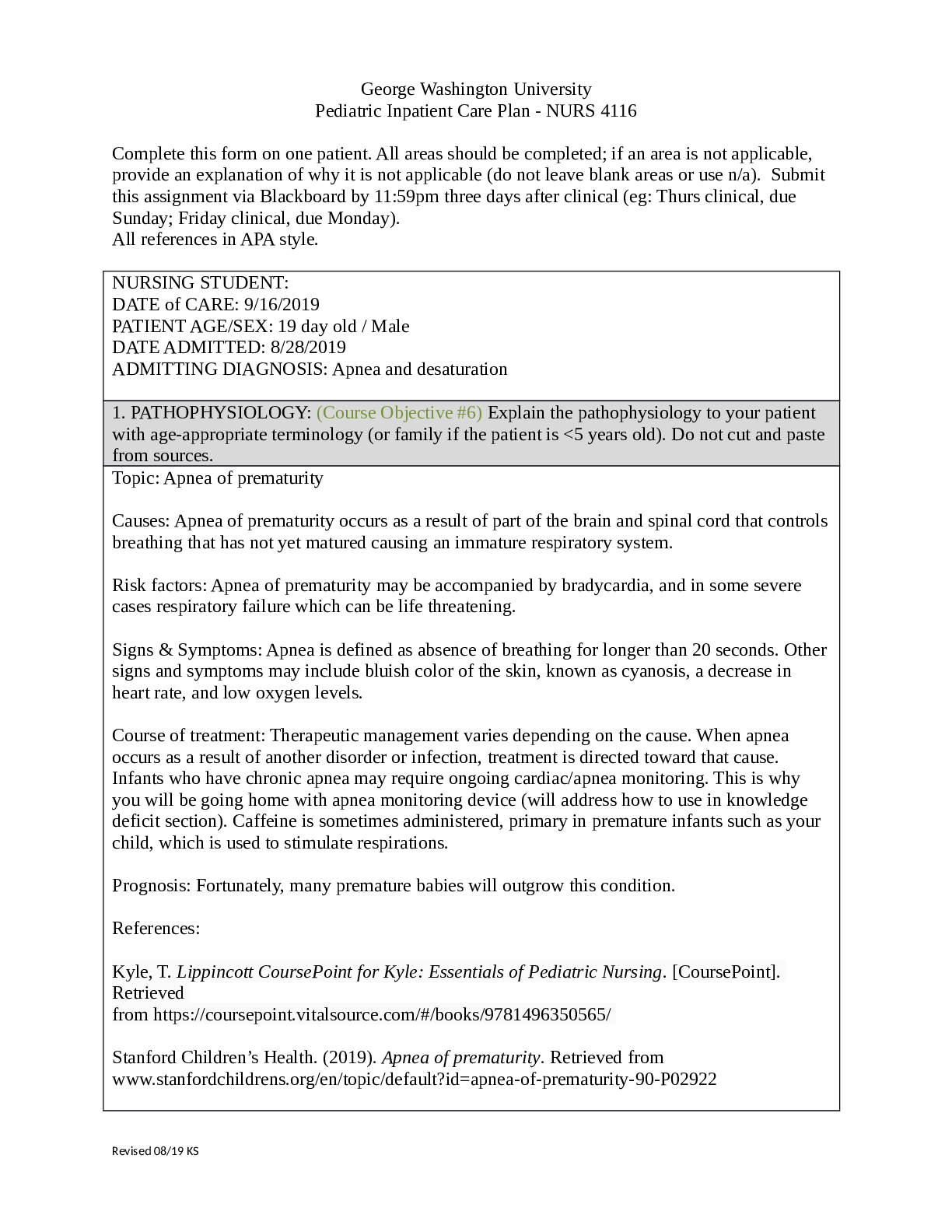
George Washington University
Pediatric Inpatient Care Plan - NURS 4116
Complete this form on one patient. All areas should be completed; if an area is not applicable,
provide an explanation of why it is not applicable (do not leave blank areas or use n/a). Submit
this assignment via Blackboard by 11:59pm three days after clinical (eg: Thurs clinical, due
Sunday; Friday clinical, due Monday).
All references in APA style.
NURSING STUDENT:
DATE of CARE: 9/16/2019
PATIENT AGE/SEX: 19 day old / Male
DATE ADMITTED: 8/28/2019
ADMITTING DIAGNOSIS: Apnea and desaturation
1. PATHOPHYSIOLOGY: (Course Objective #6) Explain the pathophysiology to your patient
with age-appropriate terminology (or family if the patient is <5 years old). Do not cut and paste
from sources.
Topic: Apnea of prematurity
Causes: Apnea of prematurity occurs as a result of part of the brain and spinal cord that controls
breathing that has not yet matured causing an immature respiratory system.
Risk factors: Apnea of prematurity may be accompanied by bradycardia, and in some severe
cases respiratory failure which can be life threatening.
Signs & Symptoms: Apnea is defined as absence of breathing for longer than 20 seconds. Other
signs and symptoms may include bluish color of the skin, known as cyanosis, a decrease in
heart rate, and low oxygen levels.
Course of treatment: Therapeutic management varies depending on the cause. When apnea
occurs as a result of another disorder or infection, treatment is directed toward that cause.
Infants who have chronic apnea may require ongoing cardiac/apnea monitoring. This is why
you will be going home with apnea monitoring device (will address how to use in knowledge
deficit section). Caffeine is sometimes administered, primary in premature infants such as your
child, which is used to stimulate respirations.
Prognosis: Fortunately, many premature babies will outgrow this condition.
References:
Kyle, T. Lippincott CoursePoint for Kyle: Essentials of Pediatric Nursing. [CoursePoint].
Retrieved
from https://coursepoint.vitalsource.com/#/books/9781496350565/
Stanford Children’s Health. (2019). Apnea of prematurity. Retrieved from
www.stanfordchildrens.org/en/topic/default?id=apnea-of-prematurity-90-P02922
Revised 08/19 KS
[Show More]