Biology  >  GIZMOS  >  Gizmo SNC2D Student Exploration: Cell Division (All)

Gizmo SNC2D Student Exploration: Cell Division

Document Content and Description Below

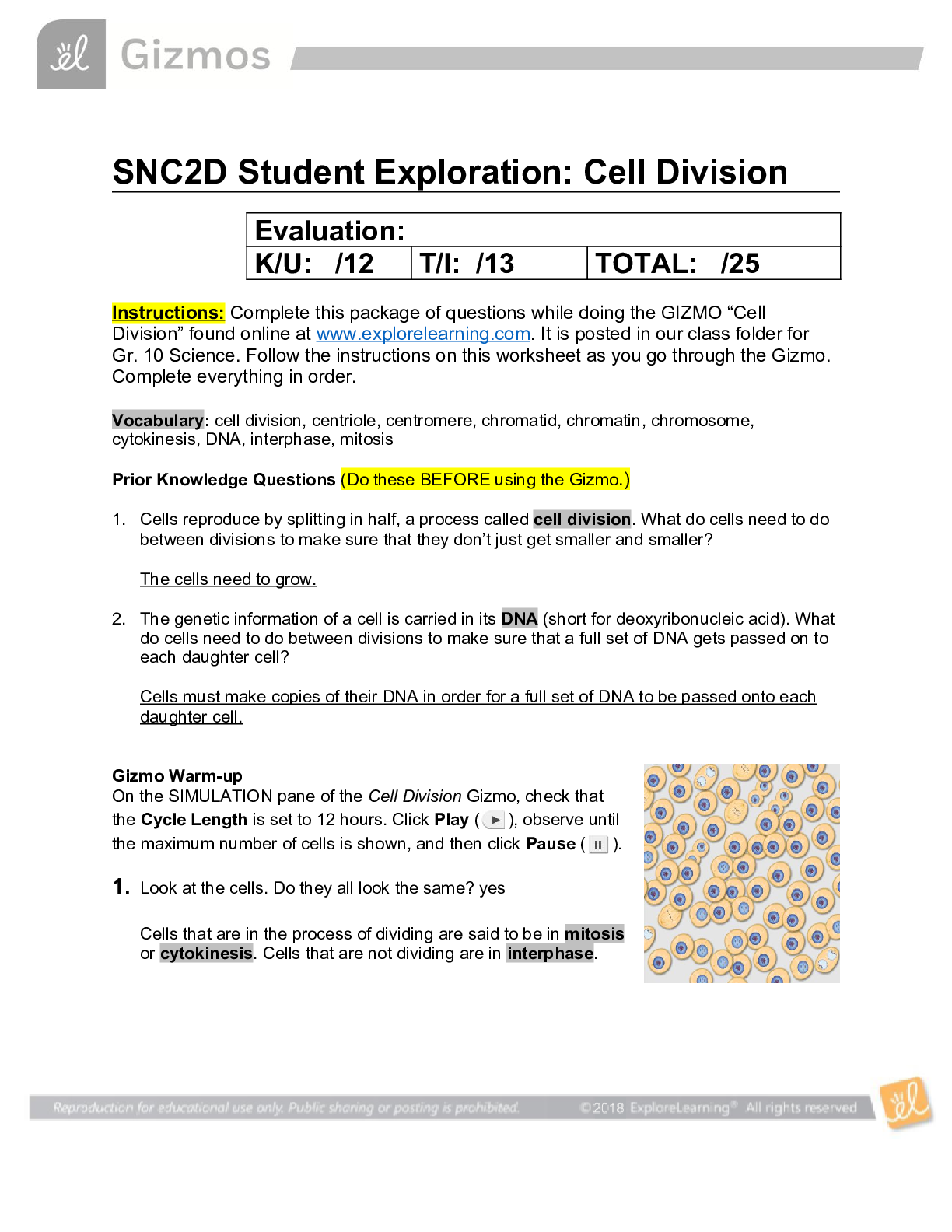
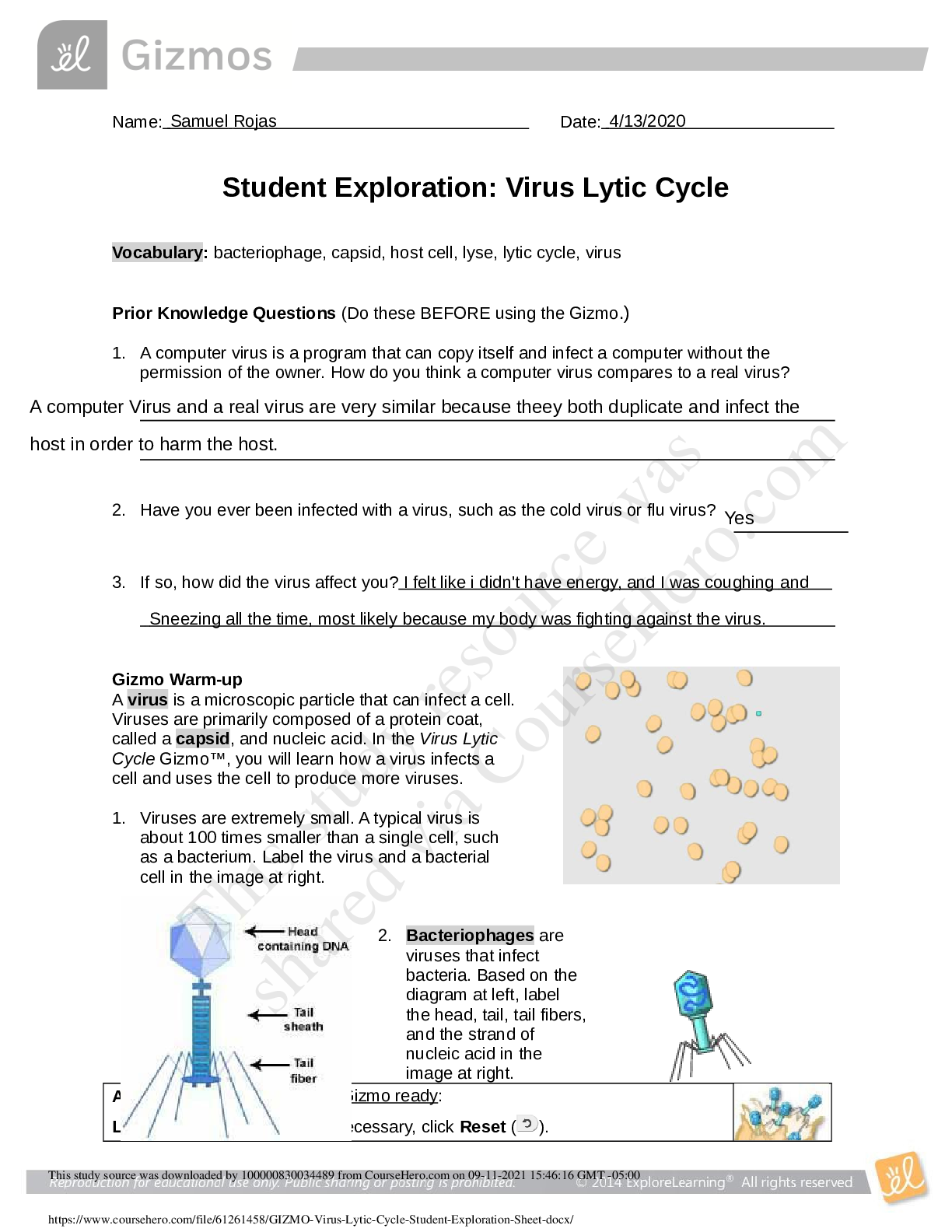
SNC2D Student Exploration: Cell Division Evaluation: K/U: /12 T/I: /13 TOTAL: /25 Instructions:​ Complete this package of questions while doing the GIZMO “Cell Division” found online at ​w ... ww.explorelearning.com​. It is posted in our class folder for Gr. 10 Science. Follow the instructions on this worksheet as you go through the Gizmo. Complete everything in order. Vocabulary​:​ cell division, centriole, centromere, chromatid, chromatin, chromosome, cytokinesis, DNA, interphase, mitosis Prior Knowledge Questions ​(Do these BEFORE using the Gizmo​.) 1. Cells reproduce by splitting in half, a process called ​cell division​. What do cells need to do between divisions to make sure that they don’t just get smaller and smaller? The cells need to grow. 2. The genetic information of a cell is carried in its ​DNA​ (short for deoxyribonucleic acid). What do cells need to do between divisions to make sure that a full set of DNA gets passed on to each daughter cell? Cells must make copies of their DNA in order for a full set of DNA to be passed onto each daughter cell. Gizmo Warm-up On the SIMULATION​ ​pane of the ​Cell Division ​Gizmo, check that the ​Cycle Length ​is set to 12 hours. Click ​Play​ ( ), observe until the maximum number of cells is shown, and then click ​Pause​ ( ). 1. Look at the cells. Do they all look the same? yes Cells that are in the process of dividing are said to be in ​mitosis or ​cytokinesis​. Cells that are not dividing are in ​interphase​.2. Check the ​Magnify ​box and move the cursor over the cells. ​/3 TI A. Of the 100 cells shown, how many are in the process of dividing? ​18 cells B. Select the BAR CHART tab, and turn on ​Show numerical values​. How many cells are in the interphase​ ​stage of their life cycle? ​80 cells Based on these two observations, would you say that a cell spends most of its life cycle in interphase or in mitosis/cytokinesis? ​Interphase Activity A: Phases of the cell cycle Get the Gizmo ready​: ● Click ​Reset​ ( ). ● Select the DESCRIPTION tab. ● Click on the right arrow once so that ​Interphase​ is shown. Question: What are the stages of the cell cycle? 1. Observe​: Click ​Play​ and hold the cursor over the cell. Observe the cell as it divides several times. (This happens quickly!) What do you notice happening during this process? ​/2 TI The DNA is copied, chromatids appear, and the cells separate. 2. Summarize​: On the DESCRIPTION pane, read about each phase in the cell cycle. In the spaces below, summarize what occurs in your own words. ​/12 KU Phase Summary Interphase - the cell grows - DNA is copied - new organelles form Prophase - the first stage of mitosis - chromosomes are formed from chromatin - spindle fibres are forme [Show More]

Last updated: 3 years ago

Preview 1 out of 5 pages

Buy Now

Instant download

We Accept:

Payment methods accepted on Scholarfriends (We Accept)
Preview image of Gizmo SNC2D Student Exploration: Cell Division document

Buy this document to get the full access instantly

Instant Download Access after purchase

Buy Now

Instant download

We Accept:

Payment methods accepted on Scholarfriends (We Accept)

Reviews( 0 )

$9.00

Buy Now

We Accept:

Payment methods accepted on Scholarfriends (We Accept)

Instant download

Can't find what you want? Try our AI powered Search

147
0

Document information


Connected school, study & course


About the document


Uploaded On

May 31, 2021

Number of pages

5

Written in

All

Seller


Profile illustration for Expert Tutor
Expert Tutor

Member since 4 years

58 Documents Sold

Reviews Received
6
2
0
0
3
Additional information

This document has been written for:

Uploaded

May 31, 2021

Downloads

 0

Views

 147

Document Keyword Tags

Recommended For You

Get more on GIZMOS »
$9.00
What is Scholarfriends

Scholarfriends.com Online Platform by Browsegrades Inc. 651N South Broad St, Middletown DE. United States.

We are here to help

We're available through e-mail, Twitter, Facebook, and live chat.
 FAQ
 Questions? Leave a message!

Follow us on
 Twitter

Copyright © Scholarfriends · High quality services·