Pathophysiology > EXAM > PATH 370 Pathophysiology Study Guide Chapter 31 – West Coast University | PATH370 Pathophysiology (All)
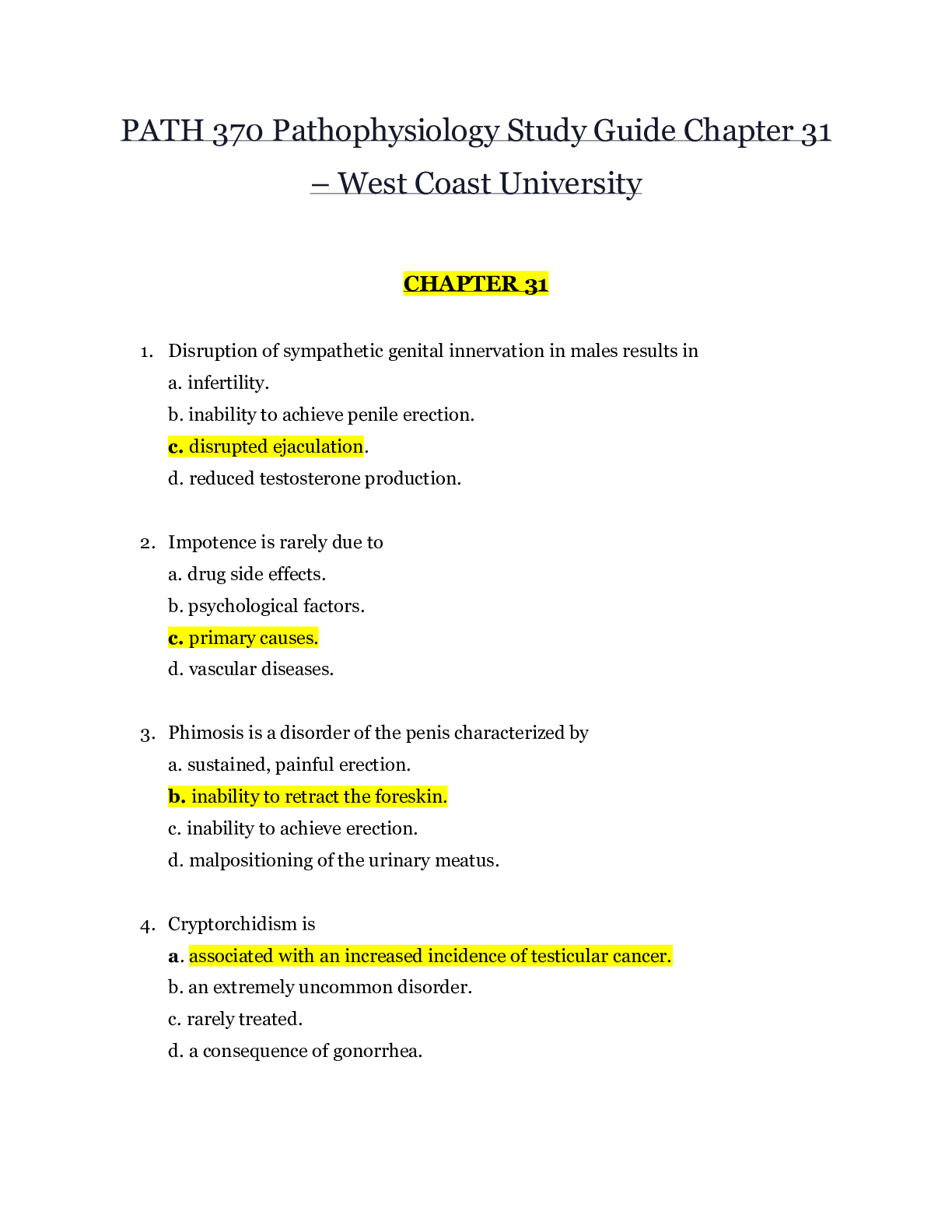
PATH 370 Pathophysiology Study Guide Chapter 31 – West Coast University | PATH370 Pathophysiology Study Guide Chapter 31
Document Content and Description Below
Last updated: 3 years ago
Preview 1 out of 3 pages
Instant download
Buy this Document to get the Full Access Instantly
Provided by Students Who Aced it
We Verify Document Content to Gurantee Accuracy
Reviews( 0 )
Document information
Connected school, study & course
About the document
Uploaded On
Jul 26, 2020
Number of pages
3
Written in
All

Additional information
This document has been written for:
Uploaded
Jul 26, 2020
Downloads
0
Views
204
Topic Tags
Related Subjects & Courses
Explore similar study resources and related concepts.
Recommended For You
Get more on EXAM »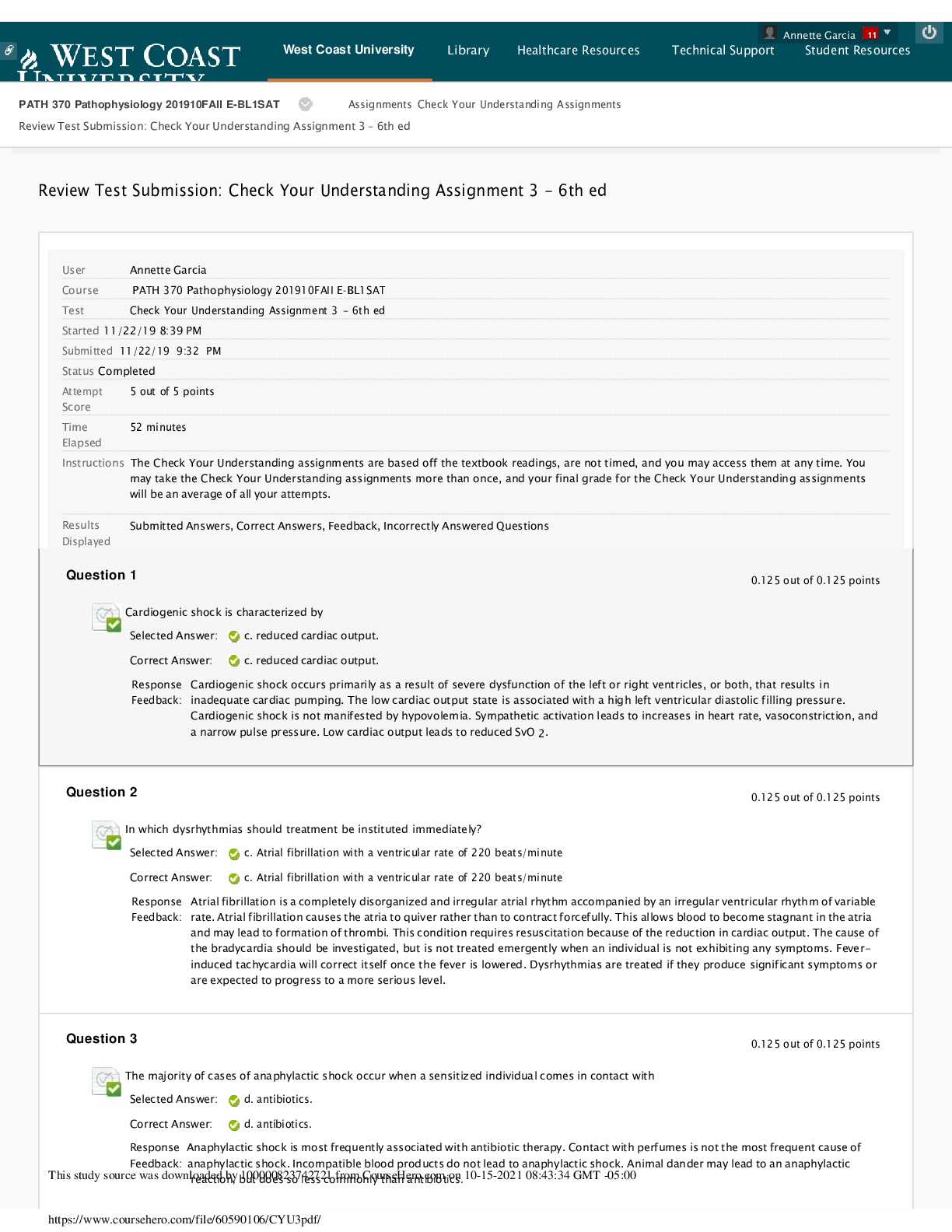
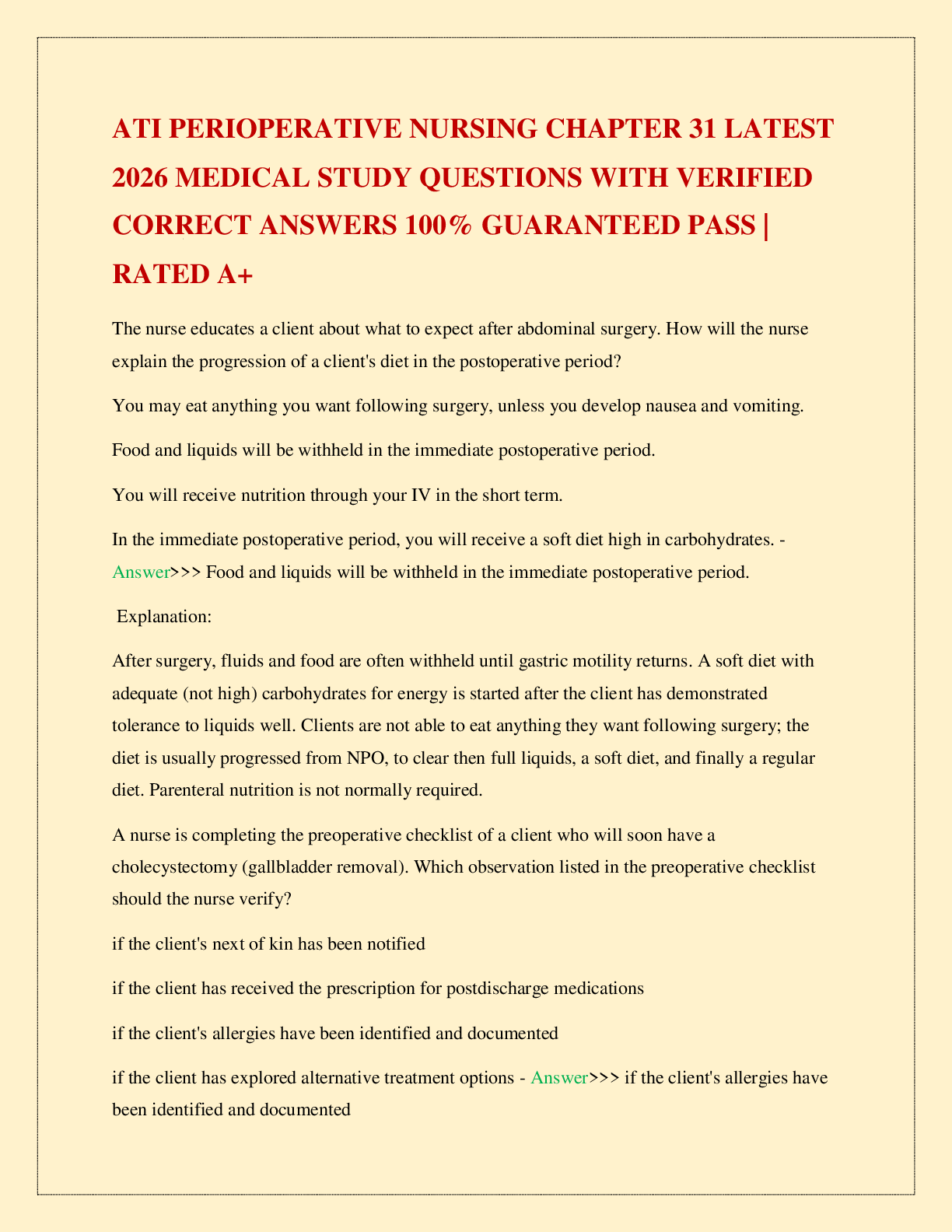
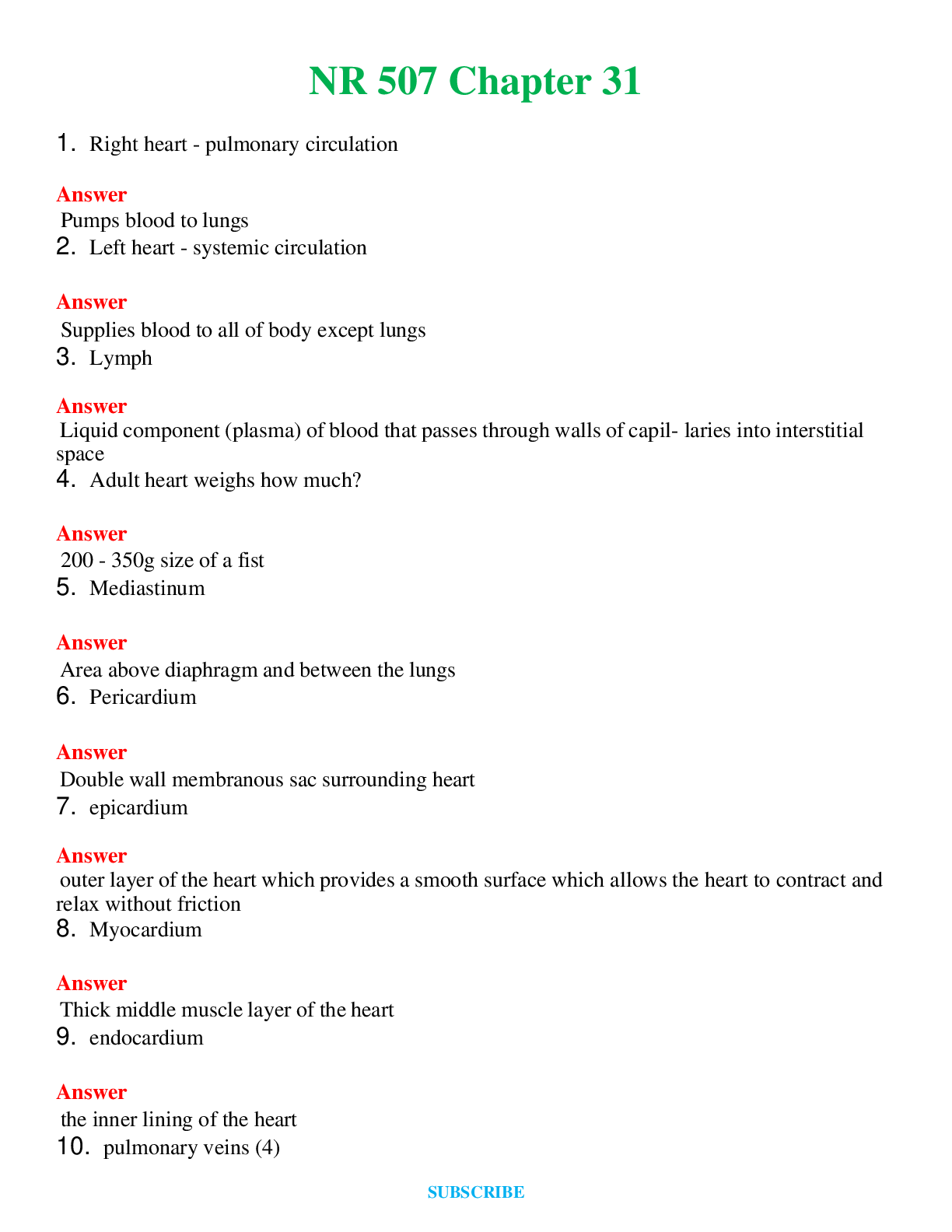
NR 507 Chapter 31 Questions and Answers (Verified Answers)
WestCoast PATH370 Week 1 Quiz 2020/WestCoast PATH370 Week 1 Qu...

University of New Mexico - MGMT 328mgmt 328 quiz chapter 3. 10...

NR 566 Exam Preparation: Week 6 Chapter 31 Contraception (TOP...
Solution Manual for Applied Engineering Mathematics, 1st Editi...

Solution Manual for Applied Engineering Mathematics, 1st Editi...

LAW 108 Chapter 31 Antitrust Law and Promoting Competition.
Quiz #7 Dirette Chapter 31 / Nursing & Pharmacology / 2025 Stu...
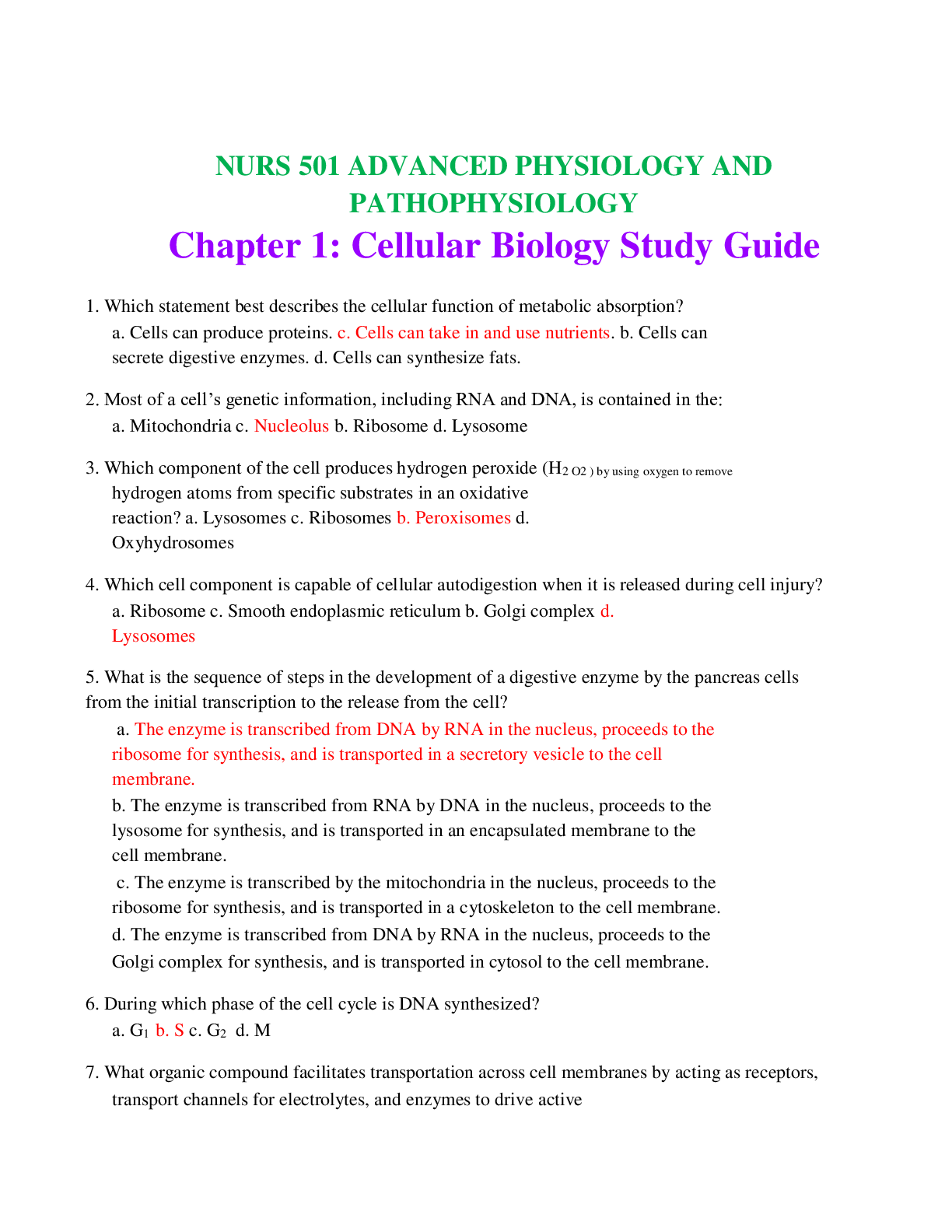
NURS 501 ADVANCED PHYSIOLOGY AND PATHOPHYSIOLOGY : Ultimate Te...
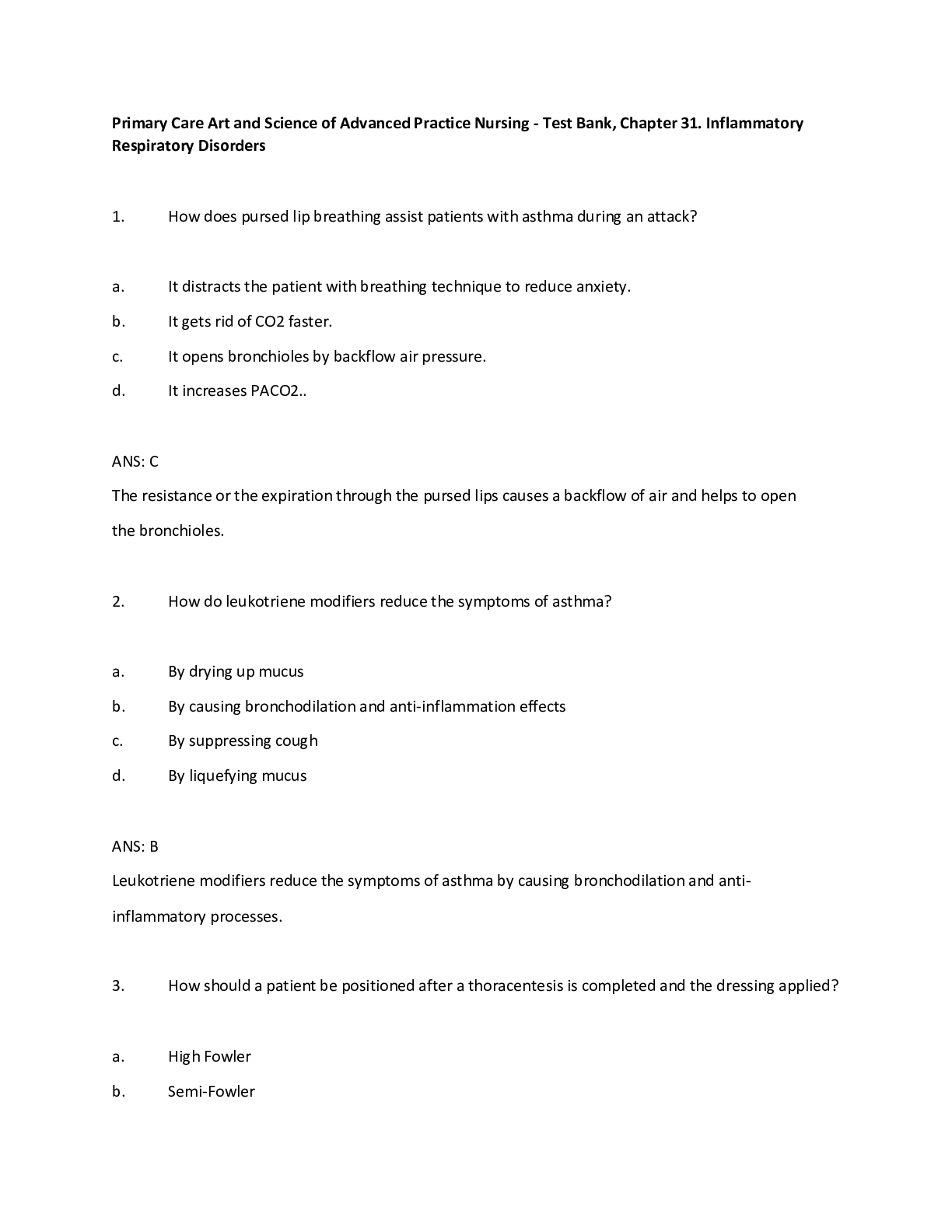
Primary Care Art and Science of Advanced Practice Nursing - Te...

Test Bank-Chapter 31. Nursing Care of Patients With Lower Resp...
.png)
PATHOPHISIOLOGY II – SUMMER 2016 TEST 1 CHAPTER 31- Structure...
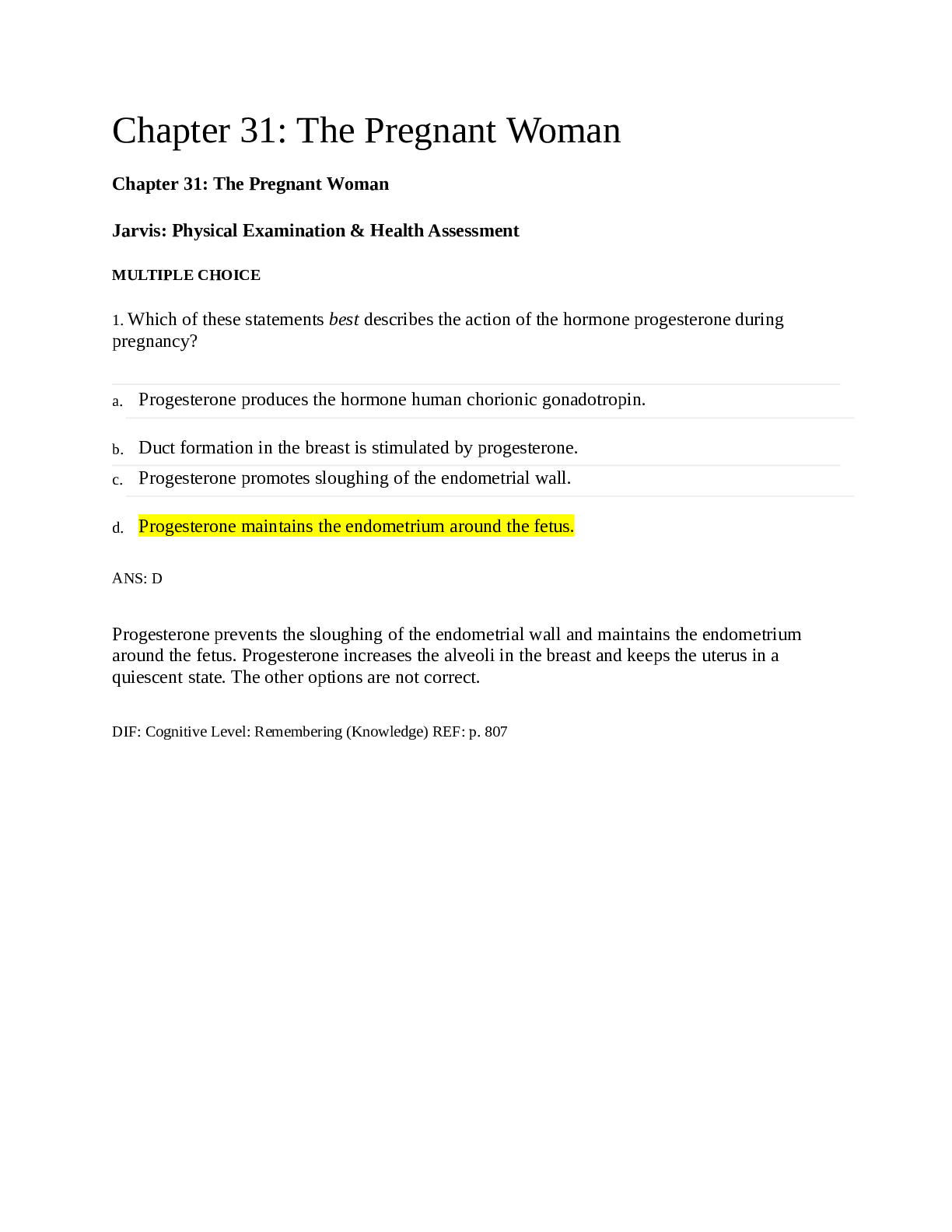
PHYSICAL EXAMINATION AND HEALTH ASSESSMENT TESTBANK BY JARVIS:...
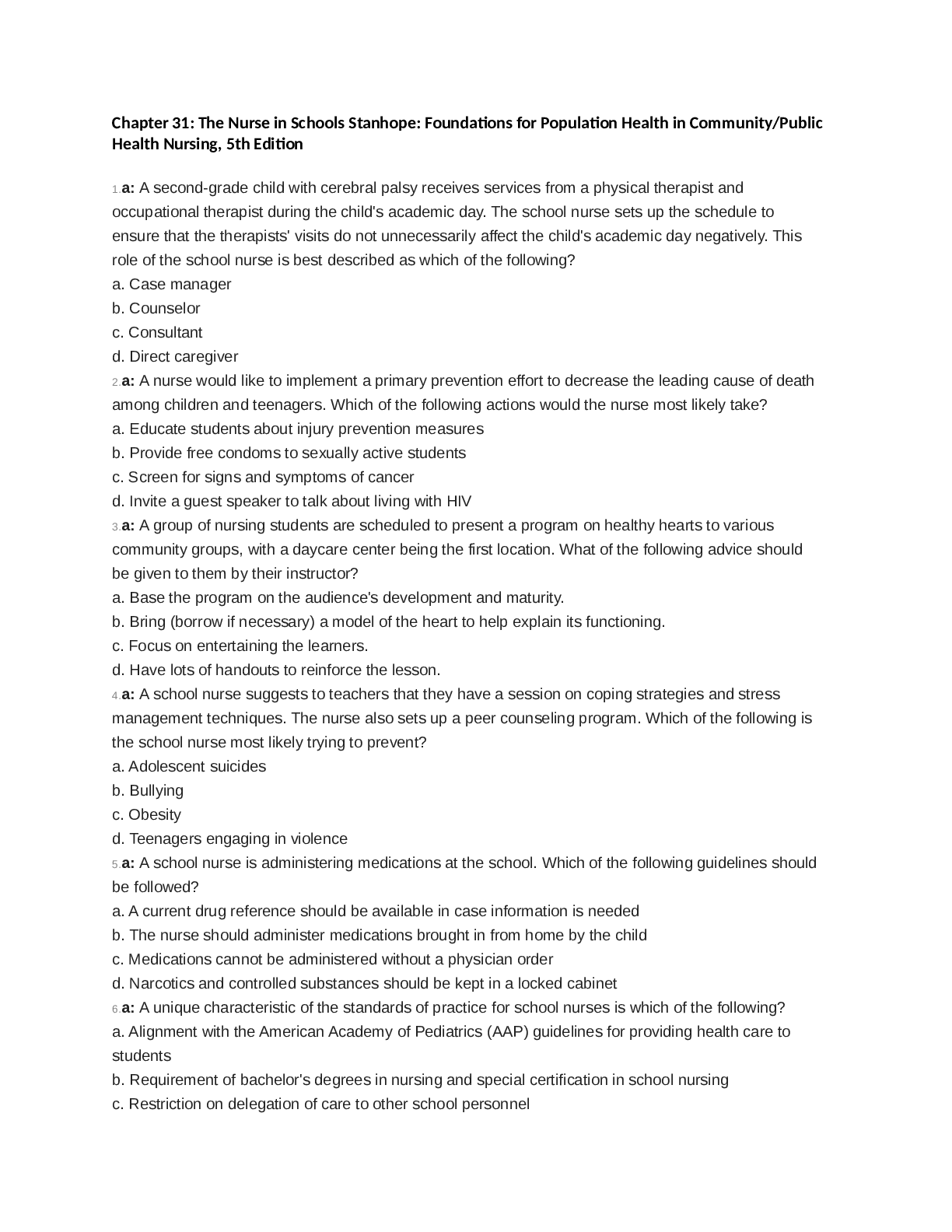
Foundations for Population Health in Community Public Health N...
.png)
Chapter 31: Older Adults Halter: Varcarolis’ Foundations of Ps...

 – Chamberlain College of Nursing.png)
 – Chamberlain College of Nursing.png)