Pathophysiology  >  STUDY GUIDE  >  PATH 370 Pathophysiology Study Guide Final – West coast University | PATH370 Pathophysiology Study (All)

PATH 370 Pathophysiology Study Guide Final – West coast University | PATH370 Pathophysiology Study Guide Final

Document Content and Description Below

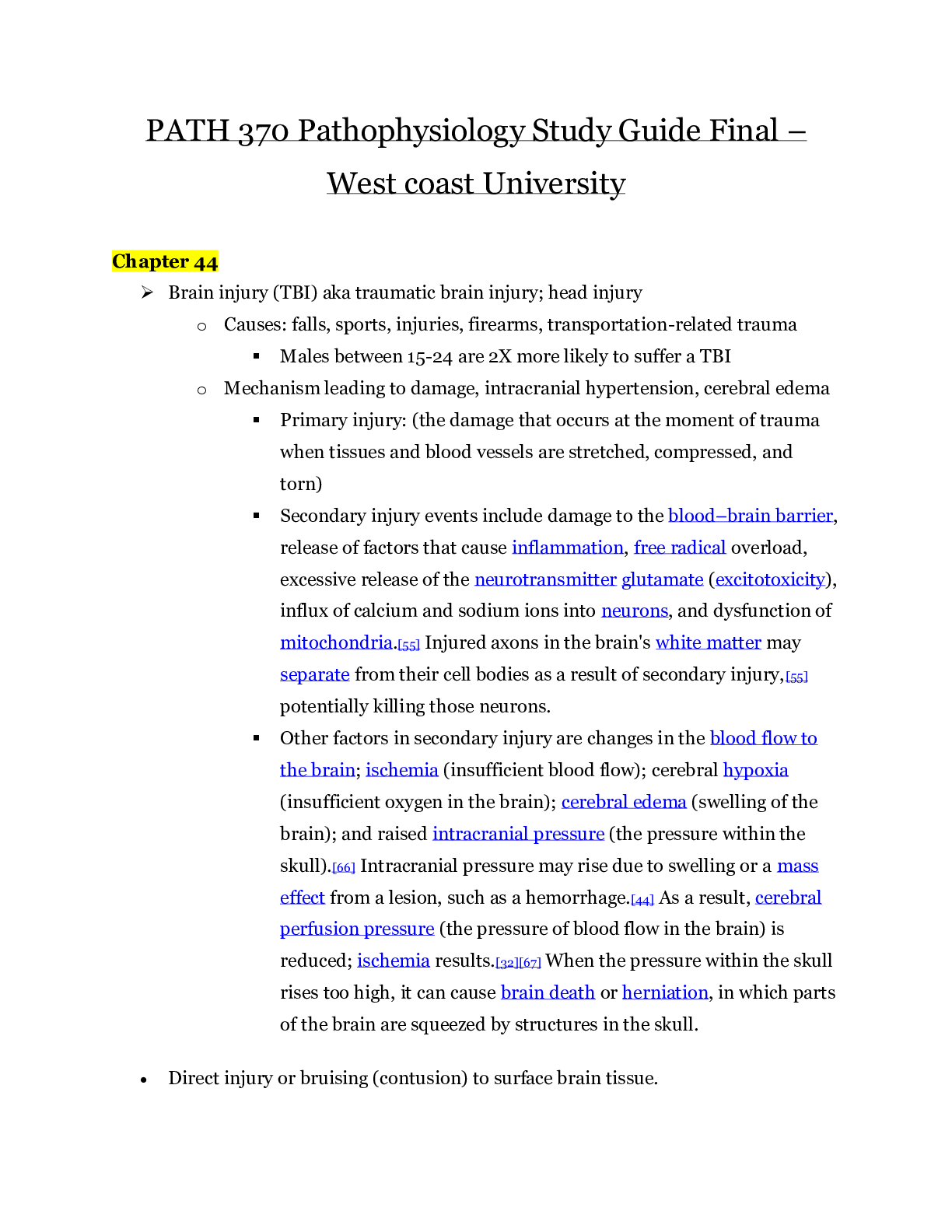
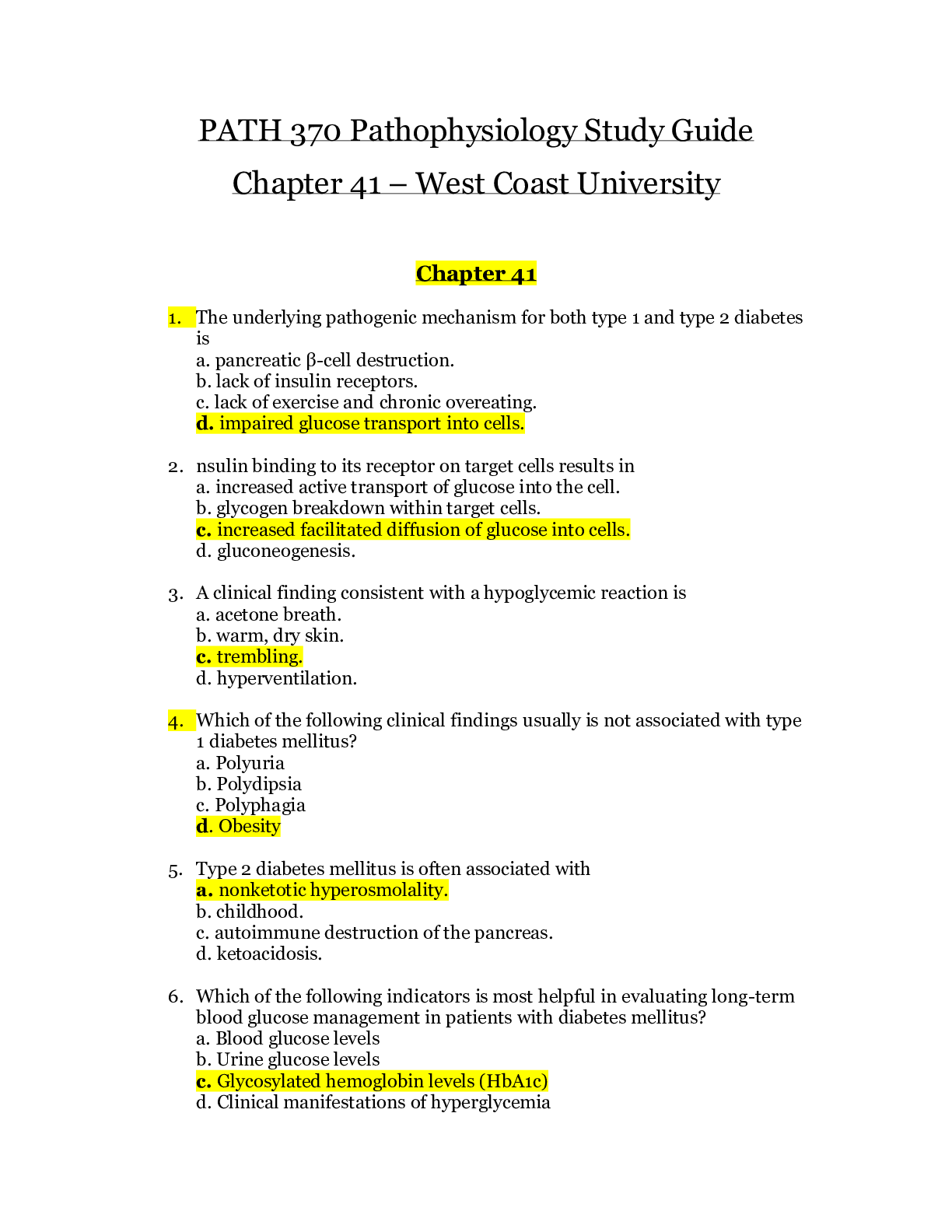
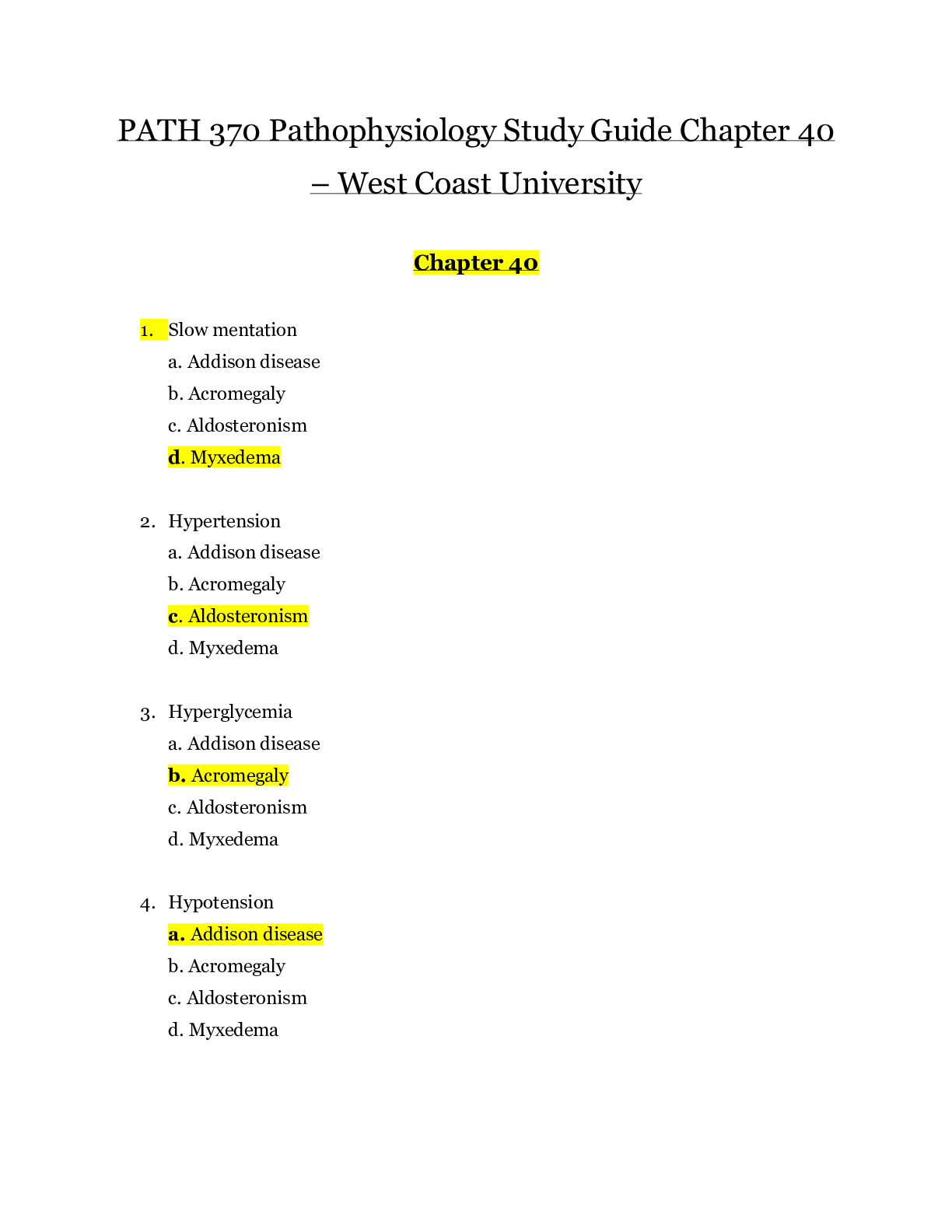
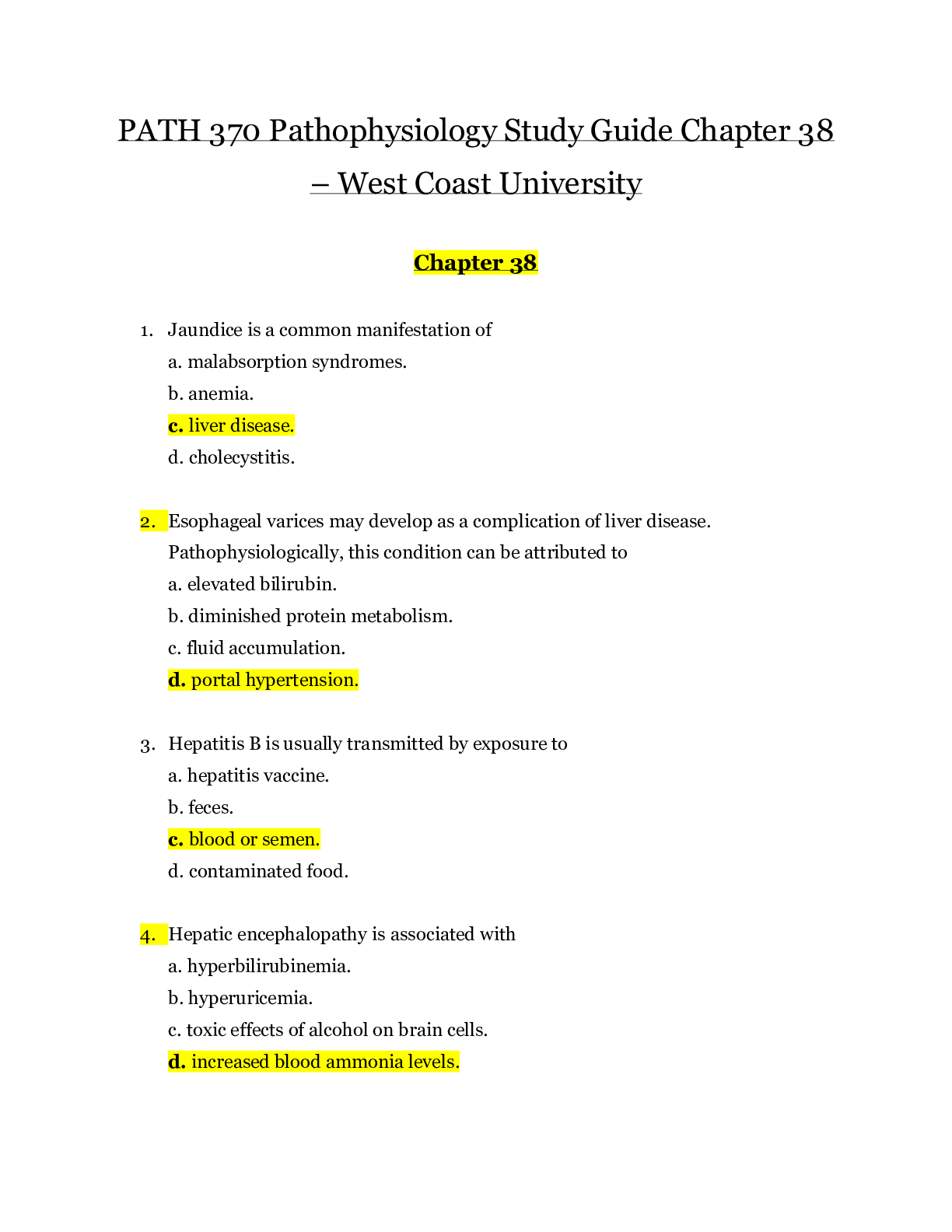
PATH 370 Pathophysiology Study Guide Final – West coast University Chapter 44 ¬ Brain injury (TBI) aka traumatic brain injury; head injury o Causes: falls, sports, injuries, firearms, transpor ... tation-related trauma ♣ Males between 15-24 are 2X more likely to suffer a TBI o Mechanism leading to damage, intracranial hypertension, cerebral edema ♣ Primary injury: (the damage that occurs at the moment of trauma when tissues and blood vessels are stretched, compressed, and torn) ♣ Secondary injury events include damage to the blood–brain barrier, release of factors that cause inflammation, free radical overload, excessive release of the neurotransmitter glutamate (excitotoxicity), influx of calcium and sodium ions into neurons, and dysfunction of mitochondria.[55] Injured axons in the brain's white matter may separate from their cell bodies as a result of secondary injury,[55] potentially killing those neurons. ♣ Other factors in secondary injury are changes in the blood flow to the brain; ischemia (insufficient blood flow); cerebral hypoxia (insufficient oxygen in the brain); cerebral edema (swelling of the brain); and raised intracranial pressure (the pressure within the skull).[66] Intracranial pressure may rise due to swelling or a mass effect from a lesion, such as a hemorrhage.[44] As a result, cerebral perfusion pressure (the pressure of blood flow in the brain) is reduced; ischemia results.[32][67] When the pressure within the skull rises too high, it can cause brain death or herniation, in which parts of the brain are squeezed by structures in the skull. • Direct injury or bruising (contusion) to surface brain tissue. - - - - - - - - - - - - - - - - - - - - - - - - - - - - - - - - - Chapter 51 ¬ Muscle strain o Etiology-most common, si/sx, dx, tx ¬ Ostroporosis --> fractures (classifications: simple, compound, comminuted, spiral...etc.) o Etiology, si/sx, dx, tx, risks ¬ Osteomyelitis o Etiology, risks ¬ Rhabdosarcoma vs Liposarcoma vs Osteosarcoma vs Chondrosarcoma o Prefix and suffix ¬ Myasthenia gravis vs. Muscular dystrophy o Etiology, si/sx, dx, tx ¬ Compartment syndrome o Etiology, si/sx, dx, tx Chapter 52 ¬ Autoimmune disease o General (Definition, si/sx, biomarker) ¬ Systemic Lupus Erythematosis (SLE) o Etiology, si/sx, dx, tx o SLE vs. Scleroderma ¬ Rheumatoid Arthritis (RA) vs Osteoarthritis (OA) o Etiology, si/sx, dx, tx ¬ Gouty Arthritis vs Pseudogout o Etiology, si/sx, dx, tx o What is tophi? [Show More]

Last updated: 3 years ago

Preview 1 out of 13 pages

Buy Now

Instant download

We Accept:

Payment methods accepted on Scholarfriends (We Accept)
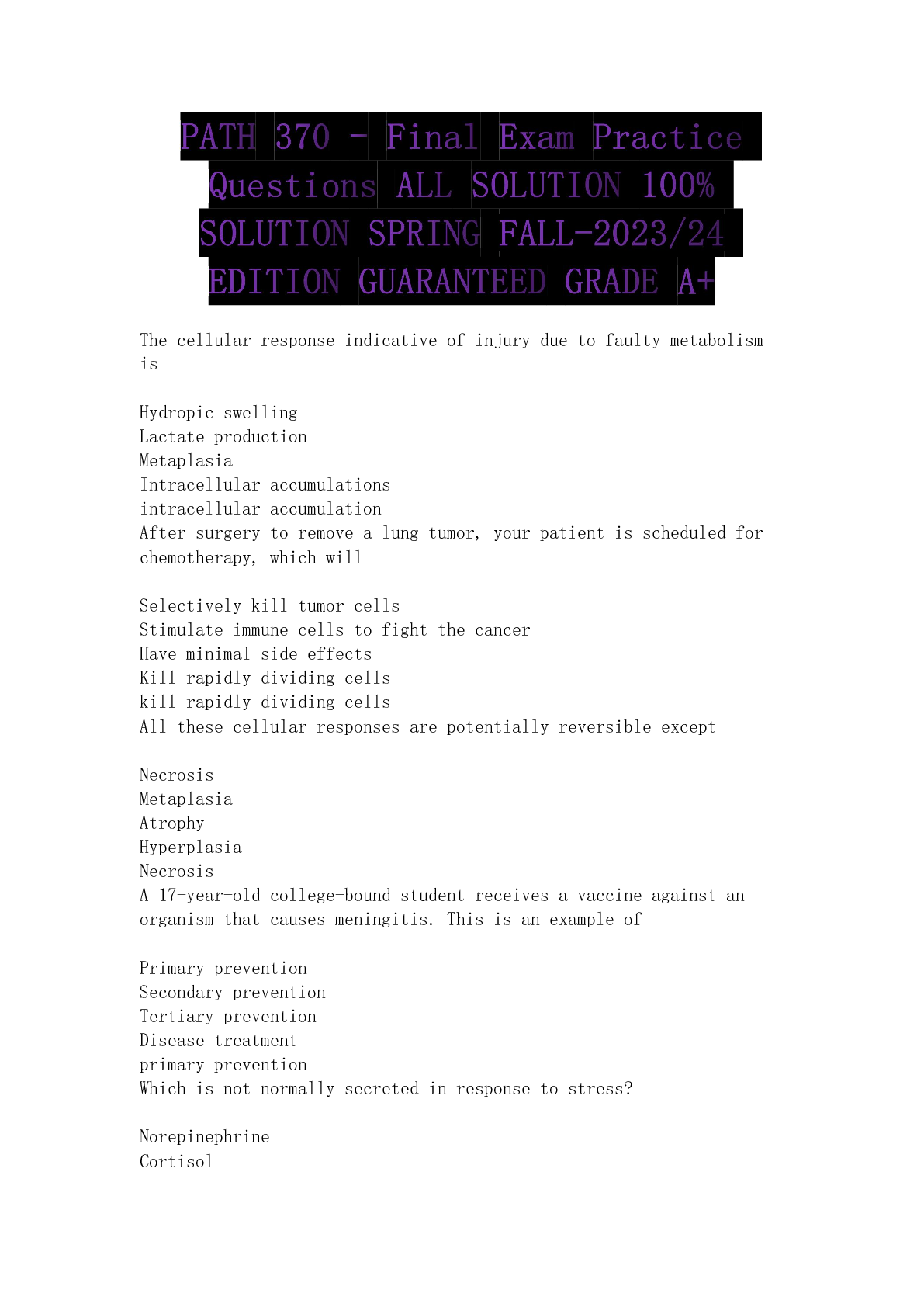
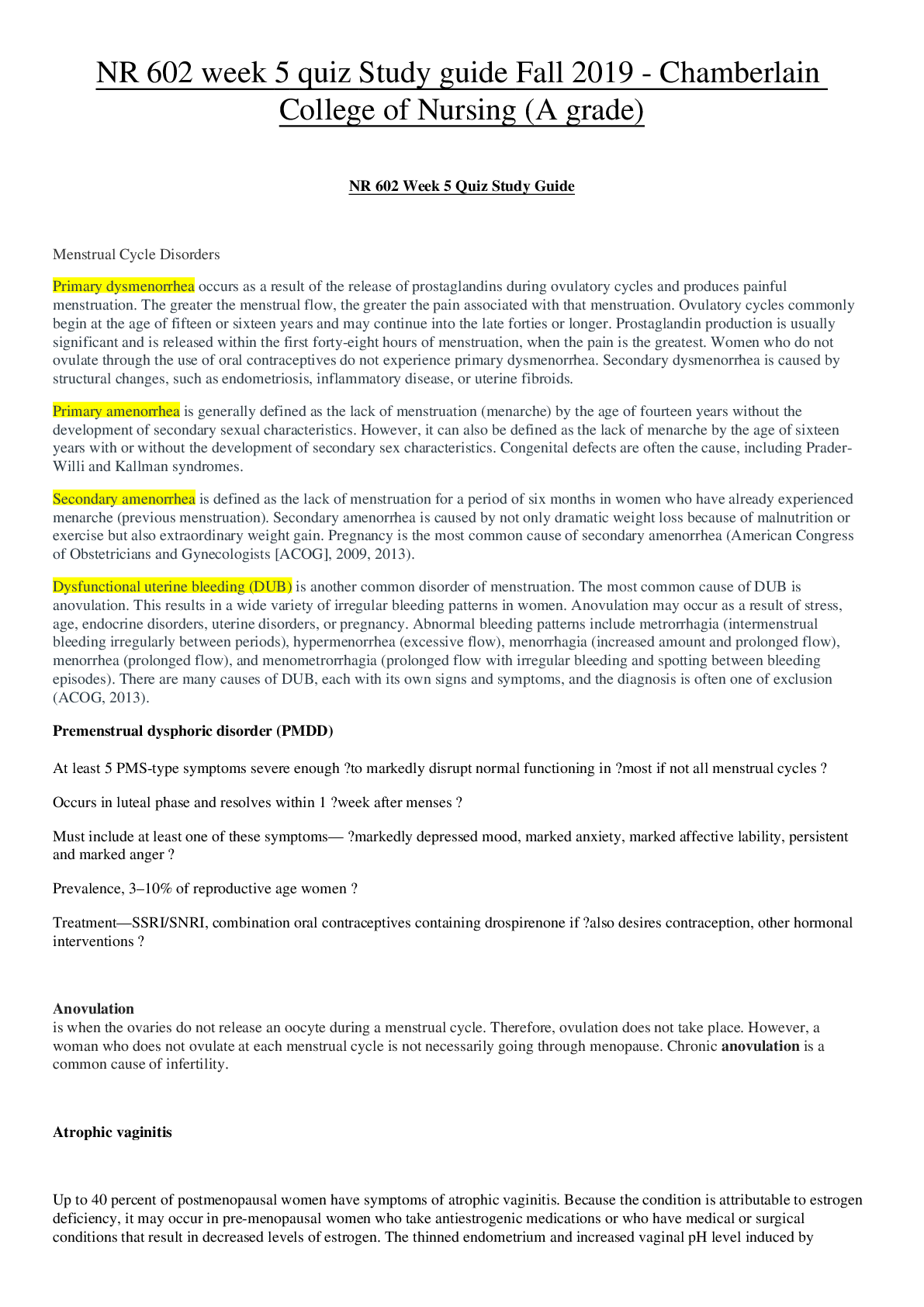
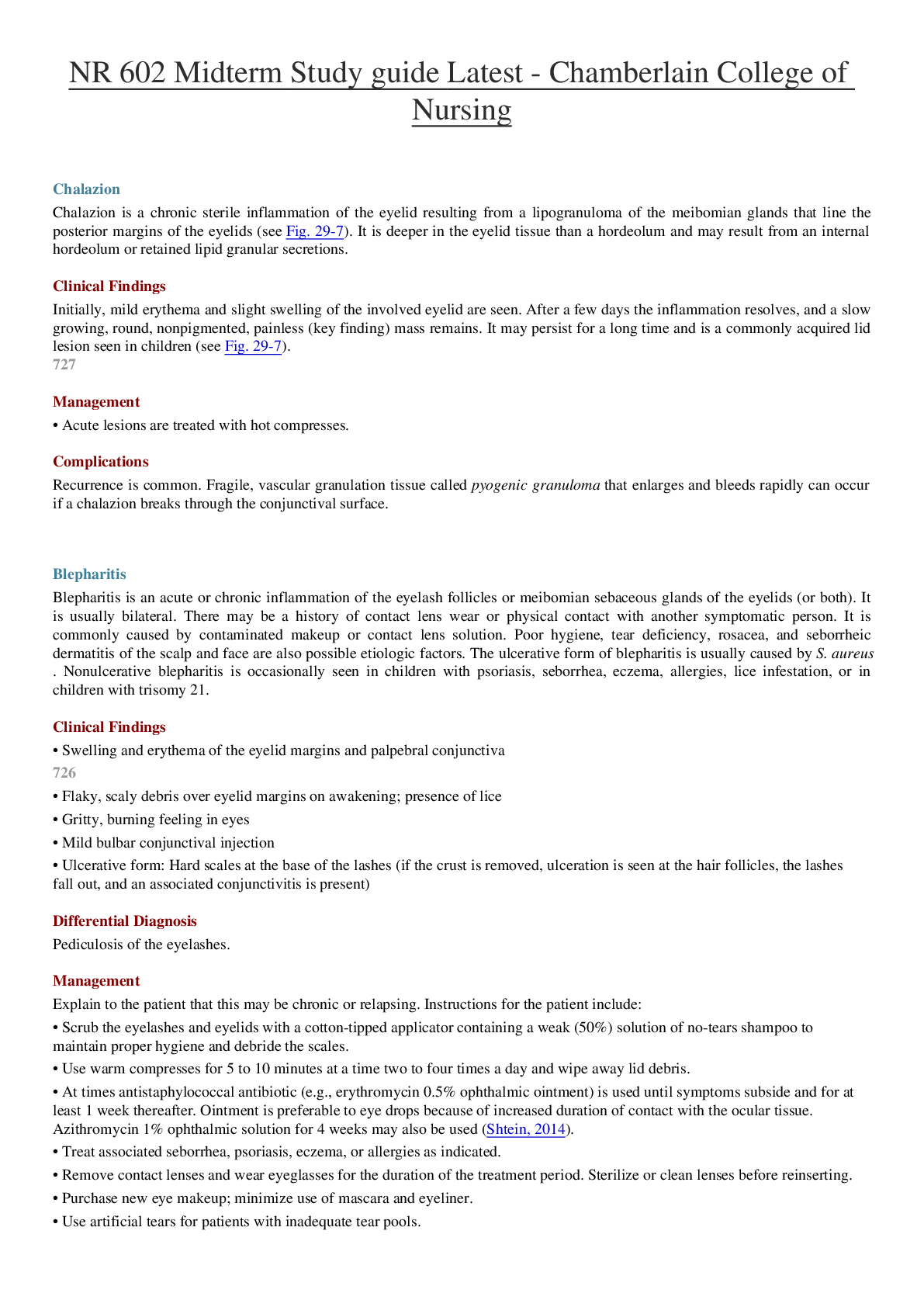
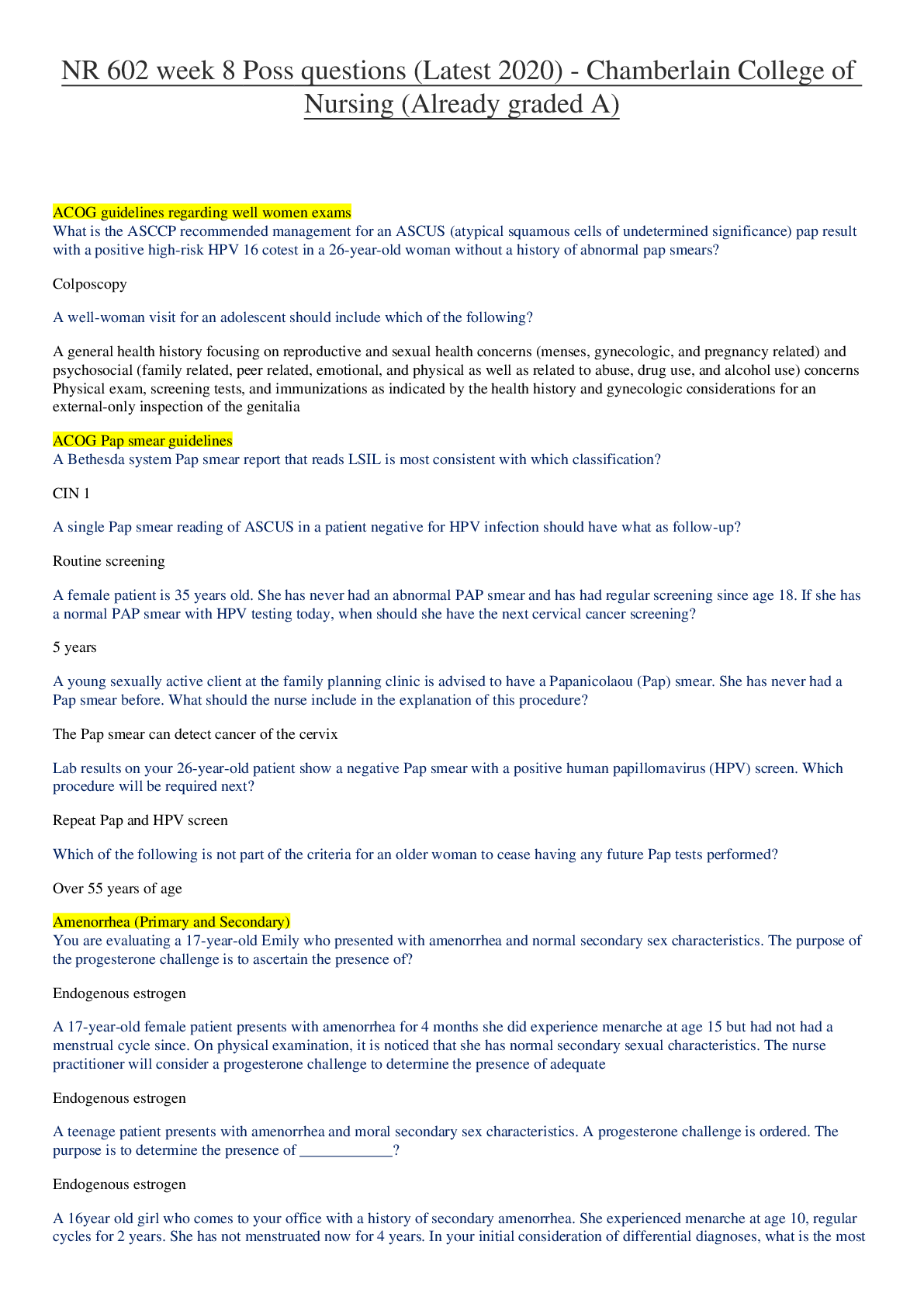
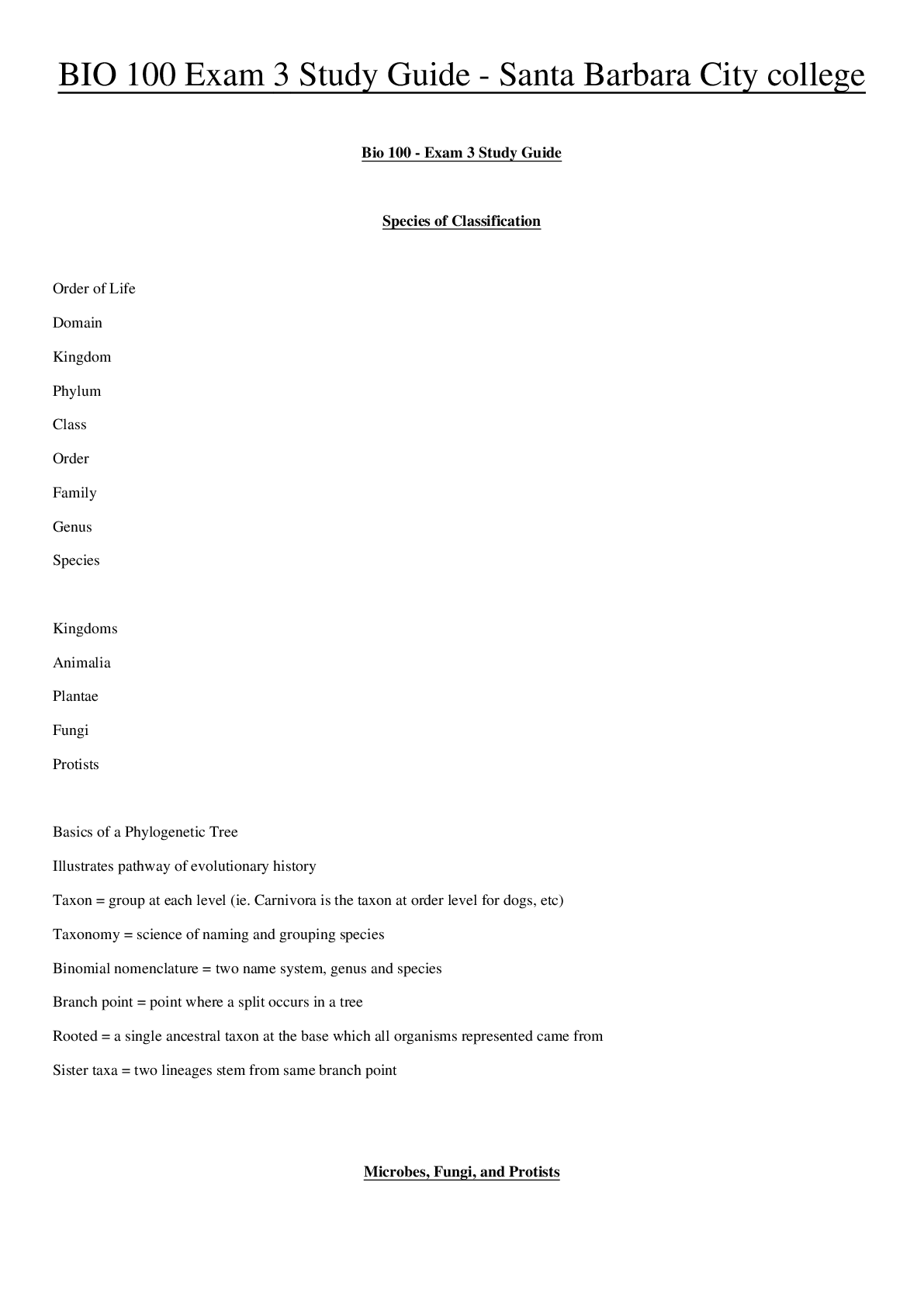
Preview image of PATH 370 Pathophysiology Study Guide Final – West coast University | PATH370 Pathophysiology Study Guide Final document

Buy this document to get the full access instantly

Instant Download Access after purchase

Buy Now

Instant download

We Accept:

Payment methods accepted on Scholarfriends (We Accept)

Reviews( 0 )

$7.50

Buy Now

We Accept:

Payment methods accepted on Scholarfriends (We Accept)

Instant download

Can't find what you want? Try our AI powered Search

130
0

Document information


Connected school, study & course


About the document


Uploaded On

Jul 29, 2020

Number of pages

13

Written in

All

Seller


Profile illustration for Martin Freeman
Martin Freeman

Member since 5 years

486 Documents Sold

Reviews Received
85
28
9
9
23
Additional information

This document has been written for:

Uploaded

Jul 29, 2020

Downloads

 0

Views

 130

Document Keyword Tags

More From Martin Freeman

View all Martin Freeman's documents »

Recommended For You

Get more on STUDY GUIDE »
$7.50
What is Scholarfriends

Scholarfriends.com Online Platform by Browsegrades Inc. 651N South Broad St, Middletown DE. United States.

We are here to help

We're available through e-mail, Twitter, Facebook, and live chat.
 FAQ
 Questions? Leave a message!

Follow us on
 Twitter

Copyright © Scholarfriends · High quality services·