Accounting > Solutions Guide > CHAPTER 22 MANAGEMENT CONTROL SYSTEMS, TRANSFER PRICING, AND MULTINATIONAL CONSIDERATIONS: ANSWERS (All)
CHAPTER 22 MANAGEMENT CONTROL SYSTEMS, TRANSFER PRICING, AND MULTINATIONAL CONSIDERATIONS: ANSWERS
Document Content and Description Below
Last updated: 1 year ago
Preview 1 out of 48 pages
Instant download

Buy this Document to get the Full Access Instantly
Provided by Students Who Aced it
We Verify Document Content to Gurantee Accuracy
Reviews( 0 )
Document information
Connected school, study & course
About the document
Uploaded On
Jun 25, 2021
Number of pages
48
Written in
All

Additional information
This document has been written for:
Uploaded
Jun 25, 2021
Downloads
0
Views
239
Topic Tags
Recommended For You
Get more on Solutions Guide »
Test Bank CHAPTER 22 ACCOUNTING CHANGES AND ERROR ANALYSIS

Test Bank for Primary Care 6th Edition Buttaro Chapter 1 to C...
Primary Care 6th Edition Buttaro Test Bank Chapter 1 to Chapte...

Giger & Davidhizar: Transcultural Nursing: Assessment and Inte...

Obstetrician Chapter 22: Nursing Management of the Postpartum...

NR 304 Week 4 Musculoskeleton Review Questions with correct an...
HA Chapter 22 Actual Questions and Verified Answers ( Included...

NURS 6501 / NURS6501: Advanced Pathophysiology - Chapter 22 St...

NR566 / NR 566: Advanced Pharmacology for Care of the Family W...

.png)
Chapter 22_ Parenteral Medications _ Nursing School Test Banks...
NUR1021 1211c Chapter 22 real exam questions and answers solut...

Pharmacology Exam 4 Review: Chapter 20 Anxiolytics and Hypnoti...
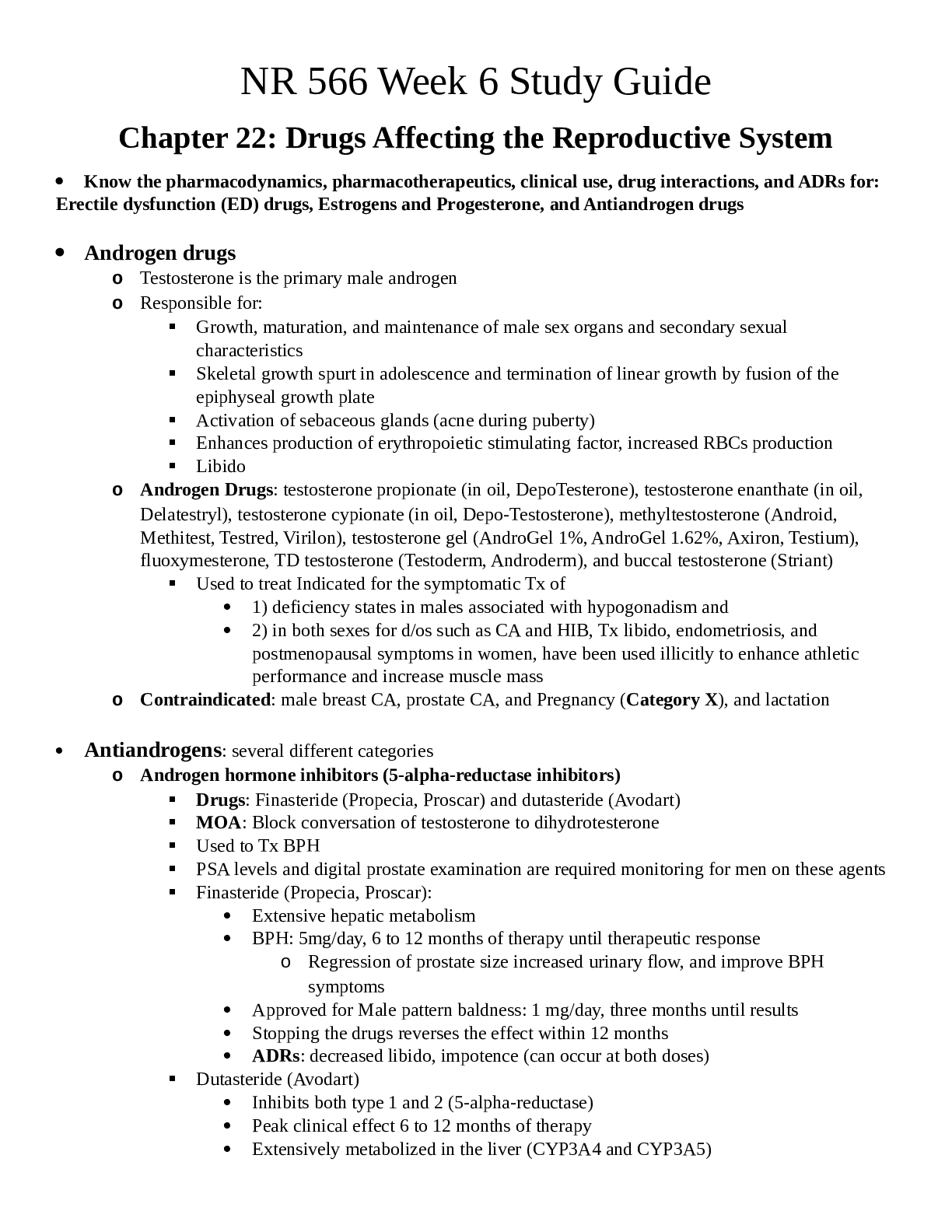
NR 566 Week 6 Study Guide {2022} | Chapter 22: Drugs Affecting...


