Government > EXAM > Apex HighGOVERNMENT 1018.1.4 Final Exam_ Semester Exam (All)
Apex HighGOVERNMENT 1018.1.4 Final Exam_ Semester Exam
Document Content and Description Below
Last updated: 3 years ago
Preview 1 out of 5 pages
Instant download
Buy this Document to get the Full Access Instantly
Provided by Students Who Aced it
We Verify Document Content to Gurantee Accuracy
Reviews( 0 )
Document information
Connected school, study & course
About the document
Uploaded On
Jul 08, 2021
Number of pages
5
Written in
All

Additional information
This document has been written for:
Uploaded
Jul 08, 2021
Downloads
0
Views
67
Topic Tags
Related Subjects & Courses
Explore similar study resources and related concepts.
Recommended For You
Get more on EXAM »
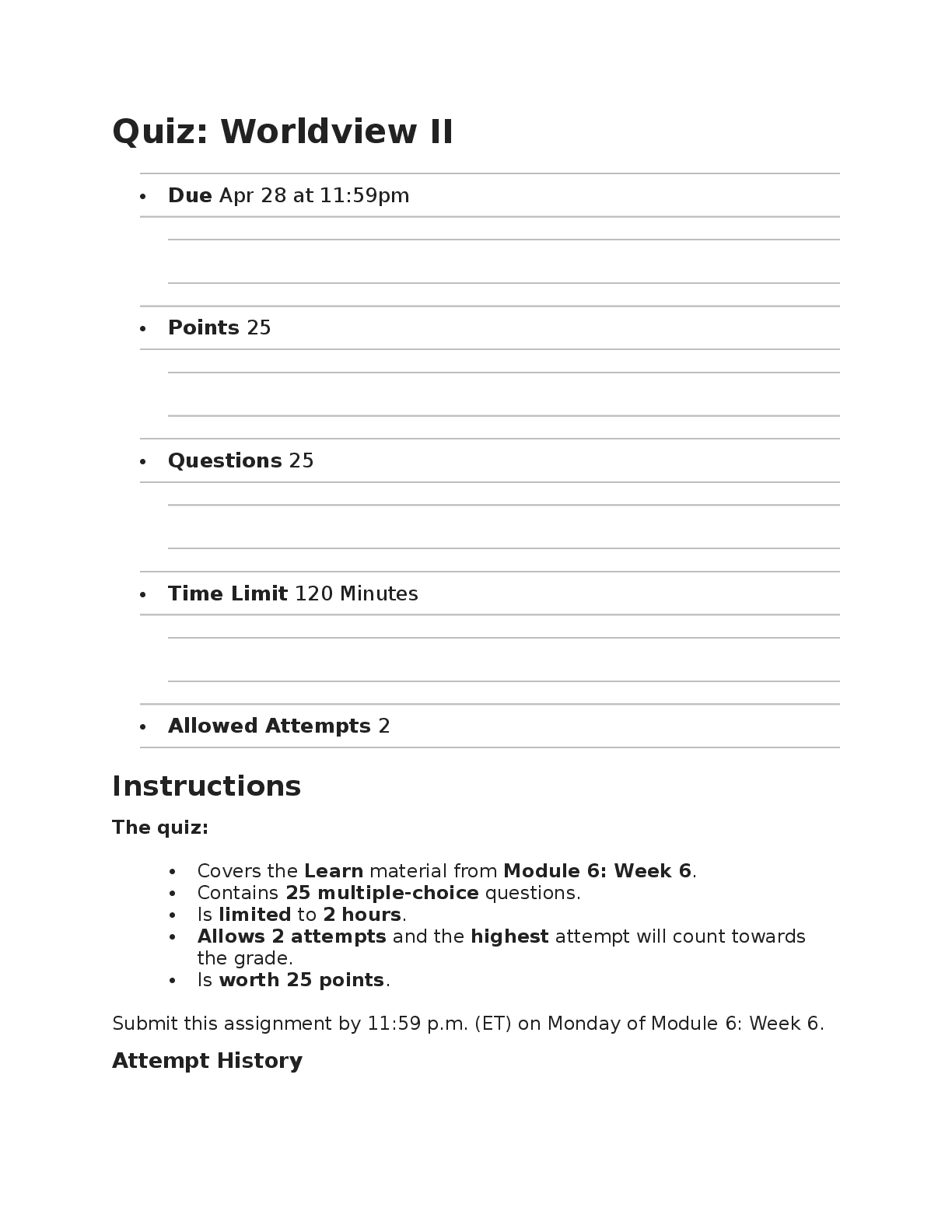
GOVT 220 Quiz 2 Week 6 Module 6:Quiz: Worldview II||Questions...
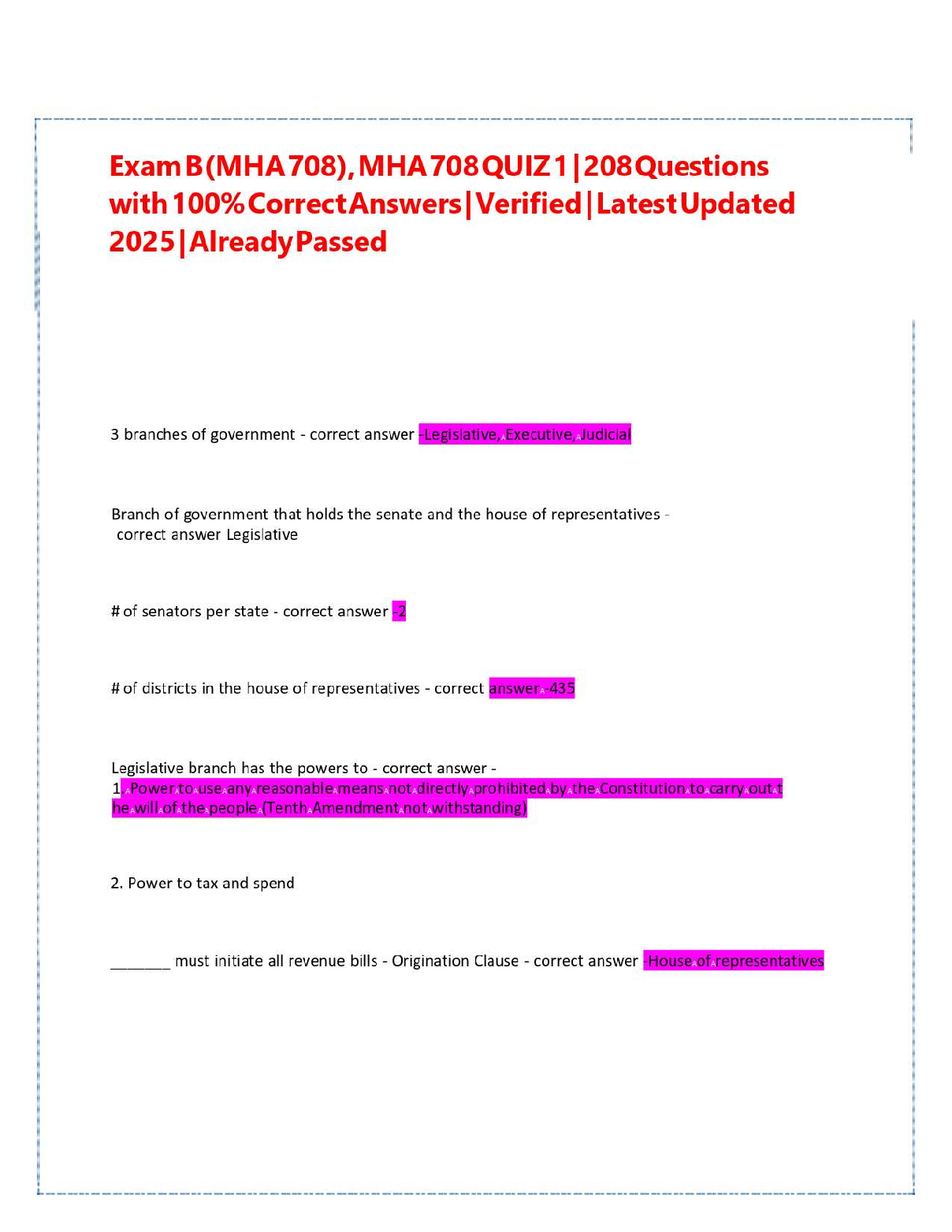
Exam B(MHA 708), MHA708QUIZ1|208Questions with 100% Correct An...


International Corporate Governance 1e International Edition by...

International Corporate Governance 1e International Edition by...
Governmental and Nonprofit Accounting 11th Edition by Freeman,...

CLG 0010 DoD Governmentwide Commercial Purchase Card Test_ 202...

Constitutional Law Governmental Powers and Individual Freedoms...

TEST BANK for An Introduction to Policing 9th Edition by John...





.png)