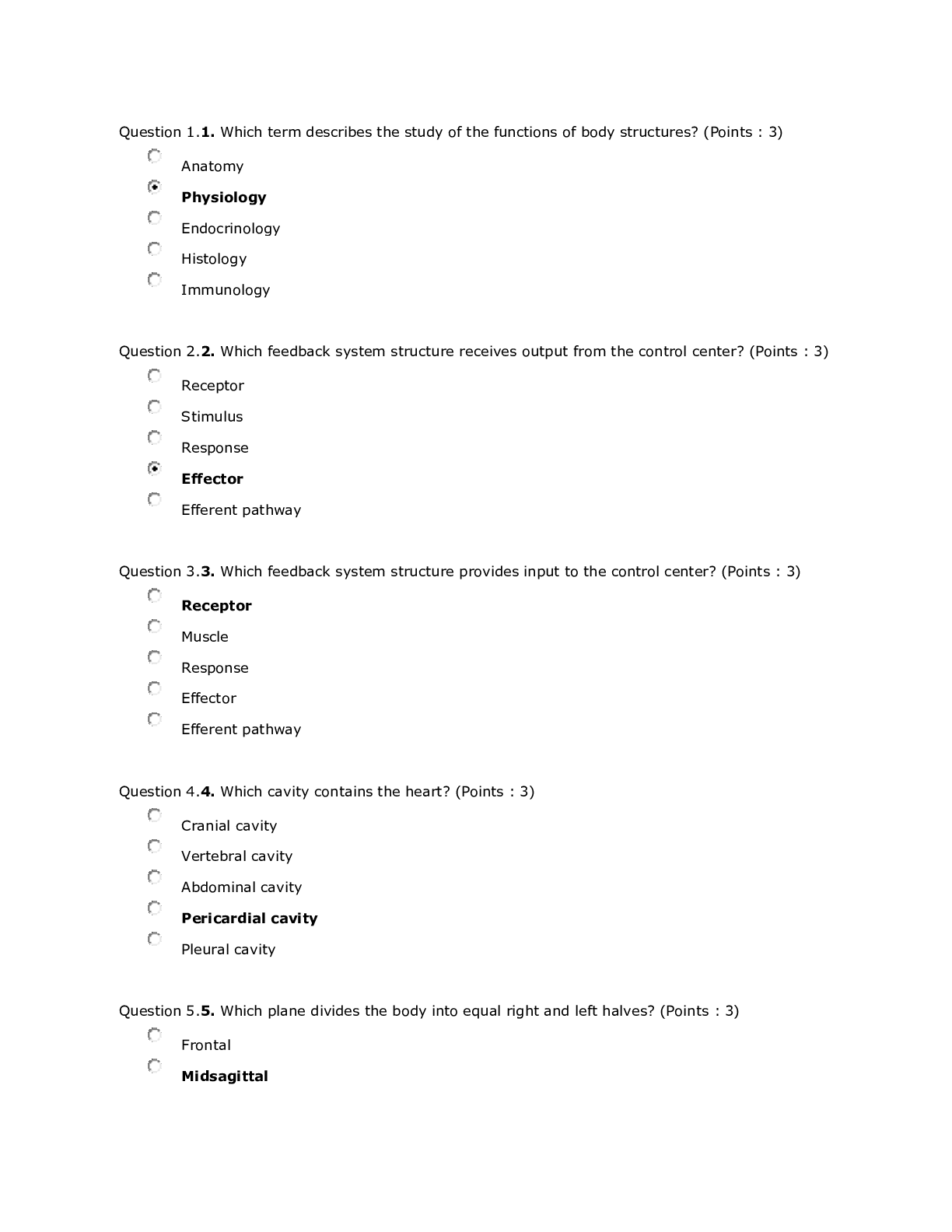
Why does the heart pump blood to the lungs through the pulmonary circulation?
To cool the blood within the pleura of the lungs
To provide the lungs with oxygenated blood so they can function
To ob
...
Why does the heart pump blood to the lungs through the pulmonary circulation?
To cool the blood within the pleura of the lungs
To provide the lungs with oxygenated blood so they can function
To obtain carbon dioxide necessary for body tissues
To oxygenate the blood and discard carbon dioxide through diffusion
The pulmonary artery delivers DEOXYGENATED blood from the RIGHT VENTRICLE to the LUNGS to get
oxygenated
The pulmonary vein delivers OXYGENATED blood from the LUNGS to the LEFT ATRIUM
TIPS:
The right side of the heart deals with deoxygenated blood. The left side of the heart deals with oxygenated blood.
Deoxygenated blood travels to the lungs where fresh oxygen is available.
Arteries carry blood away from the heart.
Veins carry blood towards the heart
The body cavity of the heart is found in the _______ MEDIASTINUM
The 2 uppermost chambers of the heart are called the _______ ATRIA
The 2 lowermost chambers of the heart are called the _______ VENTRICLES
The _____ _____ _____ returns blood from body regions above the diaphragm SUPERIOR VENA CAVA
The _____ _____ _____ returns blood from body regions below the diaphragm INFERIOR VENA CAVA
The widest part of the heart is called the _______ BASE
The narrow end of the heart which points towards the left hip is called the _______ APEX
The ____ ____ (chamber of the heart) receives blood that has just left the lungs LEFT ATRIUM
The ____ ____ (vascular structure) carries blood from the lungs to the left atrium PULMONARY VEINS
The _____ ______ (chamber of the heart) pushes blood to the lungs RIGHT VENTRICLE
What is the function of the heart? Select all that apply
To pump blood throughout the body.
To ensure that oxygen is constantly supplied to body tissues like the muscles.
To create red blood cells through hematopoiesis
To detoxify the blood.
To generate ATP for muscular activity.
To deliver deoxygenated blood to the lungs.
To oxygenate the blood while removing carbon dioxid
Which of the following actions creates the "lub-dub" sound of a heartbeat?
The contraction of heart muscle
The closing of valves
The pounding of blood cells against the walls of blood vessels
The opening of valves
Which is the major function of the AORTA?
It brings deoxygenated blood to the heart
It brings deoxygenated blood to body tissues
It brings oxygenated blood to body tissues
It brings oxygenated blood to the heart
Name the structure
Structure 1 superior vena cava
Structure 2 pulmonary artery
Structure 3 pulmonary vein
Structure 4 mitral valve
Structure 5 aortic valve
Structure 6 left ventricle
Structure 7 right ventricle
Structure 8 left atrium
Structure 9 right atrium
Structure 10 aorta
Structure 11 pulmonary valve
Structure 12 tricuspid valve
Structure 13 inferior vena cava
Provide the function of the structure
Structure 1 Returns blood from the body regions above the diaphragm of the heart
Structure 3 Carries oxygenated blood from the lungs to the heart
Structure 5 Prevents blood in the aorta from flowing backwards into the left ventricle
Structure 12 Prevents blood in the right ventricle from flowing backwards into the right atrium
Structure 13 Returns blood from the body regions below the diaphragm of the heart
Provide the function of the valve
Tricuspid valve Separates the right atrium from the right ventricle. Prevents blood in the right ventricle
from flowing backwards into the right atrium
Mitral valve Separates the left atrium from the left ventricle. Prevents blood in the left ventricle
from flowing backwards into the left atrium
Aortic semilunar valve Separates the left ventricle from the aorta. Prevents blood from an artery from flowing
back into the left ventricle
Pulmonary semilunar valve Separates the right vetnricle from the pulmonary artery. Prevents blood from an artery
from flowing back into the right ventricle
Decide whether the given structures belong to the right side or the left side of the heart. If it is a blood vessel,
choose the side from which it enters/leaves the heart chambers.
Pulmonary Artery Right side TIPS:
Aorta Left side The aorta leaves the heart from the left ventricle.
Pulmonary Vein Left side The pulmonary vein enters the heart into the left atrium.
Vena Cava Right side The vena cava carries deoxygenated blood towards the
Mitral Valve Left side right atrium.
Tricuspid Valve Right side The pulmonary artery brings deoxygenated blood away
from the right ventricle towards the lungs.
Provide the function of each of the structures listed on the left
Valves open during muscular contraction and close when blood begins to back flow
Arteries carries blood away from the heart
Veins delivers blood to the heart
Septum separates the left and right sides of the heart
Systole when the heart contracts and pushes blood out towards the systemic and pulmonary circulation
Diastole when the heart relaxes and fills with blood
Which of the following choices shows the layers of the heart from the innermost to the outermost layer?
Endocardium, pericardium, myocardium
Myocardium, pericardium, endocardium
Pericardium, myocardium, endocardium
Endocardium, myocardium, pericardium
Trace the pathway of a red blood cell which starts in the right atrium and ends in the brain.
right atrium > tricuspid valve > right ventricle > pulmonary valve > pulmonary artery > lungs > pulmonary vein >
left atrium > mitral valve > left ventricle > aortic valve > aorta > brain
TIPS:
Beginning in the right atrium, the RBC will travel through the tricuspid valve to enter into the right ventricle.
From the right ventricle it will travel through the pulmonary valve to the pulmonary circuit via the pulmonary artery.
The pulmonary artery brings deoxygenated blood from the right side of the heart to the lungs to get oxidized.
From the lungs, oxidized blood travels towards the left atrium via the pulmonary vein.
From the left atrium, the RBC will travel through the mitral valve to enter the left ventricle.
From the left ventricle the RBC will move through the aortic valve into the aorta.
From the aorta the RBC will travel towards the brain via several arteries.
Pulmonary valve (aka right or pulmonary semilunar valve)
Aortic valve (aka left or aortic semilunar valve)
The heart contracts twice for every heartbeat. One contraction is the atrial contraction while the other is the ventricular contraction. During ventricular contraction, which two valves of the heart open?
Pulmonary and aortic valves
Aortic and mitral valves
Aortic and tricuspid valves
Pulmonary and tricuspid valves
How does the circulatory system help keep us warm?
The arterioles at the surface of the skin vasoconstrict so more heat leaves the body.
The arterioles at the surface of the skin vasoconstrict so less heat the leaves body.
The arterioles at the surface of the skin can vasodilate so less heat leaves the body.
The arterioles at the surface of the skin can vasodilate so more heat leaves the body.
Provide name of the structure that is boxed/circled in the diagram
Which structure is boxed in orange chordae tendineae
Which structure is circled in blue papillary muscles
Which structure is boxed in yellow intraventrcular septum
NOTE:
Chordae tendineae connect the mitral and tricuspid valves of the heart
to the group of muscles circled in blue.
Determine whether the following is true or false
Structure B is called the ENDOCARDIUM and lines the
valves. It comes into direct contact with RBCs
Structure A is called the PERICARDIUM and lines the
outside of the heart. It is comprised of the visceral and
parietal pericardium, and the pericardial cavity.
Structure C is the MYOCARDIUM and contains the
contractile muscle within the heart.
Determine whether each structure is associated with oxygenated or deoxygenated blood.
Aorta oxygenated Left Atrium oxygenated
***Pulmonary Artery dexoygenated Superior Vena Cava dexoygenated
Left Ventricle oxygenated ***Pulmonary Vein oxygenated
Inferior Vena Cava dexoygenated Bronchial Veins dexoygenated
Right Ventricle dexoygenated Coronary Artery oxygenated
Right Atrium dexoygenated Coronary Vein dexoygenated
Bronchial Arteries oxygenated
The left side of heart pumps oxygenated blood towards the systemic circulation.
The right side of the heart pumps deoxygenated blood towards the pulmonary circulation.
***Typically arteries carry oxygenated blood AWAY from the heart. The only exception to this is the pulmonary
artery which carries deoxygenated blood away from the heart.
***Typically veins carry deoxygenated blood TOWARDS the heart. The only exception to this is the pulmonary vein
which carries oxygenated blood towards the heart.
Trace the pathway of a RBC as it oxegenates the body tissues. Start in the right atrium and continue until
the blood re-enters the right atrium.
right atrium > tricuspid valve > right ventricle > pulmonary valve > pulmonary artery > lungs > pulmonary vein >
left atrium > mitral valve > left ventricle > aortic valve > aorta > arteries > body tissues > veins > vena cava >
right atrium
TIPS:
Beginning in the right atrium, the RBC will travel through the tricuspid valve to enter into the right ventricle.
From the right ventricle it will travel through the pulmonary valve to the pulmonary circuit via the pulmonary artery.
The pulmonary artery brings deoxygenated blood from the right side of the heart to the lungs to get oxidized.
From the lungs, oxidized blood travels towards the left atrium via the pulmonary vein.
From the left atrium, the RBC will travel through the mitral valve to enter the left ventricle.
From the left ventricle the RBC will move through the aortic valve into the aorta.
From the aorta, the RBC will travel through arteries away from the heart and towards body tissues
The RBC will move away from the body tissues towards the hearts via veins. Eventually, the veins will drain into
the vena cava and ultimately end up in the right atrium.
From the following statements, select all that are true about bronchial arteries. Select all that apply.
a. They are blood vessels that carry oxygenated blood from the lungs to the heart.
(Pulmonary veins bring oxygenated blood from the lungs to the heart, not bronchial arteries)
b. They are blood vessels that bring oxygenated blood from the left ventricle to the tissues of the lungs.
c. They do not have valves.
d. They are blood vessels that deliver oxygenated blood to major body tissues.
(Bronchial arteries only supply blood to the tissue of the lungs, not to the major body tissues)
e. They are blood vessels that bring deoxygenated blood from the right ventricle to the lungs to get oxygenated.
(Bronchial arteries do NOT supply deoxygenated blood from the right ventricle; the pulmonary arteries supply
deoxygenated blood from the right ventricle)
f. They are blood vessels that circulate blood through heart cells.
(bronchial arteries do NOT supply blood to the heart; they supply blood to the lungs)
Determine whether each vessel is part of the pulmonary or systemic circuit.
Aorta systemic (supplies oxygenated blood to the body)
Pulmonary Artery pulmonary (transports deoxygenated blood to the pulmonary system)
Bronchial Artery systemic
Superior Vena Cava systemic (brings deoxygenated blood back to the heart)
Pulmonary Vein pulmonary (transports oxygenated blood to the pulmonary system)
Coronary Vein systemic (specifically serve the cardiac muscle cells)
Coronary Artery systemic (specifically serve the cardiac muscle cells)
The sequence below depicts the flow of blood through the heart. Arrows indicate the direction of blood movement
through the heart. Pay attention to opened and closed valves in each step (ie: in step 2 all of the valves are
closed). Use the image to answer the following question.
Which steps depict atrial systole?
STEPS 1 and 6
(During atrial systole blood will be moved from the atria to the ventricles. The blood will move through the
tricuspid and mitral valves)
Which of the following are true statements about valves? Select all that apply.
The aorta contains several valves to forcefully expel blood towards the systemic circulation.
Both arteries and veins have valves.
Only veins have valves.
Valves ensure blood moves in the right direction.
In the leg, venous valves ensure blood moves upward and back toward the heart.
Associate each description with either heart sound S1 or S2.
Occurs after diastole S1 Occurs after systole S2
Aortic Valve opens S1 Aortic Valve closes S2 (causes "dub" sound)
Pulmonary Valve opens S1 Pulmonary Valve closes S2 (causes "dub" sound)
Tricuspid Valve closes S1 (causes "lub" sound) Tricuspid Valve opens S2
Mitral Valve closes S1 (causes "lub" sound) Mitral Valve opens S2
Select True or False for each of the statements about the sounds of the heart.
The "dub" sound of the heart is produced by the opening of the aortic and pulmonary valves.
FALSE
The "lub" sound of the heart is produced by the closing of the tricuspid and mitral valves.
TRUE
During the "dub" sound the tricuspid and mitral valves open while the aortic and pulmonary valves snap shut.
TRUE
Select all of the correct names for Structure B.
Pulmonary valve
Tricuspid valve
Left semilunar valve
Right semilunar valve
Mitral valve
Aortic Valve
[Show More]
.png)
.png)