NURSING > DISCUSSION POST > NR 503 Population Health, Epidemiology And Statistical Principles week 1 (All)
NR 503 Population Health, Epidemiology And Statistical Principles week 1
Document Content and Description Below
Last updated: 3 years ago
Preview 1 out of 2 pages
Instant download

Buy this Document to get the Full Access Instantly
Provided by Students Who Aced it
We Verify Document Content to Gurantee Accuracy
Reviews( 0 )
Document information
Connected school, study & course
About the document
Uploaded On
Jul 14, 2021
Number of pages
2
Written in
All

Additional information
This document has been written for:
Uploaded
Jul 14, 2021
Downloads
0
Views
198
Topic Tags
Recommended For You
Get more on DISCUSSION POST »NR503 / NR 503: Population Health, Epidemiology & Statistical...

NR503 / NR 503: Final Quiz Concepts to Review (Latest 2021: Po...

NR503 / NR 503: Population Health, Epidemiology & Statistical...

NR 503 / NR503 Population Health, Epidemiology & Statistical P...

NR 503 / NUR503 Population Health, Epidemiology and Statistica...

NR 503 / NR503 Population Health, Epidemiology and Statistical...

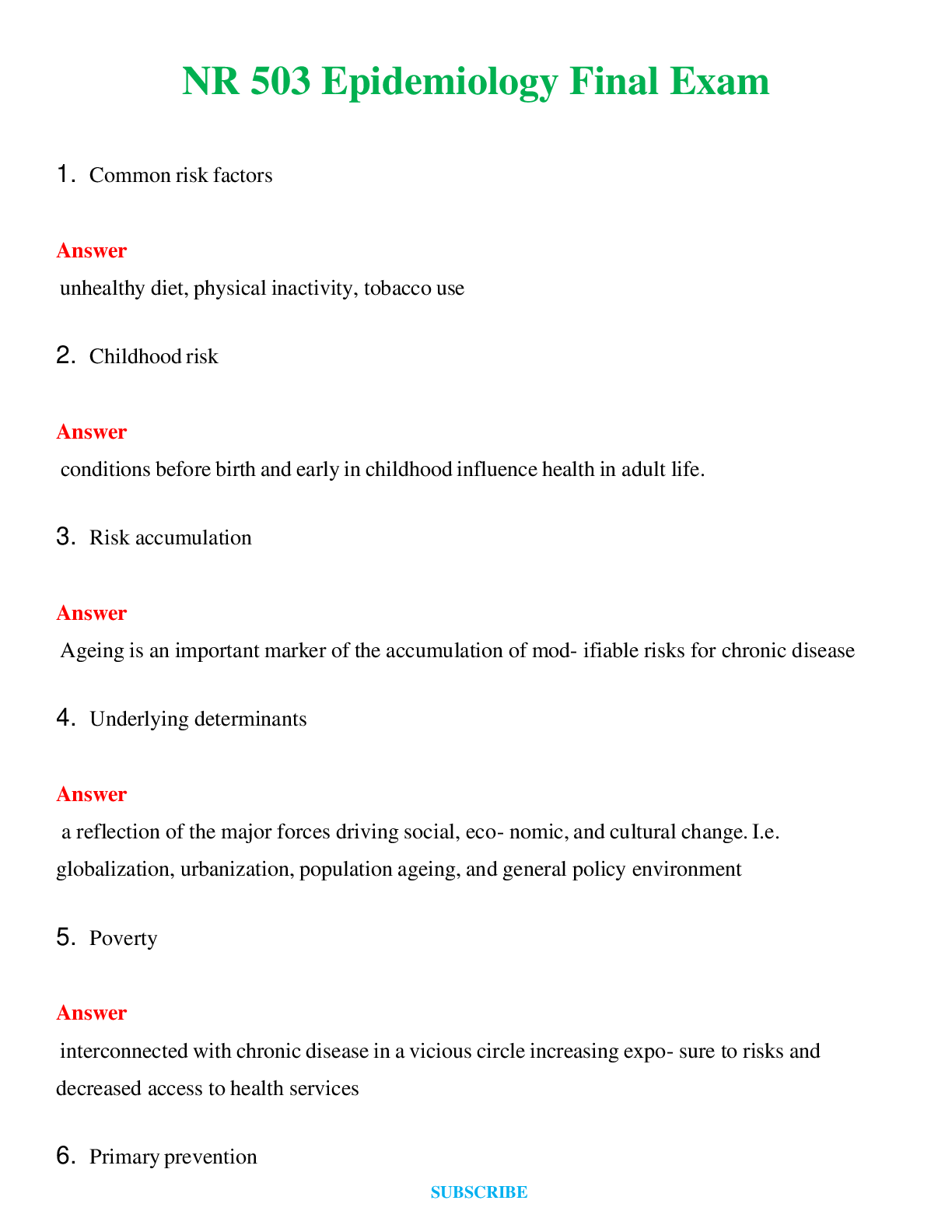
NR 503 Epidemiology Final Exam Questions and Answers (Verifi...
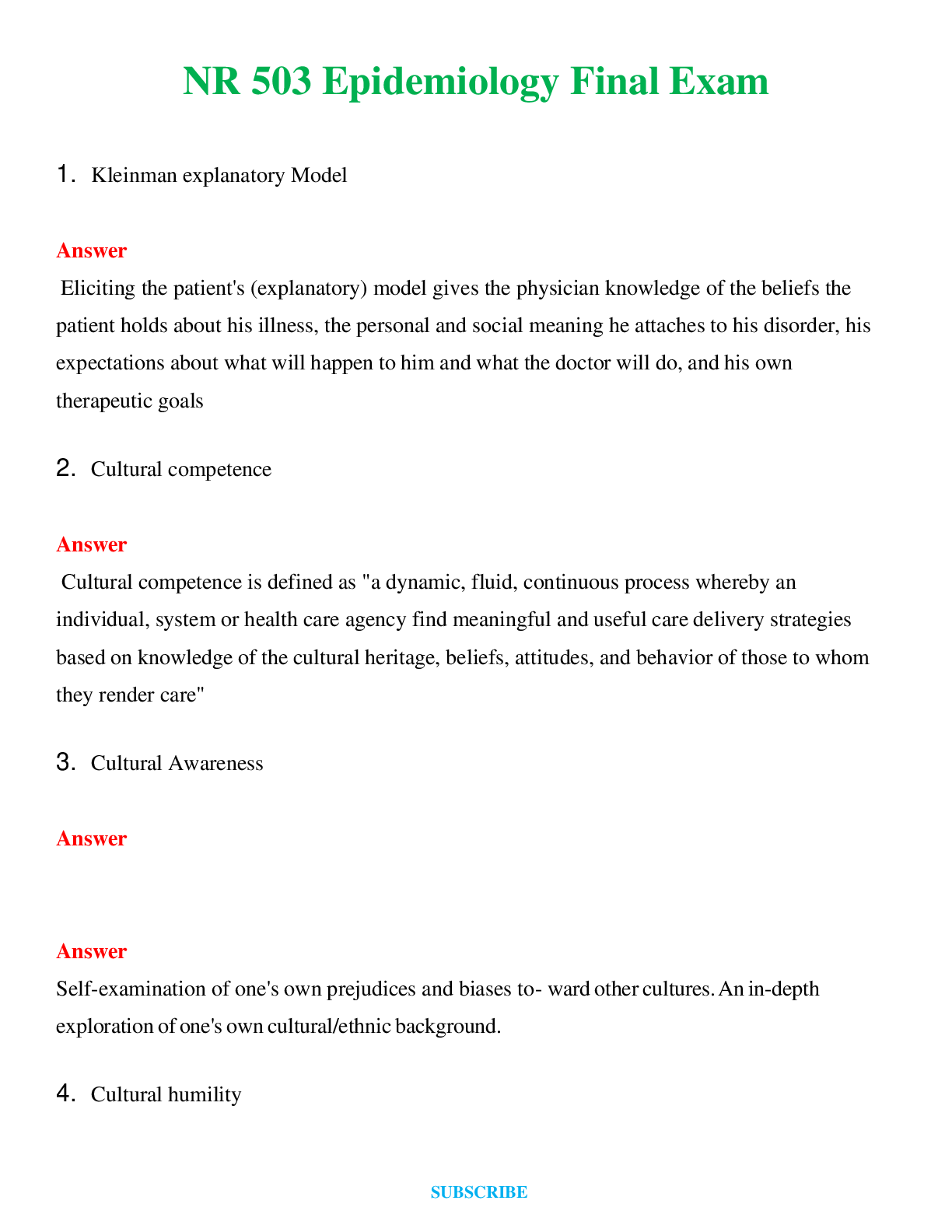
NR 503 Epidemiology Final Exam Questions and Answers (Verif...
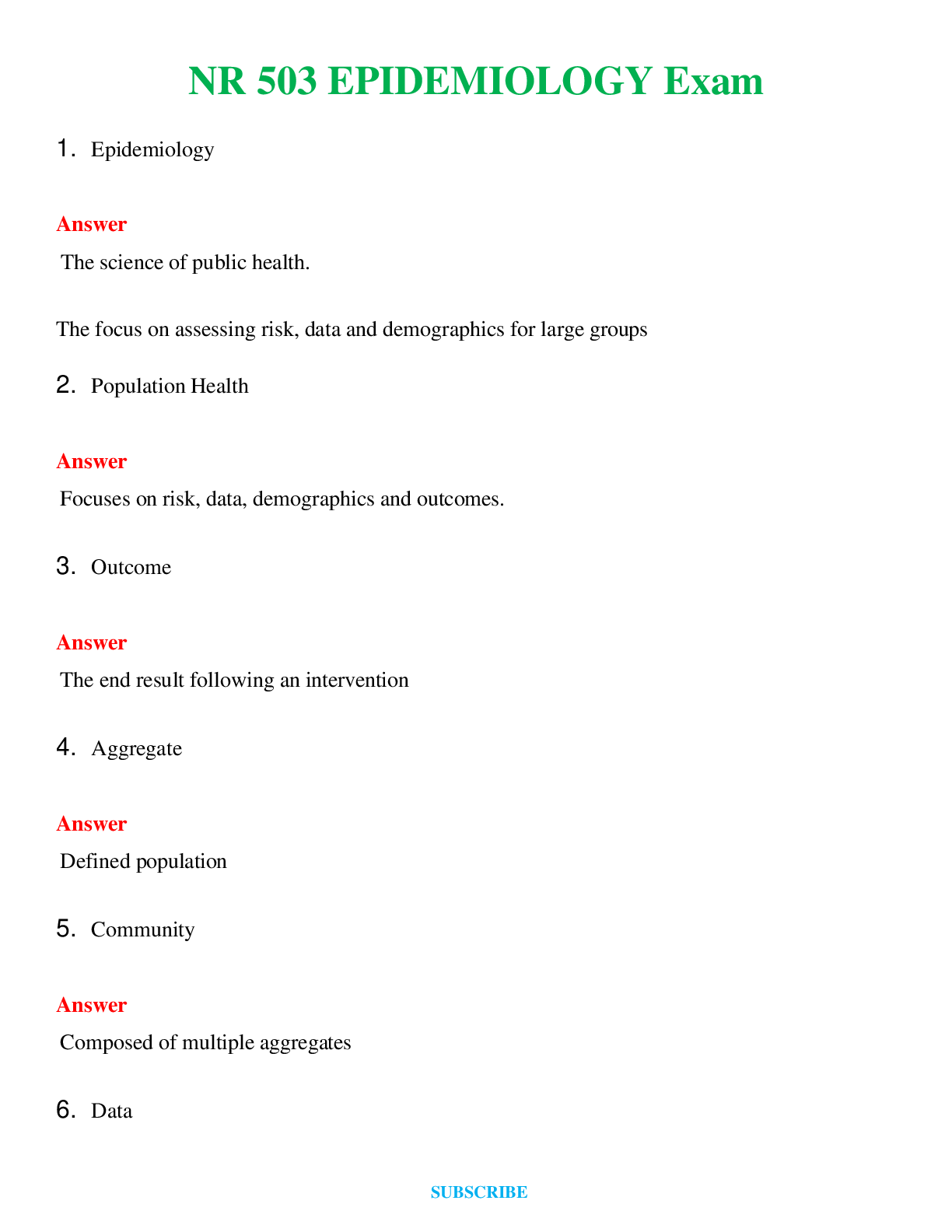
NR 503 EPIDEMIOLOGY Exam Questions and Answers (Verified Ans...
.png)
Chamberlain College of Nursing - NR 503NR 503 week 1 part 1

NR 503 Population Health, Epidemiology & Statistical Principle...

Test Bank For Community Public Health Nursing Promoting the He...

TEST BANK for Davis Advantage for Psychiatric Mental Health Nu...

Test Bank For Fundamentals of Nursing 11th Edition Potter Perr...





.png)


