CONTENTS INCLUDE:
ADVANCED CLINICAL CONCEPTS
• ARDS is an unexpected, catastrophic pulmonary complication
occurring in a person with no previous pulmonary problems.
The mortality rate is high (50%)
• In ARDS, a comm
...
CONTENTS INCLUDE:
ADVANCED CLINICAL CONCEPTS
• ARDS is an unexpected, catastrophic pulmonary complication
occurring in a person with no previous pulmonary problems.
The mortality rate is high (50%)
• In ARDS, a common laboratory finding is lowered PO2.
However, these clients are not very responsive to high
concentrations of oxygen.
• Think about the physiology of the lungs by remembering
PEEP: Positive End Expiratory Pressure is the instillation and
maintenance of small amounts of air into the alveolar sacs to
prevent them from collapsing each time the client exhales.
The amount of pressure can be set with the ventilator and is
usually around 5 to 10 cm of water.
• Suction only when secretions are present.
• Before drawing arterial blood gases from the radial artery,
perform the Allen test to assess collateral circulation. Make
the client’s hand blanch by obliterating both the radial and
ulnar pulses. Then release the pressure over the ulnar artery
only. If flow through the ulnar artery is good, flushing will be
seen immediately. The Allen test is then positive, and the
radial artery can be used for puncture. If the Allen test is
negative, repeat on the other arm. If this test is also negative,
seek another site for arterial puncture. The Allen test ensures
collateral circulation to the hand if thrombosis of the radial
artery should follow the puncture.
• If the client does not have O2 to his/her brain, the rest of the
injuries do not matter because death will occur. However,
they must be removed from any source of imminent danger,
such as a fire.
• PC)2 >45 or PO2 <60 on 50% O2 signifies respiratory failure.
• A child in severe distress should be on 100% O2.
• Early signs of shock are agitation and restlessness resulting
from cerebral hypoxia.
• If cardiogenic shock exists with the presence of pulmonary
edema, i.e., from pump failure, position client to REDUCE
venous return (HIGH FOWLER’s with legs down) in order to
decrease venous return further to the left ventricle.
• Severe shock leads to widespread cellular injury and impairs
the integrity of the capillary membranes. Fluid and osmotic
proteins seep into the extra vascular spaces, further reducing
cardiac output. A vicious cycle of decreased perfusion to ALL
cellular level activities ensues. All organs are damaged, and if
perfusion problems exist, the damage can be permanent.
• All vasopressors/vasodilator drugs are potent and dangerous
and require weaning on and off. Do not change infusion rates
simultaneously.
• A client is brought into the hospital suffering shock symptoms
as a result of a bee sting. What is the first priority?
Maintaining an open airway (the allergic reaction damages the
lining of the airways causing edema). Also, keep the client
warm without constricting clothing; keep legs elevated (not
MEDICAL –SURGICAL NURSING
RESPIRATORY SYSTEM
• Fever can cause dehydration from excessive fluid loss in
diaphoresis. Increased temperature also increases
metabolism and the demand for oxygen.
• High risk for pneumonia:
- Any person, who has altered level of consciousness, has
depressed or absent gag reflex and cough reflexes, is
susceptible to aspirating oropharyngeal secretions.
(Alcoholics, anesthesized individuals, those with brain injury,
drug overdose, or stroke victims).
- When feeding, raise the head of the bed and position the
client on side – not on back.
• Bronchial breath sounds are heard over areas of density or
consolidation. Sound waves are easily transmitted over
consolidated tissue.
• Hydration – enables liquification of mucous trapped in the
bronchioles and alveoli, facilitating expectoration. Essential
for the client experiencing fever. Important because 300 to
400 ml of fluid are lost daily by the lungs through
evaporation.
• Irritability and restlessness are early signs of cerebral
hypoxia – the client is not getting enough oxygen to the
brain.
• Pneumonia preventatives:
- Elderly: flu shots; pneumonia immunizations; avoiding
sources of infection and indoor pollutants (dust, smoke, and
aerosols); do not smoke.
- Immunosuppressed and debilitated persons: infection
avoidance, sensible nutrition, adequate intake, balance of
rest and activity.
- Comatose and immobile persons: elevate head of bed to
feed; turn frequently.
• Compensation occurs over time in clients with chronic lung
disease, and arterial blood gases (ABGs) are altered. It is
imperative that baseline data are obtained on the client.
• Productive cough and comfort can be facilitated by SemiFowler’s or high Fowler’s positions, which lessen pressure
on the diaphragm from abdominal organs. Gastric distention
becomes a priority in these clients because it elevates the
diaphragm and inhibits lung expansion.
RENAL SYSTEM
• Normally, kidney excrete approximately 1ml of urine per kg of
body weight per hour, which is about 1 to 2 liters in a 24-hour
period.
• Electrolytes are profoundly affected by kidney problems.
There must be a balance between extracellular fluid and
intracellular fluid to maintain homeostasis. A change in the
number of ions or in the amount of fluid will cause a shift in
one direction or the other. Sodium and chloride are the
primary extracellular ions. Potassium and phosphate are the
primary intracellular ions.
• In some cases, persons in ARF may not experience the
oliguric phase but may progress directly to diuretic phase
during which the urine output may be as much as 10 liters per
day
CARDIOVASCULAR SYSTEM
• What is the relationship of the kidneys to the cardiovascular
system?
- The kidneys filter about a liter of blood per minute
- If cardiac output is decreased, the amount of blood going
through the kidneys is decreased; urinary output is decreased.
Therefore, a decreased urinary output may be a sign of
cardiac problems.
- When the kidneys produce and excrete 0.5 ml of urine per kg
of body weight or average 30 ml/hr output, the blood supply is
considered to be minimally adequate to perfuse the vital
organs GASTROINTESTINAL SYSTEM
• A Fowler’s or semi-Fowler’s position is beneficial in reducing
the amount of regurgitation as well as preventing the
encroachment of the stomach tissue upward through the
opening in the diaphragm.
• Stress can cause or exacerbate ulcers. Teach stress
reduction methods and encourage those with a family history
of ulcers to obtain medical surveillance for ulcer formation. ENDOCRINE SYSTEM
• Thyroid storm is a life-threatening event that occurs with
uncontrolled hyperthyroidism due to Grave’s disease.
Symptoms include fever, tachycardia, agitation, anxiety, and
hypertension.
- Primary nursing interventions include maintaining an airway
and adequate aeration.
- Propylthiouracil (PTU) or methimazole (Tapazole) are
antithyroid drugs used to treat thyroid storm. Propanolol
(Inderal) may be given to decrease excessive sympathetic
stimulation. MUSCULOSKELETAL SYSTEM
• A client comes to the clinic complaining of morning stiffness,
weight loss, and swelling of both hands and wrists.
Rheumatoid arthritis is suspected. Which methods of
assessment might the nurse use and which methods would
the nurse not use?
- Use inspection, palpation, and strength testing.
- Do not use range of motion (this activity promotes pain
because ROM is limited) NEUROSENSORY SYSTEM
• Glaucoma is often painless and symptom-free. It is usually
picked up as part of a regular eye exam.
• Eye drops are used to cause pupil constriction since
movement of the muscles to constrict the pupil also allows
aqueous humor to flow out, thereby decreasing the pressure
in the eye. Pilocarpine is often used. Caution client that
vision may be blurred 1 to 2 hours after administration o NEUROLOGICAL SYSTEM
• Use of the Glasgow Coma Scale eliminates ambiguous
terms to describe neurologic status such as lethargic,
stuporous, or obtunded.
• Almost every diagnosis in the NANDA format is applicable,
as severely neurologically impaired persons require total
care. HEMATOLOGY/ONCOLOGY
• Physical symptoms occur as a compensatory mechanism
when the body is trying to make up for a deficit somewhere
in the system. For instance, cardiac output increases when
hemoglobin levels drop below 7g/dl.
• ONLY use normal saline to flush IV tubing or to run with
blood. NEVER add medications to blood products. TWO
registered nurses should simultaneously check the
physician’s prescription, client’s identity, and blood bag
label. REPRODUCTIVE SYSTEM
• Menorrhagia (profuse or prolonged menstrual bleeding) is the
most important factor relating to benign uterine tumors.
Assess for signs of anemia.
• What is the anatomical significance of a prolapsed uterus?
When the uterus is displaced, it impinges on other structures
in the lower abdomen. The bladder, rectum, and small
intestine can protrude through the vaginal wall. PEDIATRIC NURSING
GROWTH AND DEVELOPMENT:
1. When does birth length double? = by 4 years
2. When does the child sit unsupported? = 8 months
3. When does a child achieve 50% of adult height? = 2
years
4. When does a child throw a ball overhand? = 18 months
5. When does a child speak 2-3 word sentences? = 2 years
6. When does a child use scissors? = 4 years
7. When does a child tie his/her shoes? = 5 years RESPIRATORY DISORDERS
• Child needs 150% of the usual calorie intake for normal
growth and development.
• Do not examine the throat of a child with epiglottis due to the
risk of completely obstructing the airway, i.e., do not put a
tongue blade or any object in the throat.
• In planning and providing nursing care, a patent airway is
always a priority of care, regardless of age! CHILD HEALTH PROMOTION
• Subcutaneous injection, rather than intradermal, invalidates
the Mantoux test.
• The common cold is not a contraindication for immunization. CARDIOVASCULAR DISORDERS
• Polycythemia is common in children with cyanotic defects.
• The heart rate of a child will increase with crying or fever.
• Infants may require tube feeding to conserve energy. NEUROMUSCULAR DISORDERS
• The nursing goal in caring for children with Down syndrome is
to help the child reach his/her OPTIMAL level of functioning.
• Feed infant or child with cerebral palsy using nursing
interventions aimed at preventing aspiration. Position child
upright and support the lower jaw. HEMATOLOGICAL DISORDERS
• Remember the Hgb norms:
- Newborn: 14 to 24 g/dl
- Infant: 10 to 15 g/dl
- Child: 11 to 16 g/d RENAL DISORDERS
• Decreased urinary output is FIRST sign of renal failure.
• Surgical correction for hypospadias is usually done before
preschool years due to achieving sexual identity, castration
anxiety and toilet training.
GASTROINTESTINAL DISORDERS
• Typical parent/family reaction to a child with an obvious
malformation such as cleft lip/palate are quilt, disappointment,
grief, sense of loss, and anger METABOLIC AND ENDOCRINE DISORDERS
• An infant with hypothyroidism is often described as a “good,
quiet baby” by the parents. MATERNITY NURSING
ANATOMY & PHYSIOLOGY OF REPRODUCTION
• The menstrual phase varies in length for most women.
• From ovulation to the beginning of the next menstrual cycle
is usually exactly 14 days. In other words, ovulation occurs
14 days before the next menstrual period. SKELETAL DISORDERS
• Fractures in older children are common as they fall during play
and are involved in motor vehicle accidents.
• Spiral fractures (caused by twisting) and fractures in infants
may be related to child abuse. INTRAPARTUM NURSING CARE
• Be able to differentiate true labor from false labor.
• True labor:
- Pain in lower back that radiates to abdomen
- Accompanied by regular, rhythmic contractions
- Contractions that intensify with ambulation
- Progressive cervical dilation and effacement FETAL/MATERNAL ASSESSMENT TECHNIQUES
• In some states, the screening for neural tube defects through
either maternal serum AFP levels or amniotic fluid AFP levels
is mandated by state law. This screening test is highly
associated with both false positives and false negatives. NORMAL PUERPERIUM
• Normal leukocytosis of pregnancy averages 12,000 to 15,000
mm3. The first 10 to 12 days post-delivery, values of 25,000
mm3 are common. Elevated WBC and the normal elevated
ESR may confuse interpretation of acute postpartal infections.
For example, if the nurse assesses a client’s temperature to
be 101 F on the client’s second postpartum day, what THE NORMAL NEWBORN
• PHYSICAL ASSESSMENT: A detailed physical assessment
is performed by the nurse or physician. Regardless of who
performs the physical assessment, the nurse must know
normal versus abnormal variations of the newborn.
Observations must be recorded and the physician and the
physician notified regarding abnormalities. HIGH-RISK DISORDERS
• Clients with prior traumatic delivery, history of D&C, multiple
abortions (spontaneous or induced), or daughters of DES
mothers may experience miscarriage or preterm labor related
to INCOMPETENT CERVIX. The cervix may be surgically
repaired prior to pregnancy, or DURING gestation. A
CERCLAGE (McDonald’s suture) is placed around the cervix
to constrict the internal os. The cerclage may be removed
prior to labor if labor is planned or left in place if cesarean birth
is planned POSTPARTUM HIGH-RISK DISORDERS
• Nurse must be especially supportive of postpartum client with
infection because it usually implies isolation from newborn
until organism is identified and treatment begun. Arrange
phone calls to nursery and window viewing. Involve family,
spouse, significant others in teaching, and encourage other
family members to continue neonatal attachment activities NEWBORN HIGH-RISK DISORDERS
• “Jitteriness” is a clinical manifestation of hypoglycemia and
hypocalcemia. Laboratory analysis is indicated to
differentiate between two etiologies PSYCHIATRIC NURSING
THERAPEUTIC COMMUNICATION / TREATMENT MODALITIES
• The purpose of therapeutic interaction with clients is to allow
them the autonomy to make choices when appropriate. Keep
statements value free, advice free, and reassurance free.
Remember, JUST THE FACTS! NO OPINIONS! ANXIETY DISORDERS
• Common physiological responses to anxiety include
increased heart rate and blood pressure; rapid, shallow
respirations; dry mouth, tight feeling in throat; tremors,
muscle tension; anorexia; urinary frequency; palmar
sweating. SOMATOFORM DISORDERS
• Be aware of your own feelings when dealing with this type of
client. It is a challenge to be non-judgmental. The pain is real
to the person experiencing it. These disorders cannot be
explained medically: they result from internal conflict. The
nurse should: DISSOCIATIVE DISORDERS
• The nurse should be aware that ALL behavior has meaning.
• Avoid giving clients with dissociative disorders too much
information about past events at one time. PERSONALITY DISORDERS
• Personality disorders are long-standing behavioral traits that
are maladaptive responses to anxiety and cause difficulty in
relating and working with other individuals. NCLEX-RN
questions test personality disorder content by describing
management situations EATING DISORDERS
• People with Anorexia gain pleasure from providing others with
food and watching them eat. These behaviors reinforce their
perception of self-control. Do not allow these clients to plan or
prepare food for unit-based activities MOOD DISORDERS
• Depressed clients have difficulty hearing and accepting
compliments because of their lowered self-concept SUBSTANCE ABUSE
• Know what defense mechanisms are used by chemically
dependent clients. Denial and rationalization are the two
most common coping styles used – their use must be
confronted so accountability for the client’s own behavior
can be developed THOUGHT DISORDERS: SCHIZOPHRENIA
• There are five types of schizophrenia specified under the
DSM-IV-TR. The DSM-IV-TR is a diagnostic manual prepared
by the American Psychiatric Association that provides
diagnostic criteria for all psychiatric disorders. ABUSE
• Select only one nurse to care for an abused child. Abused
children have difficulty establishing trust. The child will be
less anxious with one consistent caregiver. ORGANIC MENTAL DISORDERS
• Confusion in the elderly is often “accepted” as part of growing
old. This confusion may be due to dehydration with resulting
electrolyte imbalance. Think “sudden change” when obtaining
a history. Such changes are usually due to a specific
stressor, and treatment for the causative stressor will usually
result in correcting the confusion GERONTOLOGICAL NURSING
• Changes in the heart and lungs result in less efficient
utilization of O2, which reduces an individual’s capacity to
maintain physical activity for long periods of time. Physical
training for older persons can significantly reduce blood
pressure and increase aerobic capacity. CHILDHOOD AND ADOLESCENT DISORDERS
• Children also experience depression, which often presents as
headaches, stomachaches, and other somatic complaints. Be
sure to assess suicidal risks, especially in the adolescent
[Show More]


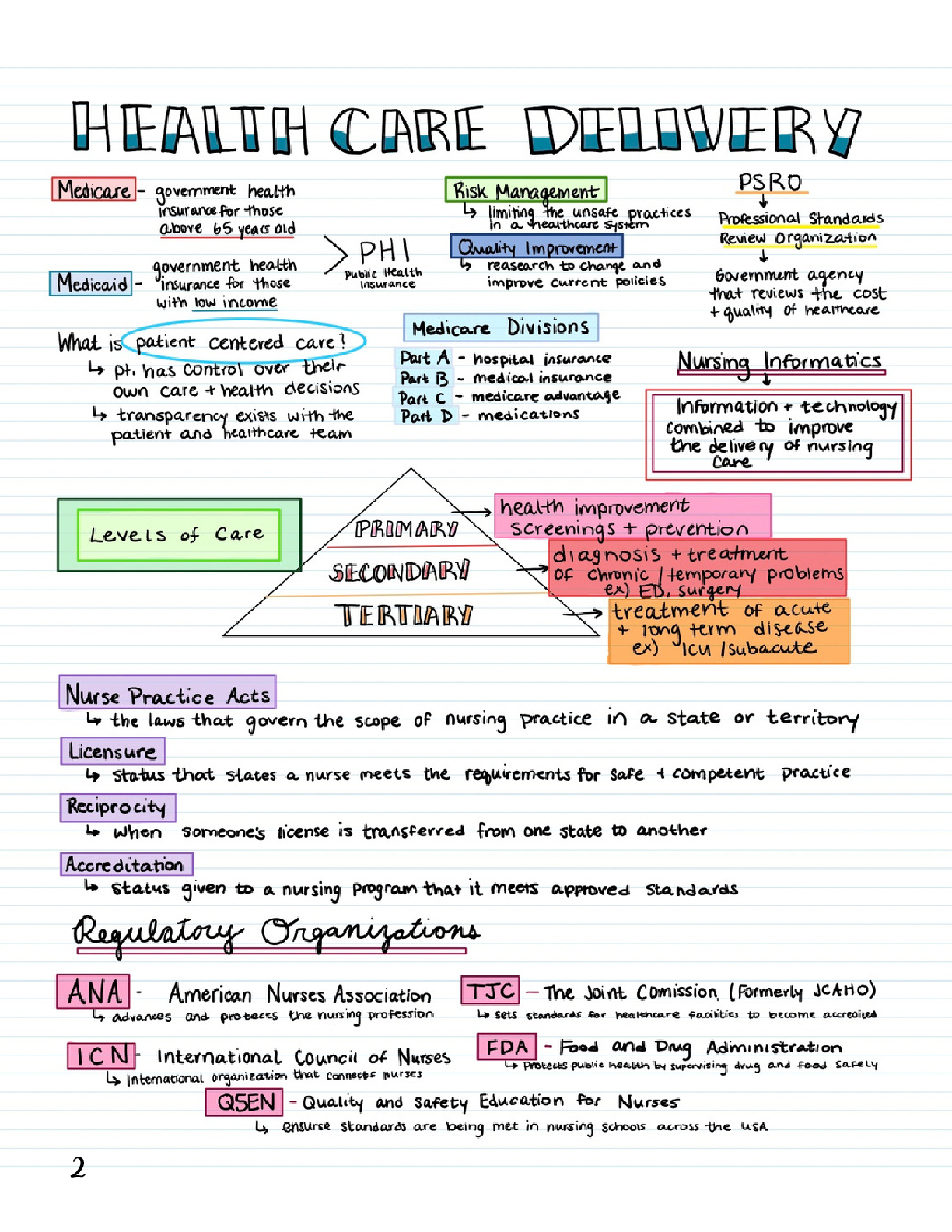
 Quiz 2 Concept Notes MY21.png)











.png)