NURSING > TEST BANKS > PREP U CHAPTER 25-31. with accurate answers. (All)
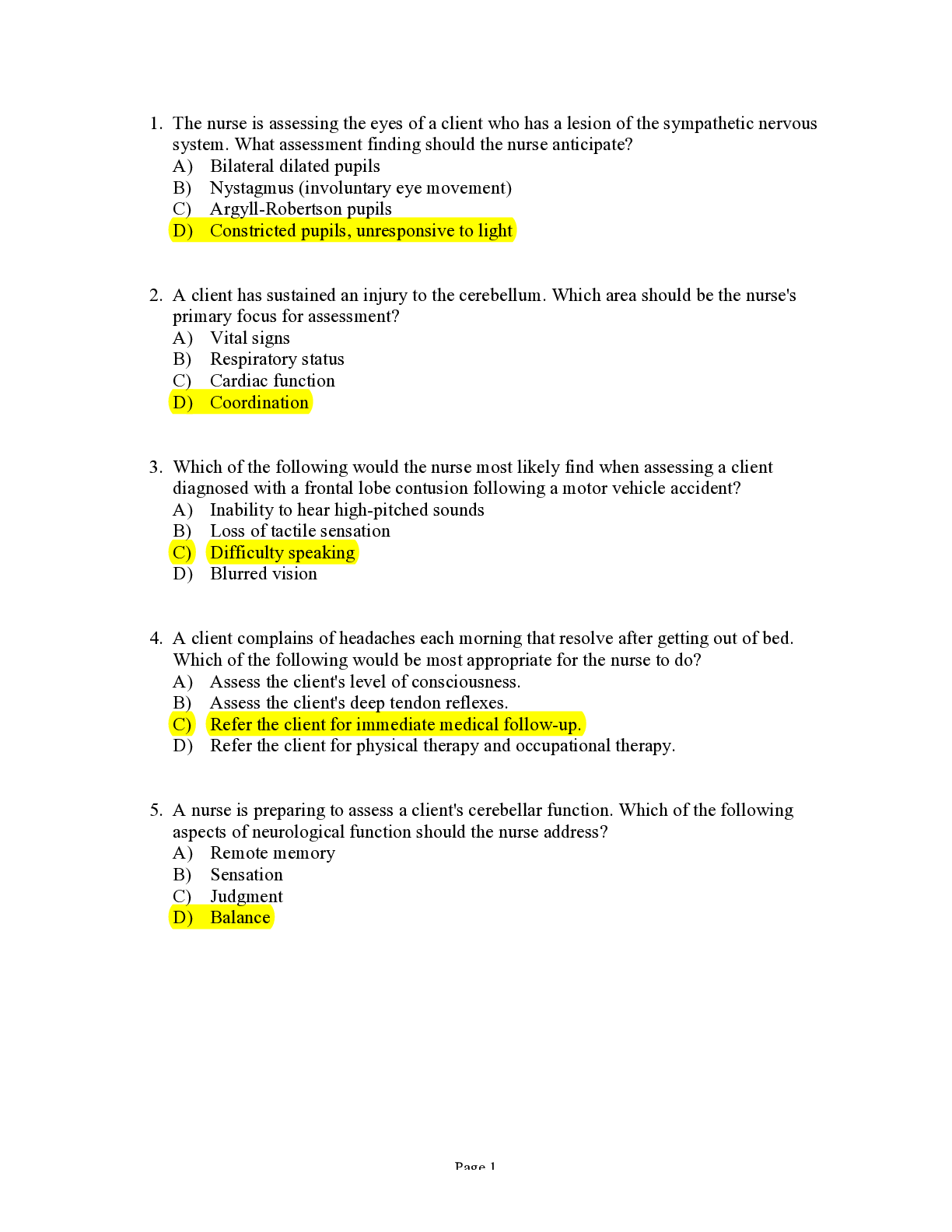
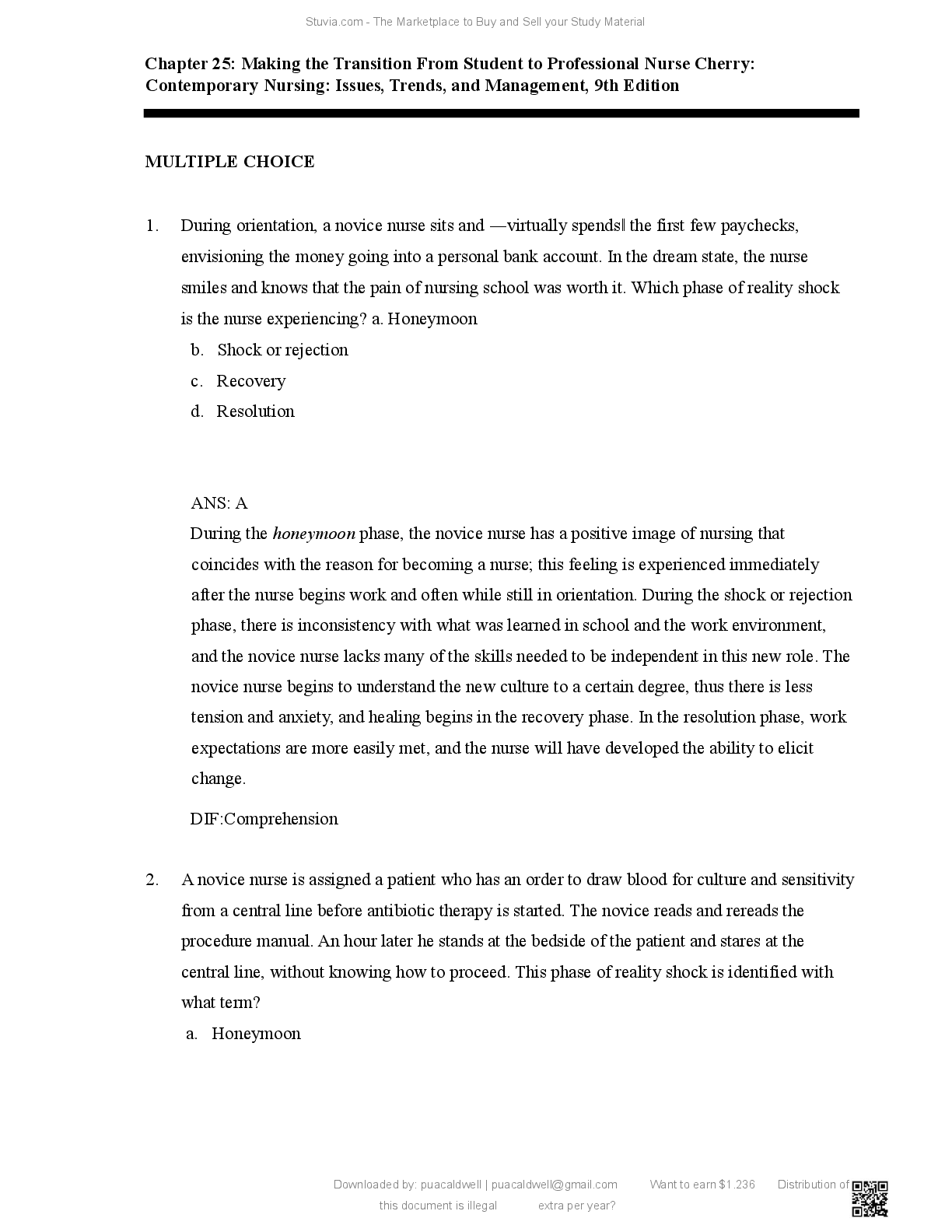
PREP U CHAPTER 25-31. with accurate answers.
Document Content and Description Below
Last updated: 3 years ago
Preview 1 out of 269 pages
Instant download
.png)
Buy this Document to get the Full Access Instantly
Provided by Students Who Aced it
We Verify Document Content to Gurantee Accuracy
Reviews( 0 )
Document information
Connected school, study & course
About the document
Uploaded On
Aug 14, 2021
Number of pages
269
Written in
All

Additional information
This document has been written for:
Uploaded
Aug 14, 2021
Downloads
0
Views
157
Topic Tags
Recommended For You
Get more on TEST BANKS »
Buttaro: Primary Care, A Collaborative Practice, 5th Edition |...

Giger & Davidhizar: Transcultural Nursing: Assessment and Inte...

Chapter 25 Caring for the Child With an Immunological or Infec...
PHYSICAL EXAMINATION AND HEALTH ASSESSMENT TESTBANK BY JARVIS...
Test Bank for Primary Care A Collaborative Practice, 5th Editi...
.png)
Burns and Grove's The Practice of Nursing Research: Appraisal,...
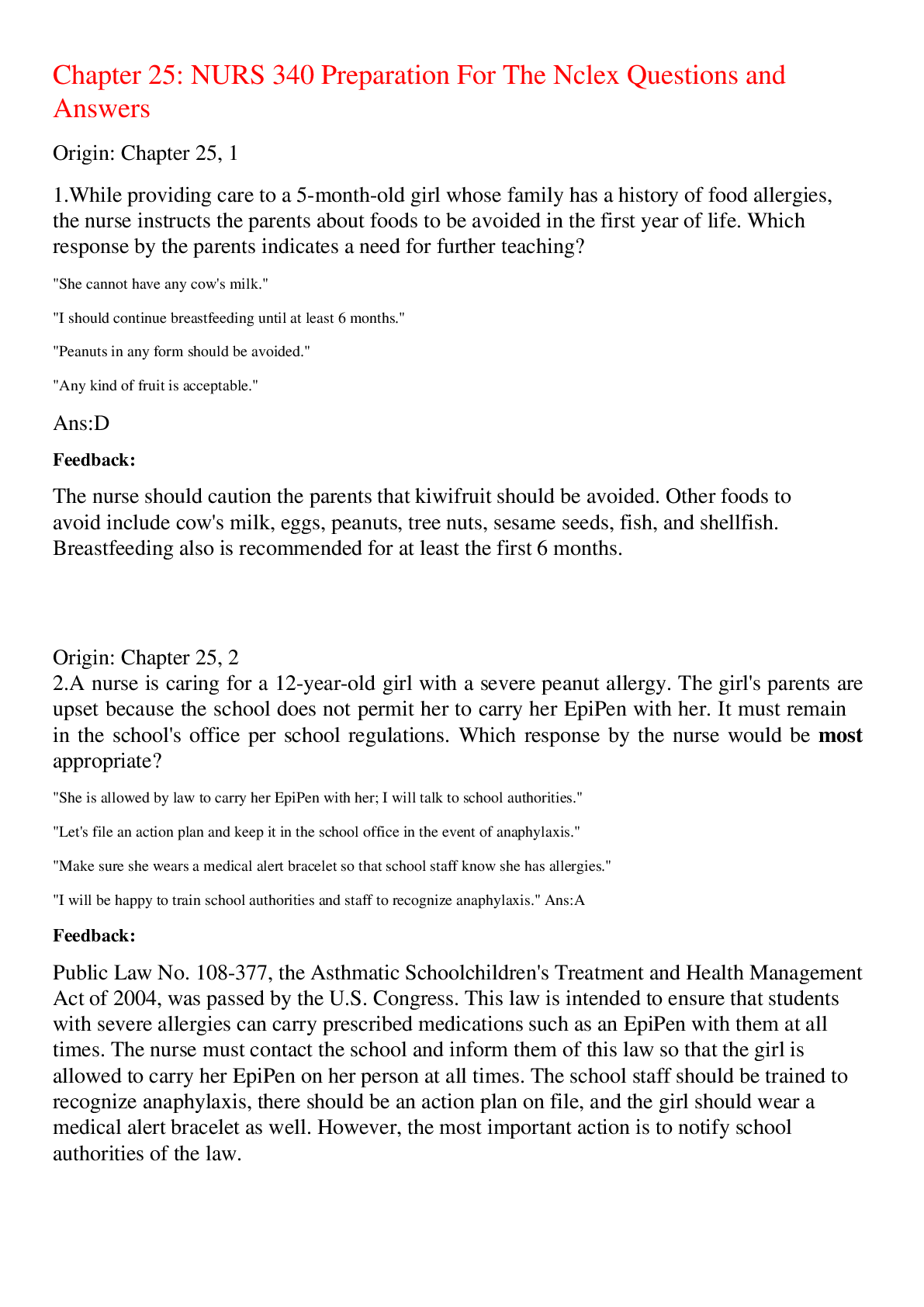
Chapter 25: NURS 340 Preparation For The Nclex Questions and A...

Chapter 25: Caring for the Child With an Immunological or Infe...
.png)
Chapter 25: Assessment of Respiratory System Lewis: Medical-Su...
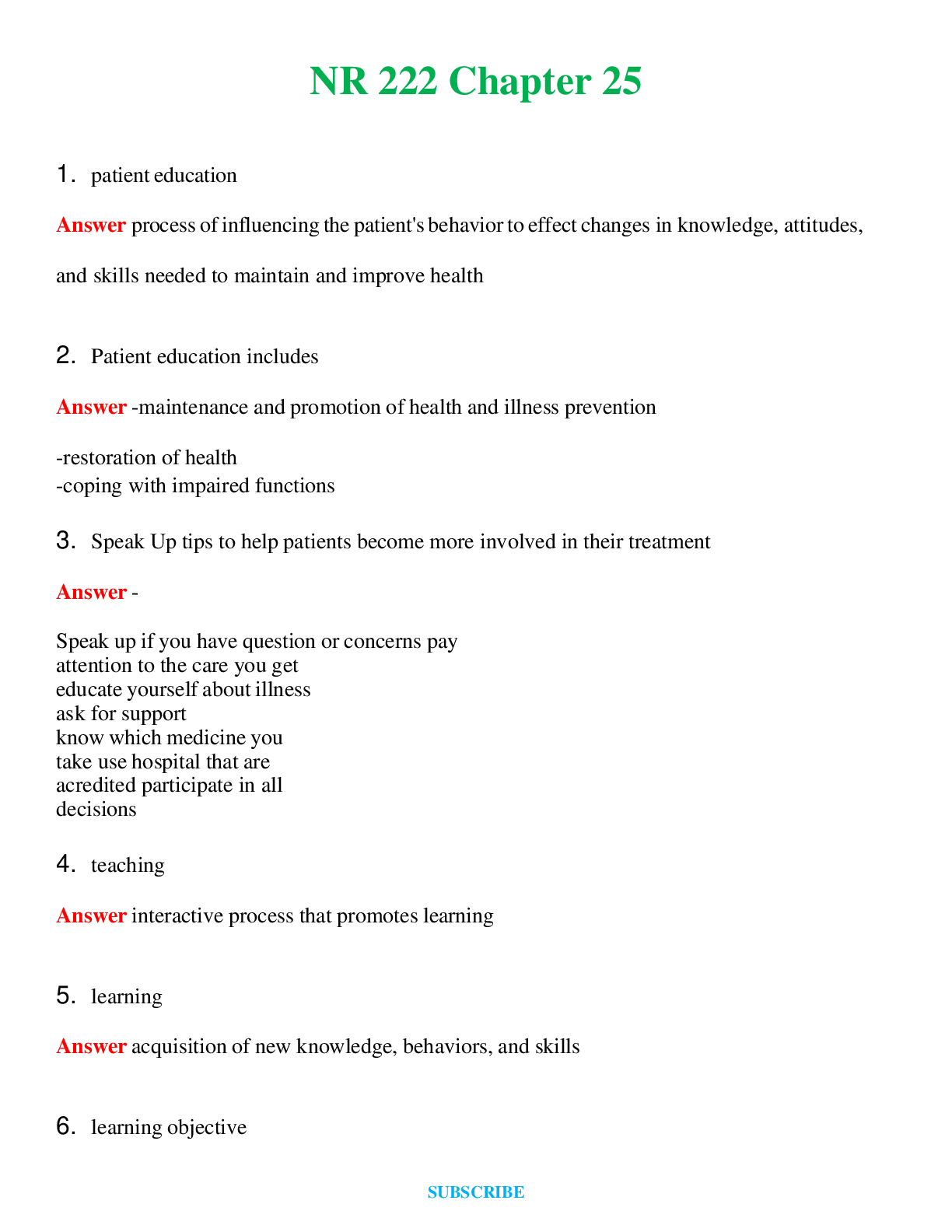
NR 222 Chapter 25 Questions and Answers (Verified Answers)
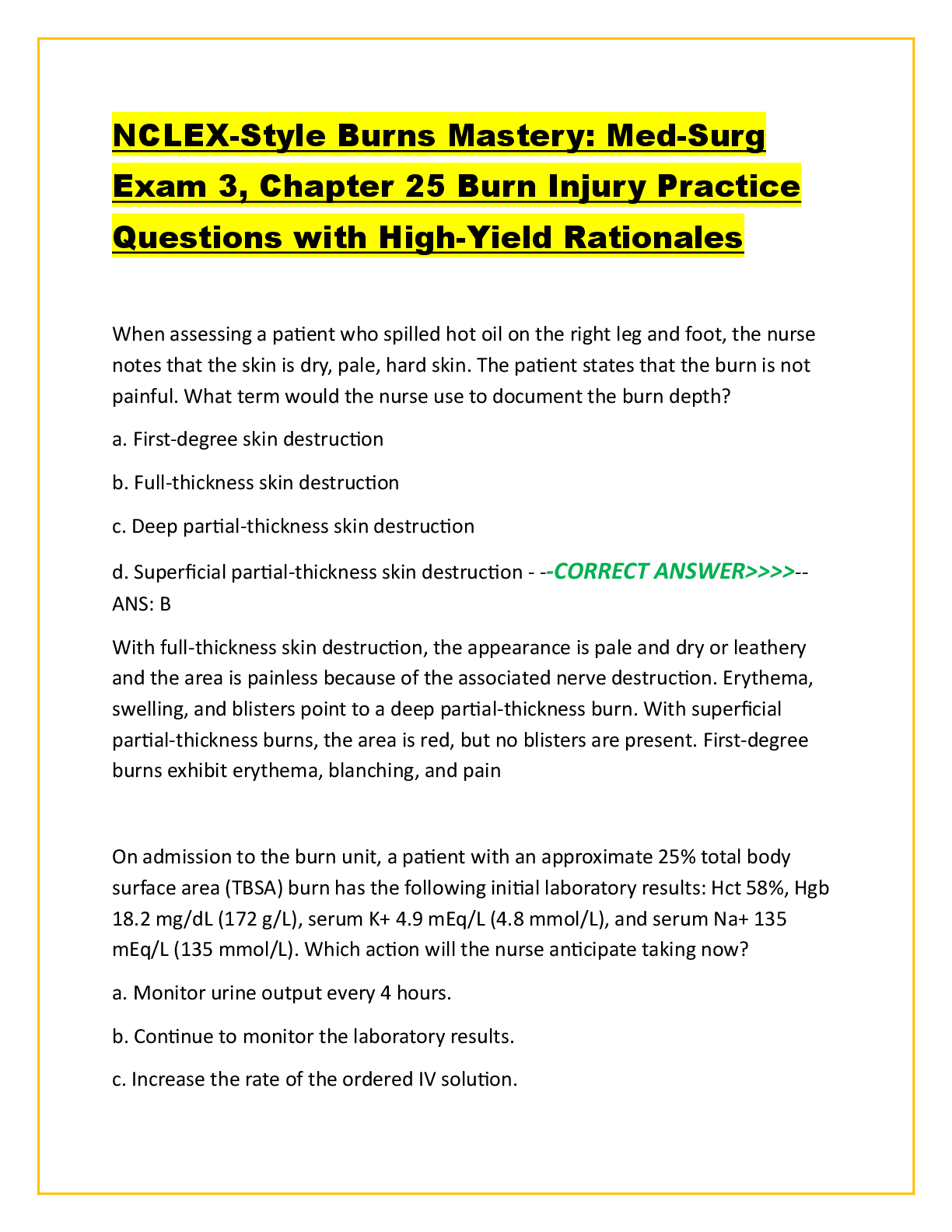
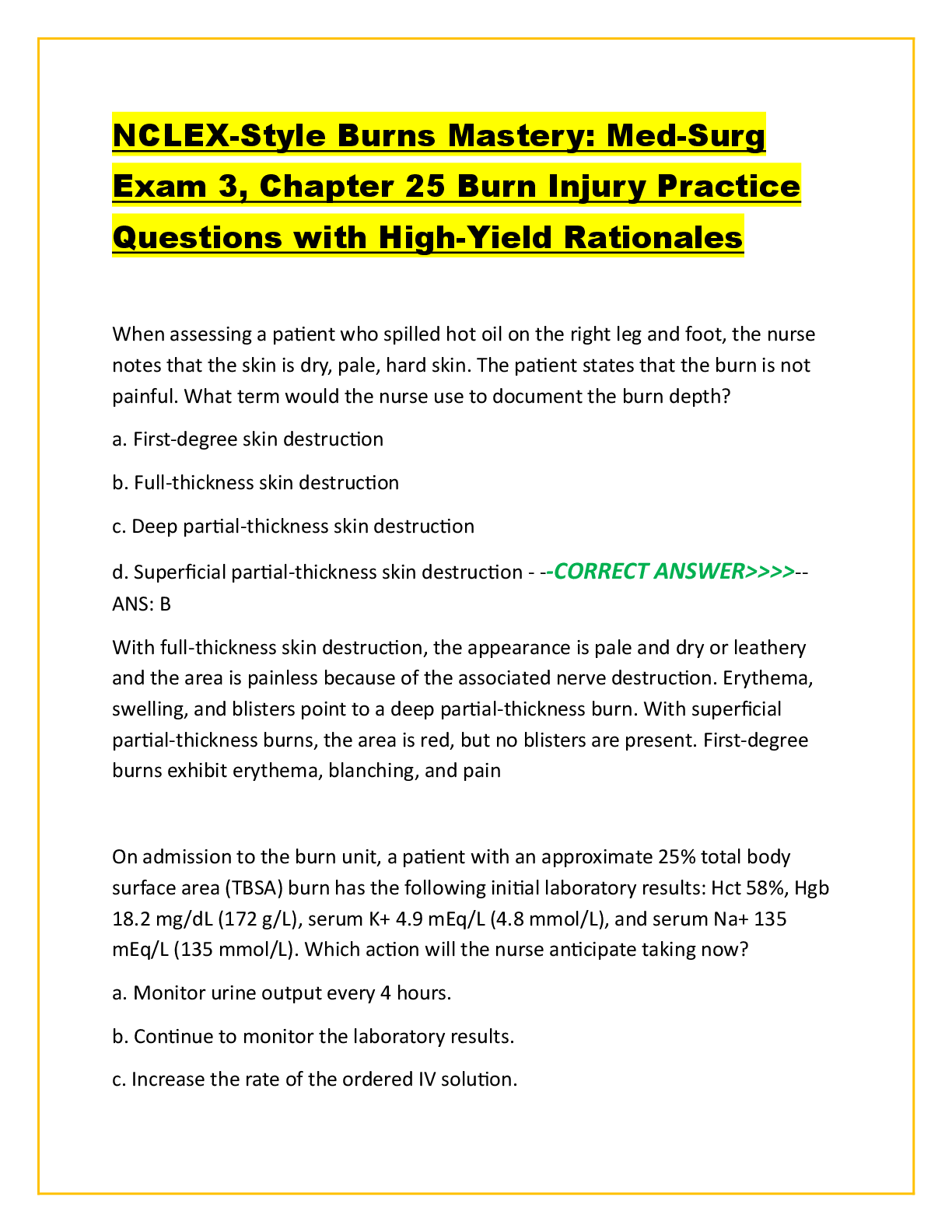
NCLEX-Style Burns Mastery: Med-Surg Exam 3, Chapter 25 Burn I...
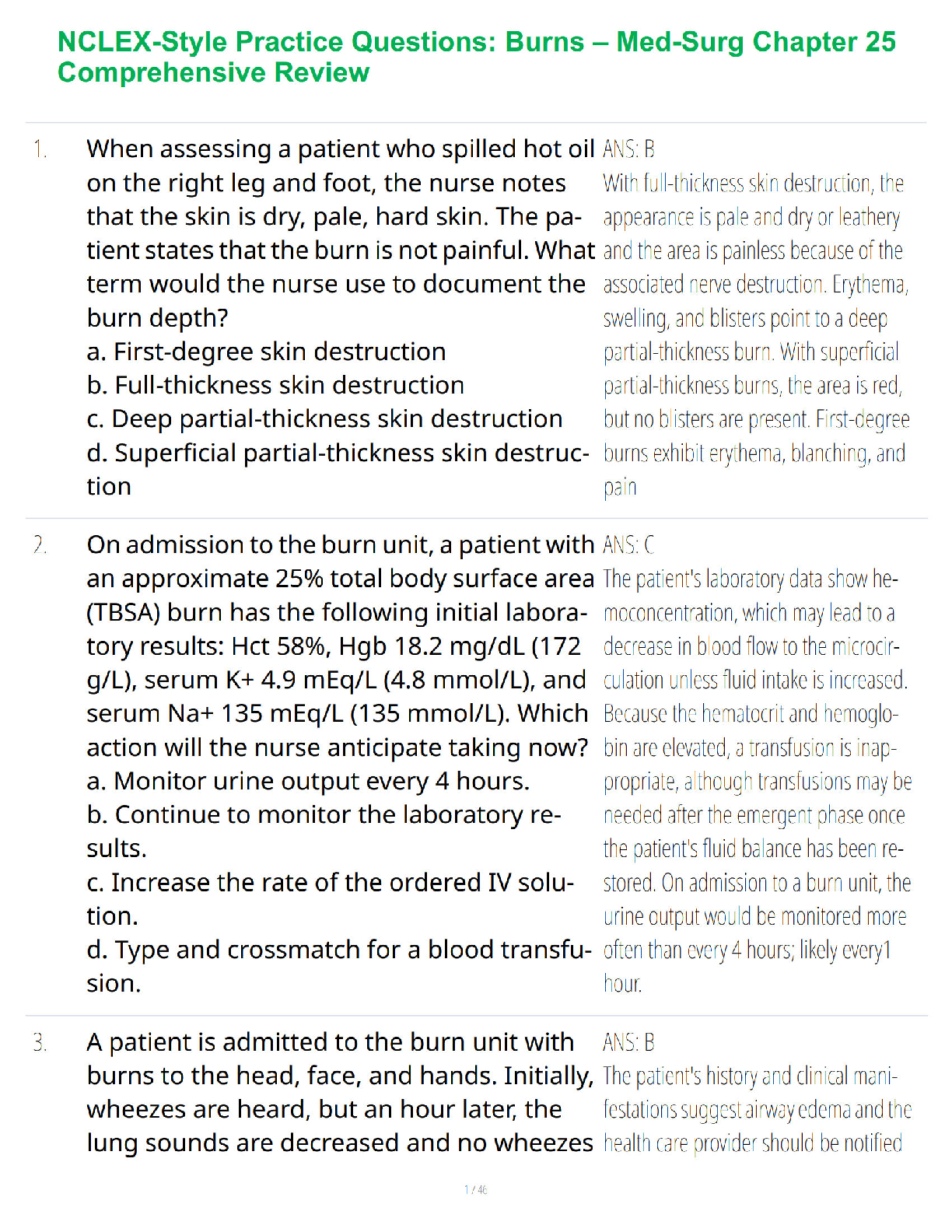
NCLEX-Style Practice Questions: Burns – Med-Surg Chapter 25 Co...
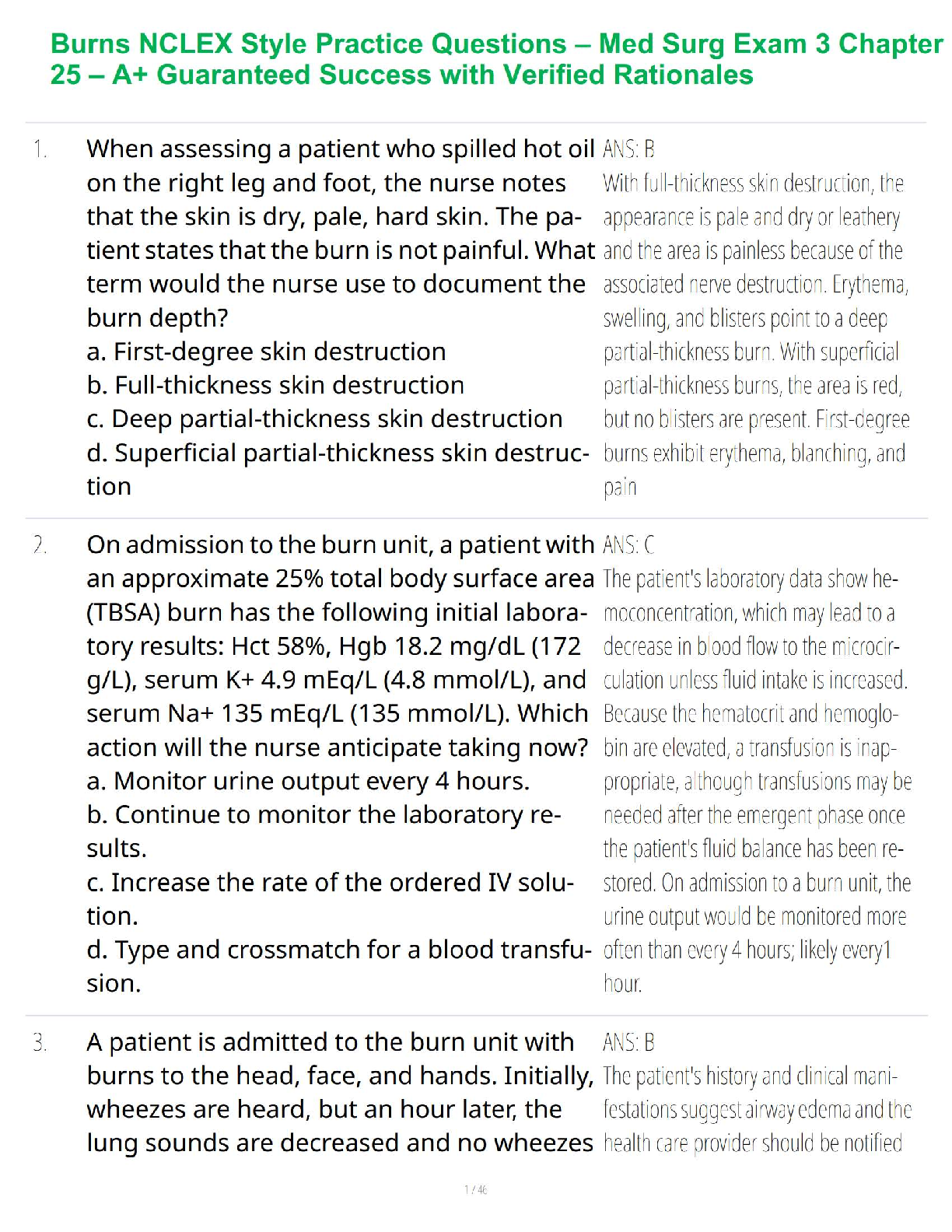
Burns NCLEX Style Practice Questions – Med Surg Exam 3 Chapter...
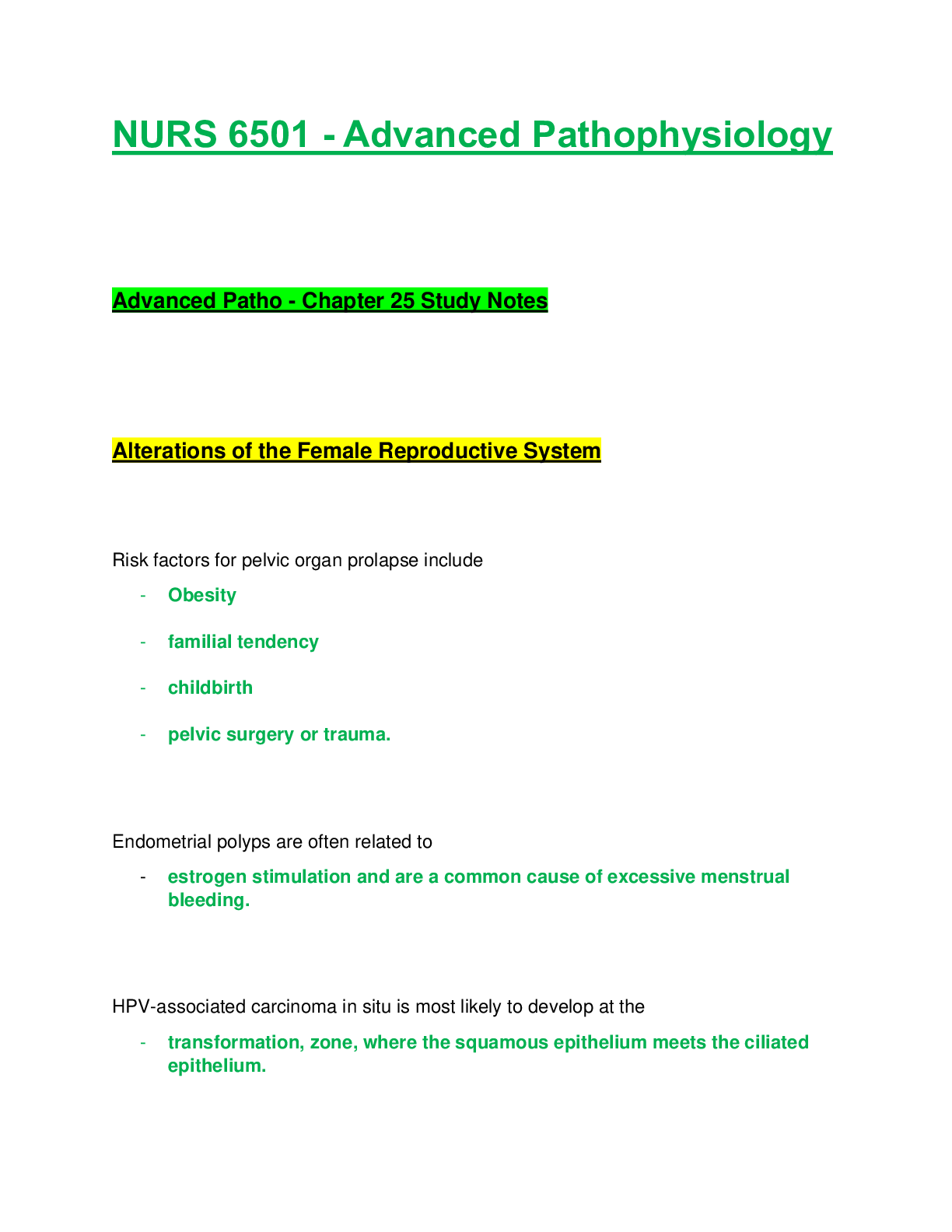
NURS 6501 / NURS6501: Advanced Pathophysiology - Chapter 25 St...

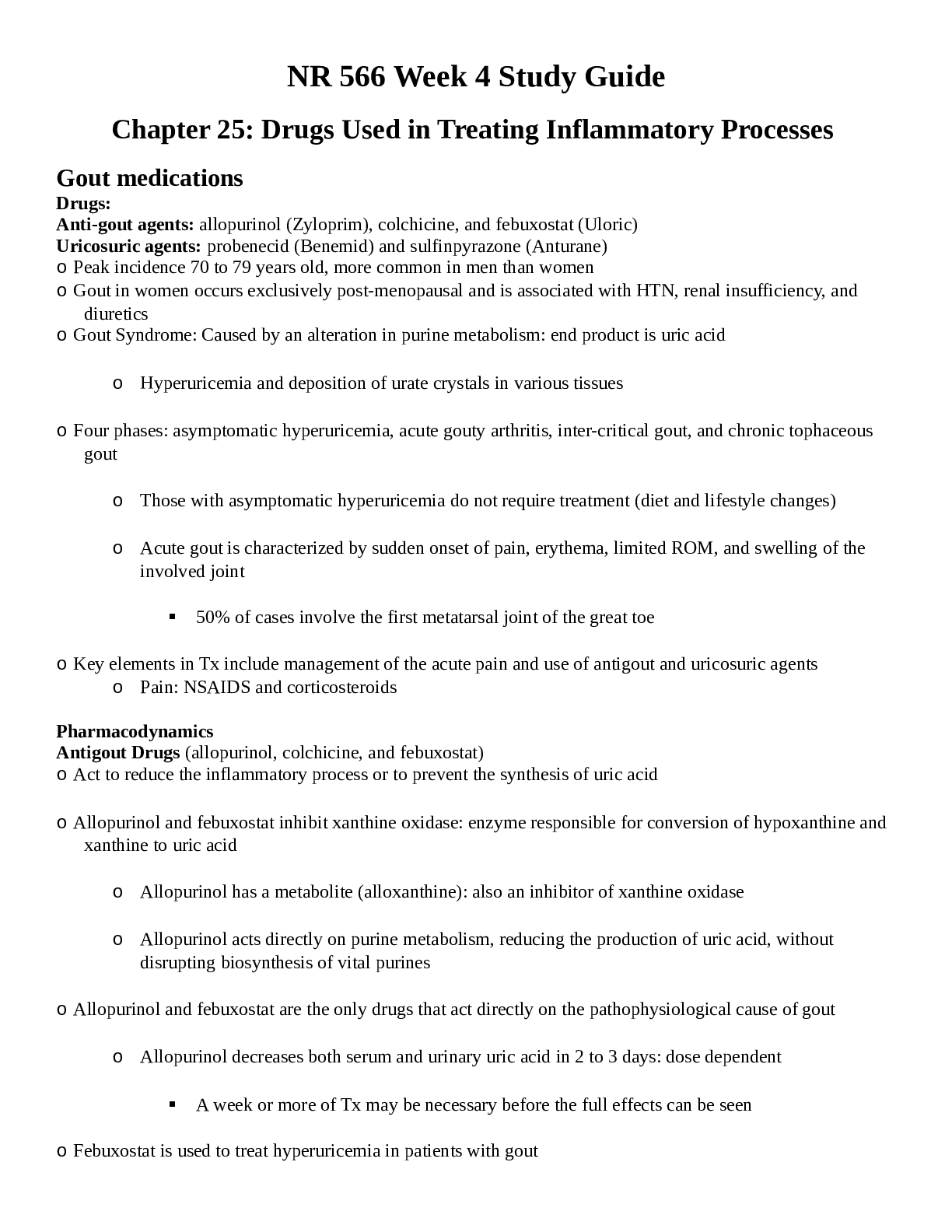
NR566 / NR 566: Advanced Pharmacology for Care of the Family W...

.png)

.png)
.png)

.png)


