Common Infections
1. Impetigo
Caused by
Staph aureus
Group Streptococcus (GAS)
Occasional MRSA
Most commonly seen in 2-5 years of age population. Easily spread in close environments.
Risk Factors: Poverty, crowdin
...
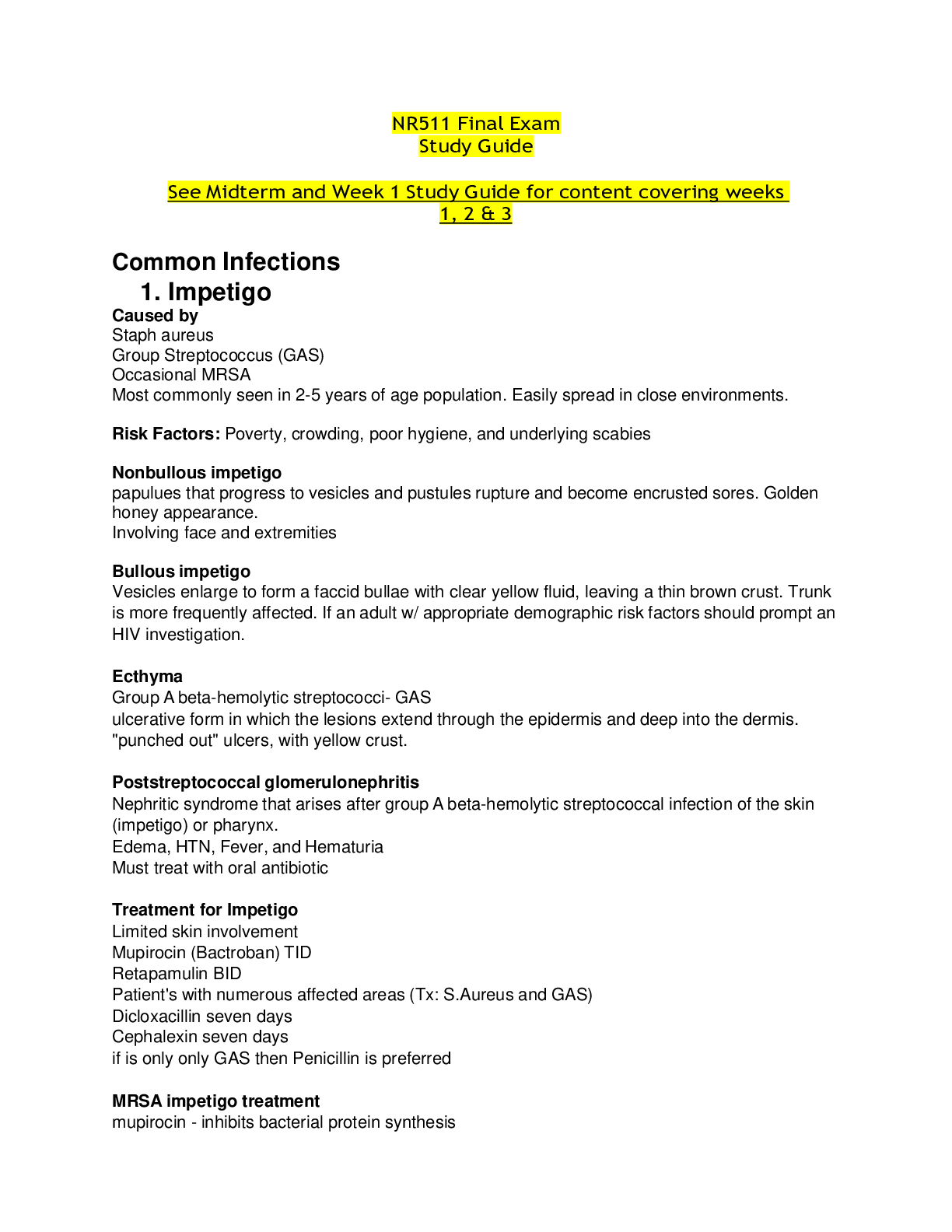
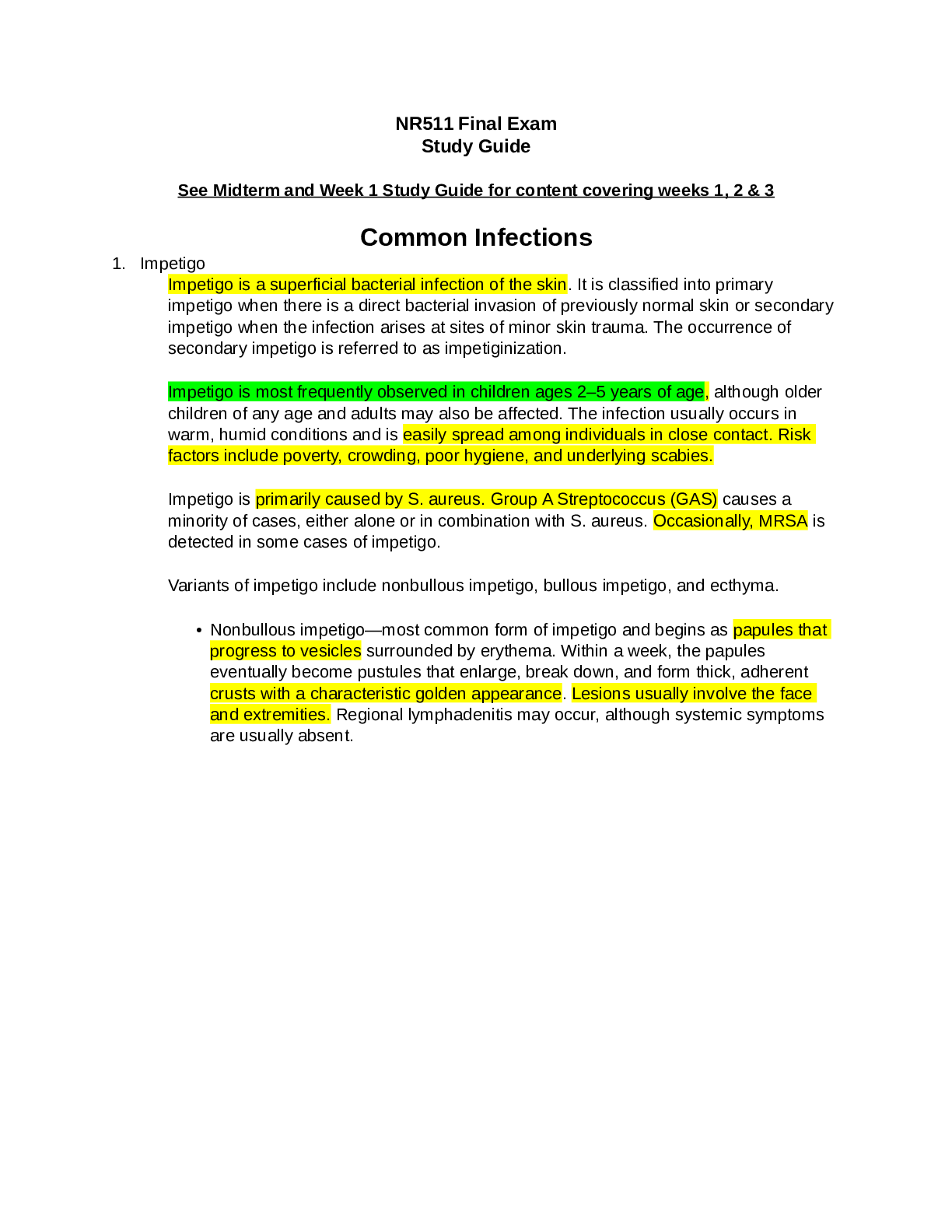
Common Infections
1. Impetigo
Caused by
Staph aureus
Group Streptococcus (GAS)
Occasional MRSA
Most commonly seen in 2-5 years of age population. Easily spread in close environments.
Risk Factors: Poverty, crowding, poor hygiene, and underlying scabies
Nonbullous impetigo
papulues that progress to vesicles and pustules rupture and become encrusted sores. Golden
honey appearance.
Involving face and extremities
Bullous impetigo
Vesicles enlarge to form a faccid bullae with clear yellow fluid, leaving a thin brown crust. Trunk
is more frequently affected. If an adult w/ appropriate demographic risk factors should prompt an
HIV investigation.
Ecthyma
Group A beta-hemolytic streptococci- GAS
ulcerative form in which the lesions extend through the epidermis and deep into the dermis.
"punched out" ulcers, with yellow crust.
Poststreptococcal glomerulonephritis
Nephritic syndrome that arises after group A beta-hemolytic streptococcal infection of the skin
(impetigo) or pharynx.
Edema, HTN, Fever, and Hematuria
Must treat with oral antibiotic
Treatment for Impetigo
Limited skin involvement
Mupirocin (Bactroban) TID
Retapamulin BID
Patient's with numerous affected areas (Tx: S.Aureus and GAS)
Dicloxacillin seven days
Cephalexin seven days
if is only only GAS then Penicillin is preferred
MRSA impetigo treatment
mupirocin - inhibits bacterial protein synthesisDoxycycline, clindamycin, or tiimethoprim-sulfamethoxazole (Bactrim)
2. Staphylococcal Scalded Skin Syndrome
Staphylococcus aureus, epidermal necrosis caused by bacterial exotoxins. Epithelial
layer peeling off in large sheetlike pieces. Mimics scalded-skin thermal burn.
More common in children. Found in places where skin rubs together.
3. Cellulitis
an acute, diffuse inflammation of the skin and subcutaneous tissue characterized by local heat,
redness, pain, and swelling. Typically unilateral common site is lower extremities. Middle aged
and older adults. Erythema, edema, warmth, and pain. "peau d’orange"
Cellulitis is caused by
The most common are beta-hemolytic streptococci (A,B,C,G, and F)
S. Aureus (gram +)
Predisposing factors to cellulitis
Tina pedis, lymphedema, and chronic venous insufficiency.
Cellulitis treatment
Beta-hemolytic streptococci and methicillin-susceptible staphylococcus areus (MSSA):
tx: Cephalexin 500mg QID (alternative for mild PCN allergy)
Clindamycin 300mg QID (severe PCN allergy)
Not associated with Human or animal bites uncomplicated (Dicloxacillin or cephalexin 10-14
days. PCN allergy=Erythromycin
If caused by human or animal bite
Augmentin 2 weeks
MRSA coverage cellulitis
Add Amoxicillin to bactrim DS bid, doxycycline bid, minocycline 200 once and then 100 bid,
Clindamycin No other coverage needed
4. Erysipelas
-Involves upper dermis, superior lymphatics
-raised above level of surrounding skin
-fever and chills with acute onset
-often affects ear (Milian's ear sign), face, and lower extremities
-commonly caused by group a strep infection
5. Necrotizing fasciitis
inflammation of fascia producing death of the tissue. Progressive infection measured in terms of
hours instead of days. progressive destruction of the muscle fascia. Pressure on the skin reveals crepitus due to gas production is caused by clostridium perfringens
6. Mammalian bites
amoxicillin-clavulanic acid + tetanus prophylaxis +/- rabies prophylaxis 3 to 5 days.Human=Staph aureus or strep. Do not suture hand wounds wait 3 to 5 days post treatment.
Pasteurella multocida
-Cellulitis, osteomyelitis
-Animal bite, cats, dogs.
Intense pain, erythema, and swelling. 12-24 hours post bite.
Urology
1. Hematuria
blood in the urine; if present in large enough quantities, urine may be bright red or reddish
brown (myoglobin, hemoglobin, or porphyrins).Pyridium can cause reddish orange color
Bladder cancer cardinal sign
Gross pain less hematuria
[Show More]