NURSING > DISCUSSION POST > NR 439 Week 4 Graded Discussion Topic: Designs – A Plan to Study for the Truth (All)
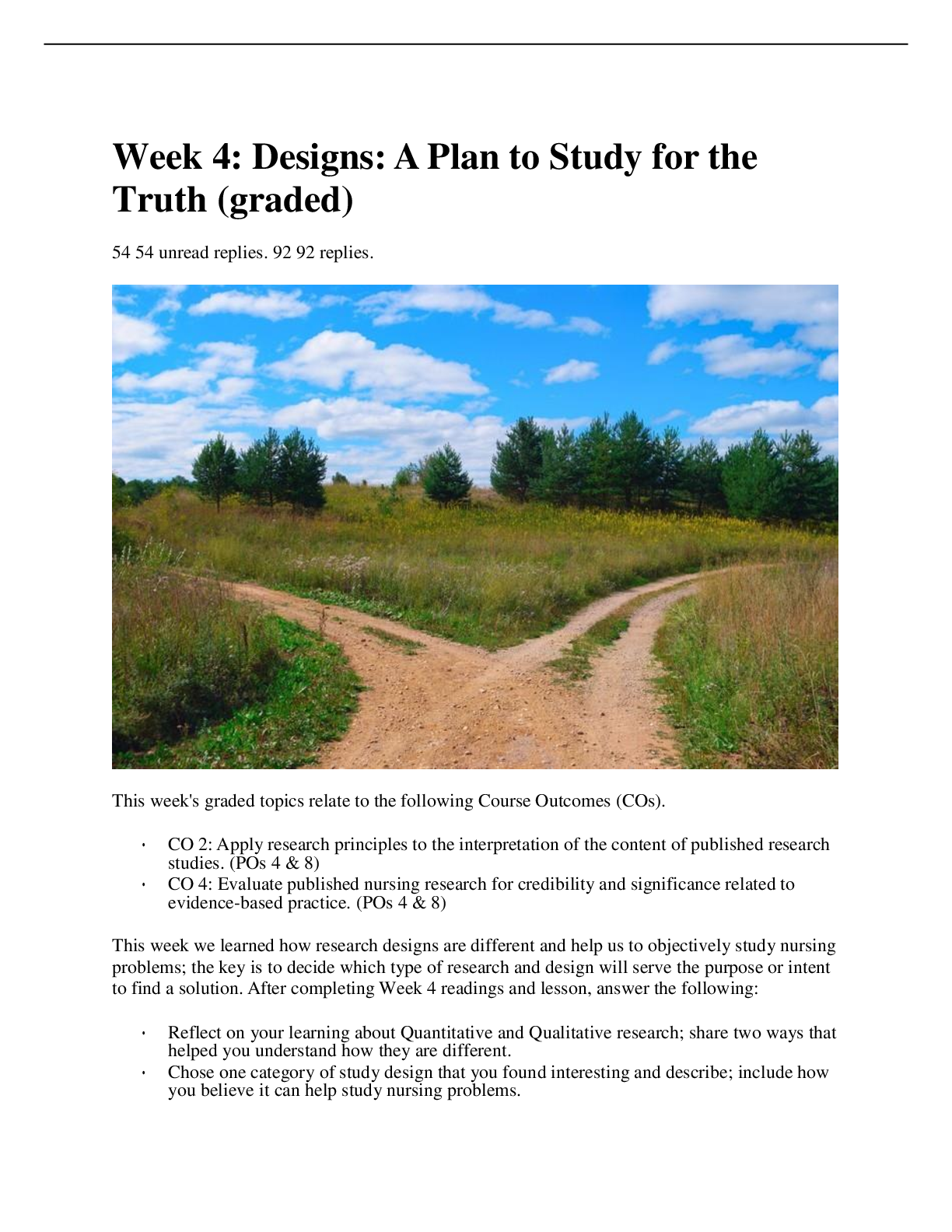
NR 439 Week 4 Graded Discussion Topic: Designs – A Plan to Study for the Truth
Document Content and Description Below
Last updated: 3 years ago
Preview 1 out of 2 pages
Instant download
Buy this Document to get the Full Access Instantly
Provided by Students Who Aced it
We Verify Document Content to Gurantee Accuracy
Reviews( 0 )
Document information
Connected school, study & course
About the document
Uploaded On
Sep 30, 2021
Number of pages
2
Written in
All

Additional information
This document has been written for:
Uploaded
Sep 30, 2021
Downloads
0
Views
197
Topic Tags
Recommended For You
Get more on DISCUSSION POST »
NR 439 Week 4 Graded Discussion Topic: Designs – A Plan to Stu...
.png)
NR 439 Entire Course Week 1 to 8, Assignment, Discussion Quest...

NR 439 Week 8 Graded Discussion Topic: The Evidence-Nursing Pr...
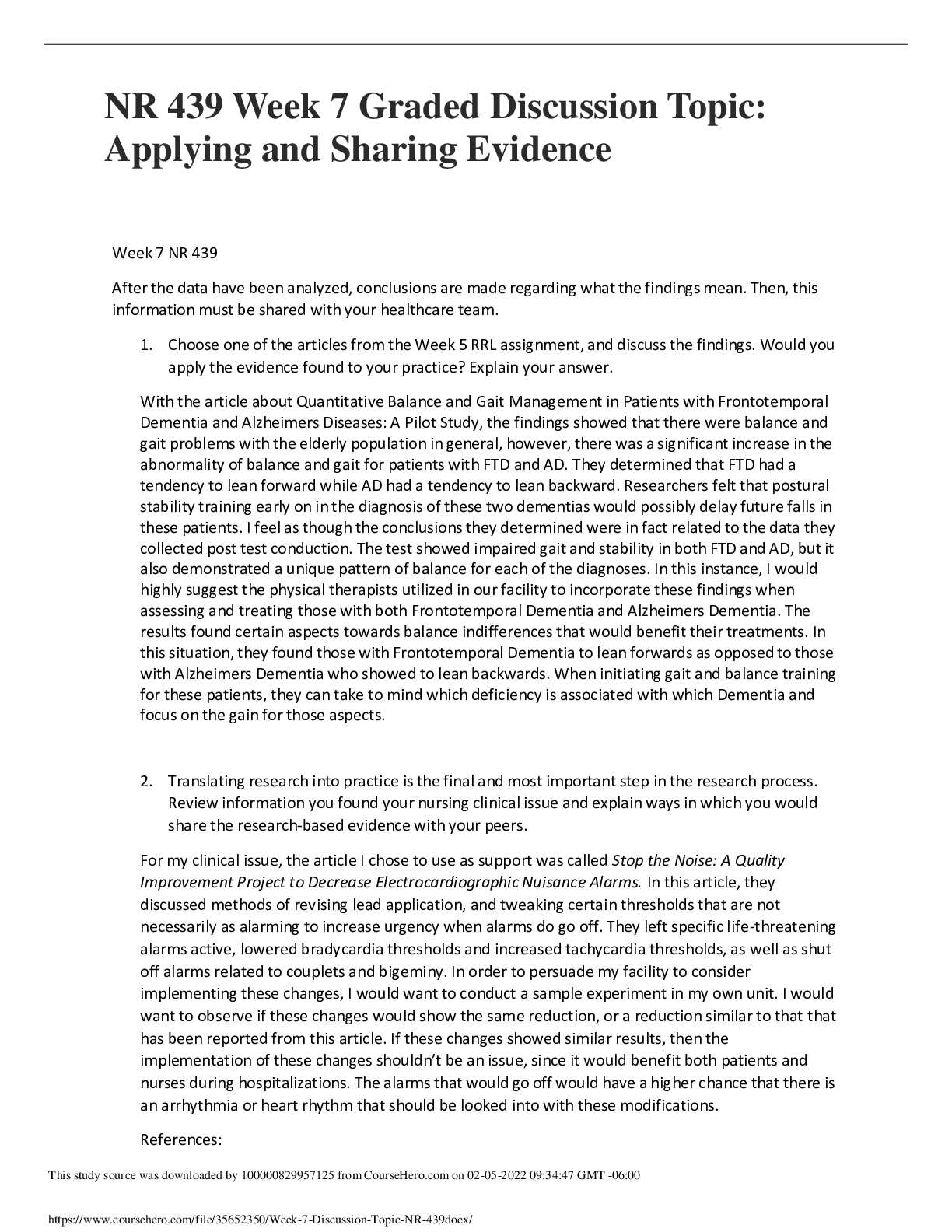
NR 439 Week 7 Graded Discussion Topic: Applying and Sharing Ev...

NR 439 Week 6 Graded Discussion Topic Data Analysis and Result...

NR 439 Week 5 Graded Discussion Topic: Samples and Data Collec...

NR 439 WEEK 4 DISCUSSION, ETHICAL AND LEGAL ISSUES COMPLETE SO...

NR 439 WEEK 2 DISCUSSION, SEARCH FOR LITERATURE AND LEVELS OF...
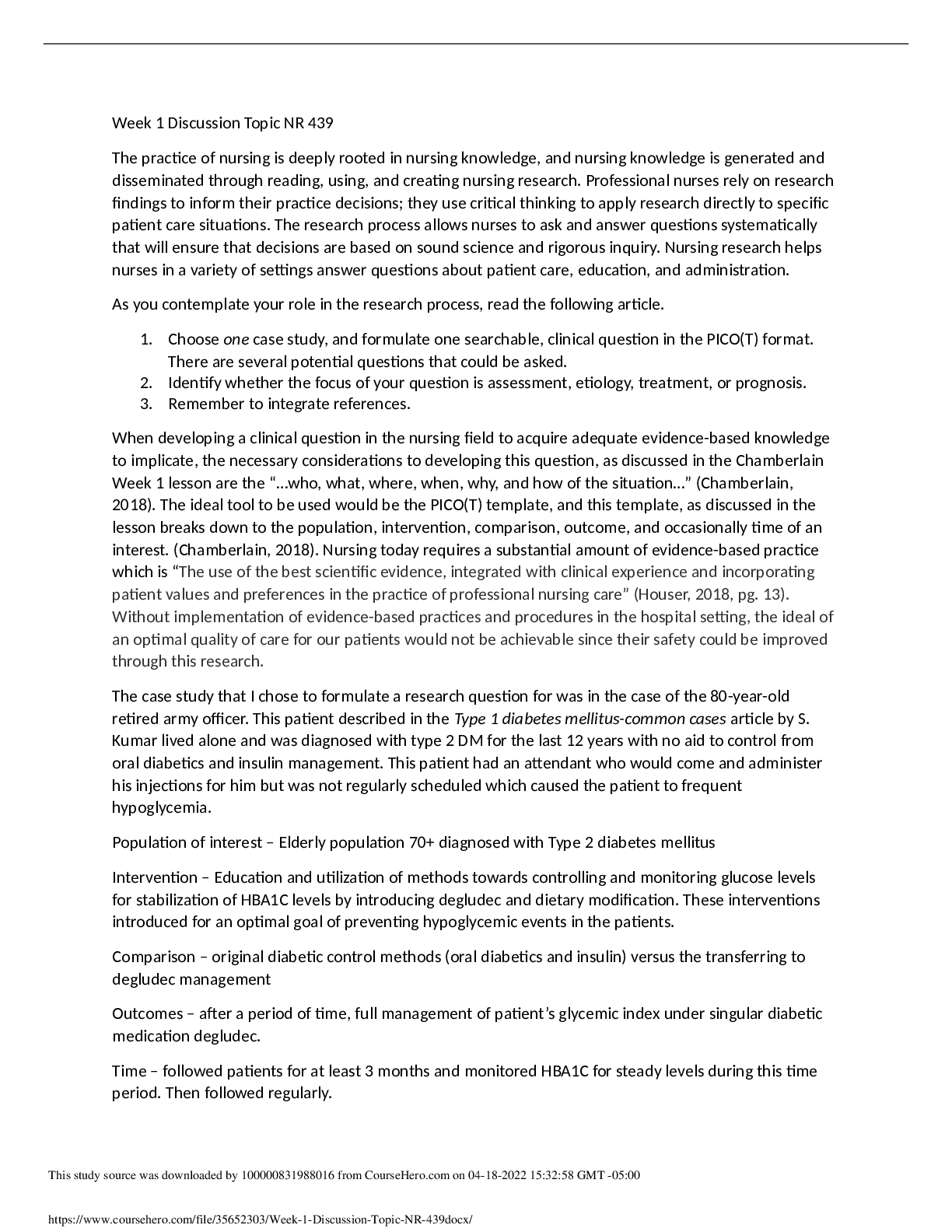
NR 439 WEEK 1 DISCUSSION, ROLE OF RESEARCH & IMPORTANCE OF SEA...
.png)
NR 439 WEEK 7 DISCUSSION, APPLYING AND SHARING EVIDENCE TO PRA...

NR 439 Week 3 Discussion: The Literature Review and Searching...
NR 439 Week 4 Graded Discussion Topic; Designs - A Plan to Stu...

NR439 / NR 439 Entire Course Week 1 to 8, Assignment, Discussi...

NR 439 WEEK 3 ASSIGNMENT, PICOT WORKSHEET 1 COMPLETE SOLUTION...
UNH NR 439 Final Exam Questions and Answers (Verified Answer...
NR 439 UNH Exam 1 Questions and Answers (Verified Answers)