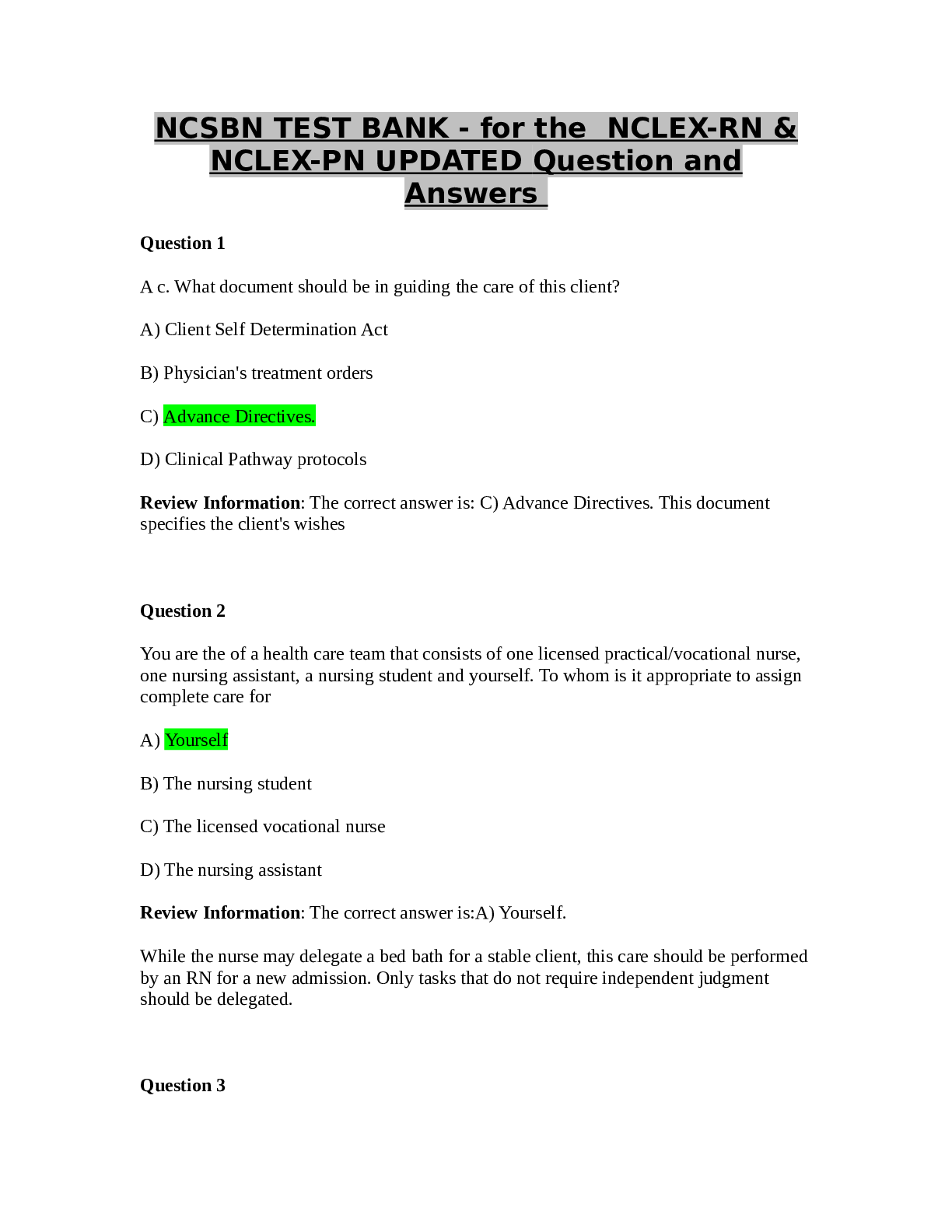
West Coast University PATHO 370 c15.
Document Content and Description Below
Chapter 15: Alterations in Blood Flow
Test Bank
MULTIPLE CHOICE
1. Which vessel normally demonstrates the most rapid blood flow?
a. An arteriole
b. A capillary
c. A venule
d. The vena cava
ANS: D
The vena cava h
...
[Show More]
Last updated: 3 years ago
Preview 1 out of 10 pages
Instant download

Buy this Document to get the Full Access Instantly
Provided by Students Who Aced it
We Verify Document Content to Gurantee Accuracy
Reviews( 0 )
Document information
Connected school, study & course
About the document
Uploaded On
Oct 04, 2021
Number of pages
10
Written in
All

Additional information
This document has been written for:
Uploaded
Oct 04, 2021
Downloads
0
Views
293
Topic Tags
Related Subjects & Courses
Explore similar study resources and related concepts.
Recommended For You
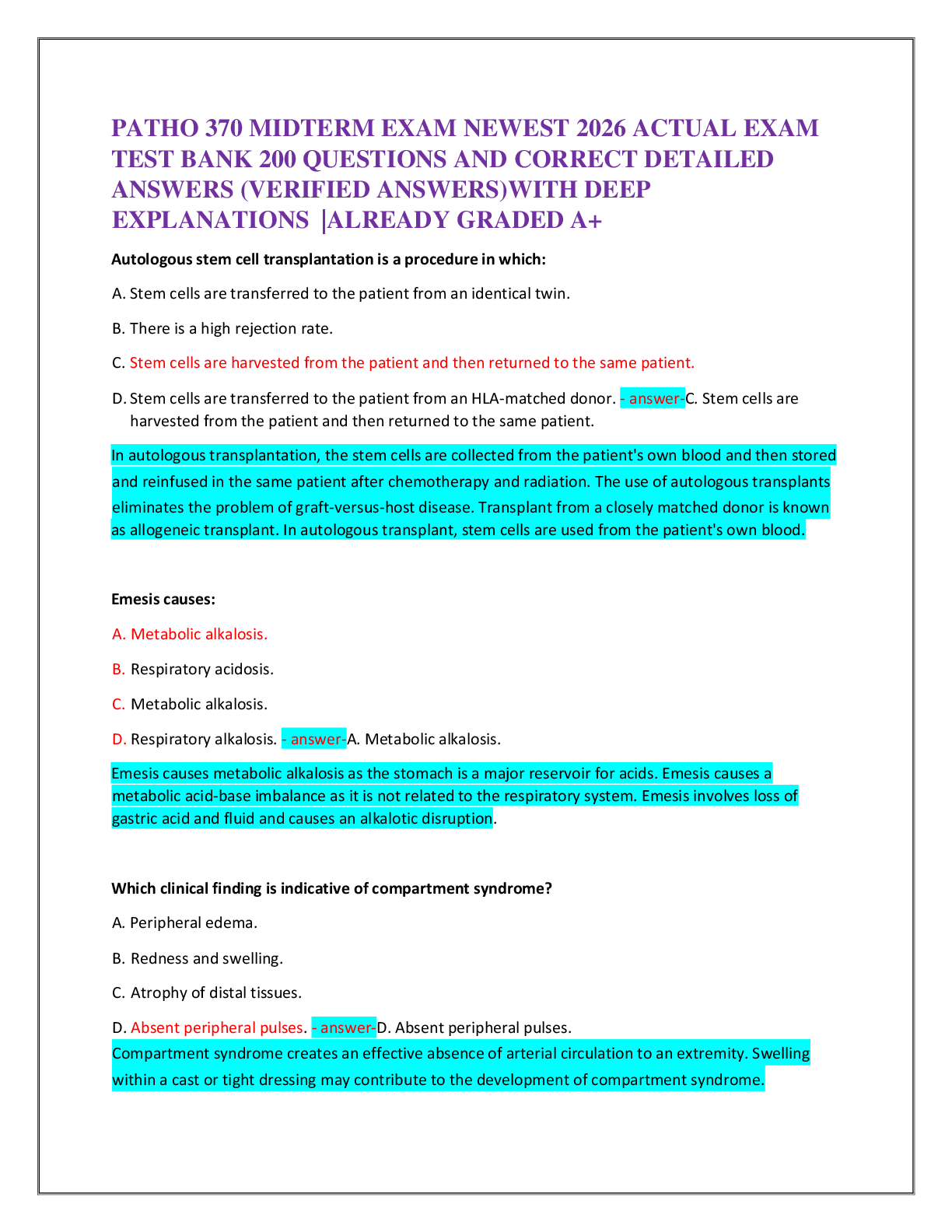
Get more on NCLEX »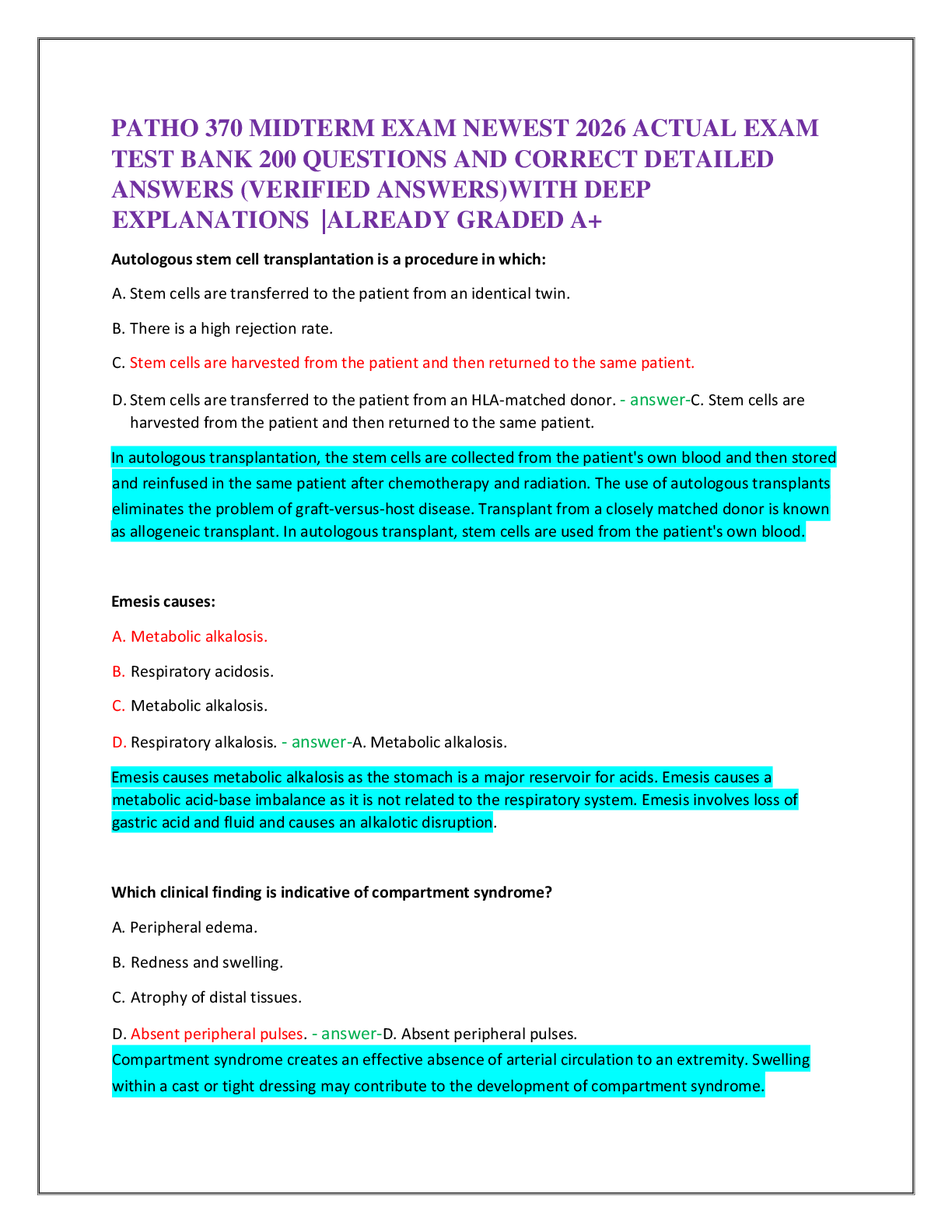

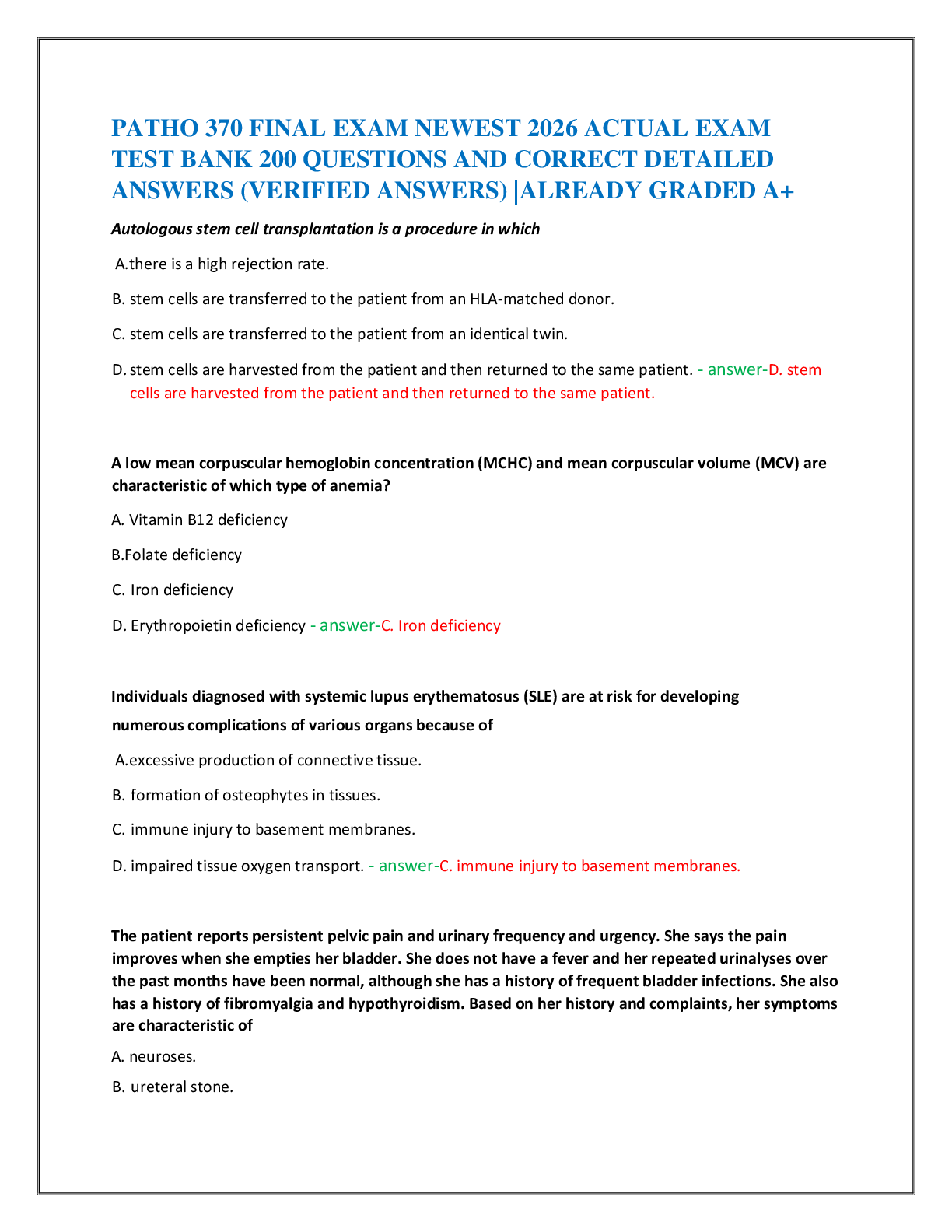
$16.5
86 Pages
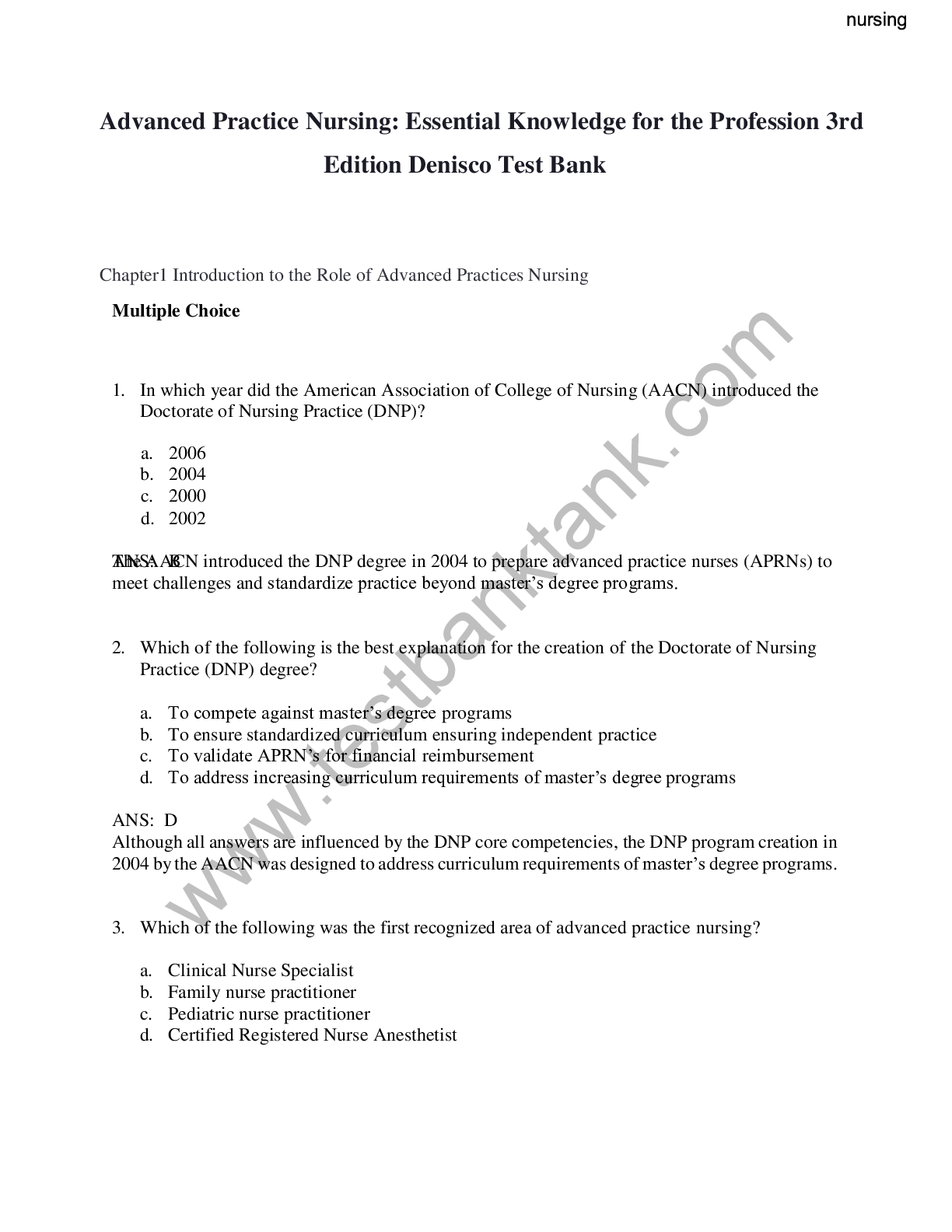
Advanced practice nursing : essential knowledge of proffesion...



$36
101 Pages
LEADERSHIP C157 Leadership Exam 2 questions and answers with c...
$6
33 Pages
Western Governors University - NURSING MS C1593C-159 Policy, P...

$22
280 Pages
Solutions Manual For Introduction to Logic 15th Edition By Irv...
.png)
$10
40 Pages
Pearson Edexcel GCE Question Booklet + Mark Scheme (Results) N...
.png)
.png)

.png)
$9
11 Pages
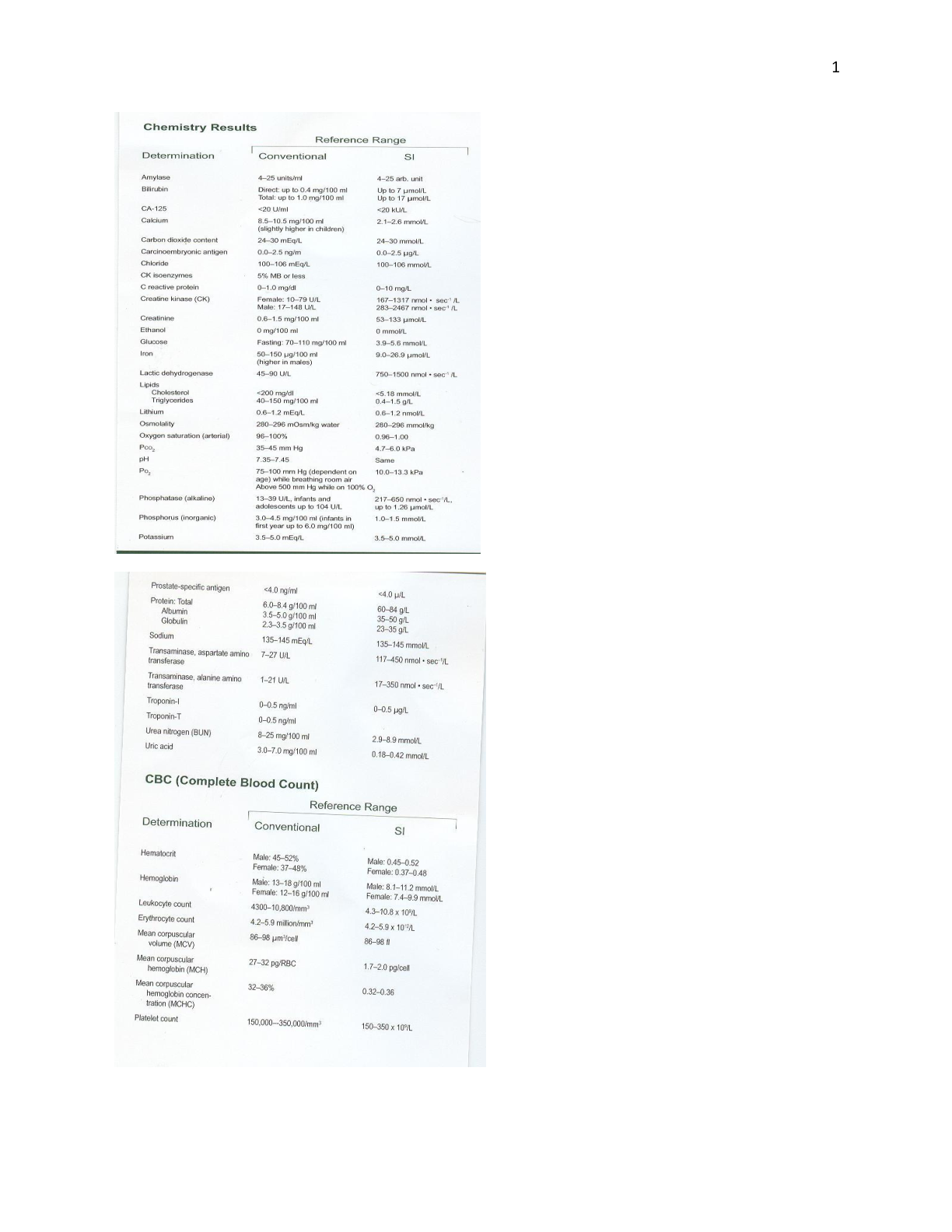
WGU C157 Essentials of Advanced Nursing Practice Field Experie...
More related documents below
.png)