NCLEX/MedSurg Master Study Guide
Nursing Process:
A - assessment
D - diagnosis
O - outcome planning (specific, measurable, timely)
Ex. The patient will walk 300 ft in the hallway by the end of the shift (3pm)
P -
...
NCLEX/MedSurg Master Study Guide
Nursing Process:
A - assessment
D - diagnosis
O - outcome planning (specific, measurable, timely)
Ex. The patient will walk 300 ft in the hallway by the end of the shift (3pm)
P - planning
Planning is done WITH patient, not FOR them. Let them assist in making goals that they
see as doable
I - intervention
E - evaluation
Reflecting on whether the goal was met/ what could be changed to help the pt. Reach it
not evaluating **ourselves** we are evaluating whether or not the goal was MET
Nursing Virtues:
Beneficence - “do good”
Non maleficence - “do no harm”
Veracity - telling the truth, never lying or trying to deceive a patient
If you make a med error, if a patient asks you about their disease
Fidelity - keeping your promises
Autonomy - pt. Is allowed (and supported) to make their own decisions
Choosing treatment plans, right to advance directives, DNR orders, etc.
Justice - providing fair care to all
Providing equal care to patients no matter what (age, sex, race, LGBT, religion, disease)
Confidentiality - keeping things between you and the patient
If a patient tells you something, it should remain between the two of you
The ONLY times you can break confidentiality are when the patient’s safety is involved
(ex. Pt. is going to commit suicide, mandatory reporting of elder abuse, etc)
Privacy - pt. Is entitled to their own personal privacy
Closing the door /curtain when they are physically exposed/leaving the room if the
patient is on the toilet
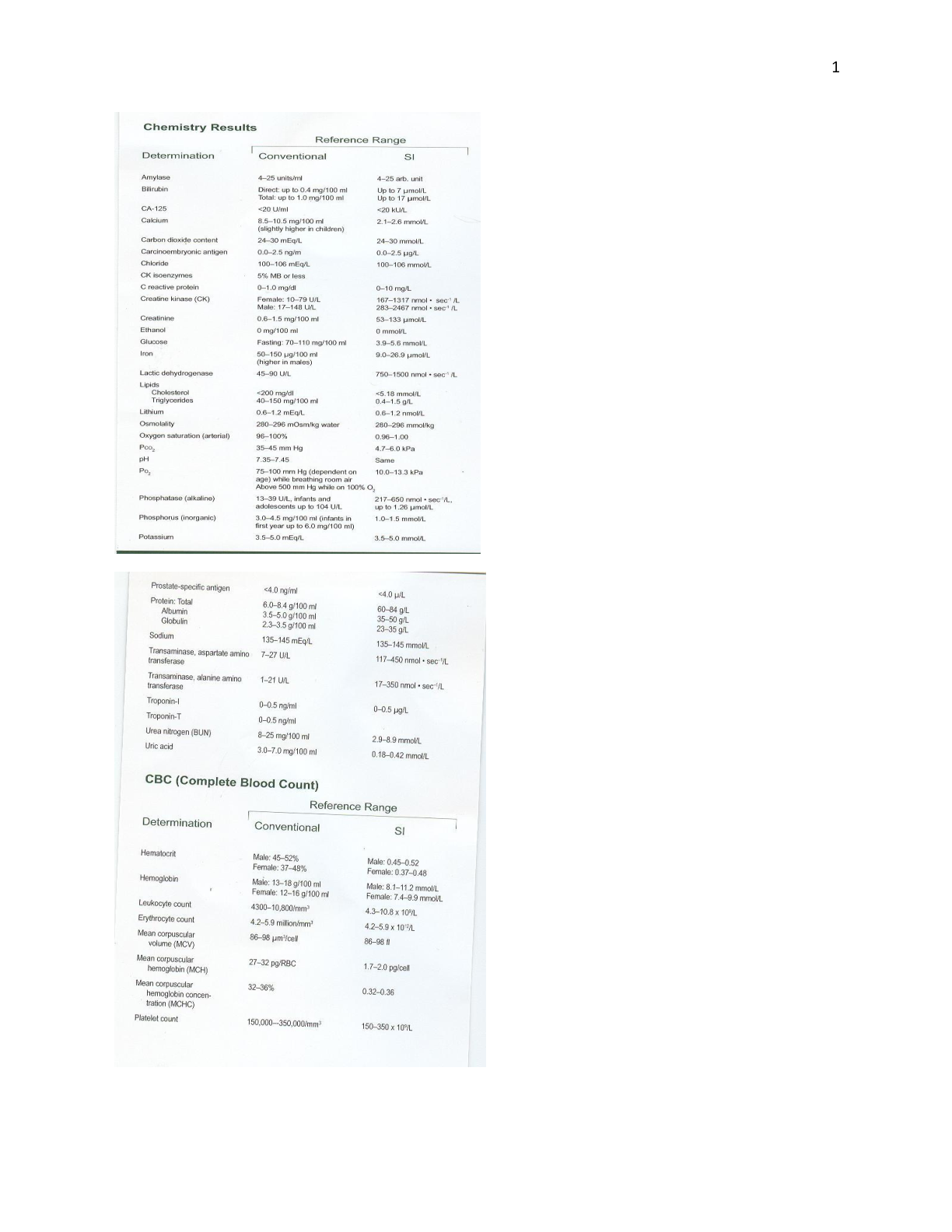
Normal Lab Values:
Digoxin 0.5-2, anything above 2 will give nausea, vomiting, diarrhea, and VISUAL
disturbances (yellow halo around anything they are looking at)
If the patient is hypokalemic (low potassium), makes it easier for them to go into Dig.
toxicity
Hold digoxin if their heart rate is below 60 bpm
Lithium - 0.5-1.5, hold for anything higher! Tremors, confusion, seizures etc.
Typically used for bipolar disorder
Never double up 22 on lithium doses if you miss one -- safety!
Lithium messes with their sodium! They need to stay stable with their sodium intake and
consult their doctor before vigorous work outs / saunas / etc. because sweat can cause
them to lose too much sodium. When they lose sodium, it makes it easier for lithium
toxicity to occur
Phenytoin/Dilantin 10-20
Used most often for seizure disorders
Blood levels have to monitored over time to adjust dosage -- pt. Gets frequent lab draws
Phenytoin reaction can cause anemia - dyspnea, fatigue, paleness, rashes, swelling and
bleeding of the gums.
BUN: 10-20, indicative of kidney function, monitor for nephrotoxic drugs
Creatinine: 0.6-1.3, indicative of kidney function, monitor for nephrotoxic drugs
INR (Warfarin) normal 1-2, on warfarin want it to be 2-3 to prevent clots
PT (Warfarin) normal 11-13 seconds,want it to be 1.5-2x longer than that
aPTT (Heparin) (remember 2 T’s in H) normal 30-45 seconds, want it to be 1.5-2.5x longer than
that. <45sec =clots!
Hgb 12-18%
HCt female: 37-47%, male: 42-52%
In pregnancy, H&H can **appear** lower because the woman’s plasma volume is
expanding -- does not mean they are necessarily bleeding if H&H dips a little bit
CVP (central venous pressure, in the heart) 2-6, low CVP is dehydration, high CVP is fluid
overload
High CVP = rales in lungs, JVD, dyspnea, tachycardia
Low CVP = shock, signs of dehydration
Platelets 150,000-400,000, below 150 we are worried about bleeding - bleeding precautions!
ANC (Absolute neutrophil count) - ~2200-7000
Minimum urine in an hour: 30ml/hr
GFR (glomerular filtration rate): should be above 60 with healthy kidneys
WBC’s: 4,000-11,000
Sodium: 135-145 - low/high sodium causes neuro problems = confusion, altered LOC, coma
ALL things potassium:
Potassium: 3.5-5 -- altered potassium = HEART Dysrhythmias, mainly V-tach
Foods with a lot of potassium: bananas, sweet potatoes
We NEVER give potassium via IV push, it can kill the person!!
K+ always given on IV pump, needs to be SLOW over 2-4 HOURS so that we don’t
change their K+ too quickly; never more than 10 mEq/hr
If patient has hyperkalemia - Give IV insulin and then immediately give IV dextrose -
forces potassium back into cells so it is not floating around in the blood causing
problems
Hyperkalemia: HIGH potassium = peaked T waves, wide QRS, wide PR (everything is
UP)
Hypokalemia: LOW potassium = U wave at the end, depressed “low waves”, muscle
cramps = especially CALF -- if pt has low potassium they can go into torsades = BAD
Also tell patient to avoid “salt substitutes” in their diet because those oftentimes contain
potassium in them instead
Calcium:
normal 8.6-10.2
Low calcium = crazy muscles!
Laryngospasms*** priority because this is your throat! Airway compromise!
Positive chvostek / trousseau’s sign
Seizures
Muscle tightness and cramping
Hyperactive bowel sounds, diarrhea
When to worry about low calcium?? After a thyroidectomy!! The parathyroid glands
(which break down bone and put calcium into the blood) are on the thyroid….. So
sometimes during surgery the parathyroid glands can be removed with the thyroid!! This
will cause low low calcium = look for the low calcium signs when they get back from
thyroid surgery!
[Show More]




.png)