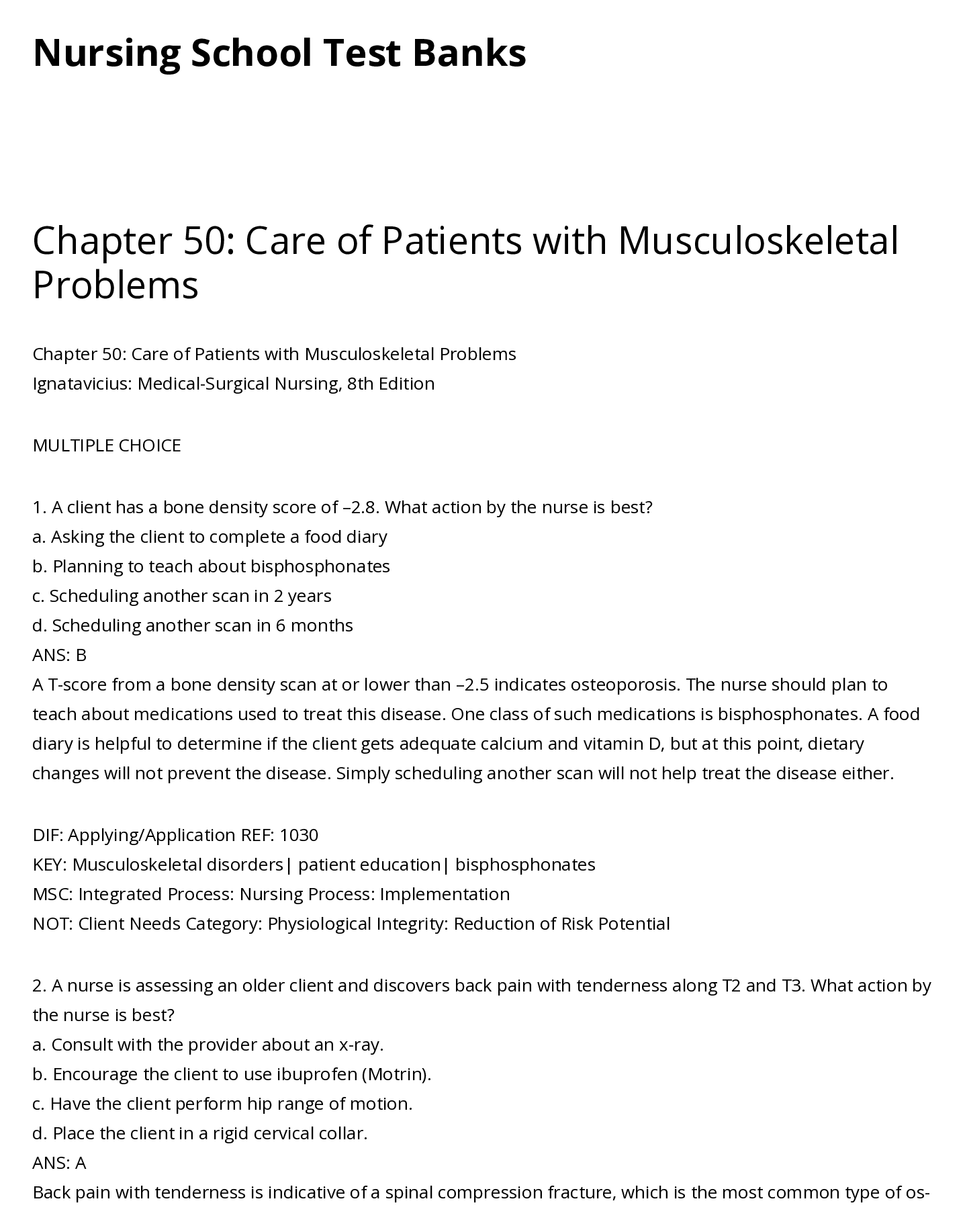
NURSING > QUESTIONS & ANSWERS > Milestone Chapter 50: Care of Patients with Musculoskeletal Problems (Concepts for Interprofessional (All)
Milestone Chapter 50: Care of Patients with Musculoskeletal Problems (Concepts for Interprofessional Collaborative Care College Test Bank)
Document Content and Description Below
Last updated: 8 months ago
Preview 1 out of 12 pages
Instant download
Buy this Document to get the Full Access Instantly
Provided by Students Who Aced it
We Verify Document Content to Gurantee Accuracy
Reviews( 0 )
Document information
Connected school, study & course
About the document
Uploaded On
Dec 27, 2021
Number of pages
12
Written in
All

Additional information
This document has been written for:
Uploaded
Dec 27, 2021
Downloads
0
Views
168
Topic Tags
Recommended For You
Get more on QUESTIONS & ANSWERS » Med Surg test Latest Verified Questions and all Correct Answers with Explanations Chapter 50 Assessment and Management of Patients with Biliary Disorders.png)
Sophia Milestone Adult Nursing (NUR 105) Med Surg test Latest...

ATI Chapter 50 Nursing Management Endocrine Problems Test Bank...
Chapter 50- Assessment and Management of Patients With Biliary...
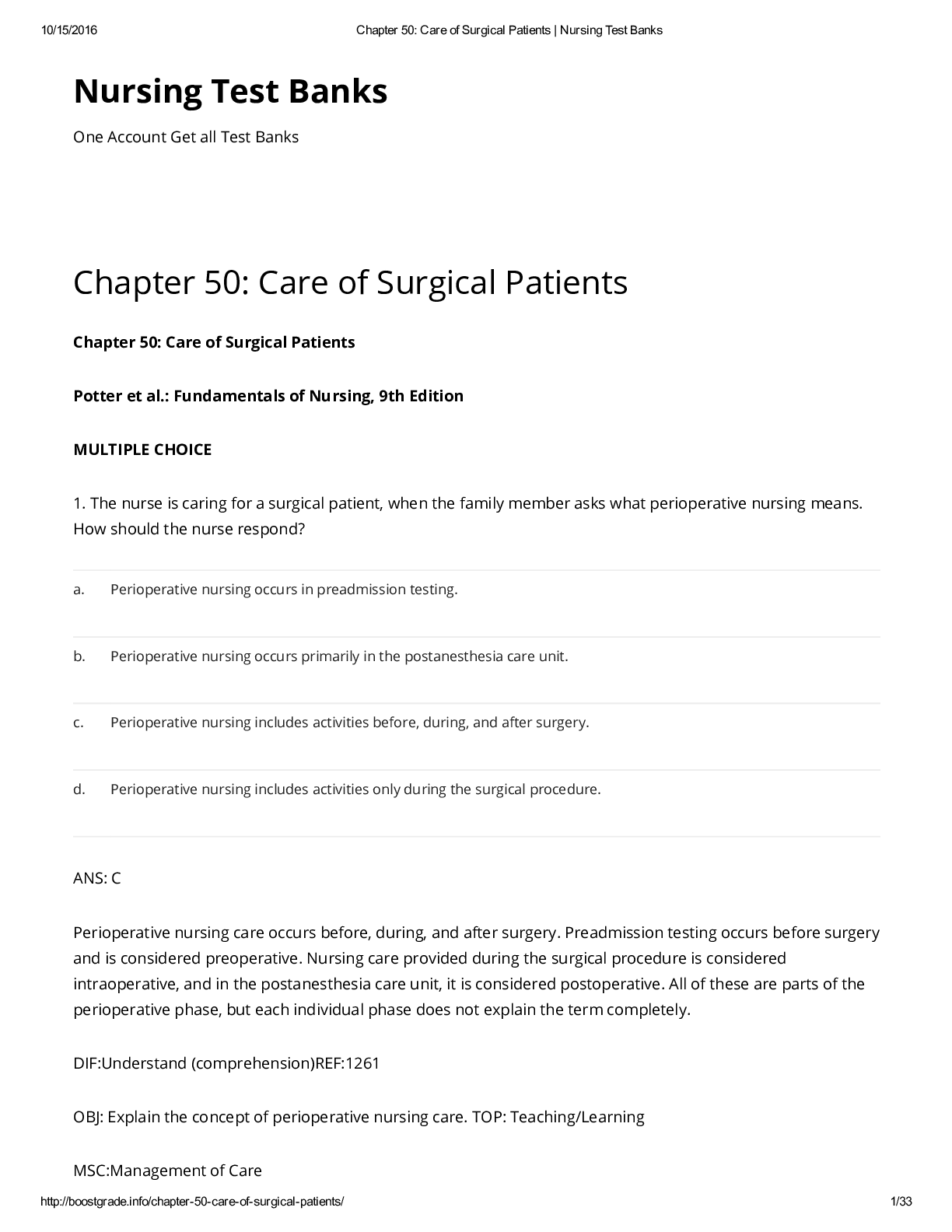
NUR 336 - Chapter 50: Care of Surgical Patients - Nursing Test...
.png)
Milestone Chapter 50 Care of Patients with Musculoskeletal Pro...
 Med Surg test Latest Verified Questions and all Correct Answers with Explanations Chapter 50 Assessment and Management of Patients with Bi.png)
Sophia Milestone Adult Nursing (NUR 105) Med Surg test Latest...

Chapter 50--Lower Gastrointestinal Tract Dysfunction: Nursing...

Chapter 50--Lower Gastrointestinal Tract Dysfunction: Nursing...
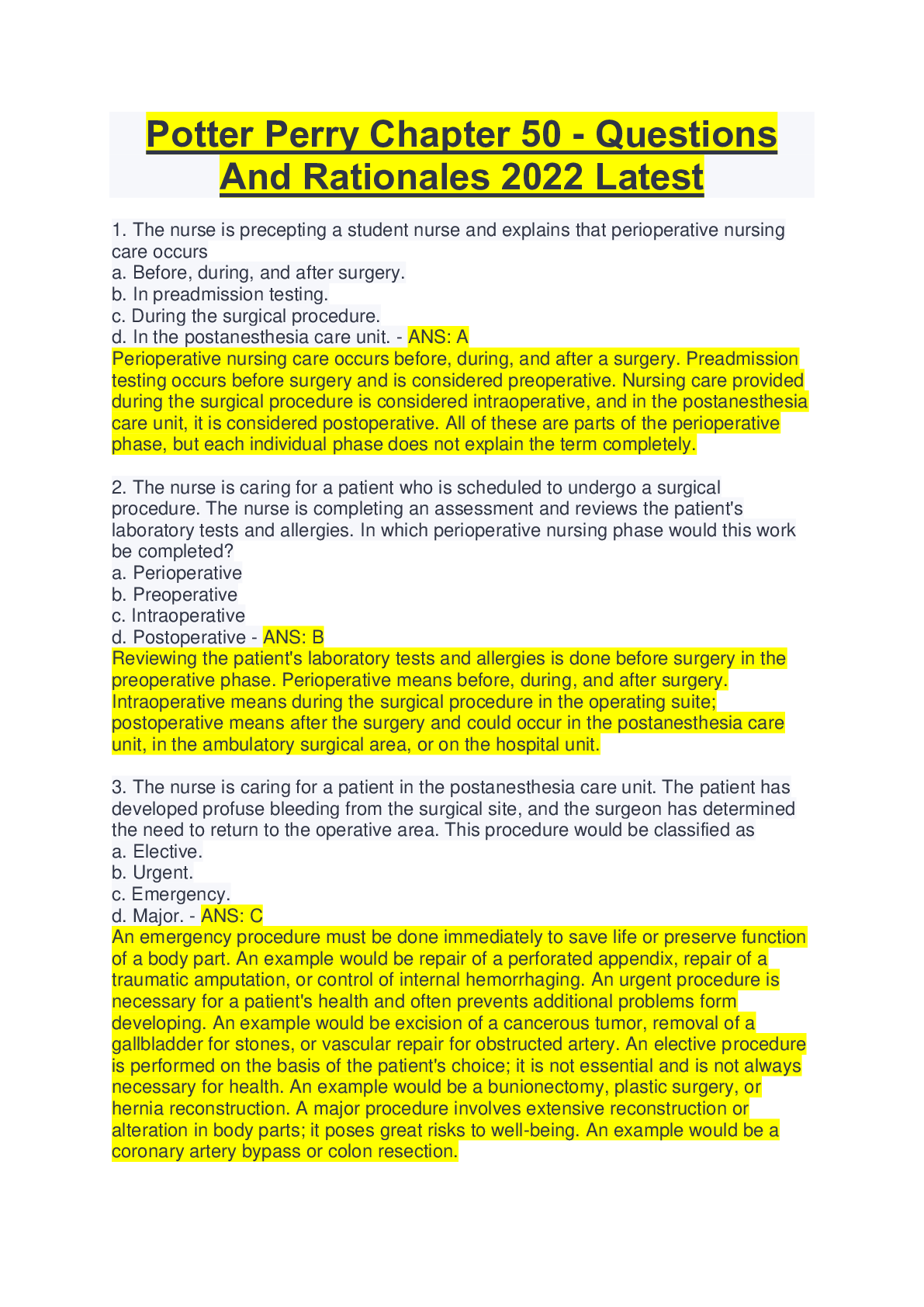
Potter Perry Chapter 50 - Questions And Rationales 2022 Lates...
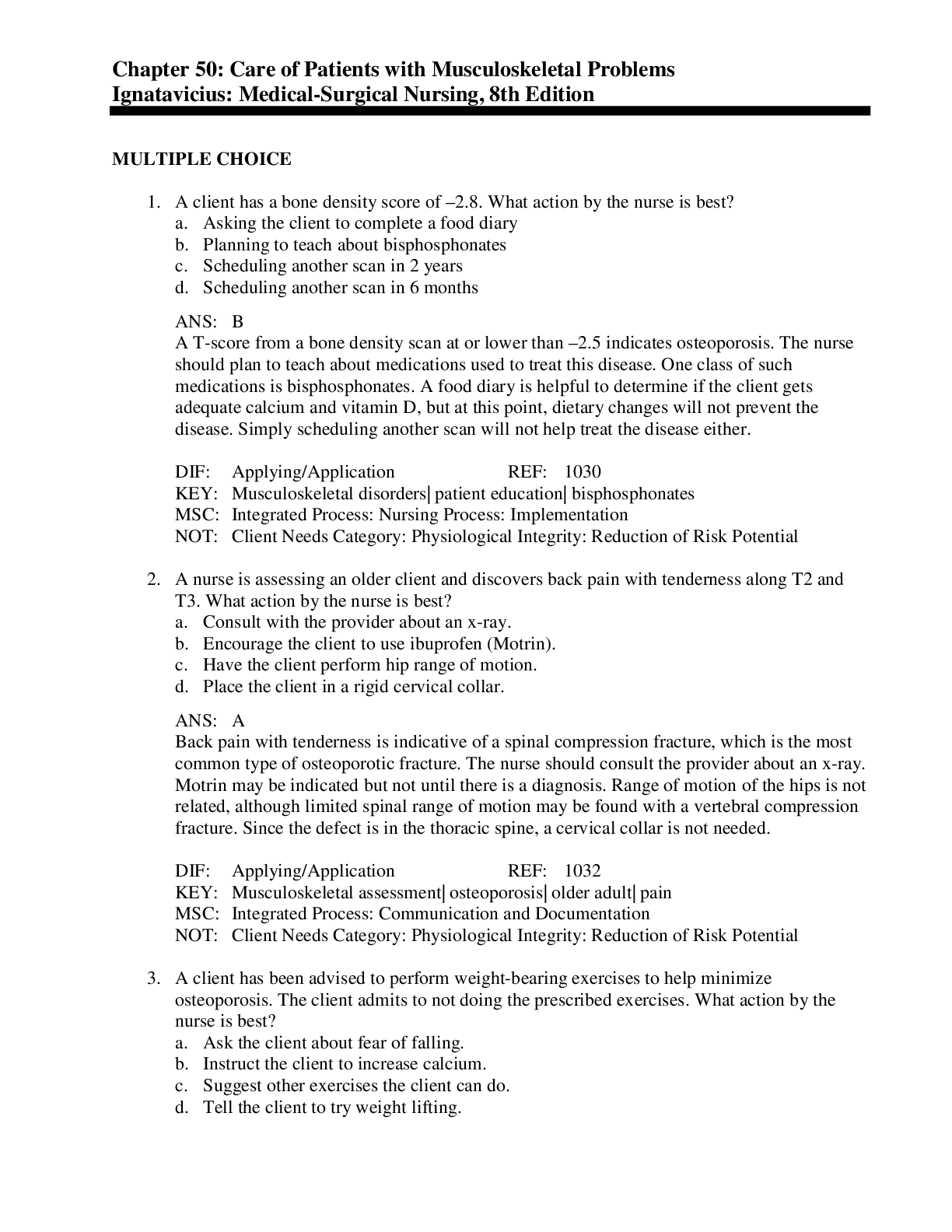
Care of Patients with Musculoskeletal Problems. Medical-Surgic...
Care of Patients with Musculoskeletal Problems. Medical-Surgic...

TEST BANK CHAPTER 50: CARE OF SURGICAL PATIENTS QUESTION AND A...
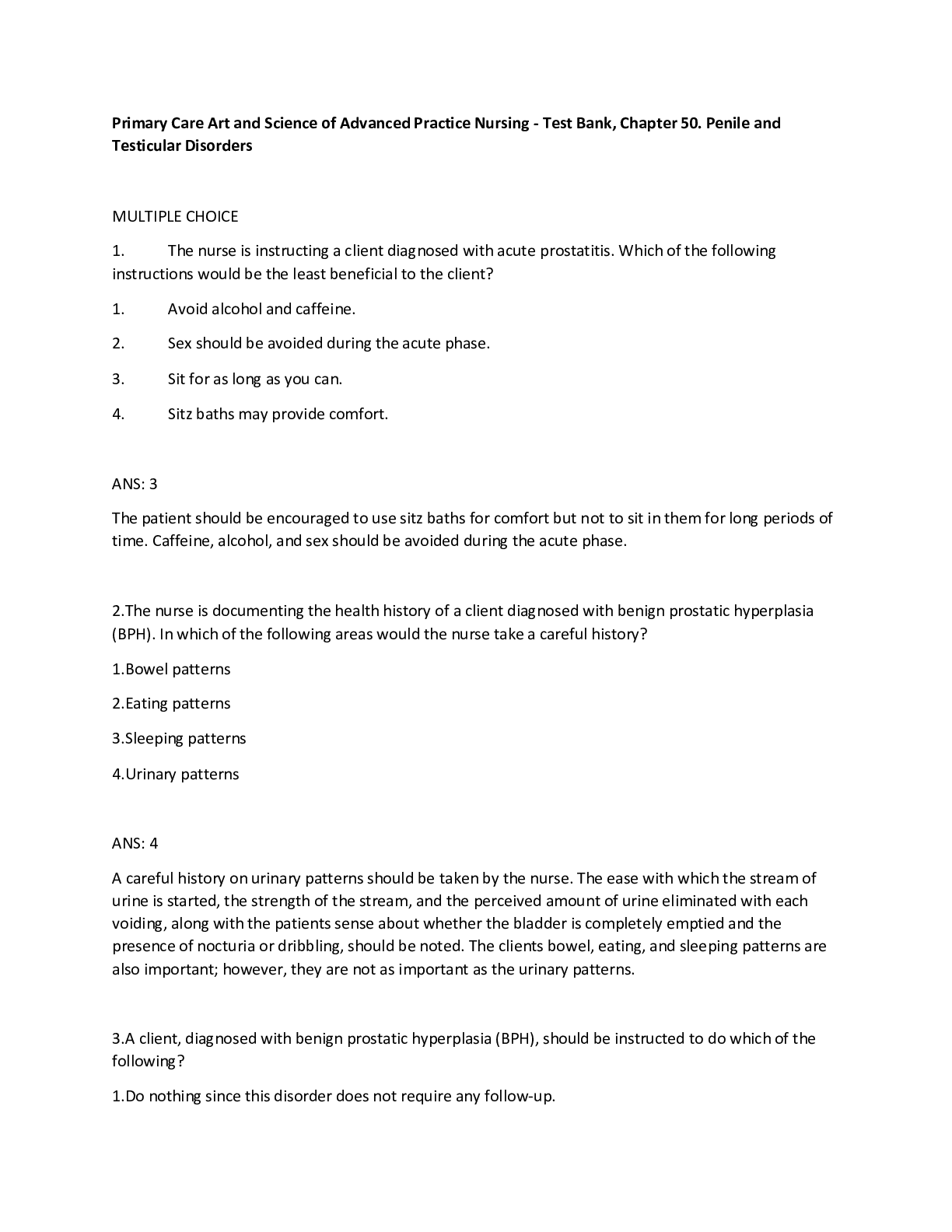
Primary Care Art and Science of Advanced Practice Nursing - Te...

NURS: Fundamentals of nursing 10th Edition. (Potter Perry Test...
NURS: Fundamentals of nursing 10th Edition. (Potter Perry Test...
NURSING LP 1300 Chapter 50: Care of Patients with Musculoskele...
NR566 / NR 566: Advanced Pharmacology for Care of the Family W...

Chapter 50 Concepts of Care for of Patients With Stomach Disor...
.png)