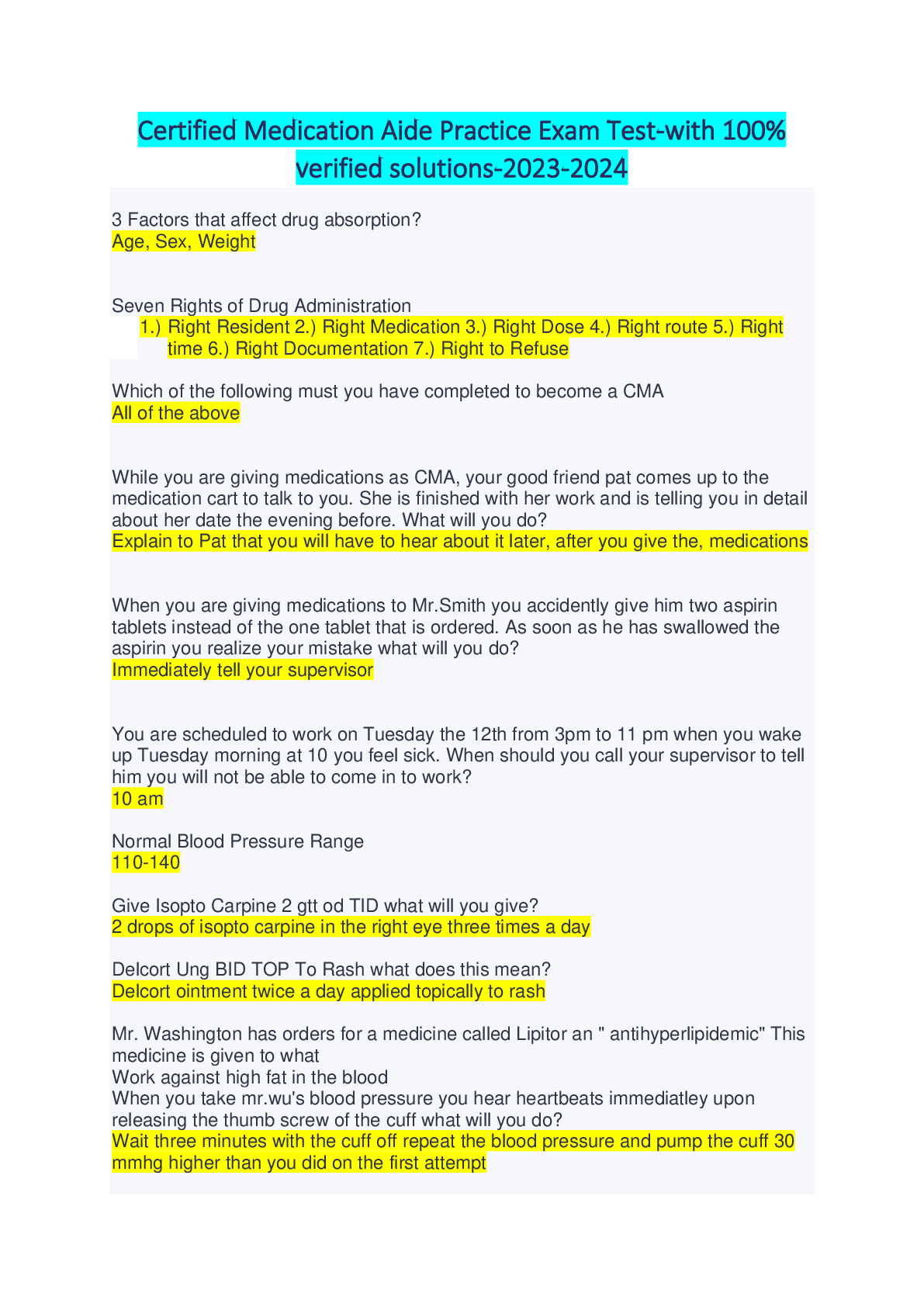
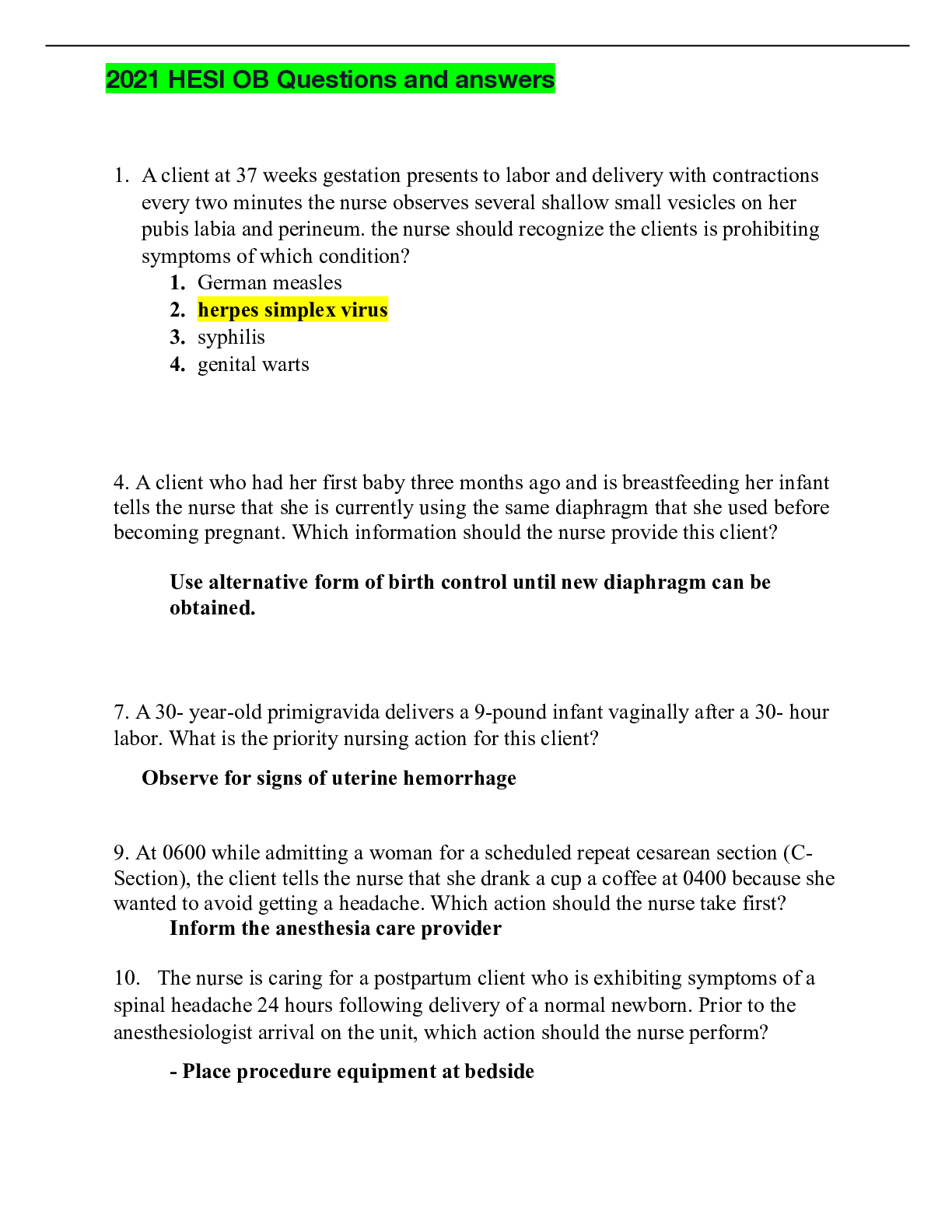
2021 HESI OB Questions and answers.pdf
Document Content and Description Below
Chapter 01: Evidence-Based Assessment
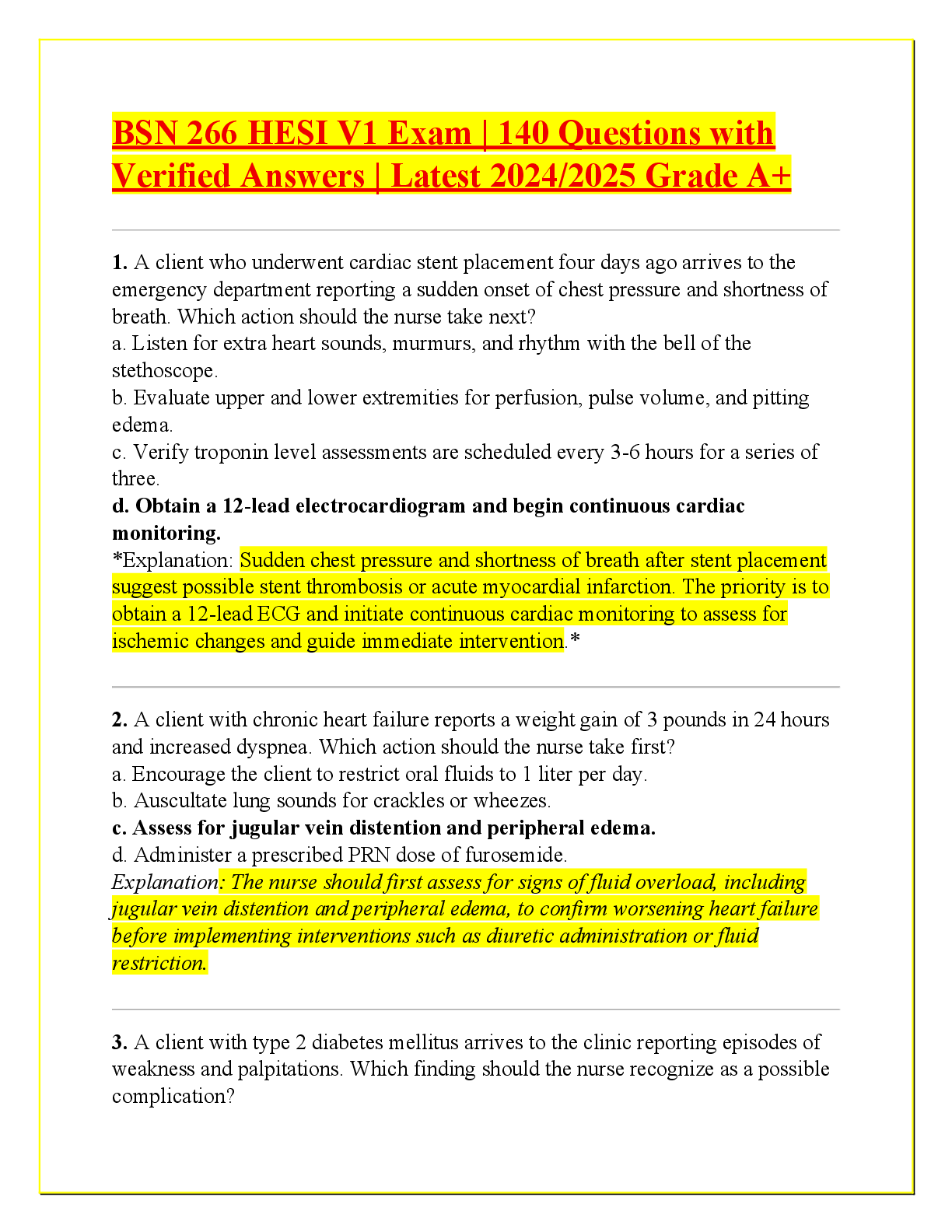
1. After completing an initial assessment of a patient, the nurse has charted that his respirations are eupneic and his pulse is 58 beats per minute. These types of data would be:
...
[Show More]
Last updated: 3 years ago
Preview 1 out of 8 pages
Instant download
Buy this Document to get the Full Access Instantly
Provided by Students Who Aced it
We Verify Document Content to Gurantee Accuracy
Reviews( 0 )
Document information
Connected school, study & course
About the document
Uploaded On
Feb 19, 2022
Number of pages
8
Written in
All

Additional information
This document has been written for:
Uploaded
Feb 19, 2022
Downloads
0
Views
110
Topic Tags
Recommended For You
Get more on EXAM »

$100.5
996 Pages
ATI TEAS 7 | 4 Versions for Reading, Math, Science, English, A...
More related documents below