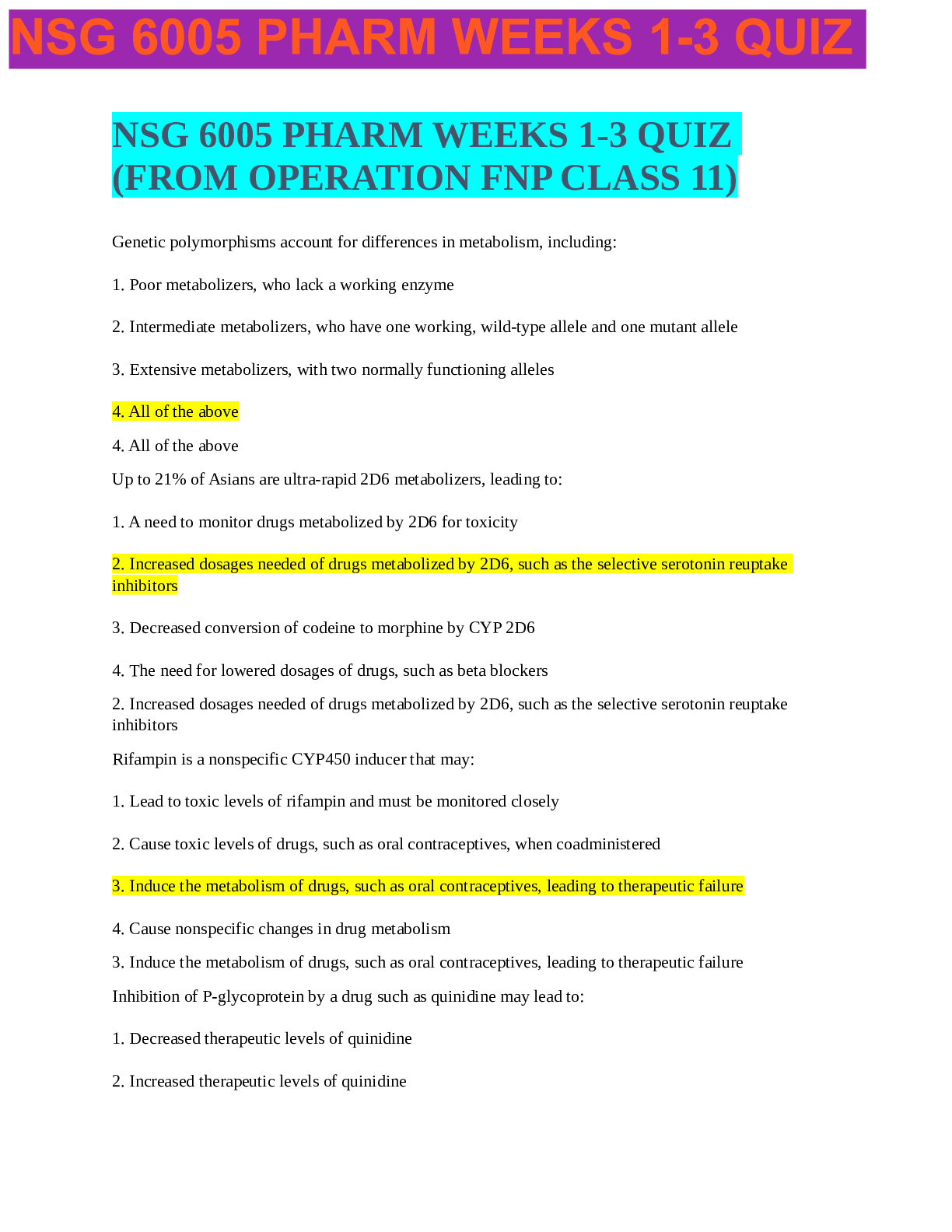
NURSING > QUESTIONS & ANSWERS > NSG 6005 PHARM WEEKS 1-3 QUIZ (FROM OPERATION FNP CLASS 11) LATEST (2021) GRADED A (All)
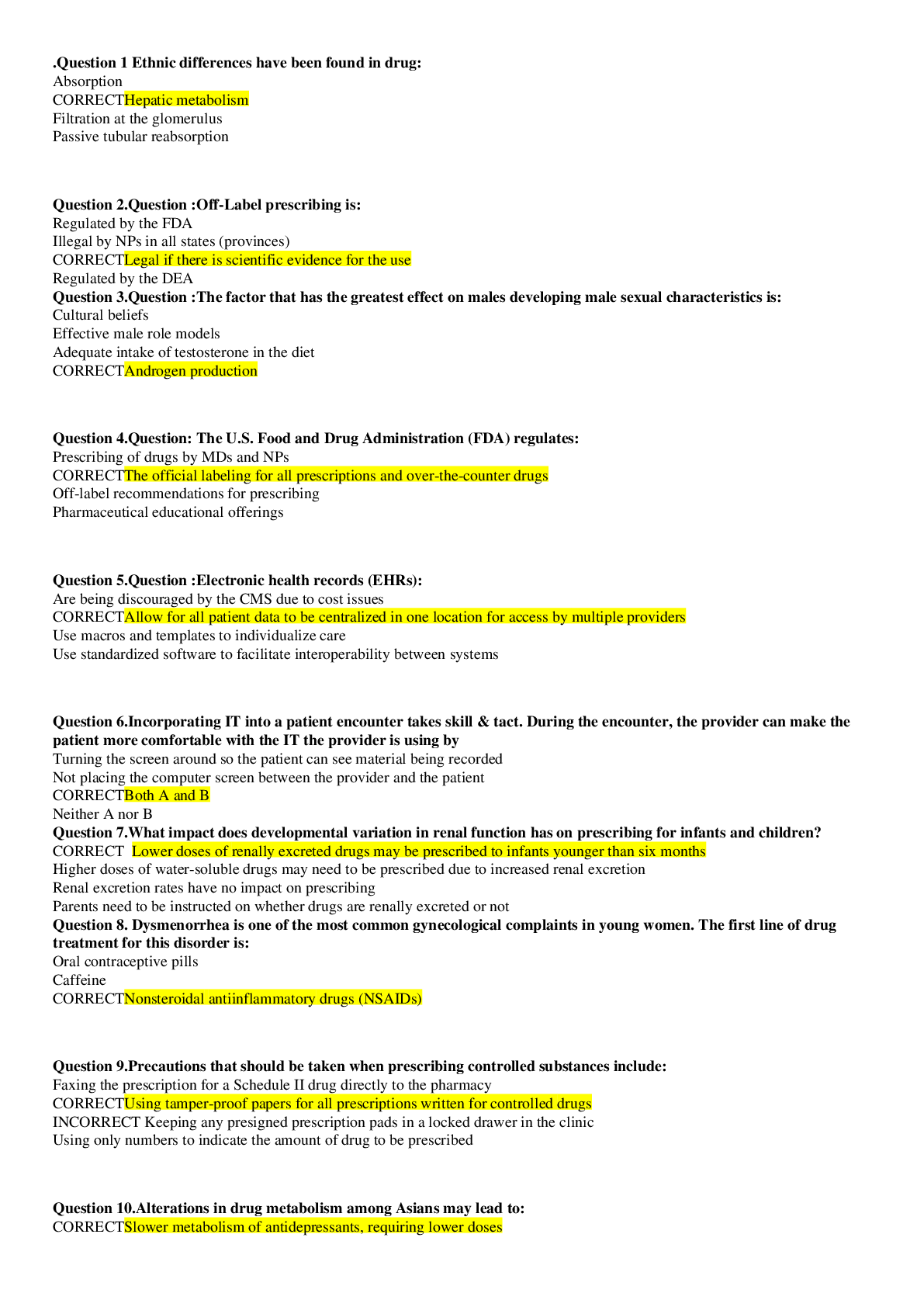
NSG 6005 PHARM WEEKS 1-3 QUIZ (FROM OPERATION FNP CLASS 11) LATEST (2021) GRADED A
Document Content and Description Below
Last updated: 8 months ago
Preview 1 out of 32 pages
Instant download
Buy this Document to get the Full Access Instantly
Provided by Students Who Aced it
We Verify Document Content to Gurantee Accuracy
Reviews( 0 )
Document information
Connected school, study & course
About the document
Uploaded On
Mar 16, 2022
Number of pages
32
Written in
All

Additional information
This document has been written for:
Uploaded
Mar 16, 2022
Downloads
0
Views
118
Topic Tags
Recommended For You
Get more on QUESTIONS & ANSWERS »
NSG 6005 PHARM WEEKS 1-3 QUIZ (FROM OPERATION FNP CLASS 11) LA...
NSG6005 / NSG6005 PHARM WEEK 6 QUIZ LATEST (2021) GRADED A
NSG6005 / NSG6005 PHARM FINAL EXAM LATEST (2021) GRADED A

NSG6005 / NSG 6005: Advanced Pharmacology Final Exam Latest Up...
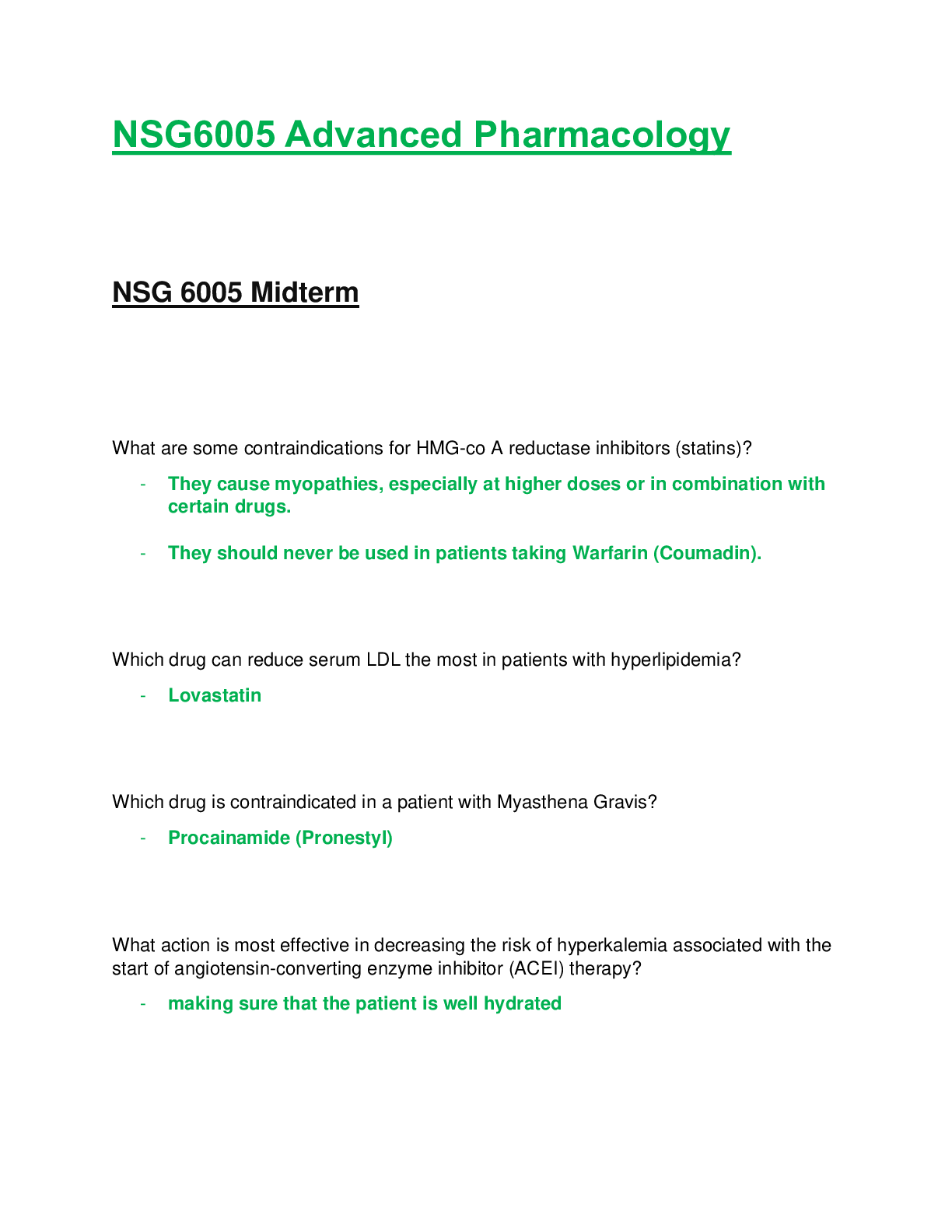
NSG6005 / NSG 6005: Advanced Pharmacology Midterm Exam Latest...
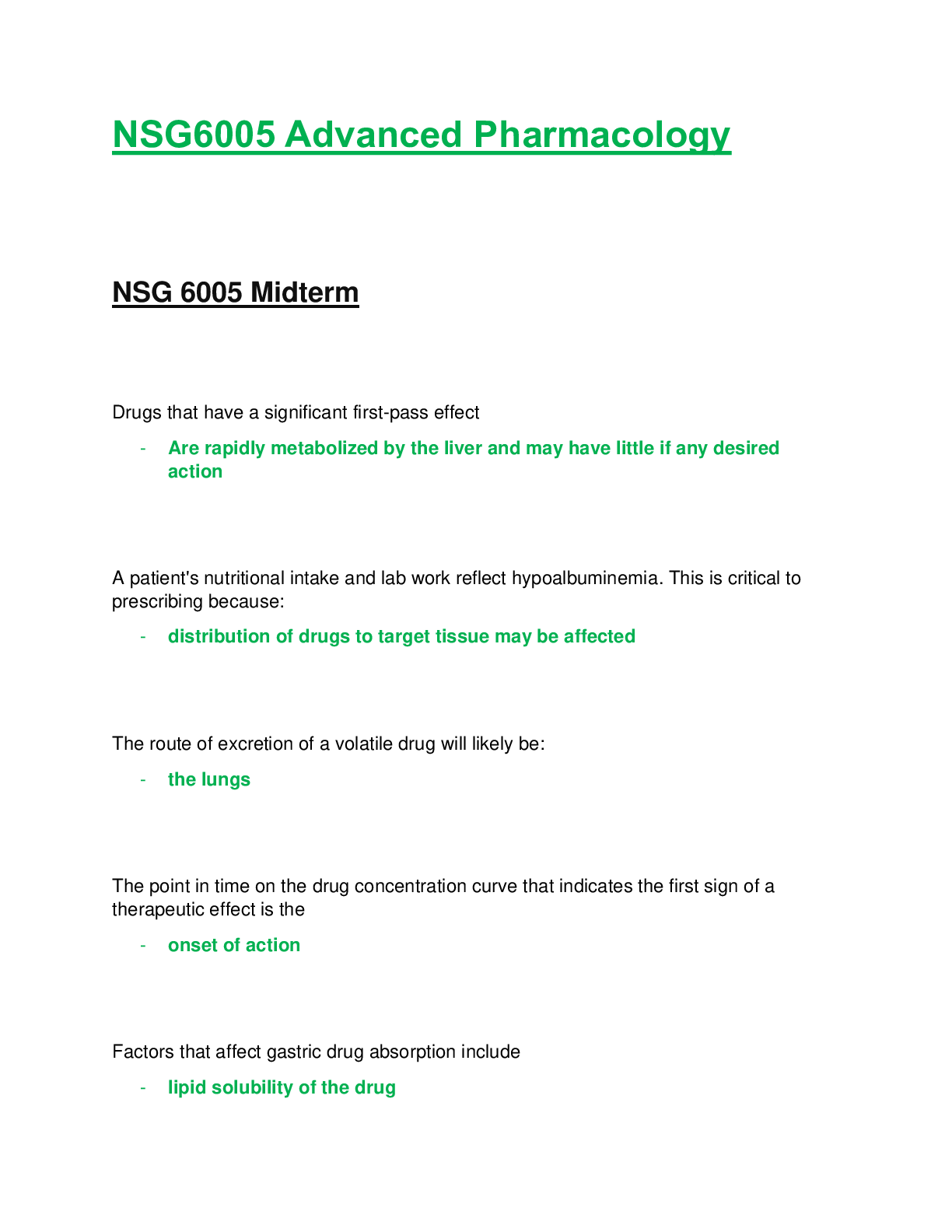
NSG6005 / NSG 6005: Advanced Pharmacology Midterm Exam Latest...

.png)