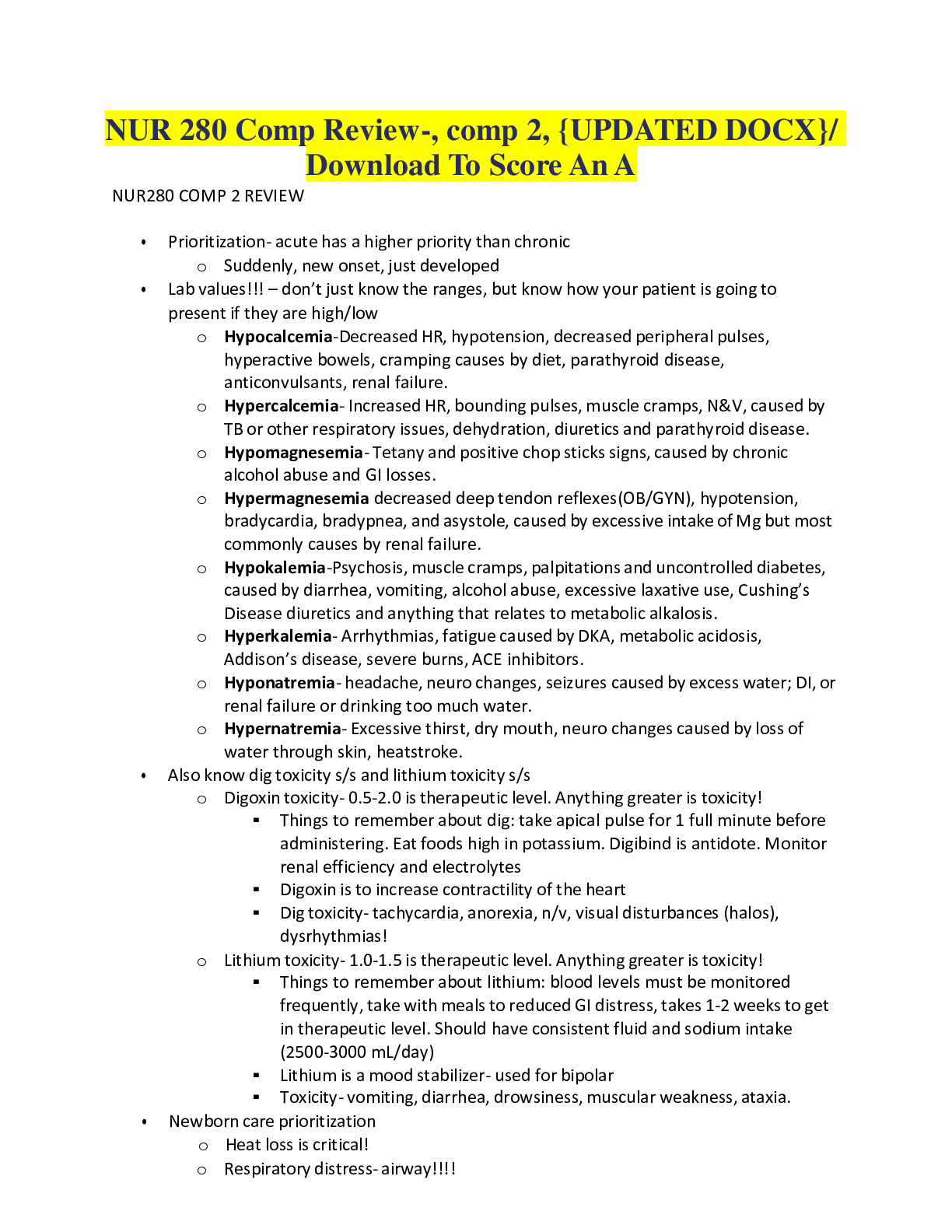
NUR280 COMP 2 REVIEW
Prioritization- acute has a higher priority than chronic
o Suddenly, new onset, just developed
Lab values!!! – don’t just know the ranges, but know how your patient is going to
present if the
...
NUR280 COMP 2 REVIEW
Prioritization- acute has a higher priority than chronic
o Suddenly, new onset, just developed
Lab values!!! – don’t just know the ranges, but know how your patient is going to
present if they are high/low
o Hypocalcemia-Decreased HR, hypotension, decreased peripheral pulses,
hyperactive bowels, cramping causes by diet, parathyroid disease,
anticonvulsants, renal failure.
o Hypercalcemia- Increased HR, bounding pulses, muscle cramps, N&V, caused by
TB or other respiratory issues, dehydration, diuretics and parathyroid disease.
o Hypomagnesemia- Tetany and positive chop sticks signs, caused by chronic
alcohol abuse and GI losses.
o Hypermagnesemia decreased deep tendon reflexes(OB/GYN), hypotension,
bradycardia, bradypnea, and asystole, caused by excessive intake of Mg but most
commonly causes by renal failure.
o Hypokalemia-Psychosis, muscle cramps, palpitations and uncontrolled diabetes,
caused by diarrhea, vomiting, alcohol abuse, excessive laxative use, Cushing’s
Disease diuretics and anything that relates to metabolic alkalosis.
o Hyperkalemia- Arrhythmias, fatigue caused by DKA, metabolic acidosis,
Addison’s disease, severe burns, ACE inhibitors.
o Hyponatremia- headache, neuro changes, seizures caused by excess water; DI, or
renal failure or drinking too much water.
o Hypernatremia- Excessive thirst, dry mouth, neuro changes caused by loss of
water through skin, heatstroke.
Also know dig toxicity s/s and lithium toxicity s/s
o Digoxin toxicity- 0.5-2.0 is therapeutic level. Anything greater is toxicity!
Things to remember about dig: take apical pulse for 1 full minute before
administering. Eat foods high in potassium. Digibind is antidote. Monitor
renal efficiency and electrolytes
Digoxin is to increase contractility of the heart
Dig toxicity- tachycardia, anorexia, n/v, visual disturbances (halos),
dysrhythmias!
o Lithium toxicity- 1.0-1.5 is therapeutic level. Anything greater is toxicity!
Things to remember about lithium: blood levels must be monitored
frequently, take with meals to reduced GI distress, takes 1-2 weeks to get
in therapeutic level. Should have consistent fluid and sodium intake
(2500-3000 mL/day)
Lithium is a mood stabilizer- used for bipolar
Toxicity- vomiting, diarrhea, drowsiness, muscular weakness, ataxia.
Newborn care prioritization
o Heat loss is critical!
o Respiratory distress- airway!!!!
Bulb suctioning- mouth first and then nose!
o Apgar score
Heart rate, respiratory effort, muscle tone, reflexes, color.
0-3 poor, 4-6 fair, 7-10 excellent.
o Bonding- how is mom reacting to baby? Watch for postpartum depression!!!
o Shots and drops- vitamin K drops in eyes, and hep B shot
o Umbilicus care- 2 arteries and 1 vein
Keep it dry, open to air, don’t submerge it.
Dab it dry- no alcohol or other substance use
IV solution is running late- don’t increase the rate! - fluid overload
Besides checking iV site, priority patient assessment is respiratory
o Crackles!!!!
How are Thyroid storm, organ rejections, and infection alike- increase in temperature!
o Tachycardia,
o Hyperpyrexia (high fever)
Thyroidectomy- have emergency trach kit and ambu bag at bedside
o Low or semi-fowler’s
o Support head, neck, and shoulders to prevent flexion or hyperextension of suture
line; elevate head of bed to 30 degrees
o Trach set and suction supplies at bedside
o Give fluids as tolerated.
o Complications:
Laryngeal nerve injury- detected by hoarseness
Thyoidtoxicosis- increased temperature, increased pulse, hypertension,
abdominal pain, diarrhea, confusion, agitation, seizures
Treatment- hypothermia blanket, oxygen, potassium iodine, PTU,
propranolol, hydrocortisone, acetaminophen; also caused by
trauma, infection, palpation, RAI therapy
Hemorrhage- check back of neck and upper chest for bleeding
Respiratory obstruction
Tetany (from decreased calcium from parathyroid involvement- Chvostek’s
and Trousseau’s sign
Have IV calcium gluconate or IV calcium chloride available
Parathyroid gland removal along with thyroid- hypocalcemia- chovasetk and trousseau’s
sign
o CATS!!! - hypocalcemia
What do ACE inhibitors, Addison’s disease, and potassium sparing diureticshyperkalemia
o ACE inhibitors- causes decreased BP, decreased aldosterone secretions- sodium
and fluid loss this causes high levels of potassium (end in –pril)
o Addison’s disease- remember that you have to ADD cortisol. So, lethargic,
dehydration, weight loss, etc. This causes high levels in potassium, but low levels
of all other electrolytes.
o Potassium sparing diuretics- cause potassium to stay in the system while fluids
and electrolytes leave. Salt substitute is essentially potassium, so don’t use, and
don’t eat a diet high in potassium.
Thoracentesis- removal of fluid from the thoracic cavity in the pleural space
o Aspiration of fluid or air from the pleural space.
Used to obtain specimen for analysis, relieve lung compression, obtain
lung tissue for biopsy, or instill medications into pleural space.
Prep/testing:
Explain procedure
Take vitals
Clip area around the needle insertion site
Position client is sitting with arms on pillows on over-bed table or
lying on side in bed
Expect stinging sensation with injection of local anesthetic and
feeling of pressure when needle inserted
Don’t remove more than 1000 mL fluid at one time
Post-nursing care
Auscultate breath sounds frequently
Monitor vital signs frequently
Check for leakage of fluid, location of puncture site, client
tolerance
Sterile dressing after procedure!!!
Chest tube- expected drainage- 100 mL/hr
o Anything higher contact the doctor
o If more than 100- internal bleeding somewhere
o Chest tube- intrapleural drainage system with one or more chest catheters held
in pleural space by suture to chest wall, attached to drainage system.
o Nursing care:
Fill water seal chamber
If suction is to be used, fill the suction control chamber with sterile water
to the 20 mL
Encourage the client to change position and cough and deep breathe
frequently
Put the drainage system below level of insertion and without kinks!
Chest tubes are only clamped momentarily to check air for leaks and to
change the drainage apparatus
Observe for fluctuations of fluid in the water-seal chamber; stops
fluctuating when:
Lung re-expands
Tubing is obstructed
Loop hangs below the rest of the tubing
o Removal of the chest tube
Instruct the client to do the Valsalva maneuver
Chest tube is clamped and quickly removed by the health care provider
[Show More]




- Test Bank.png)