NUR 280- COMP ONE REVIEW
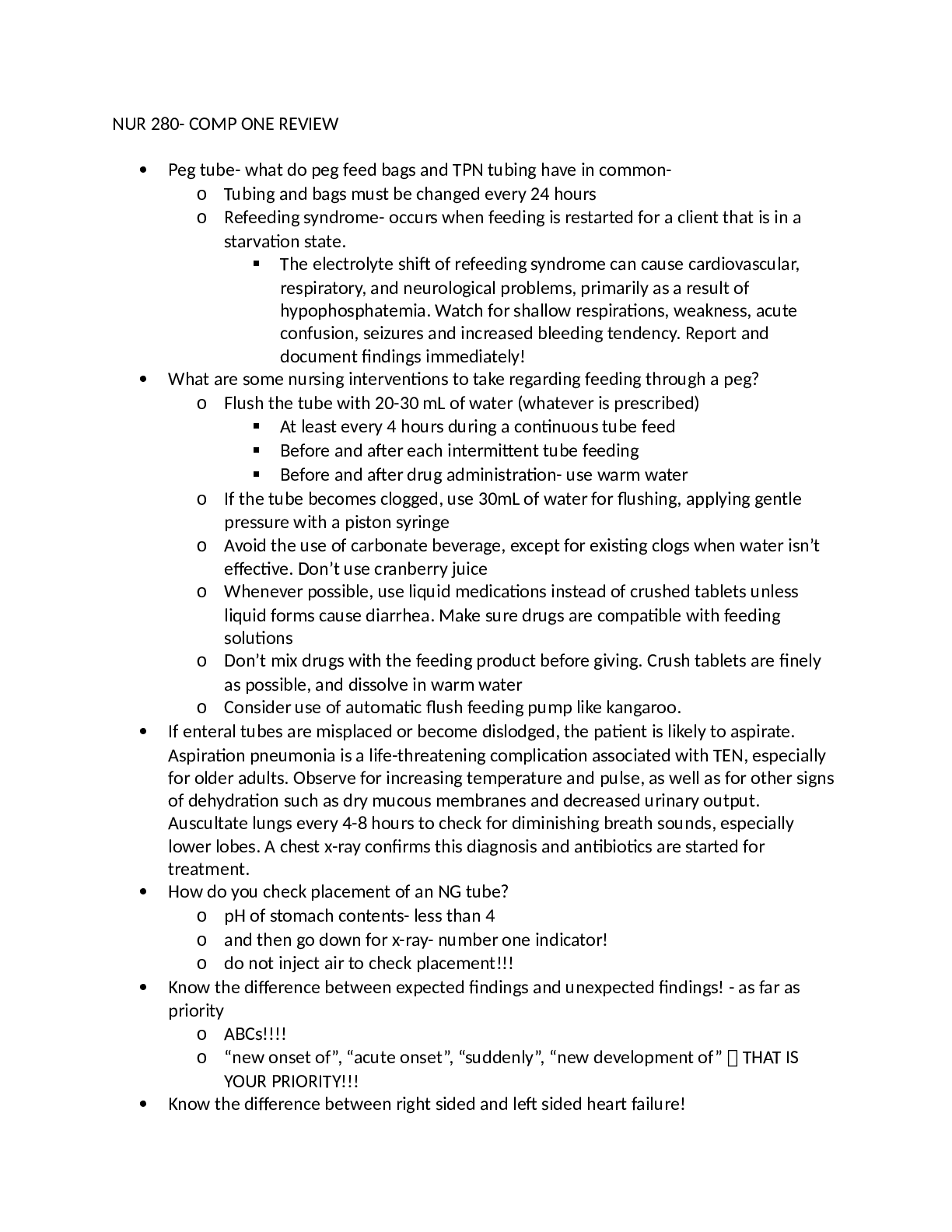
Peg tube- what do peg feed bags and TPN tubing have in commono Tubing and bags must be changed every 24 hours
o Refeeding syndrome- occurs when feeding is restarted for a client that is in a
...
NUR 280- COMP ONE REVIEW
Peg tube- what do peg feed bags and TPN tubing have in commono Tubing and bags must be changed every 24 hours
o Refeeding syndrome- occurs when feeding is restarted for a client that is in a
starvation state.
The electrolyte shift of refeeding syndrome can cause cardiovascular,
respiratory, and neurological problems, primarily as a result of
hypophosphatemia. Watch for shallow respirations, weakness, acute
confusion, seizures and increased bleeding tendency. Report and
document findings immediately!
What are some nursing interventions to take regarding feeding through a peg?
o Flush the tube with 20-30 mL of water (whatever is prescribed)
At least every 4 hours during a continuous tube feed
Before and after each intermittent tube feeding
Before and after drug administration- use warm water
o If the tube becomes clogged, use 30mL of water for flushing, applying gentle
pressure with a piston syringe
o Avoid the use of carbonate beverage, except for existing clogs when water isn’t
effective. Don’t use cranberry juice
o Whenever possible, use liquid medications instead of crushed tablets unless
liquid forms cause diarrhea. Make sure drugs are compatible with feeding
solutions
o Don’t mix drugs with the feeding product before giving. Crush tablets are finely
as possible, and dissolve in warm water
o Consider use of automatic flush feeding pump like kangaroo.
If enteral tubes are misplaced or become dislodged, the patient is likely to aspirate.
Aspiration pneumonia is a life-threatening complication associated with TEN, especially
for older adults. Observe for increasing temperature and pulse, as well as for other signs
of dehydration such as dry mucous membranes and decreased urinary output.
Auscultate lungs every 4-8 hours to check for diminishing breath sounds, especially
lower lobes. A chest x-ray confirms this diagnosis and antibiotics are started for
treatment.
How do you check placement of an NG tube?
o pH of stomach contents- less than 4
o and then go down for x-ray- number one indicator!
o do not inject air to check placement!!!
Know the difference between expected findings and unexpected findings! - as far as
priority
o ABCs!!!!
o “new onset of”, “acute onset”, “suddenly”, “new development of” THAT IS
YOUR PRIORITY!!!
Know the difference between right sided and left sided heart failure!
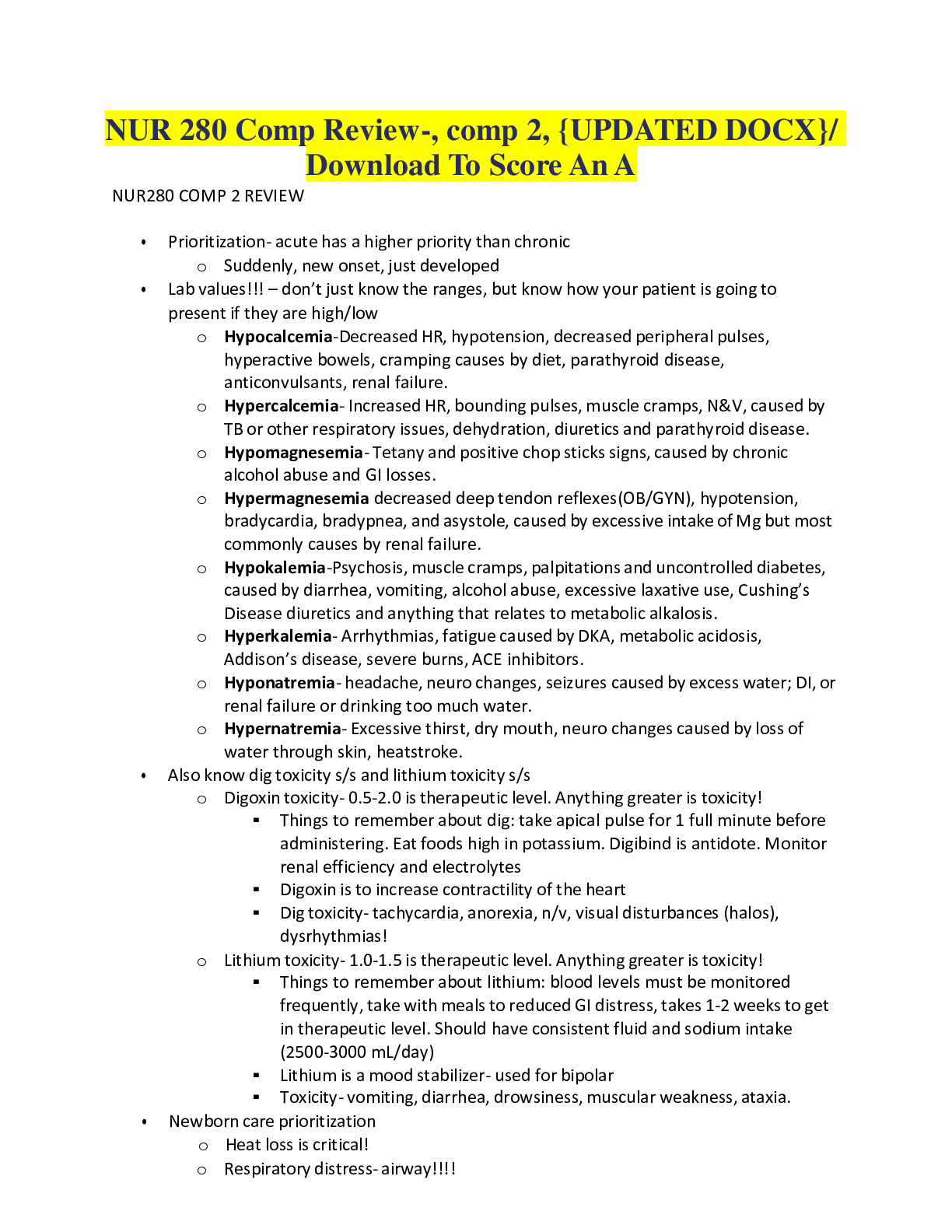
o Right- JVD, pitting edema, ascite- systemic congestions
o Left- crackles, pink frothy sputum, pulmonary edema- pulmonary congestion
o Daily weight is the best indication of heart failure- weigh after unirnating in the
morning, wearing the same clothes, at the same time.
o BNP is used to track heart failure
Understand normal growth and development in children and know normal vital signs in
children
o Heart rate:
New born- 80-180 bpm (depending on activity)
1 week-3 months- 80-220 bpm (depending on activity)
3 moths- 2 years- 70-150 bpm (depending on acivity)
2-10 years old- 60-110 bpm (depending on activity)
10+ years- 50-90 bpm (depending on activity)
o respirations
newborn-1 year- 30-35 breaths/min
1-2 years- 25-30 breaths/min
2-6 years- 21-25 breaths/min
6-12 years- 19-21 breaths/min
12+ years older- 16-19 breaths/min
o blood pressure:
Age Systolic
Pressure
Diastolic
Pressure Systolic Hypotension
Birth (12 h, <1000 g) 3959 1636 <4050
Birth (12 h, 3 kg) 6076 3145 <50
Neonate (96 h) 6784 3553 <60
Infant (112 mo) 72104 3756 <70
Toddler (12 y) 86106 4263 <70 + (age in years x 2)
Preschooler (35 y) 89112 4672 <70 + (age in years x 2)
Schoolage (69 y) 97115 5776 <70 + (age in years x 2)
Preadolescent (1011
y) 102120 6180 <90
Adolescent (1215 y) 110131 6483 <90
o Know what toys/activities would be appropriate for the different ages
o Know how they communicate, know how they play!
o You will pretty much only explain a procedure to an adolescent child
[Show More]