Computer Science > Research Paper > CMIT 321 Ethical Hacking (2198)/ CMIT 321Reconnaissance Plan and Scanning Plan 3 UMUC. (All)
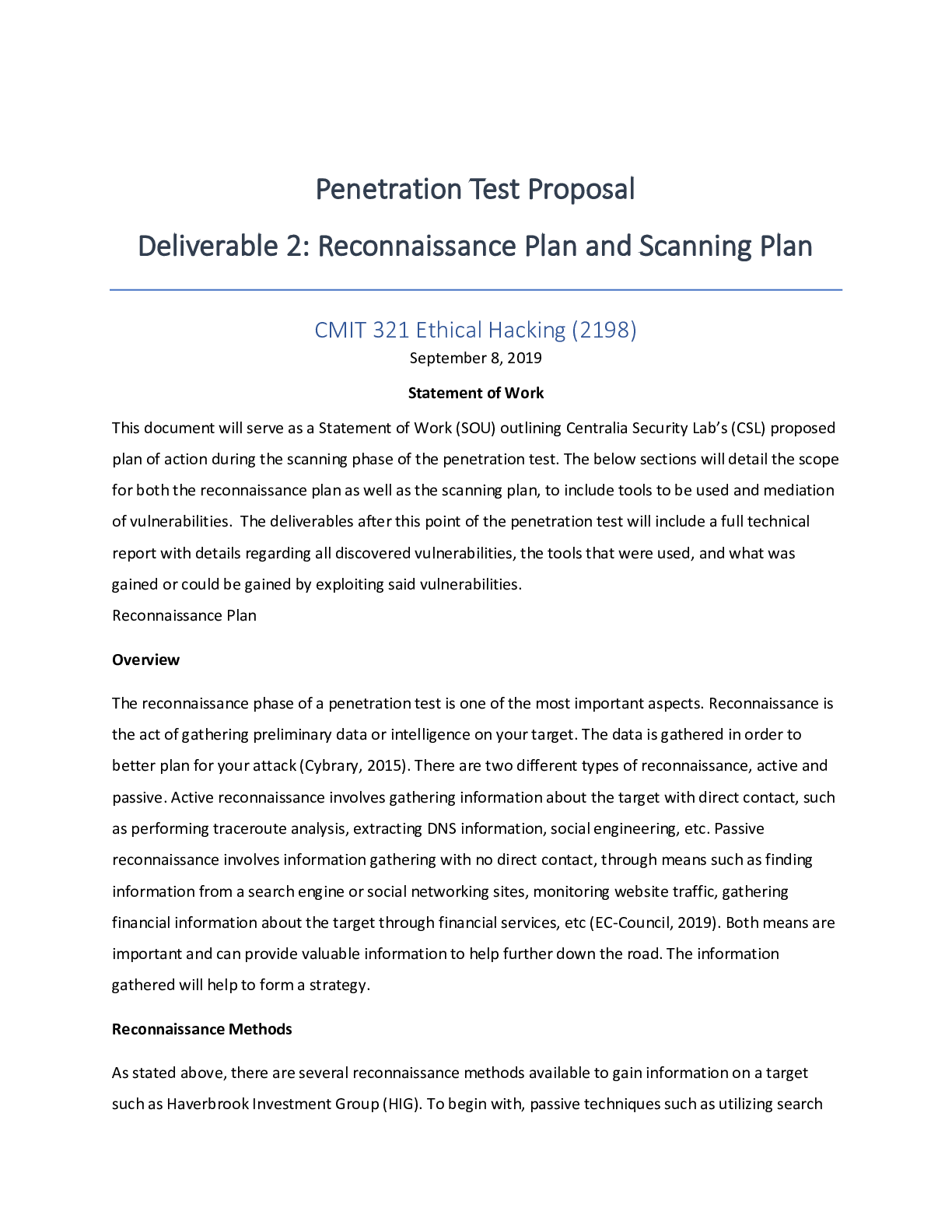
CMIT 321 Ethical Hacking (2198)/ CMIT 321Reconnaissance Plan and Scanning Plan 3 UMUC.
Document Content and Description Below
Last updated: 3 years ago
Preview 1 out of 4 pages
Instant download
Buy this Document to get the Full Access Instantly
Provided by Students Who Aced it
We Verify Document Content to Gurantee Accuracy
Reviews( 0 )
Document information
Connected school, study & course
About the document
Uploaded On
Nov 02, 2020
Number of pages
4
Written in
All

Additional information
This document has been written for:
Uploaded
Nov 02, 2020
Downloads
0
Views
234
Topic Tags
Related Subjects & Courses
Explore similar study resources and related concepts.
Recommended For You
Get more on Research Paper »
CMIT 321 Ethical Hacking/ Penetration Test Proposal Deliverab...
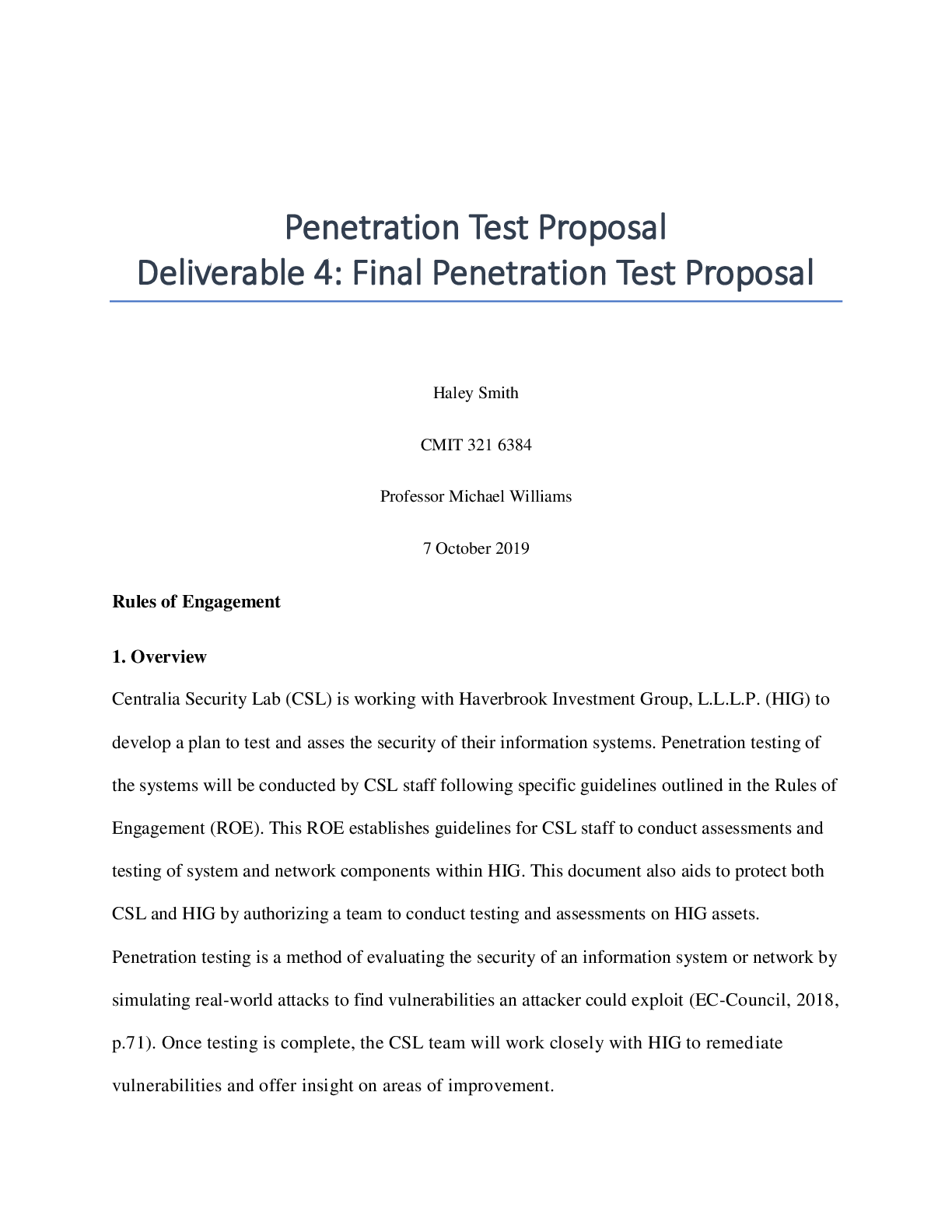
CMIT 321-6382: Ethical Hacking. Penetration Test Proposal Deli...
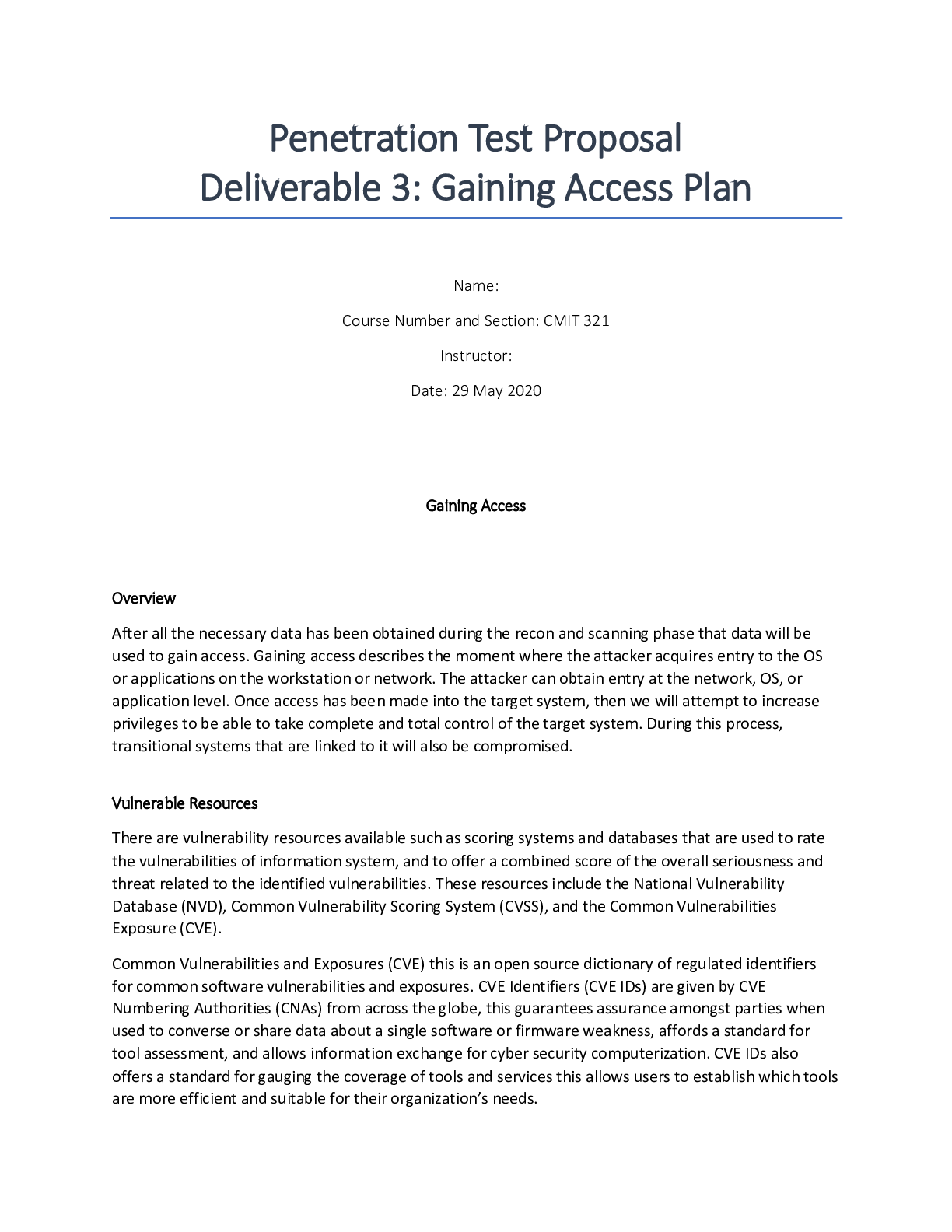
CMIT 321 Gaining Access Plan./ Penetration Test Proposal Deliv...
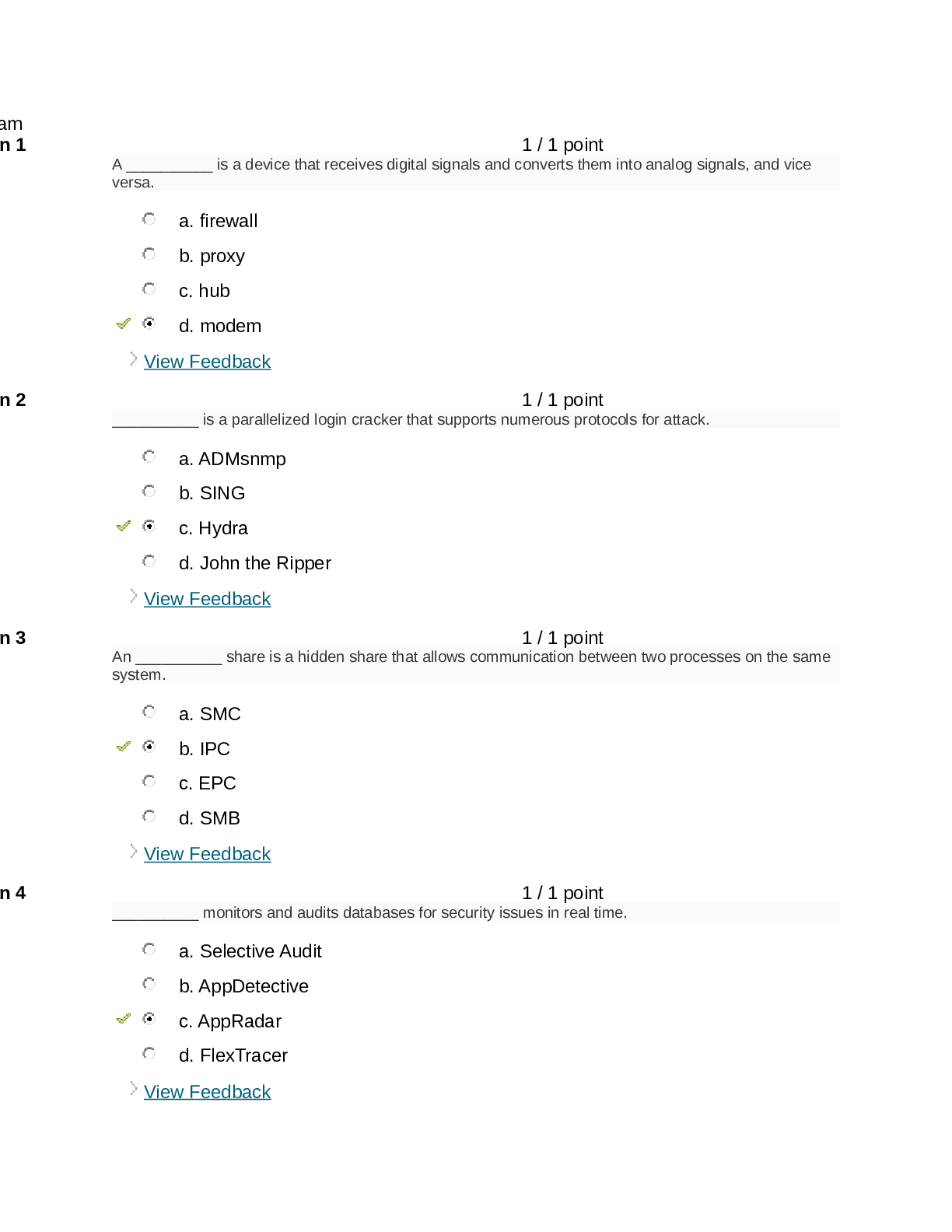
CMIT 321 Final Exam Version 2 2021/2022 | University of Maryla...
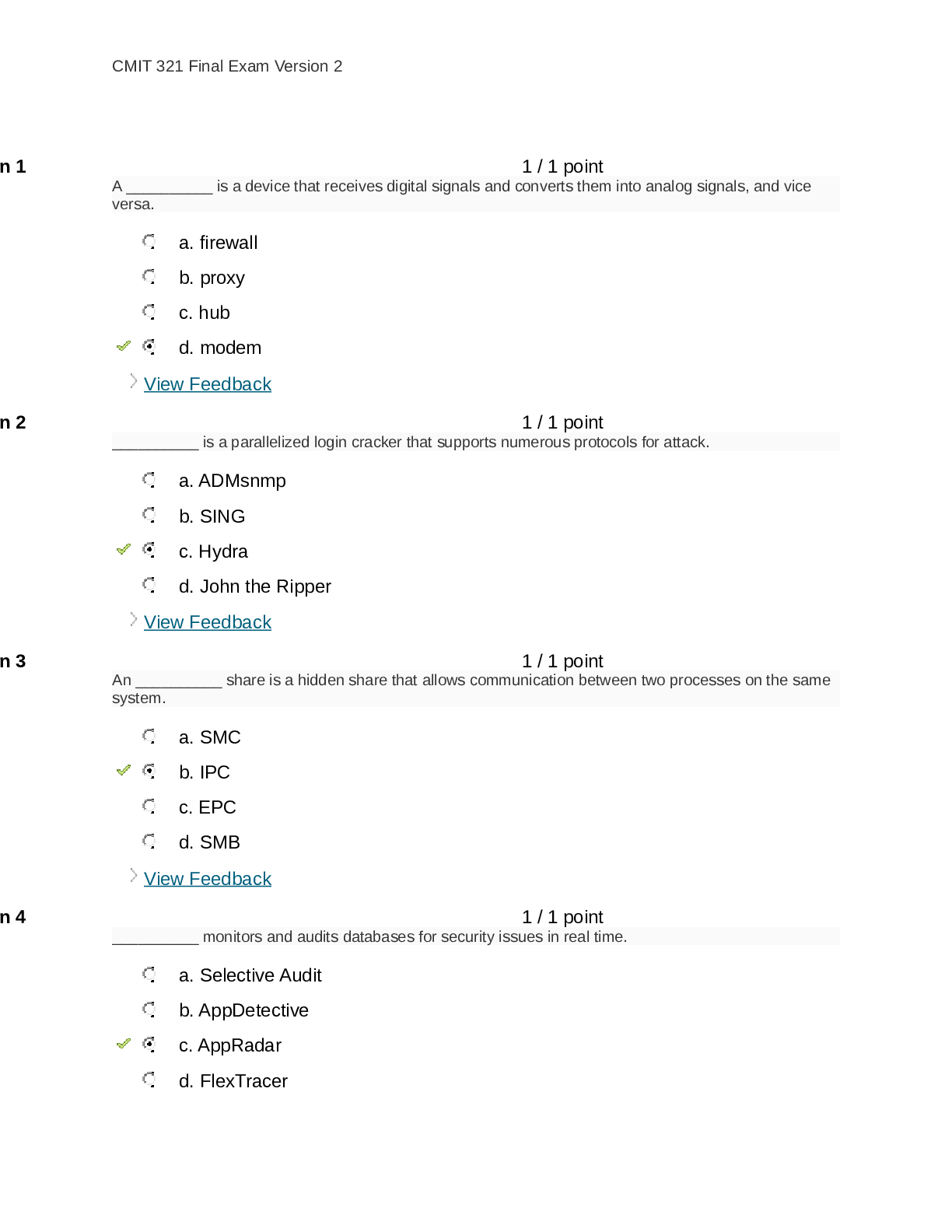

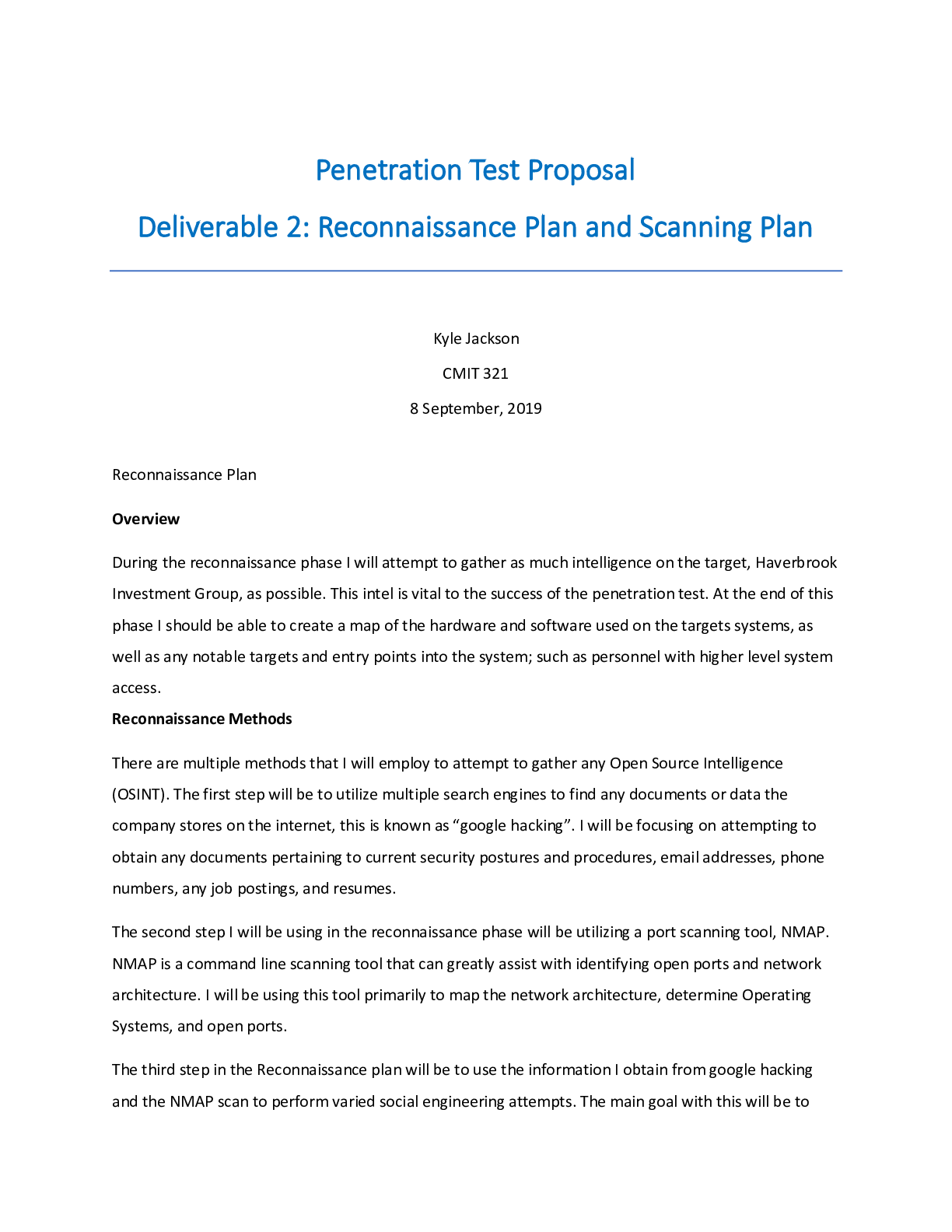
CMIT 321 Penetration Test Proposal Deliverable 2: Reconnaissan...

University of Maryland, University College CMIT 321 quiz 2

University of Maryland, University College CMIT 321 quiz 1 2n...

University of Maryland, University College CMIT 321 Final exam

eBook Advances in Optical Form and Coordinate Metrology 1st Ed...
Solutions Manual Computer Networking A Top-Down Approach 8th E...
Test Bank Understanding Current Procedural Terminology and HCP...




![Preview of UNIVERSITY OF GLASGOW: URBAN5085] GOVERNANCE AND MARKETS Course programme. 5. What are the](https://scholarfriends.com/storage/uploads/2020/07/09/22/20/43/qHg_1594322443_involving-citizens-in-policy-decisions-completed.png)


