Nursing 231 Exam 3 Questions and
answers. Rated A+
the study of all aspects of the aging process is known as - Ans-gerontology
the care of older adults - Ans-geriatrics
at age 65 a person is considered to have entere
...
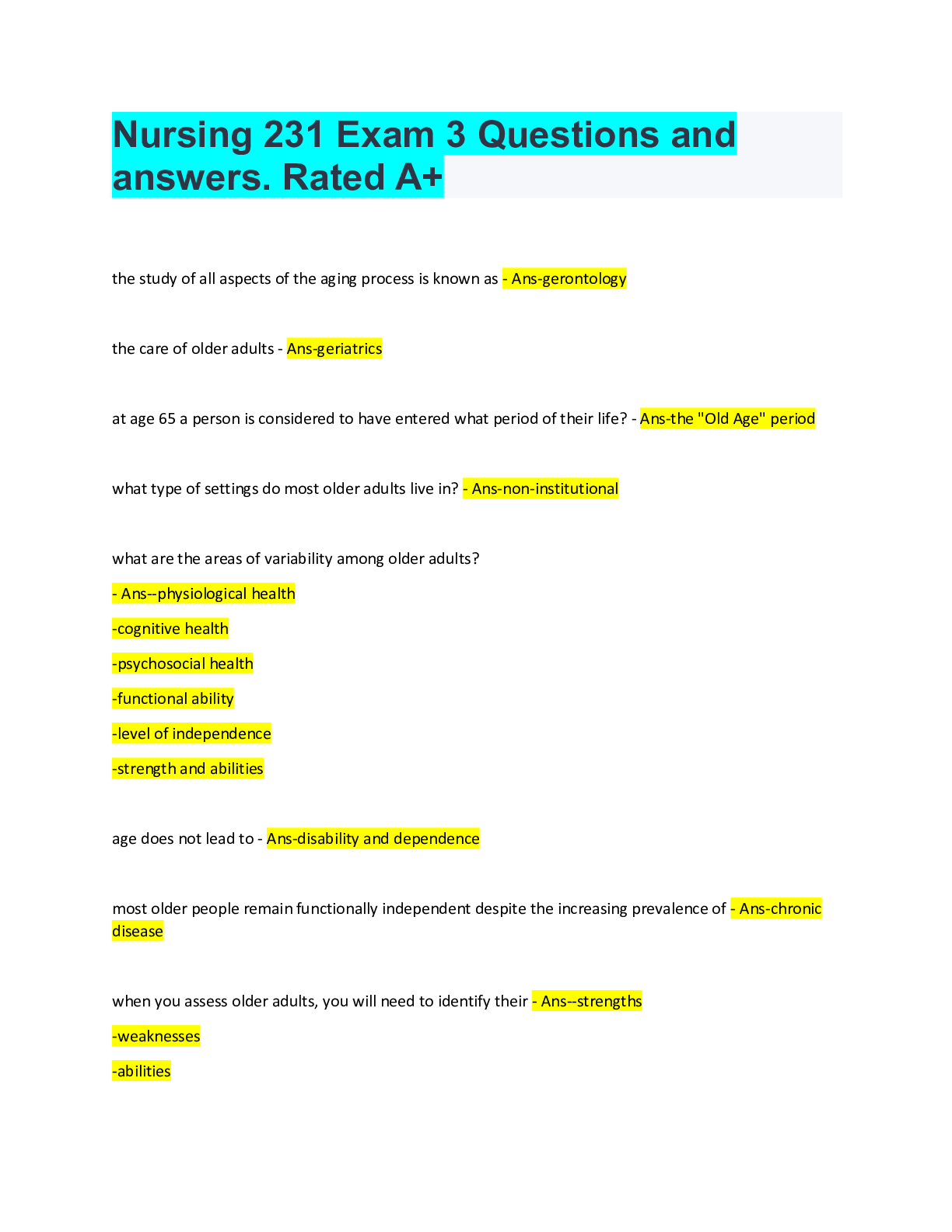
Nursing 231 Exam 3 Questions and
answers. Rated A+
the study of all aspects of the aging process is known as - Ans-gerontology
the care of older adults - Ans-geriatrics
at age 65 a person is considered to have entered what period of their life? - Ans-the "Old Age" period
what type of settings do most older adults live in? - Ans-non-institutional
what are the areas of variability among older adults?
- Ans--physiological health
-cognitive health
-psychosocial health
-functional ability
-level of independence
-strength and abilities
age does not lead to - Ans-disability and dependence
most older people remain functionally independent despite the increasing prevalence of - Ans-chronic
disease
when you assess older adults, you will need to identify their - Ans--strengths
-weaknesses
-abilities
stochastic theory of aging - Ans-viewing aging as a result of regular cellular damage, cells will deteriorate
with time
non-stochastic theory of aging - Ans-genetically programmed to age in a particular way, why family
members age similarly
psychosocial theory of aging - Ans-attempts to explain role changes in behavior and relationship that
result from aging
what are some developmental tasks appropriate for stages in life? - Ans--deaths of friends and
significant others
-retirement
-reduced or fixed income
-changes in quality of life or living arrangements
structural and functional changes of older adults - Ans--failing health
-physical strength
-self acceptance
sit or stand at eye level - Ans-in front of the patient in full view
face the older adult while speaking; do not____ - Ans-do not cover your mouth (speak clearly)
provide diffuse, bright, non-glaring - Ans-light
encourage the older adult to use his or her assistive devices such as - Ans-glasses, magnifier, hearing
aids
during the assessment, use caution when interpreting___ - Ans-signs and symptoms of diseases and
laboratory values
it is important to recognize early indicators of an___ - Ans-acute illness in older adults
some mental changes are often drug related caused by - Ans-drug toxicity or adverse drug events
nurses are essential in what? - Ans--early identification
-referral
-treatment of health problems in older adults
what are some physiological changes of the older adult? - Ans--perception of well-being defines quality
of life
-health revolves around how they perceive their ability to function
functional status in older adults includes the day-to-day activities of daily living involving activities within
what domains? - Ans--physical
-psychological
-cognitive
-social
what are some functional changes of the older adult? - Ans--changes are linked to illness/disease/degree
of chronicity
-performance of ADLs is an indicator of health or illness
-occupational and physical therapists are a great resource
delirium - Ans-acute confusional state
dementia - Ans-generalized impairment of intellectual functioning
depression - Ans-a mood disturbance characterized by feelings of sadness and despair
nursing management of older adults with any form of dementia focuses on what needs of the older
adult and family? - Ans-safety, physical, and psychosocial needs
what are some psychosocial changes of the older adult? - Ans--retirement
-social isolation
-sexuality
-housing/environment
-death
what are some health promotion preventive measures? - Ans--screening activities
-exercise
-weight reduction (if overweight)
-low fat, well balanced diet
-moderate alcohol use
-immunization visits
-smoking cessation
acute care settings pose risks for adverse events such as what? - Ans--delirium
-dehydration
-malnutrition
-health care associated infections
-urinary incontinence
-falls
what are some intrinsic factors for falls in older adults? - Ans--previous fall
-impaired vision
-postural hypotension
-conditions affecting mobility
-conditions affecting balance and gait
-cognitive impairment, agitation, confused
-slowed reaction times
-deconditioning
-adverse medication reactions (sedatives, hypnotics, anticonvulsants, opioids)
what are some extrinsic factors for falls in older adults? - Ans--poor lighting
-slippery or wet flooring
-items on floor
-inappropriate footwear
-unfamiliar environment of hospital room
-improper use of assistive devices
what is the bodies largest organ? - Ans-skin
the skin provides a protective barrier against - Ans-diseases
sensory organ - Ans-for the body to feel pain, cold, heat, touch, and pressure
pressure ulcer - Ans--localized injury to the skin
-affects the underlying tissues
-results from pressure in combination with shearing or friction
stage 1 pressure ulcer - Ans-intact skin with nonblanchable redness
CHARACTERISTICS OF DARK SKIN WITH IMPAIRE
[Show More]
.png)