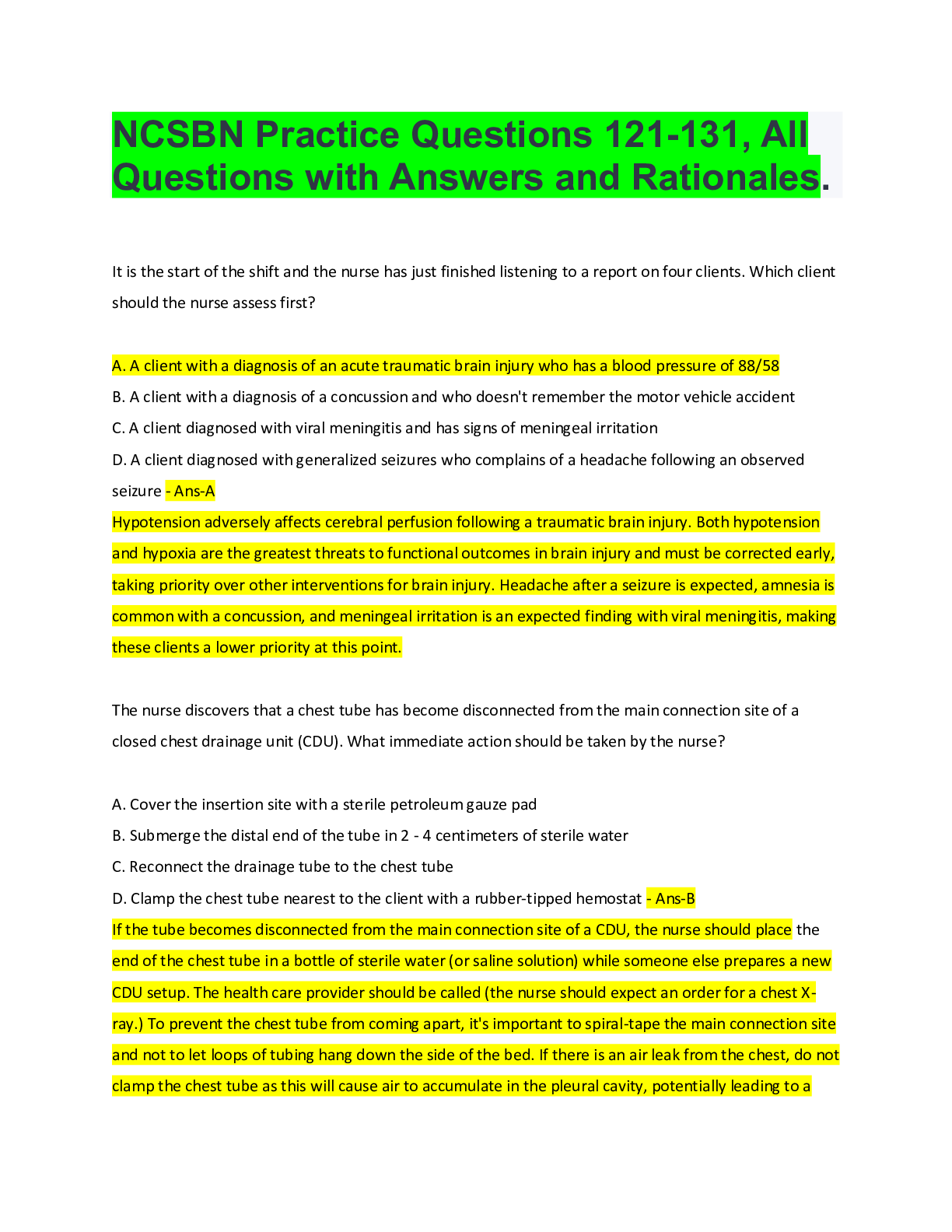
*NURSING > NCLEX > NCSBN Practice Questions 121-131, All Questions with Answers and Rationales. (All)
NCSBN Practice Questions 121-131, All Questions with Answers and Rationales.
Document Content and Description Below
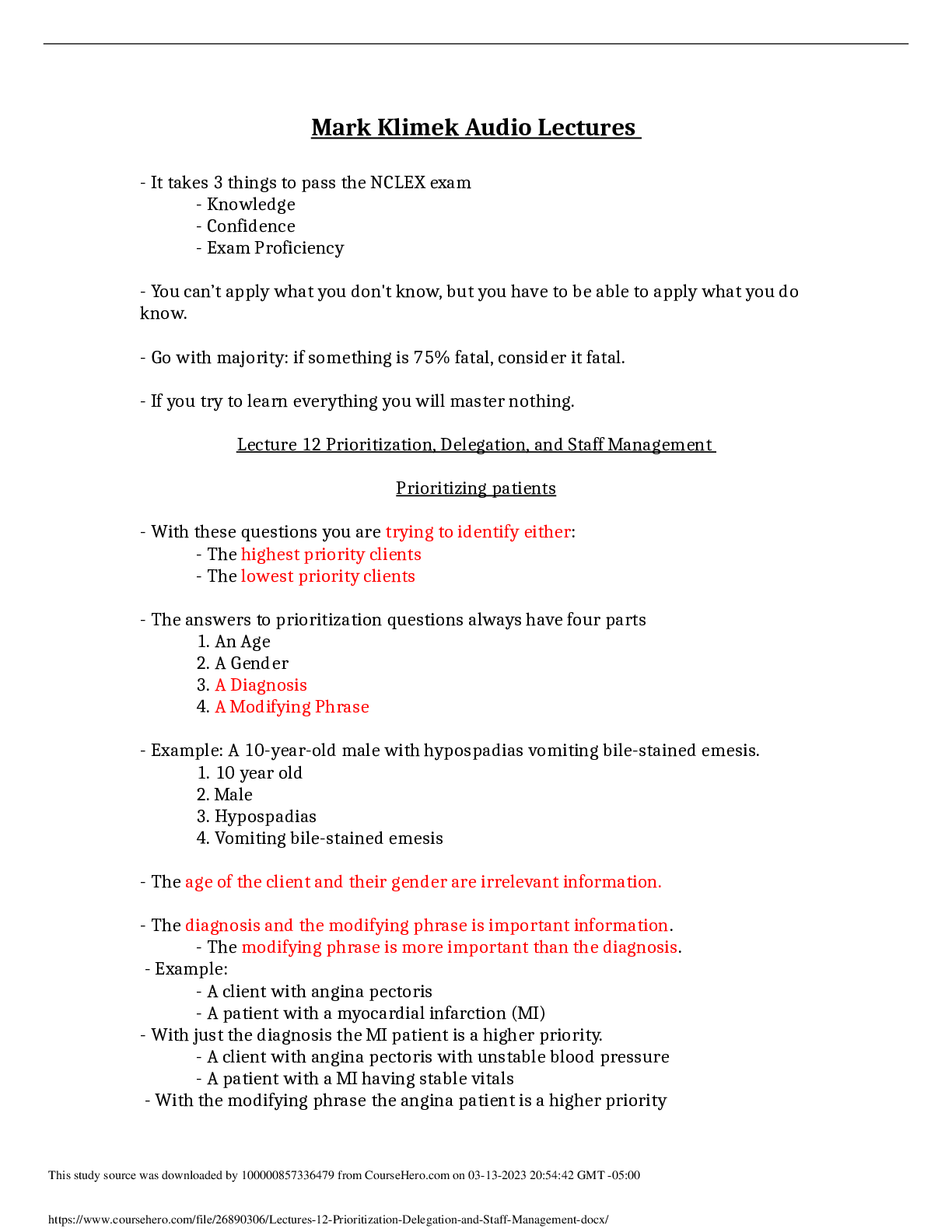
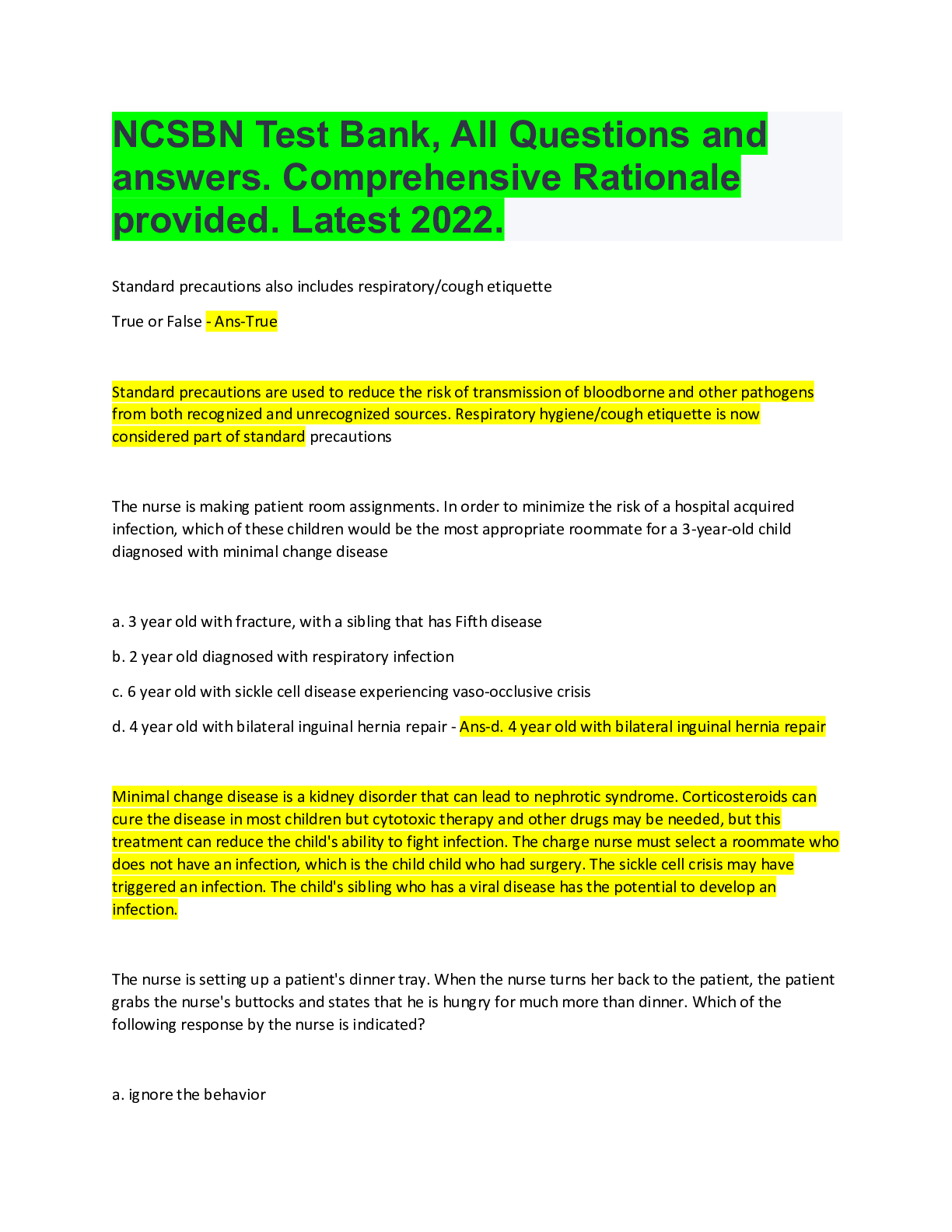
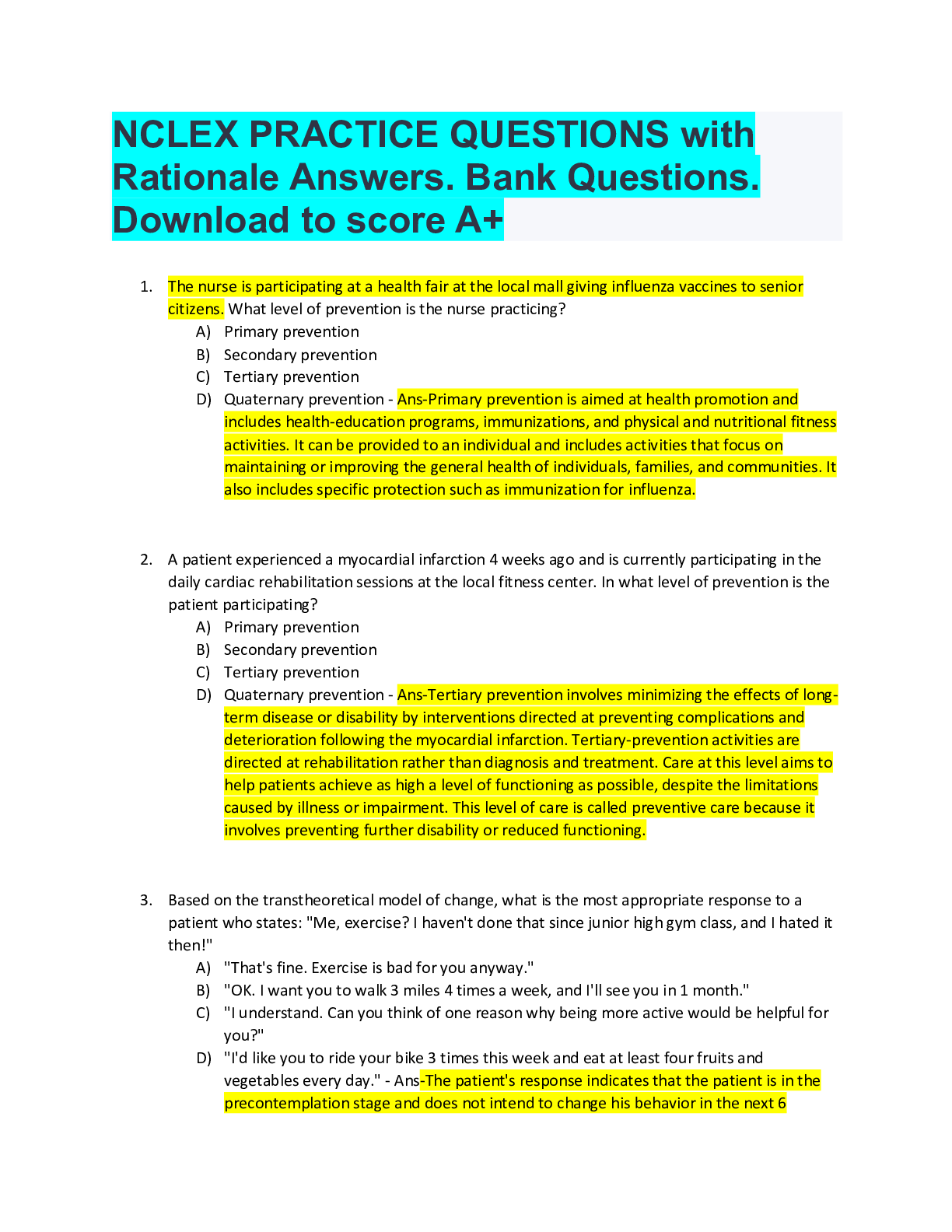
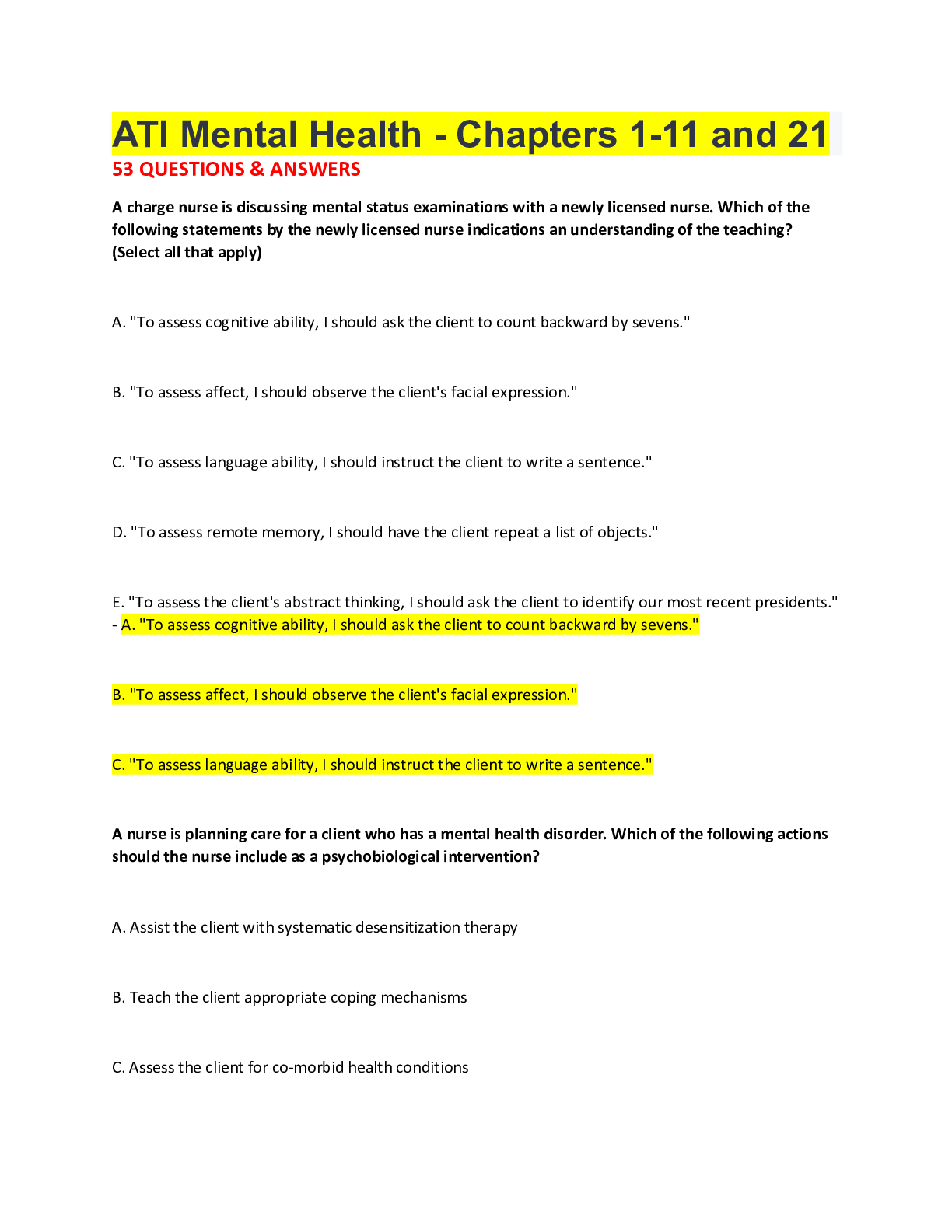
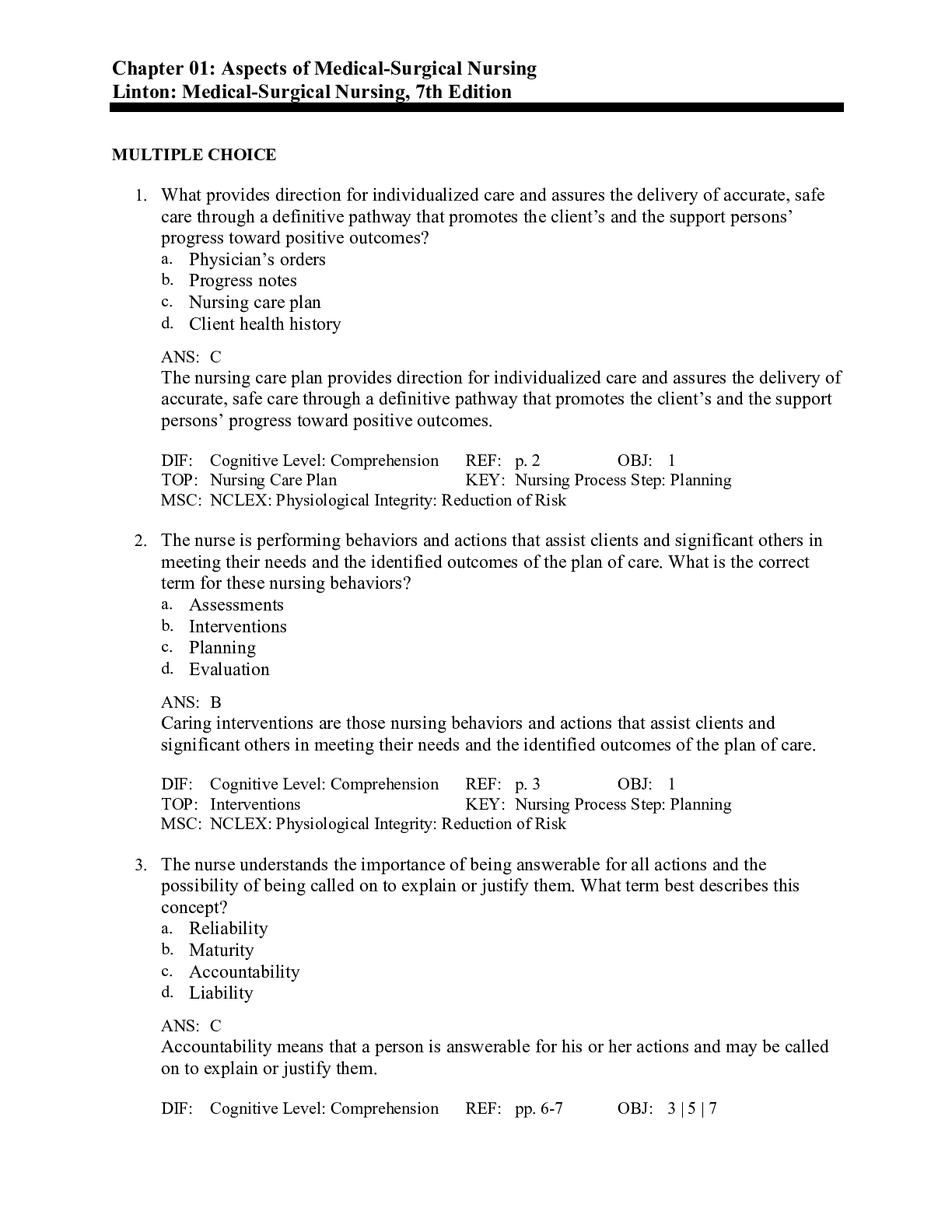
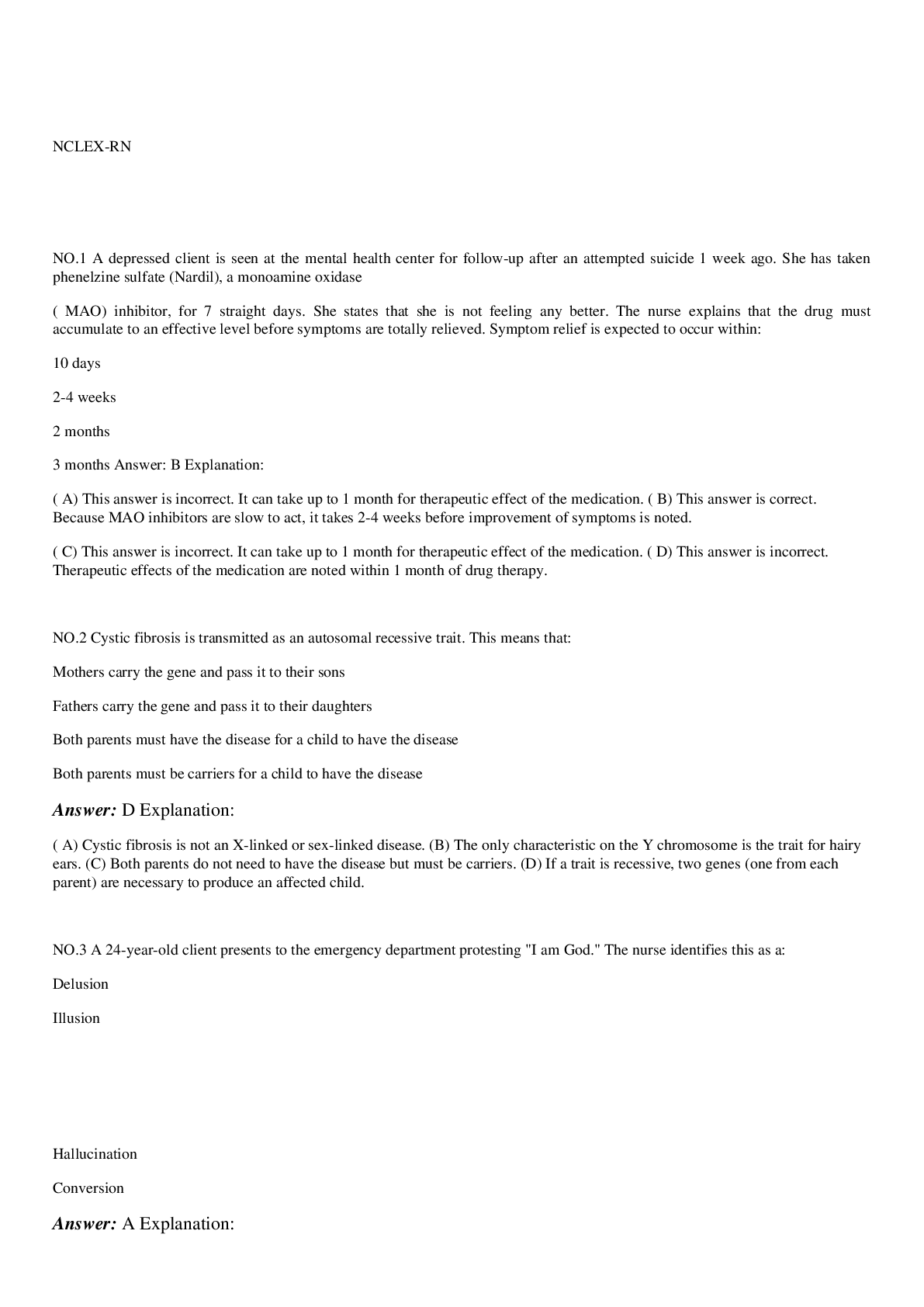
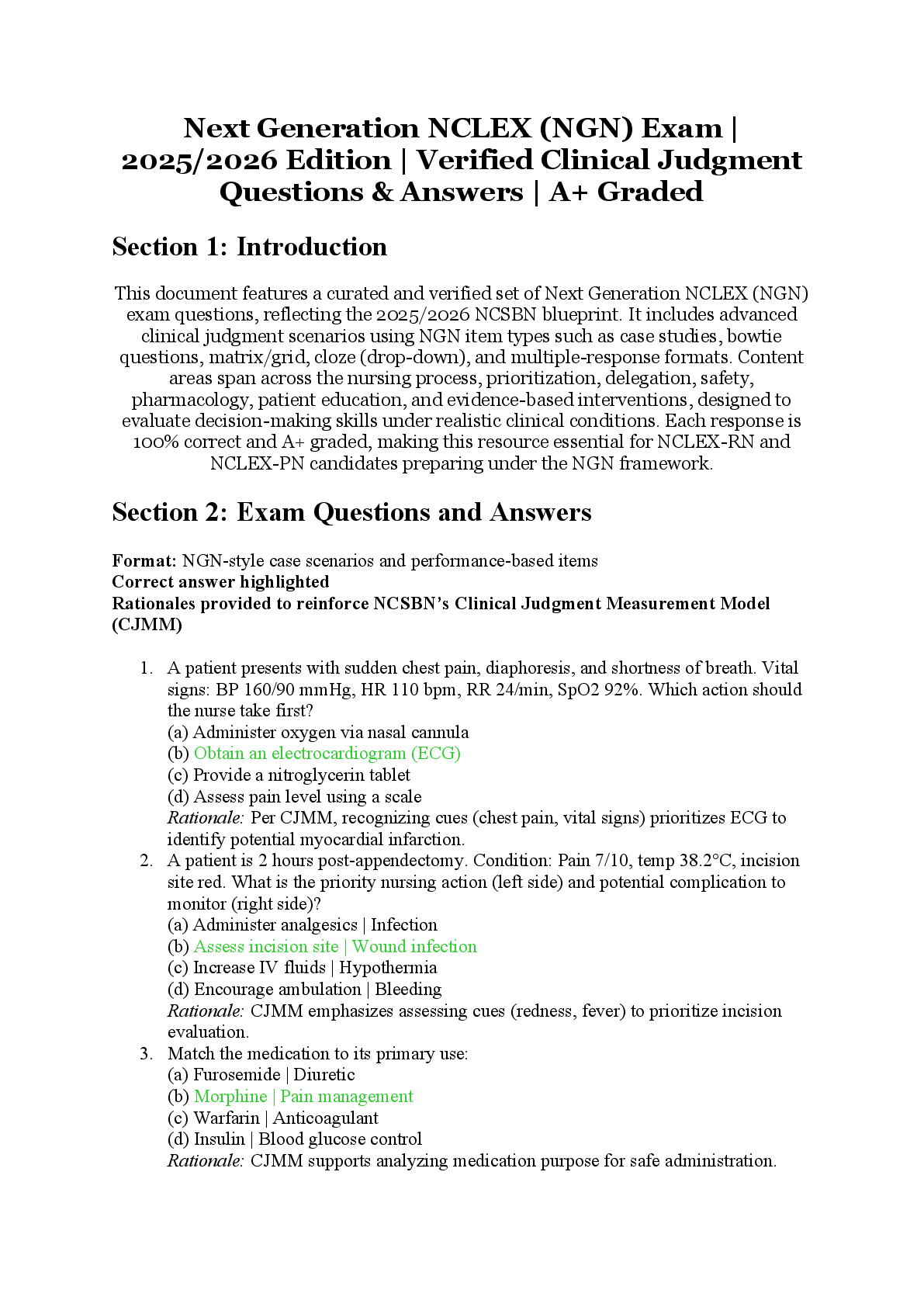
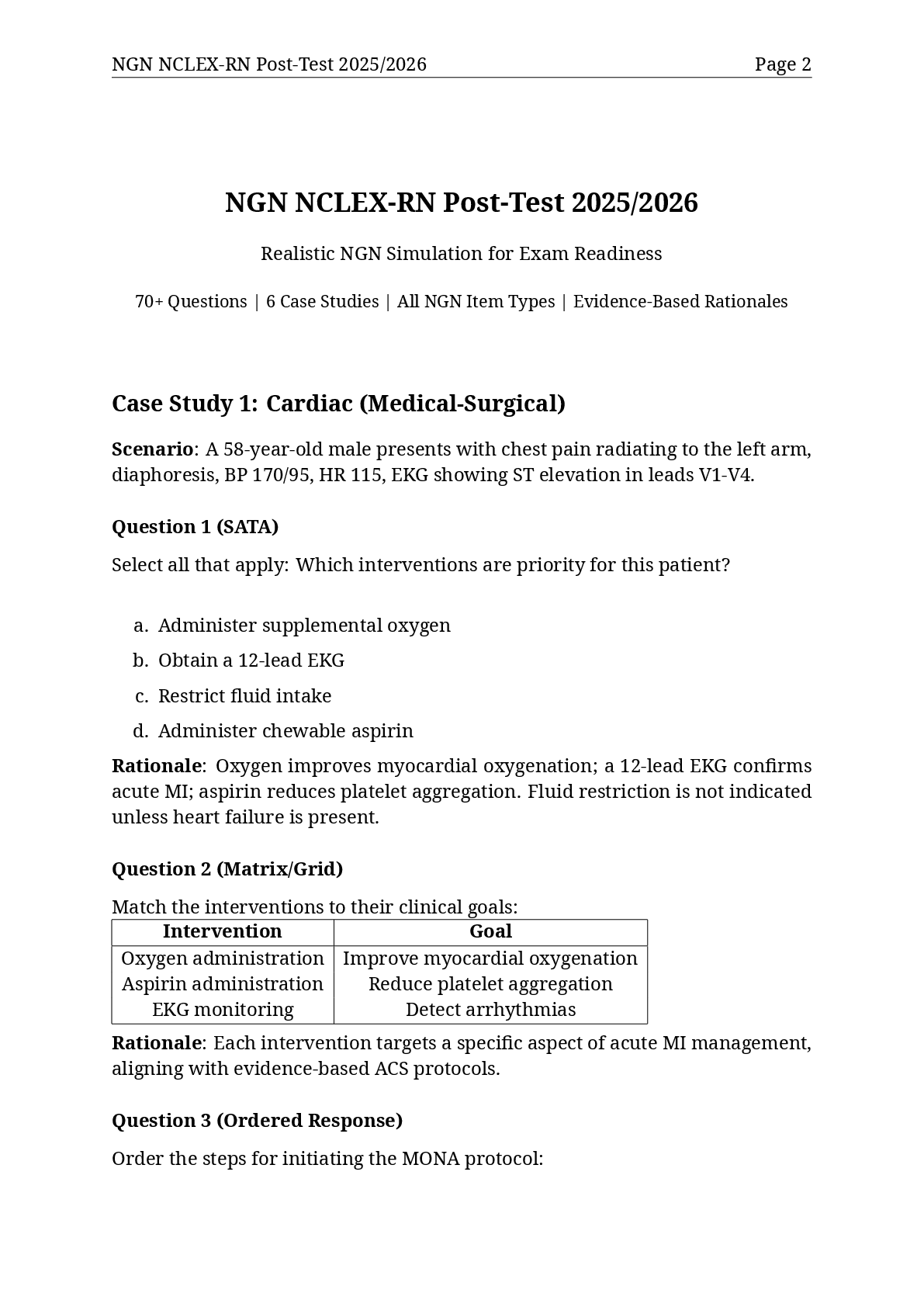
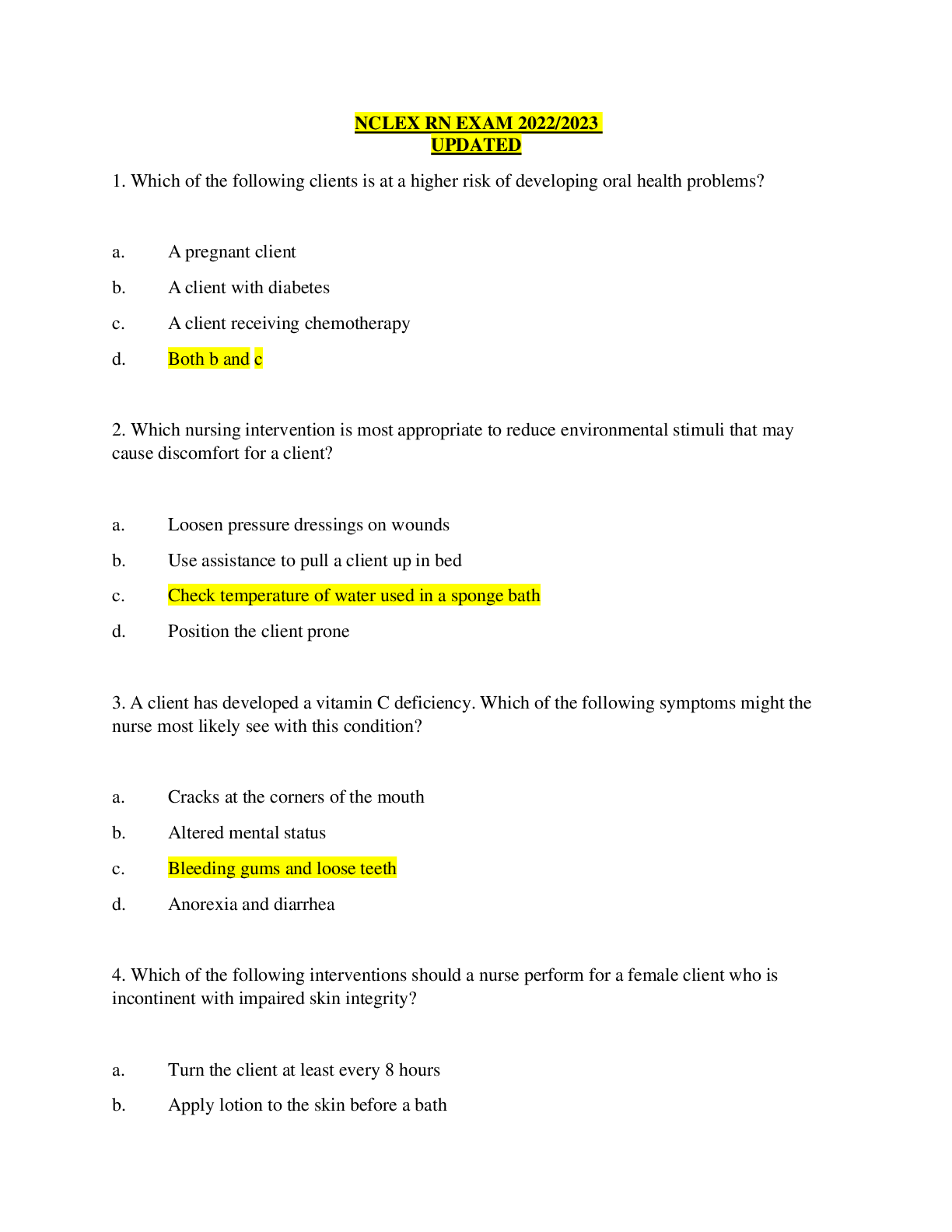
NCSBN Practice Questions 121-131, All Questions with Answers and Rationales. It is the start of the shift and the nurse has just finished listening to a report on four clients. Which client should ... the nurse assess first? A. A client with a diagnosis of an acute traumatic brain injury who has a blood pressure of 88/58 B. A client with a diagnosis of a concussion and who doesn't remember the motor vehicle accident C. A client diagnosed with viral meningitis and has signs of meningeal irritation D. A client diagnosed with generalized seizures who complains of a headache following an observed seizure - Ans-A Hypotension adversely affects cerebral perfusion following a traumatic brain injury. Both hypotension and hypoxia are the greatest threats to functional outcomes in brain injury and must be corrected early, taking priority over other interventions for brain injury. Headache after a seizure is expected, amnesia is common with a concussion, and meningeal irritation is an expected finding with viral meningitis, making these clients a lower priority at this point. The nurse discovers that a chest tube has become disconnected from the main connection site of a closed chest drainage unit (CDU). What immediate action should be taken by the nurse? A. Cover the insertion site with a sterile petroleum gauze pad B. Submerge the distal end of the tube in 2 - 4 centimeters of sterile water C. Reconnect the drainage tube to the chest tube D. Clamp the chest tube nearest to the client with a rubber-tipped hemostat - Ans-B If the tube becomes disconnected from the main connection site of a CDU, the nurse should place the end of the chest tube in a bottle of sterile water (or saline solution) while someone else prepares a new CDU setup. The health care provider should be called (the nurse should expect an order for a chest Xray.) To prevent the chest tube from coming apart, it's important to spiral-tape the main connection site and not to let loops of tubing hang down the side of the bed. If there is an air leak from the chest, do not clamp the chest tube as this will cause air to accumulate in the pleural cavity, potentially leading to acollapsed lung or tension pneumothorax. Only if the chest tube becomes dislodged from the client does the nurse need to cover the insertion site with a sterile gauze dressing. The client states to the nurse: "I am ready to stop all of these treatments. I just want to go home and enjoy my family for the little bit of time I have left." Which action is most appropriate? A. Call in a referral to a social worker and explain that the request will need to be discussed in more detail at a later time B. Encourage the client to discuss this decision with the health care provider and family C. Tell the family members that the client's preference is to go home to die D. No action is needed at this time unless the client repeats the statement to another caregiver - Ans-B The client has the right to stop treatment and should be supported in clearly communicating this decision with the health care provider and family. The nurse needs to act as an advocate for the client. It is factually incorrect to wait until the request is repeated; clients should not need to express their wishes repeatedly before caregivers listen to them. The nurse should not be the one to share sensitive information with the family; the client controls that information. Social services may get involved but time is of the essence for those who are terminally ill. A client who is newly diagnosed with hypertension is prescribed benazepril. What is the most important point to make when teaching the client about this medication? A. "Notify the health care provider if there is a change in your voice." B. "Monitor your blood pressure and pulse regularly." C. "Take medication as directed at the same time each day, even if you feel well." D. "Call your health care provider if you develop a dry cough." - Ans-A Benazepril (Lotensin) is an angiotensin converting enzyme (ACE) inhibitor. Even if you don't know this drug, remember that the spelling of ACE inhibitors usually end with "pril." One of the side effects of ACE inhibitors is a dry cough; sometimes the cough is severe enough to require discontinuation of the drug. But the most important point to make is that if the client's voice changes or "sounds funny" or there is any swelling of the lips, tongue or throat, the client should contact the health care provider because this could indicate angioedema, a potentially fatal condition.A client's admission urinalysis shows the specific gravity value of 1.039. Which of these findings would the nurse expect to find during the physical assessment of this client? A. Above normal heart rate B. Moist mucous membranes C. Poor skin turgor D. Increased blood pressure - Ans-C The specific gravity value is high, which would indicate dehydration. Specific gravity measures urine density and an average urine specific gravity value is around 1.020. Poor skin turgor, as seen with tenting of the skin, is consistent with this problem. [Show More]
Last updated: 3 years ago
Preview 1 out of 50 pages
Buy this document to get the full access instantly
Instant Download Access after purchase
Buy NowInstant download
We Accept:

Reviews( 0 )
$10.00
Can't find what you want? Try our AI powered Search
Document information
Connected school, study & course
About the document
Uploaded On
Jun 28, 2022
Number of pages
50
Written in
All

Additional information
This document has been written for:
Uploaded
Jun 28, 2022
Downloads
0
Views
214

 with Correct Answers.png)

 JN21.png)