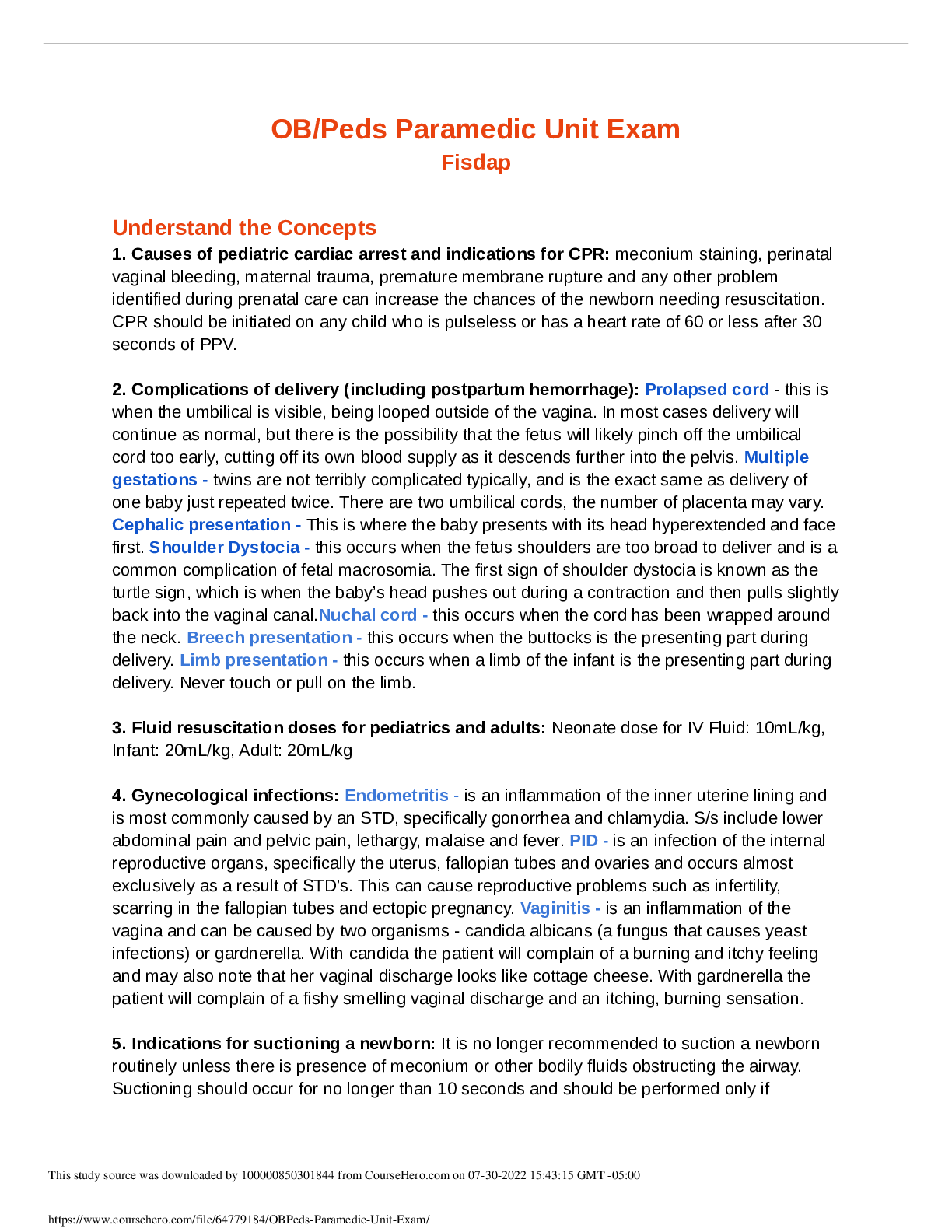
OB/Peds Paramedic Unit Exam
Fisdap
Understand the Concepts
1. Causes of pediatric cardiac arrest and indications for CPR: meconium staining, perinatal
2. Complications of delivery (including postpartum hemorrhage):
...
OB/Peds Paramedic Unit Exam
Fisdap
Understand the Concepts
1. Causes of pediatric cardiac arrest and indications for CPR: meconium staining, perinatal
2. Complications of delivery (including postpartum hemorrhage): Prolapsed cord –
Multiple
gestations -
Cephalic presentation –
Shoulder Dystocia -.Nuchal cord –
Breech presentation -.
Limb presentation
3. Fluid resuscitation doses for pediatrics and adults: Neonate
4. Gynecological infections: Endometritis -
5. Indications for suctioning a newborn: It is no longer recommended to suction a newborn routinely unless there is presence of meconium or other bodily fluids obstructing the airway.
6. Maternal changes within the third trimester: blood volume increases from about 4.5L to 7L
during pregnancy.
7. Pediatric respiratory conditions (including croup and epiglottitis): Croup
(laryngotracheobronchitis).
8. Predisposing factors for high-risk pregnancies and complications associated with
trauma:
9. Signs and symptoms of medical conditions (including hypovolemia, meningitis, &
appendicitis): in the lower right abdominal quadrant, involuntary
guarding and muscle spasms of the area.
10. Signs and symptoms of pediatric abuse and traumatic injuries:
Perform the Skills
1. Assist in an abnormal delivery: for the mother with the breech presentation,
respiratory distress or oxygen saturation levels fall below 94 percent. Establish two large bore
IVs and begin fluid resuscitation. Begin immediate transport.
2. Calculate an APGAR score: the apgar score should be conducted 1 minute after birth and 5
minutes after birth.
3. Calculate thermal injuries for pediatric body surface area affected: The size of a burn for
a baby or young child can be quickly estimated by using the "rule of nines."
4. Differentiate between types of pediatric seizures: Seizures in an infant are often related to
5. Perform endotracheal intubation on a child (understand indications and methods):
1 - meconium
2- congenital diaphragmatic hernia,
3- pneumothorax,
6. Prevent heat loss in a newborn: maintaining the body temperature of the infant is essential..
7. Prevent postpartum bleeding: treatment and prevention of PHH is rather limited, but
following these steps will give you the best patient care possible in this scenario.
8. Treat a tricyclic antidepressant overdose: Tricyclic antidepressant overdose is poisoning
caused by excessive medication of the tricyclic antidepressant (TCA) type.
9. Treat an ectopic pregnancy: an ectopic pregnancy is a pregnancy that occurs anywhere outside the uterus but is most common to happen in the fallopian tubes..
10. Treat pediatric respiratory conditions (including asthma, bradycardia, obstructed tracheostomy tube, upper respiratory infections, and respiratory failure):
11. Treat vaginal bleeding: vaginal bleeding can occur for a variety of reasons, many of which the paramedic will not be able to thoroughly evaluate or assess.
[Show More]