Forensic Science > ANSWERS AND COMMENTARIES > FORENSIC AND NETWORK INTRUSION (All)
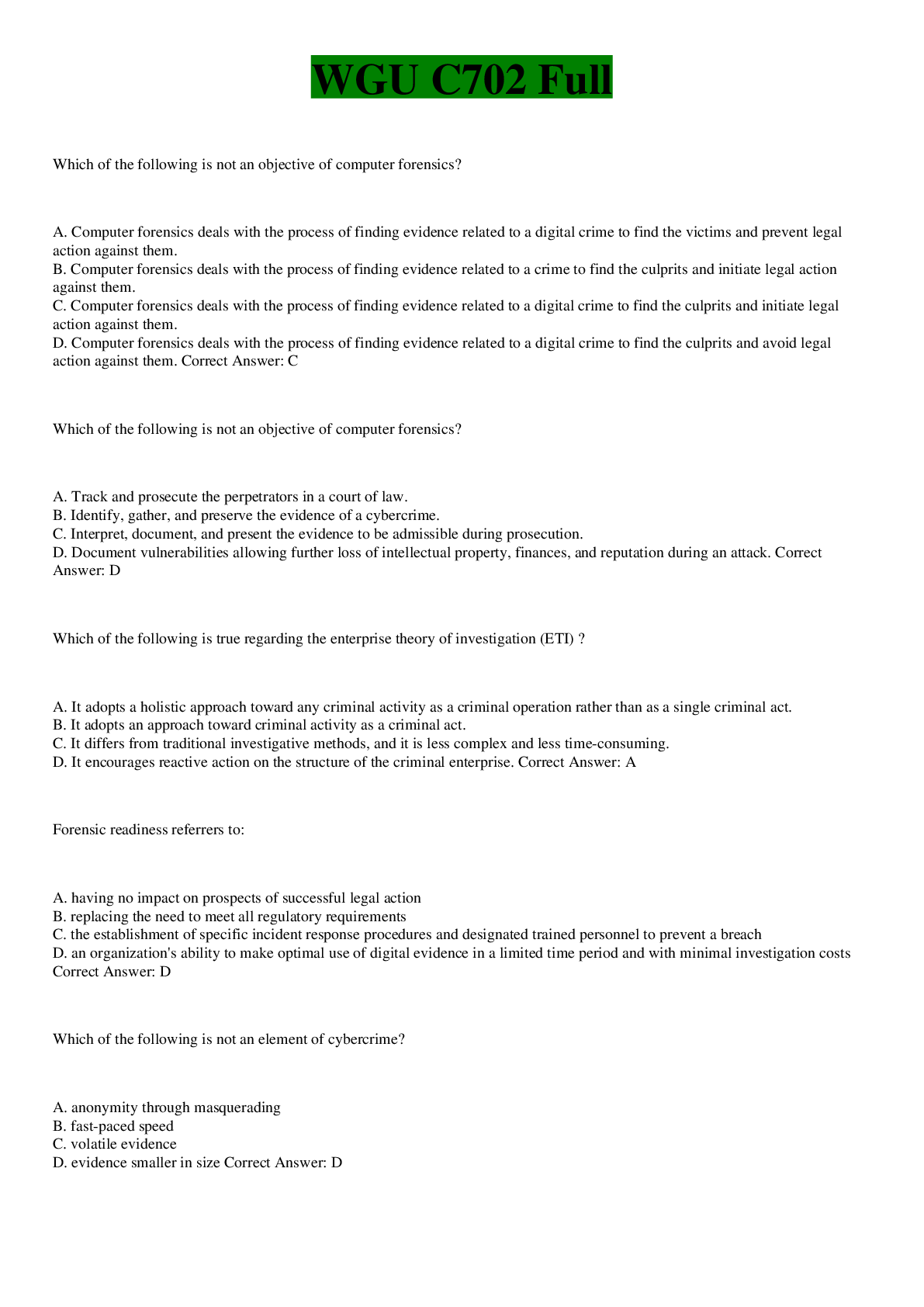
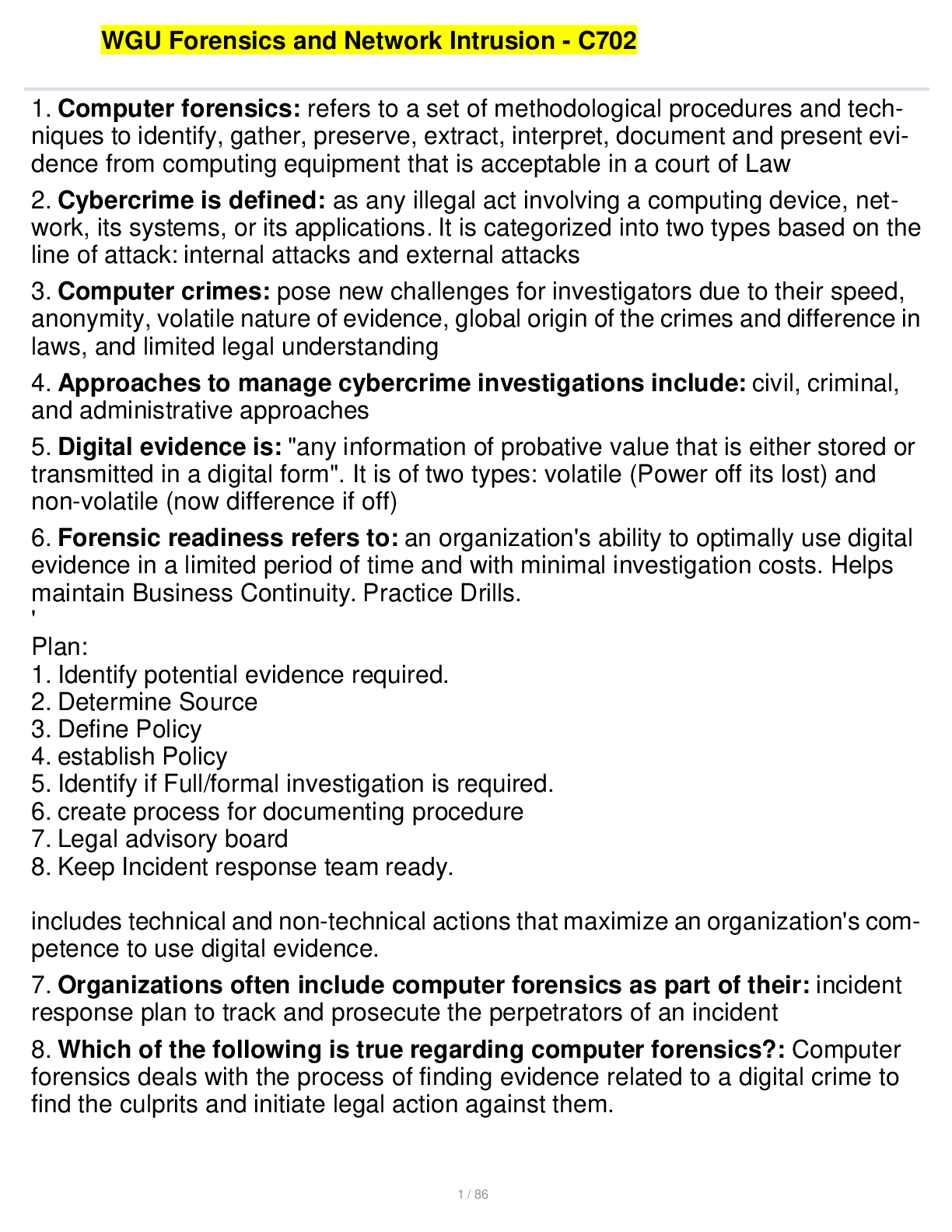
Which of the following is not an objective of computer forensics? A. Computer forensics deals with the process of finding evidence related to a digital crime to find the victims and prevent legal a ... ction against them. B. Computer forensics deals with the process of finding evidence related to a crime to find the culprits and initiate legal action against them. C. Computer forensics deals with the process of finding evidence related to a digital crime to find the culprits and initiate legal action against them. D. Computer forensics deals with the process of finding evidence related to a digital crime to find the culprits and avoid legal action against them. Which of the following is not an objective of computer forensics? A. Track and prosecute the perpetrators in a court of law. B. Identify, gather, and preserve the evidence of a cybercrime. C. Interpret, document, and present the evidence to be admissible during prosecution. D. Document vulnerabilities allowing further loss of intellectual property, finances, and reputation during an attack. Correct Which of the following is true regarding the enterprise theory of investigation (ETI) ? A. It adopts a holistic approach toward any criminal activity as a criminal operation rather than as a single criminal act. B. It adopts an approach toward criminal activity as a criminal act. C. It differs from traditional investigative methods, and it is less complex and less time-consuming. D. It encourages reactive action on the structure of the criminal enterprise. Forensic readiness referrers to: A. having no impact on prospects of successful legal action B. replacing the need to meet all regulatory requirements C. the establishment of specific incident response procedures and designated trained personnel to prevent a breach D. an organization's ability to make optimal use of digital evidence in a limited time period and with minimal investigation costs Which of the following is not an element of cybercrime? A. anonymity through masquerading B. fast-paced speed C. volatile evidence D. evidence smaller in size Correct Answer: D Which of the following is true of cyber crimes? A. Investigators, with a warrant, have the authority to forcibly seize the computing devices. B. Investigators attempt to demonstrate information to the opposite party to support the claims and induce settlement. C. The searching of the devices is based on mutual understanding and provides a wider time frame to hide the evidence. D. The claimant is responsible for the collection and analysis of the evidence. Which of the following is true of civil crimes? A. The initial reporting of the evidence is generally informal. B. A formal investigation report is required. C. Law enforcement agencies are responsible for collecting and analyzing evidence. D. The standards of proof need to be very high. Correct Answer: Which of the following is not a consideration during a cybercrimes investigation? A. collection of clues and forensic evidence B. analysis of digital evidence C. presentation of admissible evidence D. value or cost to the victim Correct Answer: Which of the following is a user-created source of potential evidence? A. address book B. printer spool C. cookies D. log files Correct Answer: Which of the following is a computer-created source of potential evidence? A. bookmarks B. spreadsheet C. swap file D. steganography Correct Answer: Which of the following is not where potential evidence may be located? A. digital camera B. smart card C. processor [Show More]
Last updated: 3 years ago
Preview 1 out of 110 pages
Buy this document to get the full access instantly
Instant Download Access after purchase
Buy NowInstant download
We Accept:
Can't find what you want? Try our AI powered Search
Connected school, study & course
About the document
Uploaded On
Aug 05, 2022
Number of pages
110
Written in
All
This document has been written for:
Uploaded
Aug 05, 2022
Downloads
0
Views
150
Scholarfriends.com Online Platform by Browsegrades Inc. 651N South Broad St, Middletown DE. United States.
We're available through e-mail, Twitter, Facebook, and live chat.
FAQ
Questions? Leave a message!
Copyright © Scholarfriends · High quality services·